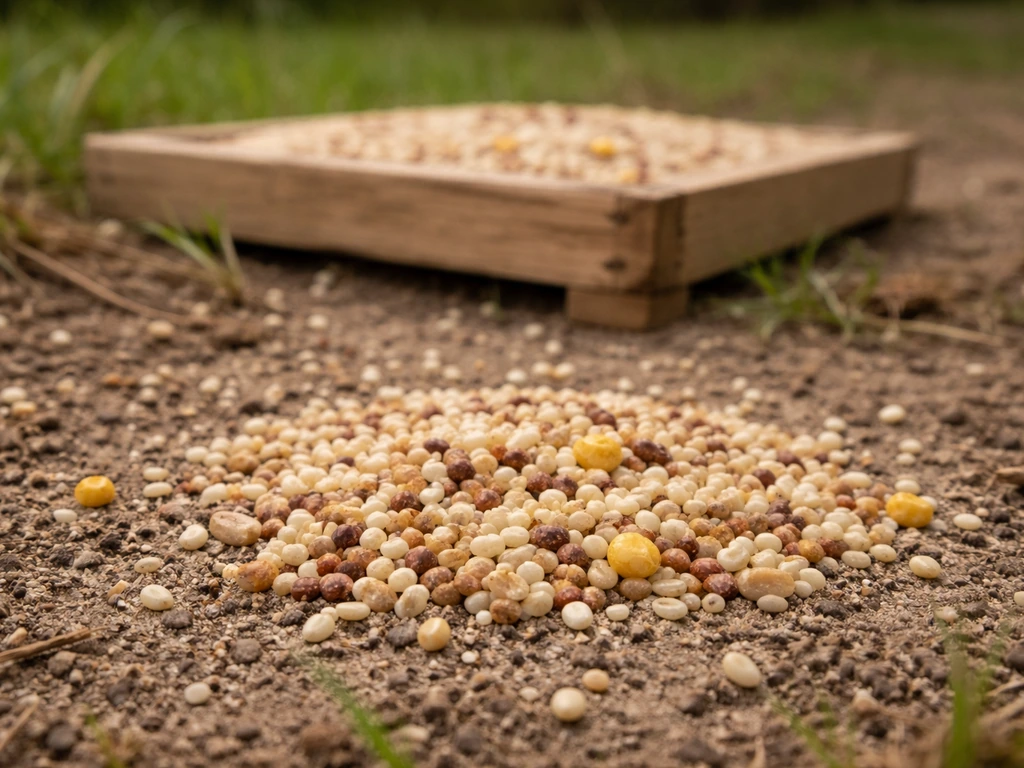
Pigeons tend to avoid nyjer (thistle) seed, safflower seed, and striped sunflower seed with the hull intact. They'll readily eat most common mixes that contain milo, cracked corn, wheat, millet, and sunflower hearts, so if you're feeding any of those right now, you're basically running a pigeon buffet. Swap to a nyjer-only tube feeder or a straight safflower fill, and most pigeons will leave the feeder alone within a few days.
What Bird Seed Pigeons Don’t Eat and What to Use Instead
Maya Collins
3 Jun 2026
Seeds pigeons generally won't eat
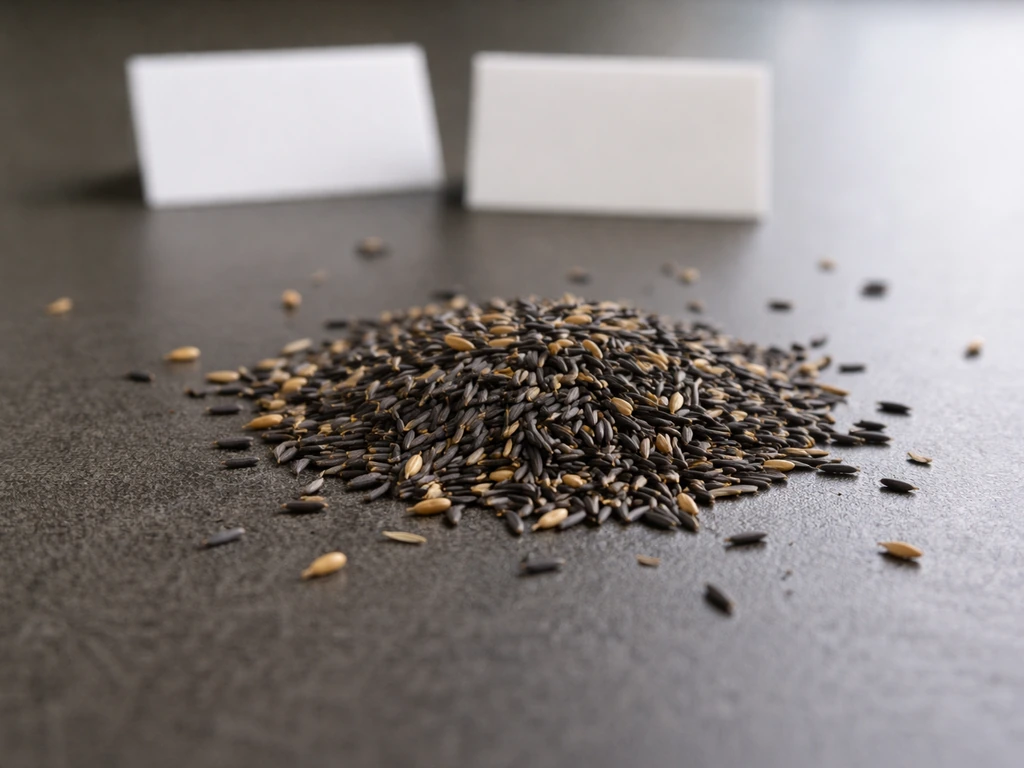
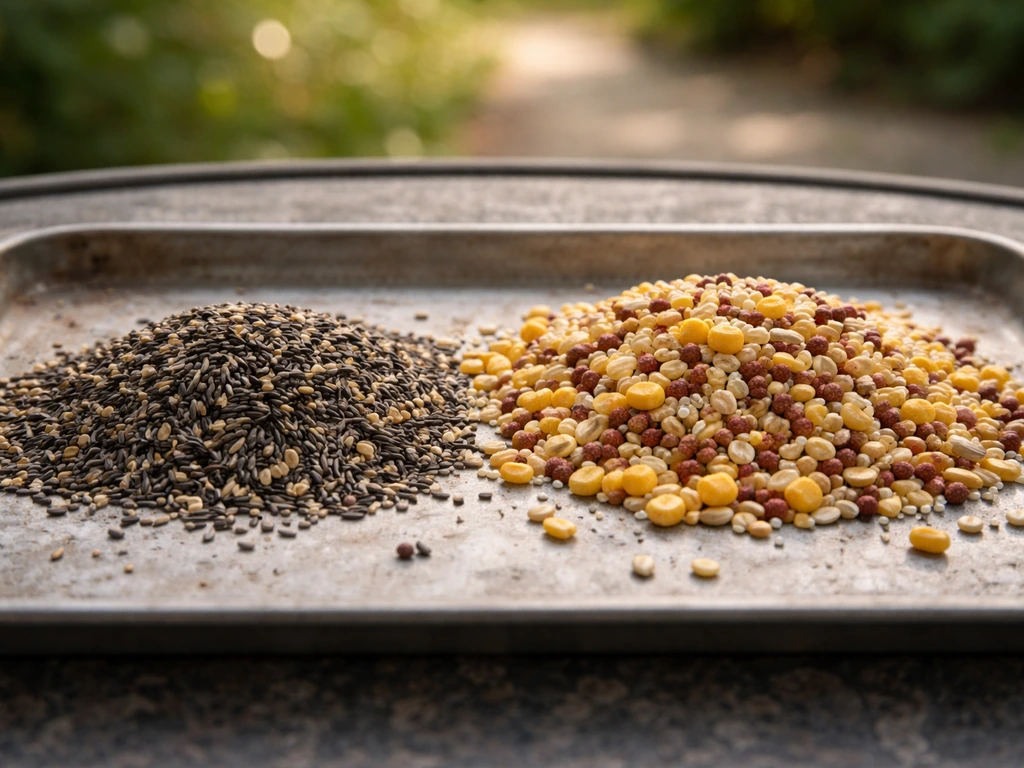
There are a few specific seeds that tend to move pigeons along. These aren't guaranteed repellents, but they're backed by solid practical experience and how pigeon digestion actually works.
- Nyjer (also sold as thistle): tiny seeds with very low caloric payoff for a bird the size of a pigeon. Finches and redpolls love it, pigeons mostly ignore it.
- Safflower: the thick outer shell is hard enough that pigeons don't reliably bother cracking it. Cardinals, chickadees, and house finches manage just fine.
- Striped sunflower (whole, hulled-in): larger hull than black oil sunflower, requiring more effort to crack. Pigeons prefer the easy access of shelled sunflower hearts.
- Hot pepper-coated seed: capsaicin doesn't affect birds neurologically the way it does mammals, but many pigeon-deterrent mixes use it as a practical discourager. Results vary, but worth trying.
- White milo in very small amounts: often listed as a filler seed that many desirable songbirds also skip, so it's not a great trade-off on its own.
What they will eat is a longer list: whole wheat, cracked corn, millet, sunflower hearts (shelled), maize, peanuts, and pretty much any grain-based mix sold as 'wild bird' or 'economy' seed. An academic study on the foods of rock doves and feral pigeons describes a dependence on cereals such as wheat and barley, and in its study context pigeons were also given millet, canary seed, maize, and peanuts. Research on rock pigeon crop contents consistently shows wheat, corn, and sunflower as dominant food items near urban and suburban areas, which is exactly what most budget seed mixes are loaded with.
What pigeons prefer vs. what they skip (and how to test it yourself)
Pigeons are ground and platform feeders by habit. They like open, flat surfaces where they can walk around and pick through seed. They're not built for clinging to tube feeders or navigating small perches. Their bill is designed for picking up whole seeds and swallowing them intact, after which their gizzard grinds the hulls down using grit particles they deliberately ingest. That's the key physical reason why thick-hulled seeds (like safflower) reduce pigeon feeding: it's not that they can't crack them at all, it's that the effort-to-reward ratio makes easier food sources more attractive.
You can run a simple choice test at home. Put two shallow dishes side by side, one filled with your current mix and one filled with straight safflower or nyjer. Watch for 15 to 20 minutes on two or three different days. If pigeons consistently go to one dish and ignore the other, you've confirmed which swap works for your flock. This kind of controlled offer-choice setup mirrors how researchers actually measure food preference in pigeons, and it gives you real data about what's happening in your specific yard, not just a generic recommendation.
One myth worth clearing up: bread is not a safe alternative or a 'swap' to move pigeons to. Pigeons will eat bread readily (it shows up in lab preference studies), and it provides almost no nutritional value, crowding out real food and causing digestive problems. If your neighbors are feeding bread, that's going to undermine everything you do at your feeder.
Practical seed swaps to discourage pigeons today
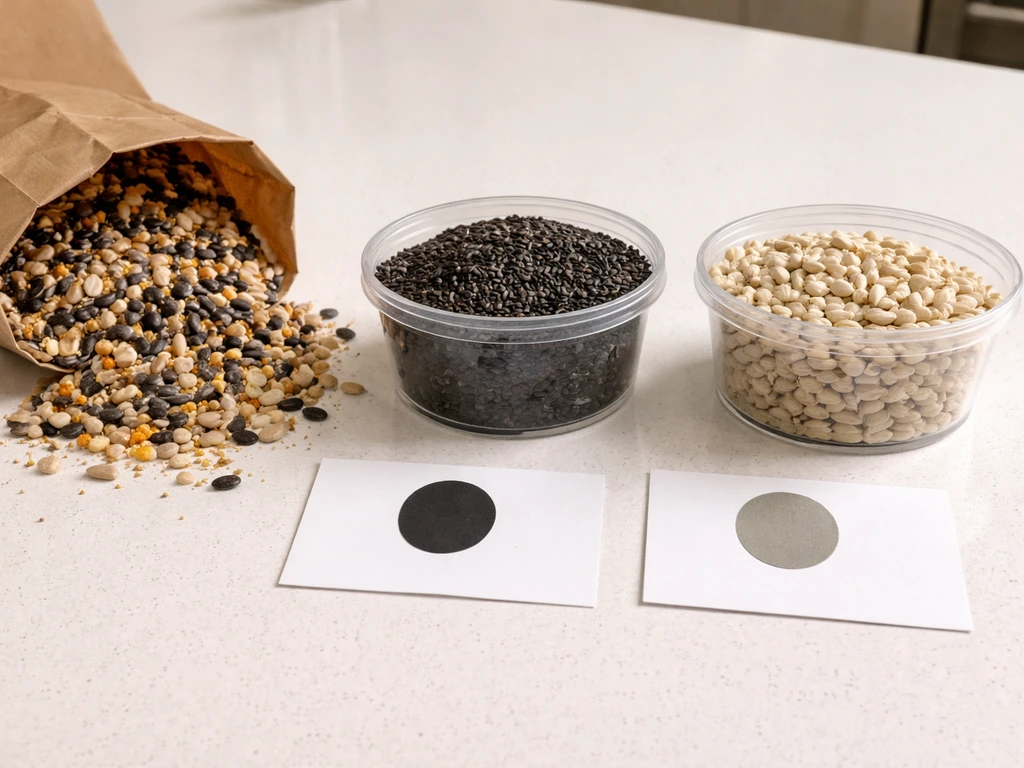
The most effective swap is to stop buying mixed seed that contains millet, milo, cracked corn, and wheat, and replace it with one or two targeted seeds that appeal to the birds you actually want. These same ideas can help with crows too, since they typically avoid sunflower seed hulls and other cluttered, less-preferred seed types. Here's a comparison of the most common options:
| Seed type | Pigeons eat it? | Good for | Notes |
|---|---|---|---|
| Nyjer (thistle) | Rarely | Finches, siskins, redpolls | Needs a tube or mesh feeder with small ports; spoils faster than other seeds |
| Safflower (whole) | Rarely | Cardinals, chickadees, doves (some) | Works in hopper or platform feeders; bitter taste deters squirrels too |
| Black oil sunflower (shelled) | Yes, readily | Most songbirds | Avoid if trying to deter pigeons; too easy to access |
| Striped sunflower (whole hull) | Occasionally | Woodpeckers, jays, larger songbirds | Better than shelled but not a reliable pigeon deterrent on its own |
| Mixed economy seed (millet, milo, wheat) | Yes, consistently | Juncos, sparrows, towhees | Avoid if pigeons are a problem; these are pigeon staples |
| Hot pepper-coated seed | Sometimes deterred | Most songbirds (unaffected by capsaicin) | Results inconsistent; useful as part of a broader strategy |
My practical recommendation: start with straight safflower in a hopper-style feeder. It's widely available, cheaper than nyjer, and the birds you want (cardinals especially, but also chickadees and wrens) will find it within a few days. If you also want to feed finches, add a dedicated nyjer tube feeder hung separately. Those two changes alone will remove most of the food incentive for pigeons without sacrificing the variety that makes a backyard feeder worth running.
A quick note on sibling problems: if you're also dealing with grackles, starlings, or sparrows competing at feeders, the safflower swap helps with starlings too, though each species has slightly different preferences and weak points. If you are also dealing with grackles, starlings, or sparrows competing at feeders, the same basic seed and feeder tactics still apply, and you may also want to look up what bird seed starlings do not like to fine tune the mix. If you're also dealing with grackles, starlings, or sparrows competing at feeders, knowing what bird seed do grackles not like can help you choose a better deterrent alongside your safflower approach. Sparrows also prefer smaller seeds, so offering the right mix for them can help reduce conflict at your feeder. The overlap is useful but the solutions aren't always identical.
Feeder setup and placement to reduce pigeon access
Seed choice is only half the job. Pigeon access is mostly about feeder design and where you put it. Pigeons need a flat surface and enough space to land and walk. Remove those, and even seed they can eat becomes harder to access.
Feeder types that work against pigeons
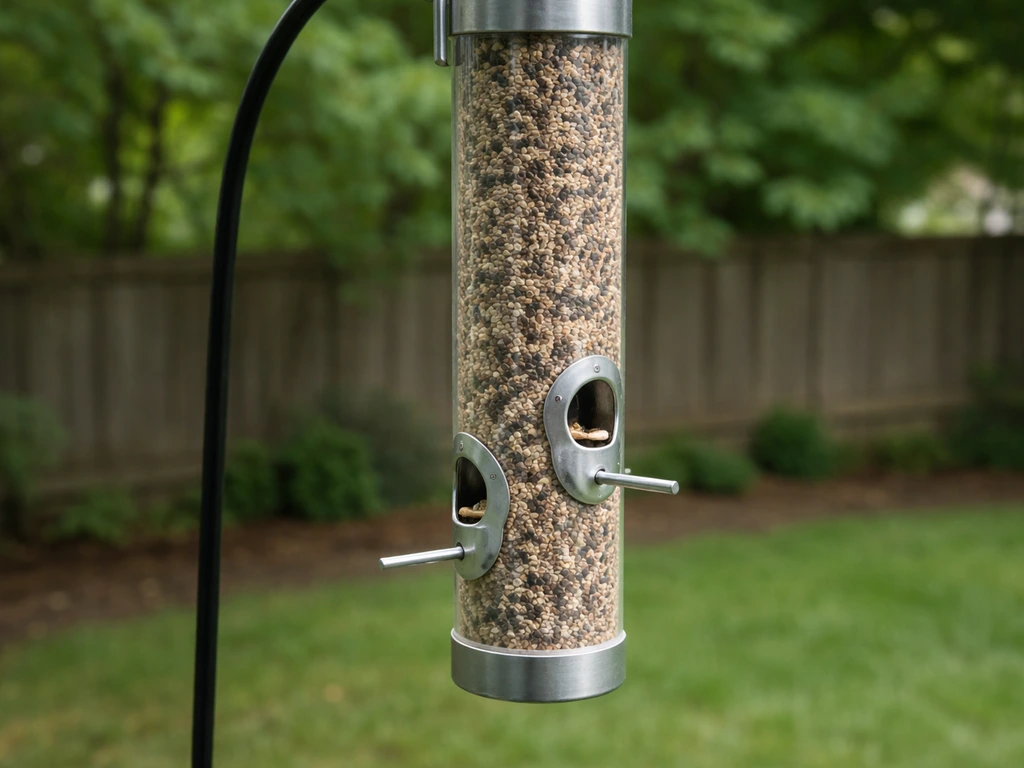
- Tube feeders with short perches (under 2 inches): finches can cling, pigeons can't get a foothold.
- Caged feeders: a wire cage around the feeder lets small songbirds through but physically blocks larger birds including pigeons. Works well for safflower, sunflower, and suet.
- Weight-sensitive feeders: close the feeding ports when a bird over a certain weight lands. Pigeons are heavy enough (around 300g) that most weight-sensitive feeders will shut them out.
- Upside-down suet feeders: expose food only from beneath, requiring birds to cling upside down. Woodpeckers, nuthatches, and chickadees manage; pigeons don't.
Where to put feeders
- Hang tube feeders at least 5 feet off the ground on a thin pole or hanging wire, away from flat surfaces pigeons can use as a staging area.
- Keep feeders at least 10 feet from fences, ledges, rooflines, and other broad surfaces where pigeons prefer to perch.
- If you use a platform or tray feeder, limit the platform width. A small 6-inch tray gives little room for pigeons to maneuver, while allowing smaller birds to land and feed.
- Avoid placing feeders directly under eaves or on open decks, both of which are pigeon-preferred habitat.
If pigeons are still landing on or near the feeder despite these changes, adding a physical barrier like a baffle above a hanging feeder or a squirrel guard below a pole-mounted one can make access awkward enough that they give up and look elsewhere.
How storage and seed condition affects whether pigeons show up
This is something a lot of guides skip, but it's genuinely important: wet, spoiled, or sprouted seed changes how attractive food is to pigeons and other wildlife. Research on feral rock pigeons found they strongly prefer dry seed over moist seed, consuming roughly three times as much dry seed as moist seed when both were available. So if your seed is sitting damp in a tray or feeder, it's not just a hygiene problem, it's actively less appealing to pigeons, but it creates different problems.
Storage basics to keep seed dry and clean
- Store seed in a sealed, hard-sided container (metal or thick plastic) off the ground in a cool, dry location. A garage or shed works well if it doesn't get excessively hot.
- Don't mix old seed into a new bag. Empty and wipe out the container before refilling.
- Buy seed in quantities you'll use within 4 to 6 weeks during summer, or 2 to 3 months in dry winter conditions. Nyjer goes stale faster than most seeds.
- Cracked corn is the seed most likely to harbor aflatoxins (toxic mold compounds) if stored in humid conditions. If you use corn at all, keep it especially dry and don't let it sit.
Wet seed in the feeder: what to do
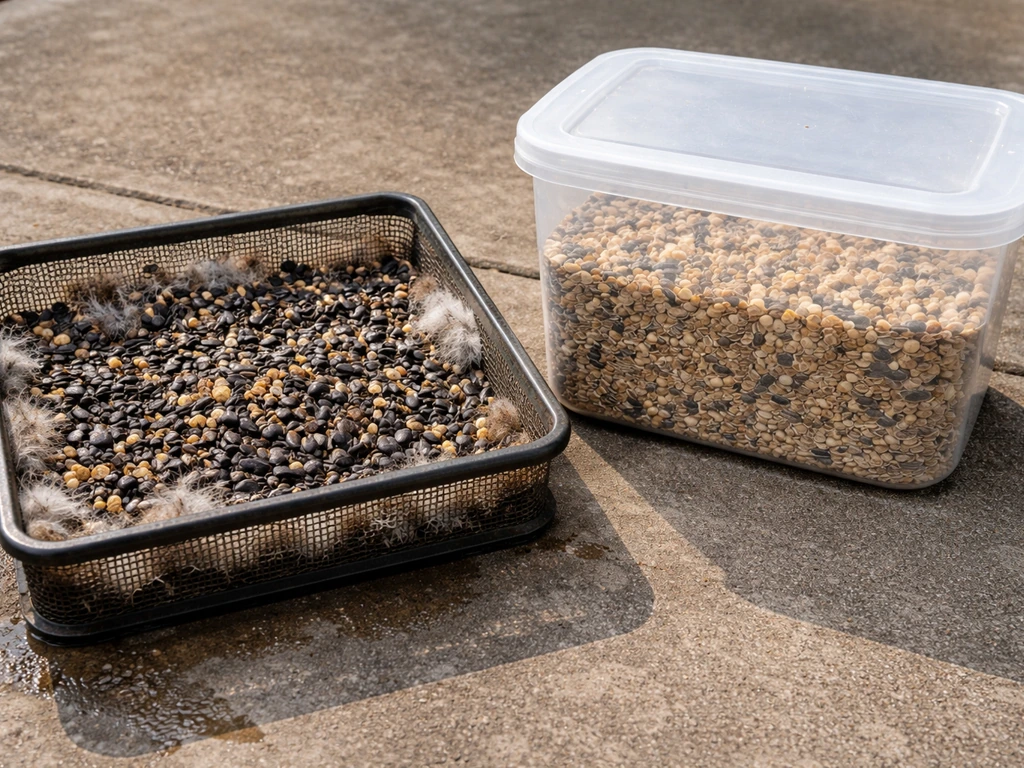
If seed in the feeder gets wet from rain or humidity, don't just top it up. Empty all of it into a bag and throw it away. Wet seed can start molding within 24 to 48 hours, especially in warm weather, and moldy seed is a real health risk to birds. Clean the feeder before refilling (see the next section for how). A feeder with drainage holes in the tray or bottom can reduce how often this happens, but it doesn't eliminate the problem if seed sits damp for more than a day.
Sprouted seed in a tray is a related issue. Some seed will germinate if it stays moist long enough. The sprouts aren't toxic, but they indicate the seed has been sitting wet and probably has mold starting underneath. Clear it out, clean the surface, and refill with dry seed.
Cleanup and ongoing pest management to stop the cycle
Pigeons don't just come for seed you put out intentionally. They come because there's seed on the ground, droppings near a reliable food source, and a general 'food available here' signal. Breaking that cycle requires regular cleanup, not just a one-time effort.
Ground cleanup
- Sweep or rake under feeders every 2 to 3 days during active feeding season. Spilled seed on the ground is a major draw for pigeons, who are naturally ground feeders.
- Bag and remove seed hulls, droppings, and waste seed rather than just scattering it. Decomposing seed can attract rodents as well as birds.
- If you have a persistent pigeon problem, consider temporarily removing ground trays entirely for 1 to 2 weeks while you make the seed swap. Pigeons are habitual: disrupting the routine plus removing the preferred food is more effective than either change alone.
Feeder cleaning schedule
Clean feeders once a month at minimum, more often if you're in a humid climate or if you've had wet seed in the feeder. Use a 10% bleach solution (1 part bleach to 9 parts water), scrub all surfaces including ports and perches, rinse thoroughly, and let the feeder dry completely before refilling. A wet feeder plus dry seed will just rewet the seed, which defeats the purpose. Hot dishwasher cycles or hot soapy water are reasonable alternatives if you don't want to use bleach.
Droppings on or around the feeder are a specific concern: bird droppings can carry disease and will quickly build up if pigeons are regular visitors. Clean those surfaces as part of your monthly feeder routine, and wear gloves when handling heavily soiled areas.
Managing persistent pigeons without creating other problems
If you've swapped seed, adjusted feeder setup, and kept up with cleanup but pigeons are still visiting, the food source pulling them may not be your feeder at all. Check for spilled seed in other parts of the yard, check if neighbors are feeding bread or grain in the open, and look for areas where pigeons are roosting nearby. A roost site within 50 feet of your yard makes visits much harder to stop through feeder management alone. Physical deterrents on roosting surfaces (spikes, wire, or sloped covers on ledges) address that part of the problem. Non-lethal approaches are generally the most practical and sustainable option for homeowners, and they avoid the risk of creating other wildlife problems.
The full plan comes down to this: replace mixed seed with safflower or nyjer, switch to caged or tube feeders with short perches, clean up spilled seed every few days, and do a proper feeder wash once a month. The Nebraska Extension feeder-selection material also emphasizes practical feeder-management considerations such as keeping seed dry and maintaining feeders to reduce problems that come with poor seed and feeder conditions spilled seed every few days. Most people who follow through on all four steps see a meaningful reduction in pigeon activity within one to two weeks.
FAQ
What bird seed do pigeons not eat (or rarely stick with)?
Pigeons usually avoid nyjer (thistle) and safflower when the seed is thick-hulled and not easy to access on a platform. Even if they try a bit, they often stop after they do not get quick rewards compared with nearby easier grains.
Will pigeons stop eating the “bad” seed if I mix in bread or crusts?
They are the exception to the “avoid” rule. If you offer bread at the same time as safflower or nyjer, pigeons can still keep coming because bread is palatable but nutritionally poor, and it also makes their feeder attention harder to break.
Why are pigeons still showing up after I switched seed? (My feeder has safflower now.)
If the seed you avoid is still present on the ground, pigeons will keep targeting that spot. They respond to food availability beyond the feeder, so you need to remove spilled seed and do ground cleanup every few days, not just change the feeder fill.
I bought a “wild bird” mix. Is it still likely to attract pigeons?
It depends on the bird mix you start with. If your current “wild bird” bag already contains millet, milo, cracked corn, wheat, or other grains pigeons like, you will keep attracting them until you replace it with a targeted single-seed option.
What feeder style works best with safflower to reduce pigeon access?
Use safflower in a feeder setup that lets it reach them, but makes landing awkward when they try to dominate. For example, a hopper with fewer open ledges and a short-perch design reduces their ability to comfortably pick and sort at the feeder.
Can pigeons eventually eat safflower or nyjer anyway?
Yes, because “not eaten” often means “less preferred,” not impossible. If your yard has alternative food sources, pigeons may sample avoided seeds less. If they are food-stressed (winter, heavy snowfall, or nearby roosts with no other feeding sites), they may test unfamiliar seed more often.
Does weather change which seed pigeons will avoid?
Wet seed can flip the decision in your pigeons’ favor. Even if safflower is a good choice, damp seed in a tray or hopper can become moldy or simply less appealing to people but more detectable to wildlife through odor changes, so keep seed dry and clean out any damp portions quickly.
What’s the quickest way to test which swap works in my yard?
Start with straight safflower and observe for multiple days, because pigeons can explore slowly. If they still prioritize your current dish, try the swap in shallow dishes side by side at the same time of day so you are comparing preference rather than timing.
How can feeder cleaning affect whether pigeons keep coming?
A typical issue is forgetting to clean the feeder ports and perches. Seed oils and residue can keep drawing birds back, and a wet feeder can re-wet new seed, reducing your deterrent effect. A full rinse and dry step helps maintain the “fresh and dry” advantage.
Do pigeons care more about seed type or about how they can access it?
If pigeons can land and walk on a broad tray or open platform, they can usually make it work even with safflower. The strongest non-food lever is removing easy ground access and using a baffle or squirrel guard where appropriate to stop comfortable landing right at the feeder.
Next Article
What Bird Seed Do Sparrows Eat Best and How to Offer It
Discover what sparrows eat, best seed types to offer, what to avoid, and how to store and present seed safely.