Grackles dislike nyjer (thistle) seed, safflower seed, and whole peanuts in the shell more than most other common feeder foods. Swapping to those seeds and pairing the change with the right feeder style cuts grackle visits noticeably. It won't eliminate them entirely, but it shifts your feeder from a grackle buffet to something they largely pass over in favor of easier pickings elsewhere.
What Bird Seed Do Grackles Not Like? Fix Your Feeders

Maya Collins
27 Apr 2026
The honest truth about grackles and your feeder
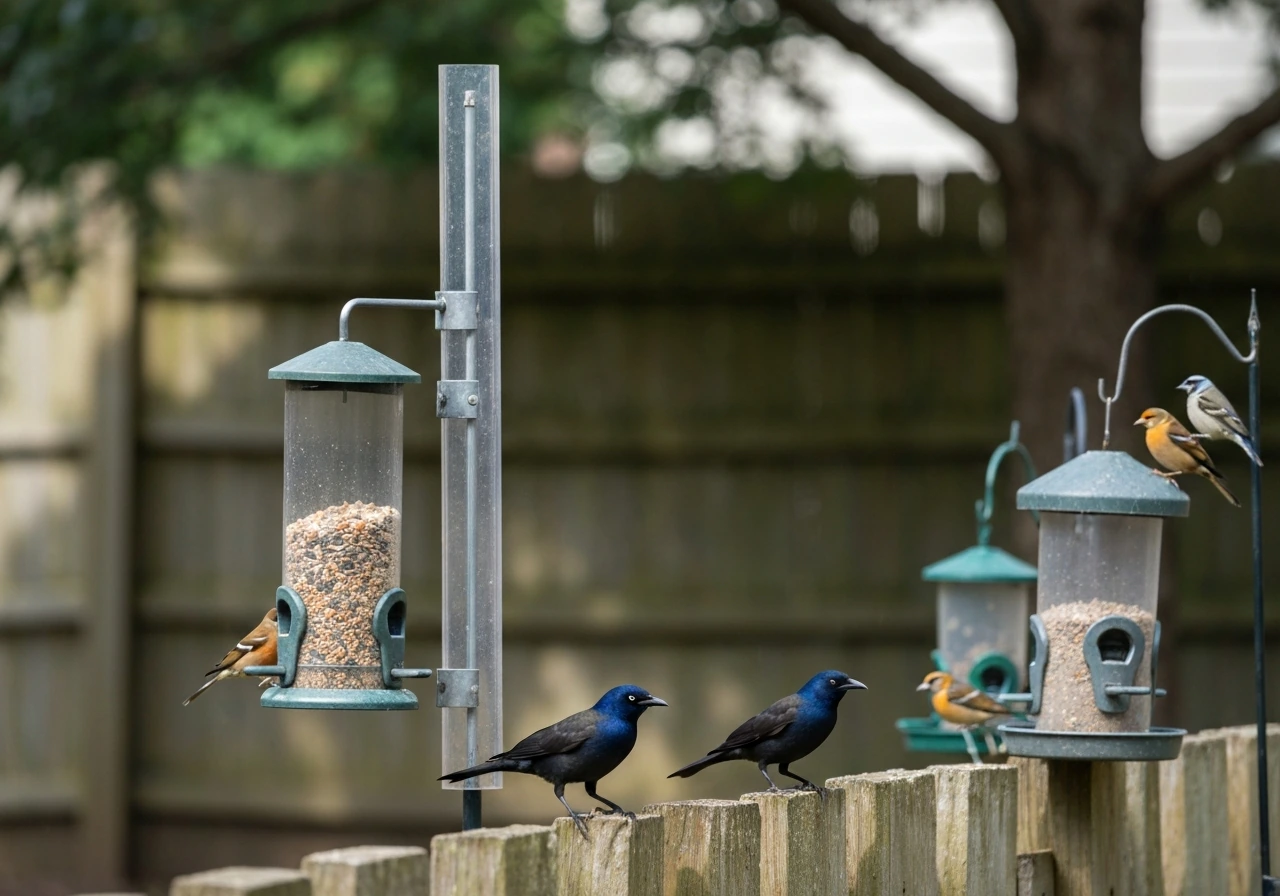
Grackles are highly adaptable, opportunistic feeders. They'll eat sunflower seeds, cracked corn, safflower, millet, milo, peanuts, suet, fruit, and oats. That list is almost every common feeder food. So the idea that you'll find a magic seed they categorically refuse isn't quite right. What's actually true is that some foods are much less preferred, some feeder designs are much harder for them to use, and combining both creates enough friction that grackles move on. The goal isn't a grackle-proof yard. It's making your feeders less worth their time.
Grackles also strongly prefer foraging on the ground and from open, flat surfaces. If your feeders offer a wide tray, ground-level scatter, or a pile of spilled seed under the feeder, grackles will use all of it regardless of what seed you're offering. That's the other half of the fix: feeder design matters just as much as seed type.
Seeds and foods to pull from your mix right now
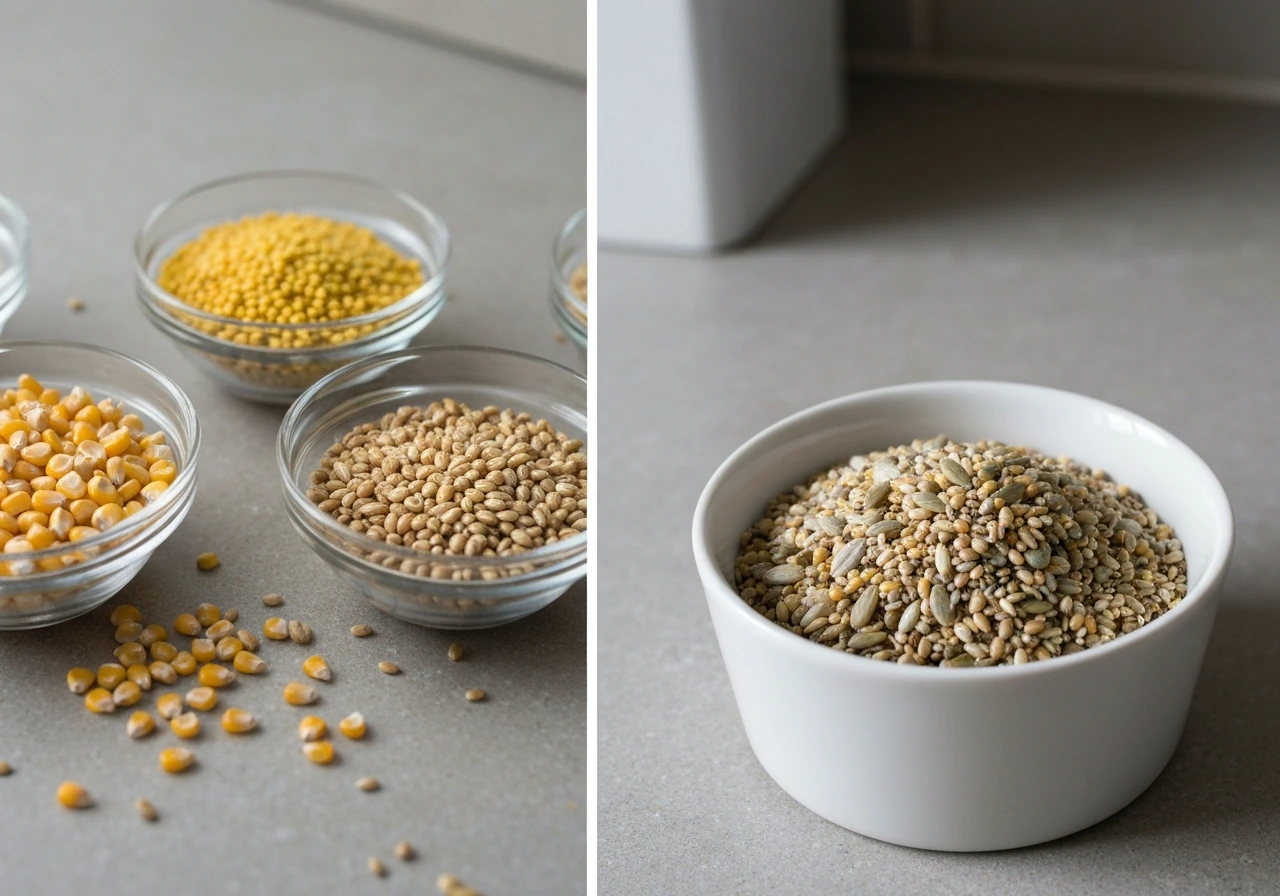
Some seeds are essentially grackle magnets. If you're currently offering any of these, switching away from them is your fastest lever.
- Cracked corn: grackles love it, and it's one of the first things to draw large flocks. Remove it completely.
- Milo (sorghum): cheap filler seed that grackles readily eat off the ground. Most quality songbirds ignore it anyway, so dropping it costs you nothing.
- Mixed seed with lots of filler: generic wild bird mixes often bulk up with milo, oats, and millet, all of which grackles will eat. Read the label and avoid mixes heavy in those ingredients.
- Black oil sunflower in open trays: grackles eat sunflower enthusiastically. It's the most popular feeder seed overall, so you can't always eliminate it, but serving it in the wrong feeder format makes the problem much worse (more on that below).
- Suet in open cage feeders: grackles and starlings will drain a standard suet cage fast. If suet is part of your setup, switch to a tail-prop or upside-down suet feeder, which favors clinging birds like woodpeckers and discourages flat-footed bigger birds.
Seeds and foods that pull other birds in without rolling out the mat for grackles
The strategy here is to offer things that your target birds (finches, chickadees, nuthatches, cardinals, titmice) actually want, but that grackles find less appealing or can't easily access.
| Seed / Food | Who it attracts | Why grackles tend to skip it |
|---|---|---|
| Nyjer (thistle) | Goldfinches, siskins, redpolls, house finches | Requires a finch feeder with tiny ports grackles can't use; low caloric payoff per seed for a large bird |
| Safflower seed | Cardinals, chickadees, doves, house finches | Bitter taste and hard shell; grackles can eat it but generally prefer easier options first |
| Whole peanuts in the shell | Jays, woodpeckers, titmice | Hard to crack for many birds; grackles can manage but a clamp-style peanut feeder limits access |
| Shelled peanut pieces in a mesh feeder | Woodpeckers, nuthatches, chickadees | Clinging mesh feeder design is harder for grackles to use stably |
| Mealworms (dried or live) | Bluebirds, robins, wrens, warblers | Requires a specific dish feeder; grackles will eat them but they go fast and a deep dish limits access |
Safflower deserves a closer look. It's often cited as a grackle deterrent, and while grackles can eat it, they tend to move on when it's the only offering and other feeders nearby have better options. It's most effective when you've already removed cracked corn and milo from your setup. Cardinals in particular take to safflower quickly, so it's a good primary seed if cardinals are one of your target species.
Nyjer is the strongest structural deterrent because it genuinely requires a specialized feeder. A tube feeder with small ports, or a finch sock, physically prevents grackles from accessing it efficiently. This is one case where the seed choice and the feeder design work together almost automatically.
Feeder changes that make a bigger difference than seed alone
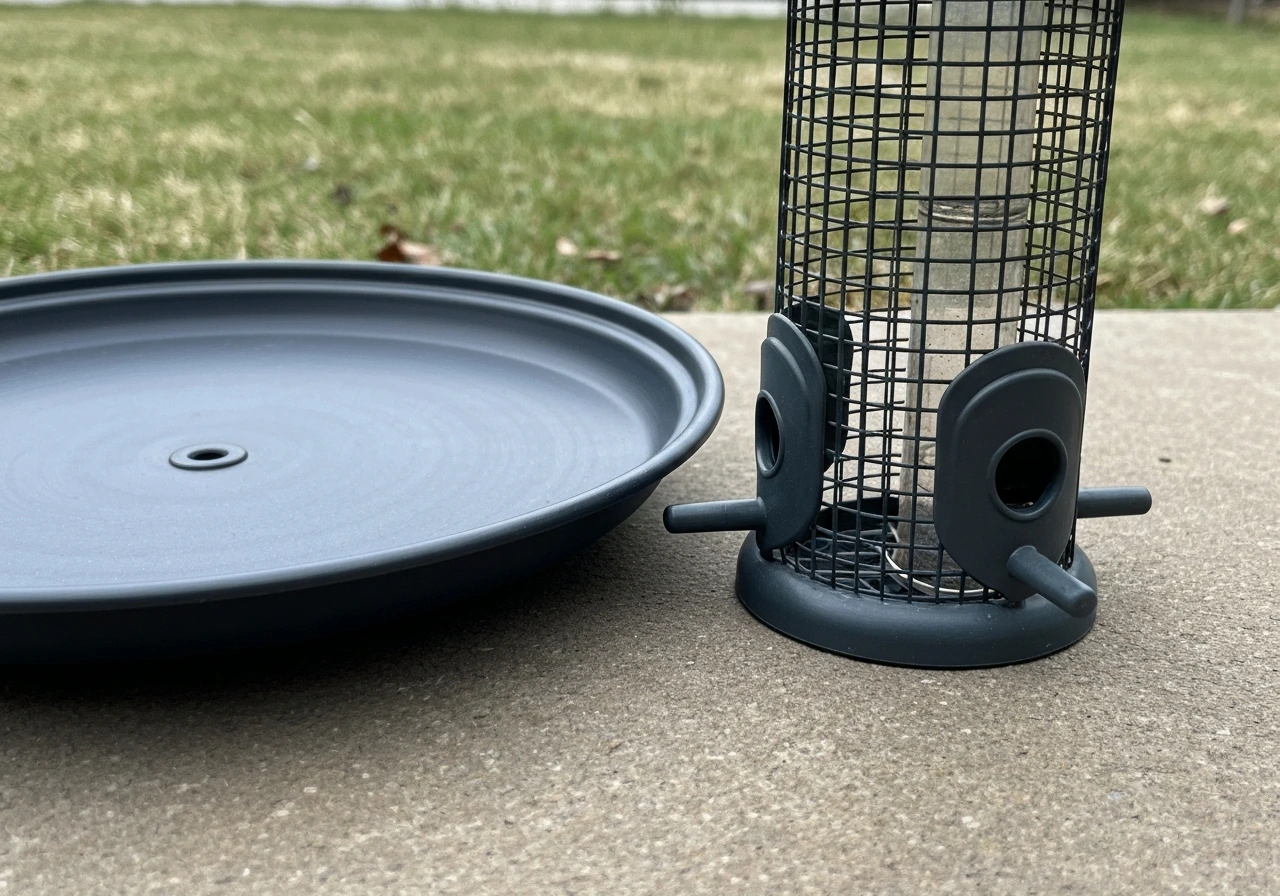
Since grackles prefer ground feeding and flat open platforms, the feeder format is often where you get the most gain.
Switch feeder styles
- Tube feeders with short or no perches: grackles are large birds and struggle to balance on a short perch. A tube feeder with perches under 2 inches long heavily favors smaller birds like chickadees and finches.
- Remove tray and platform feeders temporarily: open trays are ideal grackle dining tables. Pull them while you reset your seed mix, then reintroduce one only if your target birds specifically need it (e.g., for larger species like cardinals or jays).
- Upside-down or clinging-only suet feeders: woodpeckers can handle them easily; grackles generally won't bother.
- Weight-sensitive or caged feeders: some feeders close feeding ports when a bird above a set weight lands on them. Grackles typically trigger these closures. These feeders work well but cost more upfront.
- Baffles above and below hanging feeders: a baffle doesn't stop grackles from landing on the feeder itself, but it prevents them from perching on the pole and hopping down, and it blocks squirrels that also attract opportunistic birds to spillage.
Placement adjustments
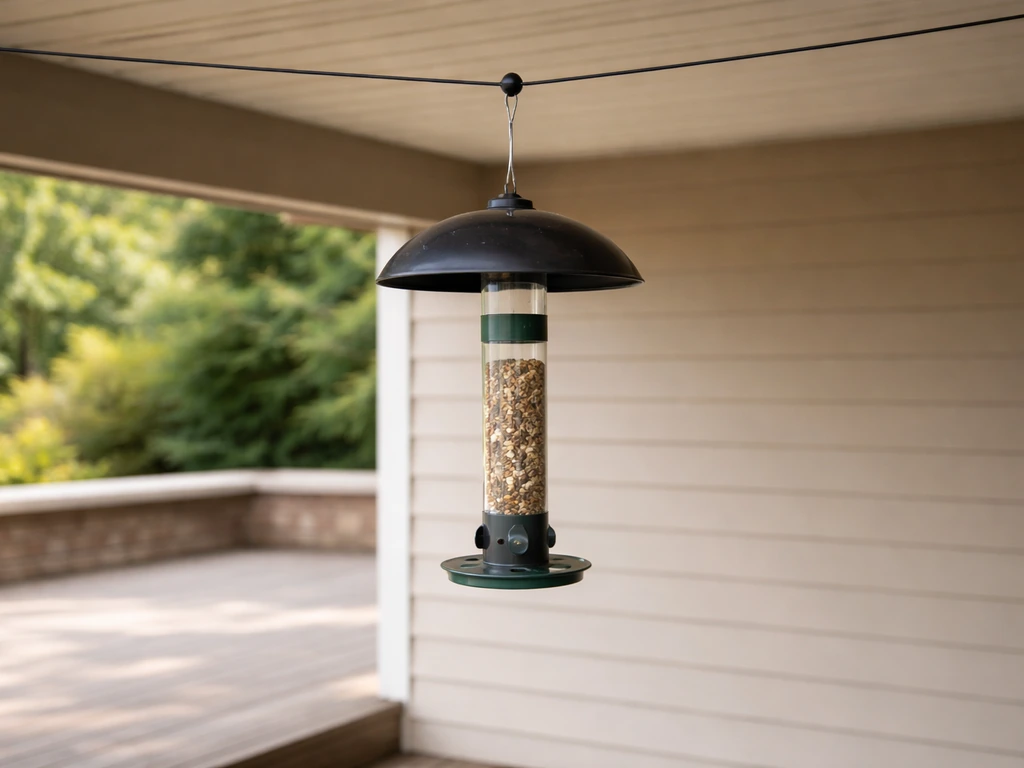
Hang feeders away from large flat surfaces like decks and patio tables that grackles use as staging areas. Give yourself at least 5 to 6 feet of clearance below the feeder so there's no easy ground-level access. If you're in a region with large grackle flocks (common across the southern and midwestern U.S. from March through October), consider bringing feeders in during peak morning hours (7 to 10 a.m.) when grackle activity is highest, then putting them back out. It sounds inconvenient but it genuinely reduces flock visits within a week or two.
Your plan for today: how to start testing new choices
- Pull all cracked corn and milo from your feeders right now. Bag it up and store or dispose of it. Don't leave it out as a 'use it up' phase — that just keeps the grackles coming.
- Empty your current mixed seed. Check the label; if the mix is heavy in corn, milo, or oats, don't refill with it.
- Clean each feeder before refilling. Rinse with a 9: 1 water-to-bleach solution, rinse again with plain water, and let it dry completely before adding new seed (at least 30 minutes in sun or 2 hours in shade).
- Refill with one of the preferred alternatives: safflower for a general feeder, nyjer for a finch feeder if you have one. If you only have one feeder, start with safflower.
- If you have a tray or platform feeder, remove it or cover it for 10 to 14 days while the new seed draws in your target birds.
- Note the date and roughly how many grackles visited on day 1. You'll use this as your baseline.
- Check again at the same time of day after 5 days and after 14 days. Compare visit frequency and flock size. Most people see a meaningful drop within one to two weeks.
Seed storage, wet seed, and cleanup (this matters more than people think)
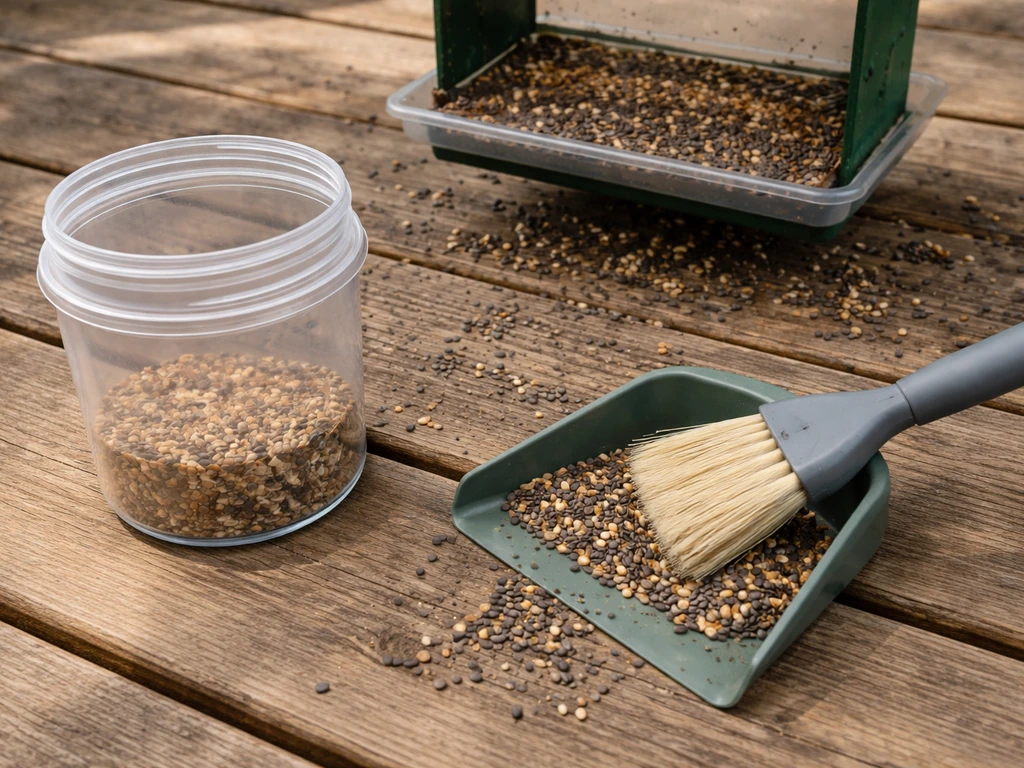
Spoiled and wet seed is one of the biggest hidden reasons grackles keep showing up. Rotting seed on the ground or in a tray is an easy food source that doesn't require much effort, exactly the kind of foraging grackles prefer. Fixing your seed hygiene is part of the pest management strategy, not just a health issue.
Storing your seed correctly
- Store seed in a hard-sided, airtight metal or thick plastic container. Soft bags left open in a garage invite moisture, mold, and rodents.
- Keep seed in a cool, dry location. Heat and humidity accelerate mold growth, particularly in safflower and nyjer, which have higher oil content.
- Use seed within 4 to 6 weeks of purchase for best quality. Nyjer in particular goes stale quickly. If finches are ignoring your feeder, stale nyjer is often the reason.
- Don't mix old seed with new. If you're refilling, dump the remaining old seed, clean the feeder, then add fresh seed.
What to do when seed gets wet or starts to sprout
If seed in your feeder gets wet from rain or high humidity, it can develop mold or bacteria within 24 to 48 hours in warm weather. Do not try to dry it out and reuse it. Empty the feeder into a trash bag, dispose of the wet seed, clean the feeder with the 9:1 bleach solution, rinse thoroughly, let it dry completely, and refill with fresh seed. Sprouted seed on the ground under your feeder should be raked up and bagged. Left alone, sprouting seed mat creates a persistent ground-level food source that draws grackles, sparrows, and other ground foragers constantly. If you are trying to keep sparrows coming, use sparrow-friendly seed like small black oil sunflower and millet what bird seed do sparrows eat.
Managing spillage and ground debris
Audubon recommends disposing of uneaten feeder seed rather than dumping it on the ground. Raking out the area under your feeders every week or two removes hulls, old seed, and droppings that attract pests and promote mold. This is especially important in spring and summer when warm temperatures speed up decomposition. Project FeederWatch recommends cleaning seed feeders about every two weeks, and more often during warm or damp stretches. Project FeederWatch also tracks specific food types for birds, including peanuts (shelled or in the shell), on its food-type pages blank" rel="noopener noreferrer">Project FeederWatch recommends cleaning seed feeders about every two weeks, and more often during warm or damp stretches.. Cleaning the ground zone is just as important as cleaning the feeder itself.
How to tell if your changes are actually working
The easiest method is a simple tally. Pick one 15 to 20 minute observation window per day, ideally at the same time each morning. Count how many grackles you see at or near your feeders during that window. Write it down. Do the same for your target birds. After 14 days of your new seed and feeder setup, compare. You're not looking for zero grackles. You're looking for a meaningful reduction in flock size, shorter visit duration, and more of your target species at the feeders.
If grackle numbers haven't dropped after two weeks, run through this checklist before assuming the seed isn't working: If you’re still getting plenty of visits, use the guidance in this article on what bird seed do crows not like to make smarter swaps.
- Is there still spilled or sprouted seed on the ground under the feeder? Clean it up and rake the area.
- Are neighbors offering cracked corn or open tray feeders nearby? You may be getting overflow traffic from adjacent yards. Feeder design changes (caged or weight-sensitive feeders) help more in this case.
- Are you in a high-density grackle area during spring or fall migration? Seasonal flock pressure is temporary, and sometimes the best move is to take feeders down for two to three weeks until the migration wave passes.
- Is your feeder still offering a platform or tray? If yes, remove it.
- Have you switched the suet feeder to an upside-down style? If not, that's likely where the grackles are still getting an easy meal.
Fine-tuning is a normal part of this process. What works well in a suburban backyard in Ohio may need adjusting in coastal Texas where grackle populations are larger and more persistent. The seed swaps and feeder design changes are the same, but the timeline for results may be longer in areas with high year-round grackle density. If starlings are also a problem alongside grackles, the feeder design changes overlap heavily since both species share a preference for open, accessible feeders and ground foraging. The same principles apply to other persistent large feeder birds like pigeons, though the specific seed preferences differ slightly. If you also want to discourage pigeons, look into what bird seed do pigeons not eat and swap those items out.
FAQ
If grackles don’t like nyjer, why do they still show up at my finch feeder?
Nyjer usually reduces grackles when the feeder has truly small access ports, but grackles can still visit if they can reach the opening or if seed spills below the feeder. Check for tray overflow, adjust to prevent dropping, and raise or shield the feeder so there is no easy ground feeding zone within 5 to 6 feet.
Do I need to remove all sunflower seed to keep grackles away?
No, but you do need to manage what is easiest for them to grab. Sunflower oil or hulled options may still be acceptable for your target birds, but reduce or remove the specific high-access items (like cracked corn, milo, or in-shell peanuts) and prioritize seeds that are harder for grackles to exploit in your feeder format.
How long should I wait before deciding the seed change is not working?
Give it about two weeks using consistent daily observation. A drop in grackle visit duration and frequency counts as progress even if you still see some individuals. If numbers do not change, recheck feeder access, spilled seed, and whether wet or sprouted seed is creating a persistent ground buffet.
What’s the most common reason “grackle-deterrent seed” seems to fail?
Spilled, wet, or sprouted seed under the feeder. Grackles shift to ground foraging quickly, and rotting seed becomes an easy, low-effort food source. Rake and bag the ground zone weekly or more often in damp weather, then clean the feeder on a similar schedule.
Can I mix safflower with other seeds, or should I use it alone?
Mixing can work, but safflower tends to perform best when it is the main offering and the competing items (especially cracked corn and milo) are removed. If you still include those preferred grains, grackles may ignore safflower and focus on the easier food.
Do finch socks and tube feeders also help for cardinals, or is it too restrictive?
They help mainly by limiting access, so cardinals may not use the narrow-port setup as readily as they use open platforms. If cardinals are a priority, consider using feeder styles that cardinals can access while still preventing large birds from efficiently reaching the seed, or separate feeder locations by distance from grackle staging areas.
Will bringing feeders in during morning peak hours harm other birds?
It can, so do it strategically. The goal is to reduce grackle dominance during their busiest window, typically 7 to 10 a.m. If your target species are active at different times, consider shortening the indoor window or staggering feeders so some options remain available for smaller birds.
Is bleach cleaning safe for all feeders and bird species?
It can be safe when used correctly and thoroughly rinsed, but the key is complete removal of residue. Use the recommended dilution, rinse well, and let the feeder dry fully before refilling. If the feeder is coated or has rubber components, verify it can handle bleach and avoid soaking materials that degrade.
What should I do with spilled hulls and old seed when the ground zone is messy?
Rake up hulls, old seed, and droppings, then bag and remove them rather than leaving them in place. This reduces both immediate food availability and the buildup of organic material that promotes mold and odors that attract persistent ground foragers.
What if I’m trying to reduce grackles but keep sparrows coming?
Separate the strategy. Use sparrow-friendly seed in appropriate feeders and avoid leaving a ground-level seed patch under grackle-priority setups. Since grackles and sparrows both use accessible ground zones, consistent ground cleanup is what prevents grackles from turning your sparrow system into a shared buffet.
Next Articles
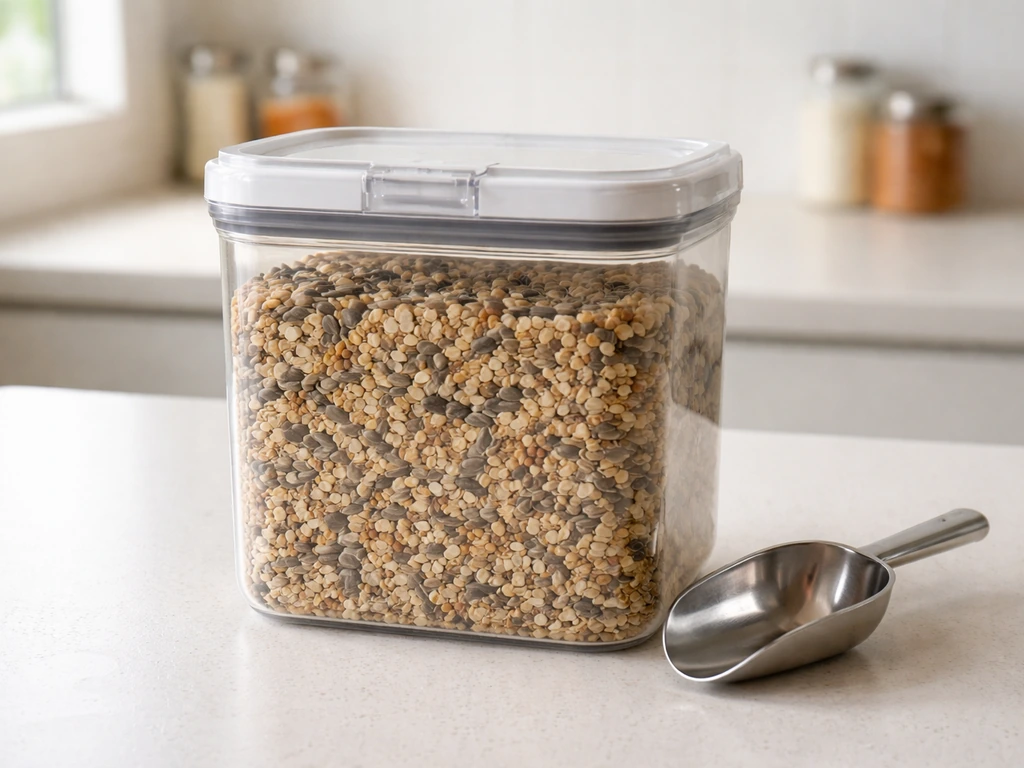
How to Make Bird Seed Last Longer: Storage and Fixes
Learn how to make bird seed last longer with proper storage, humidity control, pest prevention, and fixing wet or moldy
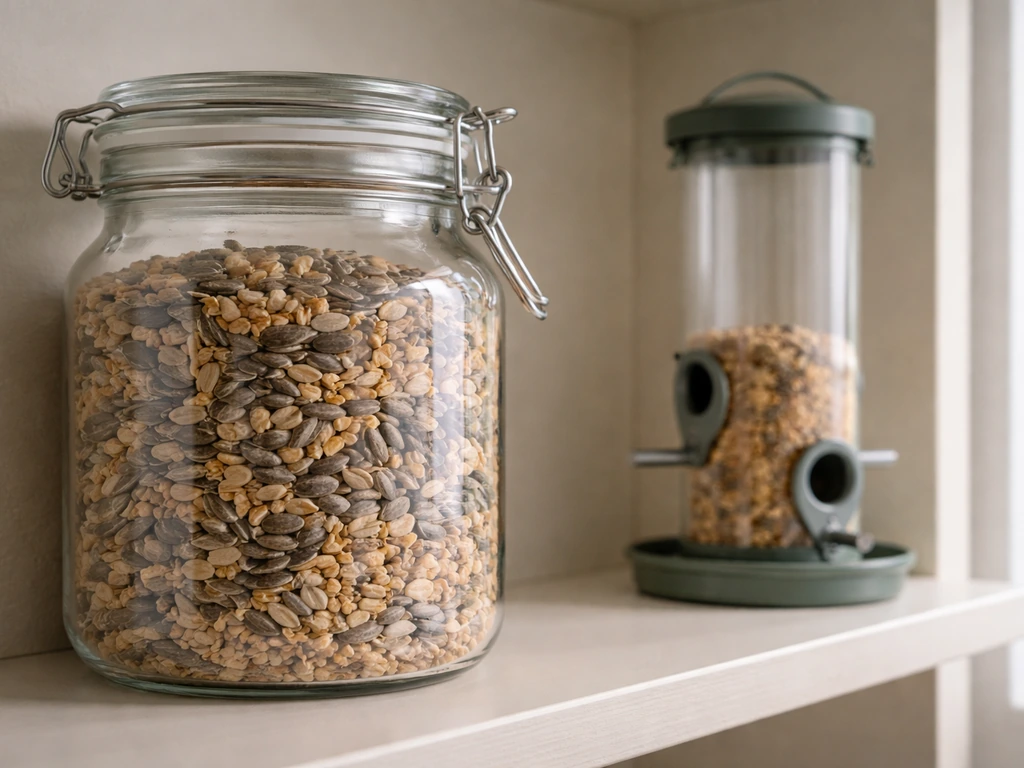
How to Keep Bird Seed Fresh and Stop It From Molding
Stop birdseed mold with smart storage: dry handling, right container, moisture control, bag cleanup, and feeder sanitizi
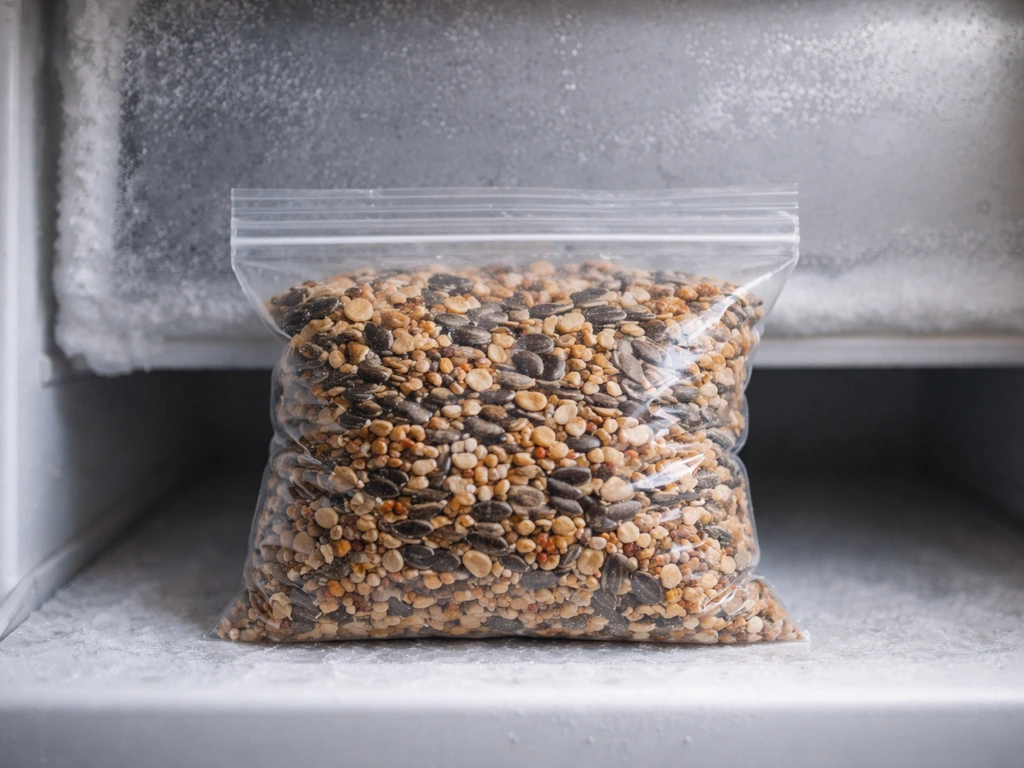
How Long to Freeze Bird Seed to Kill Bugs: Time Guide
Exact freezing time and safe steps to kill beetles, moths and weevils in bird seed, plus thaw checks and storage.