Unopened bird seed typically lasts 6 to 12 months from the purchase date when stored properly in cool, dry conditions. Some seeds, like plain sunflower or safflower, hold up closer to the 12-month end of that range, while oil-rich mixes and nyjer (thistle) seed degrade faster, often going stale or rancid within 4 to 6 months even in an unopened bag. The key word is 'properly': a bag that sat in a hot garage or damp shed all summer can go bad well before those timelines, even if it was never opened.
How Long Does Unopened Bird Seed Last? Shelf Life Guide
Maya Collins
14 Jun 2026
Shelf life of unopened bird seed by type
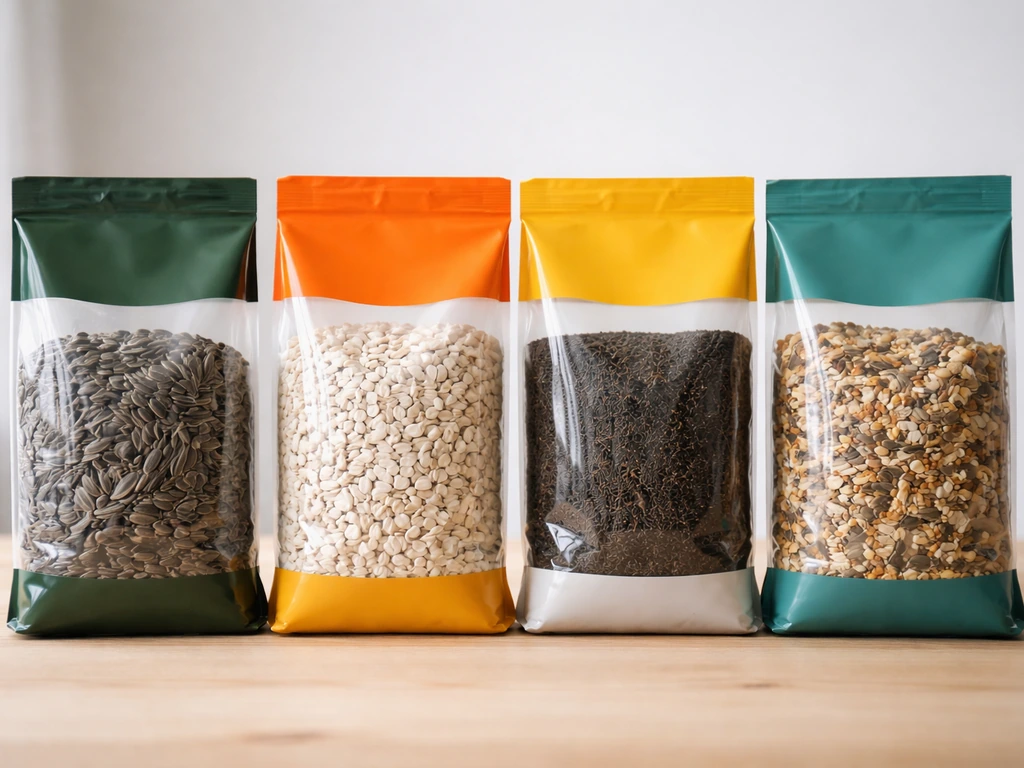
Not all bird seed ages the same way. The fat content, moisture level at packaging, and seed coat thickness all affect how long a bag stays fresh. Here's a practical breakdown to use as your starting point.
| Seed Type | Typical Shelf Life (Unopened) | Main Degradation Risk |
|---|---|---|
| Black-oil sunflower | Up to 12 months | Rancidity from oils, mold in humid storage |
| Striped sunflower | Up to 12 months | Slower oil degradation than black-oil |
| Safflower | 10 to 12 months | Relatively stable; dislikes humidity |
| White millet | Up to 12 months | Moisture and insect contamination |
| Nyjer (thistle) | 4 to 6 months | High oil content goes rancid quickly |
| Peanuts (in shell or shelled) | 4 to 6 months | High aflatoxin and mold risk, especially shelled |
| Mixed seed blends | 6 to 12 months | Shortest-lived ingredient sets the limit |
| Suet or fat-based seed cakes | 6 months (refrigerated longer) | Rancidity; melts or molds in heat/humidity |
Blended mixes are only as fresh as their most vulnerable ingredient. If a mix contains nyjer or shelled peanuts alongside sunflower, use the shorter 4 to 6 month window as your guide. Manufacturers sometimes print a 'best by' date on the bag, which is worth checking, but that date assumes ideal storage. If the bag has been sitting in less-than-ideal conditions, treat those timelines as an upper ceiling, not a guarantee.
What 'going bad' actually looks like in an unopened bag
One of the biggest misconceptions is that an unbroken bag means safe seed. That's not always true. Packaging can have microscopic punctures, thin seams can allow humidity in, and insects can infiltrate through weak spots or even through the seed itself before packaging. Here's what to watch for before you ever put seed in a feeder.
Mold and fungal growth
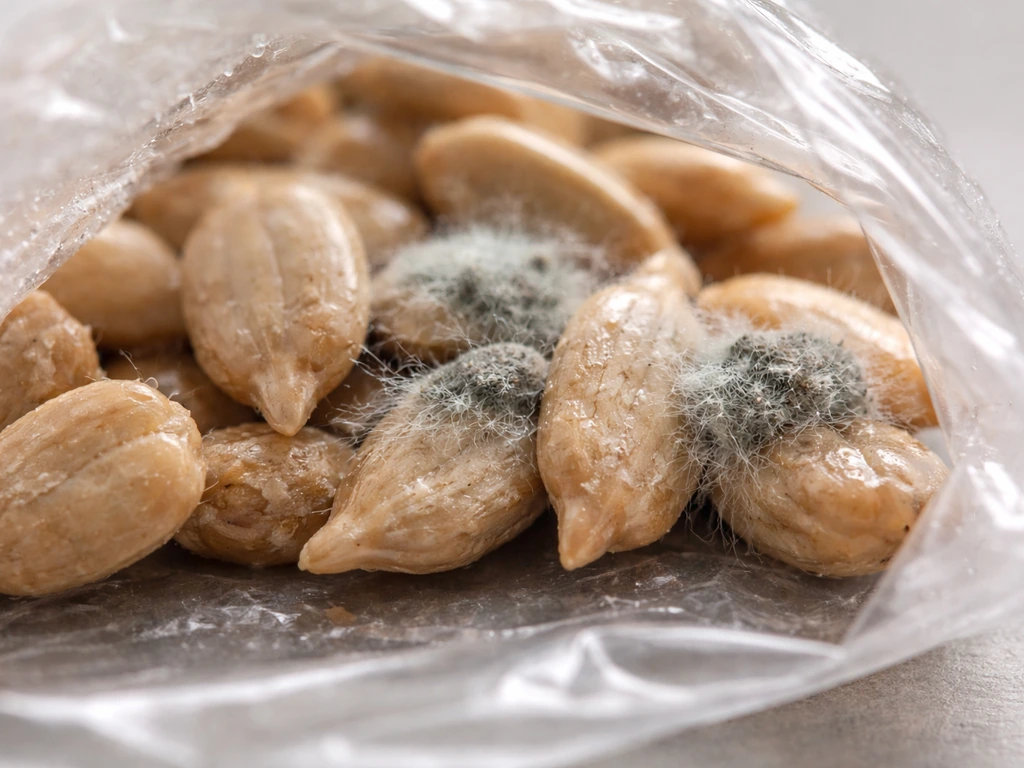
Mold is the most serious problem. Even inside a bag, if moisture has entered, you can get Aspergillus and other mold species growing on the seed. Cornell Wildlife Health Lab identifies Aspergillus as a direct cause of aspergillosis in birds, a serious fungal respiratory disease. The Missouri Department of Conservation flags it as a significant health risk for wild birds at feeders. If you open a bag and see any gray, white, green, or black fuzzy patches, powdery coatings, or clumping from moisture, that batch is done. Don't try to pick out the moldy parts.
Insects inside the bag
Grain weevils, Indian meal moths, and seed beetles can infest bird seed before it ever reaches your yard. If you feel or see movement inside the bag, find webbing or silky threads when you open it, or notice small holes chewed in the packaging, you have an insect infestation. Heavily infested seed should be discarded, both because the nutritional value is compromised and because you'll be importing those insects into your yard or storage area.
Rancidity and staleness
Seed that has gone rancid usually smells off, somewhere between musty and sharp or sour. Fresh sunflower seed has a mild, almost nutty smell. Fresh nyjer has almost no odor. If something smells wrong when you cut the bag open, trust your nose. Rancid seed won't immediately kill birds, but it loses nutritional value and birds will often reject it, especially finches and small songbirds with sensitive palates. Stale seed that just smells flat and dull rather than actively bad is a gray area, but it's worth considering whether you're giving birds something worth eating.
Clumping and caking
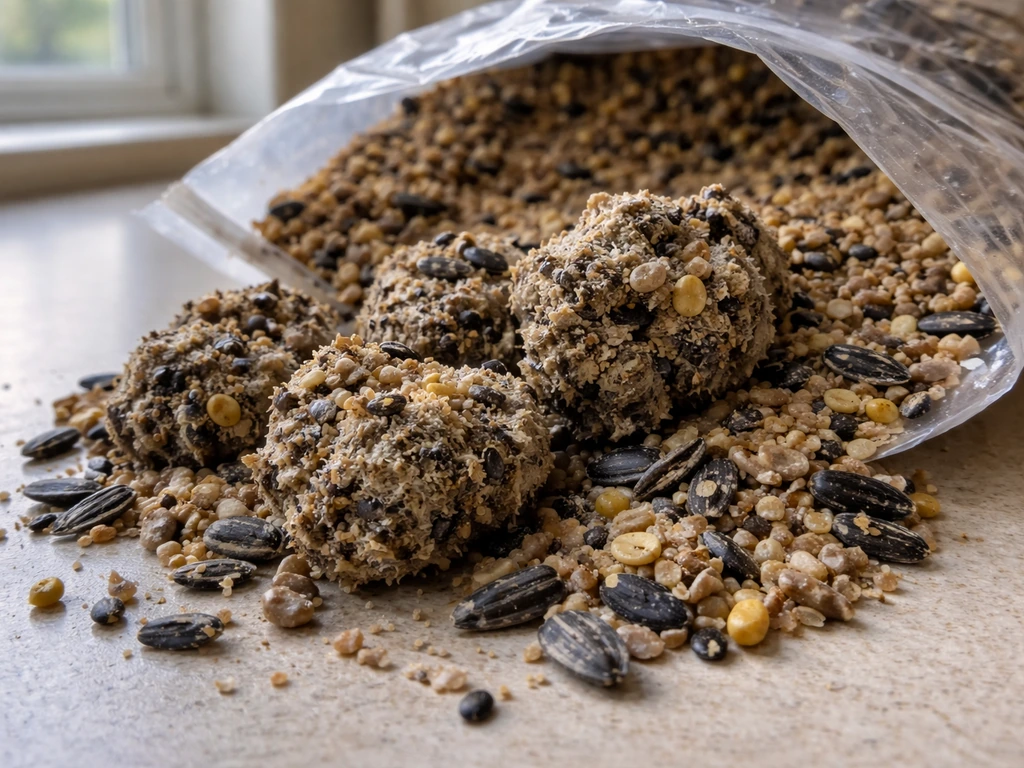
If seed pours out of the bag in clumps, chunks, or caked masses rather than loose individual seeds, moisture got in at some point. This is a mold risk even if you can't see visible growth yet. Caked seed should be discarded.
Why storage conditions matter more than the 'best by' date
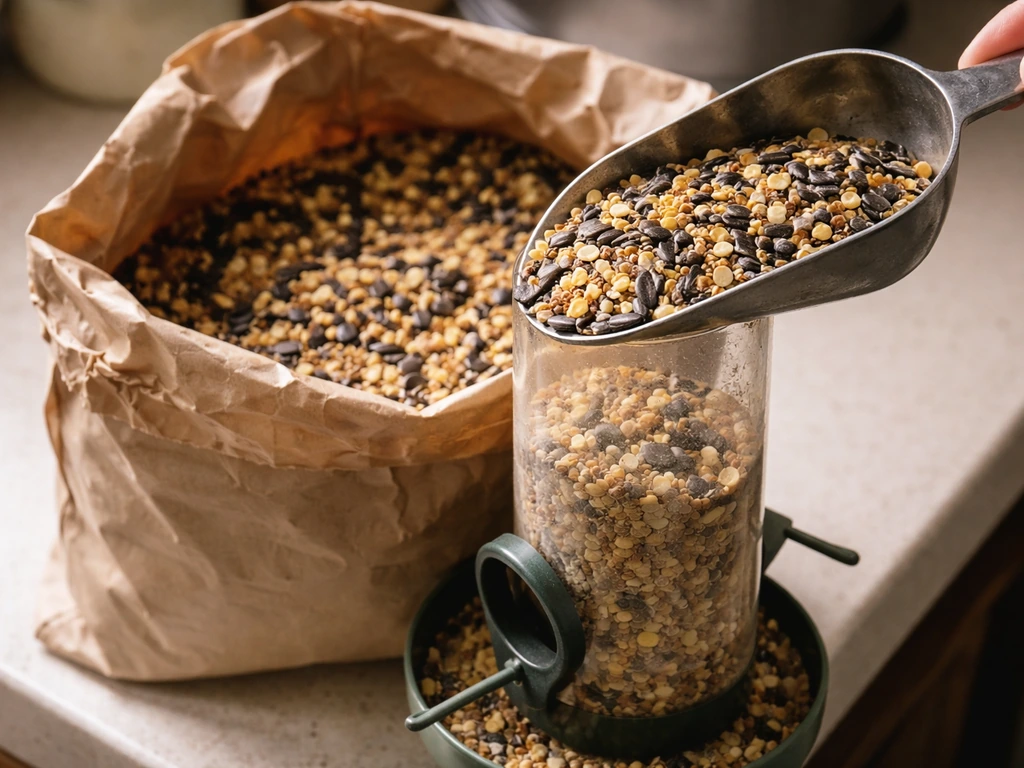
Temperature and humidity are the two biggest factors in how fast bird seed degrades. The FDA notes that mold growth during storage is strongly influenced by temperature, humidity, and moisture, which is why moisture in stored seed is a concern for animal health mold growth is strongly influenced by temperature, humidity, and moisture during storage. The FDA notes that mold growth is strongly influenced by temperature, humidity, and moisture during storage, which explains why a bag that spent the summer in a hot shed can go bad in 2 to 3 months while the same bag kept in a climate-controlled basement might still be good at 10 months.
- Heat above 80°F (27°C) accelerates oil oxidation (rancidity) and encourages mold growth.
- Relative humidity above 60% is the main driver of fungal contamination in stored grain and seed.
- Direct sunlight degrades oils and heats the bag, even through packaging.
- Concrete floors and uninsulated walls create condensation that wicks moisture into paper or thin plastic bags.
- Temperature swings, like a garage that heats up during the day and cools at night, cause condensation inside the bag.
- Pest pressure is higher in attached garages, barns, and outdoor sheds, meaning damaged packaging is more likely.
Penn State Extension advises storing bird seed in a cool, dry place specifically to prevent the mold and moisture conditions that make seed hazardous. If you're in a humid climate (the Gulf Coast, Pacific Northwest, or anywhere that gets hot summers with high humidity), treat those shelf life timelines as shorter by at least 20 to 30 percent unless you have genuinely climate-controlled storage.
How to check if your unopened bag is still safe today
Run through this quick checklist before you open or use any bag of seed you're unsure about. This takes about two minutes and can save your birds from a contaminated batch.
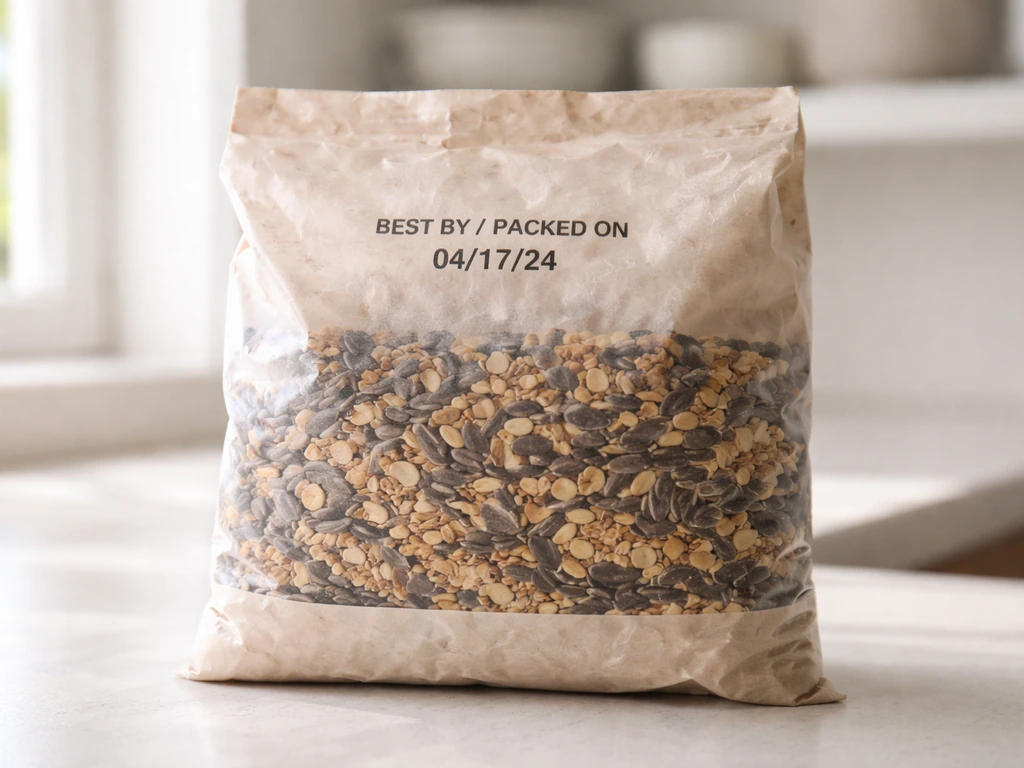
- Check the date: Look for a 'best by' or 'packed on' date. If it's more than 12 months old, inspect extra carefully regardless of storage conditions.
- Feel the bag: Squeeze it gently. It should feel loose and grainy. If it feels clumped, hardened, or has wet spots, open and inspect before using.
- Look at the packaging: Check for holes, chew marks, insect entry points, staining from moisture, or visible mold on the outside near seams.
- Smell before you open: If the bag has a sour, musty, or sharp odor even through the packaging, that's a warning sign.
- Open and pour a small amount: Fresh seed looks clean, dry, and pours freely. Look for webbing, live or dead insects, gray or white powdery coating, or any discoloration.
- Smell the opened seed directly: It should smell mild or neutral. Any musty, sour, or rancid smell is a reason to discard.
- Check for clumping in the bag: Pour out a cup or so. If seeds are stuck together, moisture has been inside the bag.
If a bag passes all seven checks, it's almost certainly fine to use. If it fails any one of the last four (smell, appearance, insects, clumping), err on the side of discarding, especially if you have peanuts, nyjer, or any seed marketed specifically for finches or small songbirds, which tend to be more sensitive to seed quality than larger birds like pigeons or doves.
Best storage practices to keep seed fresh as long as possible
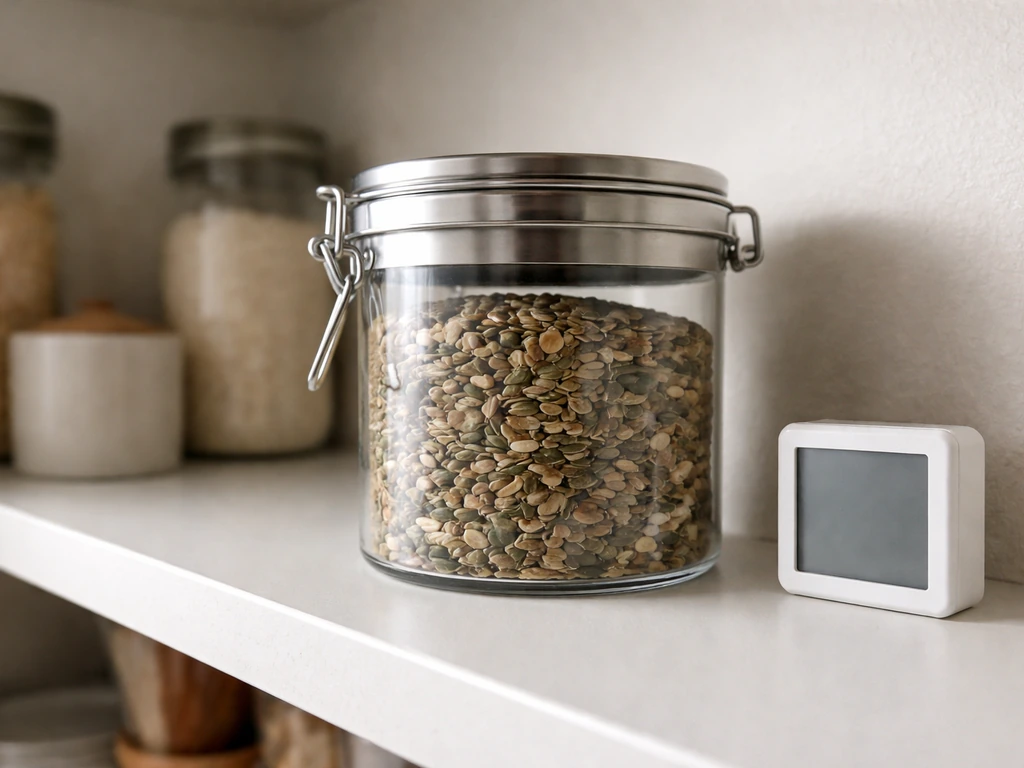
Even if you're buying seed in bulk to save money, how you store it determines whether you've actually saved anything. Here's what works.
Container and location
- Transfer seed into airtight, food-grade metal or hard plastic containers after opening. Metal (like galvanized steel trash cans with locking lids) is best for larger quantities because it blocks rodents.
- Keep containers off concrete floors, which transfer moisture. Use a wooden pallet, shelf, or rubber mat.
- Store in the coolest, driest space you have: a climate-controlled basement or a shaded indoor area is ideal.
- Avoid garages, especially attached ones, unless they are climate-controlled. Temperature swings and proximity to vehicles (exhaust fumes) make garages a poor choice.
- For unopened bags you plan to store for more than 2 to 3 months, place the original bag inside a sealed container as an extra moisture barrier.
- Buy in quantities you'll use within 4 to 6 weeks during warm months and 2 to 3 months during cool, dry months. This is the most practical way to avoid degradation.
Pest prevention
- Inspect incoming bags at the store or upon delivery for any damage before you buy or accept them.
- Freeze new seed for 48 to 72 hours before long-term storage to kill any insect eggs already present.
- Do not store bird seed near pet food, grain, or other attractants that increase overall pest pressure.
- Check stored bags and containers monthly for signs of insects or moisture.
What to do if the seed is spoiled
If you've confirmed the seed has mold, a heavy insect infestation, or a clearly off smell, don't put it out for birds. Penn State Extension is direct on this: moldy seed should not be used. The Aspergillus molds that grow on stored grain can produce mycotoxins including aflatoxins, which the FDA identifies as dangerous to animals that ingest contaminated material. Putting moldy seed in a feeder doesn't just fail to help birds, it can actively harm them.
Safe disposal
- Seal the contaminated seed in a heavy-duty garbage bag before disposal to contain mold spores and prevent pests from spreading the contaminated material.
- Do not compost moldy bird seed. Mycotoxins persist and can spread to other garden areas.
- Dispose of it in the regular trash, not in a bin that wildlife can access.
- Wash the container that held the seed with hot, soapy water, rinse thoroughly, and allow it to dry completely before refilling.
Feeder cleanup after suspected contamination
If any suspect seed made it into a feeder before you caught the problem, clean the feeder before refilling. Use a 9:1 water-to-bleach solution, scrub all surfaces including perches and ports, rinse well, and let the feeder dry completely in the sun before adding fresh seed. This is the same feeder hygiene protocol recommended to reduce general disease transmission at feeders.
Feeding guidance when you're not 100% sure about seed quality
If seed is borderline (no obvious mold, but older than ideal or stored in less-than-perfect conditions), your safest move is to use it in very small quantities and watch what happens at the feeder. Birds are often better judges of seed quality than we are. If birds that normally flock to your feeder are ignoring the seed or pecking at it half-heartedly, that's a real signal.
Be especially cautious about seed quality if you're feeding species that are more vulnerable to mold-related illness. Smaller songbirds (finches, chickadees, nuthatches) and birds that spend a lot of time on the ground under feeders picking up fallen seed face more sustained exposure than larger birds that eat and move on. Ground-feeding birds like doves and juncos are particularly at risk from seed that has fallen and gotten damp on the ground.
It's also worth noting that spoiled or low-quality seed can attract the wrong visitors. Rancid or insect-infested seed draws rodents, raccoons, and squirrels faster than fresh seed does. If you've noticed unusual pest activity around a feeder, the seed quality is worth checking alongside the feeder placement.
If you're unsure whether a specific batch is safe, the question connects to a broader one: whether old bird seed is generally safe for birds to eat, and the honest answer is that it depends on why it's old and how it was stored. Seed that is simply past its best-by date but was stored perfectly may still be fine. If you're trying to figure out how long do bird seed ornaments last, treat the best-by date as just a baseline, since storage conditions can shorten the usable window. Seed that was stored badly is a different story, regardless of its age on paper.
Your next steps right now
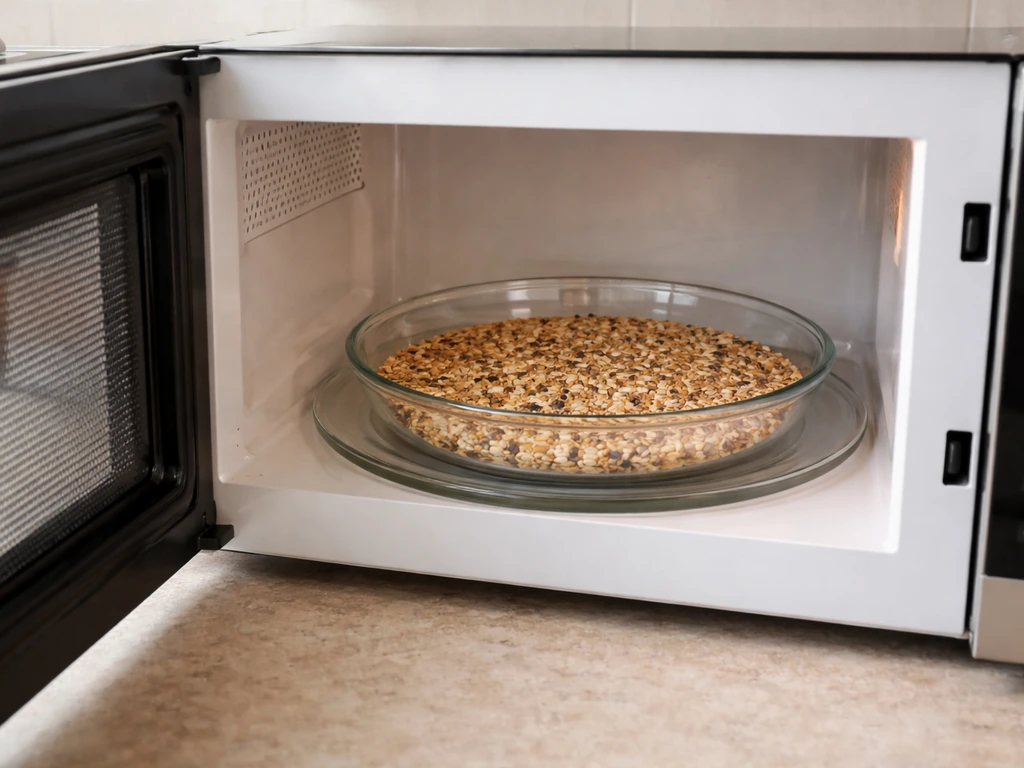
Here's what to do today if you're standing in front of a bag of seed you're not sure about. If you need to microwave bird seed, only do it briefly to warm it through and avoid scorching, since times vary by seed type and power settings.
- Run the 7-point inspection checklist above before opening or using the bag.
- If anything fails (off smell, clumping, insects, visible mold), seal it and trash it. Do not put it out for birds.
- If it passes, transfer it to an airtight, hard-sided container and note the date.
- Move your seed storage to the coolest, driest location you have access to.
- Commit to buying in smaller quantities: enough for 4 to 6 weeks in summer, 2 to 3 months in winter.
- Clean your feeders on a regular schedule (every 2 weeks minimum, weekly in hot or wet weather) regardless of seed quality, to prevent buildup that can contaminate fresh seed.
- If you're putting out seed for species like finches or small backyard songbirds, prioritize freshness. These birds notice and avoid low-quality seed more readily than larger, less selective species.
FAQ
How long does unopened bird seed last if the bag stayed in a hot garage or near a humid wall?
Unopened seed can still go bad early, because the bag can pick up humidity through weak seams or microscopic punctures. If the seed was stored in a hot garage, damp shed, or near a wall that sweats in winter, you should use a shorter window than the standard range even if the bag has never been opened.
Does a seed mix last as long as the longest-lasting ingredient in it?
Yes, because “seed last” and “bag quality” are different. Bulking out a bag with older, oil-rich ingredients, or a mix that includes nyjer or shelled nuts, can reduce freshness before the rest of the mix does. When a blend contains a faster-degrading component, follow the shortest component window rather than the longest.
Can I just scoop out a small moldy section of an unopened bag and use the rest?
For health reasons, discard the whole bag if you find visible mold, fuzzy patches, clumping/caking from moisture, or a strong rancid smell. Picking out a small moldy section is not reliable because mold, moisture, and potential toxins can be unevenly distributed throughout the bag.
What should I do if I suspect unopened seed has weevils or moths but I do not see heavy damage?
Insect presence matters even if the seed looks fine. If you see webbing, silky threads, movement, small holes in the packaging, or bugs at the opening, treat it as infested and discard heavily affected seed. If it’s only a few dead insects and no webbing, you may still want to rinse and freeze the remaining seed, but if you notice active infestation, don’t use it.
Does the printed best-by date mean the seed is unsafe after that day?
“Best by” is typically based on ideal conditions and mainly indicates best quality, not an instant safety cutoff. If the bag was kept cool and dry, it may still be acceptable shortly after that date, but if stored in heat or humidity, age past best by should be treated as a higher risk window rather than a guarantee.
How can I safely test borderline seed without risking bird health?
Using slightly older seed is risk-reducing only if you detect no mold, no insect activity, no caking, and no off smell. For borderline seed, start with small amounts, monitor whether birds accept it, and stop immediately if birds avoid it or you see dampness accumulating in the feeder.
Why is seed quality more important for ground-feeding birds like doves and juncos?
Ground-feeding birds are higher risk because fallen seed gets damp and can foster mold even if the rest of your seed is fine. If you feed ground foragers, consider shorter storage assumptions and more frequent feeder and tray checks, and remove damp refuse promptly.
Will freezing unopened bird seed make it last longer or make mold-safe?
Freezing can help kill existing insects in seed, but it does not fix mold that has already started from moisture. If the bag smells off, shows clumps, or has visible mold, do not rely on freezing, discard instead.
How can I tell if the seed went rancid versus just getting stale?
Oil-rich mixes and seeds with higher fat content can turn rancid faster, and rancidity is more likely to make birds reject the seed even if it is not visibly moldy. If the smell is sharp or sour, treat that as a discard signal rather than a “stale but fine” situation.
Does opening the bag change how long bird seed lasts, even if it seems fresh?
Unopened bags that are otherwise fine can become a problem after opening because moisture and pests can enter during refilling and storage near feeders. Keep the bag tightly sealed, store it indoors in a dry spot, and consider transferring to an airtight container for long-term holding.
Next Article
How Long to Microwave Bird Seed Safely and Effectively
Microwave bird seed safely with exact time and power, safety steps, and pest prevention tips for mold and wet seed.