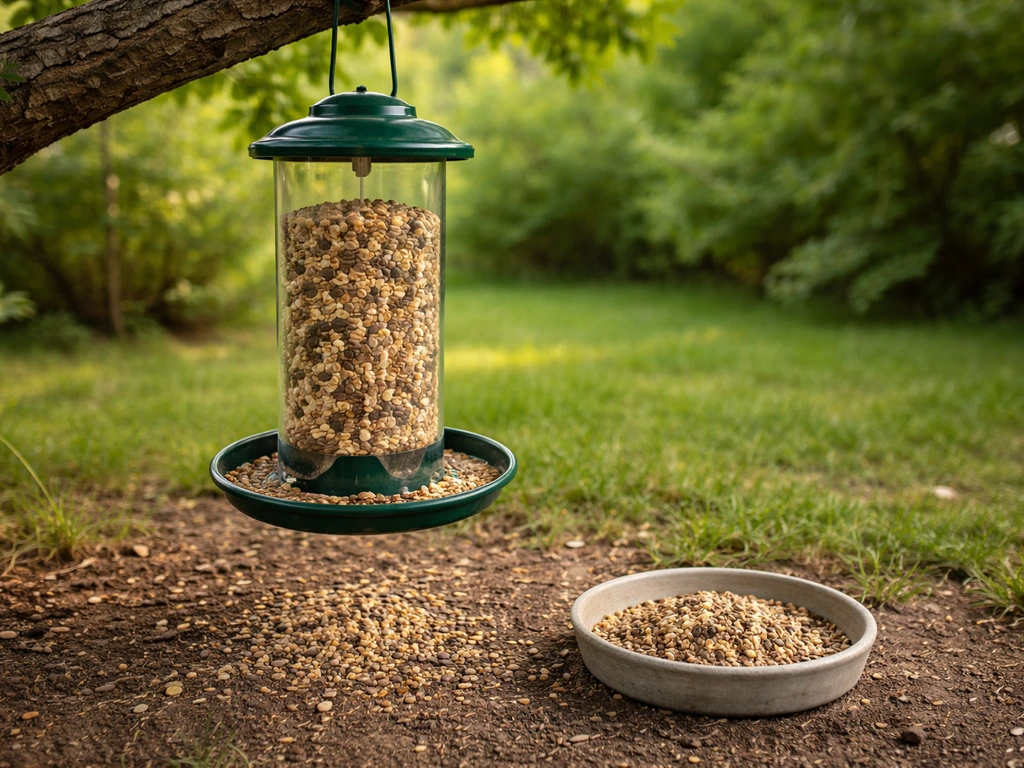
Bird seed ornaments typically last 1 to 2 weeks outdoors in mild weather, but that range shifts a lot depending on where you live, what binder you used, and where you hung them. In hot or rainy conditions they can go bad in just 2 to 3 days. In cool, dry weather with good airflow, a well-made ornament can stay fresh and structurally intact for up to 4 weeks.
How Long Do Bird Seed Ornaments Last? Lifespan Guide

Maya Collins
7 Jun 2026
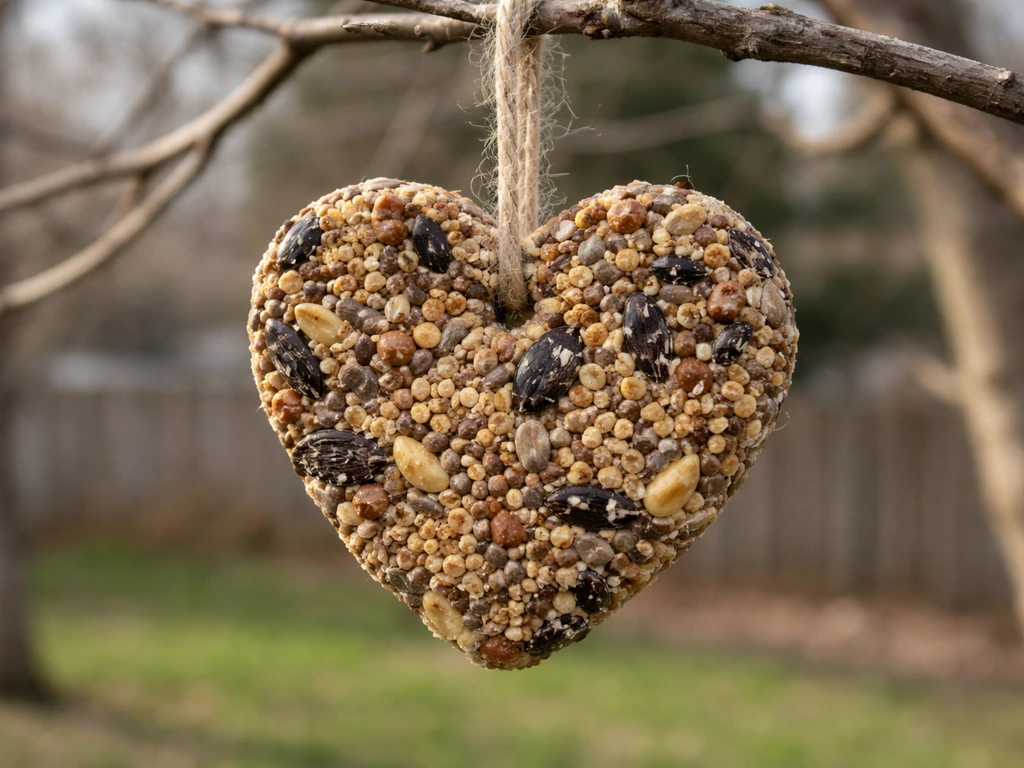
Microwaving bird seed is usually intended for quick drying or warming, but the exact time depends on the seed type and your microwave power. 'Lasting' means something different depending on what you're tracking: whether the ornament is still physically holding together, whether the seed inside is still safe for birds to eat, and whether birds are still interested in it. All three can fail at different times.
Ornaments vs wreaths: do they last the same amount of time?
Bird seed ornaments and bird seed wreaths are essentially the same product in different shapes. Wreaths tend to have more surface area exposed to air and moisture, which means they can dry out faster in good conditions but also absorb rain more readily in wet weather. Smaller ornaments (think cookie-cutter shapes) dry more quickly after being made, which helps them hold together better initially. The bigger variable isn't the shape, it's the binder.
| Format | Typical outdoor lifespan (mild weather) | Main risk |
|---|---|---|
| Small ornament (cookie-cutter style) | 2 to 4 weeks | Crumbling if binder is thin |
| Hanging seed ball | 1 to 3 weeks | Interior mold if fat stays damp |
| Seed wreath | 1 to 2 weeks | Faster moisture absorption due to surface area |
| Commercial pre-made ornament | Up to 6 months sealed, 2 to 4 weeks once hung | Fat going rancid in heat |
Commercial ornaments that are factory-dried and vacuum-sealed can sit unopened for months (similar to how unopened bagged seed stores well in the right conditions), but once you hang one outside, the clock starts at the same point as a homemade version.
What actually determines how long yours lasts
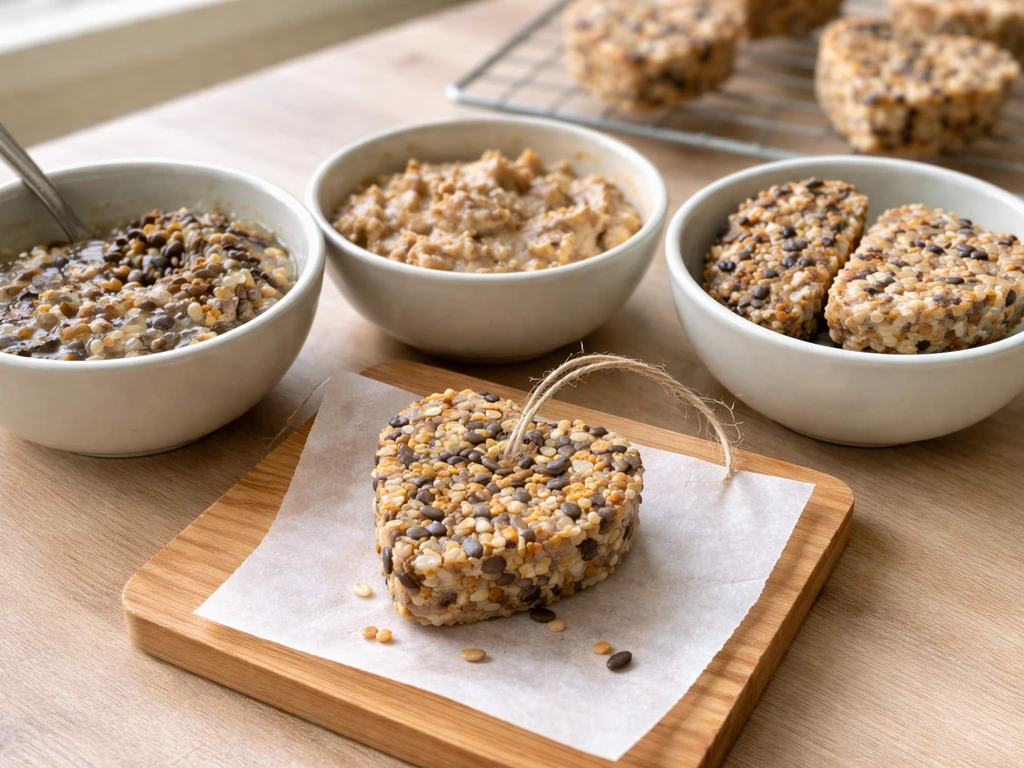
The binder makes the biggest difference
Gelatin-based ornaments are the most moisture-sensitive. They hold together beautifully when dry but soften and collapse fast when wet. Fat or suet-based binders (rendered lard, coconut oil, or commercial suet) are more waterproof but go rancid faster in heat. Peanut butter mixtures fall somewhere in between: they resist moderate moisture but can attract ants and rodents more aggressively. If you're making ornaments yourself, rendered beef suet or coconut oil in cool weather tends to give the best balance of durability and freshness.
Weather and sun exposure
Heat is the fastest killer of fat-based binders. Above about 75°F (24°C), suet and peanut butter mixtures soften, drip, and go rancid noticeably faster. Direct sun accelerates this. Rain and humidity are the main threat to gelatin-based ornaments and will also promote mold growth in any ornament within 24 to 48 hours of getting thoroughly wet. Wind is actually helpful: good airflow keeps the surface drier and discourages mold, but it can also speed up crumbling in fragile ornaments.
Placement: sheltered vs fully exposed
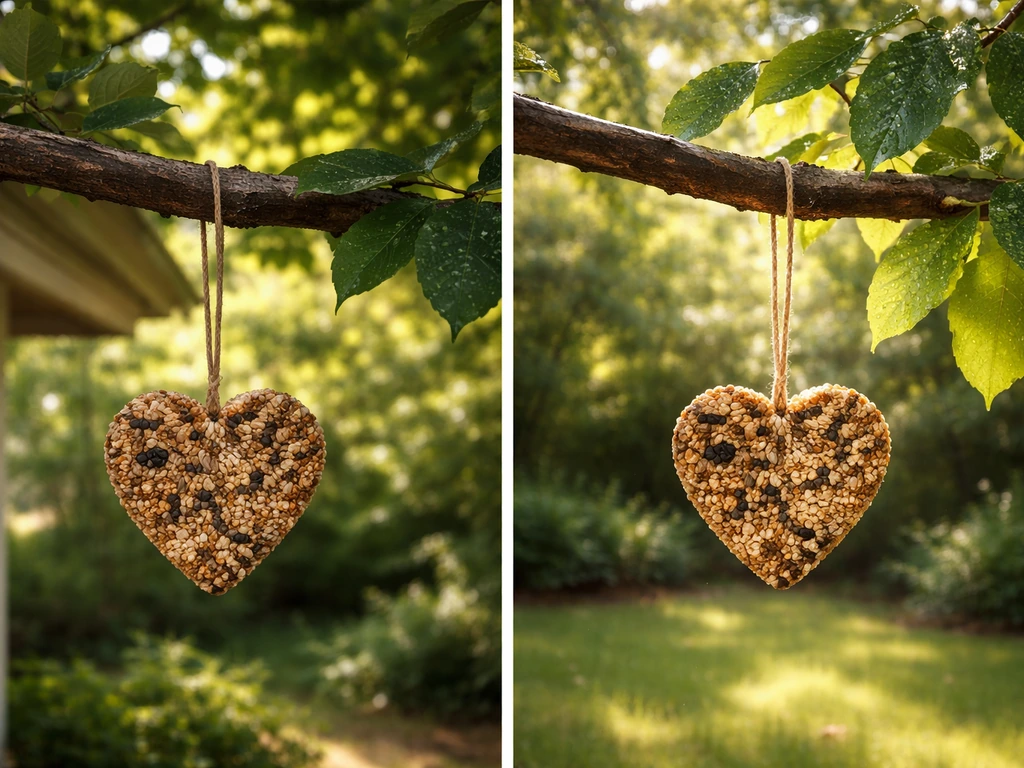
An ornament hanging under a roof overhang or in dappled shade can easily last twice as long as one hanging in full sun or open to rain. If you hang yours on an exposed shepherd's hook with no cover, expect a shorter lifespan and check it more frequently. Indoors (for a nature table or holiday decoration), ornaments can last several weeks to a couple of months if kept dry, though any fat-based binder will eventually go rancid even without weather exposure.
How fast birds eat them
In an active backyard, birds may strip an ornament down to the binder within 2 to 3 days, making spoilage irrelevant. If bird traffic is slow, the ornament sits longer and has more time to degrade. Smaller ornaments in high-traffic spots often get consumed before they have a chance to go bad, which is actually the ideal outcome.
Signs your ornament is past its prime
Don't just track days on a calendar. Do a quick visual and smell check every few days, especially after rain or a warm spell. Here's what to look for:
- Visible mold: fuzzy gray, green, or black growth anywhere on the surface or inside cracks. Mold produces spores that can cause aspergillosis in birds, a respiratory disease with no effective treatment once established. Take it down immediately.
- Sprouting seeds: small white shoots or green growth coming from the seed. This means the seed has gotten wet enough to germinate, and the ornament has been damp for a while.
- Rancid or sour smell: fat-based ornaments that smell 'off,' soapy, or sharp have gone rancid. Birds may still nibble but rancid fat isn't good for them long-term.
- Pest activity: ants trailing up the hanging cord, small beetles crawling on or near the ornament, or tiny larvae visible in seed clusters. Indian meal moths, flour beetles, and grain beetles are common culprits in bird seed.
- Structural collapse: a fully softened or crumbling ornament isn't a safety issue by itself, but it means seed is falling to the ground fast, which creates a mess and attracts rodents.
- Birds ignoring it: birds are good judges of quality. If they've stopped visiting an ornament they previously liked, it's worth inspecting.
How to make yours last longer
Hang it right from the start
Position the ornament under a covered area or in dappled shade rather than full sun. Keep it away from areas where moisture pools or collects. Make sure there's airflow around all sides. Don't press it up against a wall or fence where one side stays damp.
Control moisture
If you're in a rainy climate, bringing ornaments inside temporarily during heavy rain and returning them once things dry out can meaningfully extend their life. You can also hang a small piece of bark or a wide saucer above the ornament as a makeshift rain guard. The goal is to let birds access it without letting rain soak it repeatedly.
Store unused ornaments properly
Homemade ornaments waiting to be hung should be stored in a cool, dry place in a sealed container or zip-lock bag. A cool pantry or garage shelf works fine in winter. Avoid the refrigerator if the ornament contains fat, since condensation when you take it out can introduce moisture. Don't stack them directly on top of each other without parchment or wax paper between them or they'll stick and crumble. Use stored ornaments within 4 to 6 weeks for best quality, or freeze them for longer storage (up to 3 months).
Rotate on a schedule
Rather than waiting for visible signs of failure, set a replacement schedule based on your conditions. In summer or humid climates, swap them out every 5 to 7 days. In cool, dry conditions, every 2 weeks is a reasonable baseline. Keep a spare ornament or two ready so replacement is easy. Rotating the hanging spot itself (moving it a few feet every week or so) also prevents buildup of contaminated debris directly below, which is a hygiene tip borrowed from standard feeder management.
Replacing ornaments and handling leftover mixture
When you take down a spent ornament, don't just toss it in the trash unless it's visibly moldy or infested. If the seed is still dry and undamaged but the ornament has just crumbled, you can scatter the seed pieces directly in a ground-feeding area or on a clean tray feeder for species like juncos, sparrows, and doves that prefer feeding at ground level.
Leftover wet seed mixture from the moldor-crumble stage should go in the bin, not the feeder. Never add moldy or rancid seed to a regular feeder just because it's there. If you have leftover dry ornament mixture that hasn't been formed yet, seal it in an airtight bag, note the date, and store it in a cool dry place or the freezer. Treat it like you'd treat regular stored bird seed: the same rules about moisture, pests, and rancidity apply.
If a batch came out poorly (wrong consistency, crumbled before hanging, or smells off right away), don't try to salvage it by re-melting the fat binder. Fat that's been heated, cooled, and reheated multiple times degrades faster and can become a food safety issue for birds. Start fresh.
Cleanup: spilled seed, fallen bits, and pest prevention
The area under a bird seed ornament needs as much attention as the ornament itself. Fallen seed and crumbled bits accumulate fast, especially as the ornament gets picked at by birds. Old, wet seed on the ground is one of the main disease vectors for backyard birds, and it's also a magnet for rodents and ants.
- Sweep or rake up fallen seed every 2 to 3 days, or at minimum every time you check the ornament. Don't let it pile up.
- Dispose of wet or moldy ground debris in a sealed bag in your outdoor bin. Don't compost it.
- If you notice ant trails leading up to the ornament, wipe the hanging cord or wire with a food-safe sticky barrier or switch to a baffle setup. Ants in the ornament accelerate decomposition and make the seed unappealing to birds.
- After removing a spent ornament, wipe the hanging hook or branch with a damp cloth. If you used a wire frame or mold to form the ornament, wash it with a solution of 2 ounces of bleach per gallon of water, scrub it thoroughly, rinse it, and let it dry completely before reusing.
- Wash your hands thoroughly after handling old ornaments, seed debris, or cleaning equipment. This isn't overcautious: bird droppings and moldy seed can carry pathogens.
- If the ground underneath is soil rather than paving, consider laying a small piece of hardware cloth or a seed tray beneath the ornament to catch debris and make cleanup easier.
If you're finding pantry pests (Indian meal moths, flour beetles, cigarette beetles, or grain beetles) near your stored seed supplies indoors, an infested ornament mixture may be the source. Illinois Extension describes pantry pests that can infest stored dry products, including bird seed, and lists common pests such as cigarette beetles, flour beetles, drugstore beetles, and the Indian meal moth pantry pests (Indian meal moths, flour beetles, cigarette beetles, or grain beetles). Inspect all stored seed and remove any infested material in sealed bags before the pests spread to your pantry.
Regional and seasonal guidance
Your climate changes everything about how you manage bird seed ornaments. Here's a quick breakdown by condition:
| Condition | Expected lifespan | Key adjustments |
|---|---|---|
| Cool, dry (fall/winter in northern states) | 2 to 4 weeks | Suet-based binders work best; gelatin holds well too. Minimal mold risk. |
| Hot, humid (Southeast, summer anywhere) | 3 to 7 days | Use small ornaments so birds finish them fast. Avoid fat-heavy binders. Check daily. |
| Wet/rainy (Pacific Northwest, coastal) | 5 to 10 days | Shelter is essential. Bring in during heavy rain. Check for mold every 2 to 3 days. |
| Cold, snowy (Midwest, Northeast winters) | 2 to 4 weeks | Suet binders harden nicely in cold. Ornaments may freeze solid but remain safe. |
| Hot, dry (Southwest summers) | 4 to 10 days | Fat goes rancid faster in heat even without humidity. Shade placement is critical. |
| Indoor display (any region) | 2 to 6 weeks | No weather risk, but fat still goes rancid. Replace if smell changes. |
In cold northern winters, suet-based ornaments actually perform at their best: cold temperatures slow rancidity, harden the binder, and reduce mold risk significantly. This is the one season where hanging ornaments in a more exposed spot is fine. In summer, even in northern climates, the calculus reverses completely. If you're making ornaments in July, keep batches very small and plan to replace them within a week regardless of how they look.
Your practical replacement schedule at a glance
Use this as a starting checklist and adjust based on what you observe in your specific yard:
- Every 2 to 3 days: check for mold, pests, structural collapse, and rancid smell. Sweep up fallen seed below.
- Every 5 to 7 days (summer or humid climates): replace the ornament regardless of appearance. Don't wait for visible failure.
- Every 1 to 2 weeks (cool or dry climates): replace or do a close inspection and replace if any signs of spoilage appear.
- After any heavy rain event: inspect immediately. If the ornament got thoroughly soaked and hasn't dried out within 24 hours, replace it.
- When birds stop visiting: treat this as a spoilage signal and inspect the ornament.
- When storing unused ornaments: seal in an airtight bag, store in a cool dry spot, and use within 4 to 6 weeks or freeze for up to 3 months.
- After removing any spent ornament: clean the hanging hardware and the ground area before putting up the next one.
The seed inside a bird seed ornament follows the same basic rules as loose stored seed: moisture, heat, and time are the three things that degrade it. If you are asking specifically about loose wild bird seed, its shelf life can be different from the seed used in ornaments. Keeping those factors low is how you get the most out of each ornament while keeping your backyard birds healthy. RSPB recommends disinfecting feeders with a mild 5% bleach solution (or a non-toxic disinfectant alternative) and washing hands or forearms thoroughly after cleaning Keeping those factors low is how you get the most out of each ornament while keeping your backyard birds healthy..
FAQ
If my bird seed ornament looks okay, is it still safe to feed birds?
They can last about the same total time, but visually they fail at different rates. Outdoors, the binder may crumble while the seed inside is still dry, or the seed may spoil inside an ornament that still holds together. That is why you should check both texture (is it holding) and smell (is it sour or rancid) after rain or hot spells.
How long after rain is it safe to put a bird seed ornament back out?
After a hard wetting, mold risk starts quickly. If the ornament was thoroughly soaked, plan to discard it if you see fuzzy growth within 24 to 48 hours, even if the rest looks intact. For fat or suet blends, also watch for a strong rancid odor, which can appear sooner in warm conditions.
What’s the shortest lifespan when bird traffic is high?
If birds are stripping them fast, you may see the ornament’s “lifespan” end in 2 to 3 days, even though spoilage would have taken longer. In that case the safest approach is to replace based on bird activity, not calendar time, and remove any remaining pieces the same day if they start to look wet or break down.
Do store-bought ornaments last longer than homemade ones once hung outside?
Generally, store-bought unopened ornaments are longer lasting because they are factory dried or sealed, but once you hang them outside, the outdoor clock starts immediately. Expect the same outdoor failure patterns, moisture and heat being the biggest drivers, regardless of whether it started from a commercial product or a homemade one.
Is it okay to refrigerate fat-based bird seed ornaments before using them?
Yes, partially. Condensation from temperature swings can add surface moisture, especially if you move fat-based ornaments directly from a cold place to outdoor warmth. If you must chill or cool them, let them come to near-outdoor temperature and stay dry before hanging.
How often should I replace ornaments if I do not want to track daily?
Use the “days plus conditions” approach. In cool, dry weather, a replacement every 2 weeks is a reasonable baseline, while hot or humid weather often requires swapping every 5 to 7 days. If you see softening, dripping, or rapid crumbling, shorten the interval immediately rather than waiting for the next scheduled change.
What smell or appearance signals that an ornament is going bad even if it is not moldy?
A strong rancid smell is a faster indicator than appearance for fat or suet binders. Even if the ornament still holds, if it smells off, do not offer it, because rancidity can develop in warm temperatures and is not reliably visible from a distance.
Can I freeze homemade ornaments for later, and what should I avoid?
Freeze them only if they were fully formed with no added liquid after making. Do not refreeze repeatedly, and keep them sealed to prevent freezer moisture. When you thaw, keep them sealed until they warm up to reduce condensation on the surface.
How important is the seed and debris under the ornament compared with the ornament itself?
Use clean-up spacing, not just overall hygiene. Remove fallen seed and crumbles from the feeding area every few days, and avoid letting wet seed sit under the ornament, since old damp seed is a disease risk. If you see ants or rodents feeding below, increase ground cleanup frequency and consider moving the ornament to a drier spot.
Can I reuse bird seed if the ornament has already crumbled?
Yes. If the seed is dry and the ornament simply crumbled, you can scatter the pieces in ground-feeding areas or place them on a clean tray feeder for ground-preferring species. Do not mix crumbled pieces back into normal feeders if the batch was wet, moldy, or rancid.
What placement mistake most commonly shortens an ornament’s lifespan?
Warm, sun-exposed, and still-air spots are the fastest way to shorten lifespan, even in climates that are not generally “hot.” If you cannot change location, add airflow and reduce repeated wetting by choosing a place with better circulation and avoiding spots where rain puddles or drips directly onto one side.
Next Article
Is Old Bird Seed Safe? A Safety Checklist and Next Steps
Checklist to judge if old bird seed is safe, what risks it poses, and how to store, clean, and prevent pests.