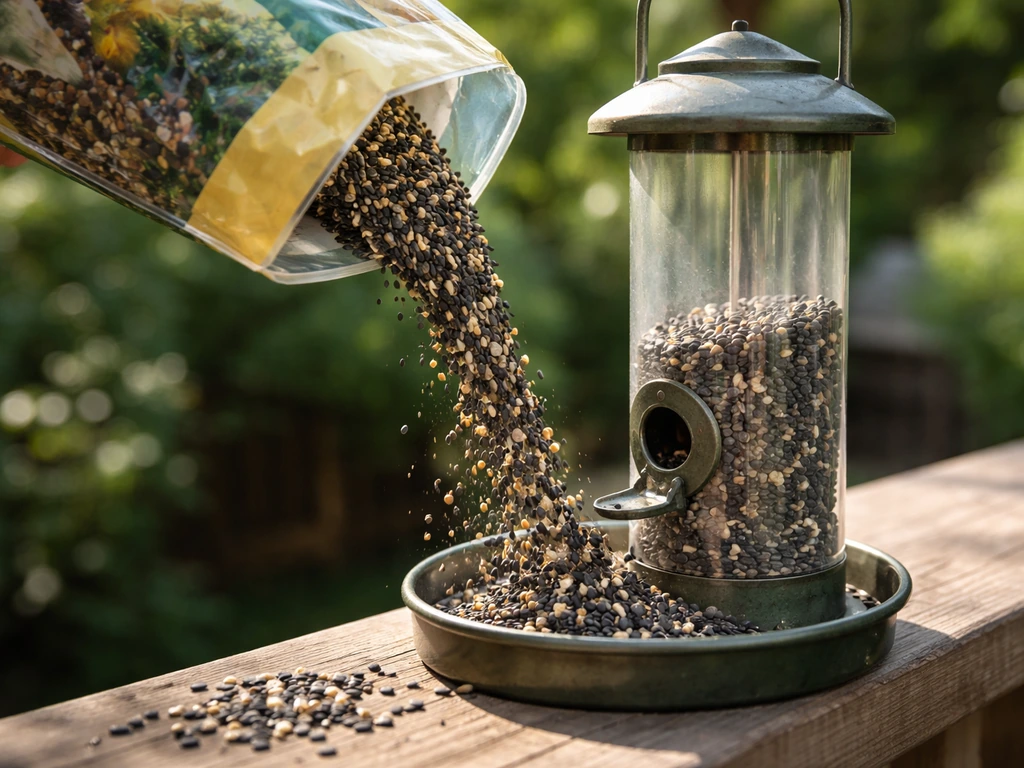
Bird seed is not covered by SNAP (food stamps) in most situations. The USDA is clear: SNAP benefits pay for food for people to eat, and bird seed is classified as pet food, which is explicitly excluded. You cannot use an EBT card to buy blank" rel="noopener noreferrer">wild bird seed at a grocery store, big-box retailer, or anywhere else under standard federal SNAP rules. Many people wonder whether Walgreens sells bird seed, so it helps to check in-store or online before you plan a purchase EBT card. That said, there is one narrow exception worth knowing about, and a few practical workarounds if you're stretching a tight budget for your backyard birds.
Can You Buy Bird Seed With Food Stamps? Rules + Tips
Maya Collins
12 Jun 2026
What SNAP actually says about bird seed
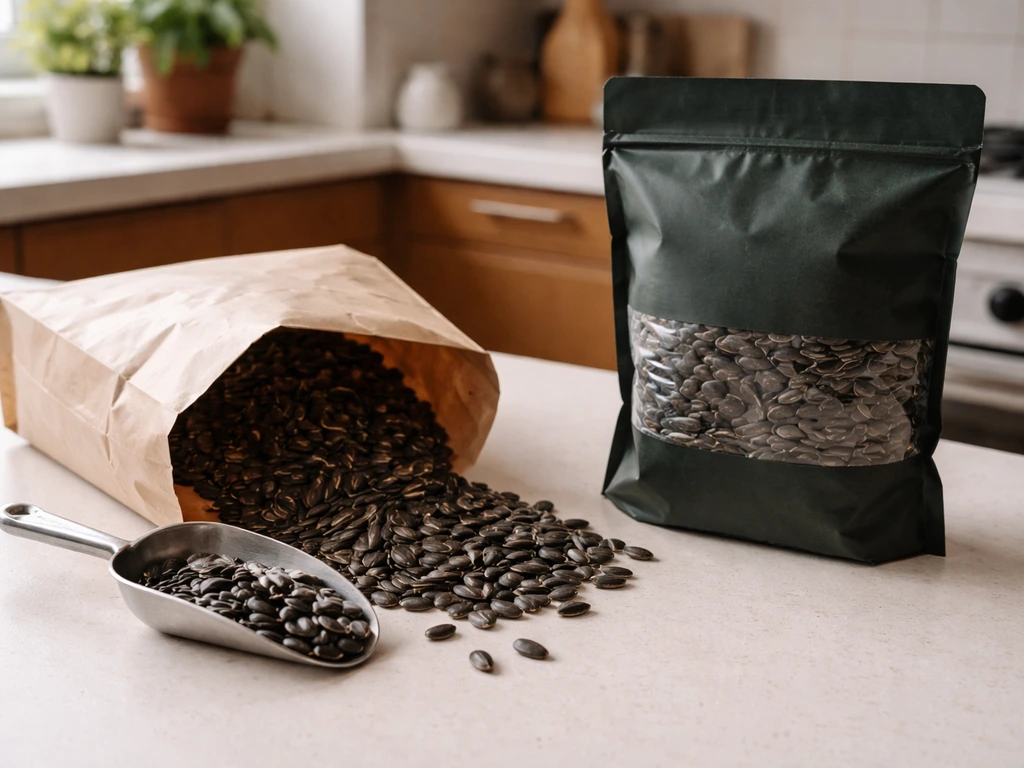
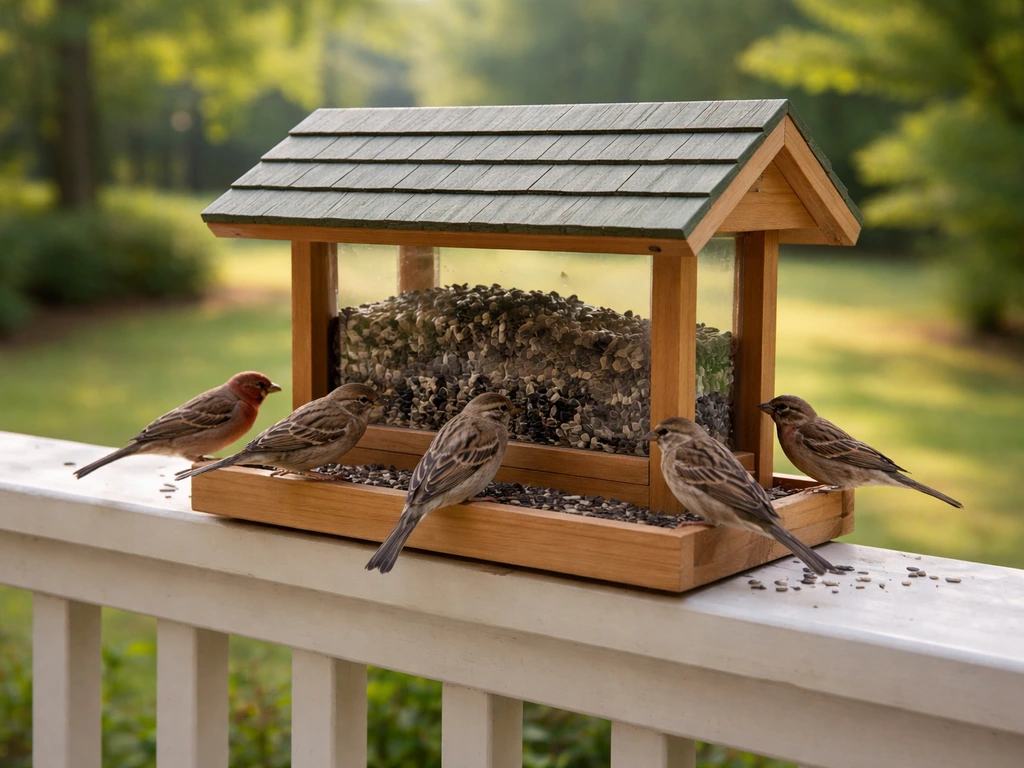
Federal SNAP regulations (7 CFR § 271.2) define eligible food as items intended for home consumption by people, plus seeds and plants that produce food for the household to eat. The USDA Food and Nutrition Service (FNS) explicitly lists pet food as a non-eligible item. Because wild bird seed is categorized the same way as dog food or cat food under these rules, it falls outside what your EBT card can pay for.
There is one edge case: if a seed product is marketed and labeled as human food (for example, raw sunflower seeds or shelled pumpkin seeds sold in the baking or bulk food aisle with a Nutrition Facts panel), it could technically ring up as SNAP-eligible because the item is classified as food for people. The moment that same seed is packaged and labeled specifically as bird feed or wild bird food, it becomes ineligible. The label and the intended use matter more than the physical seed itself.
One other label detail: any product carrying a 'Supplement Facts' panel instead of a 'Nutrition Facts' panel is automatically excluded from SNAP, regardless of what it is. This mostly affects vitamins, but it's worth glancing at labels if you're ever unsure.
How to check eligibility quickly at a specific store
If you want to verify before you get to the register, here is how to do it fast.
- Look at the product label. If the bag says 'wild bird food,' 'bird feed,' or 'for wild birds,' it will not go through on an EBT card. If the product is shelved in the human food section (bulk bins, baking aisle, snack aisle) and carries a standard Nutrition Facts label, it may be eligible.
- Check the store's SNAP-eligible item list. Many large retailers (Walmart, Target, Kroger, Meijer, and similar chains) have SNAP information available in-store or on their websites. Ask a cashier or customer service desk whether a specific item is SNAP-eligible before you put it in your cart.
- Call the store's customer service line. Give them the item's UPC number. Most registers automatically flag whether a product is SNAP-eligible based on the product code in their system.
- Check your state's SNAP rules. Most state-level Food Restriction Waivers approved through 2025-2026 target candy and sweetened drinks, not animal products. Indiana and Texas, for example, received SNAP Food Restriction Waivers focused on restricting soda and candy, not on changing rules for bird seed. Bird seed remains ineligible regardless. The USDA FNS 'SNAP Food Restriction Waivers' page lists all approved state waivers if you want to confirm your state's specific restrictions.
- If your purchase is denied at checkout, ask the cashier to check the item code. Sometimes human-food seed products get miscoded. A price check or manager override can resolve a miscoding on the spot.
If you're buying bird seed with cash: what's worth getting
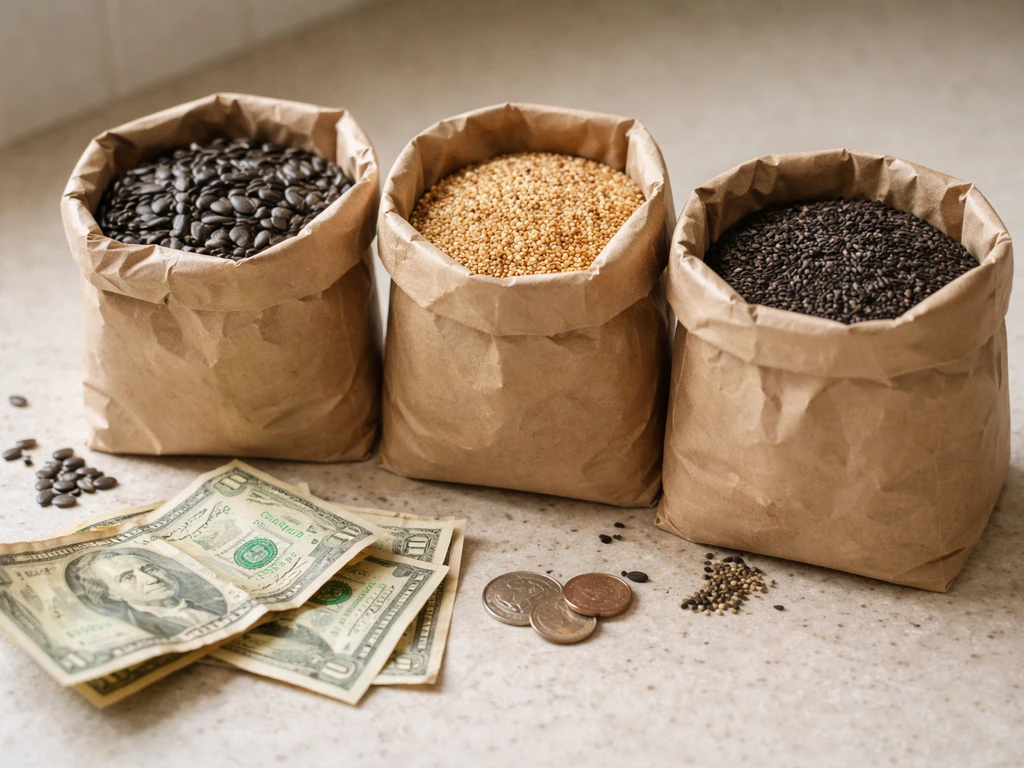
Once you know SNAP won't cover a labeled bird seed product, you still want to spend your money wisely. Not all bird seed is equally useful, and some mixes include a lot of filler that birds toss aside and that turns into a moldy mess under your feeder.
Seeds that attract the most birds with the least waste
- Black-oil sunflower seed: the single best all-around choice. Thin shells, high fat content, and almost every backyard species will eat it. Buy it in 20-40 lb bags for the best per-pound price.
- Nyjer (thistle) seed: essential for finches (goldfinches, pine siskins, redpolls). Use a fine-mesh or tube feeder designed for nyjer so it doesn't spill.
- Shelled peanuts or peanut hearts: high protein and fat, excellent for woodpeckers, jays, and chickadees. Avoid peanuts in the shell if squirrels are a problem.
- White millet: ground-feeding birds like juncos, doves, and sparrows prefer it. Sprinkle on a low tray rather than a hanging feeder.
- Avoid cheap mixes heavy in milo, wheat, and red millet. Most songbirds ignore these fillers, they pile up on the ground, and they go moldy faster than seeds birds actually eat.
Ingredient flags to watch for on the bag
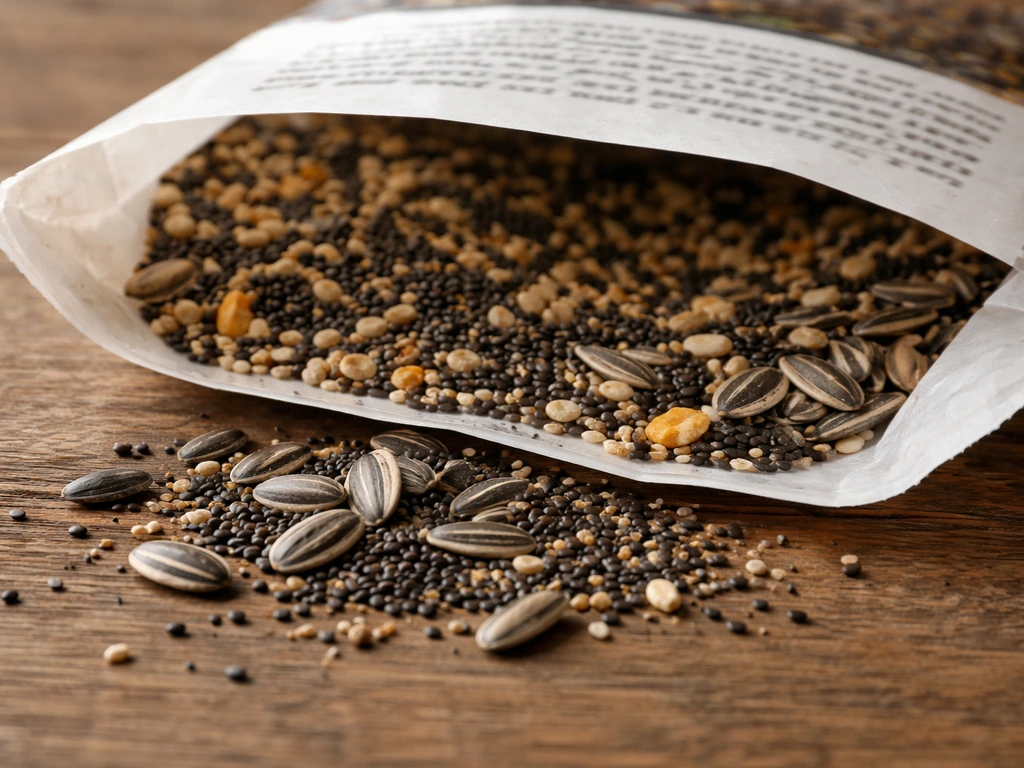
Check the ingredient list on any seed mix. The first one or two ingredients should be sunflower seed, nyjer, or millet. If milo or oat groats appear first, you're mostly paying for filler. Also look at the moisture content and the 'best by' date: seed that has been sitting in a warehouse for over a year will already have lower germination rates and higher risk of early mold after you bring it home.
Storage and handling after you bring seed home
How you store bird seed after purchase has a direct impact on how long it lasts, whether it sprouts under your feeder, and whether it attracts rodents or insects into your home. Getting this right saves money and keeps birds safer.
Container and location
- Use an airtight metal or hard plastic container. A metal galvanized trash can with a lid works well for large quantities. Avoid cardboard boxes or the original paper bags for long-term storage: moisture gets in and rodents chew through.
- Store in a cool, dry place. A garage, shed, or covered porch is fine as long as temperatures stay below 80°F (27°C) consistently. High heat accelerates oil rancidity, especially in sunflower and nyjer seed.
- Keep seed off the ground. Elevate containers on a shelf or pallet to reduce moisture wicking and to make it harder for rodents to access.
- Do not store large quantities indoors near food prep areas. Bird seed can harbor insects (particularly grain weevils and moth larvae) and should be kept in a dedicated storage area.
How long does bird seed last
| Seed Type | Properly Stored Shelf Life | Signs It Has Gone Bad |
|---|---|---|
| Black-oil sunflower | Up to 12 months | Rancid smell, clumping, visible mold |
| Nyjer (thistle) | 4-6 months | Oily residue, seed shriveling, mold |
| Shelled peanuts | 2-3 months | Musty smell, discoloration, mold |
| White millet | Up to 12 months | Clumping, insects, sour smell |
| Mixed seed blends | 6-9 months | Any off smell, webbing from moth larvae |
Preventing sprouting under feeders
Spilled seed germinates quickly in warm, moist soil. To prevent a seed garden under your feeder, buy sterilized bird seed (labeled as such), or spread a thin layer of gravel or a seed catcher tray beneath the feeder to keep fallen seed off the dirt. You can also purchase pre-hulled seed (no shells), which cannot germinate.
Feeder setup, daily care, and cleanup
Setting up your feeder correctly
Place feeders at least 10 feet from dense shrubs or fences where cats can stalk, but within 3 feet or more than 30 feet of a window to reduce bird-window collisions (birds in the 3-30 foot range build up lethal momentum before hitting glass). Use a baffle on the pole to keep squirrels and raccoons out of the seed.
How often to clean feeders
Clean tube and hopper feeders every 1-2 weeks in dry weather, and every 3-5 days in humid or rainy conditions. A dirty feeder is one of the biggest sources of salmonella and aspergillosis (a deadly mold-based respiratory infection) in backyard birds. Do not let wet seed sit in a feeder for more than 24-48 hours.
- Empty the feeder completely and discard any damp or clumped seed.
- Scrub all surfaces with a stiff brush and a solution of 1 part bleach to 9 parts water.
- Rinse thoroughly with clean water until no bleach smell remains.
- Allow to air dry completely before refilling. Filling a wet feeder accelerates mold growth dramatically.
- Sweep or rake the ground below the feeder to remove seed hulls and droppings. These accumulate bacteria and attract rodents.
Household hygiene after handling seed
Wash your hands thoroughly after filling feeders or handling seed. Bird seed and bird droppings can carry salmonella, and although infection from casual feeder contact is rare, it is a documented risk. Keep children and pets away from the ground area directly below feeders where droppings and hulls accumulate.
What to do if SNAP won't cover it: real alternatives
If bird seed is outside your budget right now, you have more options than you might expect. Several of them cost nothing at all. Indiana’s SNAP Food Restriction Waiver approval letter sets the waiver effective date as Jan. 1, 2026 and specifies exclusions for “soft drinks” and “candy,” including definitions for those items effective date of Jan. 1, 2026 and exclusions for “soft drinks” and “candy”.
Free and low-cost bird seed sources
- Local wildlife rehabilitators and bird rescue organizations: many accept donated seed and will share excess with community members who ask.
- Community seed swaps and garden clubs: especially common in spring, these often include birding supplies.
- Local Facebook groups and Nextdoor: neighbors upgrading feeders or clearing out storage frequently give away seed for free.
- Food pantries with pet or wildlife sections: some food banks have expanded to include pet and wildlife supplies. Call ahead to ask.
- Nature centers and Audubon Society chapters: many run low-cost seed sales or community programs for backyard birders.
Safe, low-cost seed substitutions
If you buy seeds in the human food aisle, some of those products double well as bird feed. Raw, unsalted sunflower seeds (the kind sold for snacking or baking) are fine for most feeder birds and can be purchased with SNAP because they are labeled as human food. Similarly, plain rolled oats, raw millet (sold in health food sections), and unsalted shelled peanuts are all foods birds will eat and that ring up as human food at the register. Avoid anything salted, flavored, or coated in sugar, as those additives are harmful to birds.
Where to buy bird seed cheaply with cash
If you're buying with cash and watching cost, big-box stores like Walmart and Tractor Supply consistently offer the lowest per-pound prices on black-oil sunflower seed, especially in 40 lb bags. Stores like CVS or Walgreens occasionally stock small bags of bird seed and can be handy in a pinch, though their prices per pound are higher than dedicated feed stores or farm supply chains. Online retailers and specialty pet stores (like Petco or Chewy) are solid options for specialty seed like nyjer or no-mess blends, and sometimes run sales that beat local prices, especially if you set up a recurring order. If you're wondering where to buy it online, you can also check whether Chewy sells wild bird seed. Petco does sell wild bird seed, especially specialty options like nyjer and no-mess blends.
FAQ
Can you buy wild bird seed with food stamps if the seed is the same as what people eat?
Sometimes, but only if the product scans as a human food item. Raw, unsalted sunflower seeds or plain rolled oats with a Nutrition Facts panel are the most straightforward. If the package says “bird seed,” “wild bird,” or “pet food,” or it has a Supplement Facts panel, it usually will not qualify even if the ingredient is the same.
Can I use EBT to buy bird seed at a grocery store or big-box retailer?
In most cases, no. SNAP is for food intended for home consumption by people, and bird seed labeled for feeding birds is treated like pet food, so it typically will not be covered at grocery stores or big-box retailers. The deciding factor is how the store codes it at checkout, which usually matches the label.
What’s the fastest way to check whether a specific bird seed bag will work with EBT?
If you are unsure, confirm before you pay by asking the cashier what category it rings up under, or scan it if your store supports self-checkout. If it does not come up as a human-food item, you can avoid a declined transaction by switching to a plain, labeled snack or baking ingredient (for example, unsalted sunflower seeds) rather than a “bird mix.”
Can you buy bird treats like suet or seed cakes with food stamps?
Not usually. Some bird treats are sold in formats like suet cakes, seed cakes, or “bird food” blocks, and those are commonly coded as pet food. If you want something likely to qualify with SNAP, stick to basic human foods birds commonly eat, like unsalted shelled peanuts or plain oats, and avoid anything salted, flavored, or coated.
Can you buy bird seed online with EBT, like for delivery?
Yes, but with a catch: it must be a SNAP-eligible human food at the time of purchase, and you should avoid “bird feed” or “wild bird” listings that are coded as pet food. For online orders, check the product listing carefully for human-food labeling like Nutrition Facts, and expect that a “bird feed” variant may be excluded even when the ingredient looks identical.
What if I buy seed from a bulk bin or a store that repackages it into smaller bags?
Be careful with “bulk” or “repackaged” items. If a store repackages seed into a container that is labeled as bird feed or pet food, it may be coded ineligible. If it is sold in a bin or package labeled for human consumption with Nutrition Facts (or the appropriate human-food labeling), the chance of eligibility is higher.
Does label wording like “Nutrition Facts” vs “Supplement Facts” affect whether SNAP covers it?
Yes, but any changes in the label can change eligibility. If an item has a Supplement Facts panel, it is generally excluded no matter what it is, and if the same product is marketed as bird feed, it is typically excluded even if the physical seed is the same.
Are there budget-friendly ways to feed backyard birds if SNAP won’t cover bird feed?
If your goal is to stretch seed cheaply, the best cost-effective move is often to buy sunflower seed or similar basic ingredients in human-snack or baking sections, as long as they are unsalted and not coated. For bird-specific seed, costs rise quickly, so using SNAP-eligible ingredients for feeding alongside careful feeder management can reduce waste and mold.
Can some stores approve bird seed purchases even if SNAP usually excludes it?
Not as a rule. Some stores may accept EBT for certain items under local or inventory-specific coding, but federal SNAP eligibility still generally treats labeled bird seed as ineligible pet food. The practical approach is to rely on human-food labeling rather than expecting the same seed bag to work across stores.
Next Article
Does Chewy Sell Wild Bird Seed? What to Buy and How
Find out if Chewy sells wild bird seed, what blends contain, how to choose, store, and prevent mold pests.