If you're comparing your options before committing, it's worth knowing that Costco is one of several big-box retailers that carry bird seed in bulk. Home Depot also sells bird seed, sometimes in similar bag sizes, and is worth checking if Costco's in-store stock is out. Either way, the bulk buying angle is where Costco usually wins.
What Kind of Bird Seed Does Costco Carry?
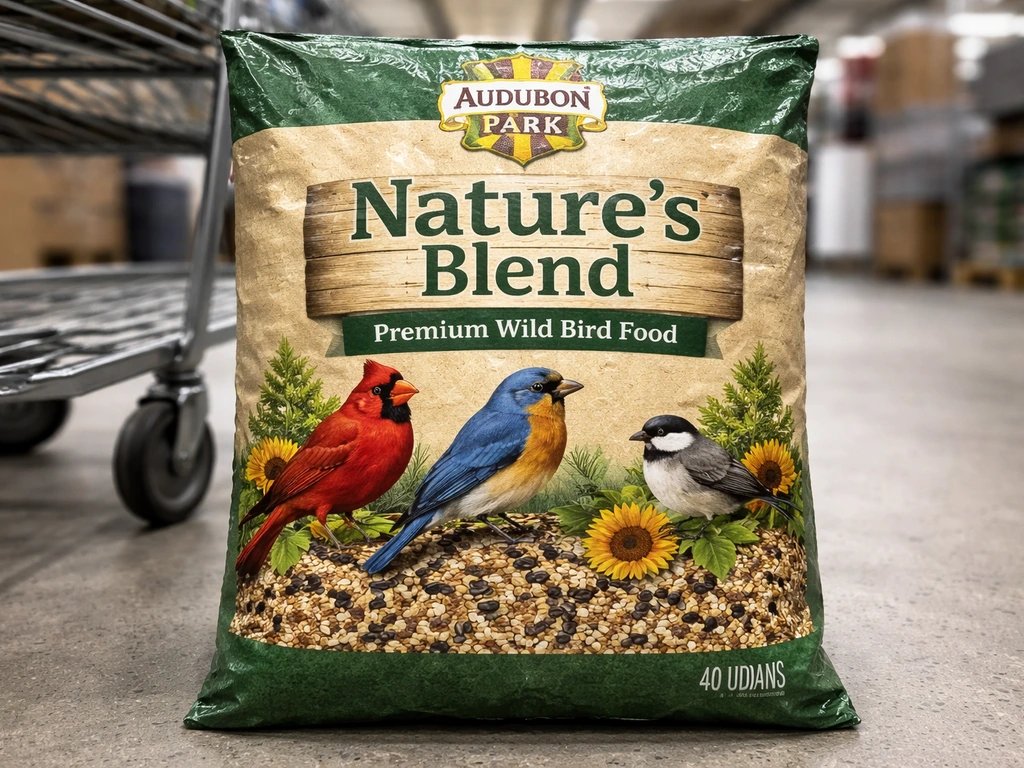
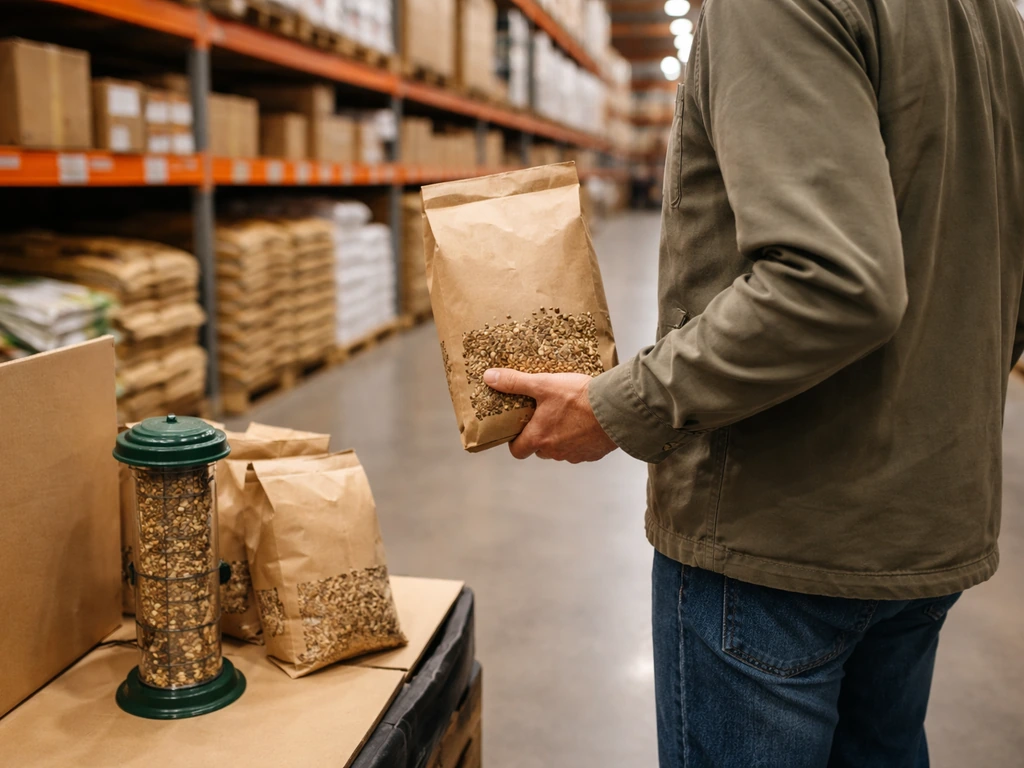
The main product Costco lists is the Audubon Park Nature's Blend Premium Wild Bird Food, 40 lbs (item 100280765 on Business Delivery, product page ID 3093228 on same-day delivery). This is a mixed wild bird seed blend, not a single-seed product. A third-party price tracker also lists a similar product called "Nature's Mix Premium Wild Bird Feed, 40 lbs" (SKU 481303), which may reflect an alternate label or a previous product run at Costco warehouses. A non-affiliate price tracker also records a related Audubon Park Nature’s Blend SKU “481303,” which may correspond to an alternate label or a different product run SKU 481303.
Costco does not appear to sell suet cakes, nyjer/thistle seed, or mealworms through its standard channels. The selection is narrower than a dedicated wild bird store, but the 40-lb bag is a practical choice if you're feeding a busy backyard all season. If you want a broader variety of seed types under one roof, Walmart's bird seed selection covers more product categories at smaller bag sizes.
How Much Does Costco Bird Seed Cost?
A third-party price-tracking site captured the Nature's Mix Premium Wild Bird Feed (40 lbs) at $23.99. Costco Business Delivery prices include delivery in the displayed total, so the price you see there may differ slightly from a warehouse shelf price. Delivery pricing can also vary by region and changes over time, so treat any number you see online as a starting point rather than a guarantee.
To get today's actual price, go directly to Costco's same-day delivery listing or the Costco Business Delivery page and add the item to your cart. That will show you the real current price with any applicable delivery fees. For context, $23.99 for 40 lbs works out to roughly $0.60 per pound, which is competitive for a premium mixed blend. Specialty retailers typically charge $1.00 to $1.50 per pound for similar Audubon Park products. If you want to compare bulk pricing at another membership warehouse, Sam's Club's bird seed prices are worth checking alongside Costco's.
Is Costco Bird Seed Actually Good?
The Audubon Park brand is well-regarded in the bird-feeding hobby. The Nature's Blend is a high-energy, sunflower-forward mix described by Costco Business Delivery as a "high energy blend with lots of sunflower seeds and chips," which is exactly what you want if you're trying to attract a wide range of backyard species. Sunflower seeds and peanuts are among the most universally accepted seeds by common feeder birds, so a blend heavy on those is a good sign.
User reviews on Reddit paint a mixed but mostly positive picture. Several Costco members note it's solid value compared to specialty retailers and that birds accept the mix well. The biggest complaint that comes up is a storage or shipping condition issue: one Reddit user reported receiving a bag that was moist and contained live insects, which is a legitimate concern with any bulk seed purchase. That's a condition problem (more on this in the storage section below), not necessarily a brand quality problem, but it's worth inspecting the bag before you take it home or accept a delivery.
Pros and Cons at a Glance
| Factor | Pro | Con |
|---|
| Price | Among the lowest cost-per-pound for a premium blend (~$0.60/lb) | Price varies by region and delivery method |
| Seed quality | Audubon Park is a reputable brand; sunflower-forward mix birds love | No suet, nyjer, or specialty seed options |
| Bag size | 40 lbs is great for heavy feeders or multiple feeders | Too large if you feed casually or have storage limits |
| Availability | Online (same-day delivery and Business Delivery) is reliable | In-store warehouse stock is seasonal and inconsistent |
| Condition risk | Sealed bags are usually fine | Bulk seed can arrive or sit moist; inspect before buying |
What's Actually in the Seed and Which Birds Will Come
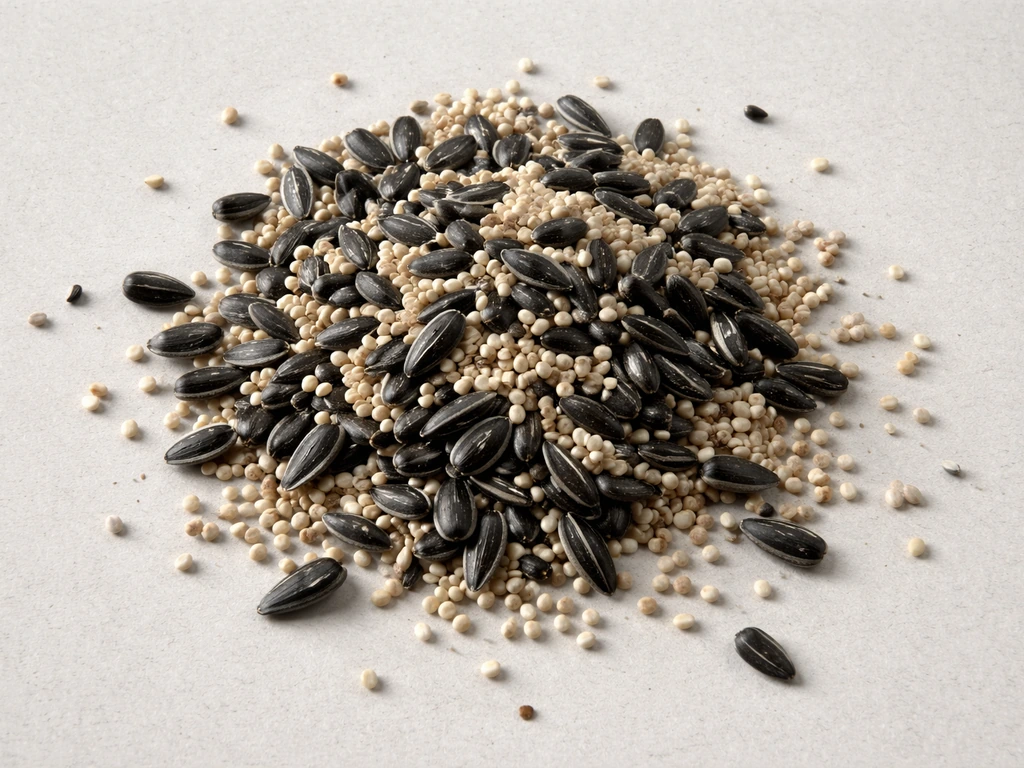
According to the Costco same-day listing and Instacart's ingredient breakdown, the Audubon Park Nature's Blend contains: white proso millet, chipped sunflower seeds, black oil sunflower seeds, peanuts, and red millet. This is a well-rounded mix. Here's what each ingredient does for you:
- Black oil sunflower seeds: the single best all-around feeder seed. Thin shells make them easy for small birds to crack. Cardinals, chickadees, nuthatches, finches, and jays all take these readily.
- Chipped (hulled) sunflower seeds: same nutrition as whole sunflower, no shell mess on the ground. Good for platform feeders and reduces cleanup.
- White proso millet: the top choice for ground-feeding birds like juncos, doves, towhees, and sparrows. Scattering some on the ground or in a tray feeder brings in more species.
- Peanuts: high fat and protein, excellent for woodpeckers, blue jays, and nuthatches. Note the allergen warning from Instacart: the seed is manufactured in a facility that handles peanuts, tree nuts, wheat, fish, and soy.
- Red millet: filler compared to white proso millet. Many birds ignore it. Its presence isn't a dealbreaker, but it does mean some seed may end up on the ground uneaten.
Audubon Park's broader premium blend lineup (which varies by product) also sometimes includes cracked corn, safflower seed, and striped sunflower seed. If you're in an area with a lot of squirrel pressure, a blend that includes safflower can help, since squirrels tend to avoid it while cardinals love it. If the Nature's Blend doesn't hit all your target species, compare it against what's available locally at a grocery chain. Kroger's bird seed options sometimes include single-seed bags like pure safflower or nyjer that you can use to supplement a mixed blend.
Matching Seed to Your Backyard Birds
The Nature's Blend is best suited to a mixed backyard with tube feeders, hopper feeders, and a tray or platform feeder. If you're only running one tube feeder and want to minimize waste, a pure black oil sunflower seed would be more efficient. But if you want variety and volume, this blend will attract a wide range of species without requiring you to buy and manage multiple seed types separately.
Storing Your 40-lb Bag the Right Way
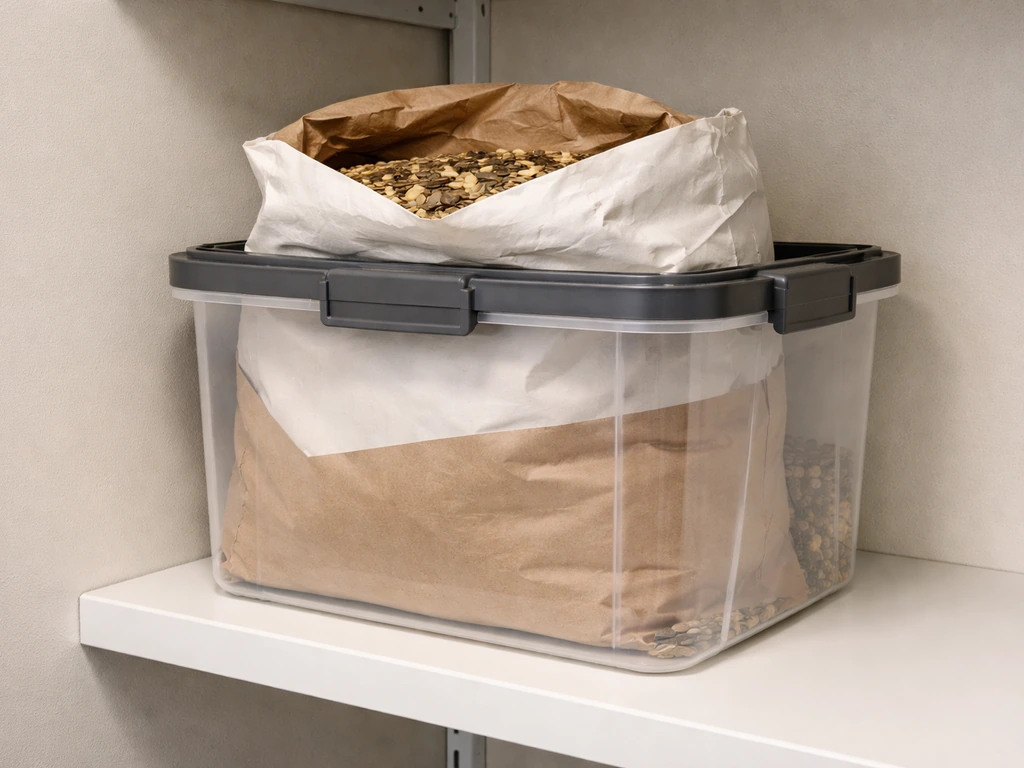
Buying 40 lbs of seed at once only makes sense if you store it properly. Mold, pests, and moisture are the three things that will ruin bulk seed, and they're all preventable with the right setup.
The Right Container
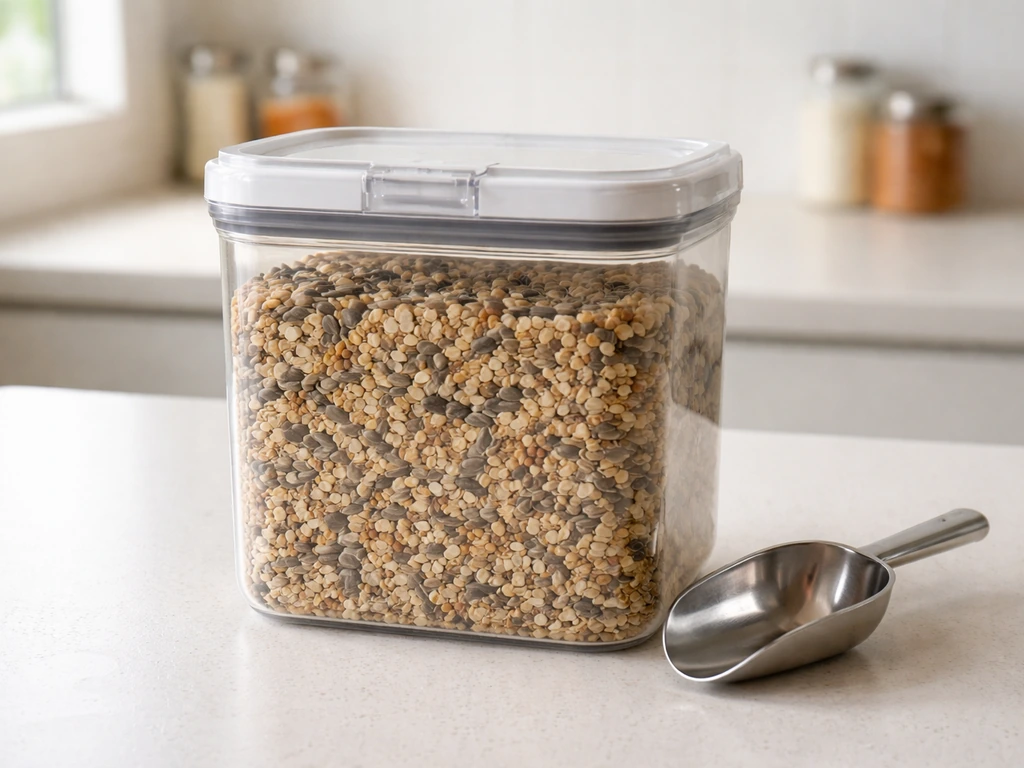
Move seed out of the paper or plastic bag it comes in and into a hard-sided, airtight container as soon as you get home. A metal trash can with a lid is the most practical option for a 40-lb bag. Metal is important because rodents can and will chew through plastic bins. A 20-gallon metal can holds a 40-lb bag with room to scoop. Keep it in a garage or shed where temperatures stay below 70°F and humidity stays low. Avoid storing it directly on concrete, which can wick moisture into the bottom of the can.
How Long Seed Stays Fresh
Properly stored mixed bird seed stays fresh for 6 to 12 months. In hot, humid climates (think Gulf Coast summers or Southeast monsoon season), aim to use the full bag within 3 to 4 months. If you only go through seed slowly, a 40-lb bag may be too much at once, and buying smaller bags more frequently will give you fresher seed overall.
Dealing with Pests, Mold, and Wet Seed
Insects and Rodents in Your Seed
The Reddit report of a Costco bag arriving moist and full of live insects is a real scenario. Grain moths (Indian meal moths) and grain weevils can infest bulk seed, especially if it was stored in a warm warehouse or sat in a delivery vehicle during warm weather. If you open a bag and see webbing, movement, or clumped seed, don't use it. Contact Costco for a return or exchange, and seal the bag in a garbage bag before disposing of it to avoid spreading insects in your home.
To prevent insects going forward: freeze the seed for 48 hours after purchase before transferring it to your storage container. This kills any eggs that may have been in the bag before it reached you. It's an extra step, but it's worth it with a 40-lb purchase.
What to Do If Seed Gets Wet or Sprouts
Wet seed is a real problem. When seed absorbs moisture, it creates the conditions for mold and mycotoxin production, which can harm birds. Oklahoma State University extension research specifically recommends removing any wet or moldy grain from wildlife feeding areas promptly to reduce aflatoxin risk. The rule is simple: if it's wet, clumped, smells musty, or shows any fuzzy growth, throw it out. Do not try to dry and reuse it.
Sprouted seed is a slightly different case. If a few seeds have started to germinate in your feeder, it usually means the feeder is staying too damp. Remove and discard the sprouted seed, clean the feeder, and check that it has adequate drainage holes. Sprouted seed itself isn't immediately toxic, but the wet conditions that cause sprouting are exactly the conditions that allow mold (including Aspergillus species, which cause Aspergillosis in birds) to take hold.
Feeder Cleaning Schedule
Project FeederWatch recommends cleaning seed feeders about once every two weeks under normal conditions, and more often during warm or wet weather. Here's a practical routine:
- Empty the feeder completely. Discard any remaining seed rather than mixing it with fresh seed.
- Rinse with hot water and scrub with a stiff brush to remove caked seed and droppings.
- Soak for 10 minutes in a dilute bleach solution (1 part bleach to 9 parts water).
- Rinse thoroughly and let the feeder air dry completely before refilling. Never add seed to a damp feeder.
- Rake up seed hulls and debris below the feeder weekly. Decomposing seed on the ground is a mold and rodent magnet.
Mold Risk Is Serious
Moldy seed is not just unappealing, it's genuinely dangerous for birds. Aspergillosis, a respiratory fungal infection caused by Aspergillus mold, is one of the leading causes of death in feeder birds that encounter contaminated seed or damp, moldy feeder environments. The FDA notes that mycotoxin formation in grains is driven by temperature, humidity, and moisture exposure, which is exactly what happens when seed sits wet in a feeder or a poorly sealed storage container. Keeping seed dry at every stage, from storage to feeder, is the single most effective thing you can do for the health of the birds visiting your yard.
Where to Check Before You Buy
Here's the practical checklist before placing your Costco order or making the trip to the warehouse:
- Check Costco's same-day delivery page for the Audubon Park Nature's Blend (product ID 3093228) for current price and availability in your ZIP code.
- Check the Costco Business Delivery site (item 100280765) if you have a Business membership or want to compare delivery pricing.
- Call your local Costco warehouse directly to confirm in-store stock before making a trip.
- Inspect the bag at pickup or upon delivery: look for intact seals, no moisture, no unusual smell, no visible webbing or clumping.
- Have a metal storage container ready at home before the bag arrives.
If Costco's availability is spotty in your area, it's worth having a backup. Grocery chains are a practical fallback for smaller quantities. Kroger carries bird seed at most locations and is easy to find in most regions. For a direct comparison of bulk warehouse pricing, Sam's Club's bird seed selection is the most direct Costco equivalent to check. And if you want maximum convenience with same-day pickup, Walmart's bird seed aisle is reliably stocked year-round.