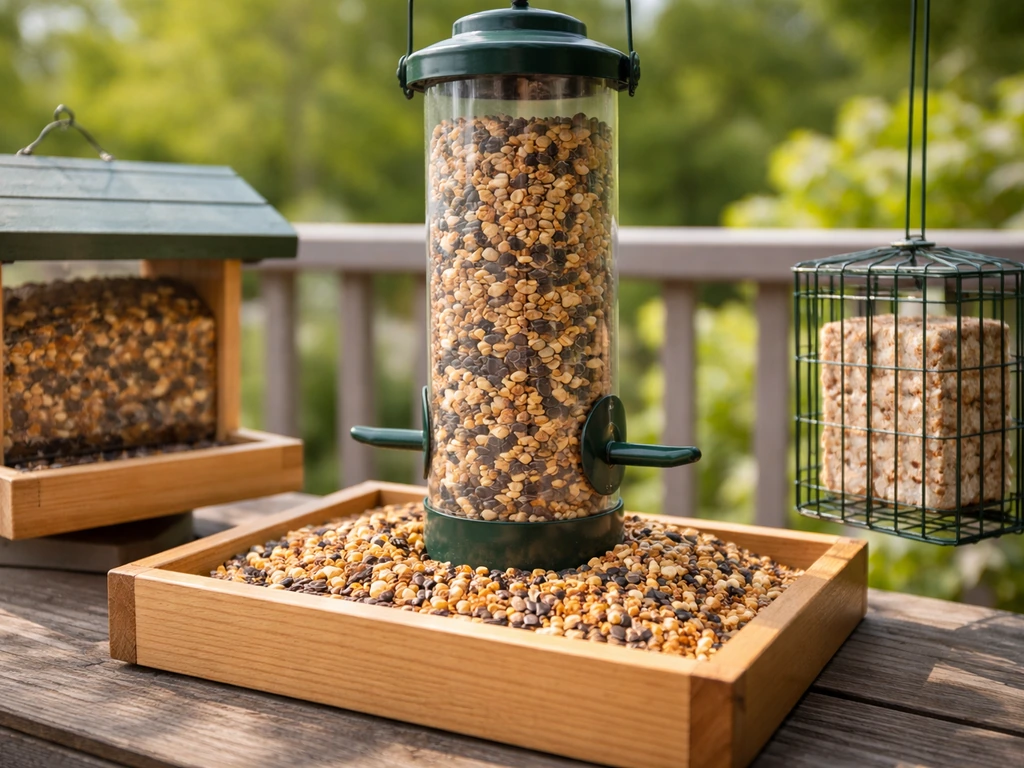
Yes, Kroger sells bird seed. You can find it in the pet supplies section, typically in a dedicated aisle (one product page listed it in Aisle 11). Kroger carries both its own store-brand wild bird seed and name-brand mixes like Nature's Song Premium Wild Bird Seed in 10 lb bags. Availability varies by store location, so it's worth checking online before you make a trip.
Does Kroger Sell Bird Seed? In-Store and Online Options
Maya Collins
6 May 2026

In-store availability: what to expect at Kroger
Kroger stocks wild bird seed, songbird food, and suet under its Pet Supplies category, both in-store and on kroger.com. The product range typically includes black oil sunflower seed, multi-bird mixes, and suet cakes. The Kroger store-brand 10 lb wild bird seed is one of the consistently listed items, alongside options from Nature's Song and similar brands. That said, not every Kroger location carries the same products, and stock can thin out seasonally. If you walk in and can't find it, ask an associate to check the pet aisle or the garden/outdoor section, since placement can shift.
How to check online before you go: store locator, pickup, and delivery

The fastest way to confirm your local store has bird seed in stock is to use the Kroger website or app. Search for 'wild bird seed' and set your store location. The product page will show you fulfillment options specific to your store, including whether pickup or delivery is available. One thing to know: some items, including the Nature's Song 10 lb bag, show 'Pickup Available' but 'Delivery Unavailable' at certain locations. That means you may be able to order it for curbside pickup but can't get it delivered to your door. If delivery matters to you, filter by delivery-eligible items.
If you place a pickup order and the item turns out to be out of stock when a Kroger associate goes to pull it, you have two options: allow substitutions (Kroger staff will try to find a comparable product) or tell Kroger not to substitute, in which case that item simply won't be included in your order. You can set substitution preferences before you check out. When you pick up, your receipt will show exactly what was included or swapped, so there are no surprises.
If your local Kroger consistently doesn't carry bird seed or stock runs thin, it's worth comparing with other retailers. If you are wondering does sam's club sell bird seed, it's one of the other big retailers worth checking alongside Walmart, Home Depot, and Costco when your local Kroger is out of stock. Many people ask, does Walmart sell bird seed, and in many regions it is available in-store and online as well. Home Depot is another retailer that may carry bird seed, with availability depending on your area. Walmart, Sam's Club, Home Depot, and Costco all carry bird seed and may offer larger bag sizes or more variety depending on your region. Costco is one of the major big-box stores that carries bird seed, so it's worth checking their current availability too Costco all carry bird seed.
What to look for when buying bird seed
Not all bird seed mixes are worth buying. The biggest red flag in a cheap mix is a high proportion of filler seeds, mainly milo (sorghum) and wheat. Most backyard songbirds won't eat them, so they pile up under your feeder and go moldy. A good mix should lead with black oil sunflower seed, white proso millet, sunflower chips, nyjer (thistle), or safflower. The Nature's Song Premium blend Kroger carries, for example, includes black oil sunflower, millet, cracked corn, sunflower chips, safflower, and black stripe sunflower. In a r/birdfeeding discussion, a user said they buy blank" rel="noopener noreferrer">Nature’s Song “no-waste wild bird seed mix” from Kroger. That's a reasonable all-around mix.
Check the bag for any visible clumping, discoloration, or a dusty or musty smell before you buy. Those are signs of moisture exposure or age. The bag should feel dry and the seed should flow freely if you shift it. Also check the bag for small holes or evidence of insects, since weevils and moths can infest seed even in a store.
Seed quality checklist at a glance
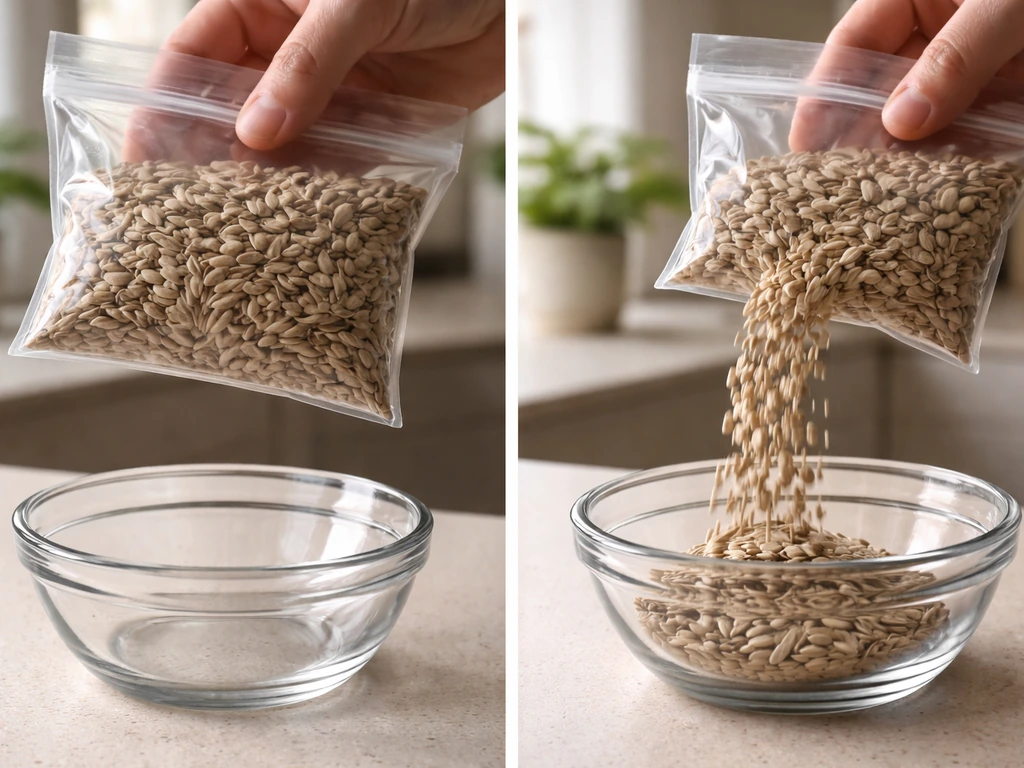
- Bag is sealed, dry, and undamaged
- No clumping or visible moisture inside
- No musty, sour, or off smell when you open it
- Seed flows freely without lumping together
- Ingredient list leads with sunflower, millet, or nyjer — not milo or wheat
- No visible insects, webbing, or fine dust from insect activity
Picking the right seed for the birds you want to attract
The seed type you buy should match both the birds in your yard and the feeders you're using. Black oil sunflower seed is the single best all-purpose choice: it attracts cardinals, chickadees, nuthatches, finches, and many sparrow species, and the thin shell is easy for small birds to crack. White proso millet draws ground-feeding birds like juncos, doves, and native sparrows. Nyjer (thistle) is essential if you want to attract goldfinches and pine siskins, but it requires a tube feeder with small ports. Safflower is a good option if squirrels are a problem because most squirrels dislike it, while cardinals and house finches will still eat it readily.
| Seed Type | Best For | Feeder Type | Squirrel Appeal |
|---|---|---|---|
| Black oil sunflower | Cardinals, chickadees, nuthatches, finches | Hopper, tube, or platform | High |
| White proso millet | Juncos, doves, native sparrows | Platform or ground tray | Moderate |
| Nyjer (thistle) | Goldfinches, pine siskins | Nyjer tube feeder | Low |
| Safflower | Cardinals, house finches | Hopper or tube | Very low |
| Sunflower chips | Most songbirds, no shell waste | Any feeder | High |
| Suet | Woodpeckers, nuthatches, wrens | Suet cage | Moderate |
If you're in the South or Southwest, white proso millet and sunflower are your core choices year-round. In the Northeast and Midwest, nyjer becomes especially valuable in winter for overwintering finches. In the Pacific Northwest, black oil sunflower and suet perform well through the wet season. Regional bird populations shift by season, so a good starting strategy is one tube feeder with black oil sunflower and one with nyjer, then adjust based on what actually shows up.
Storing seed to prevent mold, pests, and sprouting
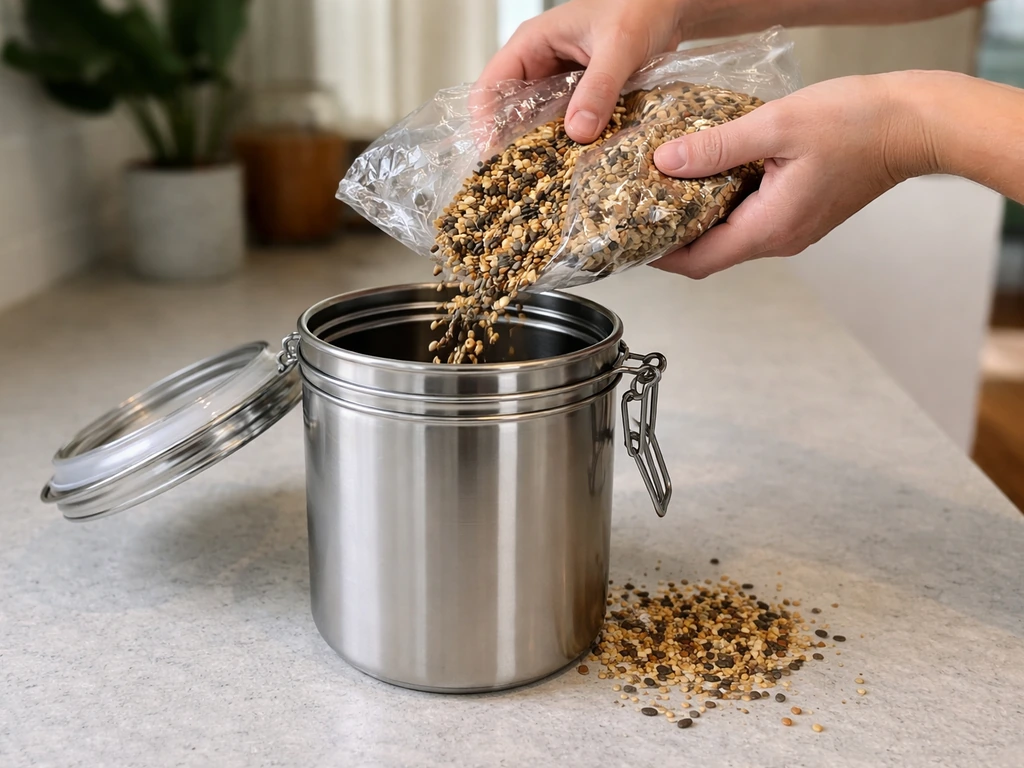
The original paper or thin plastic bag seed comes in is not adequate long-term storage. Transfer seed to a rigid, airtight container as soon as you get home. A metal trash can with a tight-fitting lid or a sealed plastic bin works well. The tight lid keeps out rodents, moisture, and insects, and the container should go in a cool, dry place. Avoid storing seed in a hot garage or shed where summer temperatures can accelerate spoilage and encourage insect activity.
Properly stored seed in a cool, dry environment typically stays good for up to a year. Seed stored in heat or humidity can go bad in weeks. Signs of spoiled stored seed include a sour or musty smell, visible mold, clumping, or the presence of small moths, weevils, or tiny larvae. If you notice fine powdery dust that looks like it came from the seed itself, that's often frass from insect activity inside the bag.
A note on climate: if you live somewhere with high summer humidity (the Southeast, Gulf Coast, or Pacific Northwest in rainy season), be especially aggressive about sealed storage and check your seed supply every couple of weeks. Moisture can penetrate loosely closed containers and start mold before you notice anything visible.
Storage do's and don'ts
- Do use a metal or hard plastic container with a locking or tight-fitting lid
- Do store in a cool, dry location away from direct sunlight
- Do keep the container off the ground to discourage rodents
- Don't leave seed in the original paper bag inside a hot shed or garage
- Don't store near a water source or in a humid basement
- Don't top off old seed with new seed — use the older seed first
What to do if your seed gets wet or goes bad
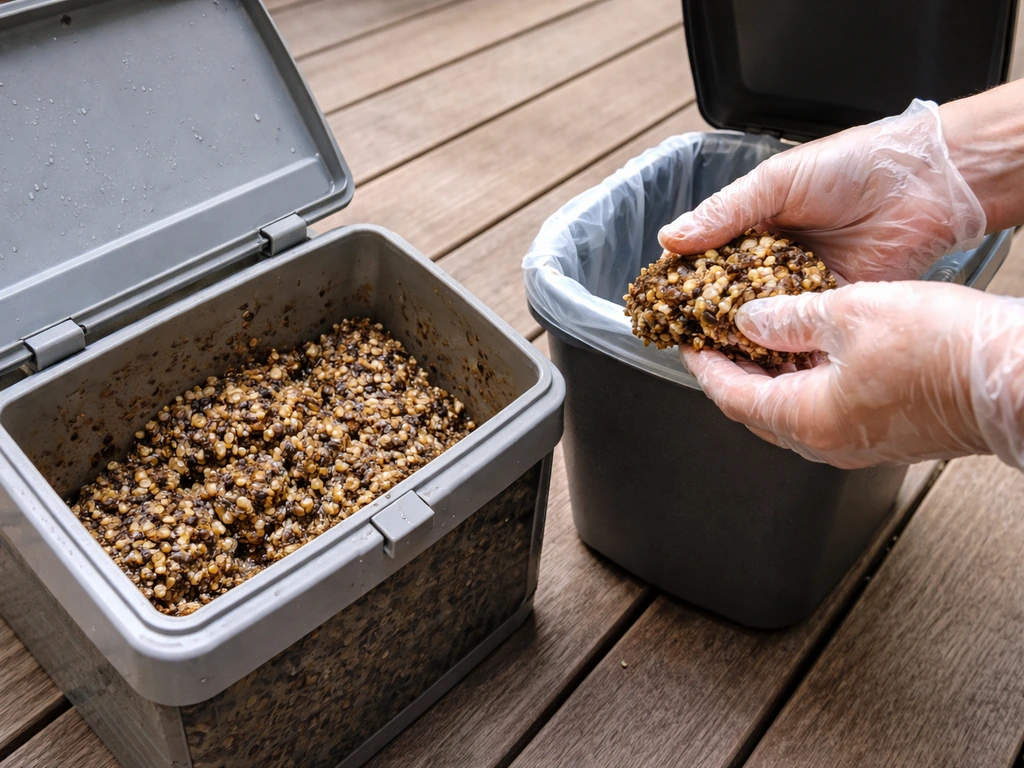
Wet seed is a real problem, and the fix is immediate action. If seed in a feeder or storage container has gotten wet, don't just let it dry in place. Clumped wet seed is a fast route to mold and bacteria, and moldy seed can make birds sick. Here's the step-by-step approach:
- Remove all the wet or clumped seed immediately and discard it. Don't spread it on the ground under the feeder — wet moldy seed on the ground is just as harmful.
- Empty the feeder completely and inspect the inside for any residue, mold spots, or slimy buildup.
- Wash the feeder with hot soapy water, scrubbing all surfaces. Then disinfect with a dilute bleach solution: 1 part bleach to 9 parts water. Let it soak for a few minutes.
- Rinse thoroughly with clean water and let the feeder air dry completely before refilling. This step matters — a wet feeder will immediately dampen the new seed.
- Check your storage container for any moisture intrusion. If seed inside is damp or starting to clump, dump the whole batch. The risk of mold and bacterial contamination isn't worth trying to salvage it.
- Refill with fresh, dry seed only after the feeder is fully dry.
If you're seeing sprouting seed under or around your feeder, that's a sign of excess moisture on the ground and seed that's sitting too long. Sweep up spilled seed at least once or twice per season, and more often in wet climates. Sprouted seed itself isn't toxic to birds, but the damp environment it creates under a feeder breeds mold and attracts rodents.
Cleaning feeders and keeping pests and wildlife under control
A clean feeder is the single biggest thing you can do for bird health. The standard recommendation from ornithology organizations is to clean seed feeders every two weeks, and more frequently in hot or humid weather, during heavy bird traffic, or if there's any report of salmonella in your area. The process is simple: empty, scrub, disinfect with a 1:9 bleach-to-water solution, rinse completely, and dry fully before refilling. Cornell Lab’s classroom feeder guidance also recommends rinsing or cleaning using a solution of 1 part bleach and 9 parts water disinfect with a 1:9 bleach-to-water solution. Uneaten seed left in a feeder for more than a few days can develop mold, especially in warm weather. Don't dump leftover seed on the ground, bag it and throw it away.
Dealing with ants, weevils, and other insects
Ants are attracted to the sugar content in certain seed mixes and to any spilled seed on the ground. If ants are climbing your feeder pole, an ant moat (a water-filled cup that fits around the pole) will stop them. For weevils in stored seed, the only reliable fix is disposing of the infested batch, washing and drying the storage container completely, and starting fresh. Don't try to pick out the weevils and keep using the seed. Once weevils are active in a container, their eggs are throughout the batch.
Handling squirrels and rodents
Squirrels are strong jumpers and can reach feeders placed up to 10 feet horizontally from a jumping-off point and about 5 feet below where they're jumping from. A squirrel baffle, either a dome above the feeder or a cylinder around the pole, is the most effective physical deterrent. Switching to safflower seed or nyjer also reduces squirrel interest significantly. Mice and rats are attracted by spilled seed under feeders, so sweeping up ground-level seed regularly and using a tray with drainage holes under your feeder helps a lot. Store your bulk seed in a metal container: rodents can chew through plastic.
When birds stop visiting or refuse seed
If birds suddenly stop using a feeder they were visiting regularly, run through this checklist: check the seed for moisture, mold, or off smell; inspect the feeder for mold or bacterial film on the inside surfaces; look for a new predator in the area (a hawk perching nearby will clear a yard fast); and consider whether you've recently changed seed types. Birds are creatures of habit and will sometimes take a few days to accept a new mix. If the seed and feeder check out clean and fresh, give it a week before worrying.
FAQ
How can I tell which Kroger stores near me carry bird seed (and in what bag sizes)?
Use the Kroger app or website to search “wild bird seed,” then set your specific store location. The listing will show the exact bag sizes and fulfillment options available for that store, since selection can differ by location and season.
If Kroger pickup shows the bird seed is available, can it still be substituted or left out?
Yes. If you allow substitutions, Kroger may replace it with a comparable product when the exact bag is out. If you disable substitutions, the item may be omitted from the order. Confirm your substitution settings before checking out to avoid surprises at pickup.
Does Kroger sell bird suet and other bird food alongside seed, or is it only seed?
Kroger typically carries more than just seed, including suet cakes and specific “songbird” or “bird food” items under pet supplies. Check the same product search area for suet and specialty foods if you are stocking your feeders.
What should I do if I find ants, weevils, or other insects in the bird seed I bought from Kroger?
Do not keep using an infested batch. Dispose of the seed, then wash and fully dry the container before buying fresh food. For insects already inside the container, picking them out usually does not solve the underlying eggs in the batch.
Is it safe to use bird seed that got a little damp but does not look moldy yet?
If it clumps, smells off, or shows any discoloration, treat it as spoiled and replace it. Damp seed can develop mold quickly, and even if it looks “almost fine,” odors and clumping are stronger indicators of risk than relying on appearance alone.
How do I store Kroger bird seed to prevent insects and spoilage?
Transfer it from the original bag into a rigid, airtight container and keep it in a cool, dry place. In humid regions, check the supply more often, because moisture can slowly penetrate loosely sealed storage and start mold before it is obvious.
Which Kroger bird seed type should I buy if I want to reduce squirrels visiting my feeder?
Safflower tends to deter many squirrels compared with common mixed seeds, while still attracting birds like cardinals and house finches. If squirrels are a major issue, safflower or nyjer (depending on your feeder setup) is often a better strategy than a generic cheap mix.
I want goldfinches, does seed choice matter for Kroger products?
Yes. Nyjer (thistle) is the key seed type for goldfinches, but it typically requires a feeder with small ports. If you buy nyjer without the right feeder, birds may not be able to access it effectively.
Are cheaper “wild bird” mixes from Kroger always a good deal?
Not necessarily. Avoid mixes where filler seeds like milo (sorghum) and wheat make up a big portion, since many backyard songbirds ignore them and the leftover seeds can spoil under feeders. Prefer mixes that lead with black oil sunflower, millet, or safflower and include sunflower chips and similar core foods.
What if birds stop visiting after I switch to a new Kroger seed mix?
It can take several days for birds to accept a change, especially if the seed composition differs. Before assuming a problem, check for moisture or mold in the seed, clean the feeder surfaces, and inspect for new predators or pests. If everything looks healthy, give it about a week.