Cardinals, chickadees, finches, nuthatches, blue jays, titmice, woodpeckers, grosbeaks, and sparrows are the birds you'll most reliably see eating sunflower seeds at a backyard feeder. Of those, blank" rel="noopener noreferrer">black-oil sunflower seed pulls in the widest variety because its thin shell is easy for almost any seed-eating bird to crack open. If you've just bought a bag and want to know what to expect, and how to set things up so birds actually show up, here's everything you need. If you’re also thinking about garden planting, you can plant sunflower bird seed for blooms and food, which pairs nicely with your feeder setup.
What Bird Eats Sunflower Seeds? Backyard Species Guide
Maya Collins
29 Apr 2026

The most common backyard birds that eat sunflower seeds
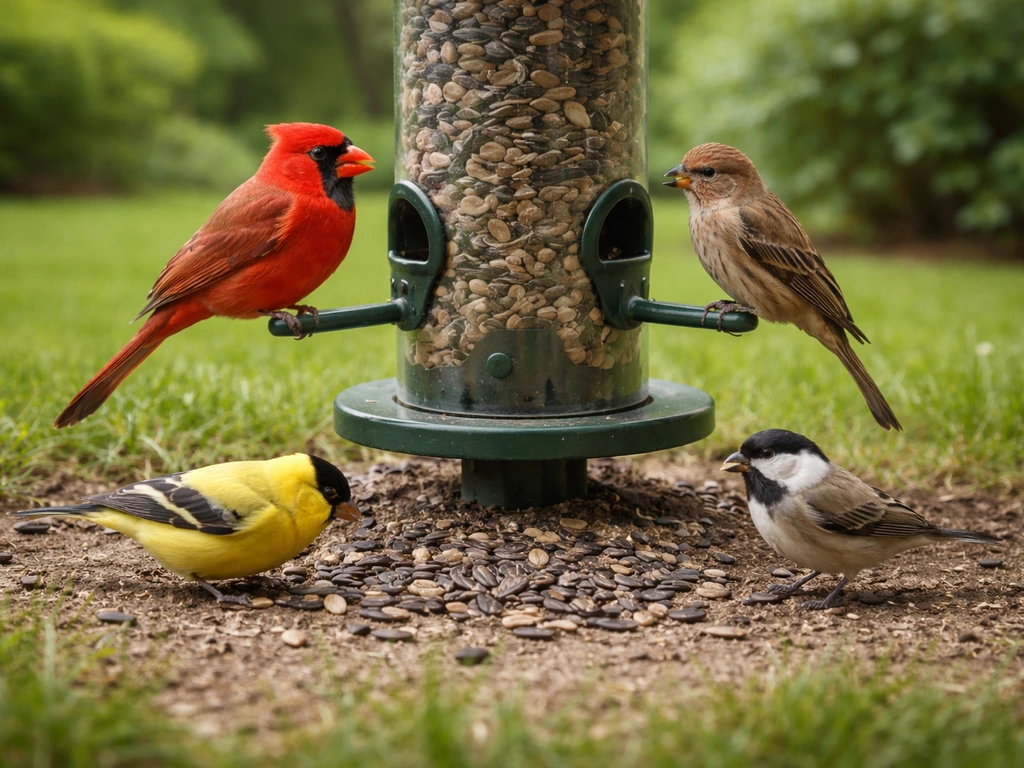
You won't get every species on this list every day, but these are the birds that consistently show up at sunflower feeders across most of North America. Black-oil sunflower is widely considered the single most preferred seed type among backyard birds, and it's easy to see why once you watch a chickadee or nuthatch work through a small pile of it.
| Bird | Shell-cracking ability | Preferred seed form | Feeder or ground? |
|---|---|---|---|
| Northern Cardinal | Strong bill, handles thick shells easily | Black-oil or striped whole seed | Feeder or ground |
| Black-capped/Carolina Chickadee | Moderate, prefers thinner shells | Black-oil or hulled | Feeder |
| American Goldfinch / House Finch | Moderate | Black-oil or hulled | Tube feeder or feeder tray |
| White-breasted Nuthatch | Strong for its size | Black-oil whole seed | Feeder (especially hanging or vertical) |
| Blue Jay | Very strong bill | Striped or black-oil whole seed | Platform feeder or ground |
| Tufted Titmouse | Moderate | Black-oil or hulled | Feeder |
| Downy / Hairy Woodpecker | Strong bill | Black-oil or hulled | Clinging feeder or platform |
| Rose-breasted / Evening Grosbeak | Very strong bill | Striped or black-oil whole seed | Platform feeder |
| House / White-throated Sparrow | Moderate | Black-oil or hulled | Ground or tray |
If you're in the Pacific Northwest or Southwest, you may also see black-headed grosbeaks, pine siskins, or dark-eyed juncos join the mix. In the Southeast, Carolina chickadees often replace black-capped chickadees, but their sunflower seed habits are identical.
Can birds eat sunflower seeds, and which type should you buy?
Yes, most seed-eating songbirds can eat sunflower seeds without any issues. The main question is whether you buy whole (in-shell) seed or hulled (shelled) seed, and within whole seed, black-oil versus striped. Each has real trade-offs worth understanding before you stock your feeder.
Black-oil sunflower vs. striped sunflower
Black-oil sunflower seeds have thinner shells, higher fat content, and a smaller overall size than striped sunflower seeds. That combination means more birds can crack them open, including smaller species like chickadees and finches that would struggle with the thick shell of a striped seed.
Bird House on the Greenway also notes that black-oil sunflower is a favorite for cardinals and chickadees because its shell is easy to open, and shelled options help birds that cannot crack harder shells smaller species like chickadees and finches can crack them open. Striped sunflower is fine for larger-billed birds like cardinals, jays, and grosbeaks, but it effectively excludes a lot of the smaller birds you probably want to attract.
If you're buying one bag to cover the broadest audience, black-oil is the right call.
Whole seed vs. hulled (shelled) sunflower
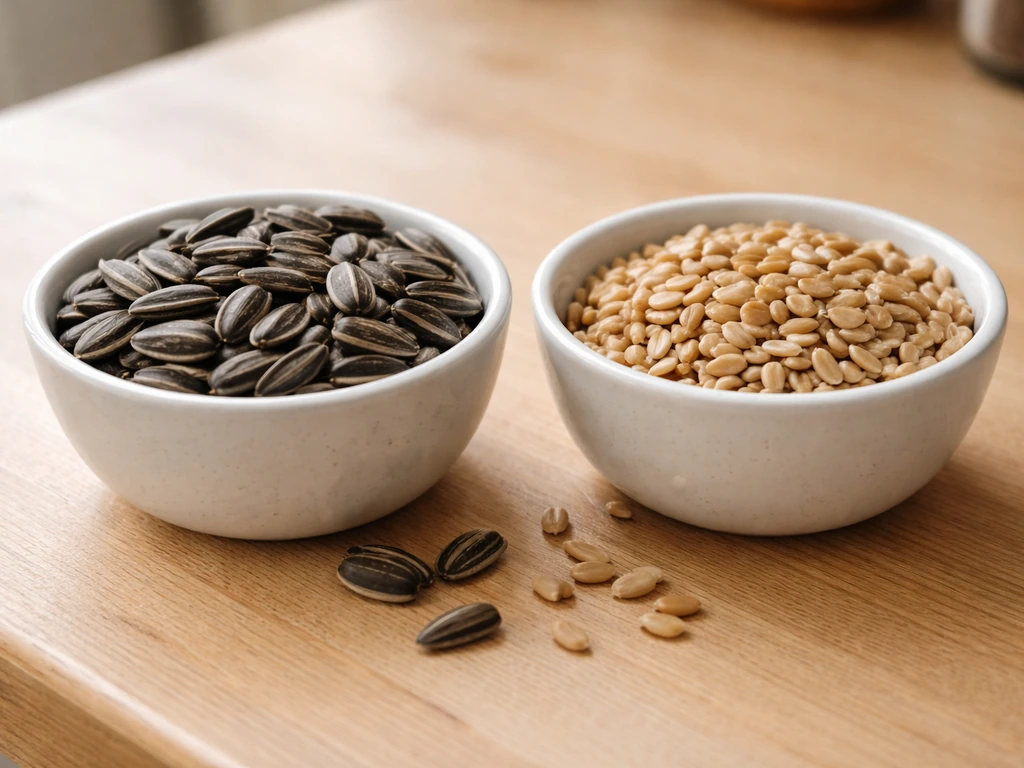
Hulled sunflower (sometimes labeled 'sunflower chips' or 'sunflower hearts') removes the shell entirely. Almost every seed-eating bird will eat it, including species that physically can't crack a whole sunflower shell. It's cleaner because there are no shell piles building up under your feeder, and it's faster for birds to consume since there's no processing step. The downside is cost: hulled seed is more expensive per pound, and it spoils faster once it gets wet because there's no shell protecting the seed meat. It's a good option if you want to attract the widest possible range of species with minimal mess, but you need to be more vigilant about keeping it dry.
| Seed Type | Best for | Shell mess | Spoilage risk | Price |
|---|---|---|---|---|
| Black-oil sunflower (whole) | Broadest bird variety | Moderate shell buildup | Lower (shell protects seed) | Affordable |
| Striped sunflower (whole) | Cardinals, jays, grosbeaks | Moderate shell buildup | Lower | Affordable |
| Hulled sunflower / chips | All species, including small birds | None | Higher when wet | More expensive |
For most backyard setups, black-oil sunflower whole seed is the best starting point. If you want to reduce shell mess or attract smaller finches more reliably, mix in some hulled seed or offer it in a separate feeder.
How to offer sunflower seeds to attract the right birds
The way you offer sunflower seeds matters almost as much as the seed type. Different species have different feeding preferences, and matching your setup to those preferences gets you more birds faster.
- Tube feeders with large ports work well for black-oil sunflower and attract chickadees, nuthatches, finches, and titmice. Birds perch and pick individual seeds.
- Hopper feeders (house-shaped feeders with a seed reservoir) work for a wider range of species including cardinals and blue jays, which prefer a stable perching platform.
- Platform or tray feeders are the most accessible option and attract the broadest range, including sparrows, cardinals, and larger birds. They also allow multiple birds to feed at once.
- Ground feeding (scattering seed directly on the ground or a ground tray) attracts sparrows, doves, and juncos, but it increases disease risk and can draw in unwanted animals. If you go this route, use a low, open ground tray rather than loose piles on bare soil.
- Avoid small-port feeders with short perches if you want to attract cardinals or blue jays. Those birds need room to land and maneuver.
Fill feeders only as much as birds will eat in a few days, especially with hulled seed. Overfilling leads to wet, compacted seed at the bottom of the feeder that birds will ignore and that can grow mold quickly. If you notice how quickly wet, leftover seed can spoil, it also helps explain why bird seed can lead to sunflowers growing where it lands mold quickly.
Feeder and tray placement that actually works
Placement affects both how many birds come and how safe they are when they arrive. Two things drive the main rules here: window collisions and predator exposure.
Window distance
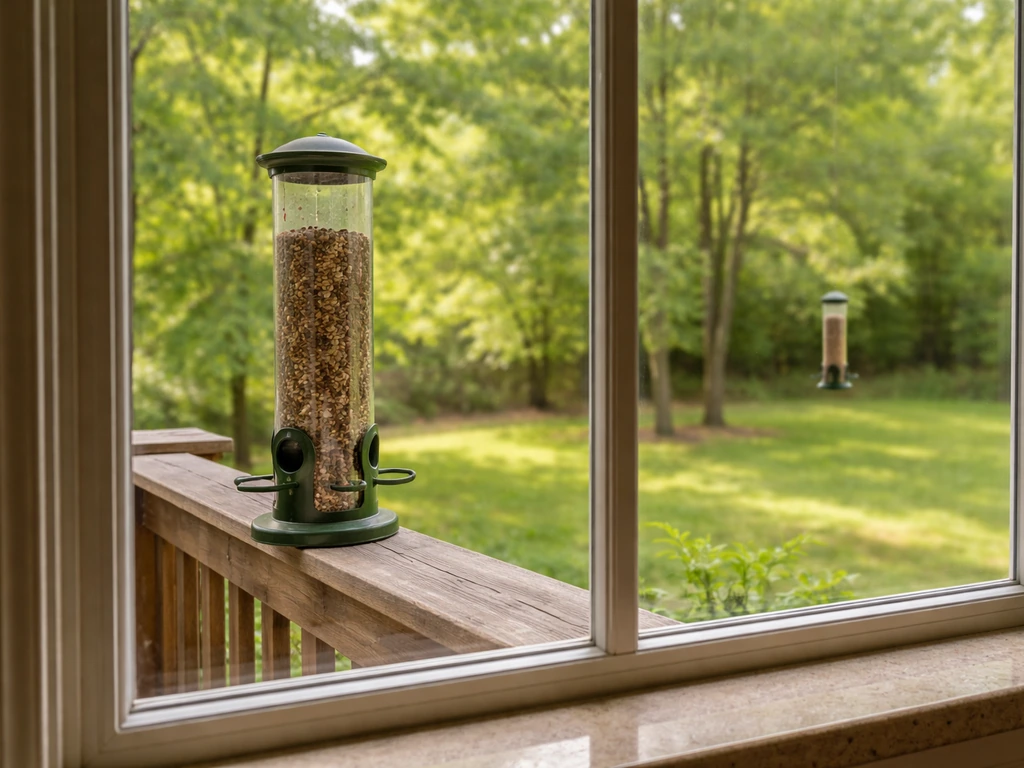
Place feeders either within 3 feet of a window or more than 30 feet away from one. This sounds counterintuitive, but birds launching from a feeder that's only 2 to 3 feet from glass don't build up enough speed to injure themselves if they fly toward it. Feeders placed in the middle range, say 10 to 25 feet from windows, give birds room to accelerate before impact, which is where the dangerous collisions happen. The 3-feet-or-30-feet rule is a widely cited guideline from Audubon and Cornell, and it's worth following.
Height and distance from trees
Hang tube or hopper feeders at least 5 feet off the ground. This keeps seed out of easy reach for most ground-based pests and gives birds a clear sightline for predator detection. Position the feeder about 10 to 12 feet from dense shrubs or trees, close enough that birds have a nearby perch to retreat to between visits, but far enough that squirrels can't jump directly from a branch to the feeder. A metal pole with a squirrel baffle is the most reliable way to keep squirrels out since no feeder design is truly squirrel-proof on its own.
Ground trays vs. elevated feeders
Ground feeding does attract species like white-throated sparrows, dark-eyed juncos, and mourning doves that don't often use elevated feeders. However, loose seed directly on soil, stumps, or a deck surface increases disease spread and attracts rodents. If you want to offer seed low, use a raised ground tray with drainage holes, positioned away from areas where other animals congregate. Clean the tray at least as often as your elevated feeders.
If no birds are showing up: troubleshooting
New feeders often take days to weeks before birds find them. Birds are creatures of habit and it takes time for local populations to discover and trust a new food source. That said, if it's been more than two weeks and you're seeing nothing, work through this checklist. If you still are not seeing birds after adjusting seed type and placement, you can also consider whether you want to plant bird seed in your yard as a related option troubleshooting.
- Check your seed. Smell it. Old, rancid, or moldy seed has a sour or musty odor that birds avoid. Replace it if it smells off.
- Confirm birds are present in your area. If it's peak migration season (spring and fall) birds may be passing through rather than resident. In deep winter, resident birds are your main audience.
- Look at feeder placement. Is it too exposed? Birds won't use a feeder in a wide open area with no nearby cover. Move it closer to a tree line or shrubs.
- Check for deterrents. Reflective objects, outdoor cats nearby, or heavy foot traffic close to the feeder can keep birds away for weeks.
- Try a different feeder style. If you're using a small tube with tiny ports and want cardinals, switch to a hopper or platform feeder.
- Be patient with timing. Early morning (just after sunrise) is when birds are most active at feeders. If you're checking at midday, you may simply be missing the action.
- Add a water source nearby. A shallow birdbath within 10 to 15 feet of your feeder significantly increases the chance of birds discovering and returning to the area.
Storing sunflower seeds so they stay fresh and safe
Sunflower seeds spoil faster than most people expect, especially in warm or humid conditions. The oil content that makes them so attractive to birds is also what makes them go rancid. Poor storage is one of the most common reasons birds stop visiting a feeder.
- Store seed in a sealed, airtight container, ideally metal or hard plastic. Avoid leaving it in the paper or mesh bags it often comes in, which let in moisture and are easy for rodents to chew through.
- Keep containers off the ground and in a cool, dry location. A garage, shed, or basement works well. Avoid storing seed outdoors in warm weather.
- Don't stockpile more than a 4 to 6 week supply at a time. Black-oil sunflower stored in good conditions stays fresh for several months, but hulled seed degrades faster and should ideally be used within a few weeks once opened.
- If seed gets wet in the feeder, remove it immediately. Wet sunflower seed, especially hulled seed, can develop mold within 24 to 48 hours in warm weather. Clumped or discolored seed in a feeder is a sign of moisture damage.
- Watch for sprouting. Whole sunflower seeds that fall to the ground can germinate and sprout. This is a sign the seed is still viable but it creates a mess and can attract additional pests. If you're curious about whether sprouted sunflower bird seed can grow into actual plants, that's a separate topic worth exploring.
- Inspect stored seed before each refill. If you see webbing, insects, or clumping inside the storage container, discard the affected seed and clean the container before refilling.
Pest prevention at and around the feeder
Insects (especially grain moths and beetles) can infest poorly stored seed. Rodents are drawn by fallen seed under feeders. Squirrels are a near-universal challenge. For insects, airtight storage is your first line of defense. For rodents, clean up fallen seed regularly and consider a no-mess or hulled seed option that produces less shell debris. For squirrels, a pole-mounted feeder with a squirrel baffle is the most effective physical barrier. Cage-style feeders that only allow smaller birds to reach the seed ports are another option, though they exclude larger birds like jays and cardinals.
Keeping your feeding area clean and hygienic
A dirty feeder spreads disease among birds. Salmonella and other pathogens can accumulate in wet seed debris, fecal matter, and shell hulls. The cleanup routine doesn't have to be complicated, but it does need to be consistent.
How often to clean feeders
Clean seed feeders every two weeks under normal conditions. If you notice sick birds at your feeder (fluffed feathers, lethargy, discharge), clean and disinfect immediately and consider taking the feeder down for a week or two. In hot, humid weather, increase cleaning frequency to once a week, especially for hulled seed feeders, which accumulate moisture faster.
How to clean a feeder properly
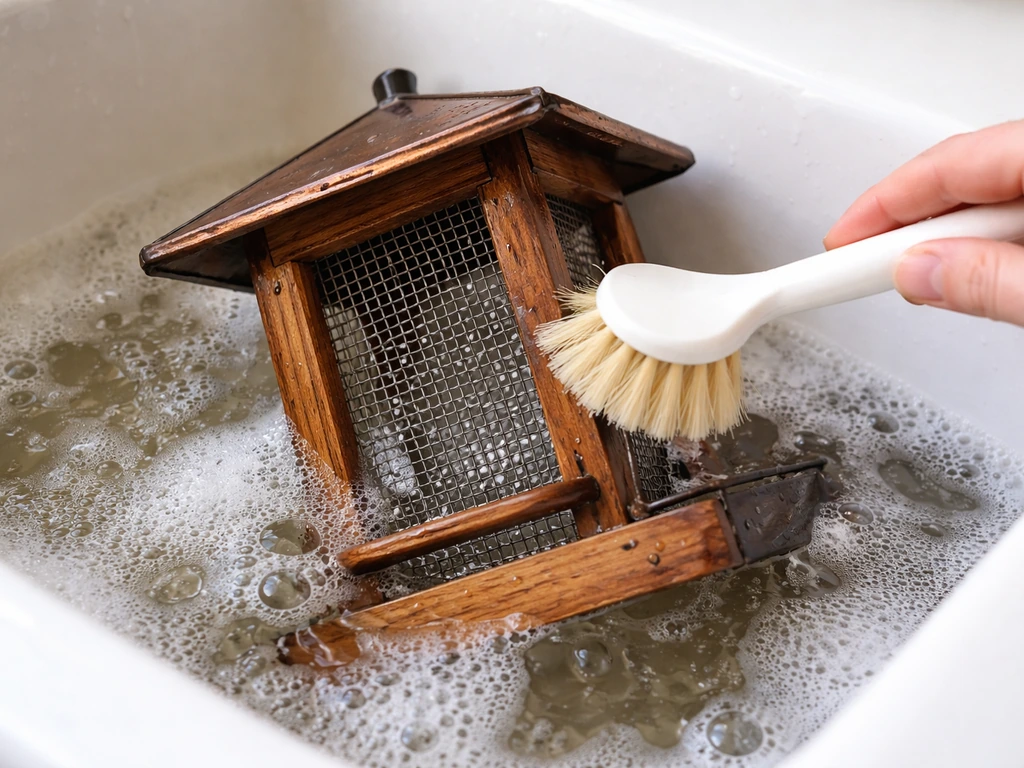
- Empty all remaining seed from the feeder. Discard it rather than putting it back, especially if there's any clumping or discoloration.
- Scrub the feeder with warm soapy water and a stiff brush, getting into all ports, corners, and crevices where seed debris and fecal matter collect.
- Rinse thoroughly, then disinfect. Use either a 50/50 white vinegar and water solution for general cleaning, or a dilute bleach solution of 1 part bleach to 9 parts water for more thorough disinfection.
- Rinse again after disinfecting to remove any residue.
- Let the feeder dry completely before refilling. Refilling a damp feeder is one of the fastest ways to create mold in your seed.
Managing shell debris and fallen seed
Sunflower shell hulls accumulate under feeders quickly and can create a mat of debris that inhibits grass growth, harbors mold, and attracts rodents. Rake or sweep under feeders every one to two weeks and dispose of the debris in your compost or trash. If you're using a platform tray, check it after rain since wet shell debris sitting in a tray becomes a hygiene problem within a day or two in warm weather. Switching partly or fully to hulled sunflower seed eliminates most of the shell debris issue, though it does increase the need to monitor seed freshness.
FAQ
What bird eats sunflower seeds the most reliably in mixed species backyards?
Black-oil sunflower seed typically brings the widest mix of common backyard species because its thinner shell is easier for small birds to crack. If you want the highest probability of seeing activity quickly, start with black-oil whole seed before experimenting with striped or specialty mixes.
Do birds eat hulled sunflower seeds, even if they cannot crack whole seeds?
Yes, hulled sunflower (chips or hearts) is eaten by essentially all sunflower seed visitors because there is no shell to process. The main trade-off is that it spoils faster when it gets damp, so you should use less at a time and check for clumping or sour odor sooner than you would with whole seed.
Are there birds that avoid sunflower seeds, even if I use the right type?
Some birds may not show up consistently because sunflower feeders do not match their usual diet, especially during certain seasons. If you are getting limited turnout, try running two feeders (one whole black-oil, one hulled) or rotate seed types, and give changes at least a couple of weeks before concluding they are not interested.
Will sunflower seeds attract squirrels as well as birds?
Yes, fallen seed and shell debris can quickly draw squirrels. The best practical fix is prevention, use a pole-mounted feeder with a squirrel baffle, and reduce cleanup hazards by raking or sweeping under feeders regularly and removing any wet seed that birds ignore.
How can I tell if my sunflower seed has gone bad and I should stop feeding it?
Look for clumping, a musty or rancid smell, visible mold, or seed that turns dark and sticky after getting humidity. With hulled seed this can happen faster, so discard questionable seed promptly and wipe the feeder so birds are not eating contaminated residue.
Should I use whole sunflower seeds or striped sunflower if I want smaller birds too?
Use black-oil whole seed if your goal includes smaller birds like chickadees and finches. Striped sunflower often limits access for smaller billed birds because the thicker shell requires more force, so you may see fewer of the small visitors unless you supplement with black-oil or hulled seed.
What is the fastest way to reduce shell mess without losing all birds?
Offer hulled sunflower in a separate feeder rather than replacing everything at once. This keeps shell debris down while still letting shell-cracking birds use the whole-seed option, and it also makes it easier to remove the hulled feeder if moisture accumulates.
Why do I sometimes see no birds at a feeder after putting it up?
New feeders often take time for local birds to discover and trust them. If you have zero activity after about two weeks, revisit seed type and feeder placement, check for competing food sources nearby, and ensure the feeder is clean and dry, since bad or wet seed can repel birds even when they notice it.
Is it safe to hang feeders near windows?
To reduce collision risk, follow the “within a few feet or far away” approach, place feeders either very close to windows (about 3 feet) or far enough away (over 30 feet). Mid-range distances are where birds may build speed toward the glass, increasing injury risk.
How high should I hang a tube or hopper feeder to discourage ground pests?
Hang it at least 5 feet off the ground so many ground-based pests have a harder time reaching seed. For best results, also place it about 10 to 12 feet from dense cover so birds can retreat quickly while squirrels cannot easily jump directly from branches to the feeder.
How often should I clean a sunflower feeder beyond the usual schedule?
In hot, humid weather, clean more frequently, about weekly if you are using hulled seed, because moisture builds faster and pathogens spread more easily in wet debris. Also clean immediately if you notice sick birds or strong wet buildup around the feeding ports.
Do I need to clean up shell hulls under the feeder even if birds seem healthy?
Yes, shell hull mats can inhibit grass growth, trap mold, and attract rodents over time. Make it a habit to rake or sweep under the feeder every one to two weeks, and check platform trays after rain since wet debris can become a hygiene problem quickly.