Yes, blue jays absolutely eat bird seed, and they are enthusiastic about it. Bats can also be attracted to bird feeders that provide bird seed, especially at night bats and bird seed. Ravens can also be attracted to backyard feeders when bird seed is available bats and bird seed. However, if you are also wondering whether owls eat bird seed, the answer depends on the type of owl and what prey is nearby do owls eat bird seed. Hawks may also take advantage of bird feeders if smaller birds are coming in to eat seed do hawks eat bird seed. According to the Audubon Society, blue jays 'may feed on almost anything' and are quick to take advantage of feeders. Their top picks are black-oil sunflower seeds, peanuts (both in-shell and pieces), and whole kernel corn. If you put any of those out, blue jays will find them. You may also be wondering whether orioles eat bird seed, and the answer depends on the type of orioles and what is available in your yard do orioles eat bird seed.
Do Blue Jays Eat Bird Seed? Feeder Tips and Safety
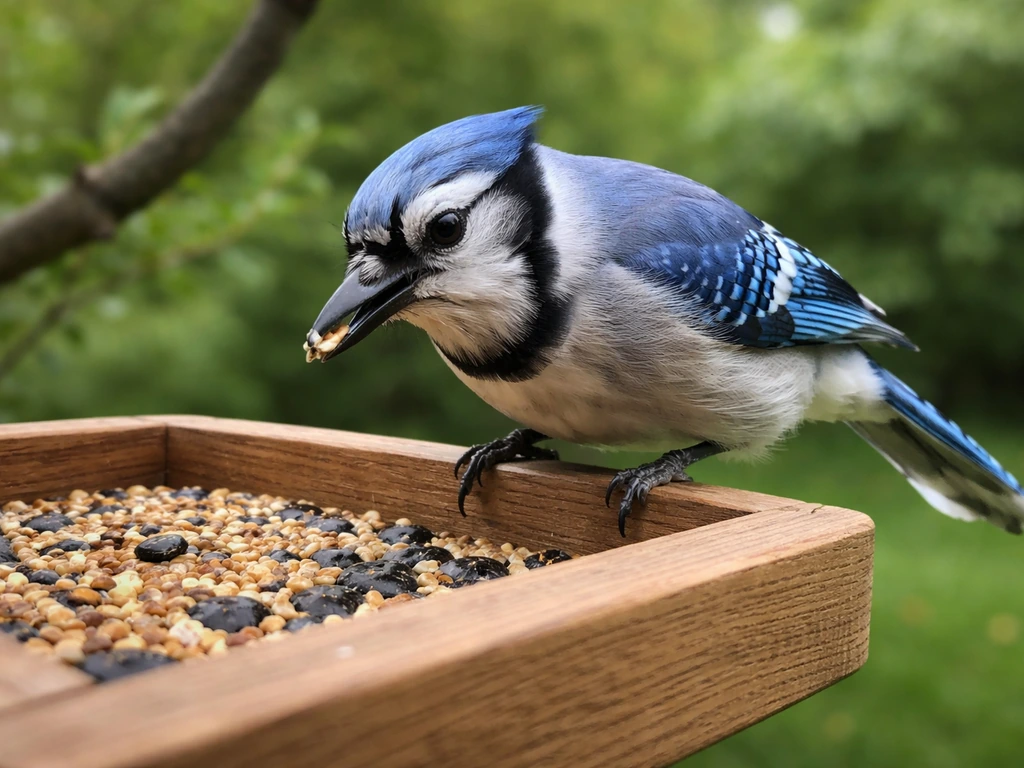
How blue jays actually behave at feeders

Blue jays are bold, confident feeders. They tend to arrive with purpose, often landing heavily on a tray or platform, grabbing the biggest seed or nut available, and flying off immediately. That grab-and-go pattern is caching behavior: blue jays stuff food into their throat pouches and throat, carry it to a hidden spot, and stash it for later. Cornell Lab's FeederWatch cameras have documented this clearly, including a documented story of blue jays making repeated peanut runs at Cornell's feeders. When a feeder is loaded with high-value food like peanuts, you will often see a jay make five or six fast trips in a row.
Blue jays are not dainty. They tend to scatter seed while digging for preferred pieces, which creates more mess than smaller songbirds. They also displace smaller birds at shared feeders, not always through direct aggression but just by showing up and being large. Expect to see chickadees and finches retreat when a jay lands. That said, blue jays are also displaced by larger or more aggressive birds themselves. In some regions, common grackles, red-headed woodpeckers, and even eastern gray squirrels have been observed pushing blue jays off feeders.
Setting up feeders and trays to attract blue jays
Feeder type and placement
Blue jays are too large and too bold for small tube feeders designed for finches. They do best at platform feeders (flat, raised trays with drainage holes) or large hopper feeders with wide perch ledges. If you use a pole-mounted feeder, place it about 5 feet off the ground and add a cone-shaped baffle of at least 17 inches in diameter below the feeder to block squirrels from climbing up and beating the jays to the food. For window placement, keep feeders either within 3 feet of a window or more than 30 feet away to reduce the risk of window strikes.
Platform feeders should have drainage holes drilled into the bottom so water does not pool after rain. Standing water is the fastest way to get moldy seed, and blue jays will avoid a tray that smells or looks fouled. If you want to hang a feeder from a horizontal line rather than a pole, you can thread short lengths of plastic tubing on either side of the feeder, which spins when squirrels try to walk along the line and keeps them off. Project FeederWatch advises against spreading seed directly on the ground, since it attracts rodents and creates a sanitation problem quickly.
Best seed types for blue jays

| Food | Blue jay preference | Best feeder type |
|---|---|---|
| Black-oil sunflower seeds | Very high | Platform or hopper feeder |
| Peanuts in shell | Very high | Platform feeder or peanut feeder |
| Peanut pieces (shelled) | High | Platform or hopper feeder |
| Whole kernel corn | High | Platform feeder or corn cob feeder |
| Suet | Moderate | Suet cage feeder |
| Mixed seed blends | Low to moderate (pick through) | Platform feeder only |
Black-oil sunflower seeds and peanuts are your two best bets. Both are consistently listed by Cornell Lab, Audubon, and the Missouri Botanical Garden as top blue jay attractors. Peanuts in the shell give jays something to work with and tend to hold their attention longer. If you use a mixed seed blend, blue jays will dig through it looking for sunflower seeds and corn, throwing everything else onto the ground, which increases mess and attracts pests. Offering sunflower seeds and peanuts in separate, dedicated feeders cuts down on that scatter significantly.
Keeping seed fresh and safe
Seed quality matters a lot. Wet, old, or contaminated seed can grow mold and carry pathogens that harm birds. Blue jays are big enough to handle a little rough handling, but smaller birds visiting the same feeder can be seriously affected by moldy seed. The rule is simple: only put out as much seed as birds will eat in one to two days, especially during warm or humid weather. In cooler, drier seasons you can fill feeders a bit more generously.
- Store seed in a sealed, airtight container, preferably metal or thick hard plastic, in a cool dry location like a garage or shed.
- Never add fresh seed on top of old seed. Empty the feeder completely, inspect for clumping or mold, and then refill.
- If seed clumps together, smells musty, or looks discolored, discard the whole batch. Do not try to dry it out and reuse it.
- Always let a feeder dry completely before refilling after cleaning. Refilling a damp feeder is the main cause of rapid mold growth.
- In humid climates or during rainy stretches, check feeders daily rather than every couple of days.
Managing pests, mess, and mold under the feeder

Blue jays are messy feeders, and that mess lands directly below your feeder. Hulls, dropped seed, and droppings accumulate fast and become a genuine pest and disease risk if ignored. Rodents (mice and rats especially) are drawn to spilled seed on the ground. Wet seed and droppings can grow mold and harbor bacteria.
- Rake or sweep the ground beneath the feeder at least once a week. During high-traffic periods with blue jays actively caching, do it every two to three days.
- Dispose of raked material in a sealed bag or compost bin away from the feeding area, not just to the side of it.
- Place a tray or catch pan under the feeder to collect hulls, then empty and rinse it every few days.
- If you see droppings accumulating on or under a tray feeder, clean the tray immediately rather than waiting for your regular schedule.
- Inspect the ground and feeder area for signs of rodent activity: droppings, chewed containers, or burrowing near the base of a pole feeder. If you see signs, stop ground-level feeding immediately and store all seed inside.
Competing birds and handling blue jay aggression
Blue jays are dominant birds at most feeders. They will displace smaller songbirds like chickadees, nuthatches, and sparrows just by landing nearby. This is normal feeder behavior, and it is worth knowing that it is less about active aggression and more about size and confidence. The smaller birds typically return within a minute or two after a jay grabs what it wants and flies off to cache it.
If you want to support both blue jays and smaller birds without one group constantly chasing off the other, the most effective solution is separate feeders at different heights and locations. Put peanuts and large sunflower seeds on a platform feeder for blue jays, and hang a tube feeder with safflower or nyjer seed about 10 to 15 feet away for smaller birds. Blue jays generally do not bother with tube feeders because the perches are too small and the ports too narrow for their bills.
It is also worth knowing that blue jays themselves get pushed around by larger visitors. Crows, grackles, and squirrels can dominate a feeder space and prevent blue jays from feeding at all. Crows may also eat from bird feeders, including bird seed, depending on what is available Crows, grackles, and squirrels can dominate a feeder space. If your feeder area is overrun by any of those, a squirrel baffle and a smaller feeding zone with less food spread around can help restore some balance. Crows behave differently from blue jays at feeders, much like the contrast you would see comparing blue jays to robins or orioles, which tend to be less interested in seed feeders altogether. Robins, for example, can also eat bird seed, especially when it is easy to access and made for backyard feeders do robins eat bird seed.
Feeder cleaning and storage routine
A consistent cleaning schedule is the single biggest factor in keeping your feeder area safe for birds and your yard free of pests and mold. Here is a practical routine that works year-round.
Every one to two weeks
- Empty the feeder completely and discard any remaining seed.
- Scrub the feeder with hot water and a stiff brush to remove hulls, droppings, and residue.
- Disinfect by soaking or wiping with a solution of no more than 1 part bleach to 9 parts water (a 10% bleach solution). Let it sit for a few minutes.
- Rinse thoroughly with clean water until you cannot smell bleach.
- Allow the feeder to air dry completely, ideally in sunlight, before refilling. This step is non-negotiable for mold prevention.
- Rake the area below the feeder and remove all accumulated debris.
During warm or wet weather
In summer or during rainy periods, mold grows much faster. Shorten your cleaning interval to every three to five days if possible, and reduce the amount of seed you put out so none is sitting wet for more than a day. Iowa DNR recommends monthly bleach cleanings as a minimum, but Project FeederWatch specifically flags warm and damp conditions as the trigger for doing it more often. Iowa DNR recommends cleaning bird feeders and waterers with a “10 percent bleach solution” about once each month and refilling only after the feeder is dry monthly bleach cleanings. If you ever see black or fuzzy growth inside a feeder, clean it immediately, do not wait for the scheduled day.
Seed storage best practices
- Store seed in a sealed hard container, not the paper or thin plastic bags it comes in.
- Keep storage containers off the ground and away from walls where rodents travel.
- Use older seed first (first in, first out) rather than dumping fresh seed on top of a half-empty container.
- Check stored seed every few weeks for clumping, off smells, or visible mold. When in doubt, throw it out.
- Buy seed in quantities you will use within four to six weeks to ensure freshness, especially for peanuts which go rancid faster than sunflower seeds.
Blue jays reward the effort. Once they discover a reliable, clean source of sunflower seeds and peanuts at your yard, they will return regularly and sometimes bring others. The caching behavior means they may visit far more often than they appear to be eating, which is one of the more interesting things to watch at a backyard feeder.
FAQ
Do blue jays eat bird seed year-round, or only in certain seasons?
They use feeders most aggressively when natural food is scarce, like late fall through winter, but they may still visit during spring and summer. In warm weather, reduce the amount you fill because seed spoils faster, which also keeps visiting birds healthier and reduces mold.
What is the best way to offer peanuts so blue jays keep coming without wasting food?
Use in-shell peanuts or large peanut pieces and keep them in a feeder with drainage, so hulls do not sit in wet conditions. If you use a mixed seed blend, expect a lot more scatter, because blue jays dig for peanuts and sunflower and drop the rest.
Will blue jays eat suet or fruit, or do they only prefer seed?
Blue jays will mainly target high-value seed and nuts at feeders, but they also eat insects and will opportunistically take other foods you offer. If you switch foods, do it gradually and keep an eye on whether smaller birds are being outcompeted on your current feeder type.
Do blue jays ever get stuck or injured at feeders?
Yes, especially if perches are slippery, openings are awkward, or the feeder design suits smaller birds but not larger jays. Choose a platform or large hopper feeder with sturdy perches, and inspect for sharp edges, loose parts, and any gaps where a bird could wedge itself.
How do I stop blue jays from emptying the feeder immediately?
Limit the portion you put out, use a feeder designed to meter food (like a hopper), and separate the highest-value items so they are not all in one place. Also, shorten refills during humid weather so there is less time for caching and spoilage.
Should I use safflower or sunflower if I also want to attract smaller birds?
Safflower often attracts a different set of birds than sunflower, but blue jays can still take it. If your goal is a smaller-bird zone, place tube feeders with safflower or nyjer farther away and higher or lower than the blue jay platform feeder, then keep peanuts and large sunflower reserved for the jay feeder.
Do blue jays prefer platform feeders, or will hopper feeders work too?
Both can work well, but platform trays and large hoppers with wide ledges are usually most effective because blue jays land securely and grab quickly. If your hopper has narrow perches meant for finches, jays may avoid it or only feed briefly.
What should I do if the spilled seed below my feeder is attracting rodents?
Do a targeted cleanup under the feeder, remove husks and fallen seed regularly, and avoid spreading seed on the ground. A baffle and a feeder height that discourages climbing help, but sanitation is the main control since rodents respond to consistent food sources.
How often should I clean feeders to prevent mold and disease from blue jay mess?
During warm or rainy periods, plan on cleaning and refreshing more frequently, rather than waiting for a monthly routine. If you see any black or fuzzy growth, or you notice seed that smells damp or looks clumped, clean it immediately and discard the affected seed.
Will blue jays cause window collisions, and how can I reduce the risk?
They are bold at feeders, and collisions happen when birds fly in at speed. Place feeders within a few feet of the window or more than a few dozen feet away, and consider temporary repositioning during peak jay traffic until you see fewer near-misses.
Do crows, grackles, or squirrels also eat from the same feeder as blue jays?
They often do, and when they dominate a feeding area, blue jays may not get a turn. If that happens, use stronger squirrel protection (baffles) and create a smaller-bird or jay-focused feeding zone with the food arranged so larger competitors cannot monopolize it.
Do Bats Eat Bird Seed? How to Stop Seed-Feeding
Find out if bats eat bird seed, spot bat versus bird signs, and stop feeder seed theft while keeping yards safe.