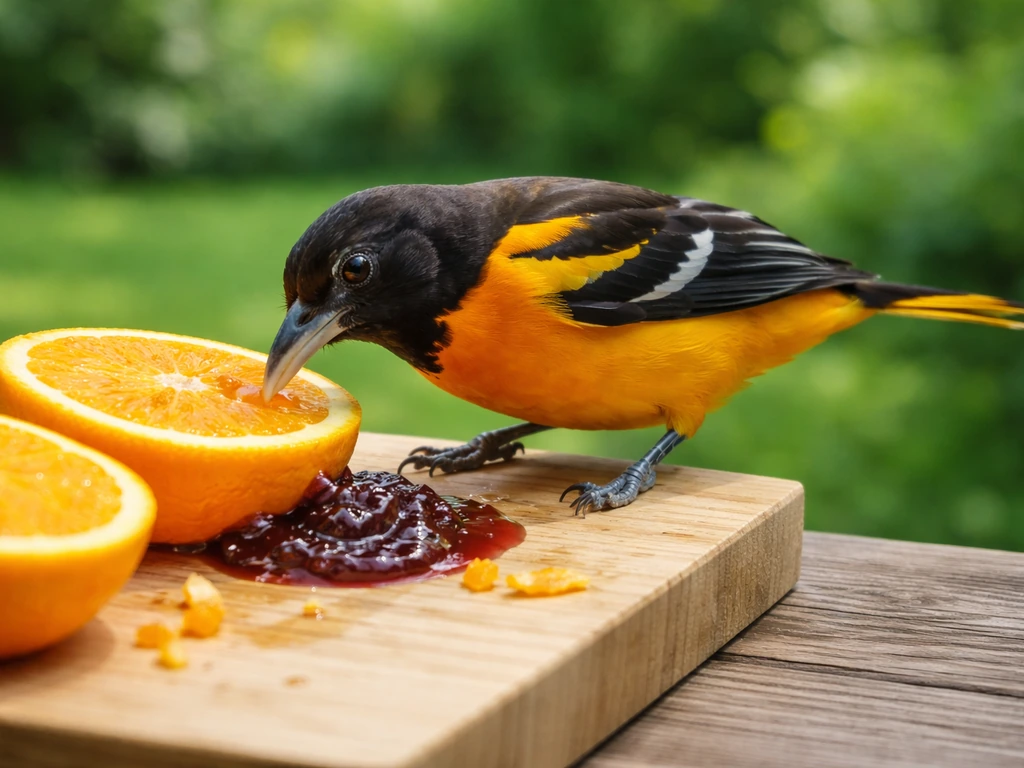
Yes, ravens will eat bird seed. They are opportunistic omnivores and will pick through whatever is available at a feeder, especially larger seeds like black-oil sunflower and peanuts. Hawks will typically eat meat such as rodents, smaller birds, and carrion rather than bird seed. That said, seed is not their first choice. If you are wondering about your specific feeder, do orioles eat bird seed, and the answer depends on the type of seed and whether it is offered in an accessible way. Ravens prefer meat, carrion, eggs, and insects when those are on offer. At a backyard feeder, they tend to show up because it is an easy, reliable food source, not because they are specifically craving millet. If you are seeing ravens at your seed station, the real question is usually how to stop them from taking over and making a mess.
Do Ravens Eat Bird Seed? How to Stop Them Safely

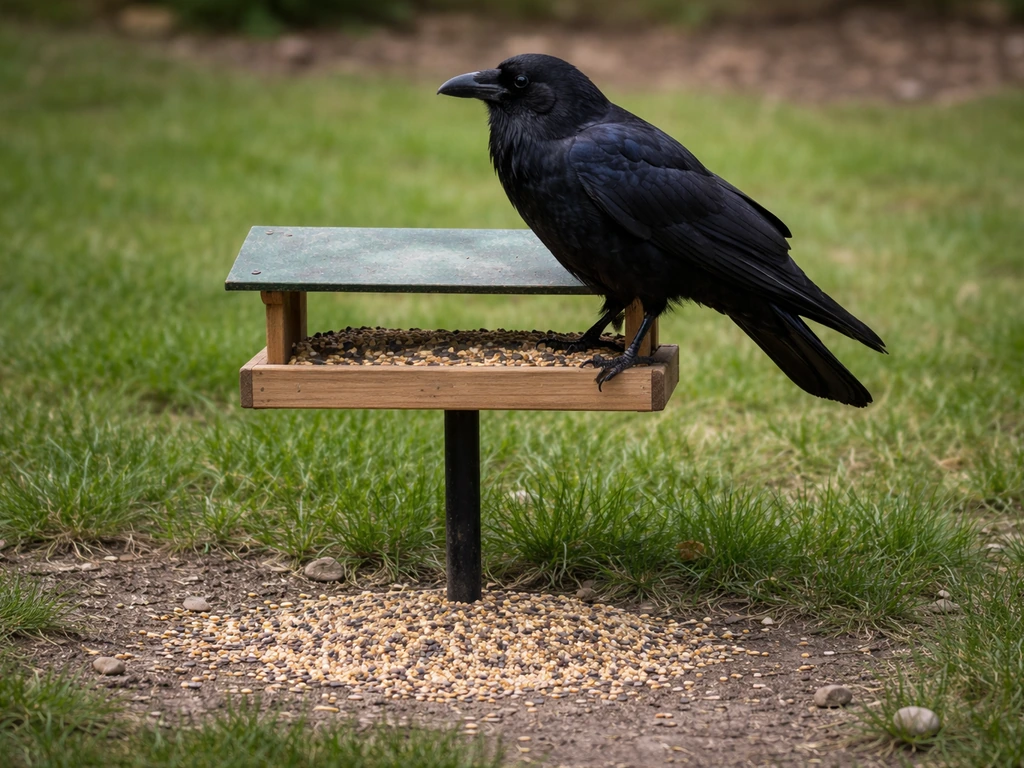
Why ravens show up at your feeder in the first place
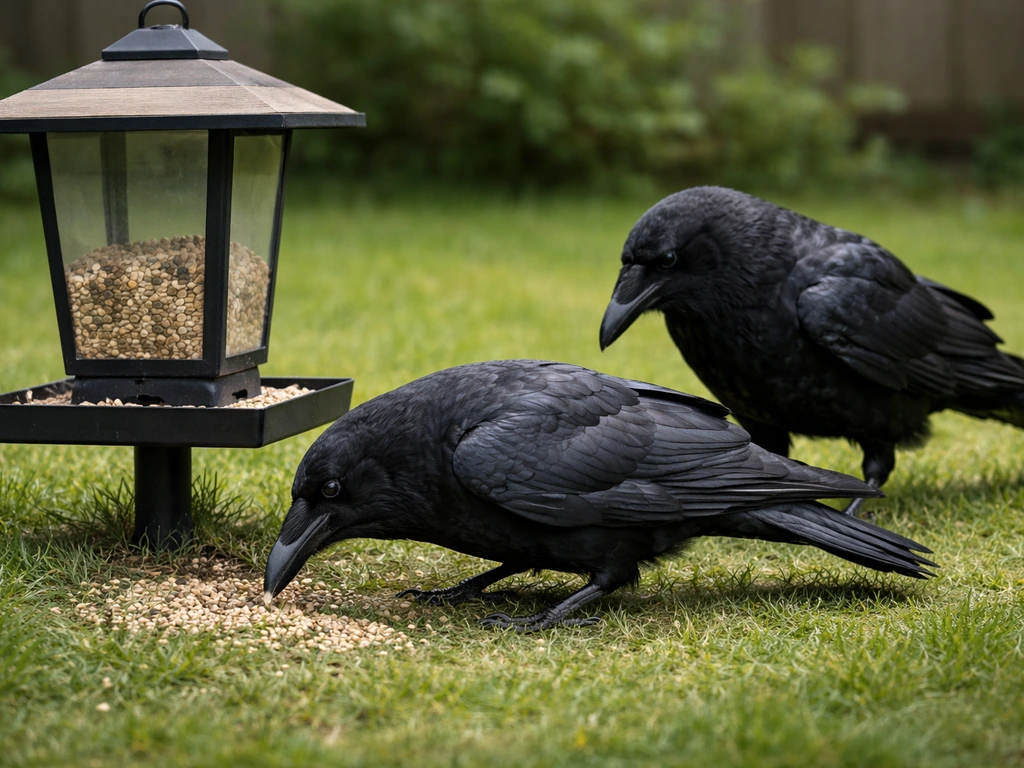
Ravens are what wildlife biologists call master foragers. The National Park Service describes them as omnivores that eat grains and fruit alongside carrion, live prey, and insects. The Smithsonian National Zoo puts it simply: their diet varies based on habitat and available food sources. That flexibility is exactly why a bird feeder gets their attention. If your yard is regularly stocked with seed, peanuts, or suet, a raven passing through will clock that resource and come back.
Ravens forage primarily on the ground. They are big birds (up to 25 inches long, with a wingspan reaching nearly four feet), so tray and platform feeders are much more accessible to them than small port or tube designs. They will also knock seed off a tray just to sort through it on the ground, which is where the real mess starts. Unlike smaller songbirds that visit quickly and move on, a raven will linger, dominate the space, and drive off other birds.
One behavior worth knowing: ravens cache food. They will pick up more than they eat and bury it nearby, often in the ground. So even when a raven seems to have left, it may have stashed a supply of your sunflower seeds in your lawn. This caching habit is documented across corvids and is part of why a single raven visit can strip a feeder faster than you would expect.
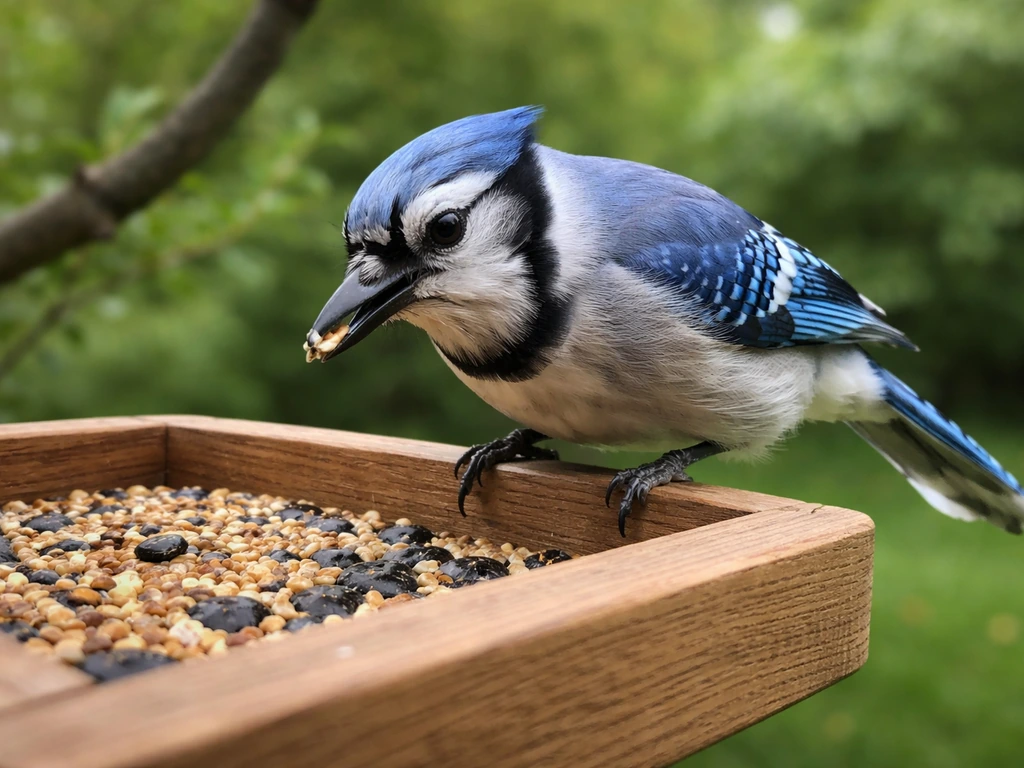
Ravens are closely related to crows, and they share the same bold, problem-solving personality. If you have ever dealt with crows at a feeder, ravens behave similarly but on a larger scale. Blue jays, also corvids, show some of the same food-hoarding tendencies but are small enough that standard tube feeders largely exclude them from bulk access. Blue jays do eat bird seed, and you can usually spot them working the feeder for smaller offerings. Ravens are simply too big to be kept out by size alone unless you use the right feeder design.
How to stop ravens from taking over your feeders
Switch to feeder designs they physically cannot use
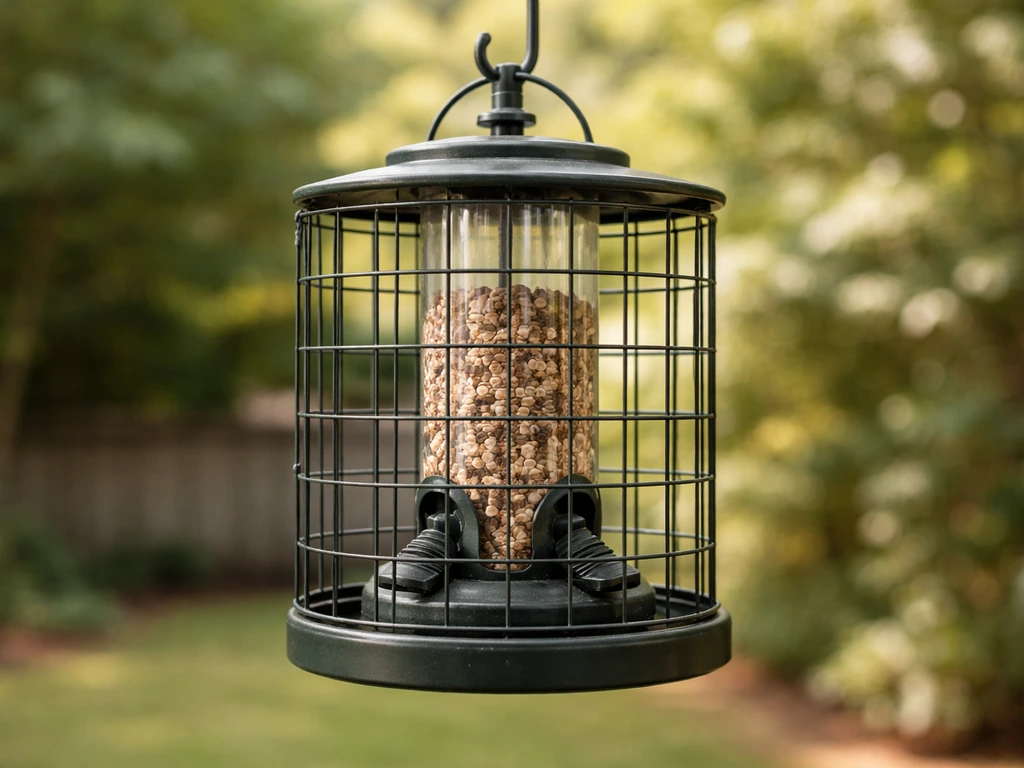
This is the most reliable long-term fix. Ravens cannot fit their bills into small port holes or squeeze into wire mesh tube feeders designed for small birds. Replace open tray feeders with hopper feeders that have short perches and small feeding ports. For peanuts specifically, Tufts recommends tube-shaped metal mesh feeders where the opening size limits who can access the nuts. A raven's beak is too large to extract peanuts from a properly sized mesh peanut feeder.
Use a weight-activated or caged feeder
Weight-activated feeders close off seed access when anything heavier than a target bird lands on them. Ravens, weighing around 1.5 to 4.5 pounds depending on the individual, will easily trigger the shutoff mechanism designed to stop squirrels (usually set around 3 to 5 ounces). Caged feeders, which surround the seed station with a wire cage that only small birds can pass through, are equally effective. Both designs are available at most hardware and garden stores.
Adjust feeder placement
Move feeders away from open ground areas where ravens prefer to forage and land. Hanging feeders from thin wire between two points, rather than on a pole or branch, makes landing awkward for large birds. Placing feeders closer to shrubs or dense plantings gives small birds a quick escape but makes big corvids less comfortable since they prefer open sightlines when feeding.
Rotate deterrents to prevent habituation
Reflective tape, predator silhouettes, and alarm-call devices can temporarily discourage ravens, but ravens are intelligent and acclimate quickly. The Minnesota DNR recommends moving or changing frightening devices regularly, ideally daily, so the birds do not learn to ignore them. The USDA makes a similar point: scare devices lose effectiveness when they emit the same patterns in the same location over time. Think of visual deterrents as a short-term bridge while you work on the feeder design changes that actually solve the problem.
Seed choices that make your feeder less appealing to ravens
What you put in your feeders matters almost as much as how you present it. Ravens are drawn to high-value, calorie-dense foods: peanuts, suet, whole corn, and large seeds. Switching to smaller seeds that less appeal to large corvids can shift the visitor profile at your feeder. Do bats eat bird seed too, and what should you change to reduce bat visits at your feeder? Do owls eat bird seed too, and what should you do differently if you want to protect your feeder from different types of backyard birds Switching to smaller seeds.
- Use nyjer (thistle) seed in a finch tube feeder. Ravens have no interest in it and cannot extract it from the tiny ports.
- Switch from peanuts in a tray to peanuts in a properly sized metal mesh tube feeder.
- Avoid loose mixes with large sunflower chunks or whole corn on an open tray.
- Remove suet feeders or use a suet cage with a tail-prop design that requires birds to hang upside down (ravens will not bother).
- Use shell-free black-oil sunflower in a tube feeder with small ports rather than in a tray or hopper with an open top.
The goal is not to stop feeding birds entirely. It is to present seed in a form that songbirds can access but large corvids cannot. For example, many crows will not be able to access seed if it is offered in a way they cannot crack open or reach large corvids cannot. Feeders with port openings under half an inch in diameter effectively exclude ravens from most seed access.
Dealing with wasted seed, pests, and cleanup
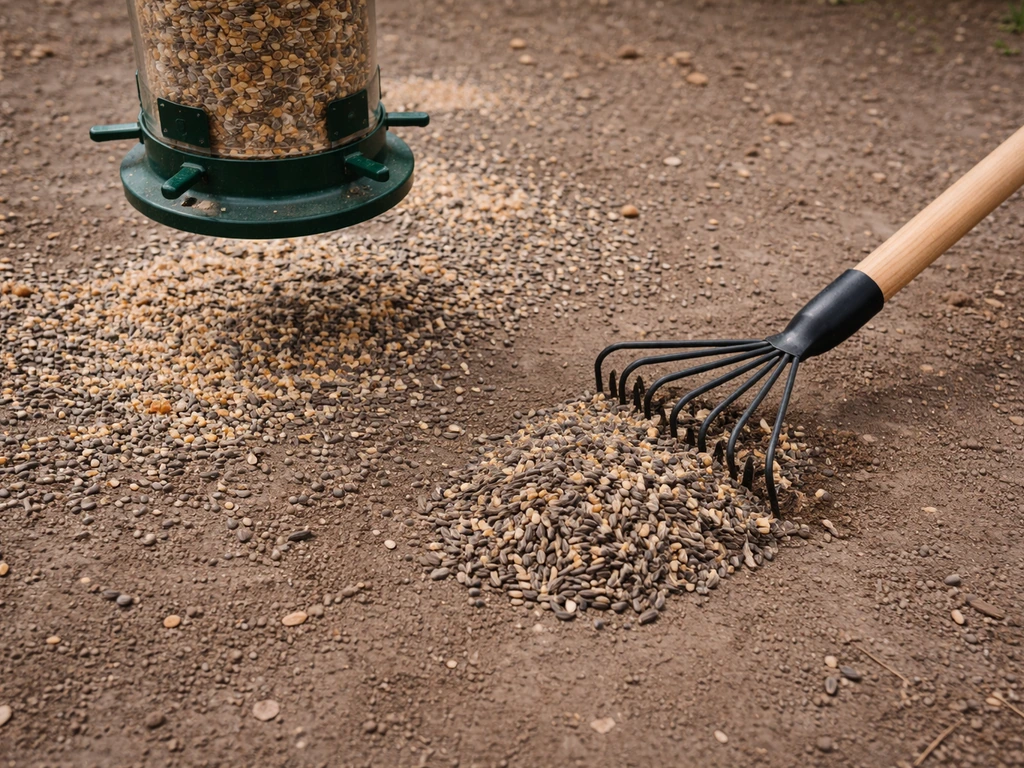
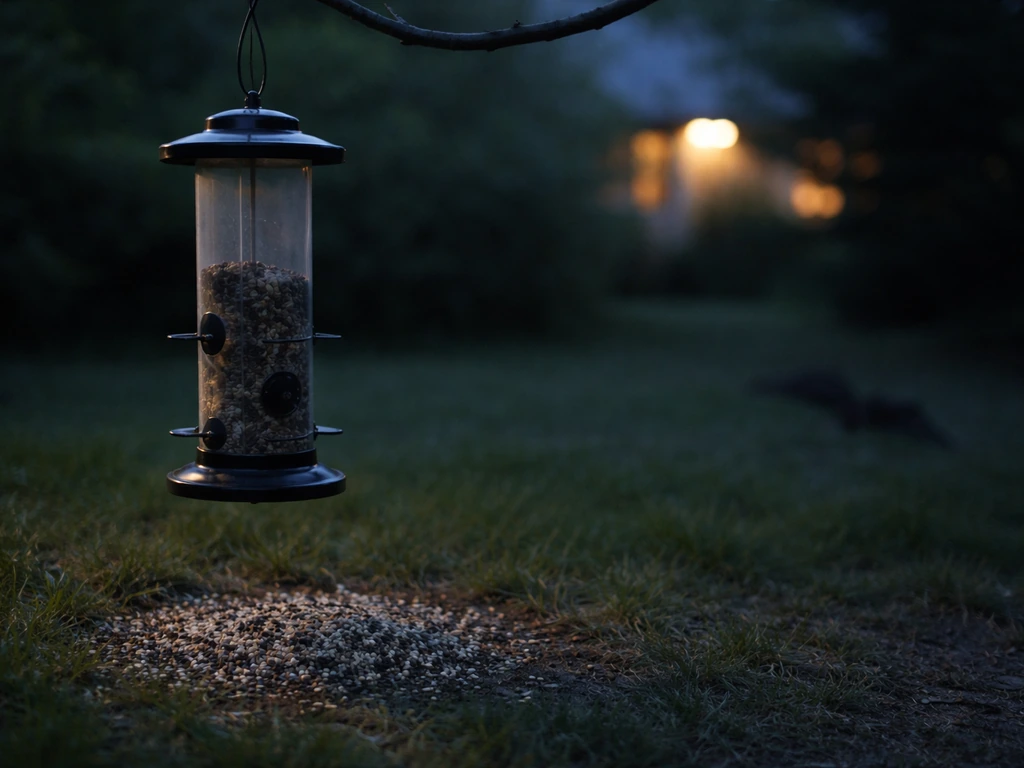
Ravens knock a lot of seed to the ground. That spilled seed is the start of a whole separate problem. Wet, ground-level seed is a fast track to mold growth, and the U.S. Fish & Wildlife Service notes that salmonella can grow in moldy, wet seed and bird droppings. Ground seed also pulls in rodents. King County Public Health directly links spilled feeder seed to rat attraction. This is worth taking seriously.
Clean up spilled seed promptly
Rake or sweep up seed hulls and droppings beneath feeders at least every two to three days, more often in wet weather. The University of New Hampshire Extension specifically calls out seed hulls and droppings as primary pest attractors. If you have had a raven visit that spread seed widely, do a same-day cleanup rather than waiting for your regular schedule.
Prevent wet and moldy seed
Penn State Extension is direct on this point: if seed becomes moldy, do not use it. Check your feeder after rain. Wet clumps of seed inside a hopper or tray feeder can start molding within 24 to 48 hours in warm weather. Scoop out wet seed, rinse the feeder with a diluted bleach solution (1 part bleach to 9 parts water), let it dry completely, and reload with fresh seed. Store bulk seed in a sealed, airtight container in a cool, dry location. A metal garbage can with a locking lid works well and also deters rodents.
Reduce ground feeding entirely
If ravens have been a persistent problem, consider stopping ground feeding altogether while you reconfigure your setup. Platforms and tray feeders placed low to the ground are what enable most of the seed scatter. Switching entirely to hanging tube feeders removes the flat landing surface ravens need to dominate your feeder station.
Safety for pets, people, and backyard hygiene
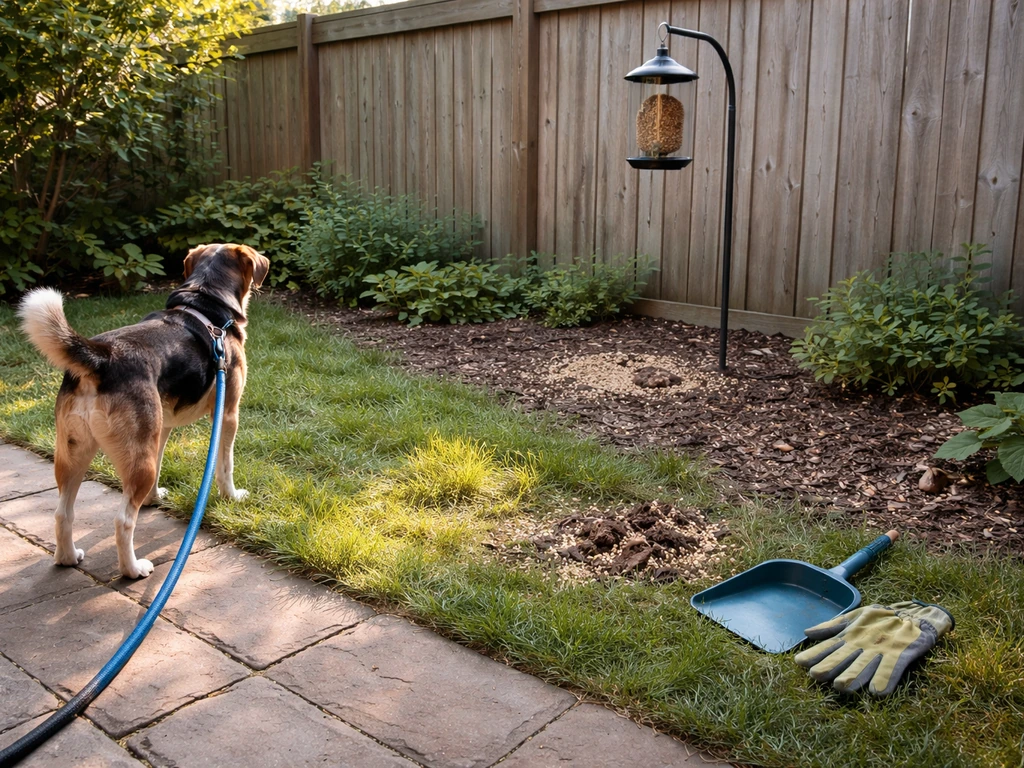
Ravens at feeders create hygiene concerns beyond just the birds themselves. A large bird sitting on or near a feeder leaves droppings that contaminate the seed area. Those droppings, combined with wet or spoiled seed, create conditions where pathogens like salmonella can develop. The American Kennel Club notes that dogs are likely to eat seed and fecal material from underneath feeders, which is a real risk if your dog has access to the yard.
- Keep dogs away from the area directly under feeders, especially if ravens have been visiting and leaving droppings.
- Wear gloves when cleaning up seed debris and droppings, and wash hands thoroughly afterward.
- Do not let children play directly under active feeders without cleaning the area first.
- Discard any seed that smells sour, looks clumped, or shows visible mold. Do not compost it if you are trying to avoid attracting rodents.
- Clean feeders themselves every one to two weeks with the diluted bleach solution, rinse thoroughly, and dry before refilling.
- If you notice an unusually large number of droppings or dead birds near your feeder, stop feeding temporarily and clean everything before resuming.
Ravens themselves are not a direct threat to people or pets in a typical backyard situation. They are wild birds and will keep distance from humans. The hygiene risks come from the conditions they create at a feeder, not from the birds themselves. Staying on top of cleanup and feeder maintenance handles most of the risk. To reduce exposure risk, the fact sheet recommends removing remaining seed from feeders and following proper cleaning and handling steps.
Your next steps based on what's happening in your yard
| Your situation | What to do first | Follow-up step |
|---|---|---|
| Ravens are showing up and eating seed | Switch to tube or caged feeders with small ports; remove open trays | Change seed mix to nyjer or shell-free seed in enclosed feeders |
| Ravens knocked seed on the ground | Rake up spilled seed same day; check for wet/moldy clumps | Store remaining seed in sealed container; consider catchment tray with drain holes |
| You are seeing rodents or pests near the feeder | Clean up all ground seed and debris; move or temporarily remove feeders | Check storage container for gaps; set traps away from feeder area if needed |
| Seed is moldy or wet inside the feeder | Discard all moldy seed; clean feeder with 1:9 bleach solution and dry fully | Reposition feeder under a roof or baffle to reduce rain exposure |
| Pets are getting into seed debris | Block pet access to the under-feeder area | Increase cleanup frequency to daily; use a feeder with a no-mess tray |
Ravens are smart, adaptable, and persistent. But they are also big and dependent on open landing surfaces to dominate a feeder. The moment you remove open trays, switch to enclosed feeders with small ports, and stay on top of ground cleanup, they will move on to easier pickings. The songbirds you want to attract will stay. That combination of feeder design, seed choice, and regular hygiene maintenance is the practical solution that actually works.
FAQ
Can I scare ravens away with a fake owl or reflective tape?
It can work only temporarily. Ravens often learn that stationary visual cues are not a real threat, so if you use deterrents you need to move or replace them frequently and pair them with feeder changes that deny access (like hopper or tube designs).
What feeder types exclude ravens the most reliably?
The most effective are enclosed feeders with small feeding ports plus minimal open landing surfaces. If you still have a tray or platform where a raven can land and sort, the bird can still knock seed free and dominate the area even if the actual access opening is limited.
Will switching from sunflower and peanuts to smaller seeds stop ravens completely?
It can reduce visits, but it usually does not guarantee removal because ravens are opportunistic. The best approach is seed downsizing plus an access design change, since ravens can still pick up spilled seed on the ground even if they cannot easily crack the seeds.
How do I handle a raven that is caching seed in my lawn?
After you install the new feeder setup, do a focused cleanup of the area where the raven typically lands, and keep up short-interval sweeping for spilled hulls. Don’t assume it is “gone” just because it stops feeding at that moment, because cached seed can resurface after the bird returns later.
If I stop using peanuts and suet, will ravens switch to eating other food at the feeder?
They may. Ravens may still target whole corn, large seeds, or any high-calorie items you offer, especially if they can access them from an enclosed feeder opening or by collecting fallen seed. Re-check all offerings, not just peanuts and suet.
Do weight-activated feeders work for ravens, and what setting should I choose?
They usually work because ravens are heavy enough to trigger squirrel-style shutoffs. The key is using a mechanism rated for heavier intruders and adjusting to a shutoff range that closes access when a raven lands, not just when lighter birds visit.
Is it safe to keep feeding birds if ravens are using my feeder, especially with my dog in the yard?
Focus on preventing seed and droppings from accumulating. Pick up spilled seed and clean droppings frequently, because pets may ingest contaminated material. If your dog routinely gets into the cleanup area, you may need to restrict access or switch to designs that minimize ground scatter.
How often should I clean under the feeder if ravens are present?
Do it more often than usual. In dry weather you can often manage every couple of days, but with raven activity and seed scatter you should aim for same-day cleanup after heavy visits, and additional checks after rain.
What should I do if wet seed has molded in a hopper or tray?
Remove the wet clumps promptly and discard any seed that shows spoilage. Then clean the feeder thoroughly, let it dry completely, and refill with fresh, dry seed, since mold can develop quickly under warm conditions even if the feeder looks mostly clean.
Can ravens harm people directly at feeders?
In most backyard situations they are not aggressive toward people, but they can create unsafe conditions indirectly by crowding other birds, knocking seed broadly, and leaving fecal contamination. Treat it as an environmental hygiene and feeder-access problem rather than a direct attack risk.
What if I have multiple bird feeders in different spots, and ravens only target one area?
Assume the raven is using the most accessible station and optimize that specific setup first. Move the targeted feeder farther from open landing zones, switch it to an enclosed design with small ports, and do intensive cleanup there, since ravens often return to the same “best” resource location.