
The safest, most venue-friendly alternatives to bird seed at weddings are dried flower petals, biodegradable paper confetti, and bubble wands. These three options cause the least wildlife harm, are easiest to clean up, and get approved by the widest range of venues. Bird seed looks charming in photos but it genuinely causes problems: it can sprout in lawns and cracks, attract pest animals, grow mold when wet, and is actually banned by name in several state wildlife regulations when used at outdoor events.
Alternatives to Bird Seed at Weddings: Safe Options

Maya Collins
10 Jun 2026
Why people skip bird seed at weddings
The appeal of bird seed as a send-off material makes sense on the surface. It feels natural, and the logic goes that birds will just eat it up and everything will be fine. In practice, several real problems get in the way.
The first issue is regulation. New Hampshire's administrative code explicitly prohibits using birdseed and rice at wedding processions and other events under its wildlife-feeding rules. This is not a fringe concern. If you were considering a bird seed diet for birds after the wedding, note that seed-based throwables still come with regulation and wildlife-management risks. USDA APHIS frames feeding wildlife as a public-health and wildlife-management problem, and North Carolina's wildlife guidance specifically flags disease risks and the potential to concentrate birds unnaturally when food is scattered outdoors.
The second issue is what happens to the seed after the photos are taken. Almost all bird seed will sprout if it lands in soil or cracks in pavement and receives moisture. If it gets rained on before it can be cleaned up, mold and bacteria can form on it within 24 to 48 hours, just as they do on wet seed in a bird feeder. That means a soggy heap of bird seed on a venue pathway is a legitimate hygiene and slip hazard, not just an aesthetic problem.
The third issue is venue contracts. Many venues ban bird seed outright alongside rice, confetti, and glitter, citing exactly these cleanup and safety concerns. Getting caught using a banned material can cost you part of your security deposit or create conflict with venue staff on an already busy day.
The best bird-safe throwing alternatives
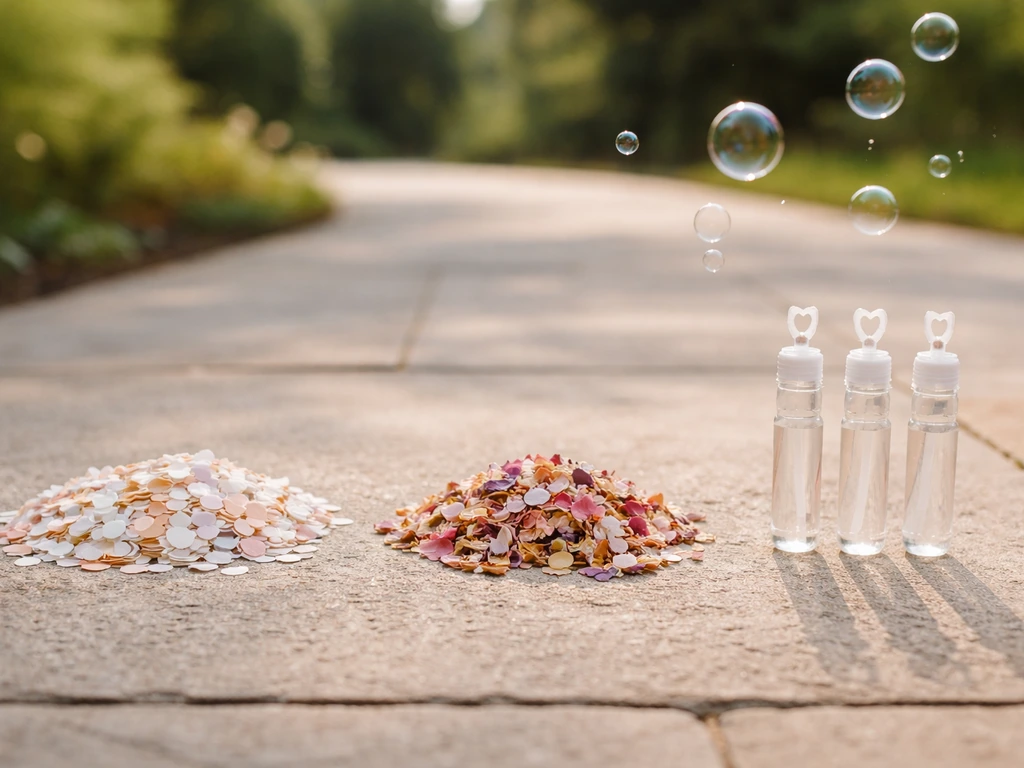
Here is how the most common alternatives actually compare across the things that matter most at a real wedding: wildlife safety, venue approval odds, cleanup effort, and weather resilience.
| Option | Wildlife Safety | Venue Approval Odds | Cleanup Effort | Weather Resilience |
|---|---|---|---|---|
| Dried flower petals | High (native/dried best) | High (check for indoor bans) | Low-Medium | Good (wind can scatter) |
| Biodegradable paper confetti | Medium (verify EN 13432/ASTM D6400) | Medium (many venues still ban) | Low if dry, Medium if wet | Poor (wind, rain spread it) |
| Bubble wands | High | Very high (widely allowed) | Very low | Moderate (wind disperses bubbles fast) |
| Ribbon or streamer wands | Medium (must collect after) | High (indoor and outdoor) | Low if collected immediately | Good |
| Seed-free herb sprigs (lavender, rosemary) | High | High | Low | Good |
Dried flower petals
Dried or fresh rose petals and other native wildflowers are recommended by the Center for Biological Diversity's Wildlife-Friendly Wedding Guide as among the best throwable options. They decompose naturally, do not attract pest animals the way food-based throwables do, and photograph beautifully. Native flower petals are the best choice outdoors because they pose zero nutritional draw for wildlife. Avoid dyed petals outdoors since the dyes can leach into soil, and check whether your venue bans fresh petals indoors as they can stain carpet and fabric.
Biodegradable paper confetti
Paper confetti that is certified to EN 13432 or ASTM D6400 standards will break down far faster than plastic glitter or foil confetti, and some products claim to dissolve on contact with water. If you go this route, look for those certification marks on the packaging rather than taking a generic 'biodegradable' claim at face value, since that label has no universal legal definition. Be aware that even genuinely biodegradable confetti is banned at many venues because staff cannot tell it apart from plastic confetti on sight. Always confirm with your venue in writing before purchasing. Also avoid using any paper confetti outdoors near water features, since small pieces can be mistaken for food by birds and fish.
Bubble wands
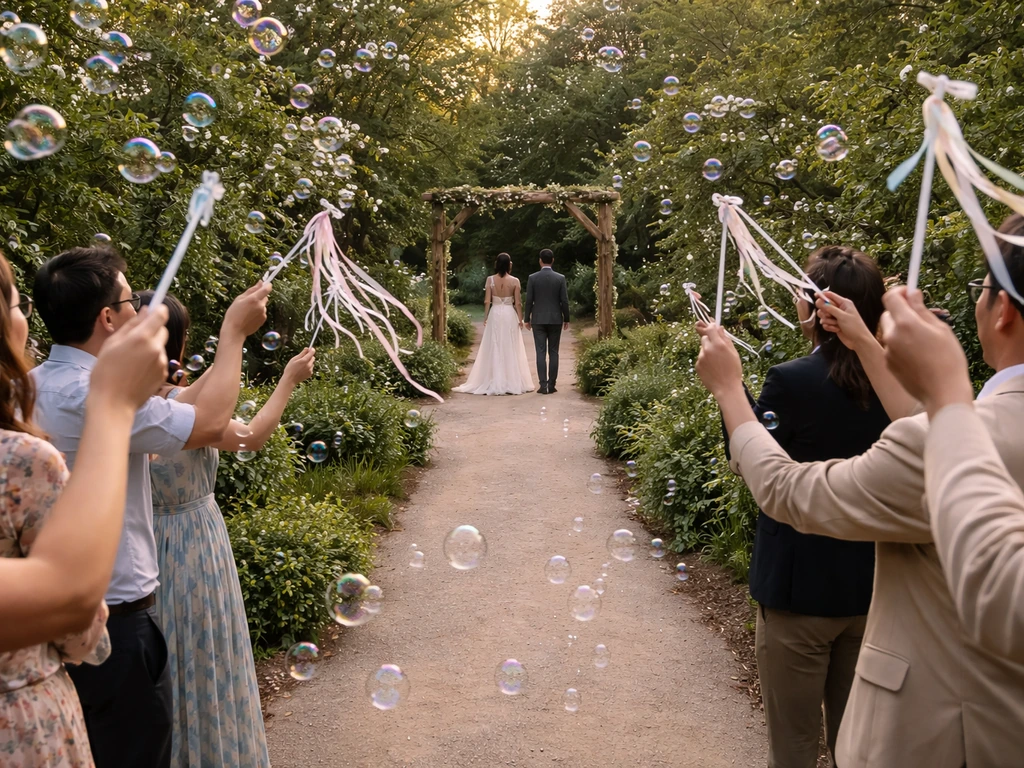
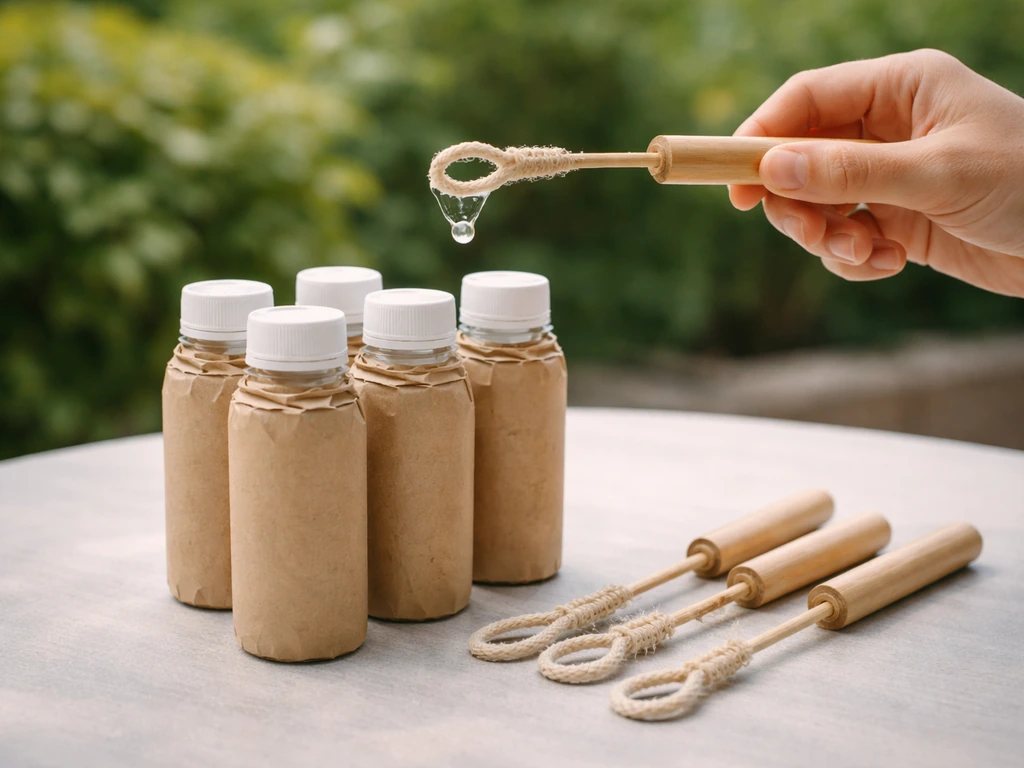
Bubble wands are the single easiest choice from a logistics standpoint. They produce no litter, leave no residue to clean, and are approved at almost every venue that bans harder-to-clean throwables. Even venues that prohibit bubbles in some areas (indoor fabric-heavy spaces, for instance) usually allow them outdoors. The one weather caveat is wind: on a gusty day, bubbles disperse before guests can appreciate them. They work best in calm or light-breeze conditions. Pre-packaged individual bubble wands are inexpensive and easy to hand out in a basket.
Ribbon wands and streamers
Ribbon wands give great visual impact and work well indoors and outdoors. The critical rule is collection: ribbon and streamer pieces left on the ground or in vegetation become entanglement hazards for small birds and other animals. The RSPCA documents cases of elastic bands and similar items wrapping around bird beaks and limbs. If you use ribbon wands, assign someone to collect every wand immediately after the send-off, before guests move on. Do not leave any ribbon on site.
Herb sprigs (lavender, rosemary, dried grasses)
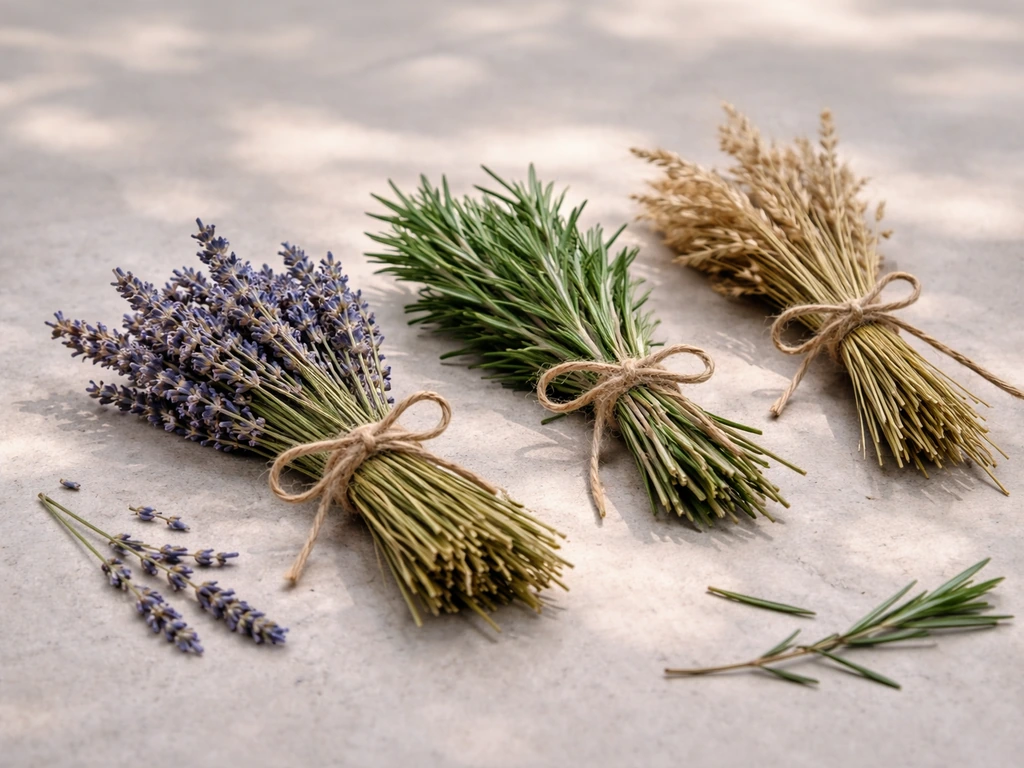
Small bundles of dried lavender or rosemary are increasingly popular and genuinely wildlife-neutral. They smell wonderful, break down quickly outdoors, and most venues accept them without question. They are also a practical option if your venue bans literally everything else listed here, which does happen at churches and historic properties.
What to avoid and why
- Rice: The 'exploding stomachs' story is a myth, but rice does attract birds and rodents, can swell in drainage systems, and is banned at many venues for cleanup reasons. Some states include it alongside bird seed in wildlife-feeding prohibitions.
- Plastic glitter and foil confetti: These are microplastic pollutants, are mistaken for food by birds and fish, and are specifically called out as litter by city ordinances (Santa Barbara's policy is a clear example). Avoid entirely.
- Balloon releases: USFWS is unambiguous here. Balloons can be ingested by birds and other wildlife or cause entanglement through their strings. A balloon release is not a bird-safe alternative to anything.
- Sky lanterns: Open flame, fire risk, and litter. Banned at most venues and in many jurisdictions.
- Sparklers: Fire hazard on dress fabric and at dry outdoor venues. Banned at most non-commercial venues.
- Standard commercial confetti (plastic/metallic): Litter risk, wildlife ingestion risk, and nearly universally banned by venues.
- Any food-based throwable (grain, seed, popcorn, dried fruit): Attracts rats, raccoons, crows, and other pest animals. Creates mold risk when wet. Goes against USDA APHIS and state wildlife-feeding guidance.
Weather and venue factors that change your decision
Where and when you are getting married matters a lot for which option will actually work. Here is how to think through the main variables.
Indoor venues
Indoors, your main concerns are staining, cleanup difficulty, and fire risk. Bubbles are the cleanest option for most indoor spaces but can leave slight residue on wood floors. Ribbon wands work well in ballrooms and chapels. Petals can stain light-colored carpet and are banned at some historic and religious venues. Confetti of any kind is banned at a majority of indoor venues because it lodges in carpets and upholstery. Always ask specifically.
Outdoor venues
Outdoors, wind is your biggest practical problem. On a breezy day, paper confetti and small flower petals will scatter far beyond the send-off area, increasing litter risk and cleanup territory. Bubbles disappear in wind before they create a visual. Ribbon wands hold up well in wind and give a clear visual effect. For calm days, dried petals are the most photogenic outdoor option.
Rain and humidity
Any paper-based throwable becomes a slipping hazard when wet. Wet paper confetti and wet petals on a stone or wood pathway can be as slippery as wet leaves. If rain is a possibility, plan for a harder surface or have mats ready, and do the send-off on a covered or protected stretch of path. Bubbles are the only option completely unaffected by rain, though a downpour makes them nearly invisible.
Pets, children, and wildlife near the venue
If dogs or other pets will be present, avoid dried herbs like lavender and eucalyptus, which can irritate dogs if ingested in quantity. If the venue is near a pond, stream, or bird habitat, stay away from any small-piece throwables including paper confetti, as wildlife ingestion risk is higher in those settings. If there are young children, bubbles are by far the safest option since there is nothing to put in a mouth or trip on.
Cleanup and hygiene plan
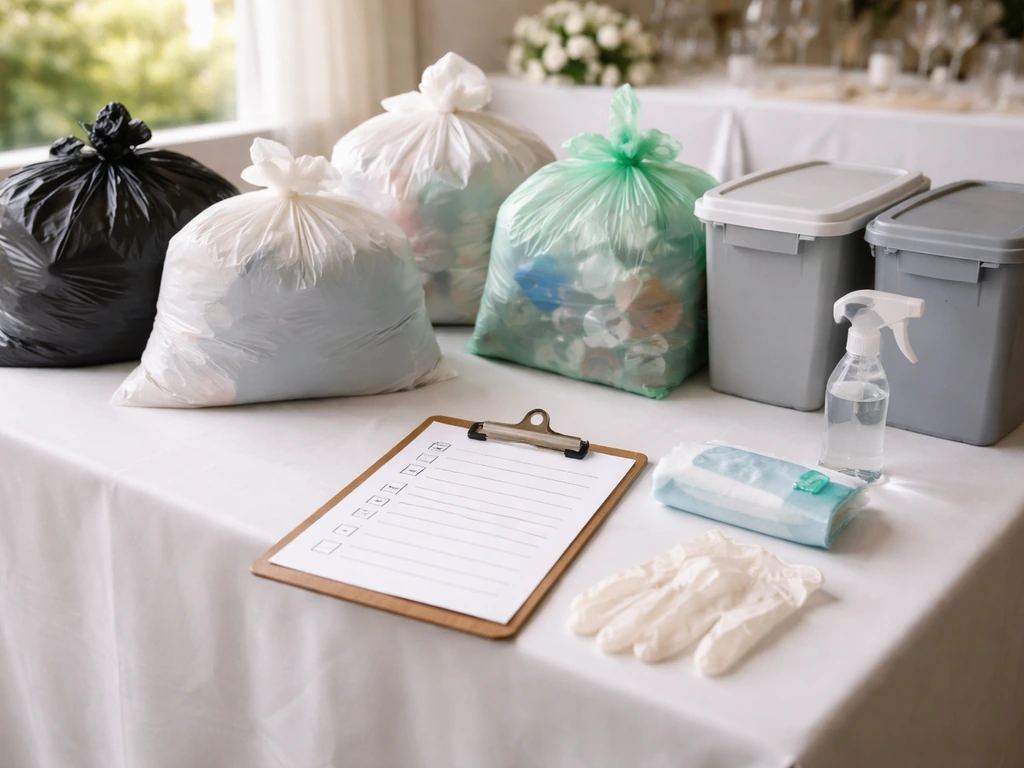
A cleanup plan is not optional. Venues expect you to leave the space as you found it, and lingering organic material can create real hygiene issues, especially in warm or wet weather. Wet organic matter, including flower petals and paper confetti, can begin to mold within 24 to 48 hours in humid conditions. Here is a workable cleanup approach for each option.
- Assign a cleanup lead before the wedding day: this is usually a coordinator, venue staff member, or a trusted family member who knows where the send-off is happening.
- Bring a large bag or bin to the send-off location. Collect all ribbon wands, streamer debris, and packaging immediately after the send-off, while guests are still moving.
- For flower petals outdoors: sweep or rake petals off hard surfaces within a few hours of the ceremony. On grass, they can be left if the venue permits, but remove any large piles to prevent smothering grass and attracting insects.
- For paper confetti: dry confetti on a hard surface is swept easily. If it gets wet, use a stiff brush or a vacuum designed for outdoor use. Do not leave wet paper confetti overnight as it can adhere to stone and cause staining.
- For bubbles: no cleanup needed for the bubbles themselves. Wipe down any wood or painted surfaces where bubble solution pooled if asked by the venue.
- Dispose of all collected material in the venue's designated waste bins. Do not leave bags of organic material in direct sun for extended periods.
- If you are at an outdoor venue near bird habitat and any food-based material was used accidentally, sweep and bag the area promptly. Do not leave any spilled seed or grain, as it will attract rodents and birds and can germinate or mold quickly.
On slip hazards specifically: wet petals and wet paper on stone, tile, or wood are legitimately slippery. If your send-off path has any of these surfaces and rain is in the forecast, position rubber-backed mats along the route or move the send-off to a covered area. Brief your coordinator on where the slippery zones are before the ceremony starts.
Picking the right option for your wedding
Use this checklist to land on your best option based on your actual situation. Go through the conditions in order and stop when you have a match.
- Venue bans almost everything (church, historic building, arboretum): Use bubble wands outdoors and ribbon wands indoors. These are approved at the highest number of restrictive venues.
- Outdoor venue, calm weather, afternoon ceremony: Dried flower petals or lavender sprigs. Best photos, easy sweep-up, no wildlife concerns.
- Outdoor venue, windy or unpredictable weather: Ribbon wands only. They hold up in wind and create clear visual impact without scattering.
- Indoor venue with hard floors: Bubble wands or ribbon wands. Avoid petals unless venue confirms they are permitted.
- Indoor venue with carpeted spaces: Bubble wands only. Nothing with small pieces.
- Venue near wetlands, ponds, or bird habitat: Bubble wands or ribbon wands (collected immediately). No confetti of any kind.
- Event with young children or pets present: Bubble wands. Nothing to ingest, nothing to trip on.
- You want something more visual than bubbles but confetti is allowed: Certified biodegradable paper confetti (EN 13432 or ASTM D6400 on the label), confirmed in writing with the venue, with a sweep-up plan in place before the send-off.
One final practical note: whatever you choose, pre-package individual portions before the wedding day. Small paper cones for petals, individual bubble wands in a basket, or ribbon wands bundled and tied with a label all look polished and prevent guests from over-using the material. Pre-packaging also makes cleanup faster because you know exactly how much material was distributed.
If you are curious about what happens when seed-based throwables do end up on the ground and get wet, the mold and sprouting dynamics are the same as what happens with bird seed that sits in a poorly maintained feeder. Birds also store food in crops for later use, which is why scattered seed can still create feeding and wildlife-attraction issues birds store food in crops. The concerns around wet seed, germination, and hygiene that apply to backyard bird feeding apply just as directly to anything seed-based scattered at an event. If you are looking for a human diet using seeds, it is important to avoid treating birdseed as a substitute, since a bird seed diet for humans is not nutritionally or safely comparable to foods designed for people.
FAQ
What should I ask the venue to confirm before I buy an alternative to bird seed?
Ask for the exact wording of their ban list (bird seed, rice, glitter, confetti, bubbles, fresh petals, ribbon, and herbs) and whether the restriction differs between indoor and outdoor spaces. Also request approval in writing for the specific product type you plan to use (for example, paper confetti with EN 13432 or ASTM D6400 certification, or individual bubble wands).
Are dried flower petals always safe, or are there situations where I should avoid them?
Avoid fresh or dyed petals indoors if the venue has light-colored carpeting or strict stain rules, and avoid any petals outdoors near pond edges or active bird habitats. If wind is strong, petals scatter and increase litter pickup time, so consider ribbon wands or bubbles instead for breezy forecasts.
If it rains, what’s the safest throwable option compared with petals or paper confetti?
Bubble wands are the only option that is effectively unaffected by rain for the throw itself. Petals and paper confetti can become slippery and may also create a wet, organic mess that starts to foul cleanup quickly. If rain is likely, plan the send-off on a covered area or use mats for any wet-prone surfaces.
Can I use “biodegradable” or “compostable” confetti that I did not test or certify?
It’s risky to rely on generic biodegradable claims, because there is no universal legal standard for the label. Look specifically for certification marks tied to breakdown standards (EN 13432 or ASTM D6400) and still confirm with the venue, since many venues ban confetti regardless of biodegradability due to staff uncertainty during cleanup.
What’s the best alternative if guests include young children?
Bubble wands are usually the safest because there is nothing small to eat or ingest and nothing that easily becomes an entanglement hazard like ribbon or streamer pieces. If children will be near the send-off area, set rules for gentle use and keep a designated adult near the supply to prevent over-sharing.
How do I prevent ribbon wand hazards to birds and other wildlife?
Assign a single person to collect every ribbon wand immediately after the send-off, before guests walk on. Do not allow remnants to end up in shrubs, grass, or gutters, and avoid long ribbon pieces that can tangle in low branches.
What’s a realistic cleanup plan that matches how venues work?
Use a timed cleanup responsibility sheet: one person controls sweeping and pickup, one person manages waste bags, and one person checks known problem zones like the route edges and where guests stop for photos. Pre-package portions so you distribute a controlled amount, then do a final inspection for wet petals or confetti residue near doors, walkways, and drains.
Are dried herbs like lavender or rosemary a good alternative if the venue bans everything else?
Often yes, but confirm pet safety first. The article notes dog irritation risks with herbs if ingested in quantity, so provide them as a decorative throw with no access for pets and avoid using them outdoors near habitats where small animals might forage. Also check indoor acceptance, since venues may have scent or residue rules.
What should I do about allergies or skin sensitivity from petals, bubbles, or confetti?
Keep options minimal and communicate clearly. For petals, avoid heavily scented or dyed products, for bubbles choose fragrance-light bubble solutions when possible, and for confetti do not use any glitter or coatings that can shed onto people’s clothing. If you have known guests with sensitivities, consider bubbles only, since they create minimal litter and less contact with skin.
What’s the most common mistake people make when switching from bird seed to alternatives?
They choose based on “natural” labels but skip venue approval and weather planning. Even bird-safe-adjacent materials can be banned, and wet paper or petals can create slip hazards. Always confirm the venue policy in writing and rehearse a cleanup and collection plan for the specific outdoor surfaces you’ll use.