
The most reliable way to stop bird seed from growing weeds is to combine the right seed type with the right feeder setup and a consistent cleanup routine. No single fix does it alone. You can buy seed labeled "weed-free" and still end up with a patch of pigweed under your feeder, because contamination is common, moisture triggers germination, and even clean seed can sprout if it sits on bare soil. But if you choose sterilized or hull-free seed, keep it dry, use a feeder that catches spills, and clean up ground debris every few days, you can feed birds year-round with almost zero weed establishment.
Bird Seed That Does Not Grow Weeds: Buy and Use It
Maya Collins
13 Jun 2026
Why bird seed grows weeds in the first place
blank" rel="noopener noreferrer">Oregon State University researchers examined 10 retail wild bird feed brands and found seeds from more than 50 weed species across those products, including several weeds on Oregon's noxious weed list. A Missouri Extension researcher found pigweed, common ragweed, and velvetleaf in birdseed and pollinator mix products sold at retail. This isn't a fringe problem. Weed seeds end up in commercial bird feed at the harvesting and processing stage, when grain crops are cleaned and the waste stream gets blended into feed mixes. Even with better processing, a University of Liège analysis concluded that a blank" rel="noopener noreferrer">low level of ragweed contamination in bird feed is essentially unavoidable with current methods.
The second reason seed germinates is moisture. FAO grain storage guidelines put the safe moisture content for most birdseed grains at 8 to 12 percent or below. Once spilled seed hits damp soil, that threshold is exceeded within hours, and germination can begin in days. Hulled seeds and whole seeds both sprout if the conditions are right. Sterilized or heat-treated seed is the exception: the embryo is killed, so germination is physically impossible regardless of moisture.
The third factor is seed that birds toss out of the feeder while foraging. Cardinals, grosbeaks, and house sparrows are especially active about bill-sweeping seed onto the ground. That discarded seed is often viable, lands on soil, and sprouts before you notice it.
What to look for when buying weed-minimizing bird seed
Start with the ingredient list, not the marketing headline. "Weed-free" printed on the front of a bag is not regulated the same way food labeling is, so treat it as a starting point rather than a guarantee. Here is what actually matters on the label and in the bag:
- Sterilized or heat-treated seed: Look for the words "sterilized," "heat-treated," or "kiln-dried" explicitly on the bag. These seeds have had their embryos rendered non-viable, so they physically cannot germinate. This is the single most effective purchase-stage choice you can make.
- Hulled or shell-free seeds: Sunflower chips (hulled sunflower), shelled peanuts, and hulled millet remove the outer shell that birds would otherwise discard. With no shells dropped, there is far less organic debris on the ground, and hull-free seeds also tend to be more thoroughly processed.
- "Cleaned" or "processed" language: These terms suggest the manufacturer ran seed through screens or air separators to remove broken seeds, dust, and foreign material including weed seeds. It doesn't guarantee zero contamination but is better than no processing claim at all.
- Nyjer (thistle) seed: Commercial Nyjer is sterilized by law before entering the US under USDA import regulations. If you're buying certified imported Nyjer, it should not germinate.
- Pelletized or extruded blends: Some brands now offer seed blended with binding agents into pellets. Birds eat the pellet whole, nothing falls to the ground intact, and there are no loose seeds to sprout. These are excellent for weed prevention but attract a narrower range of species.
- Avoid mixes with milo, wheat, oats, or red millet as fillers: These are cheap filler seeds that most desirable backyard birds reject and push onto the ground, where they readily sprout. Check the ingredient list and skip bags where these appear in the first three ingredients.
Comparing the main weed-minimizing seed options
| Seed / Format | Weed Risk | Bird Appeal | Cost |
|---|---|---|---|
| Sterilized whole seed mix | Very low | Good (broad species) | Moderate to high |
| Hulled sunflower chips | Very low | Excellent (most species) | Moderate to high |
| Sterilized Nyjer | Very low | Goldfinches, siskins, redpolls | Moderate |
| Pelletized/extruded blend | Minimal | Limited (seed-eaters only) | High |
| Standard whole seed mix (no sterilization claim) | Moderate to high | Good (broad species) | Low to moderate |
| Milo/wheat/filler-heavy mix | High | Poor (most birds reject) | Low |
Feeder setup and ground control to stop seeds reaching soil
The feeder you use matters almost as much as the seed inside it. A feeder that spills constantly is doing more work growing weeds than feeding birds. Here's how to set things up to minimize seed-to-soil contact.
Choose the right feeder style
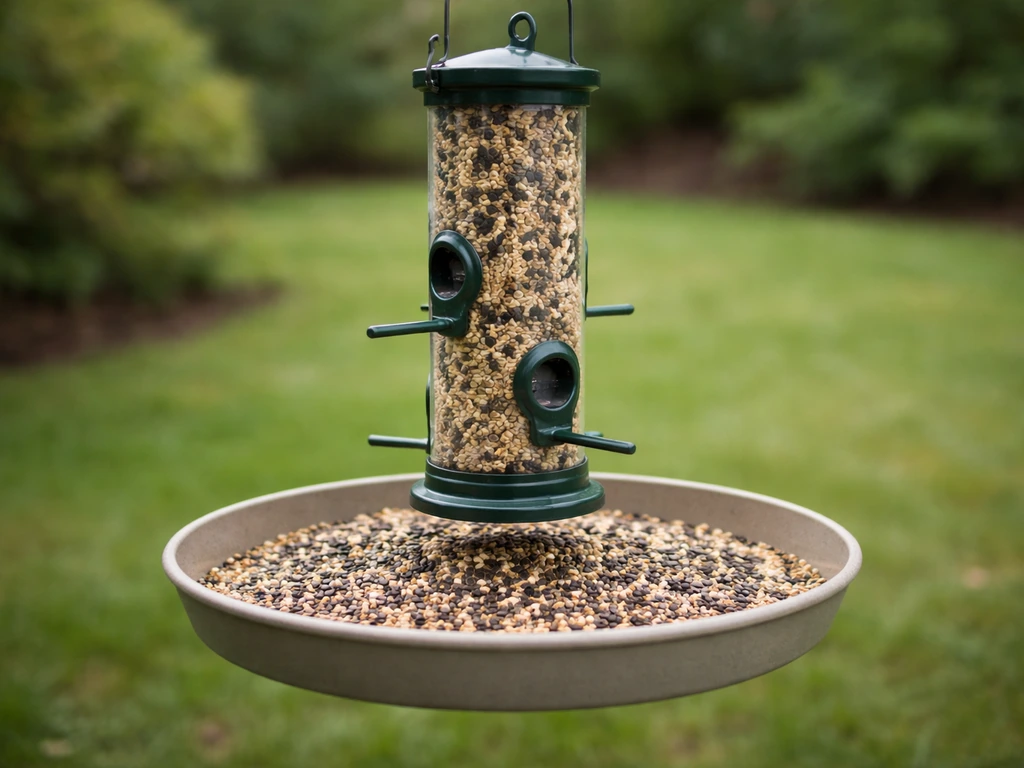
- Tube feeders with small ports: These meter seed out slowly and reduce the amount birds can sweep out at once. Pair them with a seed-catching tray attached below the feeder. These trays are sold specifically for this purpose and catch most of what would otherwise hit the ground.
- Weight-sensitive or squirrel-proof feeders: These close ports when a heavy animal lands, reducing spill from squirrels who are notorious for flinging seed everywhere.
- No-mess feeder designs: Some feeders are built around hulled seed or pellet formats and have no open tray at all. The trade-off is a higher per-fill cost.
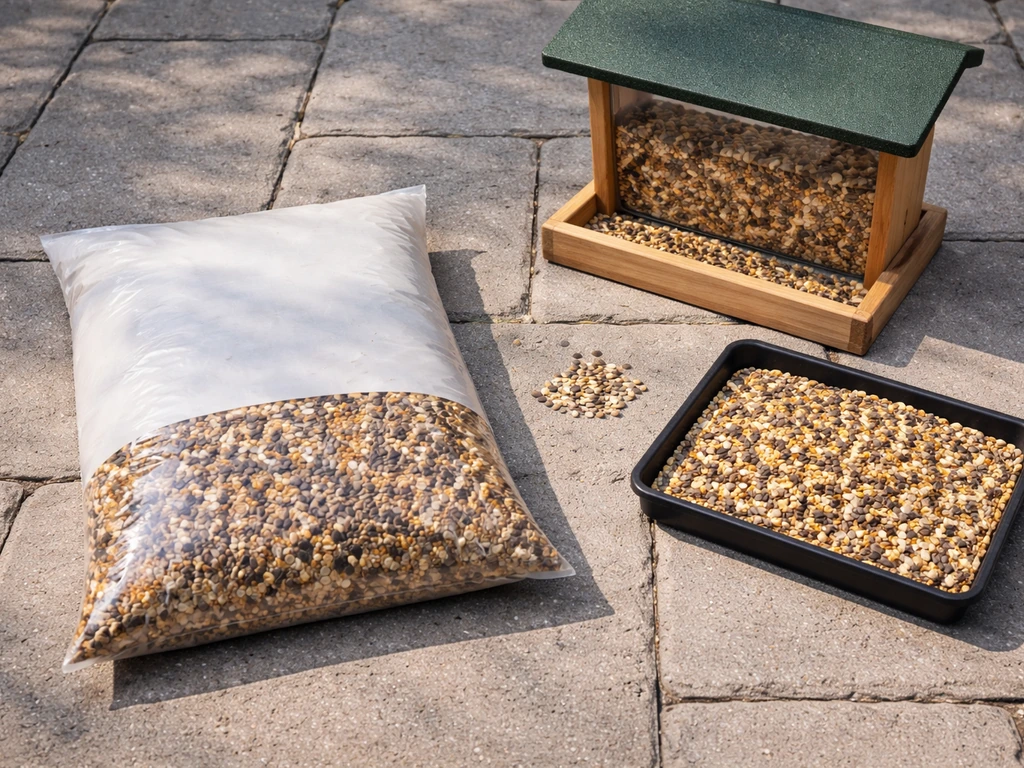
- Avoid platform feeders as your only feeder: Open tray feeders catch rain, let seed get wet and compact, and make ground drop almost inevitable. If you use a platform, clean it every 1 to 2 days and place a tarp or hardware cloth underneath.
Manage the ground under and around the feeder
- Place feeders over hard surfaces where possible: Concrete, pavers, or compacted gravel give weed seeds nowhere to root. Even a 3-foot diameter paver pad under a feeder makes cleanup easy and germination unlikely.
- Use hardware cloth or landscape fabric as a base layer: If you can't pave the area, a layer of 1/4-inch hardware cloth laid flat and covered with pea gravel blocks seeds from reaching soil while still letting birds ground-feed.
- Sweep or rake the area every 2 to 3 days: Don't let seed and hull accumulation build up. A quick sweep prevents the damp, compressed layer that acts as a germination bed.
- Remove wet seed immediately after rain: Wet seed germinates fast and also encourages mold. After rain, rake out any seed that got soaked and dispose of it in the trash, not the compost pile.
Storage and handling to prevent sprouting and mold
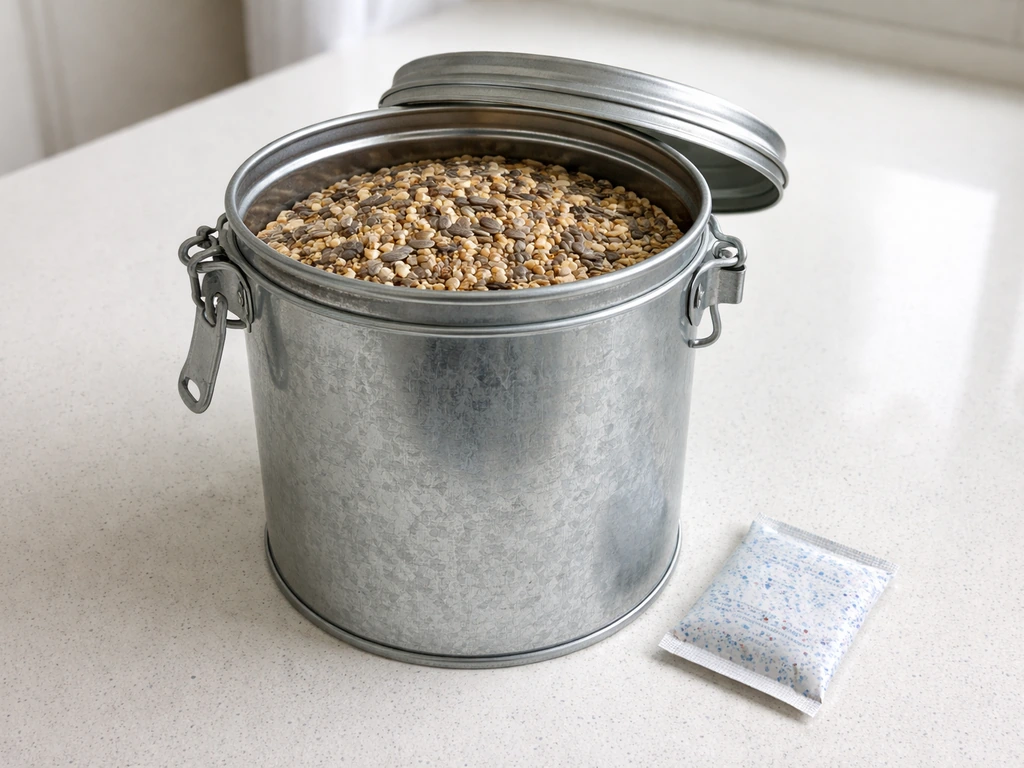
Seed that arrives in good condition can still become a weed and mold problem if you store it badly. The FAO guideline for safe birdseed storage is moisture content at or below 8 to 12 percent, and FAO specifically flags protection from water and direct sunlight as the key variables. Here's how to hit those targets at home.
- Use a hard-sided, airtight container: Metal galvanized cans with locking lids are ideal. They keep moisture out and also deter rodents. Avoid paper bags or open plastic sacks, which absorb humidity quickly.
- Store in a cool, dry, shaded location: A garage corner, shed, or basement works well. Avoid anywhere that gets above 70 to 75°F regularly or experiences humidity swings (like next to a dryer or outdoor tap).
- Keep storage containers off the floor: Set them on a shelf or pallet to prevent ground moisture from wicking up into the container.
- Buy in quantities you'll use within 4 to 6 weeks: Older seed loses quality and is more likely to have elevated moisture from repeated temperature cycles. Fresh seed also has better nutritional value for birds.
- Inspect before filling feeders: Give the seed a quick look and smell each time you refill. Clumping, a musty smell, or visible mold means the batch should be discarded, not fed.
If you're dealing with sprouted seed inside your storage container, that's a sign moisture got in somewhere. Check the lid seal, look for condensation on the interior walls, and consider switching to a smaller container you can cycle through faster. Sprouting in storage is closely related to the issue of seed sprouting at the feeder, which is worth reading up on alongside this topic.
Sorting, sifting, and safer alternatives when you're stuck with a weed-seedy mix
Maybe you bought a 40-pound bag before finding this article, or you have seed left over that contains visible weed seeds. Here's how to deal with it practically without wasting the whole bag.
Hand-sorting for small quantities
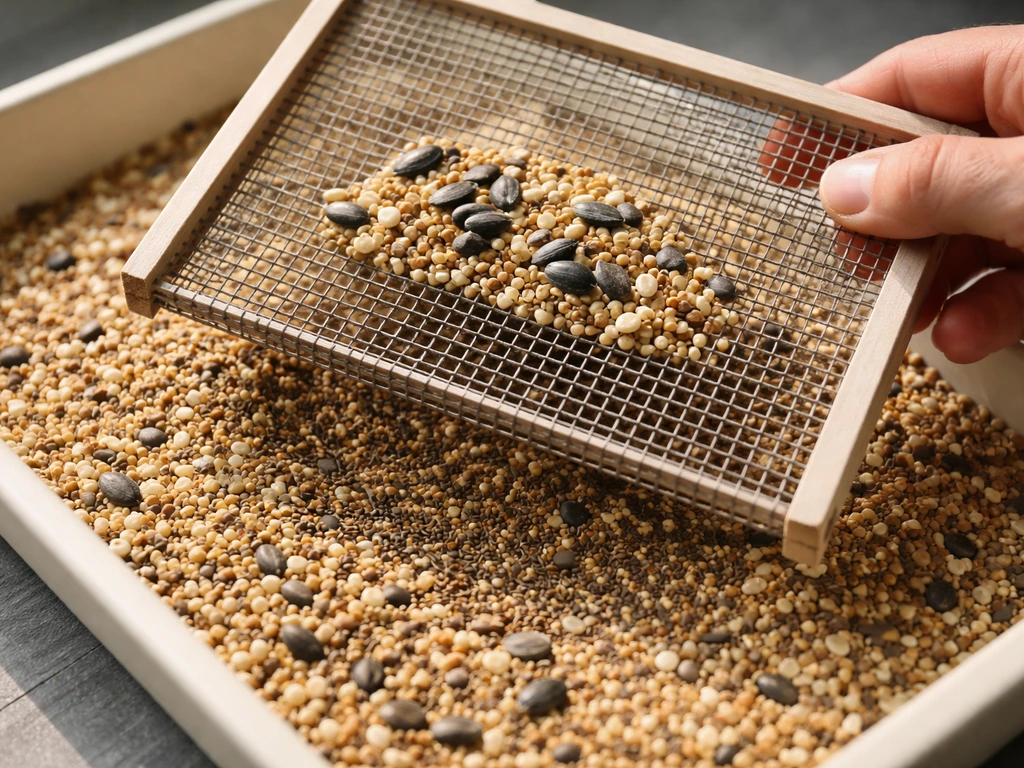
Spread seed in a single layer on a white or light-colored tray. Weed seeds tend to be smaller, darker, and irregular compared to sunflower seeds, millet, and safflower. Common contaminants like pigweed seeds are tiny, round, and shiny black. You won't catch every weed seed this way, but you can pull out the most obvious concentrations before filling the feeder. This is practical only for small batches.
Sifting with a mesh screen
A 1/8-inch hardware cloth screen stretched over a frame works well for removing fine weed seeds and dust from larger-seeded mixes. Pour the seed over the screen and let the fine material fall through. This removes a lot of the smallest weed seeds (ragweed, pigweed) while keeping sunflower, safflower, and larger millet. It won't catch weed seeds that are similar in size to the desired seed.
DIY sterilization for small batches
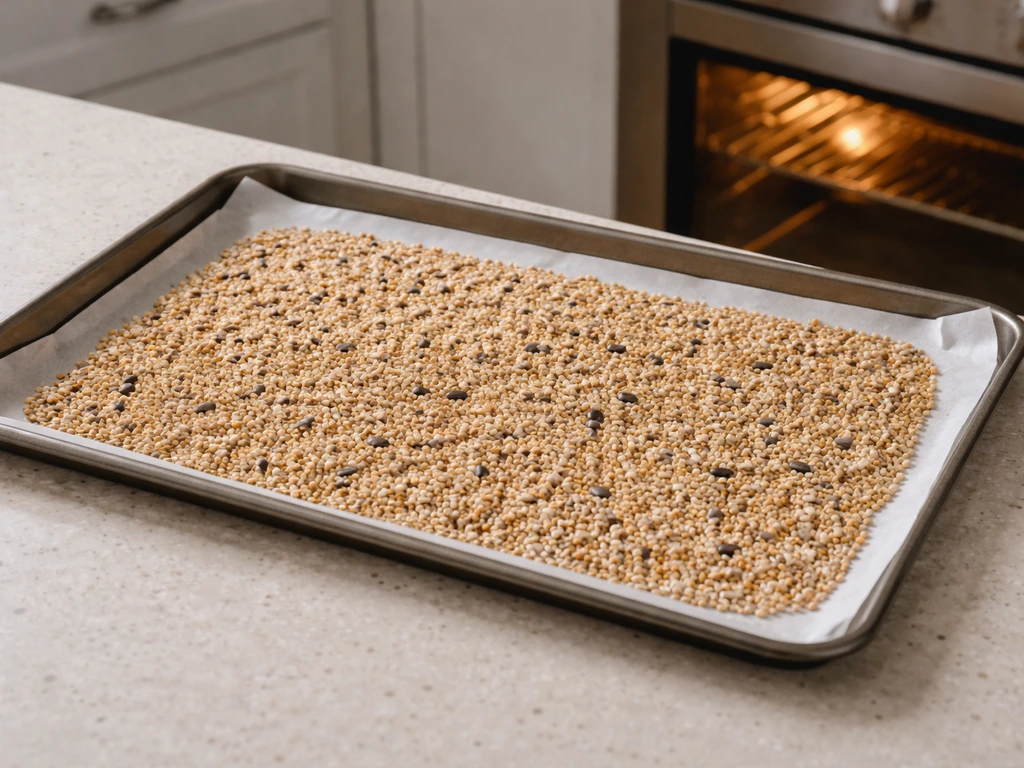
You can kill the germination potential of seed at home by spreading it in a single layer on a baking sheet and heating it at 250 to 300°F (120 to 150°C) for 30 minutes. This denatures the embryo without cooking the seed to the point of repelling birds. Let it cool completely before storing or feeding. This method works best for whole seeds like sunflower and safflower, not for very fine seeds or seed that's already showing signs of mold.
Switch to a verified weed-safe alternative
If the existing bag is heavily contaminated and you don't want to process it yourself, the most practical option is to finish using it from a feeder positioned over a hard surface with daily cleanup, then switch your next purchase to a sterilized or hulled-only product. Don't mix the contaminated seed with a clean batch.
What to do if weeds are already coming up
If you're already looking at a patch of seedlings under your feeder, act quickly. Weed seeds germinate fast but seedlings pulled before they root deeply come out easily and don't set seed themselves.
- Pull seedlings within the first 2 weeks: Young seedlings (under 3 inches) pull out root and all with minimal effort. The longer you wait, the harder removal becomes and the sooner they set seed.
- Rake and bag all debris from the feeder zone: Hull accumulation acts as mulch and holds moisture. Remove it, bag it, and put it in the trash.
- Lay a physical barrier: After clearing, place landscape fabric or a thick layer of pea gravel (at least 2 inches deep) over the area. This makes it much harder for future dropped seed to reach soil.
- Temporarily switch to hulled or sterilized seed: This stops new viable seed from hitting the ground while you deal with the current crop of seedlings.
- For persistent weed patches away from the feeder: If seeds have blown into garden beds, hand-pull before flowering. For confirmed noxious weeds (check your state or province's noxious weed list), contact your local extension office for guidance on control methods that are safe near a bird-feeding area.
For longer-term adjustment: re-evaluate your feeder placement. If the feeder is over a garden bed or lawn area, move it to a paved or graveled spot. If moving it isn't an option, installing a 3 to 4-foot radius of landscape fabric topped with decorative gravel makes a big practical difference.
Feeding your target birds while keeping weed growth low
One real trade-off with weed-minimizing seed is that some birds are attracted specifically to the seeds that create weed problems. Here's how to match safer seed choices to common backyard species without losing the birds you want.
| Bird Species | Preferred Weed-Safe Options | Notes |
|---|---|---|
| American goldfinch | Sterilized Nyjer, hulled sunflower chips | Nyjer is the classic choice; goldfinches also readily take hulled sunflower |
| Northern cardinal | Hulled sunflower, safflower (whole) | Cardinals crack safflower easily; it has low germination rates and most birds reject it from the ground |
| Black-capped / Carolina chickadee | Hulled sunflower chips, shelled peanuts | Will readily use tube feeders with small ports that minimize spill |
| House finch / Purple finch | Sterilized Nyjer, hulled sunflower chips | Avoid whole millet mixes, which these species scatter heavily |
| Mourning dove | Hulled millet (white proso, hulled), hulled sunflower | Doves feed on the ground; use a ground tray over hardware cloth and clean daily |
| Downy / Hairy woodpecker | Shelled peanuts, suet cakes | Suet produces no seed drop at all; peanut feeders have minimal spill |
| Dark-eyed junco | Hulled white proso millet, hulled sunflower chips | Ground feeders; place food on a tray over gravel or hard surface |
| Blue jay | Shelled peanuts, hulled sunflower | Jays cache food but shelled peanuts don't sprout once the skin is removed |
Safflower is worth a special mention. Whole safflower seed is one of the lower-germination options in unprocessed seed form because most birds that prefer it (cardinals, chickadees, some doves) consume it efficiently, and squirrels and house sparrows largely ignore it, meaning less scatter. It's not sterilized in the commercial sense, but it's a reasonable middle-ground option if you want whole seed without buying a premium processed product.
A note for colder climates: in northern states and Canada, the combination of frozen ground in winter and a short growing season dramatically reduces weed establishment from bird seed dropped between November and March. Safflower seed is also a commonly stored food source in bird habitats, including crops where birds store food before digestion bird crops where they store food. Weed pressure from feeders is most significant in spring and summer feeding, so if you only feed in winter, standard cleaned seed (not sterilized) is a lower-risk option.
Your practical checklist and troubleshooting guide
Use this as a quick-reference system to set up correctly from the start or fix what's not working.
Setup checklist: purchase through monitoring
- Purchase: Choose sterilized, hulled, or hull-free seed. Check the ingredient list for milo, wheat, or oat fillers and avoid mixes where these appear early. Look for "sterilized," "heat-treated," or "kiln-dried" on the label.
- Storage: Transfer seed to an airtight metal or hard-plastic container. Store in a cool, shaded, dry location off the floor. Plan to use the full batch within 4 to 6 weeks.
- Feeder setup: Position feeder over a hard surface or gravel pad. Attach a seed-catching tray under tube feeders. Avoid open platform feeders without a daily cleaning commitment.
- Fill routine: Inspect seed before every fill. If it clumps, smells off, or shows any mold, discard that portion. Fill feeders to an amount birds will consume in 1 to 2 days to prevent seed sitting in a wet feeder.
- Cleanup: Sweep or rake the area under the feeder every 2 to 3 days. After rain, remove wet seed from the ground immediately. Every 2 weeks, do a deeper clean of the feeder itself with a 10% bleach solution, rinse well, and let it dry completely before refilling.
- Monitoring: Check the ground around the feeder once a week for seedling emergence. Pull any seedlings immediately. If persistent weed growth appears, re-evaluate the seed type and feeder placement.
Troubleshooting common problems
| Problem | Likely Cause | Fix | Prevention |
|---|---|---|---|
| Weeds sprouting under feeder despite 'weed-free' label | Label not regulated; seed not sterilized | Pull seedlings now, switch to certified sterilized or hulled seed | Buy only seed with explicit sterilization or heat-treatment claim |
| Seed germinating inside the feeder | Feeder exposed to rain or dew; seed sitting too long | Empty and clean feeder, discard wet seed, let feeder dry | Use a weatherguard baffle over feeder; fill in smaller amounts |
| Mold visible in feeder or storage container | Moisture in container or feeder port; humid storage area | Discard moldy seed; scrub feeder with dilute bleach solution; check container seal | Store seed in airtight container in dry location; inspect before each fill |
| Weeds establishing in nearby garden beds | Wind or birds carrying seed beyond feeder zone | Hand-pull before flowering; apply mulch layer | Move feeder away from garden beds; use pelletized seed |
| High rodent activity near feeder | Spilled seed and hull accumulation on ground | Deep clean feeder zone; switch to a no-waste feeder or tube feeder with tray | Daily cleanup; use weight-sensitive feeder; store seed indoors in metal container |
| Birds avoiding sterilized or hulled seed | Species unfamiliar with new texture or smell | Mix 20% hulled seed into existing preferred seed and gradually increase proportion | Introduce new seed types slowly; offer multiple feeder types simultaneously |
| Weeds identified as noxious species | Contaminated seed batch | Contact local extension office; do not allow to flower or set seed; bag and trash all pulled material | Check state/provincial noxious weed list before purchase; buy from reputable suppliers with quality testing |
One last practical note: even the best seed choice won't fully solve the problem if you're feeding at ground level on bare soil. If you are considering a bird seed diet for humans, apply the same thinking about contamination control and moisture management, because unsafe seed can pose health risks as well as garden problems seed choice. For weddings, you may want alternatives to bird seed at weddings so you avoid spreading weed seeds on the event grounds. The feeder surface setup and your cleanup frequency matter just as much as what's in the bag. Get those two things right alongside a good seed choice, and weed growth under your feeder will drop dramatically within a single season.
FAQ
If a bag says “weed-free,” how can I tell whether it’s actually safer or just marketing?
Check the ingredient list and look for wording like sterilized, heat-treated, or hull-free rather than only a front-of-bag claim. Also inspect the seed visually when you open it, if you see lots of tiny dark fragments or mixed seed sizes, treat the bag as potentially contaminated and plan on tighter cleanup and spill capture.
Will sterilized or heat-treated seed still attract birds if the embryo is killed?
It can, because birds mainly choose by seed size, shape, and oil or protein content, not by whether it can germinate. Some processed seed blends can be less preferred for certain species, so if you switch products, mix the new seed in gradually for several feedings to confirm your backyard species still come reliably.
How often should I clean around the feeder to prevent new weeds from taking hold?
A good target is every few days during warm, moist periods, and daily if you have a history of pigweed or ragweed showing up. Focus on removing scattered hulls, broken seed, and any seedlings before they reach the stage where roots anchor and begin self-seeding.
What’s the best feeder type if my biggest issue is spills and seed scatter?
Choose feeders with a tray or catch system that contains fallen seed, and avoid designs that vent heavily or leave open fall-through gaps. If you see fresh seed collecting on the ground each day, add a catch tray or reposition the feeder so the spill lands on gravel or a surface you can clean quickly.
Does seed contamination become worse in humid weather even if I store the bag indoors?
Yes. Humidity can increase condensation in storage containers and can also speed germination once spilled seed contacts damp soil. Keep seed in sealed containers, store away from sunlight and heat swings, and if you notice condensation or clumping, dry or discard affected portions rather than feeding them.
Is it safe to heat-treat seed at home and then feed it to birds?
Often it is for whole seeds, but keep temperatures within about 250 to 300°F (120 to 150°C) and heat only long enough for about 30 minutes, then cool completely in a dry area. Do not use this approach on seed that is already visibly moldy, and avoid heat-treating very fine seed mixes where uneven heating and bird repellence are more likely.
Can I “save” a contaminated bag by mixing it with clean seed?
Avoid it. If the bag is heavily contaminated, mixing spreads viable weed seed throughout the blend and undermines the whole point of controlling germination. Finish the contaminated bag using maximum containment and cleanup, then switch to a consistently sterilized or hull-free product for the next purchase.
What should I do if seedlings already appeared under the feeder?
Pull them early, ideally before they establish deep roots and before they set seed. For faster results, use light hand-weeding or a small tool to remove the whole seedling, then increase spill capture and step up cleanup for the following 2 to 3 weeks to prevent a second wave.
Will landscape fabric with gravel really stop weed growth under feeders?
It helps a lot because it creates a barrier that reduces direct seed-to-soil contact, but it only works well if it stays intact and the gravel layer is thick enough to prevent seed fragments from reaching soil. Periodically inspect for fabric tears, and clear trapped debris where seed can accumulate.
Which bird species are most likely to scatter seed, and does that change my strategy?
Cardinals, grosbeaks, and house sparrows can scatter a lot, so assume a higher spill load when they visit. In that case, prioritize spill capture, choose safer processed seed that has minimal germination potential, and clean more frequently during spring and summer.
If I feed only in winter, do I still need sterilized seed?
Usually it’s lower risk, because frozen ground and shorter growing seasons reduce weed establishment from dropped seed. However, if you feed during a warm spell or your ground does not freeze reliably, you may still get germination, so keep using a feeder setup that catches spills.
Why do weeds sometimes “come back” in the same spot even after I remove seedlings?
Weed pressure can persist because the soil seed bank already has viable seeds, or because new viable seed continues to land there from ongoing scatter. The practical fix is to address both inputs: remove seedlings promptly and reduce new seed deposition by improving containment and cleanup.