The 'bird seed gif' thing, explained
If you searched 'what did you put in this bird seed gif,' you almost certainly saw a video or GIF showing something unexpected in someone's bird seed, and now you're wondering: what is that, is it normal, and is it safe? If you're trying to identify what someone put in your bird seed and whether it could be unsafe, the ingredient list and contamination checks in this guide will help you sort it out quickly.
That's a completely reasonable place to land. The short answer is that most commercial wild bird seed blends contain a mix of recognizable seeds plus intentional add-ins like dehydrated mealworms, suet bits, or sunflower chips, but they can also end up with unintentional stuff: mold, insects, clumped or sprouted seed, or moisture damage. This guide will help you figure out exactly what's in your mix, spot problems fast, and sort it out today.
What's actually in your bird seed mix
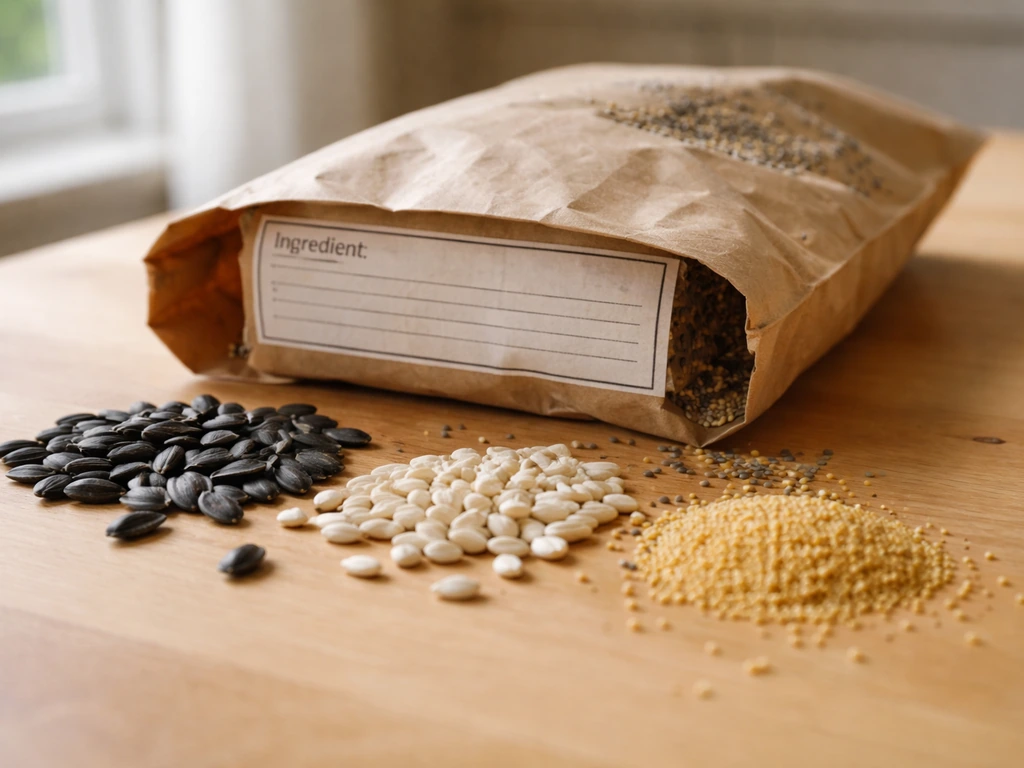
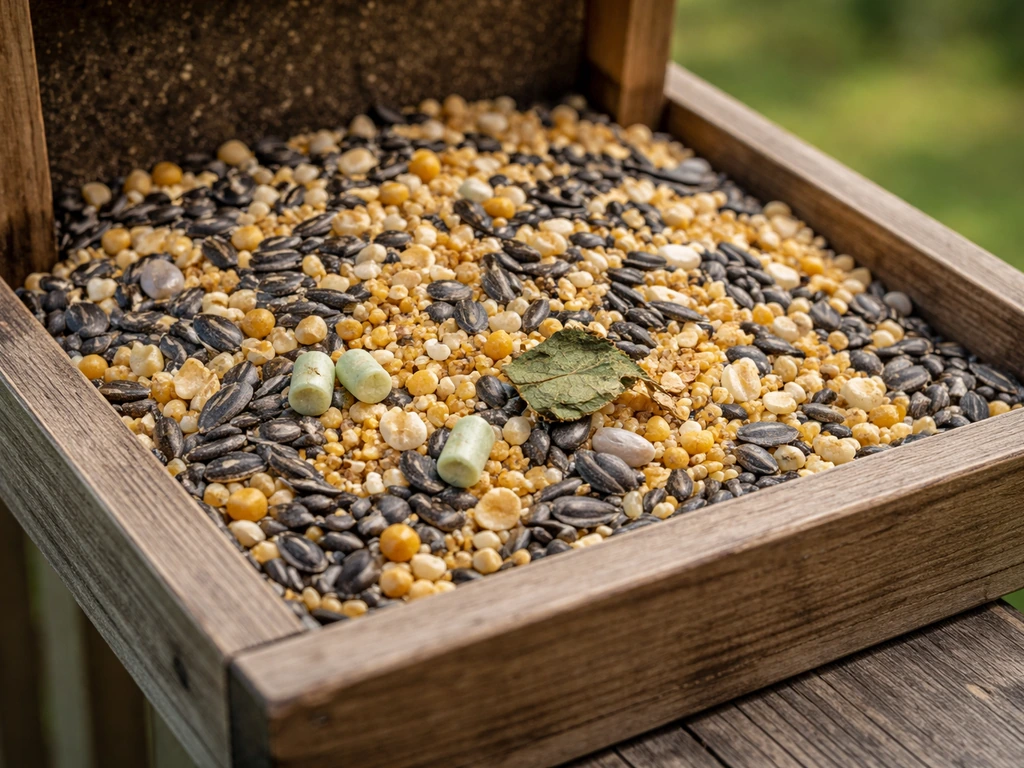
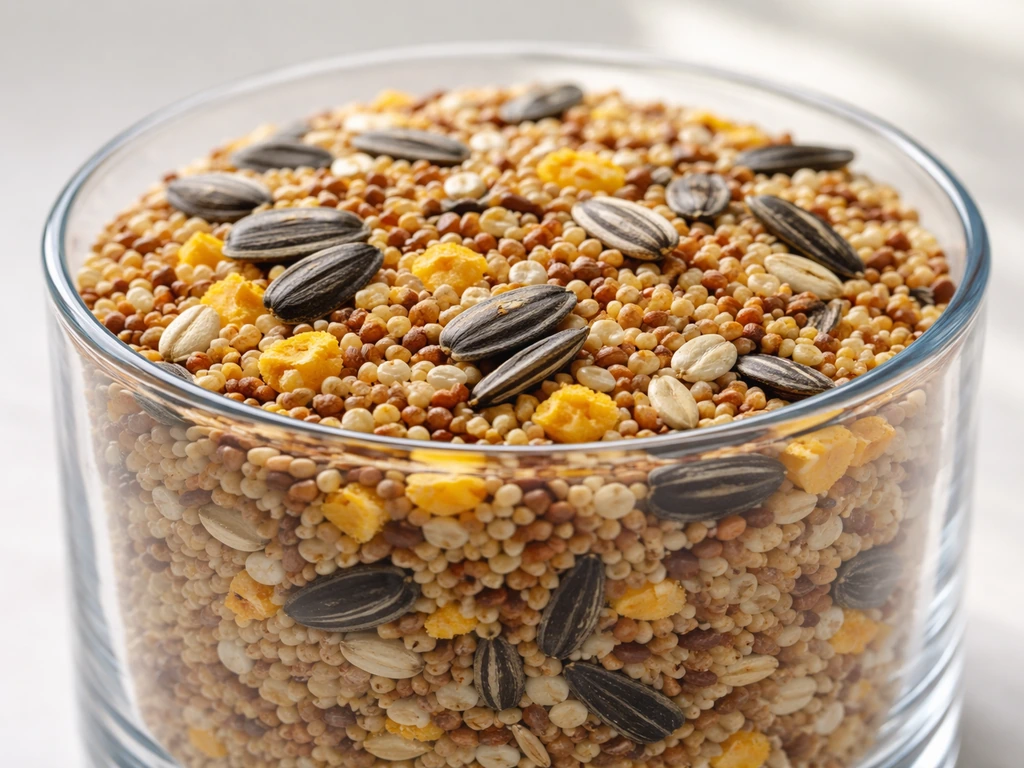
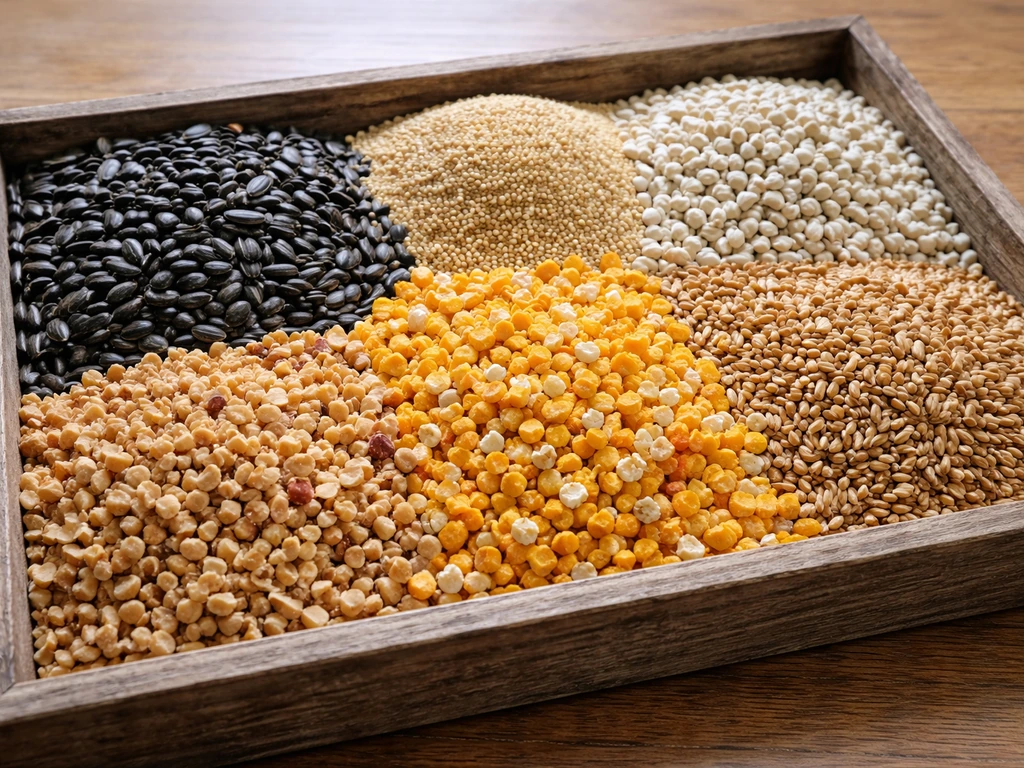
Start with the bag label. Reputable brands list every ingredient by name, and the list tells you a lot. A typical 'wild bird blend' might include black oil sunflower seed, sunflower chips, safflower, white or red millet, cracked corn, and sometimes protein add-ins like dehydrated mealworms or suet dough pieces. It may also help to know what types of seeds and ingredients commonly appear in wild bird seed blends wild bird blend.
If you are still wondering what's in bird seed beyond the label, this guide on wild bird seed blends is a good related starting point. If your mix contains mealworms, that's intentional: the bag will say 'dehydrated mealworms' right on the ingredient panel. Some mixes also include nyjer (thistle), peanut pieces, or dried fruit, and a small number of lower-quality blends still use red milo or filler grains that most songbirds reject.
One thing worth knowing: some blends have been criticized for using red dye on certain seed components. If you see vividly colored seeds in your mix that don't match the natural color of sunflower, millet, or corn, check the ingredient list for any colorant or dye. Most premium blends skip this entirely.
If you want a deeper breakdown of which seeds show up in which blend types, the sibling articles on this site covering what seeds are in bird seed and common seeds in bird feed go into that in full detail. If you're trying to identify the specific ingredients, check what seeds are in bird seed for a detailed breakdown by blend type.
If you want to compare the mix you bought with common seeds in bird feed, use this guide as your checklist for what should (and should not) be there.
| Ingredient | Why it's there | Birds it attracts |
|---|
| Black oil sunflower | High fat, thin shell, universally preferred | Cardinals, chickadees, finches, nuthatches |
| Sunflower chips (hulled) | Easy to eat, no mess, fast consumption | Finches, sparrows, doves, juncos |
| Safflower | Bitter taste deters squirrels | Cardinals, doves, house finches |
| White millet | Small seed, ground-feeding staple | Sparrows, juncos, doves, towhees |
| Cracked corn | Cheap filler, attracts ground feeders | Jays, doves, squirrels, deer |
| Dehydrated mealworms | Protein add-in for insect-eaters | Bluebirds, robins, wrens, warblers |
| Nyjer (thistle) | Tiny oil-rich seed | Goldfinches, pine siskins, redpolls |
| Suet bits/dough pieces | High-calorie fat source | Woodpeckers, chickadees, starlings |
Check your seed for contamination right now
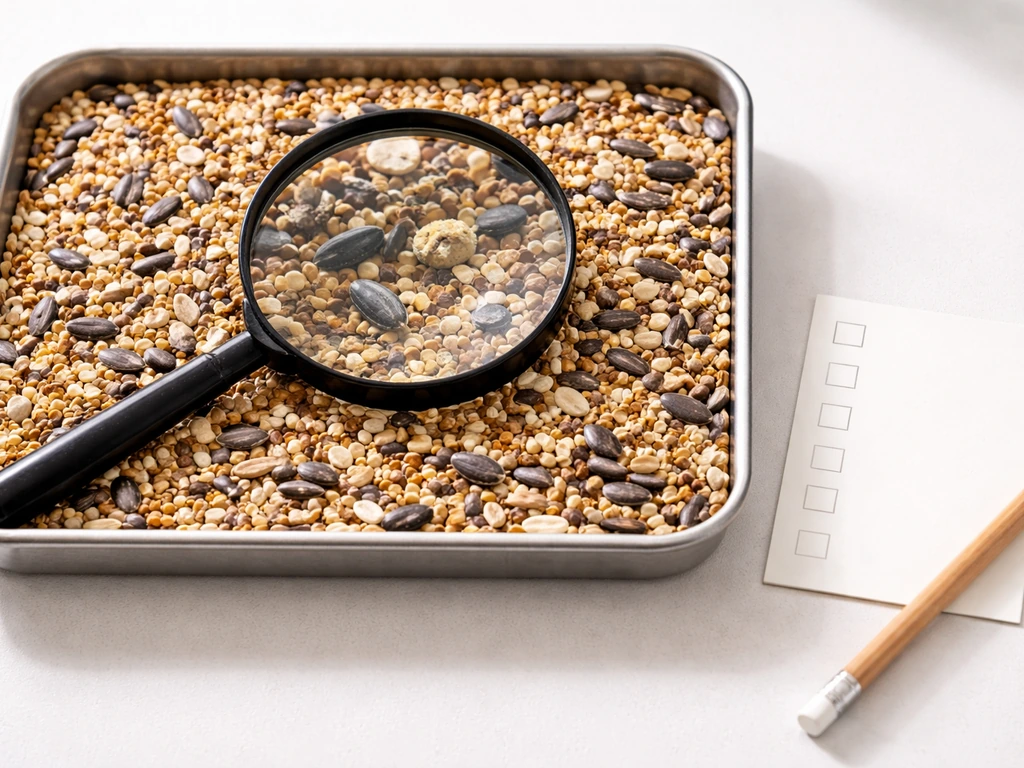
Before you refill a feeder or open a new bag into an existing container, do a quick inspection. Contaminated seed is one of the most common causes of birds getting sick at feeders, and the warning signs are pretty obvious once you know what to look for.
Signs the seed needs to go
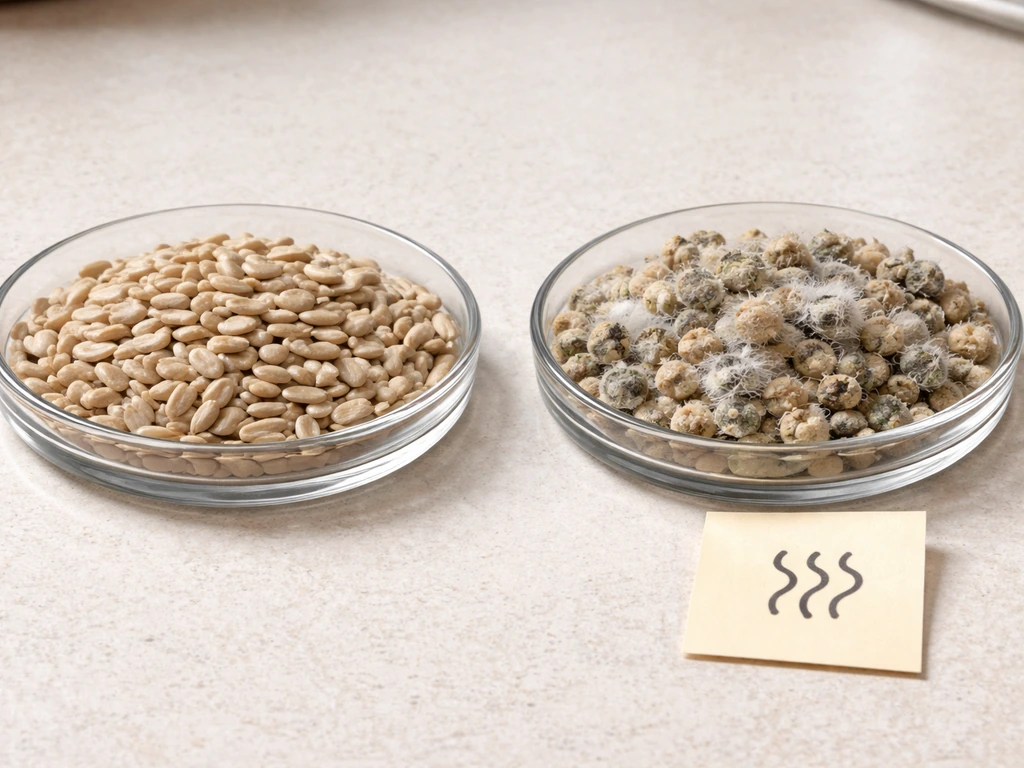
- Visible mold: gray, white, green, or black fuzzy patches anywhere in the seed mass
- Musty or sour smell: fresh seed smells nutty or neutral; rancid or musty odor means spoilage
- Clumping: seed that sticks together in chunks has been wet and is likely harboring mold
- Discoloration: dark streaks, unusual staining, or a greasy sheen can indicate rancidity or moisture damage
- Live or dead insects: small beetles, moth larvae, webbing, or tiny worms mixed into the seed
- Sprouting: seeds actively germinating in the bag or feeder tray have been wet long enough to break dormancy
- Moisture in the packaging: any sign the bag got wet in storage or shipping is a red flag
Mold is the biggest safety risk. Penn State Extension is direct on this: moldy seed should not be used, period. Birds can become ill from moldy seed and from droppings that accumulate around infected feeders. If even a portion of your seed shows mold, the safest call is to discard the whole affected batch, not just scoop off the visible patch.
What moisture damage actually means
Mold growth in stored seed is driven by moisture content and temperature. blank" rel="noopener noreferrer">Research from Kansas State on stored product protection shows mold risk climbs significantly once seed moisture exceeds roughly 14%, and ambient relative humidity above 70% can push seed toward that threshold fast. In humid climates (the Southeast, Pacific Northwest, or anywhere during summer), seed stored in an open bag or a poorly sealed bin can go bad within days, not weeks.
Fix it today: cleanup and feeder reset
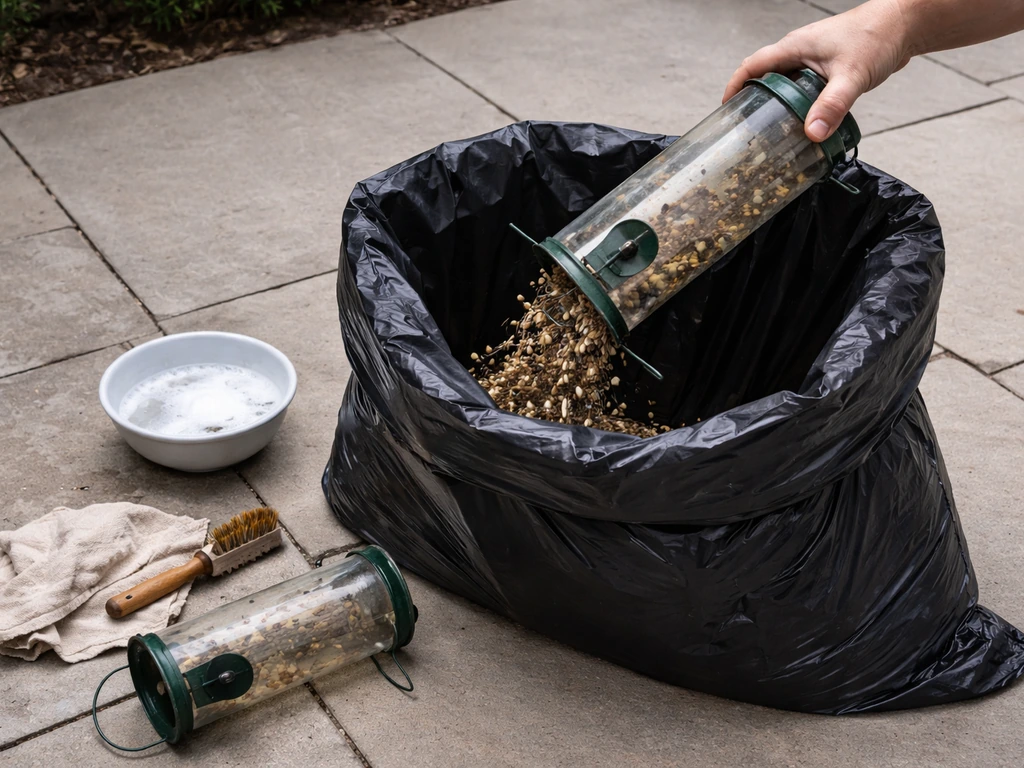
If you've found contaminated seed, here's the sequence to follow. Don't skip the drying step, it's the one most people rush and then wonder why mold comes back.
- Remove all seed from the feeder and discard it. Double-bag moldy seed before putting it in the trash to avoid spreading spores.
- Disassemble the feeder completely. Take apart any removable trays, perches, ports, and lids.
- Wash all parts with hot soapy water first, scrubbing out any stuck seed, hulls, or residue with a stiff brush.
- Disinfect with a bleach solution. Mix 1 part household bleach to 9 parts water (a 10% bleach solution). Immerse or wipe all feeder parts and let them soak for 10 minutes.
- Rinse thoroughly with clean water. Bleach residue is harmful to birds, so rinse more than you think you need to.
- Air-dry completely before refilling. This is non-negotiable. A damp feeder re-seeds mold within 24 to 48 hours.
- Clean the ground below the feeder. Rake up or bag any spilled seed, hulls, and droppings in a 3-foot radius. These accumulate disease risk fast.
- Refill with fresh seed only. Do not mix new seed with any seed from the contaminated batch.
The Iowa DNR recommends a full feeder cleaning roughly once a month under normal conditions, but Project FeederWatch advises bumping that to every two weeks during warm or damp weather. If you're in spring or summer right now (and as of April 2026, you likely are), go with the two-week schedule.
Store seed so this doesn't happen again
Most bird seed spoilage problems come down to the container and the location. A paper bag sitting in a garage that gets humid in summer is basically a mold incubator. Here's what actually works.
- Use a hard-sided, airtight container: a metal or thick-walled plastic bin with a tight lid. This also blocks rodents.
- Store in a cool, dry spot: a basement or climate-controlled space is ideal. Avoid garages in humid climates unless they're temperature-controlled.
- Keep relative humidity below 60 to 70% near your storage area if possible. A small dehumidifier in a damp garage helps significantly.
- Never pour new seed on top of old seed. Empty and inspect the container first, then add fresh seed.
- Rotate stock: use older seed first and don't let any batch sit longer than 6 to 8 weeks in humid conditions (up to 3 to 4 months in a cool, dry environment).
- Don't overfill feeders. Only put out what birds will eat in about 1 to 2 days during warm months, especially for platform feeders where seed sits exposed.
- Use a feeder with a weather guard or dome if you're in a rainy region. Wet seed in an open tray feeder is the fastest path to mold.
Which birds care about which seeds (and why it matters here)
Part of figuring out what to put in your feeder going forward is knowing what you're trying to attract, and what might show up whether you want it or not. Different seed components pull in very different visitors, and some of those visitors create their own problems.
If you want to attract specific songbirds
Black oil sunflower is the single best all-around choice: cardinals, chickadees, nuthatches, finches, and many sparrows all eat it readily. Safflower is worth adding if squirrels are raiding your feeder, since most squirrels dislike the bitter taste while cardinals and doves don't mind it. Nyjer seed in a finch-specific tube feeder draws goldfinches and pine siskins but not much else. If you want bluebirds or wrens, a separate tray with dehydrated mealworms is more effective than mixing them into a general blend.
If unexpected wildlife is showing up
Cracked corn and millet on the ground pull in not just doves and juncos but also rats, deer, and raccoons depending on your region. If you're suddenly seeing more mammal activity around your feeder, the mix likely contains cracked corn or large filler grains. Switching to a no-waste blend (hulled sunflower, nyjer, or safflower only) and using a feeder with a baffle dramatically reduces this. Also: if your mix contains suet bits or mealworms and you're in a warm climate, those protein add-ins spoil faster than seed does. In summer, check suet-containing mixes more frequently and consider switching to a plain seed blend until temperatures drop.
Hemp seed in bird feed
Some premium blends include sterilized hemp seed (also called hempseed), which is legal in bird feed formulations because the seed is heat-treated to prevent germination. It's a high-fat seed that attracts finches and sparrows. If you see it on the label, that's intentional and safe. A dedicated article on this site covers what bird seed contains hemp in more detail if you want the full breakdown.
Birds not eating, or acting weird? Here's what's going on
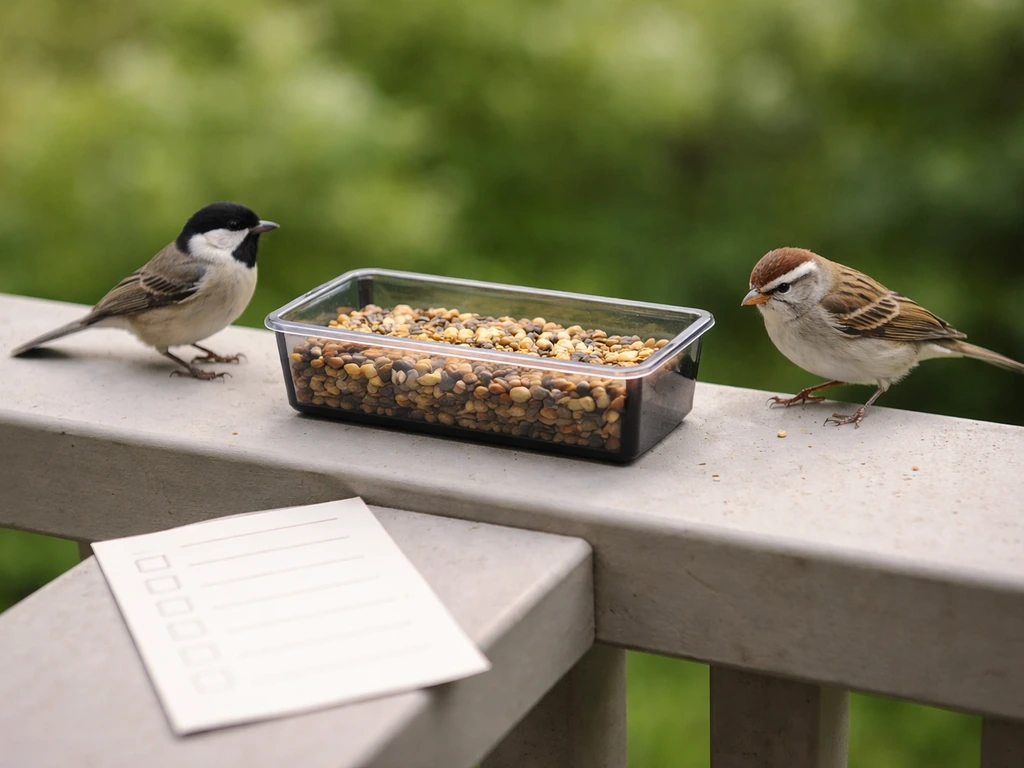
If you've cleaned everything up and put out fresh seed but birds still aren't coming, or they show up and then leave without eating, work through this list before assuming something is wrong with your setup.
| Symptom | Likely cause | Fix |
|---|
| Birds approach but don't eat | Seed type doesn't match local species; feeder style is wrong | Check what species are in your area; switch to black oil sunflower as a baseline |
| Birds ate fine, then suddenly stopped | Local natural food source is abundant (spring/fall); or feeder is in a new spot | Wait a few days; birds often cycle back. Move feeder closer to cover if recently relocated. |
| Seed disappears fast but no birds seen | Squirrels, raccoons, or large birds (starlings, grackles) taking it | Add a baffle; switch to safflower or nyjer to deter non-target species |
| Seed sits untouched for days | Mix contains too many rejected fillers (red milo, wheat, oats) | Check label; upgrade to a blend with sunflower as the first ingredient |
| Birds eating but look lethargic or fluffed | Possible disease; contaminated feeder or ground area | Take down feeder immediately, clean and disinfect, check for local disease alerts from wildlife agencies |
| Repeated mold even after cleaning | Humidity in storage; feeder location gets wet regularly; overfilling | Move storage indoors; add weather guard to feeder; reduce fill amount |
| Insects keep appearing in seed | Larvae already in seed at purchase (common with warm-stored seed); or ambient temperature too high in storage | Freeze new seed for 48 hours before storing to kill any larvae; use sealed metal container |
One thing that often gets missed: if birds in your yard are showing signs of illness (lethargy, abnormal posture, eye discharge, or dying near the feeder), the right move is to take down all feeders for at least two weeks, not just clean them. This is standard guidance during disease events like salmonellosis outbreaks, which can spread rapidly at communal feeders. Check your state wildlife agency website for current alerts before putting feeders back up.
Your next steps, right now
Here's the short version of what to do today. Inspect your current seed using the contamination checklist above. If it passes, great: check your storage setup and make sure you're not overfilling feeders. If anything looks or smells off, dispose of the seed, run through the full feeder cleaning steps with the 1:9 bleach-to-water solution and a 10-minute soak, let everything dry completely, and start fresh with a quality blend that lists real seed (not filler) as the first ingredient.
Going forward, clean your feeders every two weeks in spring and summer and at least once a month the rest of the year. That single habit prevents the vast majority of mold, insect, and disease problems that show up in backyard feeders.