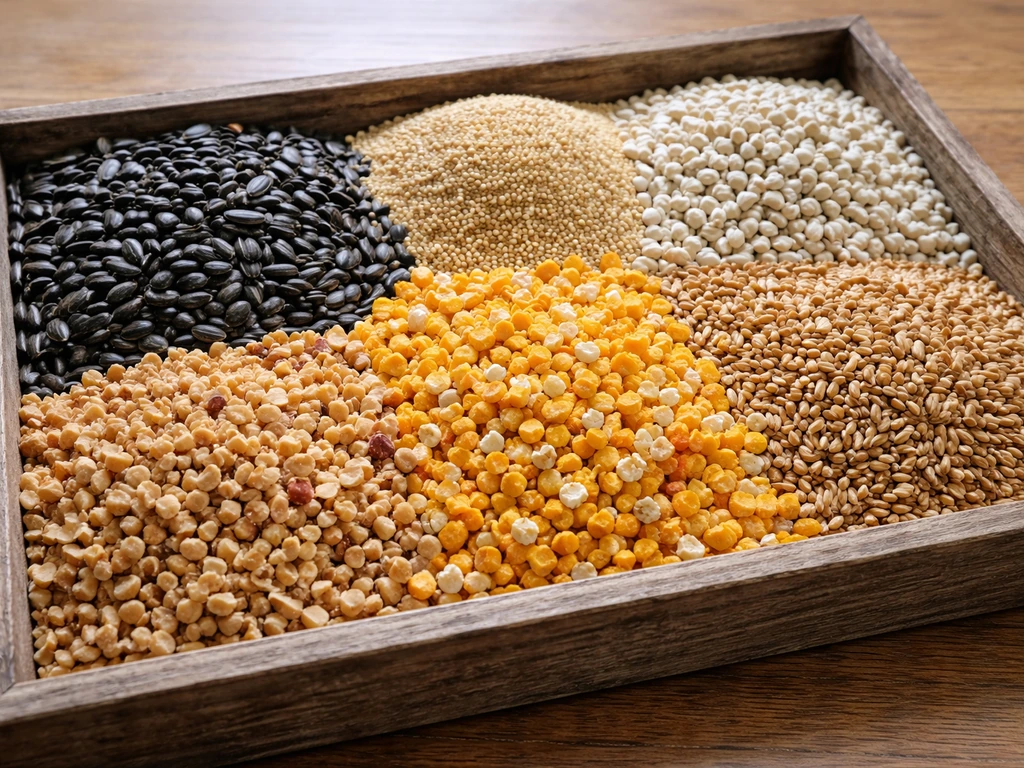
The seeds inside most bird seed bags fall into a short, predictable list: black oil sunflower, white proso millet, safflower, cracked corn, striped sunflower, and peanut hearts. Those six cover the majority of what you will find in any bag labeled "wild bird seed mix" at a hardware store, garden center, or big-box retailer. Beyond those core six, you may also see milo (sorghum), oats, wheat, canary seed, or sunflower chips depending on the brand and price point. The exact blend varies, but the label on your specific bag will always tell you, and reading it takes about 30 seconds once you know what to look for.
What Seeds Are in Bird Seed Mixes and Types
Maya Collins
4 Apr 2026
How to identify the exact seeds in your bag
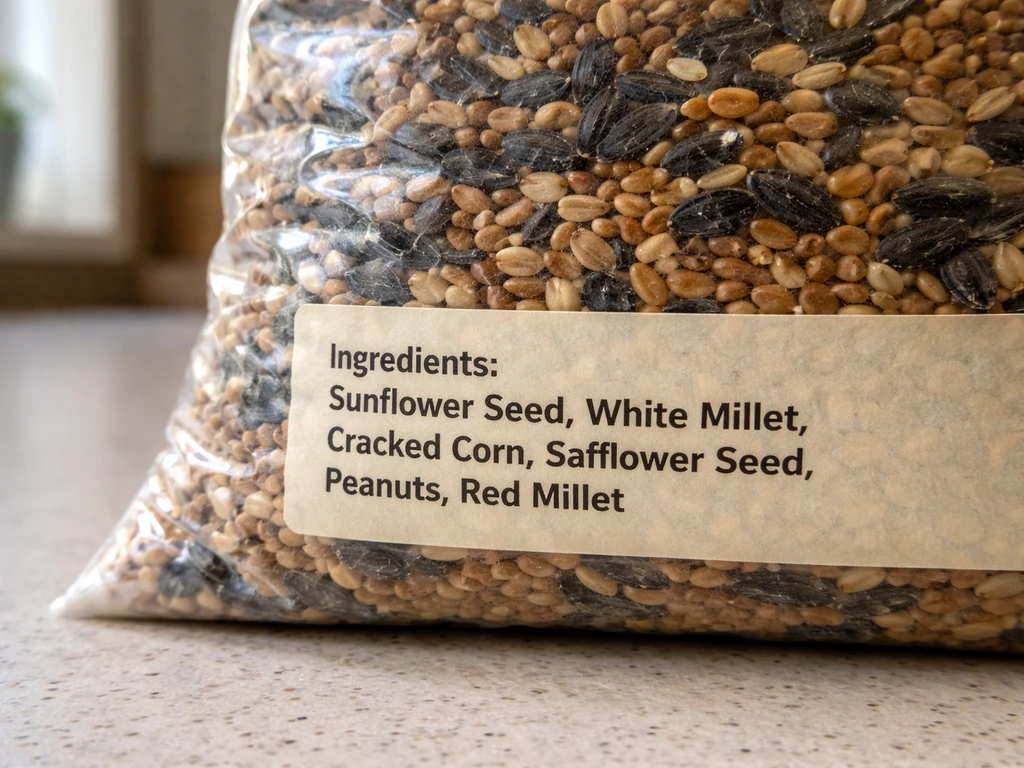
Flip the bag over and look for the ingredient statement. Every bag sold in the U.S. is subject to truth-in-labeling standards under the Federal Seed Act, which requires the label to list seed purity percentage, germination percentage, the number of noxious weed seeds per pound, any chemical seed treatment, and a kind or variety identification alongside the shipper's name and address. That ingredient list is not optional, and it is not marketing copy. It is a regulated disclosure, so take it at face value.
When you scan the ingredient statement, look for seed names spelled out in full: "black oil sunflower seed," "white proso millet," "safflower seed," "cracked corn," "striped sunflower seed," and "peanut hearts" are the standard terms used in regulated labeling. Some bags also include a bird preference chart. If yours does, the Wild Bird Feeding Institute requires that chart to show every bird species highlighted and every ingredient on the chart, so that section doubles as a handy cross-reference. If you want a deeper breakdown of how manufacturers approach what's in bird seed and how it is categorized, that is worth a read before you shop next time.
- Find the ingredient statement, usually in small print on the back or side panel of the bag.
- Write down each seed listed, in the order they appear (ingredients are typically listed by weight, largest first).
- Check the guaranteed analysis section for purity and germination percentages, which tell you how much of the bag is actually viable seed versus inert matter.
- Note any noxious weed seed count if listed. A label that discloses zero or a very low count is a quality indicator.
- Cross-reference the ingredient list against the bird preference chart on the front if one is present.
- If the bag lacks a clear ingredient statement, that is a red flag. Choose a different brand.
The most common seeds and the plants they come from
Black oil sunflower seed comes from the annual sunflower plant (Helianthus annuus) and is, by far, the most preferred seed among backyard bird species. Its thin shell makes it accessible to a wide range of birds, from chickadees to cardinals to finches. It is the ingredient most worth prioritizing if you want to attract the broadest mix of songbirds.
Striped sunflower seed comes from the same plant species but has a longer, thicker shell. That thicker hull limits it mostly to larger-billed birds like cardinals and grosbeaks. Budget mixes sometimes swap in more striped sunflower to reduce cost, since it is cheaper to produce, but smaller birds often leave it untouched.
White proso millet (Panicum miliaceum) is a small, round, pale seed. It is an excellent choice for ground-feeding birds, particularly sparrows, juncos, and doves. The U.S. Fish and Wildlife Service specifically notes that white proso millet is favored by sparrows. The U.S. Fish & Wildlife Service document notes that sparrows favor white proso millet specially notes that white proso millet is favored by sparrows. It is also less expensive than black oil sunflower, which is why many mid-range mixes use it as a significant filler. That is not necessarily bad, as long as you are targeting the right birds.
Safflower seed comes from Carthamus tinctorius and looks like a small, white, teardrop-shaped seed. It attracts many brightly colored songbirds, including cardinals and house finches, while being notably less attractive to house sparrows and European starlings. If you are dealing with aggressive feeder competition, a safflower-heavy mix can help shift the balance.
Cracked corn is dried field corn that has been mechanically broken into smaller pieces. It is cheap, widely available, and attracts ground-feeding birds like doves, jays, and blackbirds. It also attracts squirrels and deer, so placement matters. Whether to include it depends entirely on which birds you want.
Peanut hearts are the inner cotyledons of peanuts (Arachis hypogaea) after the outer skin is removed. They are popular with woodpeckers, nuthatches, titmice, and jays. They are calorie-dense, which makes them particularly valuable in cold weather.
Beyond those six, you may see milo (red sorghum), oats, wheat, canary seed, red millet, or sunflower chips. Milo, oats, and wheat are low-preference fillers for most songbirds and are mainly eaten by doves, pigeons, and non-native species. Canary seed is fine but niche. What seeds are in wild bird seed goes into further detail on regional ingredient variations if you want to dig into how geography shifts the mix.
Seed-only vs blended mixes: what actually differs
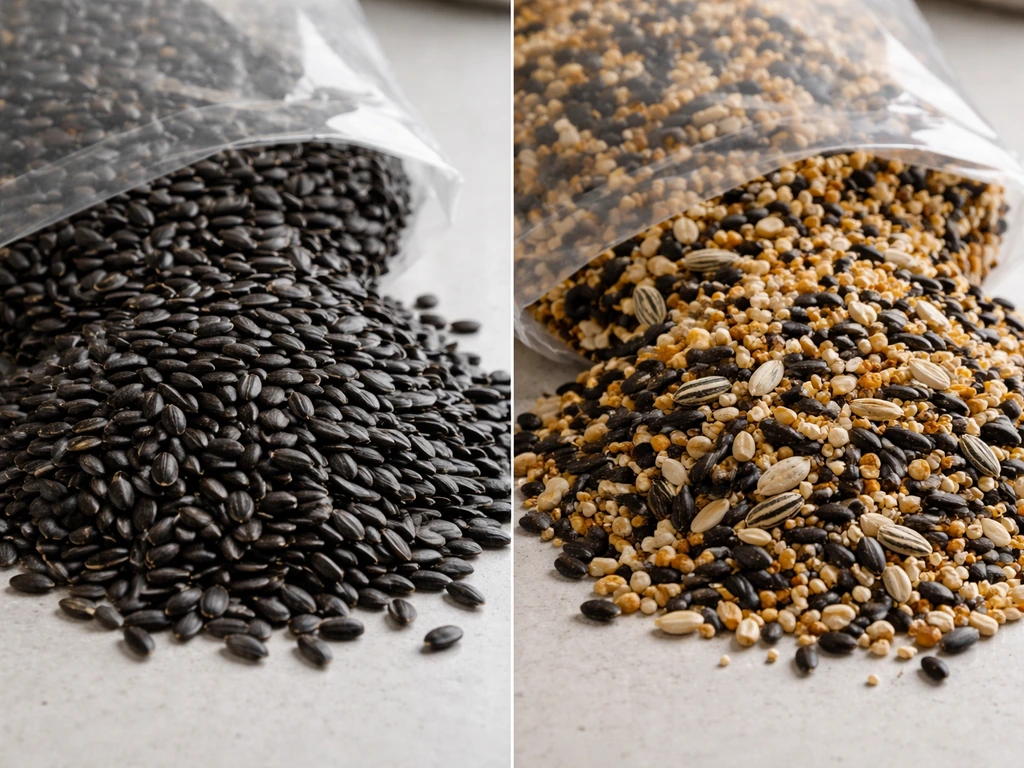
A seed-only product, like a straight bag of black oil sunflower or a pure nyjer/thistle bag, contains exactly one ingredient. You get complete control over what you put out, almost zero waste because target birds eat the whole seed, and less mess under the feeder. The downside is cost: single-species seeds tend to run higher per pound, and you either need multiple feeders or you accept a narrower range of visiting birds.
A blended mix trades some of that precision for convenience and variety. One bag can attract a wider range of species simultaneously. The real difference in quality between blends comes down to what proportion of the mix is high-value seed (black oil sunflower, safflower, peanut hearts) versus low-value filler (milo, wheat, oats, red millet). A cheap blend that is 60% milo and cracked corn will generate a lot of ground waste and attract fewer desirable songbirds than a premium blend that leads with black oil sunflower and millet.
| Type | Typical ingredients | Bird appeal | Waste level | Best use case |
|---|---|---|---|---|
| Single-seed (black oil sunflower) | Black oil sunflower only | Very broad: most songbirds | Very low (thin shell, mostly eaten) | Tube or hopper feeder, target songbirds |
| Single-seed (nyjer/thistle) | Nyjer seed only | Narrow: finches, siskins | Very low | Finch-specific tube feeder |
| Premium blend | Black oil sunflower, safflower, white millet, peanut hearts | Broad and targeted | Low to moderate | Mixed feeder setup, attracting variety |
| Budget/economy blend | Milo, wheat, red millet, cracked corn, some sunflower | Lower, mostly ground birds | High (selective feeding) | Ground feeding station only |
| No-waste/no-mess blend | Sunflower chips, peanut hearts, hulled millet | Broad | Near zero (no shells) | Deck or patio feeders where cleanup matters |
My recommendation: if you are just starting out, buy a straight bag of black oil sunflower and a separate bag of white proso millet. Offer them in separate feeders. You will attract more birds with less waste than most economy blends deliver, and you will spend less time cleaning up rejected seed off the ground.
Fillers and extras to watch out for (including weed seeds)
Low-cost mixes routinely include milo, wheat, oats, and red millet as bulk fillers. Most songbirds ignore these and kick them out of the feeder, which means they pile up under the feeder and create a cleanup problem and a potential sprouting problem. Milo in particular is dramatically over-represented in cheap mixes relative to how few birds actually eat it. If your bag lists milo (sorghum) as the first or second ingredient, you are looking at a filler-heavy product.
Weed seeds are a separate concern. The Federal Seed Act requires bags to disclose the number of noxious weed seeds per pound, and that number matters practically because seeds that fall or get kicked under the feeder can germinate. If you are feeding over a lawn or garden bed, a mix with a high noxious weed seed count can introduce plants you do not want. Always check that number on the label. Premium mixes and single-species bags typically have very low counts.
There is also the hemp seed question. Some specialty mixes include sterilized hemp seed as an ingredient, and the legality, labeling, and sourcing of that ingredient is handled under a separate regulatory framework. If you are curious whether a specific product contains it, what bird seed contains hemp covers which products include it and what to know before you buy.
One more thing worth flagging: some bags include artificial dyes on the seed coat or anti-mold chemical treatments. The Federal Seed Act requires any chemical seed treatment to be disclosed on the label, so look for that disclosure if you are concerned. Treated seeds are typically not recommended for birds or wildlife feeding situations. If you see it listed, skip that bag.
If you have ever opened a bag and thought "wait, what did they actually put in here?", you are not alone. The what did you put in this bird seed discussion digs into exactly that confusion, including why some blends look and smell different from what the label implies. And if you want a broader side-by-side look at how common blends stack up ingredient by ingredient, the breakdown of common seeds in bird feed is a useful quick reference.
Storing your seed safely once you know what's in it
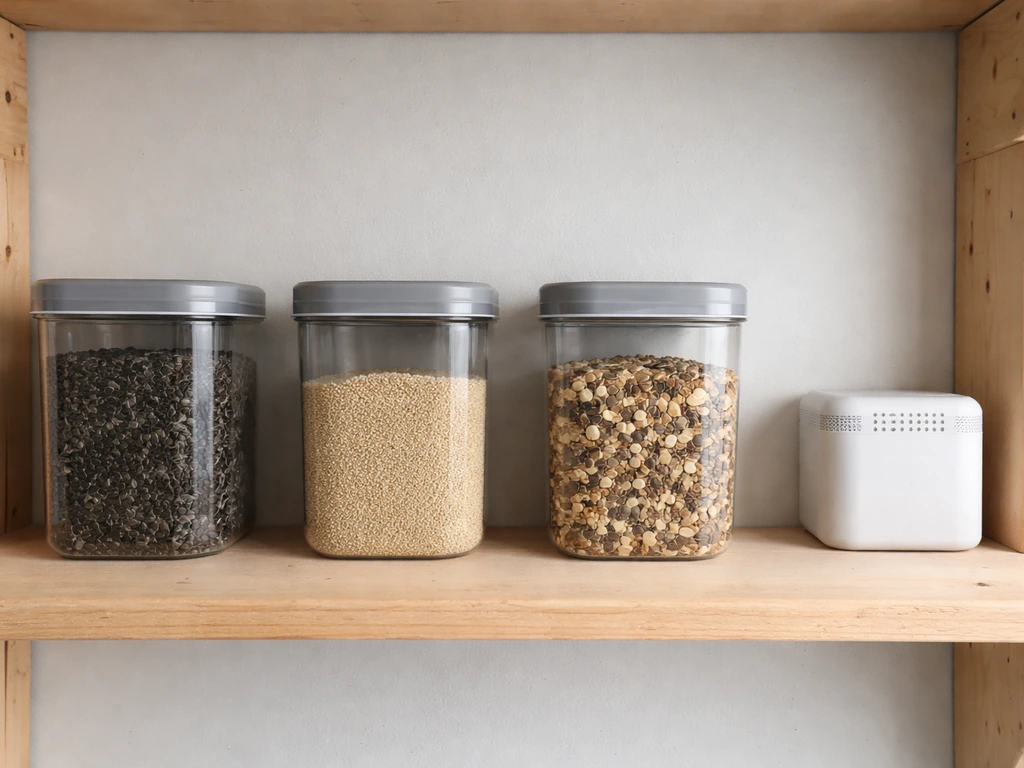
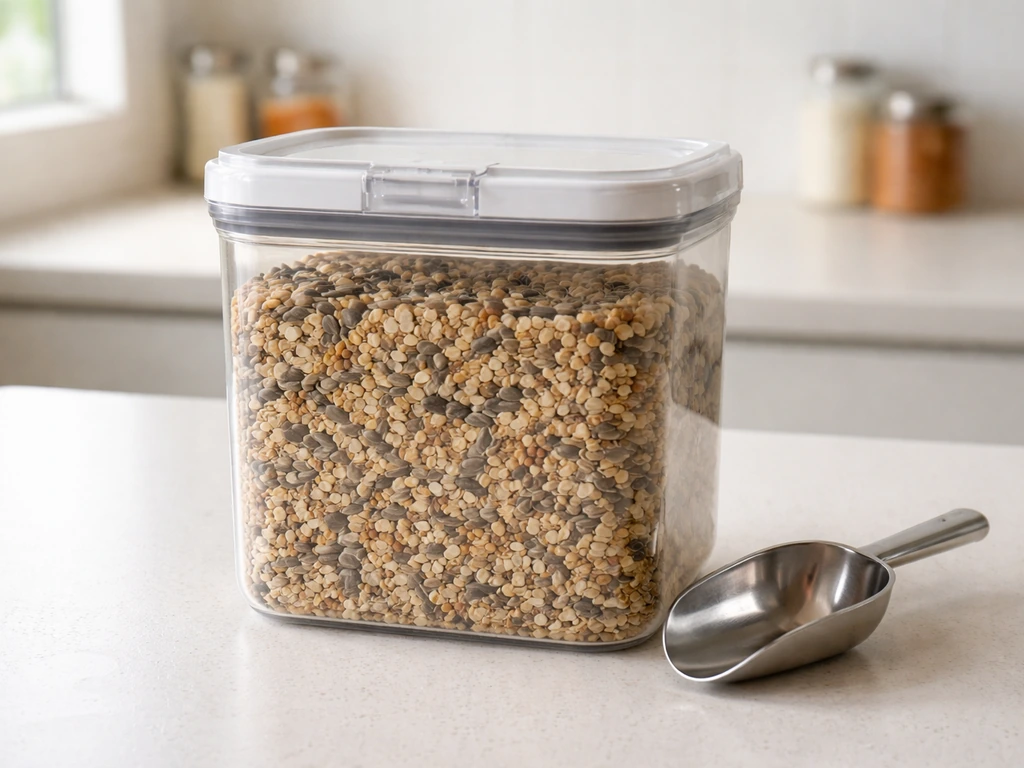
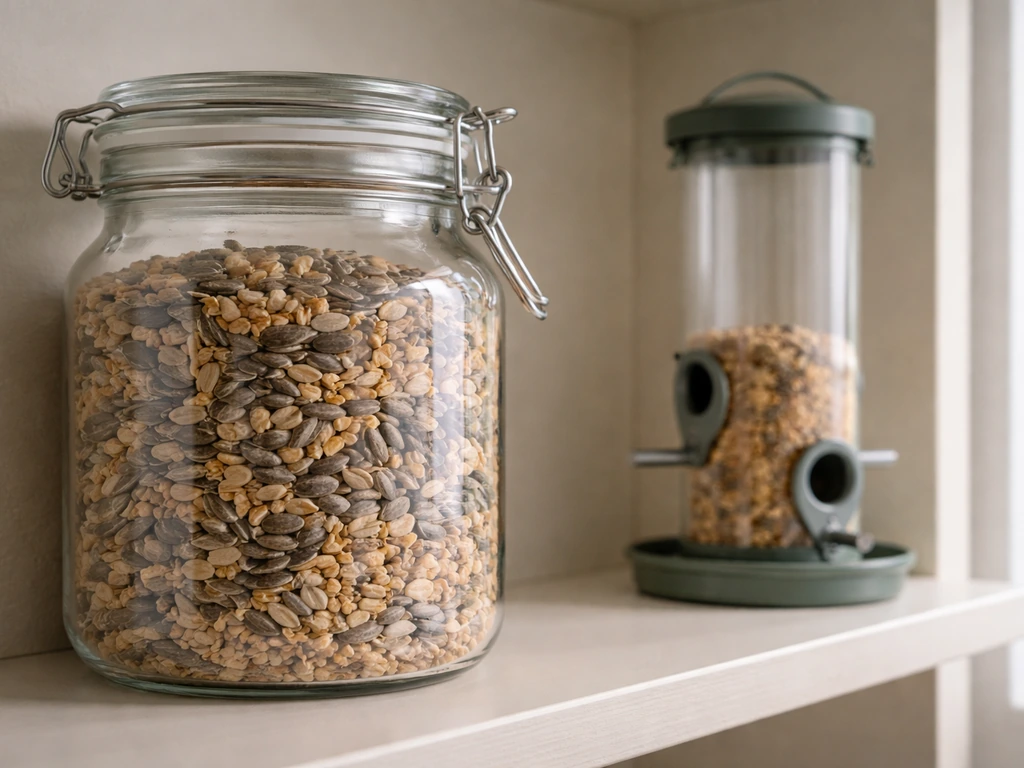
Moisture is the single biggest threat to stored bird seed. Mold development is directly tied to humidity levels in the storage environment, and once mold takes hold it can spread through an entire container quickly. The practical rule: store seed in an airtight container in a cool, dry place, away from direct sunlight. Metal or hard plastic containers with secure lids work well. Avoid leaving seed in paper bags, which absorb ambient moisture and allow insect entry.
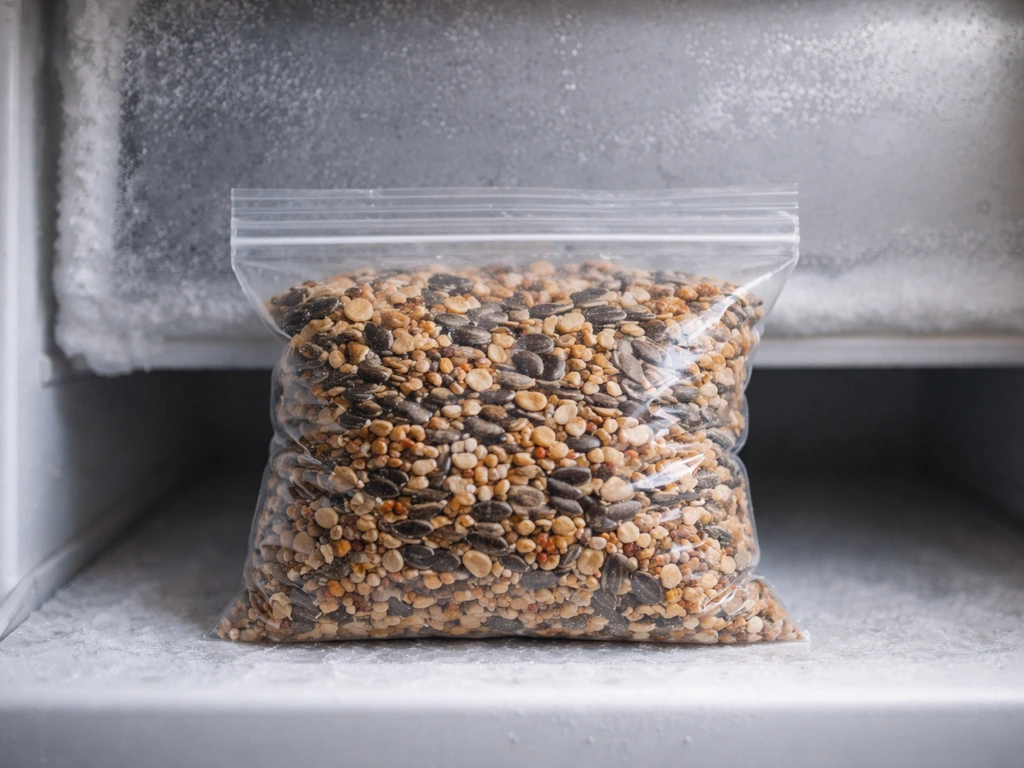
If you bought a large quantity or are storing seed between seasons, freezing it in an airtight container is a reliable way to kill any moth larvae or beetle eggs that may have been in the bag at purchase. Freeze for at least 72 hours, then allow it to come to room temperature fully before opening the container. Condensation on cold seed that gets exposed to warm humid air is exactly the moisture event you want to avoid.
- Use a food-grade metal or hard plastic container with a tight-fitting lid.
- Store in a garage, shed, or basement where temperatures stay below 70°F (21°C) if possible.
- Keep seed off the ground on a shelf or pallet to avoid moisture wicking from concrete floors.
- Label containers with the purchase date. Most seed stays viable and safe for 6 to 12 months if stored correctly.
- Do not mix old and new seed in the same container. Use the older stock first.
- Inspect stored seed monthly for clumping, off smells, or visible insects. Address problems immediately.
Peanut-based ingredients (peanut hearts, whole peanuts) are more susceptible to aflatoxin mold than other seeds and should be used within 2 to 3 months of opening even when stored properly. If peanut-containing seed smells musty or looks discolored, discard it entirely.
What to do when seed gets wet, sprouts, or shows mold
Wet seed in a feeder is a discard situation, full stop. Oregon State University advises that if seed in a feeder has gotten wet and compacted, you remove it and throw it out rather than letting it dry in place. Compacted wet seed is an ideal environment for mold and bacterial growth, and birds can contract serious diseases from contaminated feeders. Do not try to dry it out and reuse it.
After discarding wet or moldy seed, clean the feeder before refilling. A diluted bleach solution (1 part bleach to 9 parts water) applied to feeder surfaces, followed by a thorough rinse and complete air drying, is the standard approach recommended by bird health organizations. Audubon and Project FeederWatch both emphasize that regular cleaning and removal of moldy, wet, or spoiled seed and seed casings from feeders is one of the most effective ways to prevent disease spread at backyard feeders.
Sprouted or moldy seed on the ground under your feeder is a separate problem. Georgia DNR recommends raking it up promptly and treating the affected soil with a bleach-and-water solution to prevent it from spreading. Sprouting seed under a feeder is also a sign that your mix contains viable seeds (often millet or corn) that birds are rejecting, which points back to a mix quality or feeder placement issue worth addressing at the source.
Pest insects in stored seed, most commonly Indian meal moths or grain weevils, show up as webbing, small larvae, or tiny flying moths near your storage area. If you find them, seal the infested container immediately and remove it from the storage space. Freeze any uninfested seed from the same purchase for 72 hours as a precaution. Clean the storage shelf with a vacuum and wipe-down before restocking.
The broader pattern to internalize: wet conditions cause mold, mold causes disease risk, and the fix is always removal and cleanup rather than waiting it out. Keeping feeders dry (covered feeders help significantly in rainy climates), rotating seed stock so nothing sits for more than a season, and doing a quick visual inspection every time you refill will prevent the vast majority of these problems before they start. If you want a more visual walk-through of this whole process, the what did you put in this bird seed gif resource shows the step-by-step in a quick reference format.
FAQ
If a bag says “wild bird seed mix,” can it include ingredients other than the common sunflower, millet, safflower, corn, and peanut hearts list?
Yes. Many mixes add lower-preference grains like oats, wheat, and canary seed, and some brands include additional fillers such as red millet or sunflower chips. The only reliable way to know is to check the ingredient statement on your exact bag, since the blend can change by brand, season, and region.
Where on the bag should I look to confirm what seeds are in the mix, and what details matter most?
Look at the ingredient or “seed analysis” statement on the back panel. Prioritize the listed seed names (in full), plus the purity and germination percentages and the number of noxious weed seeds per pound. Those numbers help you predict waste, rejected seeds, and how much unwanted sprouting risk you may get.
What does it mean if black oil sunflower seed or proso millet is listed first versus near the end?
Order usually reflects relative proportion. If a high-value seed is near the top, the mix is more likely to be “bird-attracting” and lower waste. If milo, wheat, oats, or red millet show up first or second, the product is typically filler-heavy and many birds will kick out more seed.
Are “cracked corn” and “whole corn” interchangeable in a bird seed mix?
Not always. Cracked corn is broken into smaller pieces, which is easier for many ground-feeding birds to pick up. Whole corn kernels often get treated differently by brands and may lead to more leftover seed under feeders, depending on feeder type and the birds you’re targeting.
Why does a mix sometimes attract only certain birds, even when I’m using “wild bird” blend?
Feeder behavior and seed accessibility play a big role. For example, striped sunflower has a thicker hull that favors larger-billed birds, while small-billed species often prefer black oil sunflower. Also consider ground-feeding versus platform feeding, since millet and cracked corn can be far more effective on the right feeder style.
Is it normal to find a lot of seed spilled or kicked under the feeder?
It happens, but the amount is a quality signal. Filler-heavy blends often generate more rejected seed, leading to piles under feeders. If you see constant waste, switch to a higher proportion of black oil sunflower and millet, use smaller feeder openings, or try separate feeders for the seeds your target birds actually eat.
Do I need to worry about weed seeds sprouting from bird feed on my lawn or garden?
Yes, but you can manage the risk by checking the noxious weed seeds per pound on the label. If you feed over or near areas you want to keep clear, choose mixes that list very low counts. Also clean up rejected seed regularly to reduce germination opportunities.
Can bird seed contain hemp seed, and how will it show up on the label?
Some specialty products include sterilized hemp seed, but it will be disclosed on the bag’s ingredient information. If hemp is a concern, scan the ingredient statement for “hemp” or “hemp seed,” since it will not be reliably inferred from the usual sunflower, millet, and corn ingredients.
What should I do if the seed smells off, looks discolored, or seems dusty or clumped after storage?
Discard it. Peanut-based ingredients like peanut hearts are especially prone to aflatoxin-related spoilage if mold develops, even when the rest of the bag seems fine. Any musty odor, visible discoloration, or excessive clumping suggests moisture exposure, and birds should not be fed that seed.
Is it safe to dry out wet bird seed and put it back in the feeder?
No. Wet seed that compacts in or around a feeder should be removed and thrown out. Drying it and reusing it is risky because mold and bacterial growth can already be established, and birds can get sick from contaminated feeders.
How often should I clean feeders, especially when using mixes with lots of small seeds like millet?
At each refill, do a quick check for wet, moldy seed, and visually clean debris and old seed casings. For deeper cleaning after any wet or spoiled episode, use a bleach-and-water wash, then rinse thoroughly and let the feeder dry completely before refilling.
What freezer step actually helps with pests, and do I need to thaw first?
Freeze seed in an airtight container for at least 72 hours, then bring the container to room temperature fully before opening. Thawing first prevents condensation, which is the moisture condition that can trigger mold.
If I want to attract more birds with less waste, should I buy a mix or multiple single-seed types?
For most beginners, using a straight bag of black oil sunflower plus a separate bag of white proso millet, offered in separate feeders, reduces rejected seed compared with many economy blends. The main reason is control: you can match feeder style to seed choice and avoid filler ingredients that your target birds ignore.