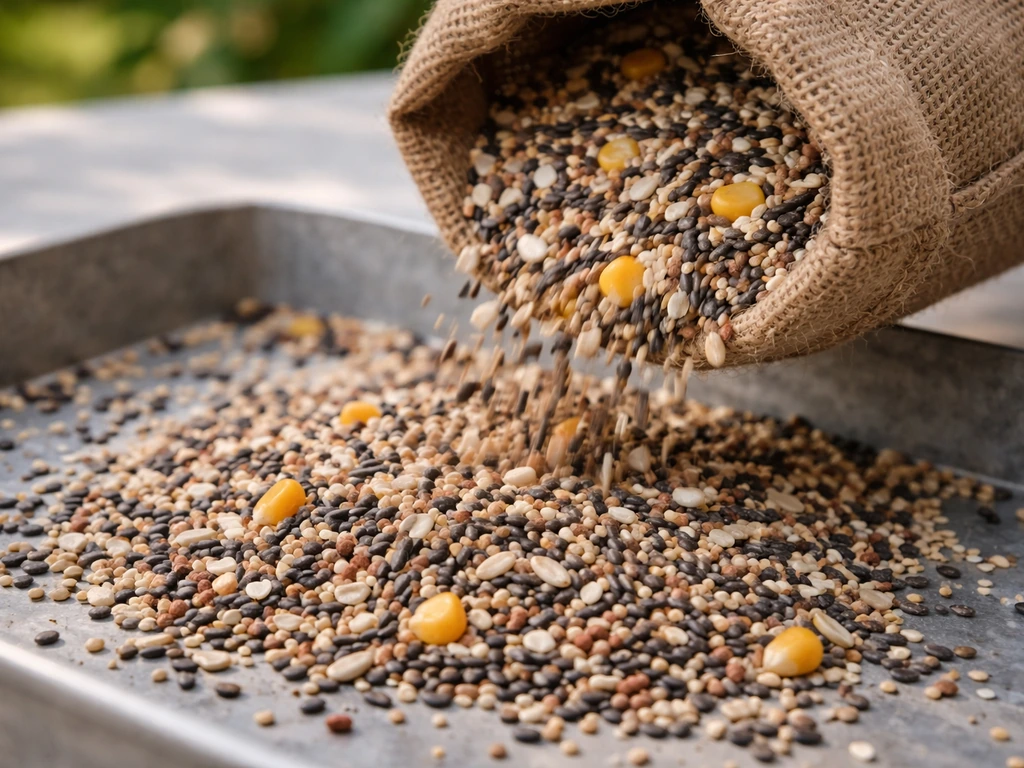
Most wild bird seed mixes contain some combination of black oil sunflower seed, millet (usually white proso millet), cracked corn, milo, safflower, and nyjer (also called thistle seed). That's the short answer. The exact blend depends on the brand, the region the mix was made for, and what birds the manufacturer is trying to attract.
What Seeds Are in Wild Bird Seed Mix and How to Check
Maya Collins
20 Apr 2026
If you want to know precisely what's in the bag you're holding right now, the label will tell you, and I'll show you exactly how to read it. If you're trying to confirm what you put in the bag or what birds it will attract, the ingredient order explained in what's in bird seed is the next step.
If you're wondering what's in bird seed, the ingredient list and how it's ordered by weight tell you the real story. If you’re still not sure what you put in the bird seed, check the ingredient list and how it’s ordered by weight on the bag what's in bird seed.
What's actually in most wild bird seed mixes
Walk into any hardware store or garden center and pick up a bag of wild bird seed, and you'll almost certainly find these core ingredients. They show up across virtually every mainstream mix because they're inexpensive, widely available, and attractive to a broad range of common backyard birds.
- Black oil sunflower seed: the most universally popular seed in any mix, with a thin shell that most birds can crack easily
- White proso millet: small, round, pale seeds that ground-feeding birds love
- Cracked corn: coarse yellow pieces that stretch a mix's volume and weight at lower cost
- Milo (sorghum): small reddish-brown spheres, very common as filler in budget mixes
- Safflower: white, oval seeds with a bitter coating that squirrels generally avoid
- Nyjer (thistle): tiny black seeds used specifically for finches and small songbirds
Some premium mixes also include striped sunflower seed (bigger shell, fewer birds can crack it), peanut pieces or whole peanuts, dried fruit, tree nuts, or even suet nuggets. Those additions push the price up but also expand the variety of birds you'll attract. Budget mixes lean heavily on milo and cracked corn, which many desirable songbirds ignore entirely.
How to read the label and confirm exactly what's inside
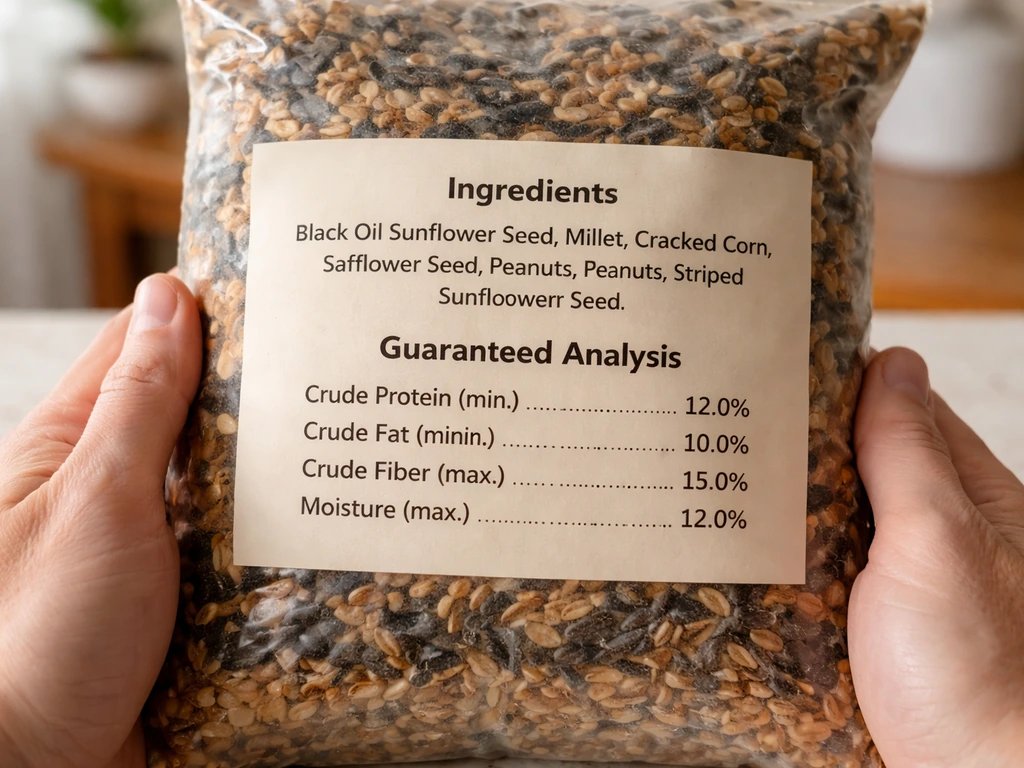
Under U. S. animal feed labeling rules, ingredients must be listed in descending order of predominance by weight. In the U.
S. , federal regulations require animal food and feed ingredient statements to list ingredients by their common or usual name in descending order of predominance by weight (21 CFR 501. 4(a)) [ingredients must be listed in descending order of predominance by weight](https://www. fda.
gov/animal-veterinary/animal-foods-feeds/animal-food-labeling-and-pet-food-claims). WBFI’s wild bird feed labeling guidance also states that ingredients must be listed in the ingredient section in order of preponderance ingredients must be listed in descending order of predominance by weight.
That means whatever is listed first makes up the largest percentage of the mix by weight. So if milo is listed first and sunflower is listed third, you've got a milo-heavy budget mix, regardless of what the front of the bag promises. This is the single most useful thing you can know when buying bird seed.
Step-by-step: reading a wild bird seed label
- Flip the bag over and find the "Ingredients" or "Guaranteed Analysis" panel, usually near the bottom or side.
- Read the ingredient list from top to bottom. The first ingredient is the dominant seed by weight.
- Look for filler ingredients early in the list: milo, oats, wheat, and red millet are common cheap fillers that many backyard songbirds won't eat.
- Check for any "ingredient group" declarations like "grain products" or "processed grain by-products," which can obscure what's actually inside.
- If you want nyjer specifically, confirm it appears on the label. Some mixes advertise finch appeal without actually containing nyjer.
Visual sorting: identifying seeds by sight
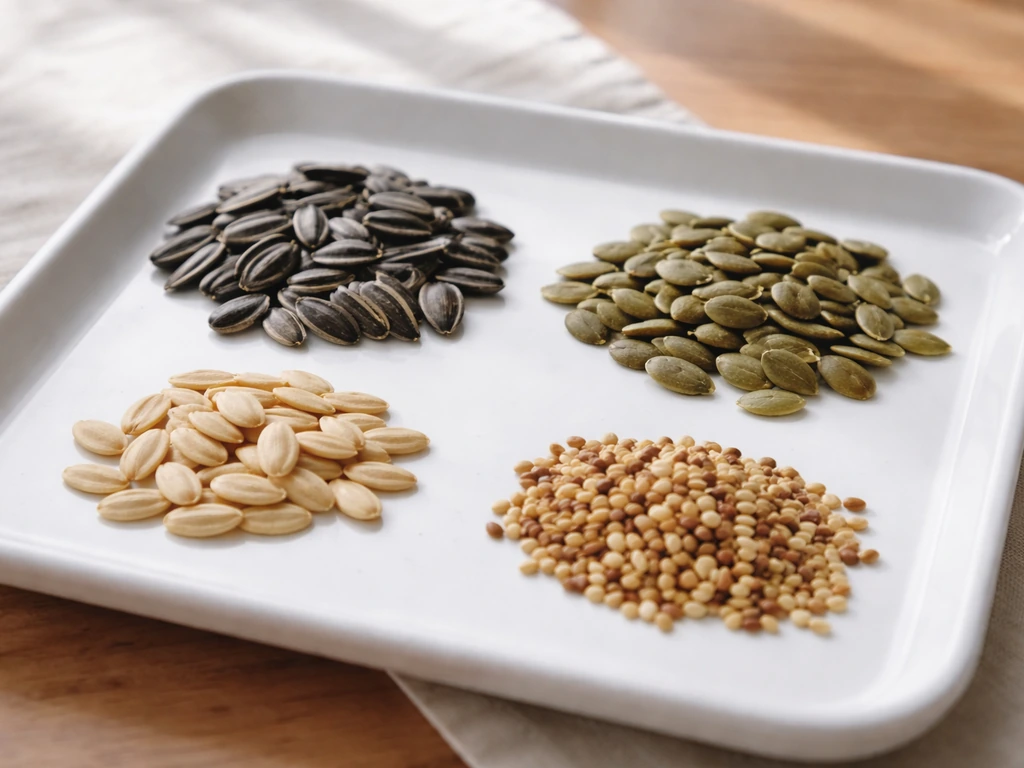
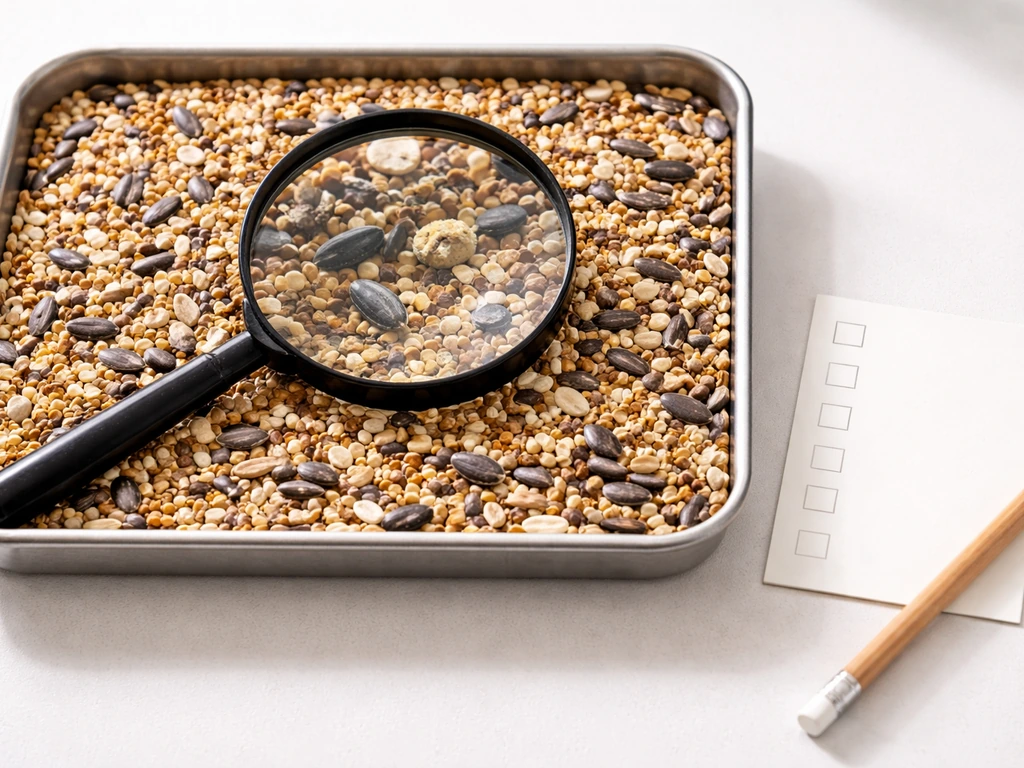
If you already have an unlabeled bag or a bulk bin purchase, you can sort the seeds visually on a white tray or piece of paper in good light. Here's what each common seed looks like: Many mixes are built around common seeds in bird feed, like black oil sunflower and millet, which are favored by a wide range of backyard birds.
| Seed | Size | Shape | Color/Markings |
|---|---|---|---|
| Black oil sunflower | Medium | Teardrop, pointed tip | Solid black shell |
| Striped sunflower | Large | Teardrop, pointed tip | Black and white striped shell |
| White proso millet | Small | Round | Pale cream/white, smooth |
| Milo (sorghum) | Small | Round | Reddish-brown, slightly glossy |
| Cracked corn | Medium-small | Irregular chunks | Yellow, coarse texture |
| Safflower | Medium-small | Oval, slightly pointed | White/off-white, hard shell |
| Nyjer (thistle) | Very small | Slender, needle-like | Black, tiny and lightweight |
A closer look at the most important seeds
Black oil sunflower
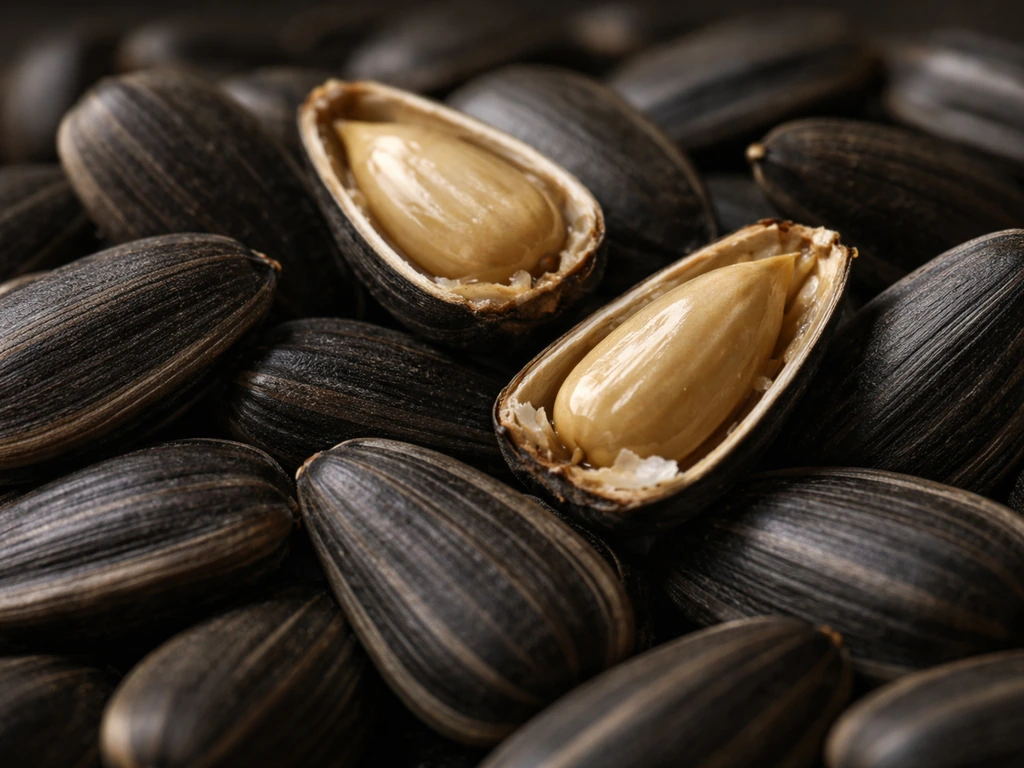
This is the MVP of backyard bird feeding. The shell is thin enough for small birds like chickadees and nuthatches to crack, and the seed inside is high in fat and protein. If you're only going to stock one seed, make it black oil sunflower. It attracts more species than any other single seed, and unlike striped sunflower, almost no bird species turns it down.
Millet
White proso millet is the go-to seed for ground feeders like juncos, sparrows, doves, and towhees. It's small and easy to eat whole without cracking. Red millet also appears in some mixes but is less palatable to most birds and is generally considered a filler. When you see "millet" on a label without specifying white proso, it may be the less desirable red variety.
Safflower
Safflower has a notably bitter taste that most squirrels and starlings dislike, making it a popular choice for people dealing with feeder pests. Cardinals, house finches, and chickadees eat it readily. It's often sold on its own but also appears in quality mixed blends. If squirrel pressure is your main problem, a safflower-heavy mix is worth the slightly higher price.
Nyjer (thistle)
Nyjer is worth clarifying because there's a lot of confusion around it. Despite often being called "thistle seed," nyjer is not derived from native or non-native thistle plants. It's a trademarked name for a specific small oil seed imported primarily from Africa and India. It's tiny, black, and needle-like, and it requires a dedicated feeder with very small ports (a wire mesh or sock-style feeder) so it doesn't spill out. If you put it in a standard tube feeder, most of it ends up on the ground.
Milo and cracked corn
These two are the most common cheap fillers you'll find in budget wild bird seed mixes. Milo (grain sorghum) is largely ignored by most songbirds, though some ground-feeding birds like doves and sparrows will eat it. Cracked corn is more broadly appealing, attracting jays, doves, blackbirds, and wild turkeys where present. The problem is that cracked corn absorbs moisture quickly and is one of the first things to mold in damp conditions. If a mix is loaded with either of these at the top of the ingredient list, you're essentially paying for filler.
Why your neighbor's mix looks different from yours
Wild bird seed mixes are not standardized. A bag labeled "wild bird seed" in Minnesota in February is likely designed around cold-hardy species like chickadees, nuthatches, and juncos, and may be heavier in high-fat seeds. The same label sold in Florida in April might contain more millet for mourning doves and ground-feeding species that are active year-round there. Manufacturers formulate regionally, and retailers sometimes stock regional blends based on what sells locally.
Brand goals also shape the mix significantly. A premium brand focused on attracting songbirds will lead with black oil sunflower and white millet. A budget brand trying to hit a low price point will pad the mix with milo, red millet, oats, and cracked corn. The ingredient list is the only reliable way to tell the difference because front-of-bag marketing language like "attracts over 40 species" is not regulated in the same way ingredients are.
Seed availability also plays a role. After a bad nyjer harvest or supply chain disruption, some manufacturers reformulate their finch-targeted mixes or reduce nyjer content temporarily. Regional guides on bird seed composition, related content on common seeds in bird feed, and information on specific ingredients like hemp seed in bird mixes can all help you understand what else to look for when comparing bags.
Spotting quality issues before and after you open the bag
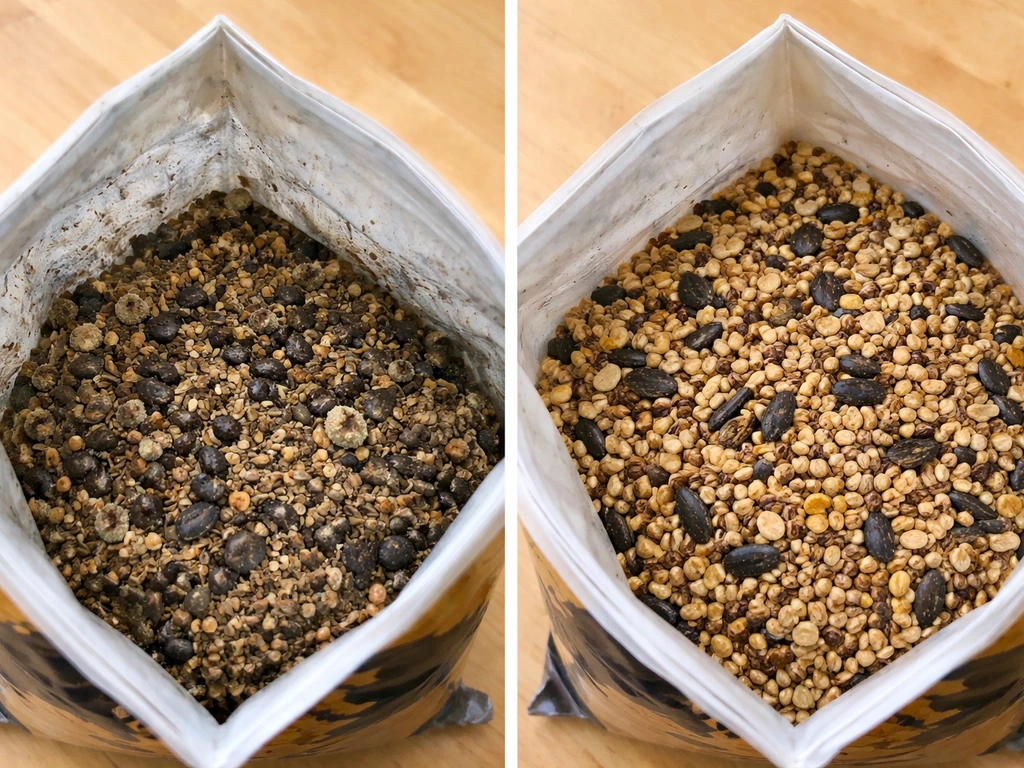
Buying a good mix is only half the job. Wild bird seed can go bad before it reaches the feeder, especially if it's been stored in a hot warehouse or sat on a retail shelf too long. Here's how to check quality at every stage.
At the store
- Check the bag for moisture damage: any soft spots, clumping visible through the packaging, or staining on the bag itself
- Look at the bag's seam and bottom for signs of insect activity (small holes, fine powder, or webbing)
- Smell the bag if possible. Fresh seed has a mild, nutty or neutral smell. A sour, musty, or chemical smell means something is wrong.
- Check any printed best-by or packaged-on date if available
After opening
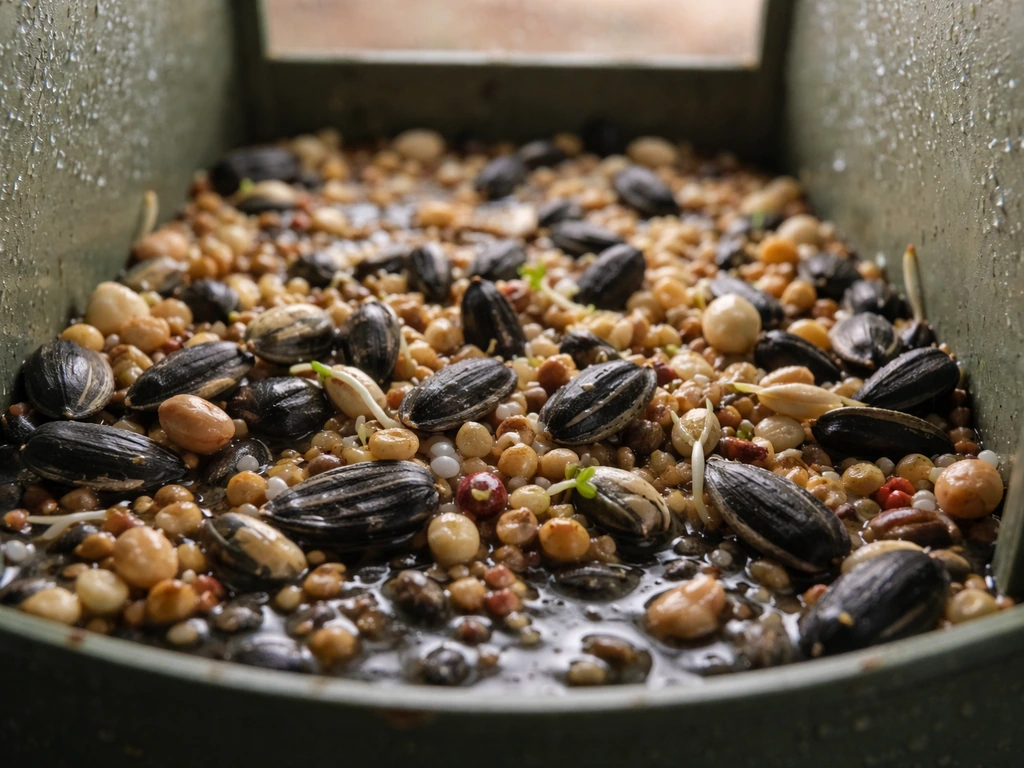
Once you open the bag, do a quick visual and smell check before filling any feeder. Clumped seeds, white or gray powdery coating on seeds, visible mold growth, or a rancid/sour odor are all reasons to discard the whole bag. Moldy seed is a genuine health hazard for birds and for pets that may get into the feeder area. Do not try to salvage it by picking out the bad parts. The toxins from mold spread beyond what's visibly affected.
Wet or sprouted seed in the feeder
Wet seed in a feeder is one of the fastest paths to mold. If you find clumped or sprouting seed in your feeder, remove all of it immediately. Don't just top it up with fresh seed. The old damp seed underneath will contaminate the new seed within a day or two. Discard the wet seed away from the feeder area, clean and dry the feeder completely before refilling, and consider switching to a feeder with better drainage or a weather guard if rain exposure is the cause.
Pest problems: insects and rodents
Grain moths, weevils, and rodents are the three most common pest problems with stored bird seed. If you find webbing or small larvae inside the bag, grain moths have gotten in. Weevil infestations look like small dark beetles moving through the seed. Either situation means the bag needs to go. For rodents, make sure your storage container has a tight-fitting lid and that you're not storing seed on the ground in a garage or shed. Metal or heavy-duty plastic bins with locking lids are the most reliable solution.
Which seeds attract which birds
Knowing what's in the mix is most useful when you connect it to what shows up at your feeder. Here's a practical breakdown of the most common backyard birds and what they're actually going for.
| Bird Species | Preferred Seed(s) | Best Feeder Type |
|---|---|---|
| Black-capped / Carolina chickadee | Black oil sunflower, safflower | Tube or hopper feeder |
| American goldfinch | Nyjer, black oil sunflower (hulled) | Sock or wire mesh feeder |
| House finch / Purple finch | Black oil sunflower, safflower, nyjer | Tube feeder |
| Northern cardinal | Safflower, black oil sunflower, white millet | Platform or hopper feeder |
| Dark-eyed junco | White proso millet, cracked corn | Ground tray or low platform feeder |
| Mourning dove | White proso millet, cracked corn, milo | Ground tray or platform feeder |
| White-throated / White-crowned sparrow | White proso millet, black oil sunflower | Ground tray or low platform feeder |
| Blue jay | Sunflower, cracked corn, peanuts | Platform feeder |
| Nuthatch | Black oil sunflower, safflower | Tube or hopper feeder |
| Pine siskin | Nyjer, black oil sunflower (hulled) | Sock or wire mesh feeder |
One thing worth noting: most mixed-seed mixes end up on the ground eventually because birds toss out seeds they don't want. That's not wasted seed if you have ground feeders like juncos and doves visiting your yard, but it does mean you need to clean up the shell debris and discarded milo regularly so it doesn't become a mold or pest problem at ground level.
Storing and handling seed after you buy it
Storage basics
The biggest enemies of stored bird seed are heat, humidity, and air. Store seed in a cool, dry location, ideally between 40°F and 70°F. A basement, garage (in winter), or climate-controlled shed works well. Avoid storing near water heaters, in direct sunlight, or anywhere that gets hot and humid in summer. Transfer seed from paper or thin plastic bags into a sealed container as soon as you get home. A metal trash can with a tight lid is inexpensive and very effective at keeping rodents and moisture out.
Shelf life
Properly stored wild bird seed stays fresh for about 6 to 12 months. Oily seeds like nyjer go rancid faster, typically within 3 to 6 months, which is worth remembering if you're buying nyjer in large quantities. After nyjer goes rancid, finches will often stop visiting a feeder completely, and the seed will smell slightly off. Buy nyjer in smaller quantities and rotate stock more frequently than you would for sunflower or safflower.
How much to put out at once
Fill feeders with only a one to two day supply of seed rather than topping them off completely each week. This keeps seed fresh, reduces the chance of seed sitting in a wet or humid feeder for days, and helps you notice problems early. It takes slightly more attention, but it's the single most effective thing you can do to prevent spoilage and mold in the feeder itself.
Cleaning your feeders
Clean your feeders about once every two weeks under normal conditions, and more frequently during warm or wet weather when mold can develop within days. Empty the feeder completely, scrub it with hot soapy water, then rinse with a disinfecting solution of 9 parts water to 1 part bleach. Rinse thoroughly with clean water after the bleach solution and let the feeder dry completely before refilling. A wet feeder refilled with fresh seed will spoil that seed quickly, undoing your whole effort.
Ground cleanup under feeders
Seed hulls, uneaten milo, and fallen seed accumulate under feeders fast and create a mold and rodent habitat if left alone. Sweep or rake the area under your feeders every one to two weeks. Discard any seed debris that looks clumped, discolored, or moldy rather than just redistributing it. If you're dealing with chronic ground mess, try switching to hulled sunflower or a no-waste mix (seeds that have had their shells removed), which significantly cuts down on debris and the pest pressure that comes with it.
FAQ
If the bag says “wild bird seed,” does it always contain nyjer and millet?
Not necessarily. Many mixes for general backyard birds focus on sunflower and cracked corn and omit nyjer or use only a small amount. Check the ingredient list, if nyjer is absent you likely will not attract finches that rely on it.
How can I tell the difference between red millet and white proso millet on the label?
Labels usually specify the color or the type. If it just says “millet,” the mix may use red millet, which is often eaten less than white proso. If you see “white proso” or “proso,” that is the best indicator you are getting the ground-feeding favorite.
Why does my feeder attract some birds but not others even though the seeds sound right?
Seed in the mix is only part of the match, feeder type matters. Nyjer requires a small-port finch feeder to prevent spilling, and ground-feeder birds may not use tube or tray feeders as much. Also consider that birds may ignore milo or cracked corn if the mix is mostly “filler” by weight.
What should I do if the ingredient list says something I cannot identify, like “seed mix,” “oil seed,” or “crumbles”?
Generic wording is a red flag for specificity. If the bag does not name a seed clearly, you cannot reliably predict what birds will come. In that case, rely on the ingredient order and overall percentages if provided, or switch brands to one with fully named ingredients.
Can I feed nyjer in a regular hopper or tube feeder?
It usually spills and wastes a lot. Nyjer is tiny and needs very small access points (wire mesh or sock-style style feeders). If you want finches, use a dedicated finch feeder rather than trying to adapt standard equipment.
Are oats, wheat, or other grains ever “good” additions, or are they always filler?
They are often included to lower cost and can be filler, especially if they appear early in the ingredient order. However, ground-feeding birds may use some grains, so oats or similar inclusions may still help attract doves, sparrows, and juncos. The key decision aid is position in the list, what is first by weight matters most.
What happens if mold is only on a few seeds in the bag, can I pick them out?
Do not try to salvage a visibly moldy bag by removing a small portion. Mold contamination can extend beyond what you see, and spores or toxins can spread throughout the seed batch. The safer move is to discard the entire bag.
How do I know if stored seed is going rancid, especially sunflower and nyjer?
Oily seeds can smell off before they look bad. A rancid or sour odor is a discard signal. This is especially important for nyjer, finches may stop visiting once it starts going rancid.
What’s the safest way to store seed after I buy it?
Move seed from paper or thin plastic into a sealed, moisture-resistant container as soon as possible. Keep it in a cool, dry area, and avoid storing near heat sources or outdoors-prone spots. A tight lid also reduces rodent access.
How much seed should I buy, and how long will it stay fresh?
For most mixes, freshness is typically about 6 to 12 months if stored cool and dry. Nyjer tends to decline faster, often within 3 to 6 months, so buying smaller quantities and rotating stock is important.
How often should I refill feeders to prevent mold?
A good target is about a one to two day supply rather than topping up weekly. This reduces how long damp seed sits in the feeder and makes problems (clumping, sprouting, sour smell) easier to catch early.
If my mix is high in cracked corn or milo, will it still be useful?
It can be useful if you have ground feeders and the birds in your area will eat those seeds. But if those ingredients are first in the list, you may be paying for material many common songbirds ignore. Consider switching to a sunflower- and millet-forward blend if your goal is broader songbird variety.
Next Article
What Did You Put in This Bird Seed GIF? Fix and Safety
Identify what’s in your bird seed mix, check mold or pests, and fix safely with today steps and prevention tips.