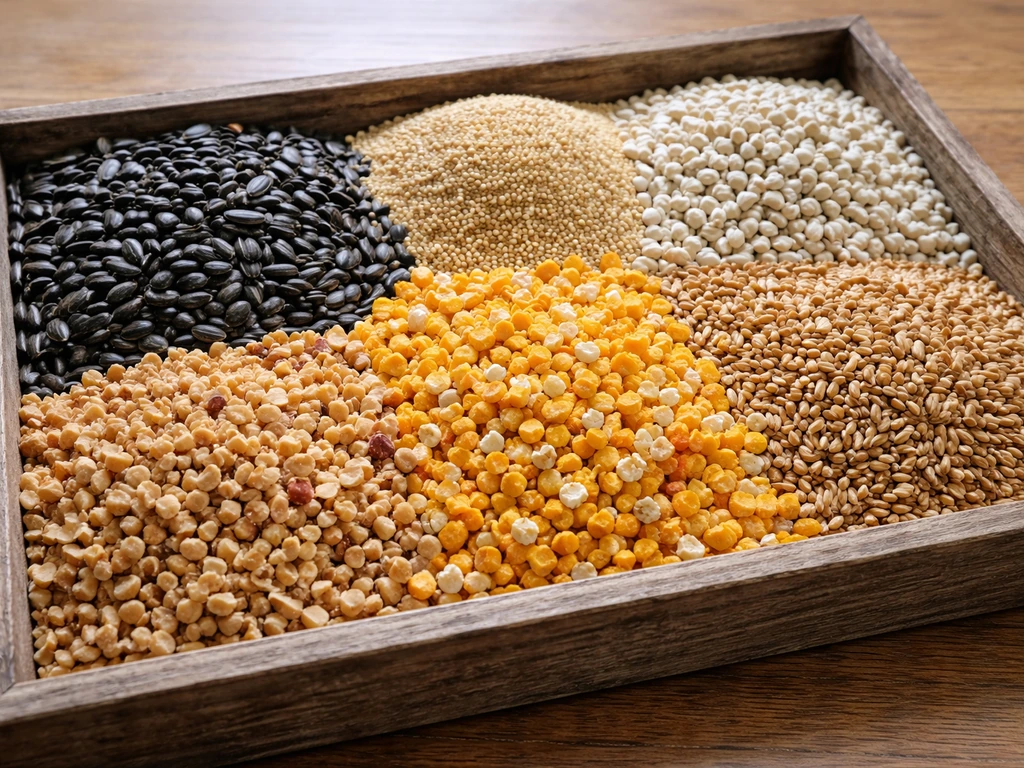
Most bird seed mixes contain a handful of core ingredients: black oil sunflower seeds, white or red proso millet, cracked corn, safflower, and sometimes peanuts or milo. Premium blends swap out the cheap fillers for more of those top-tier seeds, while budget mixes lean heavily on cracked corn and milo to bulk up the bag. Knowing exactly what's inside a bag (and what each ingredient does) lets you stop wasting money on seed birds ignore and start putting the right food in the right feeder.
What’s in Bird Seed Mix Ingredients and How to Store It
Maya Collins
11 Apr 2026
Common ingredients in bird seed mixes
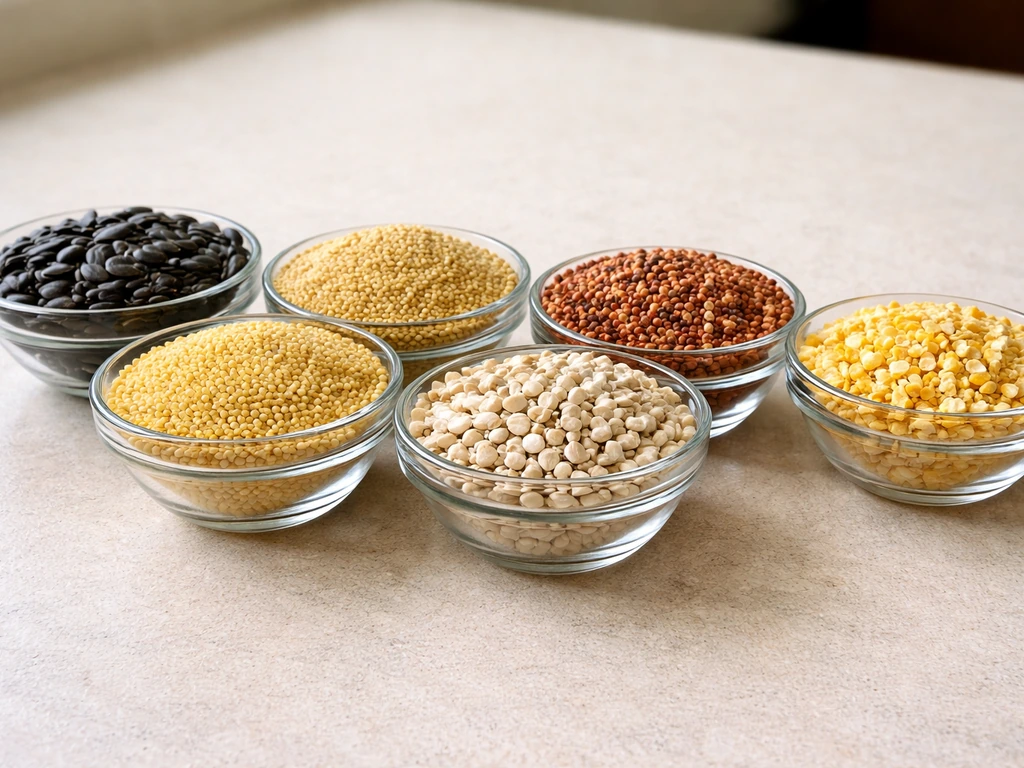
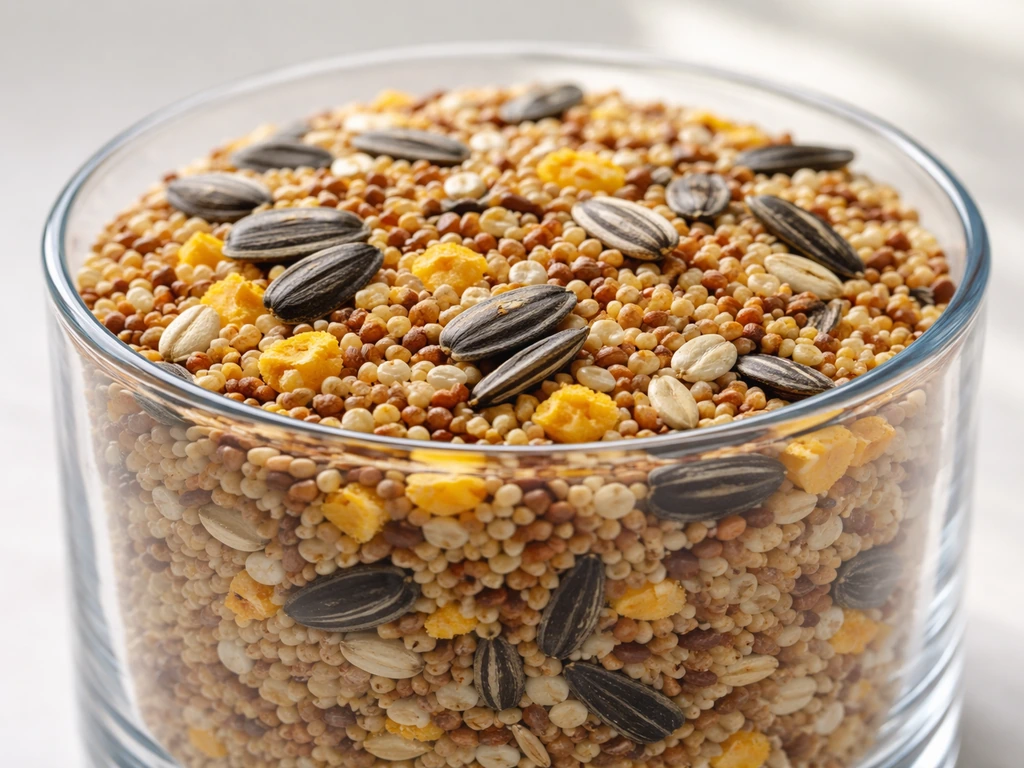
Walk down the bird seed aisle and you'll find dozens of blends, but most of them draw from the same short list of ingredients. Common seeds in bird feed appear in almost every bag in some proportion, so it's worth knowing what each one looks like and what it's doing in the mix.
- Black oil sunflower seeds: Small, thin-shelled, high in fat and protein. The single most universally accepted seed among backyard birds and the backbone of most quality mixes.
- White proso millet: Small, round, pale tan seeds. Loved by ground-feeding birds like sparrows, juncos, doves, and towhees.
- Striped sunflower seeds: Larger and thicker-shelled than black oil. Fewer species can crack them, so they're more of a bonus ingredient for larger-billed birds like cardinals.
- Safflower: White, bitter-tasting seeds that squirrels generally avoid. Cardinals and house finches love them.
- Cracked corn: Cheap filler that doves, jays, and grackles eat readily. High-quality mixes use it sparingly.
- Milo (grain sorghum): Round, reddish seeds. Common in low-cost mixes but largely rejected by most desirable songbirds; often ends up on the ground untouched.
- Peanuts (shelled or in-shell): High fat and protein. Attract jays, woodpeckers, nuthatches, and chickadees.
- Nyjer (thistle): Tiny black seeds with high oil content. Almost exclusively attracts goldfinches and siskins.
- Oats and wheat: Occasionally added to budget blends. Most songbirds ignore them.
- Canary seed: Sometimes included in songbird mixes. Sparrows and finches will eat it, but it's not a standout attractant.
One ingredient worth a closer look is hemp seed. It's increasingly showing up in specialty blends marketed for finches and small songbirds because of its high fat content and digestibility. If you're curious whether a specific mix contains it, our article on what bird seed contains hemp walks through which products list it and what to expect. If you want to go deeper on what bird seed contains hemp specifically, check the related guide for which products list it and what to expect.
How to read a bird seed label
The ingredient list on a bag of bird seed works the same way as a food label: ingredients are listed in descending order by weight. That means whatever appears first makes up the largest share of the mix. Under FDA animal food labeling rules (21 CFR 501.4(a)), each ingredient must be named by its common or usual name, so you shouldn't see mystery terms like "grain products" without specifics. If "milo" or "wheat" is the first ingredient, that's mostly what you're buying.
Many bags also carry a guaranteed analysis panel similar to what AAFCO recommends for pet foods, showing minimum crude protein, minimum crude fat, maximum crude fiber, and maximum moisture. AAFCO notes that guaranteed analysis for feed labels includes minimum crude protein and crude fat, along with maximum crude fiber and moisture blank" rel="noopener noreferrer">minimum crude protein, minimum crude fat, maximum crude fiber, and maximum moisture. AAFCO guidance explains how “crude” protein, fat, and fiber figures should be interpreted as analytical measures rather than the same thing as nutrient profiling concepts, and provides context for reading guaranteed analysis panels on pet food labels blank" rel="noopener noreferrer">AAFCO guidance on interpreting guaranteed analysis panels. For bird seed, fat content is particularly useful: a higher fat percentage usually signals more sunflower, peanut, or nyjer and means better caloric value per pound, especially in winter. If moisture is listed above 12 to 14 percent, the seed was likely packaged damp and will mold faster.
Watch for vague marketing terms on the front of the bag. "Wild bird blend" and "songbird mix" are marketing labels with no regulated definition. Flip the bag over and read the actual ingredient list rather than trusting front-panel claims. A bag labeled "premium songbird" that lists milo and red millet as the first two ingredients is not premium by any meaningful standard.
Which ingredients attract which backyard birds
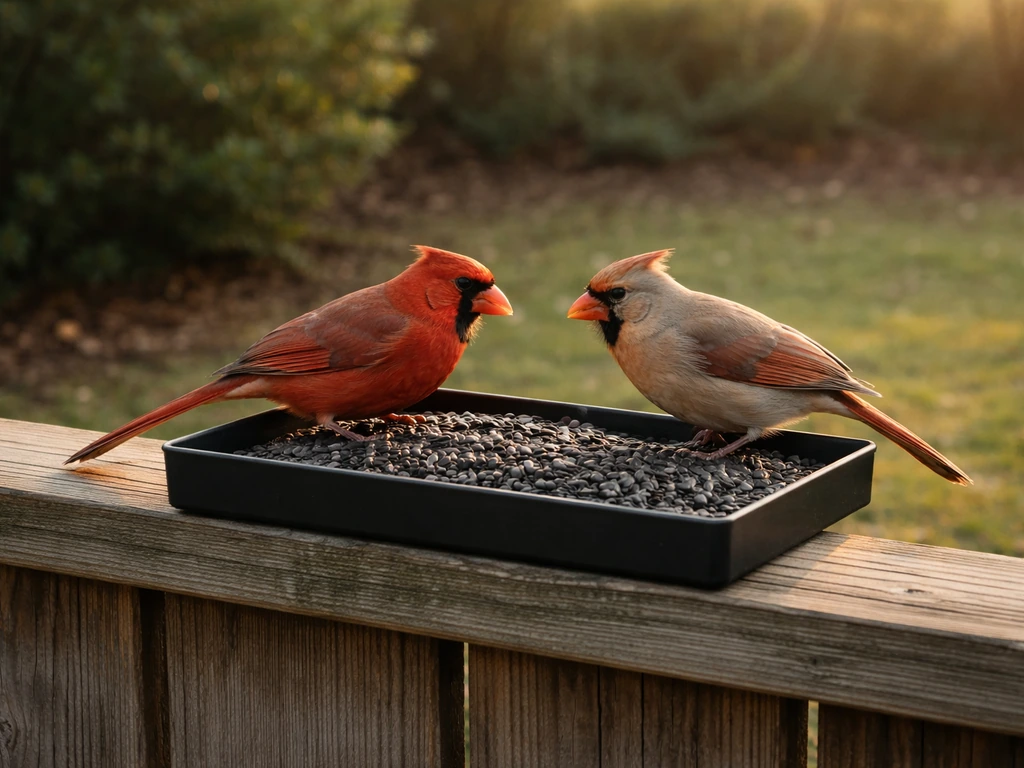
Seed choice and feeder placement work together. Ground-foraging birds like dark-eyed juncos, mourning doves, and spotted towhees are drawn to white millet scattered on the ground or served in a low tray. Cardinals and house finches prefer safflower or black oil sunflower in a hopper or platform feeder at mid-height. Goldfinches are almost exclusively tube-feeder birds that want nyjer or hulled sunflower chips, not whole seeds.
| Bird | Preferred Seeds | Best Feeder Type |
|---|---|---|
| Northern Cardinal | Black oil sunflower, safflower, striped sunflower | Hopper or platform feeder |
| American Goldfinch | Nyjer, hulled sunflower chips | Tube feeder with small ports |
| Dark-eyed Junco | White proso millet, hulled sunflower chips | Ground or low tray |
| Mourning Dove | White millet, cracked corn, black oil sunflower | Ground or open platform |
| Black-capped Chickadee | Black oil sunflower, peanut pieces, nyjer | Tube or hopper feeder |
| White-throated Sparrow | White proso millet, cracked corn | Ground or low tray |
| Blue Jay | Whole peanuts, sunflower, cracked corn | Platform or tray feeder |
| Downy Woodpecker | Shelled peanuts, sunflower, suet | Suet cage or clinging feeder |
| House Finch | Black oil sunflower, safflower, nyjer | Tube or hopper feeder |
| Pine Siskin | Nyjer, hulled sunflower chips | Tube feeder |
One nuance worth knowing: some insectivore-leaning birds that wouldn't normally eat sunflower seeds may pick at hulled sunflower chips during cold snaps when insects are scarce. Hulled seed (no shell) removes the energy cost of cracking, which matters when temperatures drop. Wild Birds Unlimited's No-Mess blends are built around this idea, using pre-hulled seeds to serve a broader range of species and reduce shell waste under feeders.
Budget vs. premium and wild vs. songbird blends
The difference between a $12 bag and a $30 bag usually comes down to filler ratio. Budget blends use cheap, high-volume ingredients like milo, red millet, wheat, and oats to keep the price low. Most desirable backyard birds ignore these seeds, so you end up with a pile of uneaten filler rotting under your feeder and attracting pests instead of songbirds. If you want a fair comparison of what's actually in different blends, our breakdown of what seeds are in wild bird seed versus targeted songbird mixes is a good place to start.
| Blend Type | Typical Ingredients | Birds Attracted | Best Use |
|---|---|---|---|
| Budget wild bird | Milo, cracked corn, red millet, wheat, some sunflower | Doves, sparrows, jays, grackles | High-traffic areas, large flocks, ground feeding |
| Mid-range wild bird | Black oil sunflower, white millet, cracked corn, safflower | Cardinals, finches, chickadees, juncos, doves | General backyard feeders, mixed species |
| Premium songbird | Black oil sunflower, safflower, white millet, nyjer, peanut pieces | Finches, chickadees, nuthatches, cardinals, sparrows | Targeted songbird feeding, less waste |
| No-mess / hulled | Hulled sunflower chips, shelled peanuts, hulled millet | Broad range including insectivores in winter | Decks, patios, or areas where shell cleanup is a problem |
| Nyjer-only / finch blend | Nyjer (thistle), sometimes hulled sunflower chips | Goldfinches, siskins, redpolls | Dedicated finch feeders, tube feeder setups |
| Wildlife blend | Black oil sunflower, white millet, striped sunflower, safflower | Juncos, towhees, doves, cardinals, finches | Yards with ground feeders plus platform or hopper feeders |
Wild Birds Unlimited's Wildlife Blend, for example, is weighted toward black oil sunflower, white millet, striped sunflower, and safflower. That combination works because it covers both platform feeders and the ground simultaneously: the millet draws juncos, doves, and towhees feeding below, while the sunflower and safflower pull cardinals and finches to elevated feeders. That's a thought-out ingredient mix, not just a marketing label.
If you're unsure whether a specific ingredient or ratio makes a mix actually useful, compare the ingredient list side by side with what you already know birds in your yard prefer. You can also dig into a more detailed look at what seeds are in bird seed to match species to specific seed types before you buy.
How to store bird seed so it stays dry and fresh
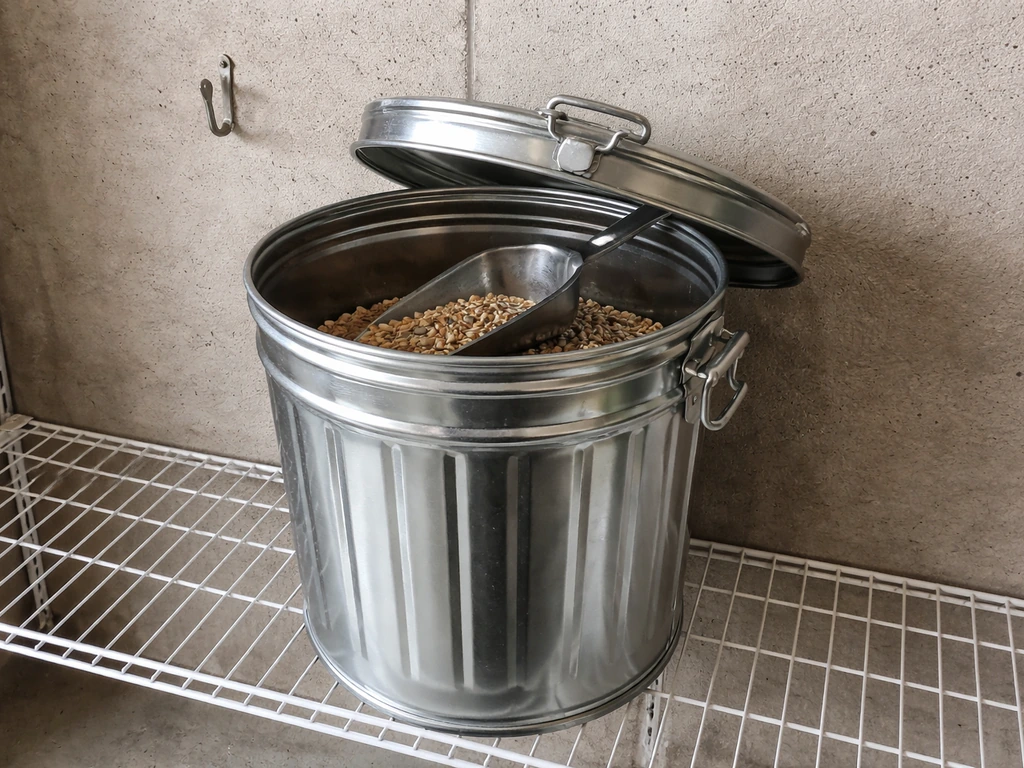
Storage is where most people go wrong. Seed left in a paper bag or open plastic sack in a garage or shed can absorb moisture, develop mold, and become infested with grain weevils or moths within a few weeks, especially in humid climates or during warmer months. Fresh seed smells slightly nutty or neutral. Seed that smells musty, sour, or rancid should be discarded.
- Use a hard-sided, airtight container: A metal trash can with a locking lid or a food-grade plastic bin with a gasket seal works well. Metal is preferable because rodents can chew through plastic.
- Store in a cool, dry location: A shaded garage corner, basement, or shed works better than an outdoor area exposed to temperature swings. Keep seed away from direct sunlight and heat sources.
- Buy in manageable quantities: In warm or humid regions, don't buy more than a 2 to 4 week supply at a time. In cool, dry climates, a 6 to 8 week supply stored properly is fine.
- Label with the purchase date: Sunflower and peanut-based mixes have a practical shelf life of about 6 to 12 months in ideal storage. Nyjer seed goes stale faster (3 to 6 months) because of its high oil content.
- Keep containers off the ground: Elevating bins on a shelf or wooden pallet reduces moisture wicking from concrete floors.
- Clean storage containers between batches: Rinse and dry thoroughly before adding new seed. Old seed debris left behind can contaminate a fresh batch.
In southern states and coastal areas with high humidity, consider storing nyjer seed in particular in a refrigerator or cool pantry. Nyjer's oils go rancid quickly in heat and birds will simply stop eating it before you notice anything is wrong. If your finch feeder suddenly goes quiet, stale nyjer is often the first thing to check.
Troubleshooting bad seed: mold, sprouting, and pests
Three problems show up most often with bird seed: mold from moisture, sprouting from damp seed left in feeders, and insect or rodent infestations. Each has a clear cause and fix.
Moldy seed
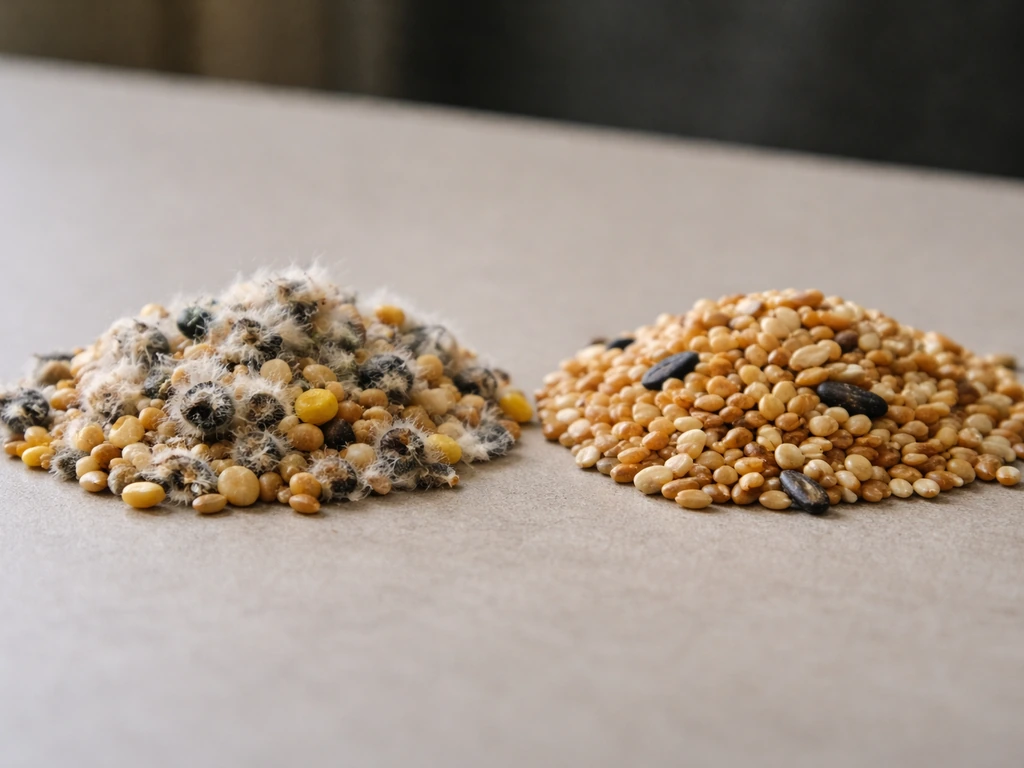
Mold grows when seed gets wet and stays wet, whether from rain, feeder condensation, or high-humidity storage. Visually, mold appears as gray, black, or white fuzzy patches, often with a damp clumping of seeds. Aflatoxin, a mold byproduct that can be lethal to birds, is invisible to the naked eye, which is why any seed that smells musty or shows visible mold should be thrown out entirely rather than picked through. Don't compost moldy seed near garden beds you use for edibles.
- Cause: Wet seed in feeder (rain, sprinklers, morning condensation) or damp storage.
- Fix: Discard all affected seed. Scrub the feeder with a 9:1 water-to-bleach solution, rinse thoroughly, and let it dry completely before refilling.
- Prevention: Use feeders with drainage holes or weather guards, empty and dry feeders weekly in wet seasons, and never top off old seed with new.
Sprouting seed
Millet and sunflower seeds will sprout if they sit in a damp feeder long enough. Sprouted seed isn't immediately toxic, but the sprouts signal that the seed has been wet for an extended period, which means mold is likely not far behind. If seed has sprouted under your feeder and is taking root in the lawn, switch to hulled seed (no shell, no viable seed coat) to eliminate the germination problem entirely.
Insect and rodent pests
Grain moths (Indianmeal moths) and weevils are the most common insect pests in stored bird seed. If you open a bag and see webbing, tiny larvae, or small brown beetles, the seed is infested. Discard it in a sealed outdoor trash bag rather than an indoor bin. For rodents, the attractant is usually spilled seed under feeders or seed stored in plastic bags. Metal storage bins and regular ground cleanup under feeders are the most effective deterrents.
If you've dealt with a suspicious bag and want to double-check what you're actually feeding (or whether someone may have contaminated a mix), our guide to what did you put in this bird seed covers how to identify unknown ingredients visually. And if you're trying to identify a mix from an image or viral post, the what did you put in this bird seed gif resource walks through a few common examples visually.
Sorting, serving, and cleaning up seed safely
Most bird seed doesn't need sorting before you put it in a feeder. But if you've bought a budget blend heavy in milo or red millet that your birds consistently ignore, sorting out those ingredients before filling the feeder cuts down on waste and reduces the wet, rotting pile under your feeder that draws pests. You can do this with a simple kitchen sieve or colander: pour the mix slowly and pick out the obvious fillers by hand or shake out smaller unwanted seeds through a mesh.
Feeder hygiene basics
- Clean tube and hopper feeders every 1 to 2 weeks during active feeding season, or immediately after any rain event that soaks the seed.
- Use a 9: 1 water-to-bleach solution or an unscented dish soap wash, scrub all surfaces including feeding ports, rinse thoroughly, and air-dry completely before refilling.
- Never add fresh seed on top of old seed. Empty the feeder completely first.
- Rake or shovel shell debris and uneaten seed from the ground under feeders at least once a week. Damp shell piles are prime mold habitat and rodent attractants.
- In high-humidity regions during summer, consider bringing feeders inside overnight and re-hanging in the morning to reduce overnight condensation buildup.
Safe handling for you
Bird seed, bird droppings, and feeder debris can carry Salmonella and other pathogens. Wash your hands with soap and water after handling seed, filling feeders, or cleaning up under feeding stations. Wear gloves when scrubbing feeders or handling large volumes of seed. Keep seed storage containers away from food prep areas in the kitchen. If you have children who play near feeders, keep the ground underneath clean and discourage them from handling seed directly.
One last practical note: if you've been going through a lot of trial and error with mixes and still aren't happy with the variety of birds visiting, the problem is usually either the seed composition or the feeder placement (or both). Use the ingredient list as your starting point, match it against the species table above, and adjust one variable at a time. A single-ingredient feeder filled with black oil sunflower will outperform most budget blends for sheer species diversity, and it's about as simple a starting point as you can get.
FAQ
What’s in bird seed if the bag lists “mixes” or “seed blends,” not individual ingredients?
Legitimate bags should still show an ingredient list with specific common names (like sunflower, millet, milo) in descending order by weight. If you see vague terms on the ingredient line, treat it as a red flag for unclear ratios, and compare the next batch at a different brand or buy a blend that clearly names each component.
How can I tell if a bird seed mix has enough sunflower or too many fillers without weighing everything?
Use the ingredient order. The first 2 to 3 ingredients usually make up most of the weight, so if sunflower is not in the top positions, the mix is likely corn/milo-heavy. You can also check the guaranteed analysis, higher crude fat generally indicates more oil-bearing seeds like sunflower or peanuts.
Is hemp seed safe for all backyard birds?
Hemp is generally used for finches and small songbirds, but some larger birds may ignore it depending on feeder type. If your birds suddenly stop eating, also check freshness and storage conditions because the oils can go rancid, which reduces palatability even when the seed looks normal.
Can I feed sprouted seeds or do I need to throw them out?
Sprouted seed suggests the mix stayed damp, which often means mold could be present nearby, even if you cannot see it. If you only see a few sprouts and no musty odor, remove the batch, clean the feeder thoroughly, and monitor, but if there is any sour or musty smell, discard it rather than trying to “pick out” sprouts.
What moisture level is actually “too high” for storage and feeding?
The article notes that moisture above about 12 to 14 percent increases mold risk. In practice, if the bag feels warm, clumped, or you notice condensation inside the container after storage, assume the seed is too damp for safe feeding and switch to a fresher, drier batch.
Is it okay to leave bird seed out in feeders overnight?
It depends on weather and feeder design. In humid or rainy conditions, seed sitting wet or under condensation is more likely to grow mold and sprout. A practical approach is to shorten refill intervals during wet stretches, and empty and scrub feeders before refilling if you see clumping or dampness.
Why do finches sometimes stop eating nyjer even though it looks fine?
Nyjer oils can go rancid without obvious visual changes, especially in heat. If your feeder goes quiet, check for stale or off odors first, then switch to a newly purchased or freshly stored bag stored cool and dry, and clean the tube feeder before refilling.
What should I do if I suspect grain moths or weevils are in the bag?
Do not just pour the top layer into a feeder. Discard the entire bag after sealing it in a trash bag outdoors, then clean the feeder and any containers that may have been exposed. To prevent re-infestation, store future seed in a sealed, airtight metal or heavy-duty container and keep the area under feeders swept regularly.
If I have a mixed blend but want more birds, should I sort or remove specific ingredients?
Sorting helps mainly when the mix is filler-heavy and your birds ignore certain components. If sunflower is already present in the top ingredient positions, sorting may not change much. For milo or red millet-heavy blends that create a rot pile and attract pests, removing those ignored seeds can reduce waste and improve feeder hygiene.
Can I compost moldy bird seed or use it in a garden?
The article recommends throwing out moldy seed entirely rather than composting near edible garden beds. If you want to dispose safely, bag it and discard. Composting near plants you eat is a risky choice because some toxins or pathogens are not reliably eliminated by typical composting.
How do I identify an “unknown” ingredient if a mix is contaminated or mislabeled?
Besides comparing the ingredient list, you can visually identify common components by size and color (for example, black oil sunflower versus hulled chips, different millet types, and corn pieces). After identification, do a small test in the feeder while keeping the rest of the batch isolated, then stop feeding immediately if birds show avoidance or the seed smells off.
Will a single seed type outperform a blend for getting more species at once?
Often yes, especially if you use the right seed for the right feeder. For example, a hopper or platform with black oil sunflower tends to attract cardinals and many finch species, while ground or low trays with white millet help ground-foragers. Once you confirm which birds you want, you can blend selectively rather than relying on a one-size-fits-all mix.
Next Article
What Seeds Are in Bird Seed Mixes and Types
Learn which seeds and grains in bird seed mixes like sunflower, millet, safflower, peanuts, corn, oats, and wheat.