
Yes, bird seed can get wet, and yes, it can go bad quickly. Whether it's salvageable depends on how wet it got, how long it's been sitting, and what the temperature is. The short answer: seed that's been wet for less than a day in cool weather can often be dried and used. Seed that's been wet for 24-48 hours in warm conditions, or anything that smells sour or shows visible mold, should go straight in the trash. Here's how to make that call confidently and fix the situation today.
Can Bird Seed Get Wet? What to Do If It Gets Wet
Maya Collins
17 Apr 2026
Does wet bird seed actually spoil?
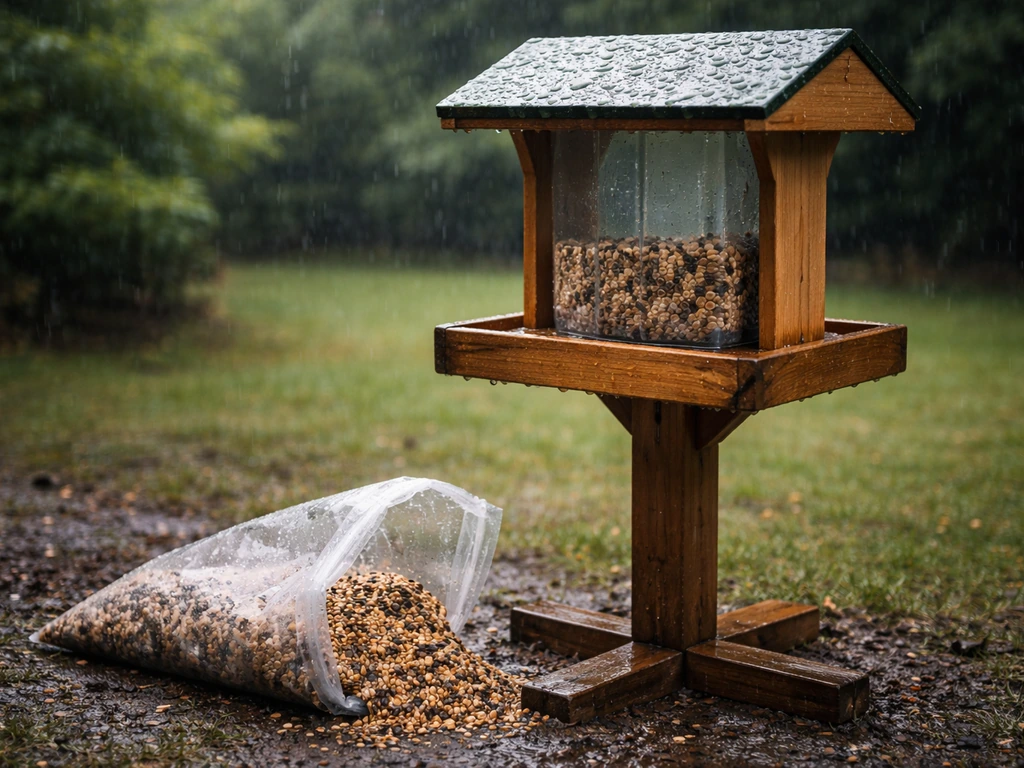
It does, and faster than most people expect. Water activates the biological processes inside seeds, including germination and microbial growth. Once moisture gets in, mold, bacteria, and yeast all have the conditions they need to take hold. The speed of spoilage is driven by temperature: cool and dry, you might have 24 hours or more to intervene; warm and humid, seed can start to smell and grow mold within hours. The real danger isn't just spoiled seed, it's aflatoxin, a toxin produced by certain mold species like Aspergillus flavus that is genuinely harmful to birds. Research from Oklahoma State and the University of Missouri confirms that temperatures between 80-100°F combined with relative humidity around 85% are the sweet spot for that kind of fungal growth. If you live somewhere warm and humid, the clock on wet seed moves very fast.
What actually happens when bird seed gets wet
Clumping
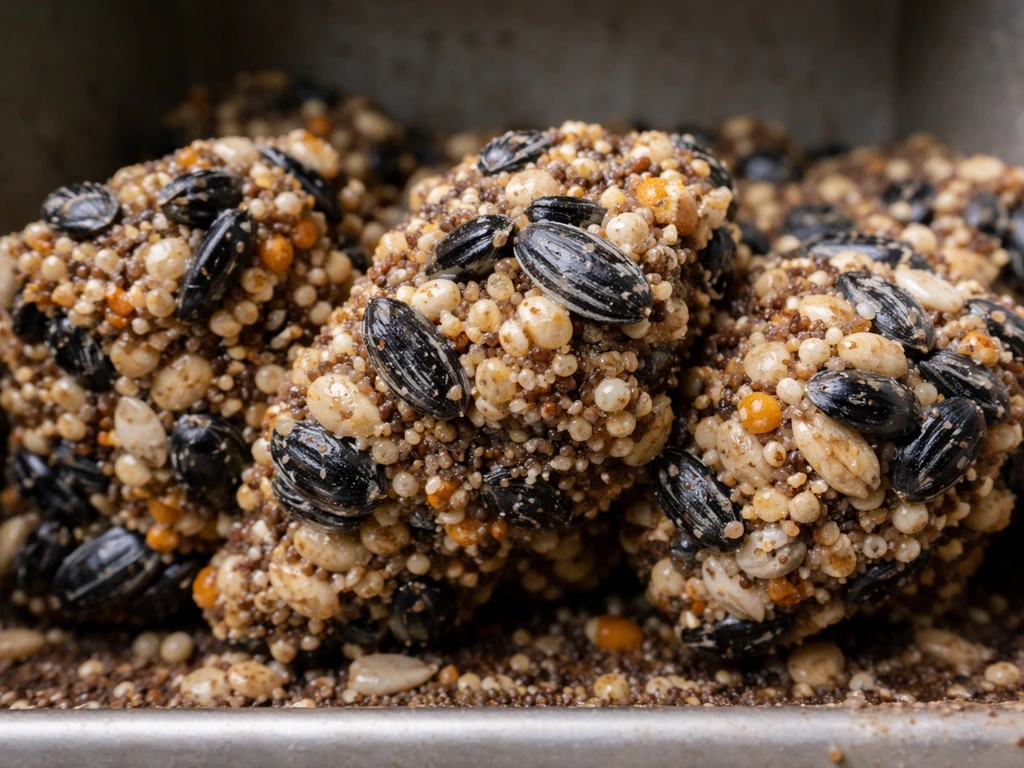
This is the first thing you'll notice. Wet seed sticks together into dense clumps that block feeder ports and prevent birds from getting to fresh seed underneath. Clumping itself isn't dangerous, but it traps moisture and creates a perfect microenvironment for mold to grow. A feeder packed with clumped seed is basically a petri dish.
Mold and bacterial growth
Mold shows up as gray, green, black, or white fuzz on the seed surface. Sometimes you'll smell it before you see it, a sour, musty, or yeasty odor is a reliable warning sign. The Georgia Department of Natural Resources specifically flags warm, wet conditions in feeders as a rapid trigger for both mold and bacterial contamination. Georgia DNR also notes that fungal issues like aspergillosis (respiratory distress) can come from buildup of wet, moldy seed hulls beneath feeders warm, wet conditions in feeders as a rapid trigger for both mold and bacterial contamination. Birds that eat moldy seed can get sick, which is exactly why you don't want to guess on this one.
Sprouting
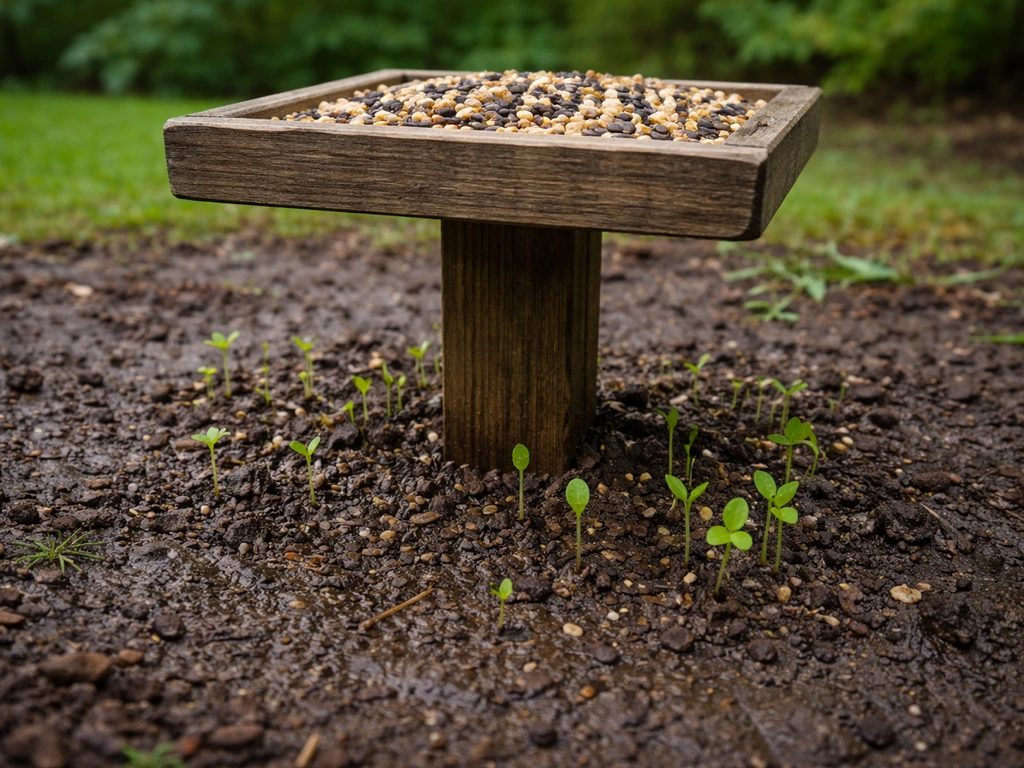
Some seeds, especially millet, sunflower, and safflower, will germinate when they get wet and stay wet. Sprouted seed under or around your feeder is a common sign that moisture has been sitting too long. Sprouting itself isn't toxic, but it signals the seed has been wet long enough that mold risk is high. If you see green sprouts under your feeder, that seed needs to be cleaned up right away. A good guide on how to clean up bird seed on the ground walks through that process step by step.
How to inspect, dry, and decide what to keep
Work through this process as soon as you discover wet seed. Don't leave it sitting while you figure out what to do.
- Smell it first. A sour, musty, or fermented odor means toss it. No exceptions.
- Look for mold. Any visible fuzz, discoloration (especially black, green, or white patches on the seed itself), or slimy texture means the batch is done.
- Check for clumping. Light clumping with no odor and no visible mold is a maybe. Heavy, compressed clumps that don't separate easily are harder to salvage.
- Spread it thin to dry. If the seed passes the smell and visual check, spread it in a single layer on a clean baking sheet or a mesh screen in a warm, well-ventilated area. Do not pile it. Piling traps moisture and accelerates spoilage.
- Dry it fast. The goal is to get seed surface-dry within a few hours. You can use indirect sunlight, a fan, or a low oven (under 100°F) with the door slightly open. Don't use high heat, it damages the seed.
- Inspect again after drying. Once dry, go through it again for any off smell or visible spots. Discard anything that still looks or smells off.
- When in doubt, throw it out. Seed is inexpensive compared to a sick bird or a moldy feeder.
How long is wet seed actually safe?
This is where temperature and humidity matter most. There's no single magic number, but here's a practical framework based on the research:
| Conditions | Safe window to inspect and dry | Recommendation |
|---|---|---|
| Cool weather (under 65°F), low humidity | Up to 24 hours | Dry and inspect; likely salvageable |
| Mild weather (65-75°F), moderate humidity | 12-18 hours | Dry immediately; inspect carefully before reuse |
| Warm weather (75-90°F), high humidity | 6-12 hours | Act fast; discard if any doubt |
| Hot weather (over 90°F), humid | Under 6 hours | Discard unless you caught it almost immediately |
| Any temp, visible mold or bad odor | N/A | Discard immediately, no exceptions |
Texas Parks and Wildlife specifically warns that seed left in feeders for a week or more in humid conditions carries significant aflatoxin risk. The takeaway: don't let wet seed sit and hope it dries on its own. Actively dry it or throw it out. For a more detailed breakdown of your options depending on the situation, what to do with wet bird seed covers the decision process thoroughly.
Preventing wet seed from happening again
Prevention is easier than remediation. Most wet seed problems come from a handful of avoidable causes: rain getting into open feeders, dew condensing overnight, poor storage containers, or overfilling feeders so seed sits too long. Here's how to fix each one.
Storage
- Store seed in airtight containers (metal or heavy plastic with gasket lids). Open bags left in a garage absorb humidity fast.
- Keep storage off the ground. Elevated storage on a shelf or pallet prevents moisture wicking up from concrete floors.
- Keep relative humidity in storage areas below 70%. Above that threshold, mold can establish on seed even without direct water contact. A cheap hygrometer in your garage or shed tells you exactly where you stand.
- Never store large quantities if you're in a hot, humid climate. Buy smaller amounts more frequently so seed doesn't sit long enough to become a problem.
Feeder setup
The feeder itself is often the biggest source of wet seed problems. A well-designed setup solves most of it. For a comprehensive look at feeder placement and design choices, how to keep bird seed dry in feeders is worth reading in full. The key principles are:
- Use feeders with wide roof overhangs or weather guards to block rain.
- Choose feeders with drainage holes in the tray so water can escape rather than pool.
- Fill feeders with only as much seed as birds will consume in 1-2 days, especially during humid or rainy stretches.
- Position feeders under eaves, tree canopy, or a dedicated feeder cover when possible.
- Tilt tube feeders very slightly so any moisture that enters drains toward the bottom drain ports rather than sitting on seed.
Regional note
If you're in the Gulf Coast, Southeast, or Pacific Northwest, wet seed is a year-round issue, not just a summer problem. In those climates, cutting feeder fill amounts in half during rainy seasons and doing twice-weekly inspections (instead of the standard once every two weeks) is a practical baseline. In hot, dry climates like the Southwest, the main risk is actually seed getting baked and rancid rather than moldy, so the concern shifts to heat rather than moisture.
Cleaning up feeders and the surrounding area after wet seed
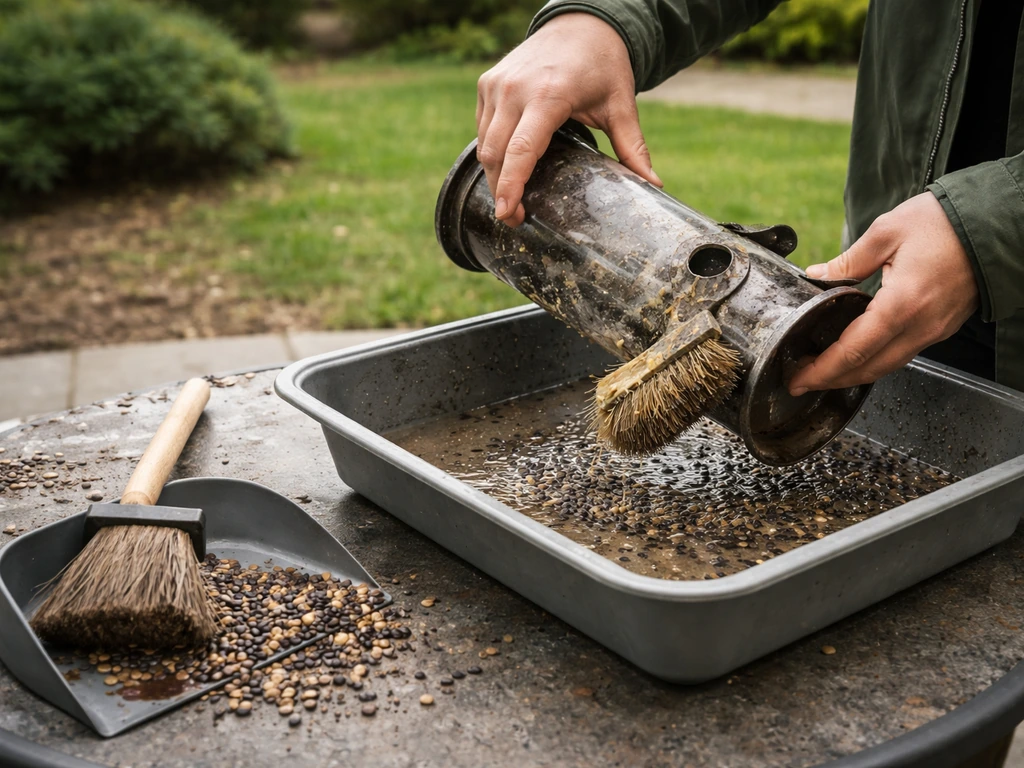
Once you've dealt with the bad seed, the feeder and surrounding area need attention too. Mold spores stay on feeder surfaces and in the soil under feeders and can contaminate the next batch of seed quickly if you skip this step.
Cleaning the feeder
- Empty the feeder completely. Remove all remaining seed, hulls, and debris.
- Scrub all surfaces with a stiff brush and warm soapy water. Get into every corner and crevice.
- Soak the feeder in a bleach solution: 9 parts water to 1 part bleach (per Virginia Department of Wildlife Resources guidance). Leave it submerged for 10 minutes.
- Rinse thoroughly with clean water. Bleach residue will deter birds.
- Let it dry completely before refilling. A wet feeder immediately re-wets your seed.
The Minnesota DNR recommends a slightly lighter mix for regular maintenance cleaning: 2 ounces of bleach per 1 gallon of water, with thorough scrubbing of all surfaces. Use the stronger 1:9 ratio when you're dealing with a documented mold problem, and the lighter mix for routine two-week cleanings. Texas Parks and Wildlife suggests cleaning feeders weekly with a 14% bleach solution during high-risk periods (warm weather, lots of rain).
Cleaning the ground below the feeder
Wet seed on the ground under feeders is a magnet for mold, pests, and rodents. Rake up all old seed, hulls, and debris. If you see sprouted seed or visible mold in the soil, the Georgia Department of Natural Resources recommends soaking the area with a dilute bleach-and-water solution to reduce mold spores in the soil. Let the area dry out before birds start foraging there again. Wet ground debris also attracts pantry pests, and if you start noticing insects in your stored seed after a wet spell, it may be time to check whether you have a weevil problem. A guide on how to get rid of bird seed weevils can help you identify and address that quickly. Similarly, moisture and decaying seed can invite moths into your storage area, so if you spot small moths around your seed supply, how to get rid of moths from bird seed covers the steps to clear them out.
How often to clean going forward
Project FeederWatch recommends cleaning feeders roughly every two weeks under normal conditions, and more frequently during warm or damp weather. After a wet seed incident, do a full clean before refilling and then plan to inspect again within 3-5 days to make sure the problem hasn't returned. That short follow-up check catches any mold that established before the clean that you might have missed.
The quick decision you need to make right now
If you're reading this because you just found wet seed: smell it, look at it, and act within the hour. Cool weather with no odor and no mold, try drying it on a flat surface in a single layer. Warm weather, any bad smell, any visible mold, or seed that's been sitting wet overnight: throw it out, clean the feeder with a bleach solution, let it dry fully, and refill with fresh seed. That's the whole decision. Don't let uncertainty push you into leaving questionable seed out for birds. Their digestive systems are sensitive to mycotoxins, and a bag of seed costs far less than the alternative.
FAQ
Can I still use bird seed if it got wet but looks normal after drying?
It depends on how long it stayed wet and what the conditions were. If there was any sour or musty odor, visible fuzz, or it was wet overnight in warm weather, drying is not a reliable fix. For cooler, brief exposure with no odor and no mold, drying in a single layer and using it promptly is usually the safer approach.
Is it safe to microwave or heat wet bird seed to kill mold?
No. Heat may kill some surface organisms, but it does not reliably neutralize mycotoxins some molds can produce. If you suspect mold risk, the safer decision is to discard the seed and fully clean the feeder rather than trying to “sterilize” it at home.
How can I tell the difference between damp seed and seed that has started to spoil?
Damp seed may clump and feel heavy, but it typically has no growth and no off smell. Spoiling warning signs include any gray, green, black, or white fuzz, a sour or yeasty odor, or sprouts under and around the feeder. If any of those appear, treat it as spoiled and don’t salvage it.
Should I remove sprouted seed under the feeder even if the sprouts look small?
Yes. Sprouting usually means moisture stayed long enough for germination, and that same moisture window increases mold risk. Rake up the sprouted material, clean the area, let it dry, and put fresh dry seed back when the feeder and ground are clear.
What’s the safest way to dry wet bird seed?
Spread it out flat in a single layer in a cool, dry, well-ventilated area. Keep it away from pets and people during drying. Avoid stacking it in a thick layer, since trapped moisture encourages mold growth even while it dries.
Can I save seed if only part of the bag got wet, like the bottom or one corner?
Check the entire batch you plan to use. If moisture wicked through the bag or you see clumps, odor, or any mold in the affected area, it’s best to discard all seed you suspect got exposed. If only a clearly separated surface portion is damp with no odor or mold, removing that portion and using the rest can be reasonable, but only if the bag stayed sealed and the rest truly stayed dry.
Do I need to throw out the seed even if I don’t see mold but it smelled odd?
Yes. Odor is an early indicator that spoilage processes have started. If you notice a sour, musty, or yeasty smell, don’t dry and reuse it, discard it, and clean the feeder before refilling.
What should I do with wet seed inside a feeder if birds keep pecking it?
Stop dispensing from that feeder if you can. Remove the wet seed immediately, clean the feeder, and refill only with fresh dry seed. If birds are already eating from it, focus on removing the contamination quickly, then do a thorough cleaning so the next batch isn’t exposed.
How often should I inspect feeders after a wet spell?
Do a full follow-up check sooner than your usual routine. After cleaning and refilling following a wet-seed incident, inspect again within a few days to confirm no mold or clumping returns. In warm or humid weather, more frequent checks are safer than waiting for the next standard interval.
Is cleaning with bleach required for every wet seed problem?
If the seed was only briefly damp in cool weather with no odor and no mold, a thorough rinse and drying may be enough. If there was any odor, visible clumping that trapped moisture, sprouting, or suspected mold, use an appropriate bleach solution to sanitize surfaces, then fully dry before refilling.