
Yes, you can store bird seed in the fridge, and it can actually work well if you do it right. The ideal storage temperature for bird seed is around 35–40°F (2–4°C), which falls squarely in the normal fridge range. The real risks aren't from the cold itself but from moisture and condensation, especially when you pull the container in and out. Get the container situation right and the fridge becomes a solid short-term storage option, particularly if you're dealing with summer heat, pest pressure, or small quantities of premium seed you want to keep fresh.
Can You Store Bird Seed in the Fridge Safely?

Maya Collins
7 May 2026
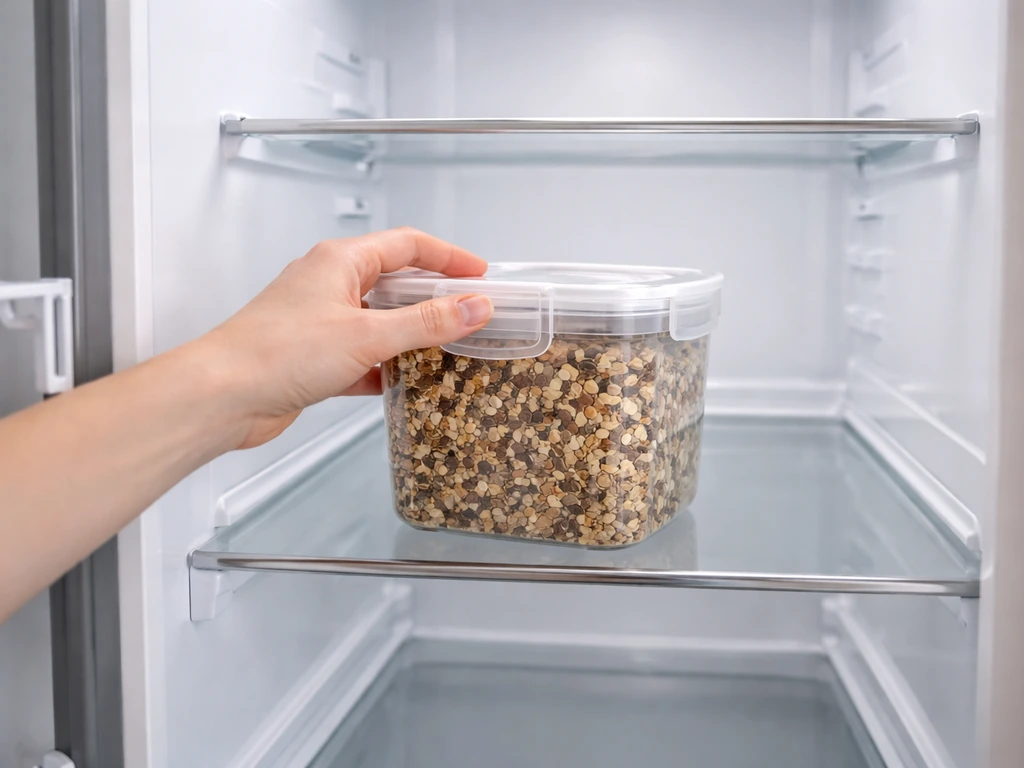
Fridge vs. pantry: when does refrigerating actually make sense?
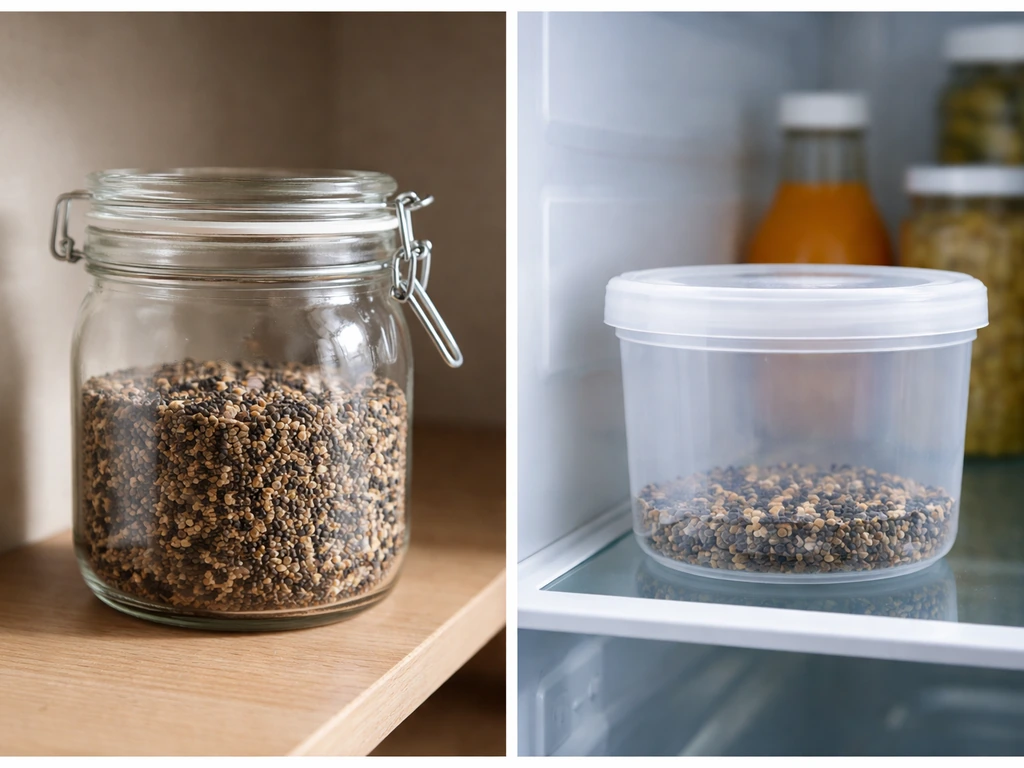
Most of the time, a cool, dry pantry or an outdoor metal can with a secure lid is the better default. If you're curious about room-temperature options, check out how to store bird seed in the pantry as an alternative to refrigeration. Wild Birds Unlimited recommends keeping seed in a cool, dry location outside the home, and that advice holds for the bulk of what most backyard birders are storing. A 40-pound bag of sunflower seed doesn't belong in your refrigerator. But there are specific situations where the fridge genuinely earns its place.
- Small quantities of specialty seed (nyjer, suet pellets, or high-fat mixes) that go rancid quickly in warm weather
- Summer storage when your garage or shed regularly tops 80–90°F and you have no climate-controlled space
- Seed you've bought in advance and won't use for several weeks
- Seed you want to keep free of pantry moths or weevils that are already active in your home
- Opened bags you've partially used and want to protect without outdoor storage space
If your pantry stays below 70°F and stays dry year-round, a good airtight container there is fine for most seed. The fridge makes more sense as a deliberate upgrade, not a default rule. One honest caveat: household refrigerators aren't perfectly stable environments. Every time the door swings open, temperature and humidity fluctuate, which is why the container you use matters a lot.
How to store bird seed in the fridge the right way
Pick the right container
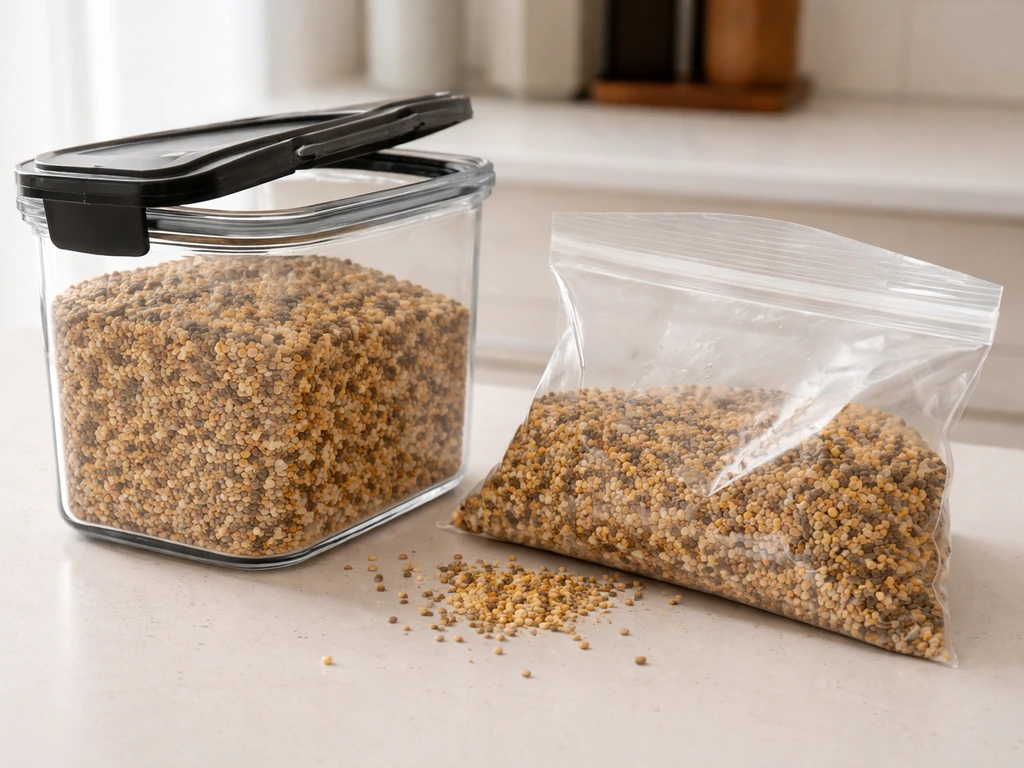
The single most important factor is an airtight, sealed container. Resealable plastic bags and loosely lidded containers let moisture in and invite pests. Go with a hard-sided container that has a locking or gasketed lid: a glass jar with a rubber-sealed lid, a BPA-free food-grade plastic container with a snap-lock lid, or a smaller gamma-seal style bucket for larger quantities. The goal is to keep relative humidity inside the container below 40%, and a proper seal is the only way to do that in a fridge environment.
Prevent condensation when you take seed in and out
This is the step most people skip, and it's where fridge storage usually goes wrong. When you pull a cold container into a warm room, moisture from the air condenses on the seed inside the moment you open the lid. The fix is simple: let the sealed container sit on the counter for 15–20 minutes and come up to room temperature before you open it. The condensation forms on the outside of the container instead of inside on the seed. Always reseal tightly before putting it back in the fridge.
Where to place it in the fridge
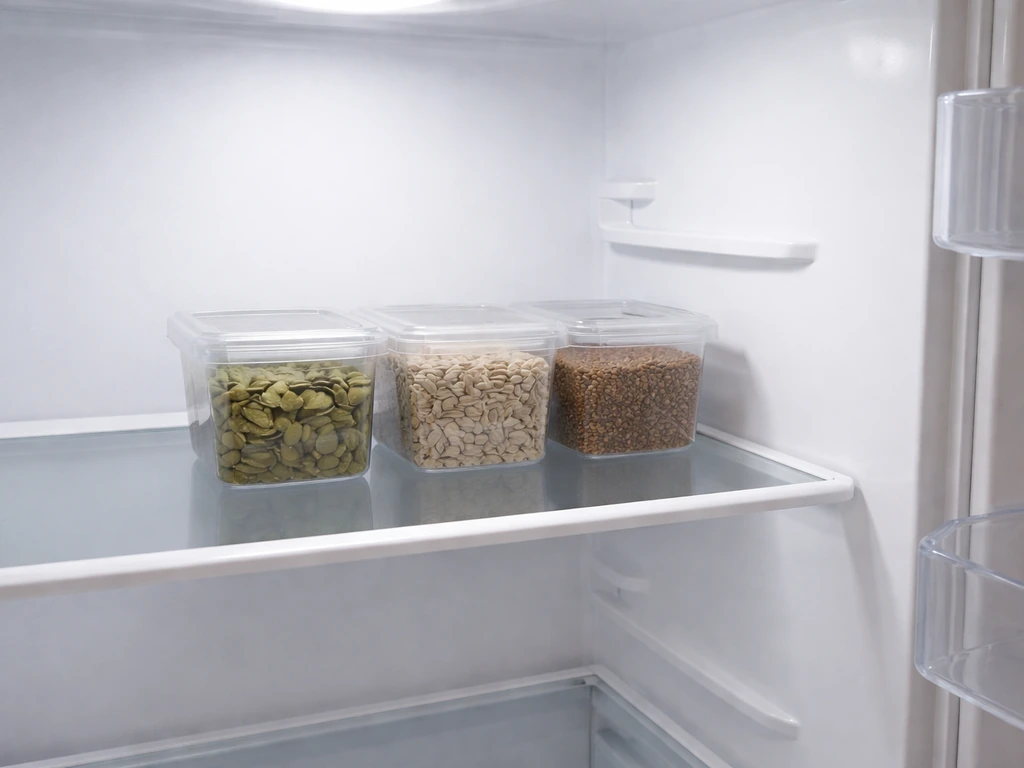
Keep seed containers toward the back of a middle shelf, away from the door where temperature swings are the largest. Avoid storing seed directly next to strong-smelling foods like onions, fish, or aged cheese. Bird seed can absorb odors, and birds are sensitive to changes in scent, which can put them off familiar seed. If space is tight, the crisper drawer works too since it's sealed from the rest of the fridge interior.
Food safety and cross-contamination
Keep seed in its own clearly labeled container, and don't let seed or seed dust come into contact with human food. Bird seed can carry bacteria, mold spores, or pest eggs. If a container ever holds visibly moldy or suspect seed, discard the seed, wash the container thoroughly, and sanitize it before reusing it for anything.
Moisture, condensation, mold, and sprouting in cold storage
Cold storage slows mold growth but doesn't eliminate the risk. Moisture is the trigger, and it can enter the container through a bad seal, through condensation during temperature changes, or if the seed was already slightly damp when you put it in. Once moisture gets in, the cold environment only delays the problem. You can come back a month later and find clumped, moldy seed even though it was refrigerated the whole time.
Sprouting is the other cold-storage surprise. Seed kept at refrigerator temperatures with any moisture present can germinate. This isn't a safety disaster at the feeder level, but it does mean the seed is no longer viable as food in the same way, and sprouted seed left in a container quickly turns into a mold problem. Keeping the container sealed and seed dry before storage prevents this. If you're specifically trying to stop seed from sprouting, it's worth knowing that sterilizing seed before storage is a related approach.
Pest control: what the fridge does (and doesn't) fix
Refrigerating seed is one of the most effective ways to stop an active pantry moth or weevil problem in its tracks. Indian meal moths, pantry beetles, and weevils all lay eggs in stored dry goods including bird seed, and larvae can survive and hatch at room temperature inside your pantry. Cold temperatures halt the life cycle. If you've found webbing, small moths, or larvae in a seed bag, moving unaffected seed to the fridge in sealed containers will prevent spread.
That said, the fridge is not a treatment for already-infested seed. If a bag has visible webbing, larvae, or clumping from insect activity, discard it. Don't move infested seed into the fridge hoping cold will sanitize it. You'll end up with dormant pests that wake up the moment the seed warms back up. For killing insects and eggs in seed you want to save, freezing at 0°F for at least four days is the right method. Refrigerating at 35–40°F is not cold enough to kill eggs and larvae reliably.
Rodents are a different matter. A standard household refrigerator physically blocks rodent access, which is a legitimate advantage over garage bins or outdoor storage in areas with active mouse or rat pressure. Just make sure the area around your fridge is clean, since spilled seed outside the fridge can still attract pests to your kitchen.
How long refrigerated seed stays good
Properly stored in an airtight container in the fridge, most bird seed stays fresh for 6–12 months. Nyjer (thistle) seed, which goes rancid and stale faster than most, benefits the most from cold storage and should ideally be used within 3–4 months regardless of how it's stored. High-fat mixes with peanuts or sunflower chips can go rancid if kept too long even in the fridge. Whole sunflower seeds and millet are more stable and hold quality well at the longer end of that range.
| Seed type | Pantry shelf life | Fridge shelf life | Notes |
|---|---|---|---|
| Nyjer (thistle) | 1–3 months | 3–4 months | Goes stale fast; buy small quantities |
| Sunflower seeds (whole) | 6–12 months | Up to 12 months | Very stable; most forgiving to store |
| Sunflower chips (hulled) | 2–4 months | 4–6 months | Higher moisture risk without shell |
| Peanuts / peanut pieces | 2–4 months | 4–6 months | Rancidity and aflatoxin risk if damp |
| Mixed seed (standard) | 4–6 months | 6–9 months | Depends on what's in the mix |
| Millet | 6–12 months | Up to 12 months | Very shelf-stable; fridge rarely needed |
Signs the seed has gone bad
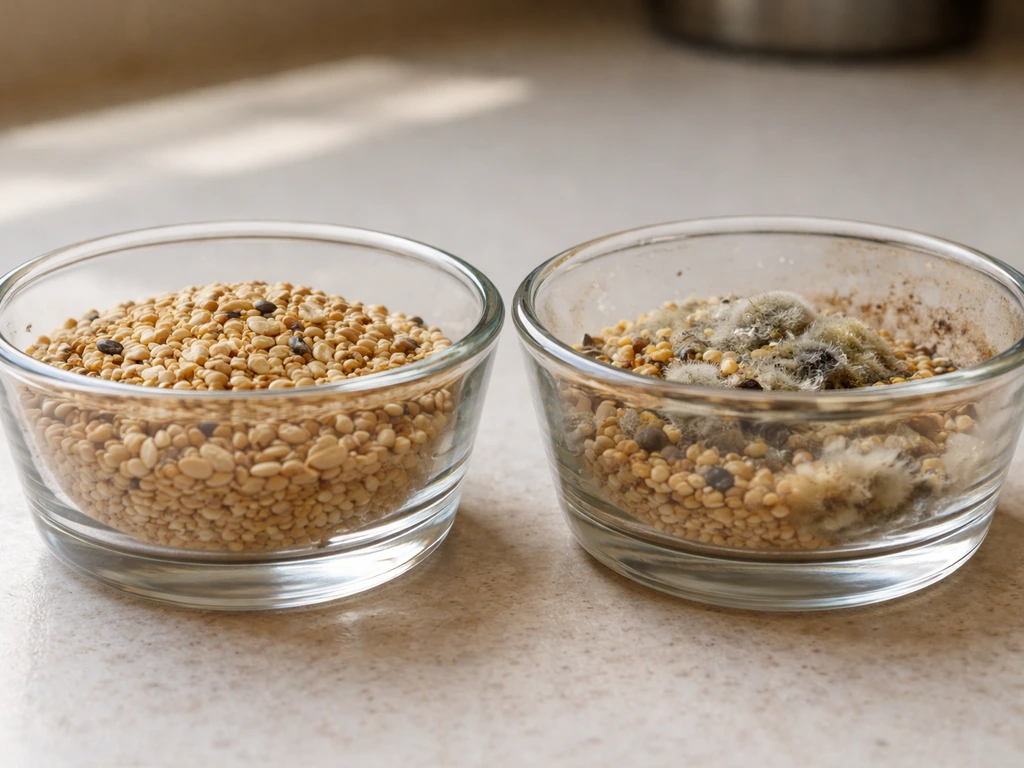
Check your seed before every fill. If you see any of the following, don't put it in the feeder. Discard the seed and clean the container thoroughly before reusing it.
- Visible mold, any color: gray, green, black, or white fuzz on seed or container walls
- Rancid or sour smell, which is especially common with oily seeds like peanuts or sunflower chips
- Clumping or caking where loose seeds have fused together
- Sprouting or visible germination on seeds
- Webbing, small moths, larvae, or fine powder (frass) indicating insect activity
- Off or musty odor with no visible mold, which can indicate early-stage spoilage
Moldy seed is a real health hazard for birds. Aspergillosis, a fungal respiratory disease, can be transmitted through moldy seed and feeders. Don't try to sort out the good seeds from a moldy batch. Bag the whole thing and put it in your outdoor trash.
What to do if your seed is already wet, clumped, or sprouted
If you pull out a container and find wet or clumped seed, your first step is to figure out how wet and for how long. Slightly damp seed that just got exposed to condensation once and still smells clean can sometimes be salvaged. Spread it in a single thin layer on a clean baking sheet and let it air-dry at room temperature for several hours. Stir it occasionally. Once it's fully dry with no stickiness or clumping, inspect it carefully before deciding whether to keep it.
Seed that smells off, looks moldy, or has been wet for more than a day should be discarded. Don't feed it, don't dry it and re-store it, and don't compost it in a way that birds can access. Bag it and throw it away. The risk to birds from aspergillosis and other mold-related illness isn't worth a partial bag of seed.
For sprouted seed: a little sprouting from very fresh seed is not an automatic discard. Some sprouted seed is actually edible at the feeder, and some birds will eat it. But if the sprouts are extensive, or if there's any accompanying mold or smell, treat it the same as moldy seed and throw it out. After discarding bad seed, clean and disinfect the container with hot soapy water followed by a diluted bleach solution (1 part bleach to 9 parts water), rinse thoroughly, and let it dry completely before adding fresh seed. If you want more detailed steps on sterilizing seed, freezing and other methods can help depending on what you are trying to fix sterilize bird seed.
Preventing the problem next time
- Start with dry seed: inspect the bag at purchase for any clumping or moisture before bringing it home
- Use a hard-sided airtight container with a gasketed lid, not the original paper or plastic bag
- Let the container warm to room temperature before opening it, every single time
- Buy seed in quantities you'll use within 4–8 weeks to reduce total storage time
- Label containers with the date you filled them so you're not guessing how old seed is
- Clean storage containers between batches, not just when something goes wrong
FAQ
Can you store bird seed in the fridge if it’s still in the original bag?
You can, but only if the container is fully sealed and you prevent moisture from entering. Use a hard-sided, gasketed container, let the seed reach room temperature before opening (to avoid condensation inside), and keep it away from the fridge door where humidity swings more.
Is it safe to leave bird seed in the fridge in a resealable plastic bag?
Yes for short-term holding, but you should treat it as a “use quickly” setup. Buy and transfer into an airtight container because resealable bags often let enough humidity through in a fridge environment, especially with repeated door openings.
Will refrigerating infested bird seed kill pantry moth eggs or larvae?
No. Refrigeration does not reliably kill existing eggs, larvae, or weevils/pantry moths. If you see webbing, larvae, or clumping linked to insects, discard the infested bag. For eggs or insects you want to save, freezing at 0°F for at least four days is the dependable method.
What should I do if my refrigerated seed gets wet or clumps a little?
It depends on what you mean by “wet.” If it was just a one-time condensation event and it dries completely with no clumping, stickiness, or odor, you may be able to salvage it after air-drying. If it has been wet more than about a day, smells off, or looks moldy, discard it.
Does the storage time in the fridge differ for sunflower, millet, and peanut mixes?
Whole nuts and high-fat mixes can go rancid even in the fridge, just more slowly. If your mix includes peanuts or sunflower chips, plan shorter storage than you would for millet or whole sunflower, and check smell and color before each refill.
Can I store bird seed in the same fridge where I keep food?
Yes, but don’t store it with human foods. Keep bird seed in its own clearly labeled sealed container, and avoid storing the container next to strong-smelling items because odors can transfer to the seed and birds may reject it.
How long should I let a refrigerated seed container warm up before I pour it into the feeder?
If you already refrigerate, you can thaw or warm the container on the counter while it stays sealed, then only open once it reaches room temperature. This reduces condensation that otherwise forms on the seed when you open a cold container.
Can I pick out the moldy kernels and save the rest of the seed?
No. If the seed shows mold or gives any mold smell, discard the entire batch rather than trying to separate “good” kernels from “bad.” Mold can spread through the bag and moldy seed is linked to serious fungal disease in birds.
What signs mean refrigerated bird seed has gone rancid or spoiled?
Rancidity is about quality loss, not just texture. If the seed smells paint-like, sour, or rancid, appears greasy or darker than expected, or tastes unpleasant, discard it rather than feeding it to birds.
Is sprouted bird seed still safe to feed?
Yes, but viability can drop. If the seed is sprouted, check for any mold or off smell, and if sprouts are extensive or there’s any sign of mold, discard. If sprouting is minimal and there is no mold smell, some birds may eat it, but it will not behave like fully viable seed.
Can I store nyjer (thistle) seed in the fridge, and will it sprout?
It’s usually fine to store, but you may need stricter moisture control. Thin or small seeds can clump faster if any condensation occurs. Focus on a strong seal and consider shorter fridge storage times for delicate varieties like nyjer (thistle).
Does using a fridge prevent rodent problems with bird seed?
Rodents are less likely in a fridge, but they can still access seed containers if they’re not sealed or if seed spills near the appliance. Keep the area around the fridge clean, wipe up any spilled seed, and always store in a sealed container.
Next Articles
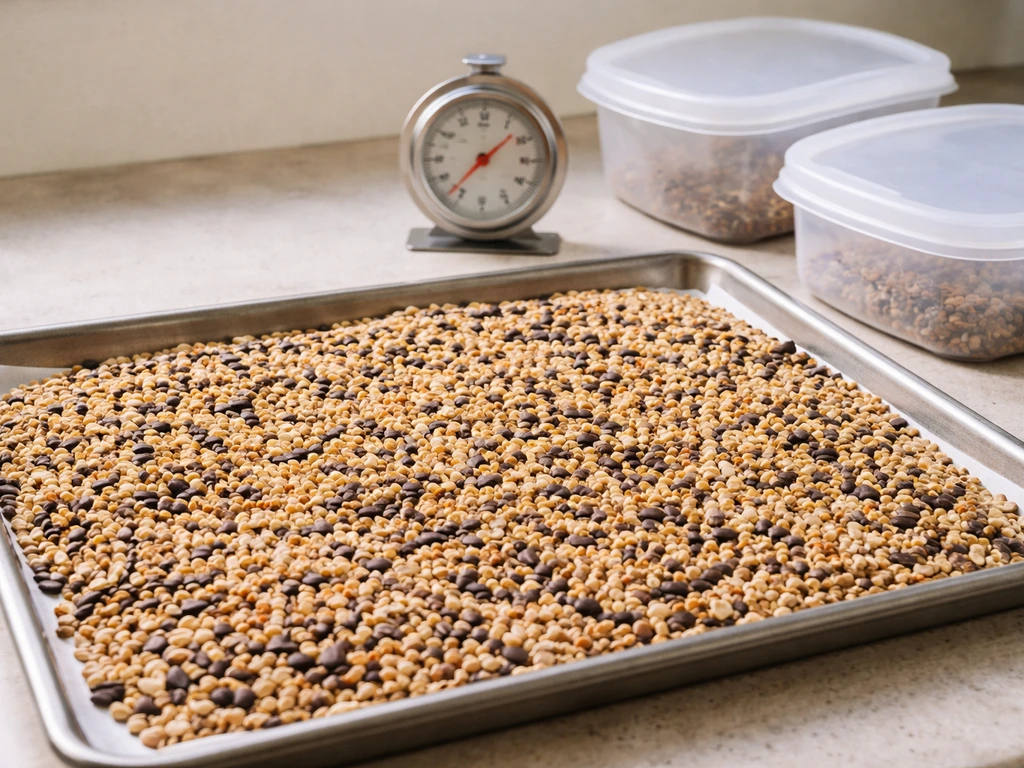
How to Sterilize Bird Seed: Safe Steps for Clean Seed
Learn how to sterilize wild bird seed step by step, safely drying and storing it, plus cleaning feeders to prevent mold
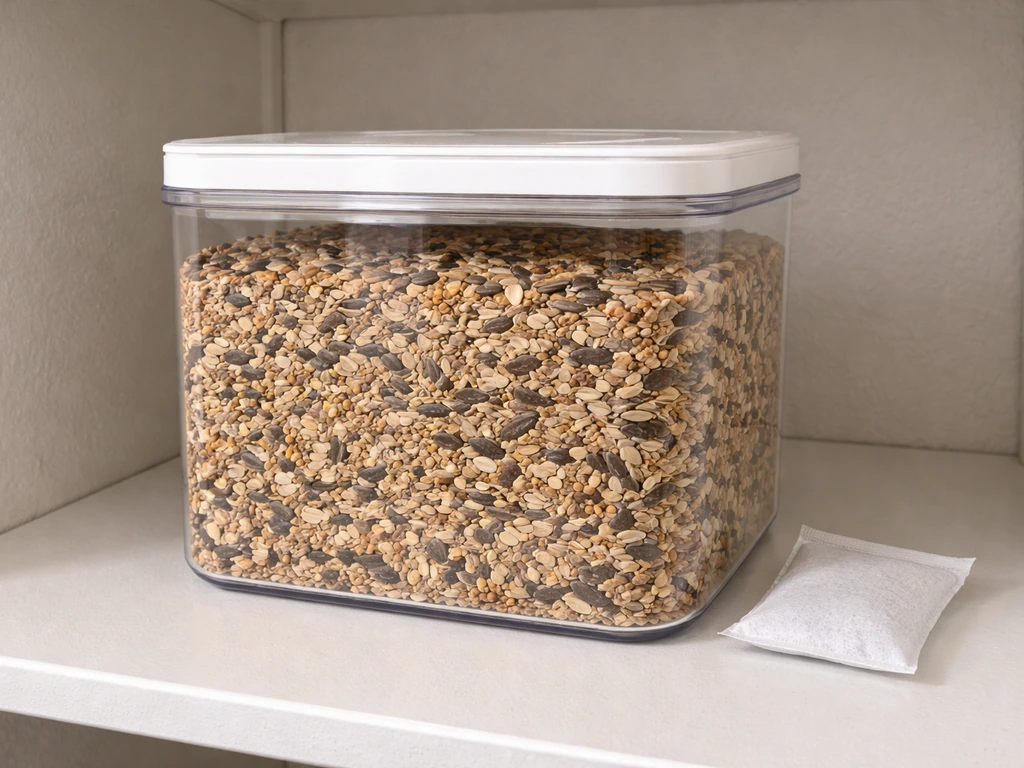
How to Keep Bird Seed From Sprouting: Fix Damp, Wet Seed
Stop bird seed sprouting by fixing damp storage, cleaning spills under feeders, and keeping seed dry and cool.
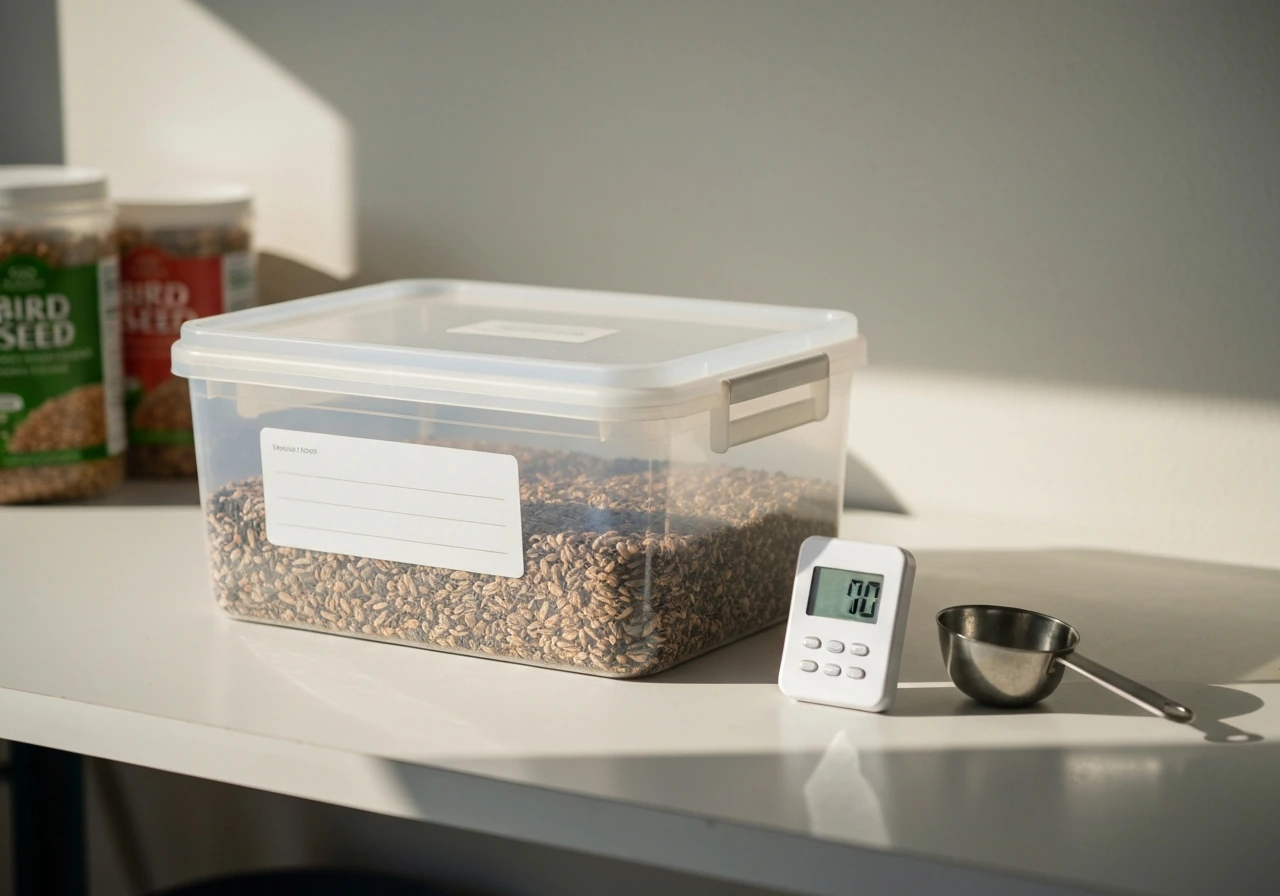
How to Store Bird Seed: Keep It Dry, Fresh, Pest-Free
Learn how to store bird seed dry and fresh indoors, in a garage, or outdoors with airtight containers and pest preventio