Bird seed stored properly in a sealed bag or airtight container lasts roughly 6 months to 2 years, depending on the seed type and conditions. Once you pour it into a feeder and expose it to weather, that window drops to about 1 to 2 days in humid or rainy conditions, and up to a week in cool, dry weather. Those are the two numbers worth keeping in mind, and everything else in this guide comes back to them. Pennsylvania Game Commission notes that bird feeders can be a potential source of exposure to aspergillosis and emphasizes keeping feeder seed fresh and free of mold.
How Long Is Bird Seed Good for in a Bag and Feeder
Maya Collins
9 Apr 2026

Typical shelf life of bird seed in the bag

A sealed, undamaged bag of bird seed stored in a cool, dry place can stay fresh for anywhere from 6 to 12 months under typical home-storage conditions, and some manufacturers put the ceiling even higher. Lyric, for example, expects roughly 2 to 3 years of shelf life if the bag is uncompromised and stored correctly. Pennington acknowledges that seed has a long shelf life but notes it starts losing nutritional value as it dries out over time, so older seed may still look fine while providing less benefit to birds.
Seed type matters a lot here. High-oil seeds like black-oil sunflower, safflower, and nyjer (thistle) contain fats that go rancid over time. Those tend to spoil faster than lower-oil grains like millet, corn, milo, and oats, which hold up longer. If you're buying a mixed blend, the oilier seeds set the expiration clock. A bag of straight white millet will outlast a bag of sunflower-heavy mix by months under the same conditions.
One practical habit worth building: check the date on the bag when you buy it and write the purchase date on the container when you transfer it. That simple step helps you rotate stock and prevents the common problem of finding a bag you forgot about for two winters.
How long seed stays fresh once it's in the feeder
This is where most people run into real trouble. Seed in an outdoor feeder is exposed to humidity, rain, morning dew, and temperature swings that dramatically accelerate spoilage. Texas Parks and Wildlife recommends filling feeders with only enough seed to be consumed within 1 to 2 days, specifically because humidity and rain exposure increases mold risk significantly if seed sits for a week or more.
Feeding Birds Responsibly guidance from the North Carolina Wildlife Resources Commission supports managing feeder use to reduce disease risk, including treating feeder management as important even beyond specific day-counts Texas Parks and Wildlife recommends filling feeders with only enough seed to be consumed within 1 to 2 days. South Carolina DNR echoes that: provide only as much food as birds will eat in one to two days to keep seed from spoiling.
Wild Birds Unlimited puts it the same way, keeping feeders filled to a one- or two-day supply so the seed turns over quickly and stays fresh.
In practice, this means filling feeders more frequently with smaller amounts rather than topping them off to the brim every few days. If you have a large tube feeder and not many birds visiting yet, half-filling it is smarter than letting a full load sit and potentially spoil at the bottom before birds reach it.
How storage conditions affect freshness

Moisture is the main enemy. Grain storage research is consistent on this: most mold fungi don't grow when relative humidity stays below about 70%, but above that threshold, fungal activity increases fast. High temperatures combined with high humidity are the worst combination because they accelerate both microbial growth and insect activity. A garage that gets hot and humid in summer, or a shed where condensation forms, is a poor place to store seed even if it feels dry on a given day.
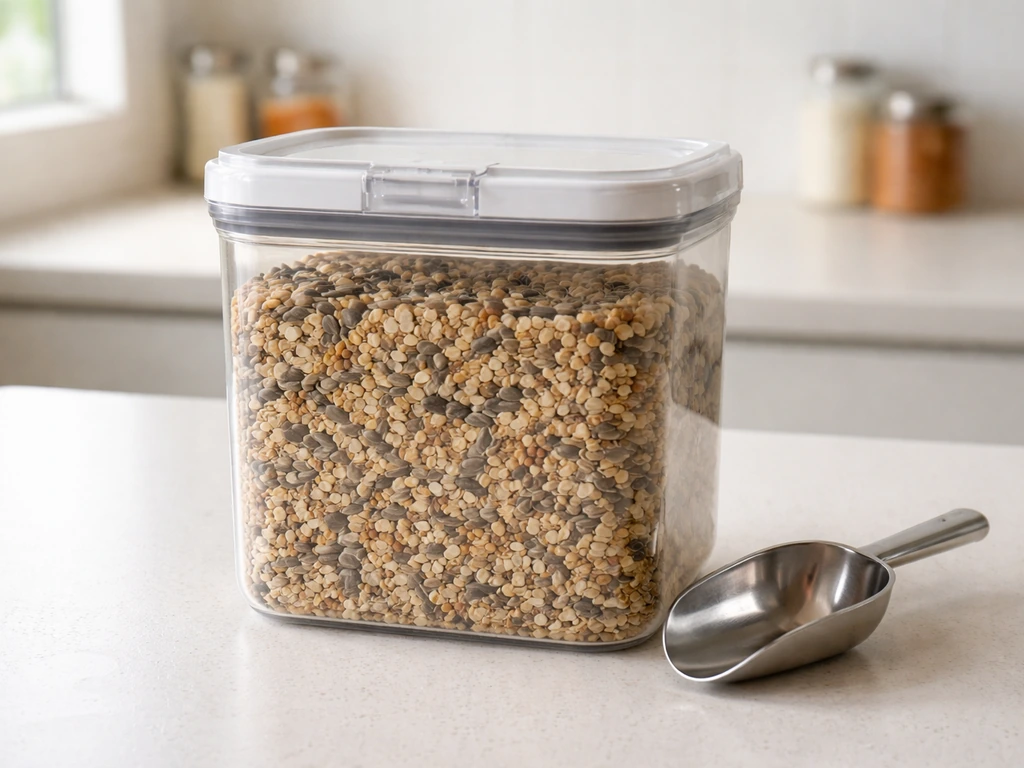
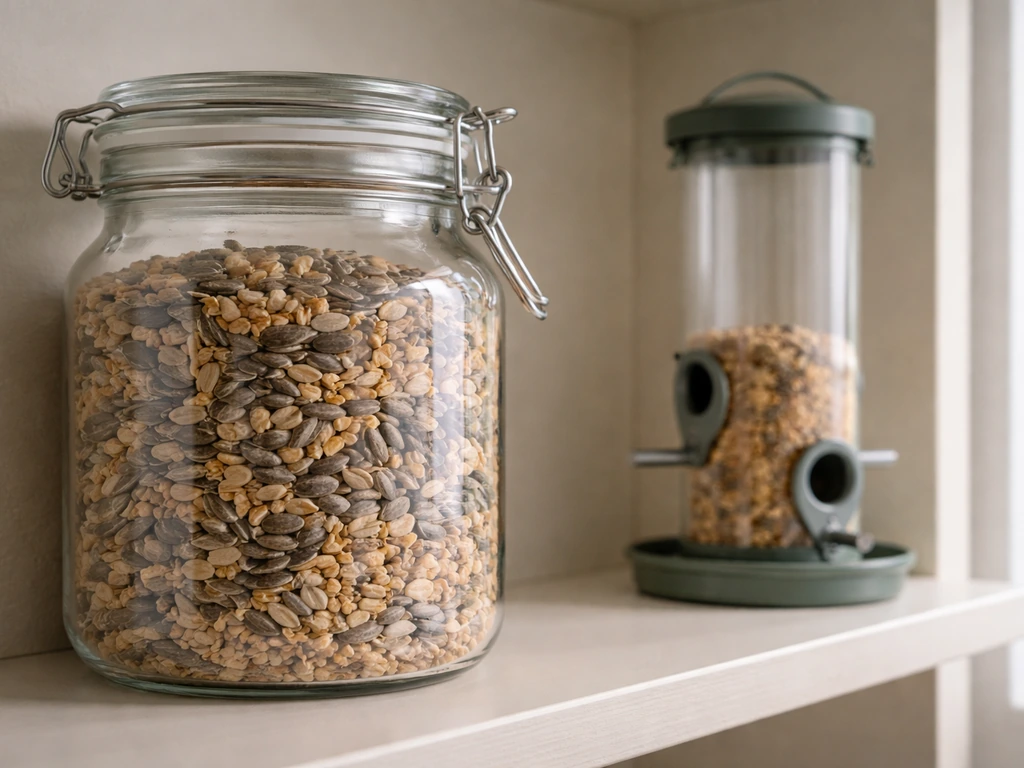
Here's what to aim for: a cool, consistently dry location, ideally indoors. A basement, utility room, or climate-controlled pantry works well. Metal or hard plastic containers with tight-fitting lids do a much better job than leaving seed in the paper or plastic bag it came in. The bag is fine as a short-term vessel, but it punctures, it doesn't seal tightly after opening, and rodents can chew through it in one night.
Temperature swings are also worth paying attention to. Seed stored where temperatures cycle between hot days and cooler nights develops condensation inside the container, which adds moisture to the seed even if the location seems dry. Keeping seed where temperatures are stable makes a real difference in how long it stays usable.
Insects are a third variable. Weevils, grain moths, and other stored-product insects can colonize seed bags, especially in warm months. If you live in a warmer climate, storing bulk seed in a sealed, rigid container reduces the risk significantly. Some people freeze new bags of seed for 48 to 72 hours to kill any insect eggs before moving them into regular storage.
Signs bird seed has gone bad
Knowing what to look and smell for saves you from accidentally feeding birds something harmful. Identifying whether bird seed is bad comes down to a handful of reliable signals, and you don't need to second-guess yourself if any of them are present.
- Musty or sour smell: Fresh seed smells neutral or faintly nutty. A musty, sour, or off odor is a clear indicator of mold or bacterial activity.
- Visible mold: Gray, white, green, or black fuzz anywhere in the batch. Even if only part of the seed looks moldy, treat the whole container as compromised.
- Clumping: Seed that has absorbed moisture clumps together. Clumped seed is almost always heading toward mold if it isn't already there.
- Excessive fine dust or chaff: Some fines are normal, but a feeder full of dust and broken seed fragments with few whole seeds is stale and unappealing to birds.
- Insects or webbing: Larvae, live insects, sticky webbing, or tiny flying moths around the storage area indicate infestation.
- Sprouting: Seeds that have started to germinate have absorbed enough moisture to trigger growth, and that moisture also encourages mold.
Birds often go off feed before humans notice anything obvious. If your regular visitors suddenly stop eating seed they normally love, staleness or rancidity could be the reason. Whether birds will eat old bird seed depends on how far gone it is, but they are better at detecting rancid fats than we are and will often avoid seed that smells off to them even when it looks normal to us.
What to do with wet, sprouted, or contaminated seed
If seed is visibly moldy, Penn State Extension is direct: do not use it. Moldy seed can carry aspergillosis and other fungal pathogens that are genuinely dangerous to birds. The U.S. Fish and Wildlife Service also notes that salmonella can grow in moldy, wet seed, which is a risk not just to birds but to outdoor pets and the people handling it. There is no drying-it-out fix for seed that has gone moldy. Discard it, and clean the container or feeder before adding fresh seed.
Wet but not yet moldy seed is a judgment call. Wild Birds Unlimited notes that if a feeder is only a little damp, shaking it to let air circulate can help the seed dry out before mold develops. That works when the seed has just gotten a light misting, not when it has been sitting wet for days. If seed has been rained on and left for more than a day or two in warm conditions, it is safer to discard and start fresh.
blank" rel="noopener noreferrer">Sprouted seed needs to come out of the feeder promptly. Sprouting means the seed absorbed enough moisture to germinate, and the same conditions that triggered sprouting will trigger mold. Remove sprouted seed, clean the feeder, and think about what caused the moisture: a leaking port, a feeder without a good rain hood, or overfilling that left seed at the bottom for too long.
For insect-infested seed, discard the entire batch. Do not try to sift out the live insects and use the rest. Insect eggs are invisible, and you will just be storing the problem. Clean the storage container thoroughly before refilling. Wondering what to do with old bird seed that is past its prime but not actually contaminated? Spreading it on the ground for ground-feeding birds or composting it are both reasonable options, as long as there are no signs of mold or infestation.
How to store, rotate, and manage feeders to extend seed life
Smart storage from the start
Transfer seed into a sealed, rigid container (metal or hard plastic) as soon as you get it home. Label it with the purchase date. Store it in a cool, consistently dry location away from direct sunlight and temperature swings. Don't mix old seed with new seed in the same container: put the new bag aside and use the old batch first. This rotation principle, same as you'd apply in a pantry, prevents old seed from sitting at the bottom indefinitely.
Fill feeders in small amounts, often
Fill to a one- to two-day supply whenever possible. This keeps seed turning over fast enough that spoilage doesn't have a chance to set in. In summer or during wet spells, lean toward one-day fills. In cold, dry winter conditions, you can push toward two or three days without much risk, but don't use heat and sun as an excuse to stop checking.
Clean feeders on a regular schedule
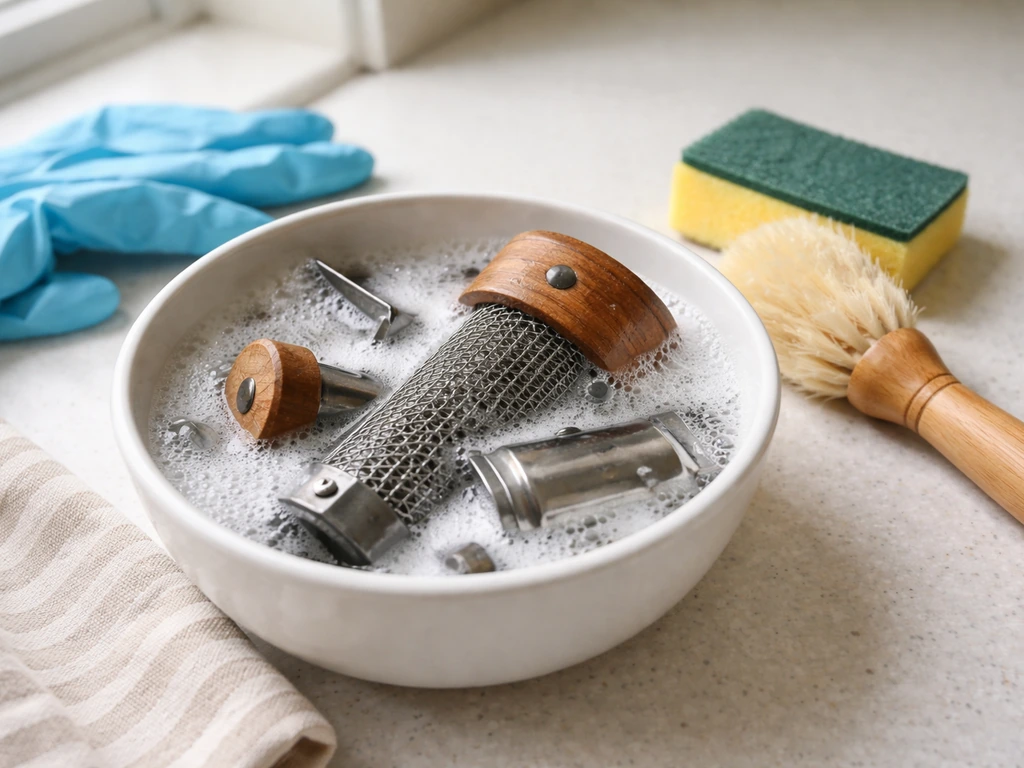
Project FeederWatch recommends cleaning seed feeders about every two weeks as a baseline, and more frequently during heavy use, warm weather, or damp conditions. Audubon aligns with this: every other week is a reasonable starting point, and more often during humid summer months. If you see black mold or clumped, discolored seed, clean immediately rather than waiting for the scheduled day.
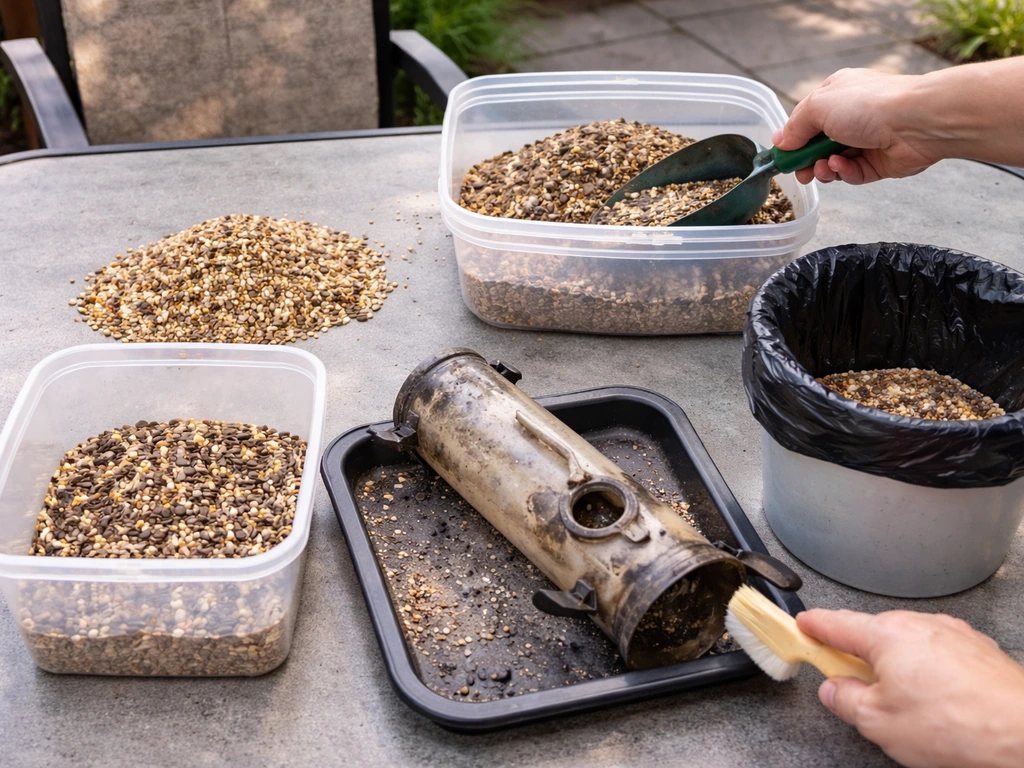
For the cleaning itself: wash with warm soapy water first to remove debris, then soak in a solution of 9 parts water to 1 part bleach for about 10 minutes. Mississippi State University Extension specifies this ratio and soak time specifically for bird feeders. After soaking, rinse thoroughly to remove all bleach residue, since South Carolina DNR flags chemical residue as a concern for birds. Let the feeder dry completely before refilling, because adding fresh seed to a damp feeder just restarts the moisture problem.
Do not use household multi-surface cleaners or dish soap with strong fragrances on feeders. A dilute bleach solution is safer for birds than most commercial cleaning products.
Manage the ground under your feeders too
Hulls, fallen seed, and bird droppings accumulate under feeders and become a source of mold and disease, including salmonella. The U.S. Fish and Wildlife Service specifically recommends sweeping up old, moldy, or discarded seed under feeders regularly. Minnesota DNR takes it further: after cleaning up old seed and hulls on the ground, sprinkling agricultural lime on the area helps reduce bacterial load. This is especially useful if you have birds congregating densely under the feeder.
A note on suet and other high-fat foods
The shelf life and spoilage rules above focus on seed, but if you're also running suet feeders, the timelines are different and generally shorter. How long suet lasts before going bad depends heavily on temperature: suet can go rancid in days during summer heat, and commercial suet cakes are often formulated differently for warm versus cool seasons. The same principles of small quantities, frequent replacement, and regular feeder cleaning apply, but with tighter timelines.
Quick reference: seed storage and feeder management
| Scenario | Expected freshness window | Key action |
|---|---|---|
| Sealed bag, cool and dry storage | 6 months to 2+ years | Rotate stock, use oldest first |
| Open container, cool and dry storage | 3 to 6 months | Seal tightly, label with date |
| Feeder in dry, cool weather | Up to 3 to 5 days | Check every 2 to 3 days |
| Feeder in humid or rainy weather | 1 to 2 days | Fill daily in small amounts |
| Feeder in hot summer conditions | 1 day or less | Fill daily, clean weekly or more |
| Wet or rained-on seed | Hours before mold risk | Remove promptly, clean feeder |
The short version: keep stored seed sealed, cool, and dry; fill feeders with only what birds will eat in a day or two; clean feeders every two weeks at minimum; and when in doubt about whether seed has gone bad, discard it. Seed is cheap relative to the risk of making your backyard birds sick.
FAQ
How can I tell if bird seed is going bad before I smell anything off?
Look for clumping, especially in humid weather, and check for visible moisture at the bottom of the container or feeder. Also inspect for insect activity like small holes in packaging, fine webbing, or moths fluttering when you open the container, these can indicate spoilage even when the seed still looks “normal.”
If the seed looks clean but it’s old, is it still safe?
It can be safe, but it may provide less nutrition, particularly with oilier seeds. If there is no mold, no musty odor, and no insect contamination, it is usually a “use with caution” situation, use it in smaller feeder fills first to see whether your birds will eat it consistently.
Can I extend how long bird seed lasts by freezing it?
Yes for prevention and timing. Freezing unopened or freshly purchased seed for about 48 to 72 hours can help kill insect eggs, then store it in a rigid sealed container afterward so moisture cannot re-enter. Avoid freezing seed that is already wet or moldy, freezing does not reverse established mold growth.
What should I do if it gets rained on and birds are still eating it?
If it was exposed to rain and sat for more than a day or two, discard it rather than trying to “dry it out” in the feeder. If it was only lightly misted and you can remove and shake it immediately so air circulates, a short recovery might be possible, but once seed has been wet for days, it is safer to replace it.
Is it better to keep bird seed in the original bag or transfer it to a container?
Transfer it as soon as you get it home. Paper and loosely sealed plastic bags do not hold a tight moisture barrier, and they can be punctured or chewed. A metal or hard plastic container with a gasket or tight lid gives you more consistent humidity control.
Can I mix new seed with old seed in the same container?
Avoid mixing. Even if old seed still seems okay, mixing means you lose track of age and can end up feeding the oldest portion longer than you intended. Use the older batch first, keep the new bag separate, and then refill the sealed container.
How often should I clean the feeder if I live in a hot, humid climate?
Use a shorter schedule than the baseline every two weeks. In warm, damp areas, plan on more frequent cleanings and tighter one-day fills during wet spells, because mold risk and insect activity both rise quickly when humidity stays high.
What’s the safest way to handle moldy or suspected bad seed?
Discard it and do not attempt to salvage it. After removal, clean the feeder and container thoroughly, let everything dry completely, and wash your hands to reduce exposure to spores. Resume feeding only after the feeder is dry and you add a fresh batch.
Do birds get sick from rancid seed, or is it mainly a “they won’t eat it” problem?
Rancid fat and staling are often rejected by birds, but the bigger hazard is mold and wet spoilage. If seed smells sharply off but is not moldy, birds may refuse it, while moldy seed carries higher risks for birds and can also pose risks to pets and people handling it.
How long does seed last in a covered feeder versus an open tray feeder?
Covered feeders help, but they do not remove the main issue, moisture intrusion at the feeding ports and lingering seed underneath. In practice, covered designs can still require one- to two-day turnover in humid or rainy weather, while open trays are typically shorter, because they collect rain, dew, and droppings more directly.