If you have a bag of old bird seed sitting in the garage or a feeder that hasn't been touched in weeks, the answer to what to do with it depends almost entirely on its condition. Some old seed is perfectly fine to put out. Some of it is genuinely dangerous to birds. This guide walks you through the whole process: triage, sort, dispose, clean, redeploy, and store, so you can make the right call today without guessing.
What to Do With Old Bird Seed: Triage, Salvage, Cleanup
Maya Collins
8 Apr 2026
Quick triage: is the seed old, wet, moldy, or insect-infested?
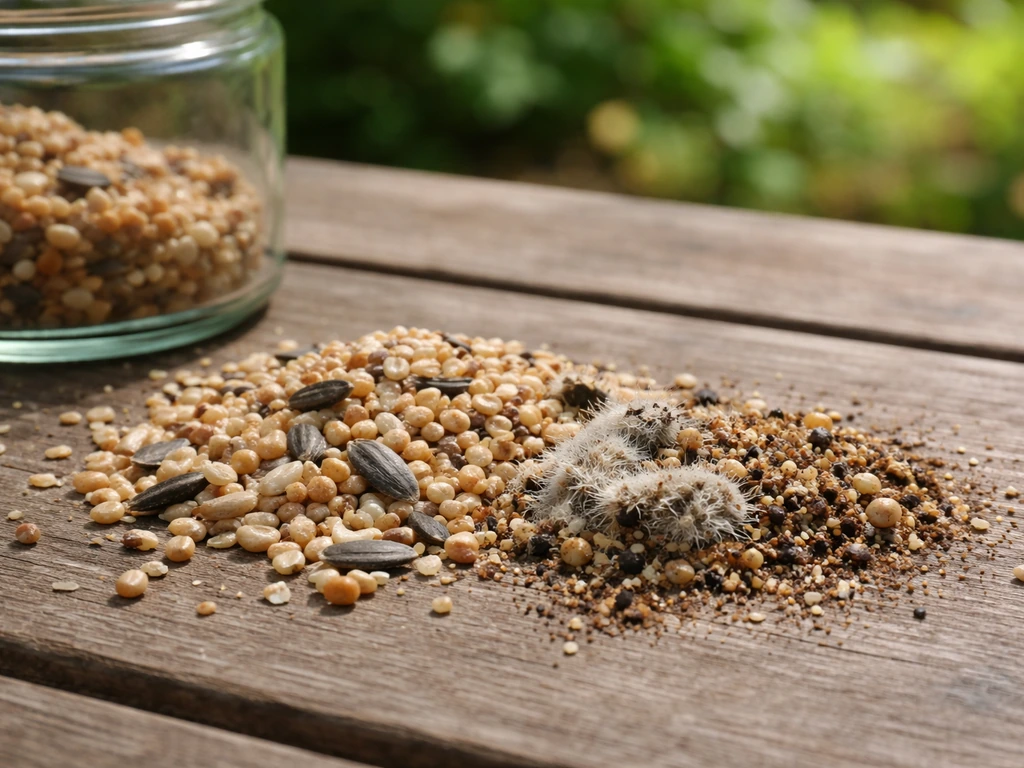
Before you do anything else, give the seed a close look and a sniff. This takes two minutes and tells you exactly which direction to go. There are four basic states old bird seed can be in, and each one has a different answer.
- Dry and smells neutral: Probably still usable. Check for insects and test for rancidity before redeploying.
- Clumped, damp, or wet: Not safe. Moisture kicks off bacterial growth and mold fast. Discard the affected portions.
- Visibly moldy (fuzzy patches, gray/black growth, slimy coating): Discard immediately. Do not attempt to pick out the moldy bits and use the rest from the same batch.
- Insect-infested (small moths, weevils, larvae, or webbing): Freeze or discard. The seed itself may or may not be salvageable depending on how far the infestation has spread.
- Stale but dry and odor-free: Likely safe. 'Old' alone doesn't mean spoiled, but check the age against typical shelf-life ranges before feeding.
The smell test matters more than people realize. If the seed smells musty, sour, or like old cooking oil, that's a sign of mold or rancidity even if you can't see obvious growth. Wildlife specialists consistently advise never feeding seed that smells off, regardless of how it looks. When in doubt, throw it out. Birds will not thank you for a feeder full of rancid seed, and the health risks from mycotoxins like aflatoxin are real. Humidity, rain, and morning dew can all trigger mold and aflatoxin production in seed left in feeders for a week or more, especially in hot, humid climates.
If you're not sure whether the seed has crossed a line, how to tell if bird seed is bad covers specific visual and sensory cues in more detail. It's worth a quick read before you make a final call on a borderline batch.
Sort and salvage: separating usable seed from spoiled pieces
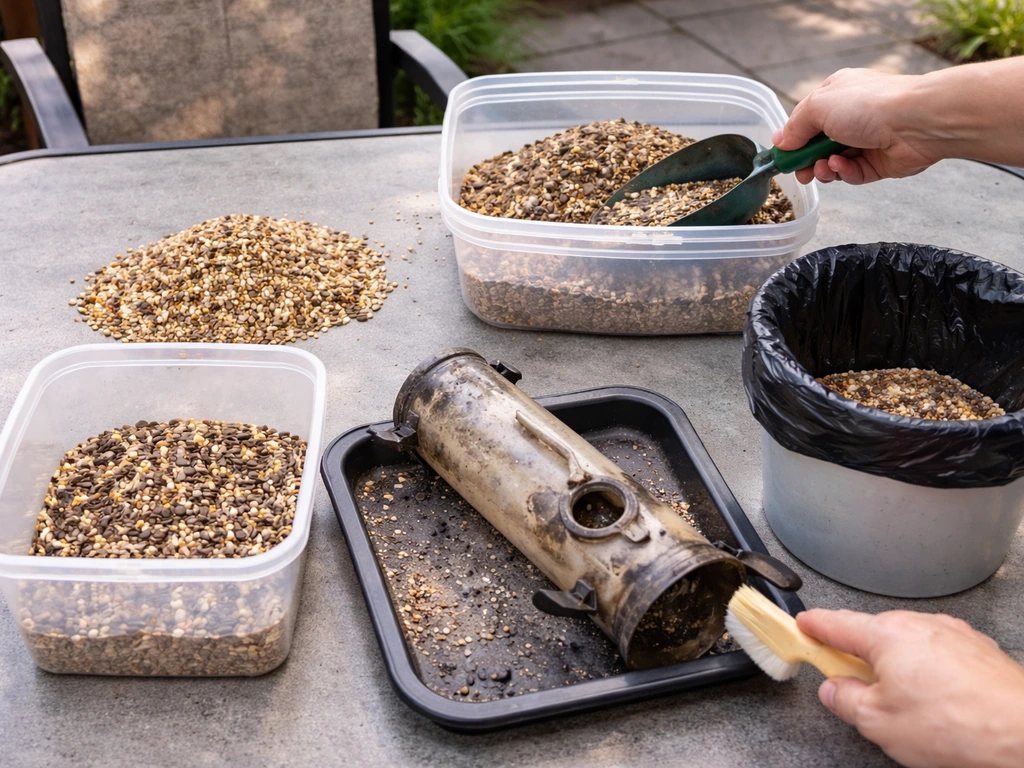
If the seed is mostly dry and only a small section looks questionable, you can try to salvage the rest. Here's how to do it without contaminating the good portion.
- Work outside or over a trash bag to avoid spreading dust, spores, or insects indoors.
- Spread the seed in a thin layer on a clean, light-colored tray or sheet so you can see clearly.
- Remove and discard any clumped sections, discolored seeds, seeds with visible mold, and any debris like hulls mixed with wet material.
- Look for webbing, larvae, or small insects moving through the seed. If you find any, bag the entire batch and freeze it for 72 hours to kill eggs and larvae before deciding whether to use or discard it.
- Smell the remaining seed after sorting. If it smells clean and neutral, it's a candidate for reuse. If there's still a musty or rancid odor, discard the rest.
- Transfer any salvaged seed to a clean, dry container immediately. Do not put it back into the original bag if the bag was damp or shows signs of pest activity.
One important rule: mold spreads by spores, and if a large portion of a bag is moldy, the rest of the batch has almost certainly been exposed even if it looks clean. In that case, the salvage math doesn't work in your favor. The whole bag is a discard.
It's also worth knowing your seed types when sorting. Oily seeds like black-oil sunflower and nyjer go rancid faster than drier grains like millet because their fat content breaks down more quickly, especially when exposed to heat. A mixed bag of old seed might have perfectly good millet sitting next to rancid sunflower. Sorting by type when you salvage is worth the extra five minutes. On the question of will birds eat old bird seed, the honest answer is: they'll often skip it if it smells off, but some birds will eat spoiled seed anyway, which is exactly the problem.
Safe disposal options for leftover bird seed
Spoiled seed needs to leave your yard in a way that doesn't just relocate the problem. Here are your options, ranked by practicality.
- Trash bin (best for moldy or infested seed): Bag the seed in a sealed plastic bag before putting it in the bin. This prevents rodents from accessing it and keeps spores contained.
- Bury it (Audubon-endorsed for non-toxic seed): Dig a hole at least 12 inches deep in an area birds don't forage. This works for seed that's just gone stale rather than actively moldy or infested. The key is keeping it away from birds.
- Compost (stale but not moldy or infested): Plain, dry, uninfested seed can go into a hot compost pile. Do not compost moldy seed, seed mixed with bird droppings, or infested seed. Pests and mold spores can survive in a cold or slow compost bin.
- Municipal yard waste programs: Some areas accept seed waste in yard waste bins. Check your local program's guidelines.
- Do not scatter moldy seed under a tree or on the lawn: This is the most common mistake. Scattering it just puts it somewhere birds will find it, which defeats the entire point.
After disposal, clean any containers, scoops, or tools that contacted the spoiled seed with the bleach solution described in the next section. Mold spores and bacteria can linger on plastic and metal surfaces.
Cleaning up spills, feeders, and surfaces to prevent pests and mold
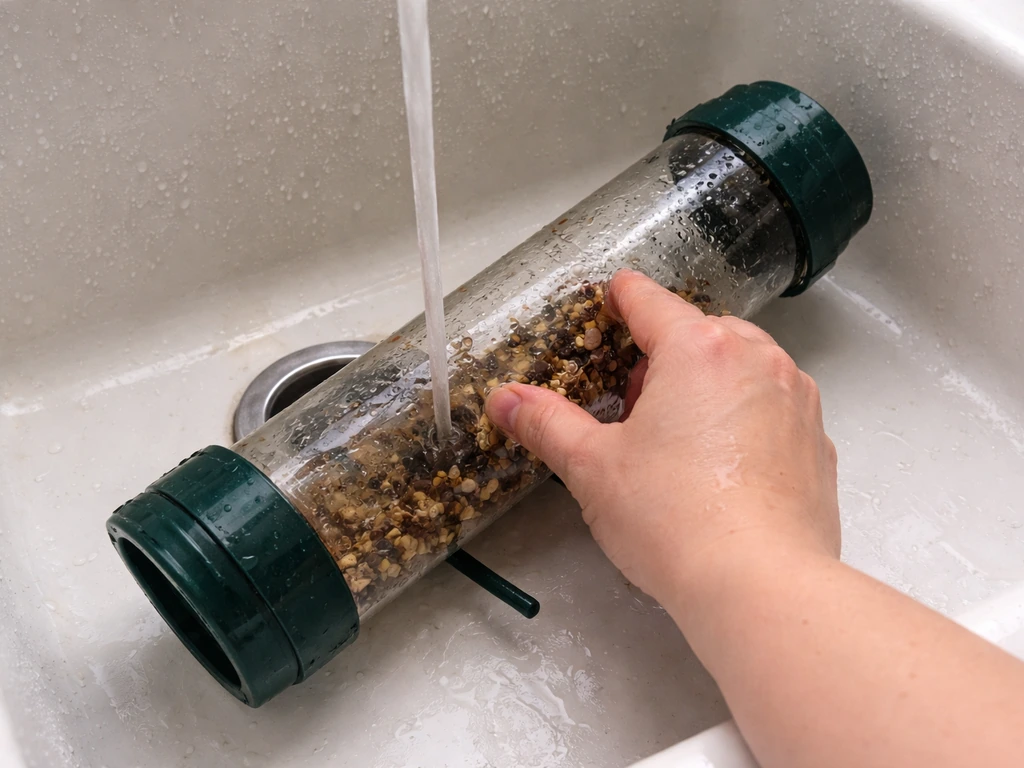
This step is where most people skip ahead and it's where problems come back. A clean feeder and a clean area under the feeder are what actually break the cycle of mold and pests. Here's the full protocol.
Cleaning the feeder itself
- Empty the feeder completely. Dump all remaining seed, even if it looks okay. You'll refill with fresh or verified-good seed after cleaning.
- Rinse with warm water to loosen debris and old hulls.
- Scrub with a brush using a 1-part bleach to 9-parts water solution. This concentration is what multiple university extension programs and Audubon recommend for killing salmonella and other pathogens.
- Let the bleach solution sit in the feeder for a few minutes before scrubbing, especially in crevices where mold hides.
- Rinse thoroughly with clean water until no bleach smell remains.
- Allow the feeder to dry completely before refilling. This is non-negotiable. Refilling a damp feeder just restarts the mold cycle immediately.
As a baseline, clean feeders at least every two weeks. In humid, hot, or rainy conditions, once a week is safer. If you see any black mold or visible contamination, clean immediately regardless of your last cleaning date.
Cleaning the ground and surfaces under feeders

The mess under a feeder is often worse than the feeder itself. Hulls, droppings, and damp seed pile up and create a concentrated mold and pest hotspot. Rake or sweep the area and bag the debris for trash disposal. Don't just scatter it into the lawn. If there's a mat or tray under the feeder, scrub that with the same bleach solution. For paved surfaces, hose them down after sweeping. In humid climates, consider moving the feeder to a new spot if the ground underneath has developed persistent mold patches. Regularly cleaning up spilled seed and old hulls also dramatically reduces rodent activity around the feeder area.
How to redeploy leftover seed safely
If you've triaged and sorted and you have seed that passed the smell and appearance tests, here's how to put it to work responsibly.
Match seed type to the right feeder and bird
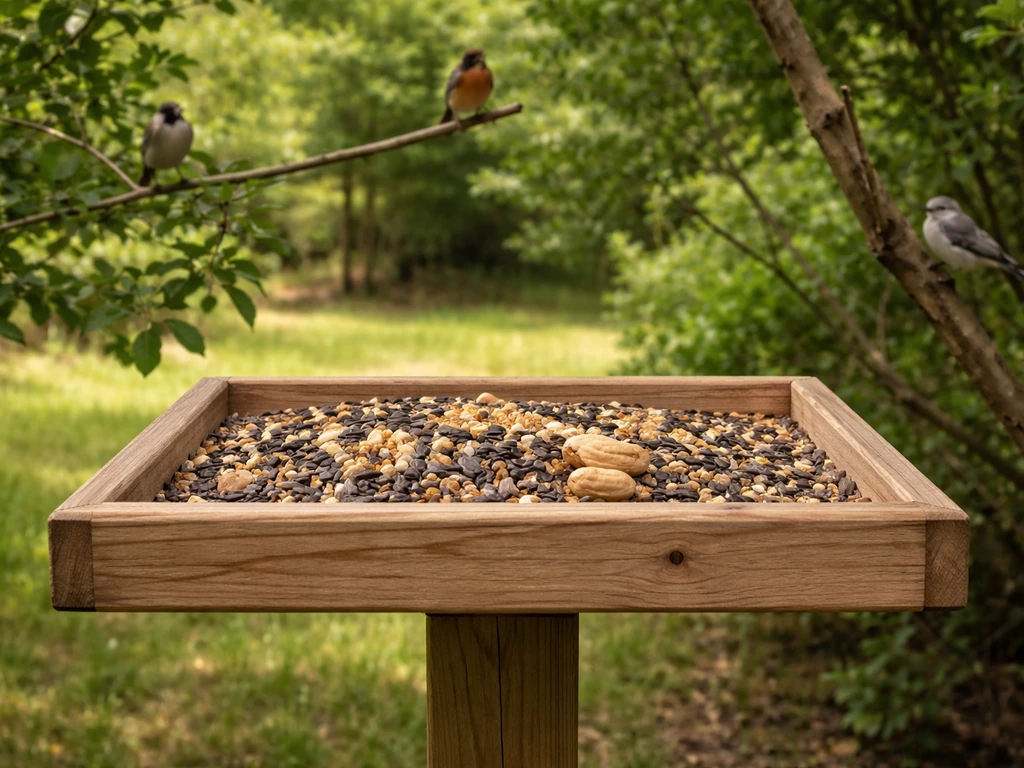
Old seed that's still good doesn't need special treatment, but putting the right seed in the right feeder gets better results and reduces waste. Black-oil sunflower works in almost every style of feeder and attracts the widest range of backyard species. Millet is best suited to platform or ground-level trays for sparrows, juncos, and doves. Nyjer (thistle) needs a fine-mesh feeder or a sock specifically designed for it, and because it goes rancid relatively quickly, use it up fast rather than storing it again. If you're mixing old and new seed, combine them in a clean container and use the blend promptly rather than storing it long-term.
Tray and platform feeding tips
If you have a larger quantity of confirmed-good mixed seed, a platform tray feeder is an efficient way to use it. Keep portions small, especially in humid weather. Put out only what birds will finish in one to two days. If the seed sits in an open tray in summer humidity for several days, it'll go from fine to risky quickly. In rainy or humid regions, covered tray feeders slow down moisture exposure considerably. Avoid spreading seed directly on the ground unless you know squirrels, deer, or raccoons won't be pulling it into problem areas. The Virginia Department of Wildlife Resources advises against ground feeding or loose seed on patios, stumps, or decks because it can increase disease spread and attract other animals Avoid spreading seed directly on the ground unless you know squirrels, deer, or raccoons won't be pulling it into problem areas..
A note on suet
If you found old suet cakes alongside the bird seed, those follow a different spoilage timeline and logic. Does bird suet go bad covers exactly when suet crosses from stale to unsafe, which is especially relevant in summer when fat-based products go rancid faster.
Pest and mold prevention for the remaining seed
Good storage is what keeps the seed you've salvaged from ending up in the same situation a month from now. These are the practices that actually make a difference.
Storage basics
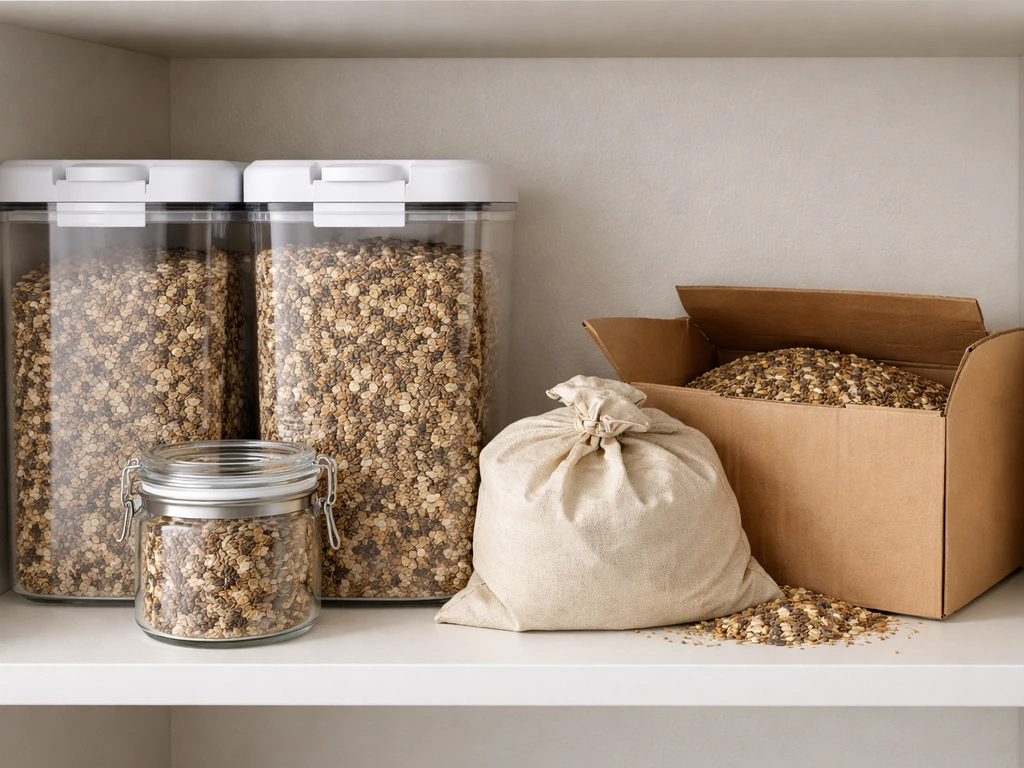
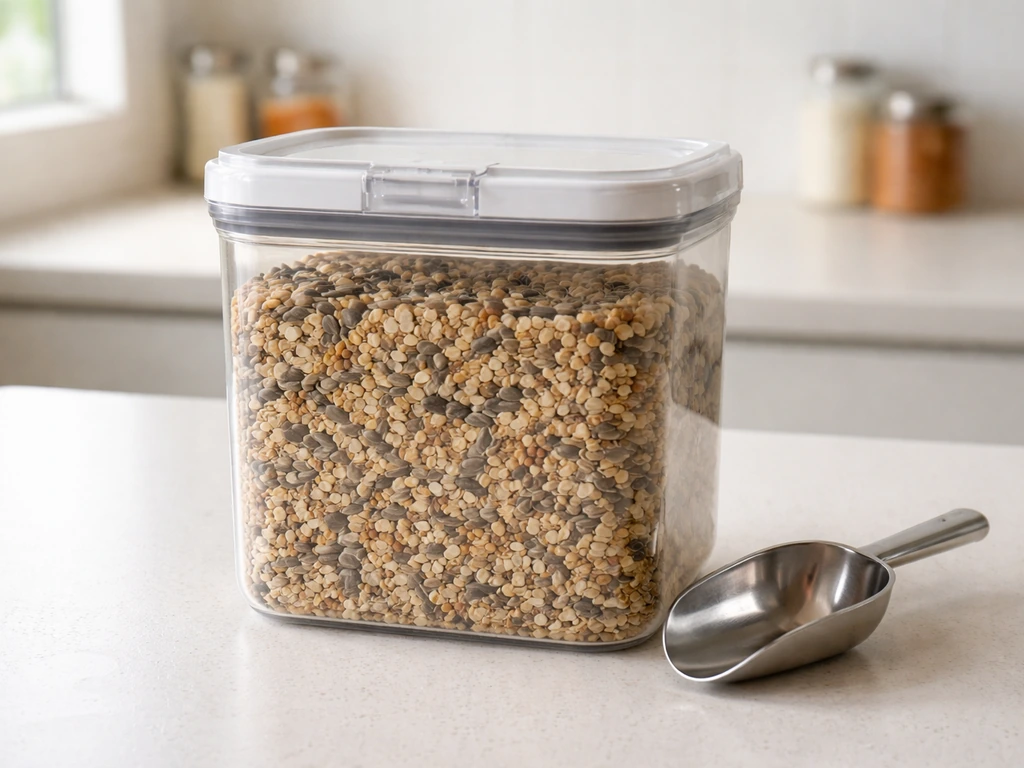
- Use hard-sided, airtight containers: Metal or thick plastic bins with tight-fitting lids keep moisture out and rodents/insects out. Avoid cardboard and cloth bags for long-term storage.
- Store in a cool, dry location: A climate-controlled space is ideal. Avoid garages or sheds that get hot in summer because heat accelerates rancidity in oily seeds.
- Keep off the ground: Elevating bins reduces moisture wicking and makes pest access harder.
- Don't mix old seed with new seed in storage: Use up the older portion before opening a new bag. This is basic FIFO (first in, first out) rotation.
- For nyjer specifically: Consider storing smaller quantities in the refrigerator or a cool space. Nyjer is a high-oil seed and goes rancid faster than most.
- If you suspect pantry pests: Freeze the seed at 0°F for at least 72 hours before storage. This kills moth eggs and weevil larvae without harming the seed's nutritional value.
How long does bird seed actually stay viable?
This is the question that comes up every time someone finds a half-empty bag from last season. The general ranges, assuming proper dry storage, are: black-oil sunflower around 6 to 12 months, millet around 6 to 9 months, and nyjer around 6 to 12 months. These are ballpark figures and not guarantees. For a more detailed breakdown by seed type, how long is bird seed good for covers shelf life with more specificity. The short version: properly stored seed that smells fine and shows no signs of moisture or pests is likely okay within those windows. Seed that's been sitting in a hot garage or partially open bag for over a year deserves more scrutiny before you use it.
Rotation and portion management
The simplest way to avoid ending up with a pile of questionable old seed is to buy in quantities you'll use within a few months. Buying a 40-pound bag sounds economical, but if you only have one small feeder that gets moderate traffic, the back half of that bag may sit long enough to go rancid or attract pests. Buy smaller bags more frequently, or split a large bag with a neighbor. Put the newest seed behind the older supply in storage, and always use the older seed first. This rotation habit alone eliminates most old-seed problems before they start.
Quick comparison: storage container types
| Container Type | Pest Resistance | Moisture Control | Practical Notes |
|---|---|---|---|
| Metal bin with lid | Excellent (rodent-proof) | Good if stored indoors | Best overall; heavy but durable |
| Hard plastic bin (thick walls) | Good (deters most pests) | Good if stored indoors | Lighter than metal; check lid seal quality |
| Original paper/cloth bag | Poor | Poor | Fine for a few days; not for long-term storage |
| Zip-close plastic bag | Poor (rodents chew through) | Moderate | Acceptable short-term for small quantities only |
| Refrigerator or freezer | Excellent | Excellent | Ideal for nyjer or small quantities of high-oil seeds |
To pull this all together: if you found old bird seed today, start at the triage step, be honest about what you see and smell, and let the condition of the seed make the decision for you. Good seed gets stored correctly and redeployed promptly. Bad seed goes in the trash, your feeders get a proper bleach-and-rinse clean, and the area underneath gets swept. That's the full cycle, and running through it once properly is a lot easier than dealing with a rodent problem or a sick bird situation later.
FAQ
Can I mix old bird seed from two different bags, one that seems fine and one that’s borderline?
Yes, but do it in a separate container and only after passing the smell and appearance checks. Don’t mix a questionable batch with good seed, instead discard the questionable portion first so any mold exposure does not contaminate the salvage.
What should I do if I already put old seed out and it turns out to be bad?
If you accidentally put out seed that later smells musty or looks moldy, remove it right away, discard it (do not compost), then clean the feeder and scrub any tray or mat underneath. Waiting for the next refill day increases spore and pest buildup.
If only a small area of my bird seed is moldy, can I remove it and keep the rest?
In many cases, partially moldy seed should not be “spot cleaned” for later use, because spores can spread through the bag even when the visible patch is small. The only exception is when the mold is truly localized and you are able to discard the entire exposed portion, then keep the remaining seed in an uncontaminated container, not back in the original bag.
Can I sift or brush off moldy-looking bits and keep feeding the rest?
Do not dust off moldy seed for reuse. While you can sift hulls or debris from dry seed that passed the smell test, any visible mold growth or musty odor means the batch should be discarded rather than brushed and reused.
Are there any feeder materials where bleach cleaning is not a good idea?
Use the feeder manufacturer guidance first if it exists, but as a safe general rule, avoid soaking porous wood, untreated cardboard, or rough materials with bleach unless the product is labeled for it. For those, use a hot water and detergent clean, then let fully dry in direct sun, and replace anything that keeps developing black spots.
Can I save old seed with insects by freezing it?
If you see pests like weevils, moths, or webs and the seed looks clumped or has a strong off-odor, discard rather than freeze it for later. Freezing can kill many insects, but it does not reliably remove mold spores or mycotoxin risk when seed has been exposed to moisture.
What’s the quickest way to reduce moisture-related spoilage in hot, humid weather?
If your goal is to protect feeders, use a covered setup and smaller portions. Covered tray feeders slow moisture exposure, and placing the feeder so it can drain quickly (not in a low spot that collects dew and rain) helps prevent the “fine to risky” slide.
Does cleaning up under the feeder really matter if the feeder itself looks clean?
Yes, because spilled hulls and damp seed become a concentrated hotspot for both mold and rodents. Sweep and bag debris regularly, and if the same area keeps getting damp mold patches, move the feeder rather than repeatedly cleaning the same spot.
How long should I wait after cleaning before putting seed back out?
Skip feeding during severe spoilage risk, then plan a short redeploy once cleaned. A practical approach is to wait for the feeder and area to fully dry after cleaning, then start with small portions for 1 to 2 days, observing for skipped feeding or odors before you increase quantity.
My seed sat in a hot garage, it looks dry, is it still risky?
If the seed was stored partially open in a hot garage, treat it as higher risk even if it looks dry. Heat accelerates oil breakdown in oily seeds, so smell becomes the key decision, and you may want to use small redeploy portions in a low-risk feeder rather than a long-term tray setup.
What’s the safest way to top off a feeder when I have both old and new seed?
For mixed old and new seed, combine only within your safe batch boundaries, then use promptly in clean containers. Avoid topping off a feeder with new seed on top of older damp residue, instead empty and refill so you control moisture exposure.
Next Article
How to Make Bird Seed Last Longer: Storage and Fixes
Learn how to make bird seed last longer with proper storage, humidity control, pest prevention, and fixing wet or moldy