Bird seed is a mix of grains, seeds, and sometimes other ingredients sold specifically to attract and feed wild birds. Most commercial bags contain a blend of things like black-oil sunflower seeds, white millet, cracked corn, striped sunflower, and safflower rather than a single seed type. Each ingredient is chosen because it appeals to specific bird species, so the blend in your feeder acts as a kind of menu for whatever birds are in your area. Beyond the seeds themselves, bird seed is distinct from other feeder foods like suet (rendered fat with seeds pressed in), whole nuts (peanuts, tree nuts), or fresh fruit, all of which attract different species or supplement a seed diet.
Bird Seed What Is It? Types, Label Reading, Storage Tips
Maya Collins
8 Jun 2026
What's actually in bird seed
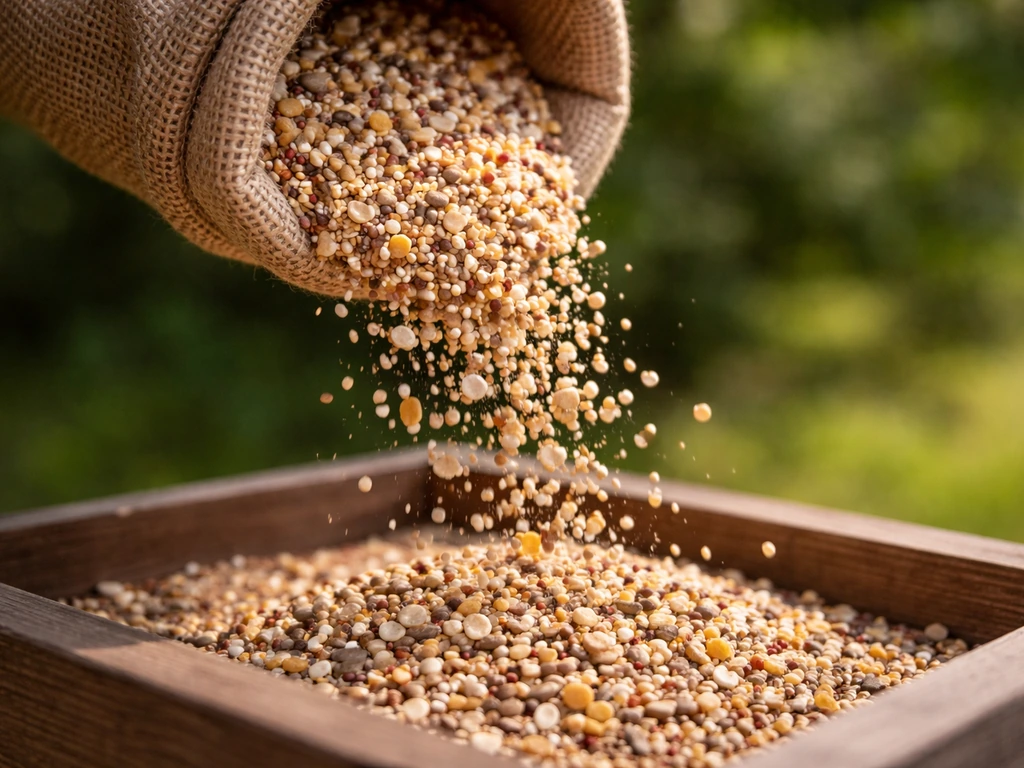
The Cornell Lab of Ornithology and Audubon both point to a short list of ingredients that do most of the work in a quality blend. Black-oil sunflower is the single most productive ingredient you can offer. Its thin shell is easy for small birds to crack, and its high fat content makes it attractive to dozens of species. White millet appeals mainly to ground-feeding birds like sparrows, juncos, and doves. Cracked corn brings in larger ground feeders and waterfowl. Striped sunflower has a thicker shell and is better suited to larger-billed birds like cardinals. Safflower is mildly bitter, which squirrels tend to dislike, but cardinals, chickadees, and nuthatches eat it readily.
Cheaper mixes are often padded with fillers, most notably milo (sorghum), wheat, and oats. These ingredients are rarely the first choice for most backyard songbirds in North America and tend to pile up under feeders uneaten, which creates mess and moisture problems. If you pick up a bag and milo (small round reddish-brown seeds) dominates the ingredient list, put it back. If you want a cheap alternative to bird seed, focus on low-cost ingredients like hulled sunflower hearts or kitchen-safe scraps that match the birds you’re trying to attract. You're mostly paying for seed birds will reject.
Beyond loose seed, bird seed is sometimes pressed into cylinders or balls with a binding ingredient like gelatin or suet. Those formats are really just seed delivered differently and work on the same principles. If you need a quick bird seed guide for choosing the right mix, start by reading the ingredient label and looking for high-quality seeds near the top. If you're curious about those formats, bird seed balls instructions are worth a look as a separate project.
How to recognize quality seed before you buy
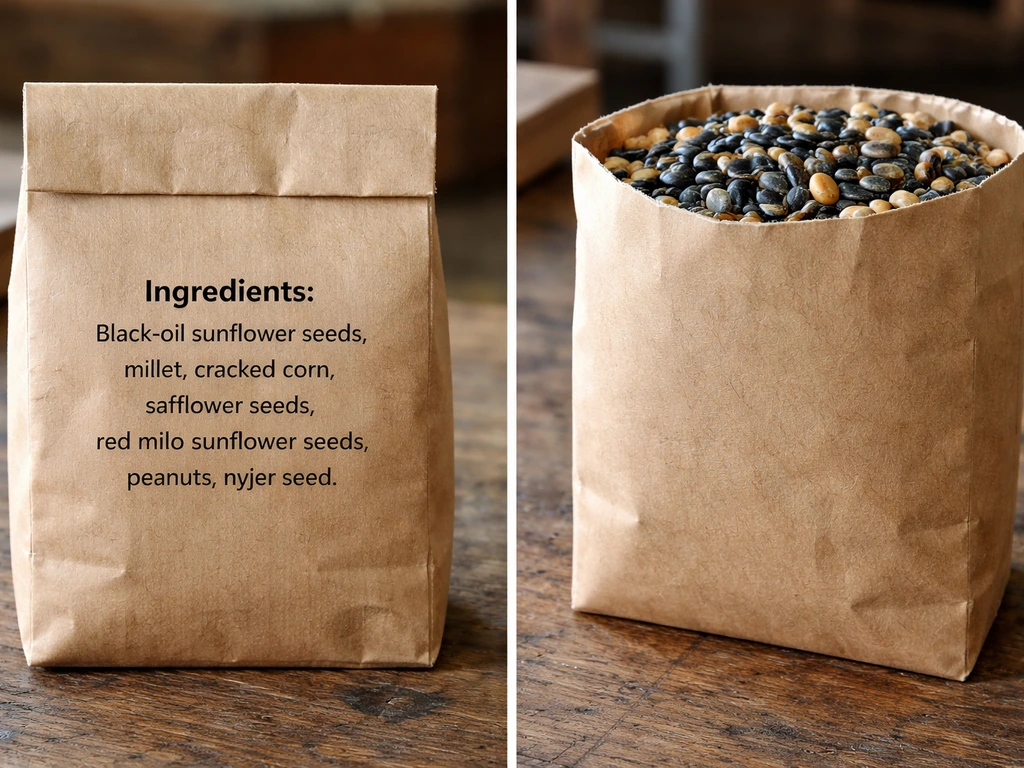
Reading the ingredient label is the most important step. Ingredients are listed by weight, so whatever appears first makes up the bulk of the bag. A good mix lists black-oil sunflower or millet in the top two slots. Avoid bags where milo or wheat lead the list.
Beyond the label, use your senses before and after you get the bag home. Fresh seed looks clean and uniform with no dusty residue coating the inside of the bag. It smells neutral or faintly nutty, not sour, rancid, or musty. Check the bag itself for any signs of moisture damage: warped seams, clumps visible through the plastic, or condensation on the inside surface. If a bag feels damp when you pick it up, skip it. Moisture at the retail stage means the seed has already started its clock toward mold.
- Check that black-oil sunflower or millet appears first in the ingredient list
- Avoid bags where milo, wheat, or oats dominate
- Smell the seed through the bag opening; it should smell neutral, not rancid or musty
- Look for dust-free, dry, uniformly colored seeds with no clumping
- Inspect the bag seams and surface for moisture damage or condensation
- Check for a manufacture or best-by date if one is printed, and skip old stock
Storing bird seed so it stays fresh
Penn State Extension is direct about this: store bird seed in a cool, dry place. The biggest enemies of fresh seed are moisture, heat, and oxygen. Moisture triggers mold. Heat accelerates rancidity in the seed oils. Leaving seed in an open bag compounds both problems by inviting pests and allowing humidity in.
The best container for stored seed is a hard-sided, airtight bin with a tight-fitting lid. Metal galvanized cans work well because rodents can't chew through them. King County Public Health specifically calls out rodent-proof containers for stored bird food because feeders and nearby seed attract rats. A plastic bin can work if it's thick-walled and the lid locks down, but it won't stop determined rodents the way metal will. Store the bin indoors if possible (a garage or basement is fine), off the ground, and away from direct sunlight.
Buy in quantities you'll use within four to six weeks. Buying in bulk feels economical, but seed that sits in storage past that window starts losing nutritional value and is more likely to go rancid or grow mold before birds ever eat it. In hot, humid climates (the southeastern U.S. in summer, for example), shorten that window to three to four weeks.
What to do with wet, sprouted, or moldy seed
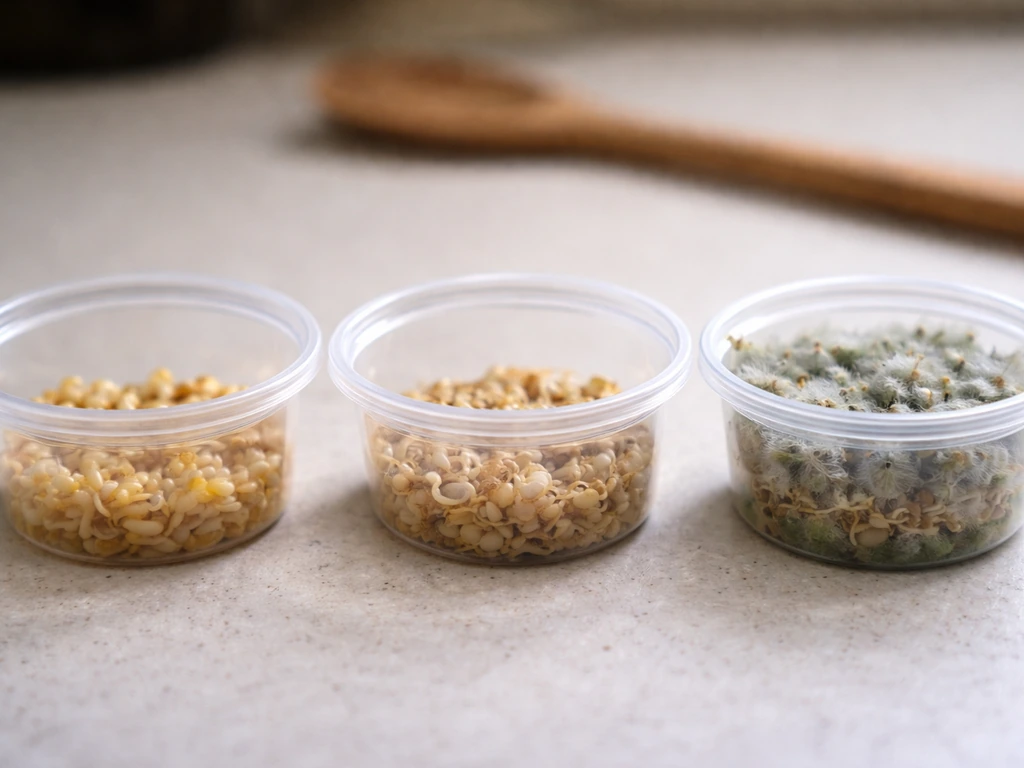
Wet or moldy seed is a triage situation, and the guidance from Penn State Extension is unambiguous: if seed becomes moldy, do not use it. Discard it. Moldy seed can carry aflatoxins and other fungal toxins that harm birds, and there is no reliable way to "dry it out" once fungal growth has started. Don't try to salvage it by spreading it in the sun; the surface may dry but the mold will still be there.
Sprouted seed is a slightly different case. A few seeds germinating at the bottom of a feeder tray is low-risk if you catch it early and remove the seed immediately. But if you have significant sprouting (fuzz, green shoots, a mat of growth), treat it the same as mold: remove and discard the whole batch. Sprouting also means moisture has been sitting long enough to be a problem for the feeder itself.
- Empty the feeder or tray completely and remove all affected seed
- Place wet or moldy seed in a sealed bag and put it in the trash, not compost
- Scrub the feeder with a dilute bleach solution (1 part bleach to 9 parts water) and rinse thoroughly
- Let the feeder air-dry completely before adding fresh seed
- Identify and address the moisture source: rain exposure, high humidity, or overfilling
Troubleshooting common feeding problems
Bugs in the feeder or storage container
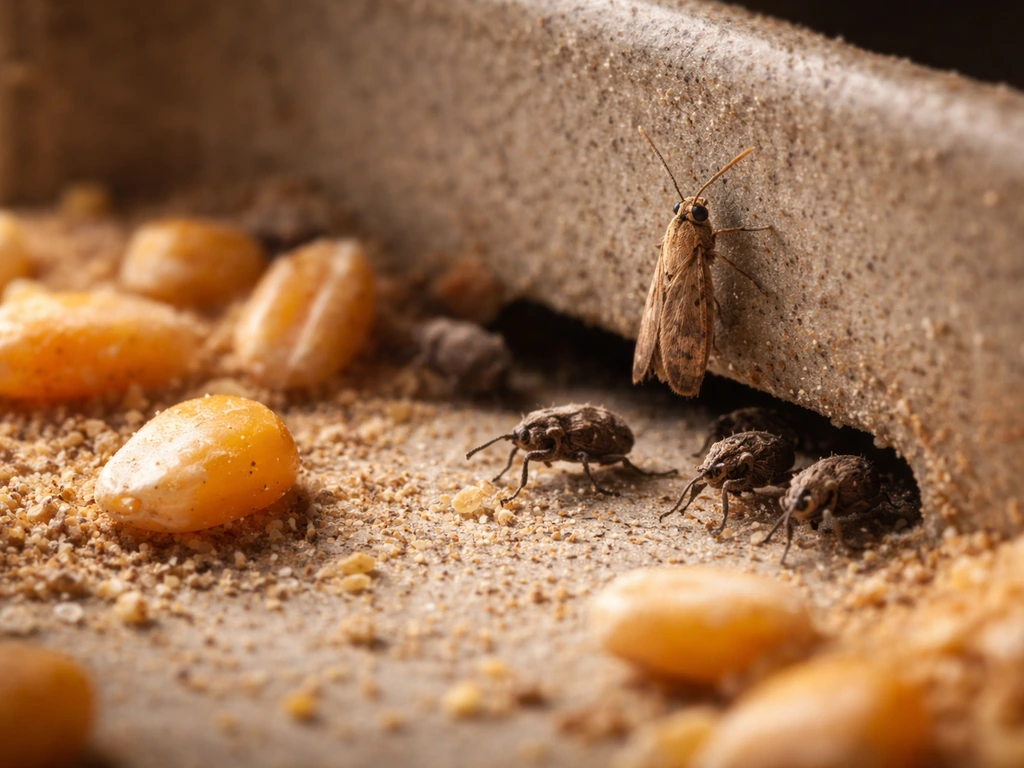
Weevils and grain moths are the most common insects you'll find in stored or feeder seed. They're almost always introduced with the seed from the retailer or warehouse, not from your yard. If you see small brown beetles or tiny moths when you open the bag, the seed was likely stored improperly before you bought it. Discard affected seed, freeze new seed for 48 hours before storing (this kills any dormant larvae), and switch to an airtight metal container.
Rodents under and around feeders
King County Public Health flags this clearly: bird feeders can increase rat activity if not managed well. Seed spillage under feeders is the main driver. Use a feeder with a tray to catch fallen seed, sweep or rake underneath regularly, and don't let seed pile up on the ground. Mount feeders on smooth poles with baffles so rodents can't climb them. Store all seed in rodent-proof containers. If you're already seeing rats, take the feeders down for two to three weeks, clean the area thoroughly, then reintroduce with better hardware and tighter management.
Rancid odor or oily residue
A sour or paint-thinner-like smell usually means the seed oils have oxidized. This happens with old stock or seed stored in heat. Birds may refuse it outright, or eat it with reduced nutritional benefit. Either way, discard it and buy fresh. Wipe down the inside of your storage container before refilling because rancid oil residue left in the bin will accelerate spoilage in the next batch.
Seed won't flow in the feeder (clumping or bridging)
Clumping in a tube or hopper feeder usually means moisture has gotten in. Empty the feeder, check for cracks or a faulty port seal, let it dry completely, and refill with fresh seed. Avoid overfilling feeders, especially tube designs, because seed at the bottom can sit for days or weeks before birds work through it.
Which birds eat what: a practical matching guide
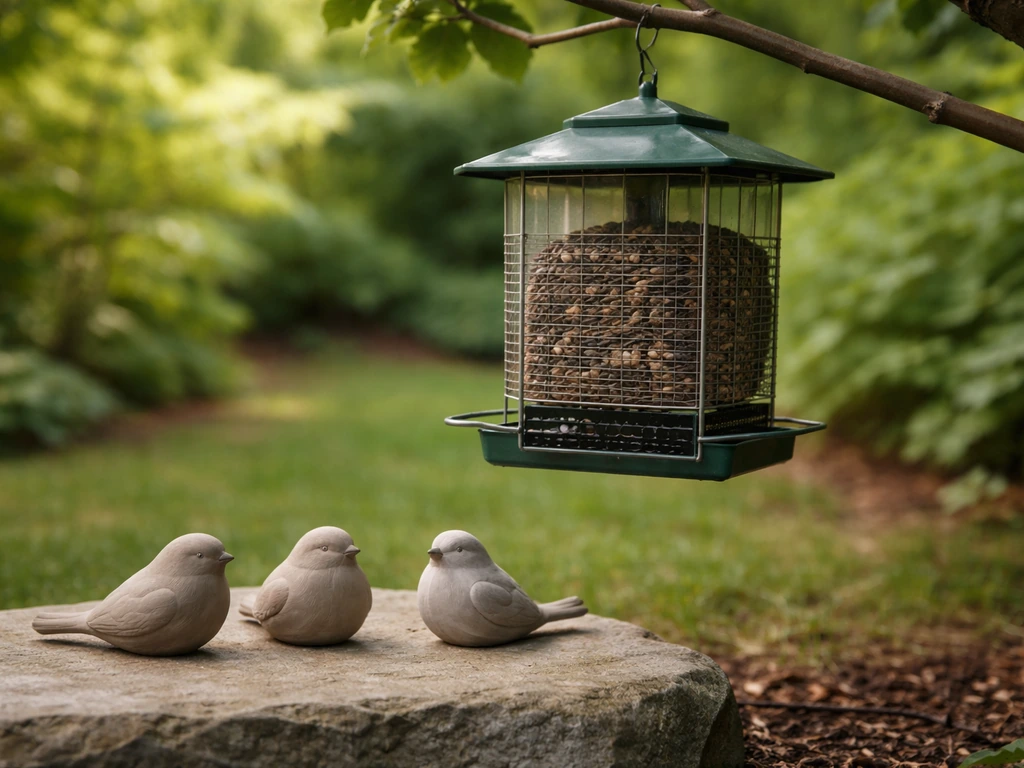
Most standard blends are designed to attract the broadest range of birds, but knowing which ingredient draws which species lets you customize. If you want fewer house sparrows and starlings dominating your feeders, swapping to a safflower-heavy or straight sunflower mix discourages them while still bringing in cardinals and chickadees.
| Seed Type | Birds Attracted | Feeder Type That Works Best |
|---|---|---|
| Black-oil sunflower | Chickadees, nuthatches, finches, titmice, cardinals, woodpeckers | Tube, hopper, platform |
| White millet | Dark-eyed juncos, sparrows, doves, towhees | Ground or low platform tray |
| Cracked corn | Blue jays, doves, grackles, ducks (if near water) | Platform or ground scatter |
| Safflower | Cardinals, chickadees, nuthatches, mourning doves | Hopper, platform |
| Striped sunflower | Cardinals, grosbeaks, larger finches | Hopper, platform |
| Nyjer (thistle) | American goldfinches, pine siskins, redpolls | Nyjer sock or fine-port tube feeder |
A few practical notes on managing species: if squirrels are raiding the feeder, safflower and nyjer are your two best deterrents since squirrels avoid both. If you're getting too many blackbirds or house sparrows, removing cracked corn from your setup usually helps. Ground feeders like juncos and doves genuinely prefer eating off a low tray or the ground rather than perching on a tube, so a small amount of white millet scattered near (not directly under) the main feeder gives them their own station and reduces crowding.
Keep in mind that some backyard visitors are not birds at all. Deer, raccoons, and squirrels all interact with seed depending on your region. The right feeder placement and hardware (baffles, weight-sensitive perches, pole mounting) matters as much as what's inside the feeder.
Keeping feeders clean and preventing repeat infestations
Project FeederWatch recommends cleaning seed feeders every one to two weeks under normal conditions, and more often during wet weather or when you notice any sick-looking birds. The All About Birds feeder-cleaning method uses no more than 1 part bleach to 9 parts water (a 10% solution). Iowa DNR recommends this same strength and frequency, roughly once a month for a thorough deep clean, with rinse and full drying before refilling.
- Empty the feeder completely, including any seed residue stuck in ports or corners
- Scrub all surfaces with a stiff brush using a 1: 9 bleach-to-water solution
- Rinse thoroughly with clean water until no bleach smell remains
- Allow the feeder to air-dry completely, ideally in sunlight, before refilling
- Dispose of old seed and hulls that have built up under the feeder
- Wipe down poles and hangers with a damp cloth to remove droppings and seed oil
For preventing repeat mold and pest problems, a few habits make a big difference. Use feeders with drainage holes or mesh bottoms so rain doesn't pool. Avoid filling feeders more than halfway in humid or rainy weather since the seed at the bottom will go bad before birds reach it. Rotate feeder locations seasonally if you're dealing with persistent buildup under one spot. And if you've had a significant pest problem (rats, weevils, or heavy mold), do a full reset: remove feeders for a week, clean everything, and start with fresh seed in clean containers before setting up again.
If you're exploring ways to stretch your bird feeding budget or reduce seed waste, there's worthwhile information in topics covering bird seed alternatives and cheap alternatives to bird seed, both of which complement a solid seed setup rather than replace it. And if you're thinking about how bird seed is packaged and stored long-term, a bird seed can or airtight container setup is worth considering alongside the loose-bag approach most stores default to.
FAQ
Is bird seed the same thing as bird food or bird feed sold for pets?
No. Bird seed is typically grain and seed mixes for wild birds, while many pet bird foods are formulated with different ingredients, additives, and pellet systems. If you use pet food in a feeder, birds may eat it differently than you expect, and residue or additives can be harder to manage, especially with outdoor moisture.
Can I feed bird seed to backyard birds right after buying it, or should I let it sit first?
In most cases, you can use it immediately. However, if the bag feels cool but slightly damp, shows condensation, or smells musty, wait is not a fix, discard it instead. For very dusty or visibly unclean seed, consider a quick sift or pour-through in a dry area to reduce mess under the feeder.
What should I do if I accidentally spill bird seed and it gets wet on the ground?
Remove any wet seed and debris because it can mold and attract pests. Wipe or rake the area so you do not keep providing a damp food source for rodents and insects. Then refill the feeder with fresh seed and check for the feeder drainage and sealing issues that likely caused the spill.
How can I tell the difference between “fresh” dust and a warning sign like rancidity?
Fresh seed can look slightly dusty, but the bag interior should not have a coating that feels greasy or leaves an oily film. Rancid seed often has a sharp sour, paint-thinner, or strongly off smell, and that is a discard signal even if the seed looks intact.
Is it safe to use bird seed that has been opened for a long time but stored in a dry bin?
Dry storage helps, but time still matters. If the seed is older than the typical four to six week window (or three to four weeks in hot, humid conditions), expect more rancidity risk and pest chances. When in doubt, check smell, look for clumping or musty odor, and replace with fresher seed if any doubt remains.
Do I need to freeze bird seed every time I buy a new bag?
Not always, but freezing is a good risk reducer if you often see weevils or grain moths. Freeze new seed for about 48 hours, then store it in an airtight metal container. This does not fix moisture problems, so if the bag was damp at purchase, discard rather than freeze.
What is the safest way to handle moldy seed if I am worried about touching it?
Wear gloves, bag the seed, and seal it before discarding so spores do not spread. Clean the feeder and any nearby surfaces after removal, then refill with fresh seed in a rodent-proof, airtight container. Avoid sweeping dry mold aggressively, it can aerosolize spores.
Can I mix different bird seed brands or types in the same container?
You can, but label and storage quality matter. If one batch is older or has any sour smell or visible dust clumps, mixing can contaminate the whole container. Also be aware that blends with different textures can affect feeder flow, for example sunflower hearts plus hull-heavy seed may behave differently in tube feeders.
Will bird seed attract insects even if I keep it sealed?
It can, mostly if the insects were already inside the bag at purchase or if the container is not truly airtight. Airtight storage plus wiping out oil residue and avoiding any moisture gives you the best odds. If you see live moths or beetles after sealing, stop using that batch and start over with cleaned equipment.
Are certain bird seed ingredients unsafe for specific birds or regions?
Some ingredients mainly change which birds come to your feeder rather than creating a universal safety issue. For example, safflower can help discourage squirrels, while cracked corn can increase ground feeder activity. The bigger safety concerns are spoiled seed, mold, and excess moisture, not the common seed types in standard blends.
How do I prevent sprouting in my feeder during rainy weather?
Use less seed at a time, avoid overfilling, and choose feeders with drainage or mesh bottoms so rain does not pool. If you see wet clumps or early sprouts, empty promptly and let the feeder dry completely before refilling with fresh seed.
What should I do if the feeder clogs even though the seed looks dry?
Clogging can be caused by seed bridging, feeder port problems, or pellet-like binding in specialty formats. Empty the feeder, inspect for cracks or a faulty seal, then test with a small amount of seed. If the feeder keeps clogging, the safest move is to switch to a blend that matches the feeder type, for example softer kernels or smaller pieces for certain ports.
If I want fewer squirrels or fewer starlings, which seed change is most effective?
For squirrels, safflower and nyjer are usually the most noticeable deterrents. For starlings and house sparrows, a safflower-heavy or straight sunflower setup often reduces their dominance. Still, hardware matters, use baffles and tray feeders to limit access, since seed choice alone cannot fully solve raiding.
Do hummingbirds or finches eat the same bird seed?
Often they do not. Many finch-friendly feeders use smaller seeds like nyjer, and hummingbirds typically use nectar, not seed mixes. If you mix finch seed with general backyard blends, you may attract different visitors than you intended and still not meet the needs of nectar-feeding species.
What is the best way to clean a bird feeder if I had rats or heavy mold issues?
Use the standard bleach water solution for routine cleaning, then do an extra thorough rinse and dry before refilling. For rats, also remove seed around the feeder for at least a couple of weeks and reintroduce only after cleaning the area and upgrading to baffles and rodent-proof containers. The goal is to remove both food residue and attractants.