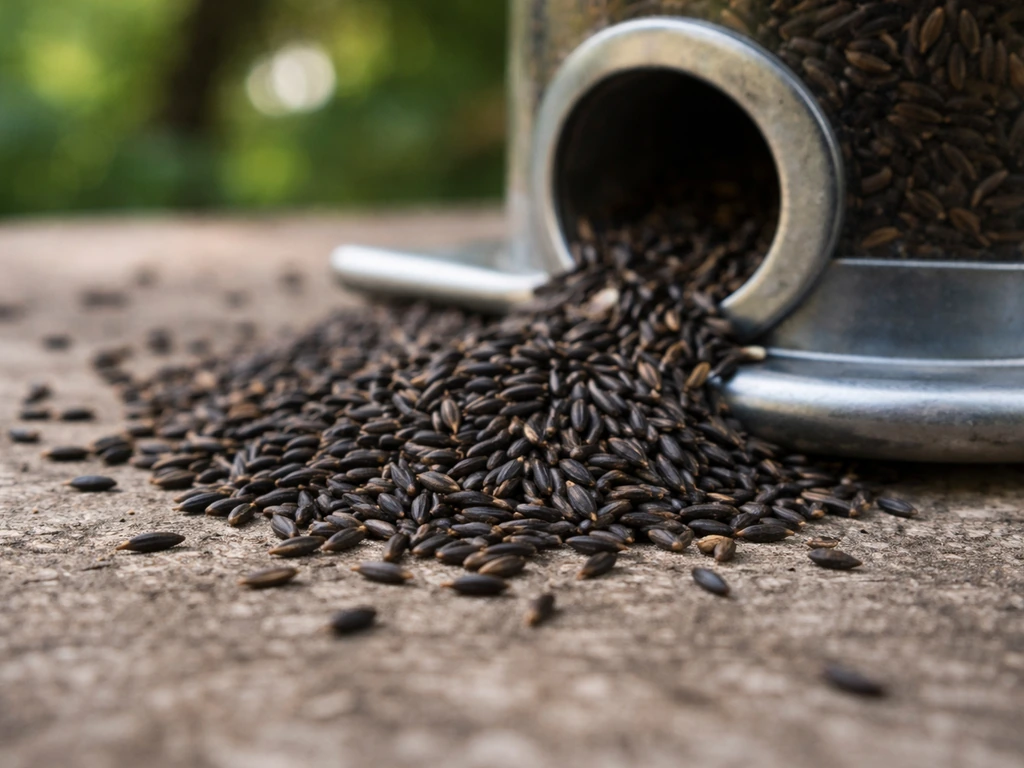
You can put thistle (nyjer) seed in a regular bird feeder, but it will likely make a mess and go to waste fast. If you have a standard hopper or wide-port tube, you typically should not use it for chia seeds, but a small-port or mesh feeder approach works better for tiny seeds can you put chia seeds in a bird feeder.
Can I Put Thistle Seed in a Regular Bird Feeder?

Maya Collins
13 Jun 2026
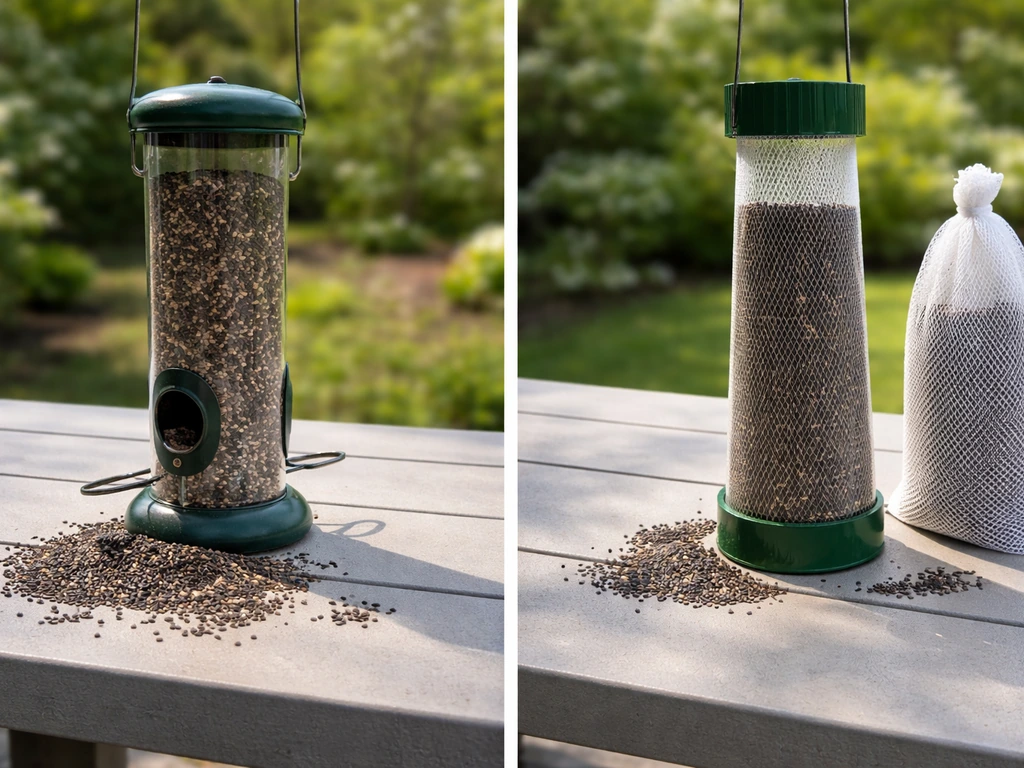
If you're wondering what is thistle bird seed, it's often sold as nyjer and is specifically used to attract goldfinches. Nyjer is tiny and lightweight, and most standard hopper or wide-port tube feeders have openings far too large to control its flow. The seed pours straight through, piles up on the ground, and spoils before birds get to it. For anything more than a short-term experiment, a blank" rel="noopener noreferrer">feeder designed specifically for nyjer is the practical move.
Thistle seed vs regular feeder: what works and what doesn't
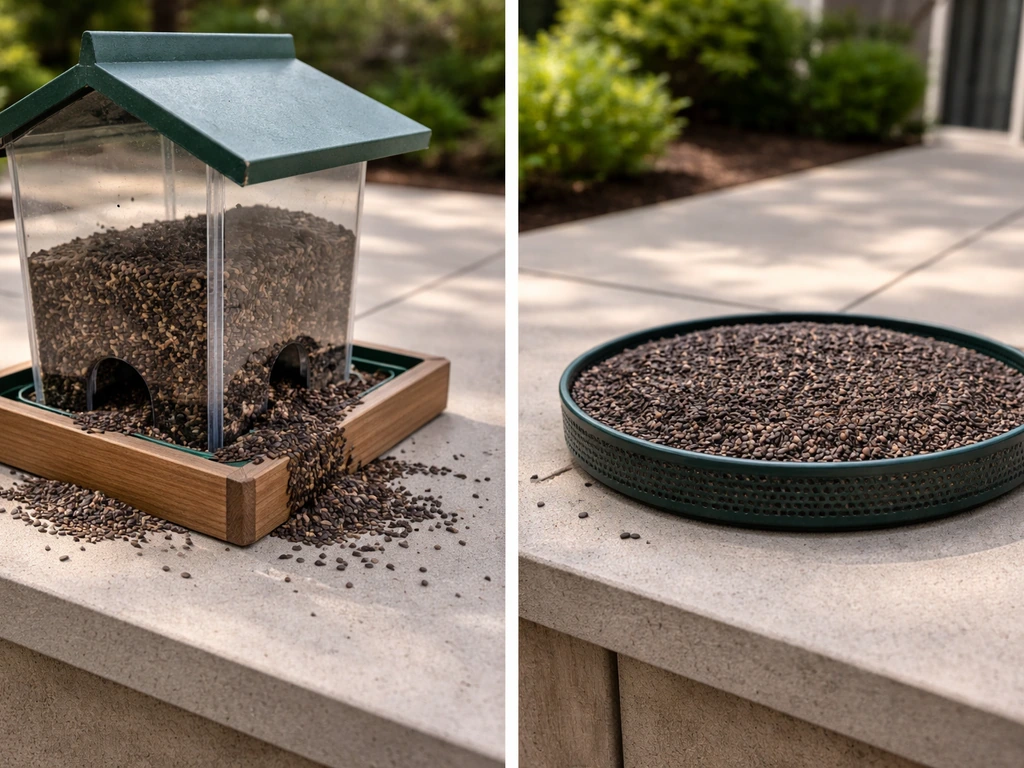
A "regular" bird feeder usually means a hopper feeder (the house-shaped kind), a wide-tube feeder with large ports, or a platform tray. These are built for sunflower seeds, safflower, or mixed blends where larger seeds flow and sit without falling through. Nyjer seed is so fine that it pours out of those openings the way sand would. You'll end up with a pile under your feeder within a day, and that seed will clump, mold, or attract rodents before most finches even find it.
There is one scenario where a regular feeder can work: a flat tray or platform feeder with raised edges. Goldfinches will land on a tray and pick nyjer off the surface. The catch is that tray feeders offer zero moisture protection, so you need to keep the portions small and refresh often, especially in humid climates. In rainy or humid regions, tray feeding with nyjer is more trouble than it's worth because the seed clumps and spoils within hours of getting wet.
Hoppers and wide-tube feeders don't just waste seed; they can actually clog differently than you'd expect. Nyjer can pack into corners and damp spots, creating a solid mass that blocks fresh seed from moving through. Once that happens, birds stop visiting, and you've got a cleanup job on your hands. Bottom line: if you already own a standard feeder, a tray setup in dry weather is your only realistic workaround. Otherwise, swap to a nyjer-specific design.
How to identify and use the right thistle feeder type
Nyjer feeders come in two main designs, and both solve the same problem: keeping tiny seed from free-falling out while still letting small-billed finches access it efficiently.
Tube feeders with small ports
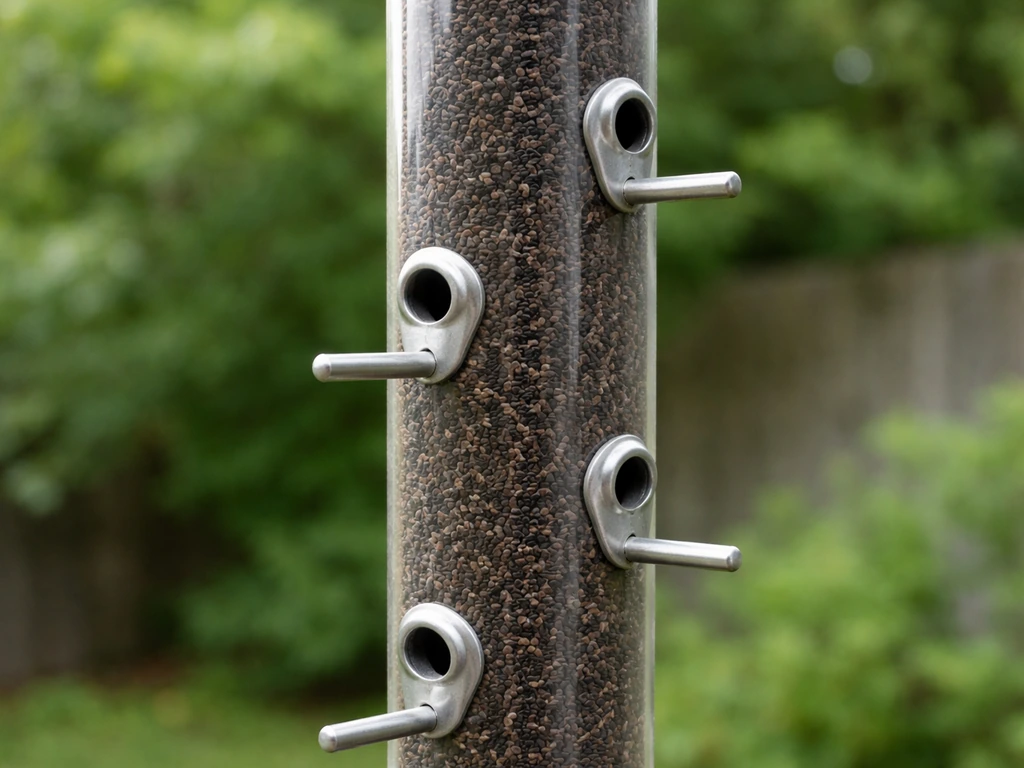
This is the most common nyjer feeder. It looks like a standard tube feeder but has very small port openings spaced along the sides, often with short perches below each port. Goldfinches grip the perch and pick seed directly from the tiny opening. The small port size controls flow so seed doesn't just dump out, and most designs include a base tray to catch minor fallout. Look for ports that are noticeably smaller than what you'd see on a sunflower tube feeder. If you can easily poke your pinky fingertip into the port, it's too large for nyjer.
Thistle socks (mesh feeders)
A thistle sock is a fine-mesh bag you fill with nyjer and hang from a hook or branch. Birds cling directly to the mesh and pull seed through the tiny openings. These are inexpensive and effective, but they degrade faster than rigid feeders and are harder to dry out between fillings. They work well in drier climates or under a covered porch.
In wet weather, moisture wicks through the mesh quickly, and a soaked sock of nyjer will mold within a day or two. Reusable mesh tube feeders made of durable screen material are a sturdier version of the same idea and easier to clean. Birds Choice says its finch mesh-tube feeder is designed so finches cling to the screen to feed, and it is intended for finch species including goldfinches.
| Feeder Type | Best For | Moisture Resistance | Ease of Cleaning | Waste Level |
|---|---|---|---|---|
| Nyjer tube feeder (small ports) | Goldfinches, siskins, redpolls | Good (enclosed body) | Easy (disassembles) | Low |
| Thistle sock (mesh bag) | Goldfinches, quick setup | Poor (wicks moisture) | Moderate (replace or scrub) | Low to moderate |
| Mesh tube feeder (screen body) | Goldfinches, clinging finches | Moderate | Easy | Low |
| Platform/tray feeder | Goldfinches (short-term only) | None | Easy | High in wet weather |
| Standard hopper or wide-tube | Mixed seed birds | Varies | Easy | Very high with nyjer |
Best placement and setup for goldfinches and cardinals
Nyjer is a goldfinch seed first and foremost. Cardinals are not thistle feeders' primary audience. Cardinals have larger beaks built for cracking bigger seeds like sunflower and safflower, and while they may occasionally pick at a tray with nyjer, you won't draw cardinals consistently with thistle alone. If cardinals are your goal, keep a separate hopper or tube feeder with black oil sunflower seed nearby. Goldfinches and cardinals will often share the same yard without conflict.
Height and location
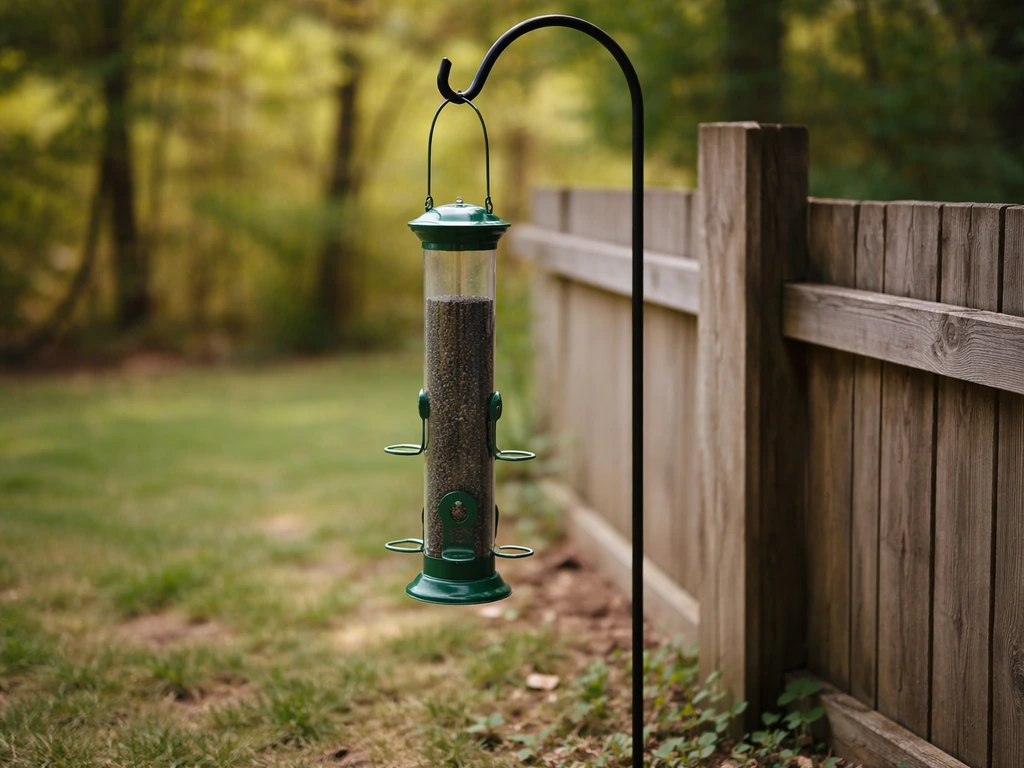
Hang nyjer tube feeders between 4 and 6 feet off the ground, from a pole, shepherd's hook, or branch. Goldfinches are comfortable feeding at eye level or higher and aren't as ground-skittish as some species. Place the feeder within about 10 feet of shrubs or trees so birds have a quick retreat route, but keep it at least 3 feet from dense cover to reduce cat ambush risk. Avoid spots that get afternoon sun in summer; direct heat accelerates spoilage inside the feeder.
Ports and perch orientation
Some nyjer tube feeders are sold as "upside-down feeders" where the ports are above the perches rather than below. Goldfinches feed upside-down happily (they do it naturally on seed heads), and these designs tend to reduce access by house sparrows and house finches that prefer right-side-up feeding. If sparrow competition is heavy at your feeder, an inverted-port tube feeder is worth trying. Standard downward-port tube feeders work fine for goldfinches too; just expect a broader mix of finch species.
Regional notes
In the northern US and Canada, goldfinch activity peaks in spring migration and again in fall. Winter feeding with nyjer still draws goldfinches that overwinter, redpolls, and pine siskins depending on your region. In the Southeast and Gulf Coast states, humidity is your main enemy: smaller, more frequent refills beat keeping a full feeder sitting in damp heat. In dry western climates, thistle socks work better year-round than they do in humid regions.
Seed handling to prevent mold, pests, and spoilage
Nyjer seed spoils faster than sunflower seed because it's so fine and has a high oil content. Moisture and heat are the main culprits. Moldy nyjer can carry mycotoxins that are harmful to birds, so this isn't just an aesthetic problem.
Buying and storing nyjer
- Buy in smaller quantities: a 5 to 10 pound bag rather than a 25-pound sack unless you have multiple feeders and high traffic.
- Store in a sealed, airtight container (a metal bin or hard-sided plastic container with a tight lid) in a cool, dry location out of direct sun.
- Use within 4 to 6 weeks of opening; nyjer goes rancid faster than other seeds once exposed to air.
- Check stored seed before filling: fresh nyjer is dark black or dark gray, slightly oily to the touch, and has a mild nutty smell. Pale, dry, or foul-smelling seed is past its prime.
- Never mix old and new seed in the feeder. Empty the feeder first, inspect what's left, and refill with fresh.
Filling and moisture management
Fill your nyjer feeder no more than halfway during humid or rainy stretches. A full feeder that sees little bird traffic can trap moisture inside, especially near the base where seed sits undisturbed. Even well-designed nyjer feeders allow some moisture in. If seed at the bottom of the tube feels clumped or damp, it's already a problem. In hot and humid conditions, check the feeder every 3 to 4 days. In dry, cool weather you can push that to weekly.
If you see any seed that looks gray-green, fuzzy, or smells sour, empty the entire feeder into the trash immediately. Do not try to pick out the bad parts and save the rest. Once mold has a foothold in a feeder, it spreads fast.
Cleanup and troubleshooting when thistle isn't getting eaten (or gets messy)
Routine cleaning schedule
Clean nyjer feeders at least every two weeks during normal conditions, and every week during warm, wet weather. Cornell's Project FeederWatch recommends scrubbing feeders and soaking them in a diluted bleach solution (roughly 1 part bleach to 9 parts water) rather than soap and water alone, as bleach kills bacteria and mold more effectively. Rinse thoroughly and let the feeder dry completely before refilling. A wet feeder seeded with nyjer is a mold factory.
- Empty all remaining seed into the trash (do not compost).
- Disassemble the feeder as far as it comes apart.
- Scrub all surfaces with a stiff brush and warm soapy water to remove seed residue and debris.
- Soak in a 1: 9 bleach-to-water solution for about 10 minutes.
- Rinse thoroughly under running water.
- Let it air dry completely, at least an hour in sun or several hours in shade, before refilling.
Cleaning up spilled seed on the ground
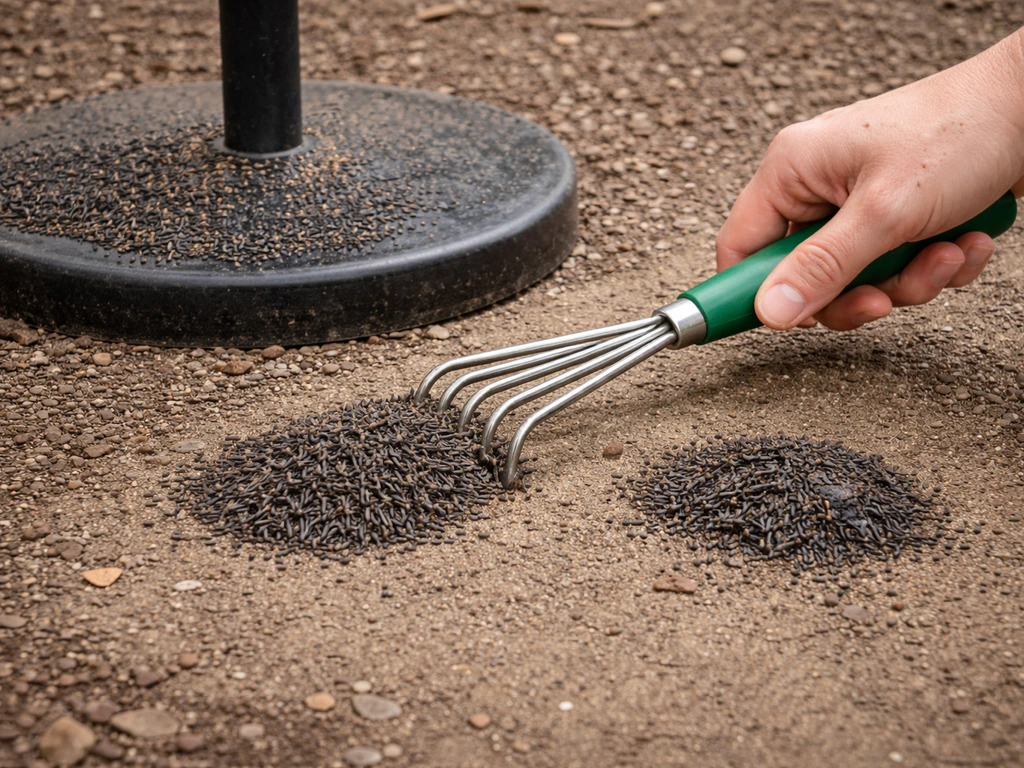
Spilled nyjer accumulates under feeders fast, especially during initial setup when birds are still learning the feeder. Sweep or rake it up every week or two. Moldy seed on the ground can make birds sick and attracts rodents. The Minnesota DNR recommends that after clearing debris, you can sprinkle a thin layer of agricultural lime (about a quarter inch deep) over the area to help kill bacteria, though it may affect grass. For areas where ground cleanup is difficult, a wide catch tray under the feeder makes collection much easier.
Troubleshooting: seed isn't being eaten
If your nyjer feeder has been hanging for two weeks and birds are ignoring it, work through these possibilities before assuming the location is wrong.
- Stale seed: nyjer that's been sitting in a warehouse or store too long loses its oil content and finches reject it. Try a fresh bag from a different source or a busier store with higher turnover.
- Wrong feeder type: if ports are too small or too large, birds can't access the seed efficiently. Check that the port size matches true nyjer tube feeder specs.
- No nearby perching cover: goldfinches are cautious. If the feeder is in an open exposed spot with no shrubs or trees within 15 to 20 feet, they may not feel safe landing.
- Competition from other feeders: if you have a heavily loaded sunflower feeder nearby, goldfinches may prefer it. Try moving feeders farther apart.
- Wrong season or region: goldfinches are migratory and their local population fluctuates. Give a new feeder 3 to 4 weeks in the right season before giving up.
- Wet or moldy seed inside: even if it looks fine from the outside, packed or damp seed at the bottom of the tube can sour the whole feeder. Empty, clean, and refill.
Troubleshooting: seed clogging or feeding too fast
If seed is clogging and not flowing to the ports, moisture is almost certainly the cause. Even a brief rain event can cause nyjer at the top of a tube to clump together and block the flow to lower ports. Fix: empty the feeder, dry it, and refill with fresh seed. If clogging keeps happening, look for a feeder with a wider mouth at the top to reduce packing, or switch to a mesh tube where airflow is better. If seed is flowing too fast and piling on the ground, the port openings are too large for nyjer. This is the classic sign you have a regular tube feeder rather than a nyjer-specific one.
Nyjer has its quirks compared to other seeds, but once you match it to the right feeder type and keep up with cleaning, it's one of the most reliable ways to pull goldfinches consistently into your yard. If you're wondering will thistle bird seed grow, the answer depends on moisture and soil conditions, but you can still improve your odds by choosing a nyjer-specific feeder so the seed stays fresh instead of clumping and spoiling. If you're curious about what nyjer actually is and where it comes from, the seed itself has an interesting origin story that's worth knowing before you buy your next bag.
FAQ
If I already own a hopper or wide-tube feeder, is there any “safe” way to try thistle (nyjer) seed in it?
You can, but only as a short experiment, and expect most of it to fall out quickly. If you must try it, use a flat tray or platform with raised edges, and keep refills small so the seed does not sit and clump.
Can I mix thistle (nyjer) with sunflower or mixed bird seed in a regular feeder?
No, do not mix nyjer with typical mixed seed in a regular hopper. Nyjer flows like fine dust and will separate from larger seeds, increasing waste and making the feeder harder to clean.
Will a regular feeder attract the wrong birds if I put thistle seed out?
House sparrows and house finches may still take advantage of any open area, even if goldfinches do not. Using a true nyjer feeder with small, controlled ports (or an inverted-port design) reduces unwanted access.
What should I do if my thistle seed looks moldy or clumps in the feeder?
If any seed in the feeder looks gray-green, fuzzy, or smells sour, remove everything right away. Do not save partially affected seed, because mold can spread inside the feeder and re-infect “clean” seed.
Where should I hang a nyjer feeder so it works better than a regular bird feeder?
Yes, position and weather matter. Hang nyjer tube feeders higher (about 4 to 6 feet) near shrubs or trees for escape cover, and avoid heavy afternoon sun that heats and spoils seed faster.
How often should I refill thistle (nyjer) seed to prevent waste and spoilage?
With nyjer, more frequent, smaller refills usually prevent spoilage, especially in humid climates. Check every 3 to 4 days in hot, wet weather, and refill before the bottom portion becomes damp.
How can I tell quickly that my feeder ports are the wrong size for thistle seed?
You should switch to a nyjer-specific feeder if you see seed piling up under the feeder or flowing too fast. Those are signs the openings are too large and the seed is bypassing the birds.
My nyjer feeder seems to clog, why does that happen and what is the fix?
If thistle is clogging and stopping flow, moisture is the most common cause, even if it rained only briefly. Empty the feeder, dry it completely, and refill with fresh seed, then reassess placement away from drizzle and humidity traps.
Can I reuse a feeder that previously held other seeds for thistle (nyjer)?
Don’t rely on an old feeder that smells musty or has residue. Even soap-only cleaning can leave biofilm behind, so thoroughly rinse and dry before refilling, and remove seed below the feeder area to reduce ground mold.
Are thistle socks or mesh feeders better than using a regular feeder in humid weather?
It depends on local humidity and how often birds feed. In wet or humid regions, thistle socks and mesh types can soak and mold sooner, so you may need more frequent changes, or choose a rigid nyjer tube feeder.
Next Article
Where Does Thistle Bird Seed Come From and Is It Safe?
Learn where thistle bird seed like Nyjer comes from, plus how to check freshness and keep it safe for finches.