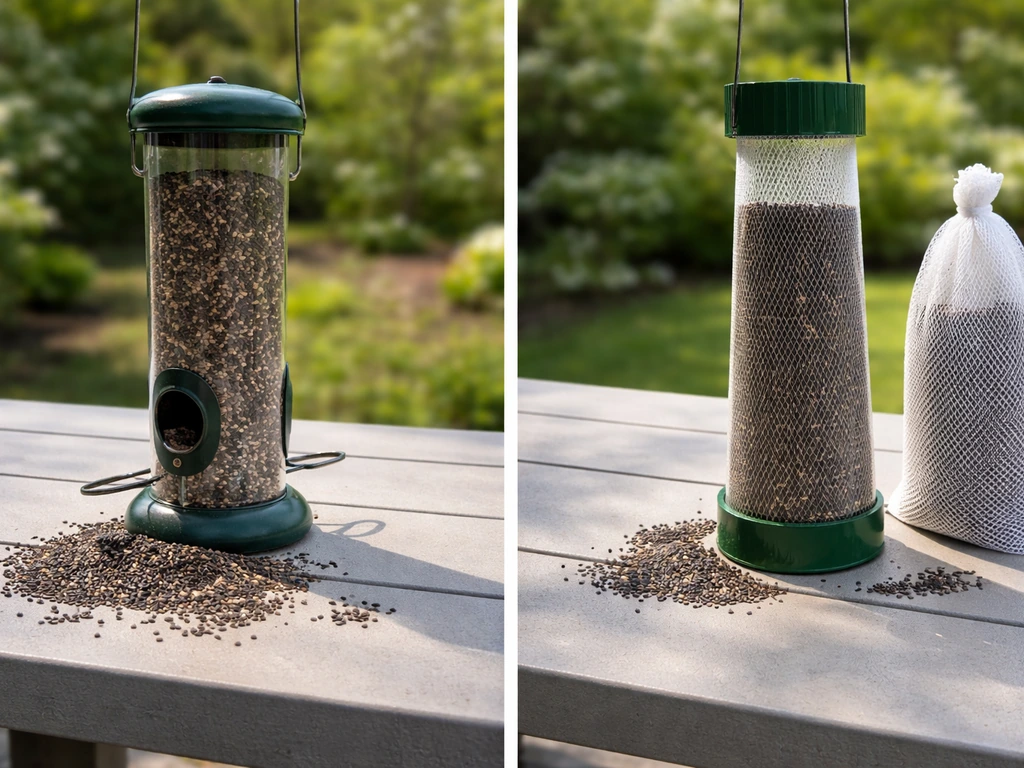
Yes, you can put chia seeds in a bird feeder, and they are safe for backyard birds. If you are wondering about other seeds in regular feeder types, see can i put thistle seed in a regular bird feeder for a quick comparison of what works and what to avoid. The real challenge is not safety but moisture: chia seeds absorb up to 12 times their weight in liquid, forming a thick gel within minutes of getting wet. That gel clumps, blocks feeders, and turns into a mold risk fast. Offer them dry, in a covered feeder, in small amounts, and you will avoid most of the problems people run into.
Can You Put Chia Seeds in a Bird Feeder? How to Do It Safely
Maya Collins
20 Jun 2026
Are chia seeds safe and suitable in a feeder?
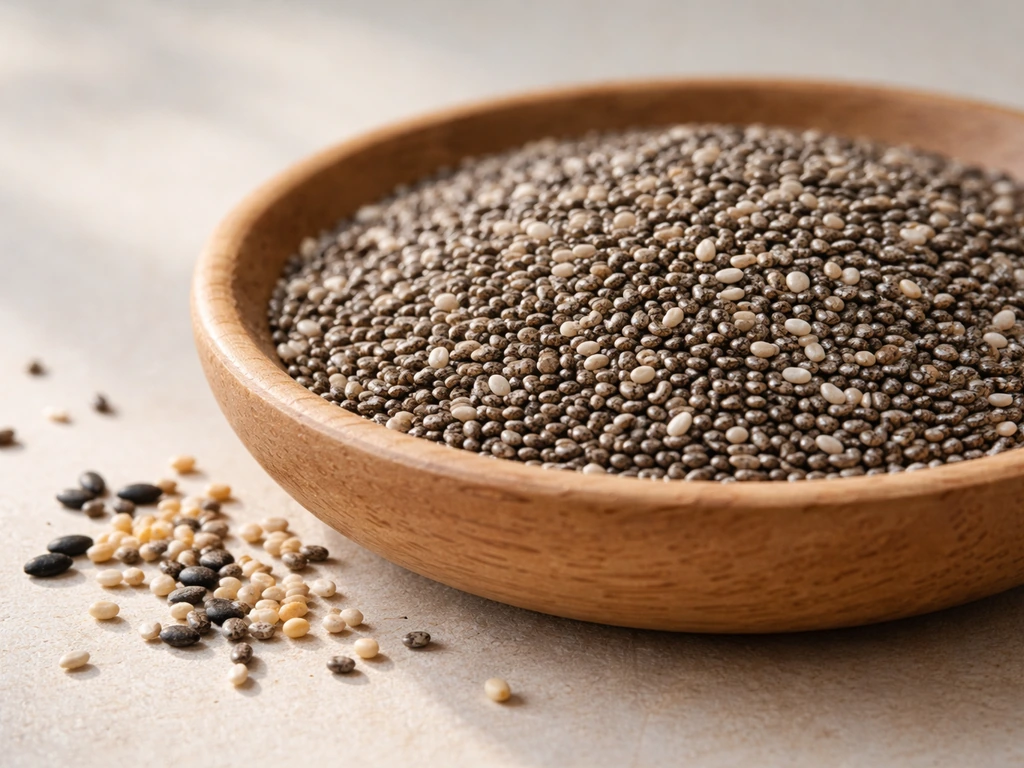
Chia seeds are non-toxic to birds. They are a small, oil-rich seed with a nutritional profile that fits naturally alongside other tiny seeds like thistle (nyjer). When you are asking where thistle (nyjer) bird seed comes from, it is typically harvested from thistle plants and then cleaned for bird-feeding use. Dry chia contains roughly 6% moisture, which means straight out of the bag they are stable and behave like any other small feeder seed. The safety concern everyone should be aware of is not the seed itself but what happens when it gets wet. Chia becomes mucilaginous, forming a gel that sticks to feeder surfaces, resists airflow, and creates exactly the kind of damp environment that breeds mold and bacteria. The Minnesota DNR warns that wet birdseed, whether in the feeder or on the ground, commonly develops mold and bacteria that can harm birds. Chia gel accelerates that risk. Keep it dry and it is fine. Let it sit wet and you have a real problem.
One more thing worth flagging: chia can sprout in as little as one to two days once it has consistent moisture and warm temperatures. A damp feeder in summer is basically a germination tray. Sprouted seeds are not toxic, but they signal that your feeder has been too wet for too long and needs immediate attention.
Best way to offer chia: feeder type, placement, and mixing
Choose the right feeder
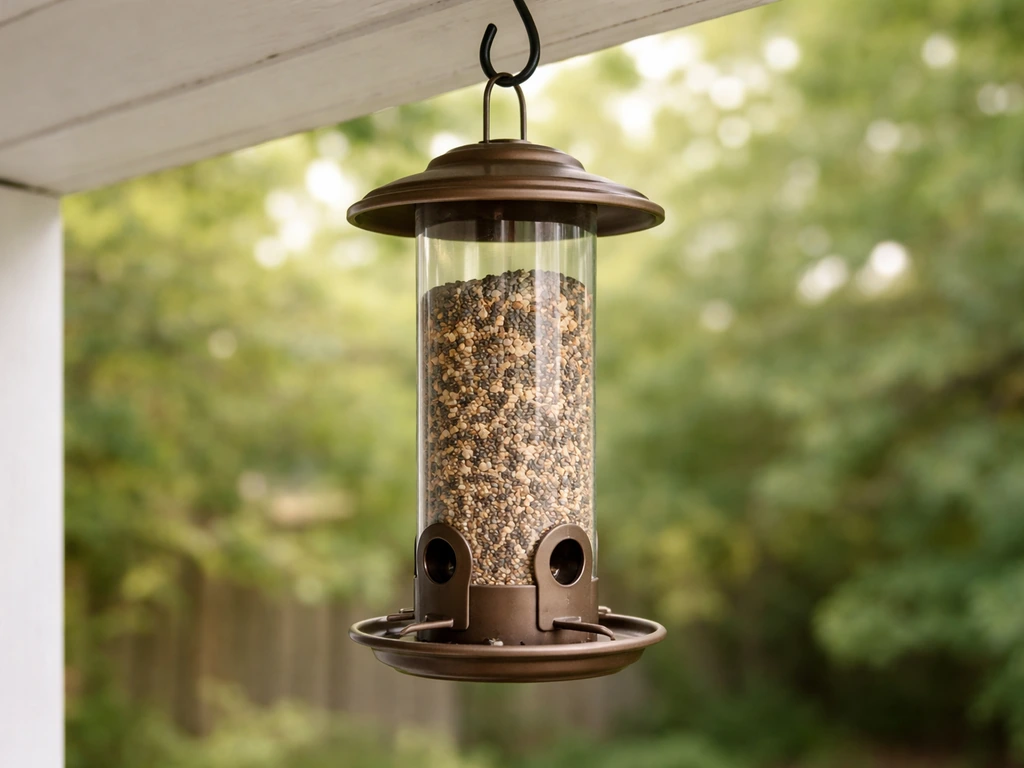
A covered tube feeder or a hopper feeder with a roof is the best choice for chia. These styles protect seed from rain and dew, which is the single most important thing you can do given chia's gel risk. Avoid open tray feeders for chia specifically. The Virginia Department of Wildlife Resources explicitly calls out tray feeders without a cover as high-moisture-risk, and with chia that risk is compounded because even light rain turns the seed pile into gel. If you only have a tray feeder, place chia in a very small portion of it and check it after every rain.
Placement matters
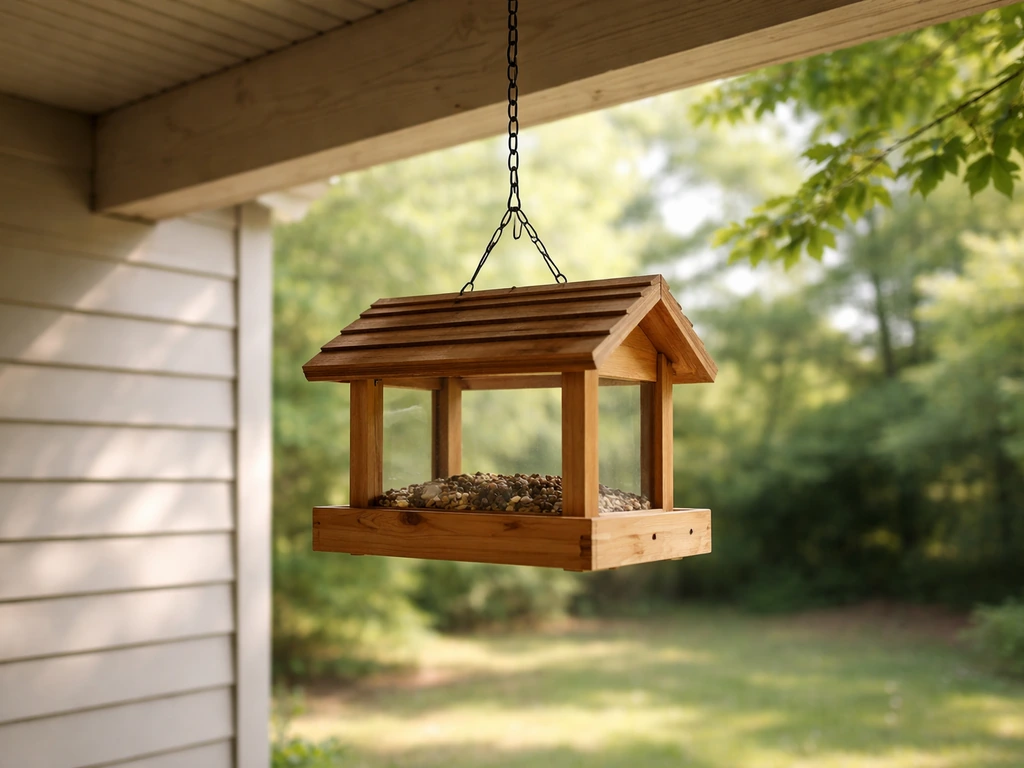
Hang the feeder in a spot with good airflow, away from sprinkler zones, and under the overhang of a tree or structure if possible. Shade reduces temperature swings that accelerate spoilage. Keep it at least 10 feet from shrubs or brush piles to reduce rodent access. Fill it no more than halfway so seed turns over quickly and does not sit in the feeder long enough to absorb ambient moisture.
Mix it, don't feature it
The most practical approach is to blend chia with an existing seed mix rather than offering it alone. A ratio of about 10 to 20 percent chia mixed into a base of nyjer, millet, or sunflower chips works well. This does a few things: it spreads the gel risk across the mix so no single spot gets saturated, it makes the feeder more attractive to a wider range of birds, and it reduces the chance of leftover pure chia sitting in the feeder for days. You can also fold chia into a suet recipe or homemade seed cake where moisture is controlled during preparation. Bird Tipper also states that chia seeds can be served raw at a feeder, added to birdseed mix, or included in suet recipes.
Which birds will actually use chia (and who won't)
Chia is a small seed, so the birds most likely to eat it are species that already favor small seeds. Think of it like nyjer or fine millet in terms of who shows interest. Will thistle bird seed grow depends mainly on how wet and warm the seed stays, since moisture can trigger sprouting thistle (nyjer).
- Finches (house finches, purple finches, goldfinches): these are your most reliable chia consumers, since they are adapted to handling tiny oil-rich seeds
- Sparrows (house sparrows, song sparrows, white-throated sparrows): ground and platform feeders that pick through mixed seed and will take chia as part of the mix
- Juncos: similar to sparrows in feeding style, comfortable with small seeds scattered on trays or the ground below feeders
- Towhees and doves: may investigate if chia falls to the ground with other spilled seed
- Chickadees and nuthatches: less enthusiastic about tiny seeds but will occasionally take them if mixed with sunflower or other preferred seeds
Larger birds like blue jays, cardinals, and woodpeckers are unlikely to bother with chia at all. Cardinals strongly prefer sunflower seeds or safflower, and jays are after peanuts and corn. If your goal is to attract a specific species, chia alone will not do it. It works best as a nutritional add-in rather than a headline seed. If you are already using thistle feeders for goldfinches, adding a small amount of chia to that mix is a low-effort way to try it with birds that are already visiting. If you are trying to figure out what thistle bird seed is, it is also commonly sold as nyjer (thistle) for finches thistle feeders.
Moisture and mold risk: sprouting, gel, and clumping
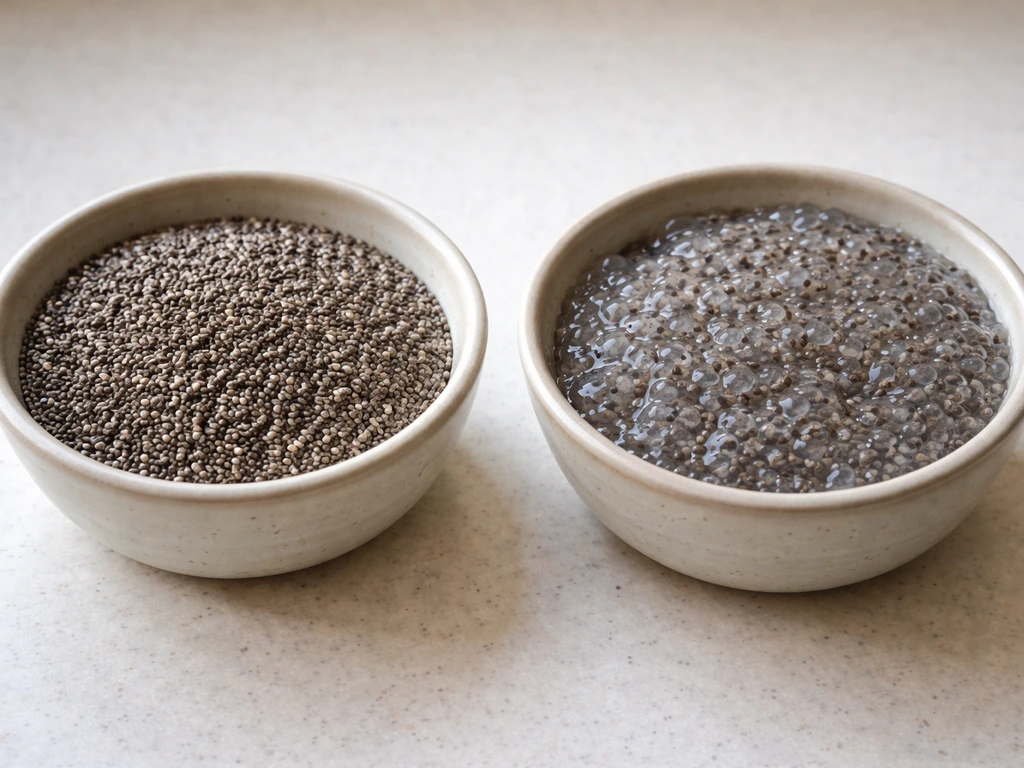
This is where chia feeders go wrong most often. Here is how to read the signs and fix each problem.
| Problem | What you see | Fix | Prevention |
|---|---|---|---|
| Gel formation | Sticky, translucent clumps in the seed | Remove and discard all affected seed immediately; do not try to dry it in place | Use a covered feeder; fill in small amounts; check after rain |
| Clumping without visible gel | Seed sticks together in chunks but no obvious wetness | Break up clumps and check for mold smell; discard if any doubt | Improve feeder airflow; reduce fill level |
| Sprouting | Tiny white tails emerging from seeds | Empty feeder into trash; full clean before refilling | Turn over seed faster; smaller fill amounts; check every 2 days in warm weather |
| Mold (visible or by smell) | Dark spots, fuzzy growth, or sour/earthy odor | Discard all seed; disinfect feeder (see cleaning section) | Clean every 1–2 weeks minimum; more often in wet weather |
| Clumped gel on feeder walls | Dried gel crust stuck to tube or tray surface | Soak in warm water, scrub with a bottle brush | Wipe feeder interior weekly; reduce chia percentage in mix |
The general rule from wildlife agencies is blunt: if seed gets wet, discard it. Virginia DWR’s safe-feeding guidance advises discarding any seed that becomes wet or damp, since moisture can raise the risk of mold or fungal growth discard any seed that becomes wet or damp. With chia the threshold is even lower because it gels so fast. Do not try to dry out gelled chia and put it back. Toss it, clean the feeder, and refill with dry seed. This is especially important in humid climates (Gulf Coast, Pacific Northwest, Florida summers) where ambient moisture alone can start the process without any rain at all.
Pest management around chia feeders
Any feeder seed can attract unwanted wildlife, and chia is no exception. Rodents, squirrels, and insects are the main concerns. Here is how to stay ahead of them.
Rodents and squirrels
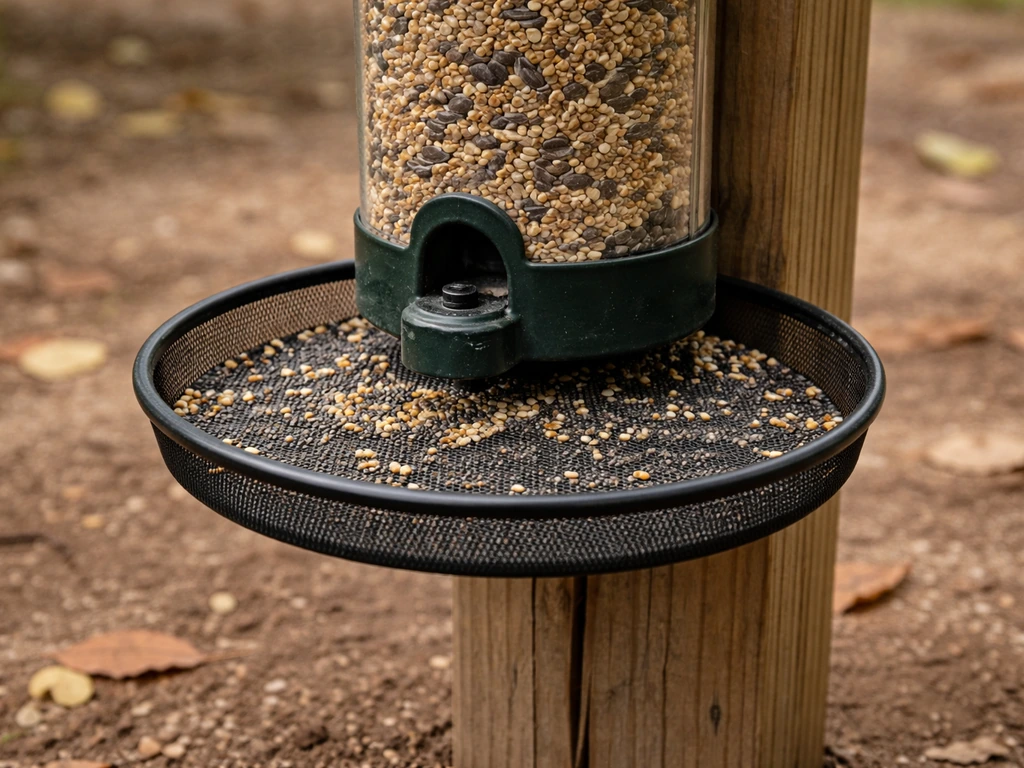
Seed that falls below the feeder is the biggest attractant. Chia is tiny and falls through gaps easily, which means ground accumulation happens fast. Use a seed-catching tray under the feeder to intercept fallen seed, and clean it every couple of days. Mount the feeder on a smooth metal pole with a baffle rather than hanging it from a tree branch where squirrels have easy access. Keep the area under the feeder raked and clear of debris. If you see rodent activity, pull the feeder for a week and clean up all ground seed before resuming.
Insects
Chia gel is a food source for ants and other insects. An ant moat above the feeder (a small water-filled cup the hook passes through) is the simplest fix. Keep the feeder dry to prevent gel formation in the first place, because once you have a gel situation you will have insects within hours in warm weather. If you see ants on the feeder, remove it, clean it, and add a moat before rehangings.
Larger wildlife
Raccoons, opossums, and deer are attracted by the smell of any spilled or rotting seed. Hanging feeders at least 5 feet off the ground and using a baffle reduces access significantly. In bear country, follow your state wildlife agency's seasonal guidance about whether to feed at all, since no feeder setup is fully bear-proof.
Storage, handling, and hygiene after feeding
Storing chia seed
Dry chia stores well. Keep it in an airtight container, away from heat and moisture. A sealed glass jar or a food-grade plastic container with a tight lid works well. Store it in a cool, dry place like a garage shelf or pantry rather than a humid shed. Dry chia has a shelf life of one to two years when stored properly. If you open the bag and notice any off smell or clumping, discard it before putting it in the feeder.
Cleaning the feeder
Project FeederWatch recommends cleaning feeders every one to two weeks under normal conditions and more frequently during heavy use or wet weather. For chia feeders I would tighten that to once a week at minimum in warm or humid months. The cleaning process is straightforward:
- Empty all remaining seed into the trash (not compost)
- Disassemble the feeder as much as possible
- Soak in a solution of 1 part bleach to 9 parts water for 10 minutes
- Scrub all surfaces with a bottle brush, paying attention to seams and corners where gel or seed residue collects
- Rinse thoroughly with clean water
- Allow to air dry completely before refilling (this step matters a lot with chia)
- Wear rubber gloves throughout the process
Do not skip the drying step. Refilling a damp feeder with chia is exactly how gel problems start. If you are in a rainy stretch and the feeder never fully dries between cleanings, switch to a fully covered model or temporarily stop offering chia until conditions improve.
Ground cleanup
The Iowa DNR recommends cleaning up spilled seed and droppings below feeders as part of regular hygiene, not just the feeder itself. Rake or sweep under the feeder every few days. If chia gel has fallen to the ground it will dry into a crust that attracts ants and mold. Dispose of all ground seed in the trash rather than leaving it to decompose in place.
When to stop or adjust: quick diagnostics for poor results
Chia is an optional, supplemental seed. If it is causing more work than benefit, it is fine to stop using it. Here is how to read the signals.
| What you observe | Likely cause | What to do |
|---|---|---|
| No birds visiting within 1–2 weeks | Wrong bird species in your area, or chia buried under unappealing seed | Reduce chia to 10% of mix or remove it; focus on seeds proven for your local species |
| Feeder clogs frequently | Too much chia in the mix; ambient humidity causing early gel | Drop chia to 10% or less; switch to a tube feeder with larger ports |
| Persistent mold despite cleaning | Feeder location too humid or shaded; not drying between fills | Move feeder to a sunnier, breezier spot; stop offering chia in that feeder |
| Rodent or insect activity increases | Ground accumulation of fallen chia; gel attracting insects | Add a seed-catching tray; reduce fill level; clean ground below feeder daily |
| Seed sprouting within 1–2 days | Feeder getting wet or too warm; overfilled | Smaller fills; more frequent turnover; covered feeder or pause chia in hot/humid weather |
| Sick birds at or near the feeder | Pathogen spread, potentially through contaminated feed or surfaces | Remove feeder immediately; disinfect fully; follow your state wildlife agency guidance on pause duration (often at least two weeks) |
The bottom line: start small. Add a couple of tablespoons of chia to your existing mix, watch what happens over a week, and scale up only if birds are eating it and the feeder stays dry and clean. If you hit two or more of the problems in the table above in the same week, pull chia from the rotation and come back to it in a drier season. There is no obligation to use it, and the birds at your feeder are not missing out if you stick to nyjer, millet, and sunflower. If you are seeing that the bird seed situation has changed, start with safer options and keep chia only for dry conditions stick to nyjer, millet, and sunflower. Chia is a useful option when conditions are right, not a necessary staple.
FAQ
Can you put chia seeds in any type of bird feeder?
You can, but chia works best only in covered tube or hopper feeders. Open tray feeders are much harder to keep dry, so chia can gel from light rain or dew and clog the feeder. If you use a tray, use a very small amount and check it after any wet weather.
How fast do chia seeds gel after they get wet?
Chia can start forming a thick gel within minutes once it absorbs liquid. That is why you should remove the feeder and discard the seed if you see clumping, sticky residue, or damp piles, rather than trying to rescue it.
What should I do if my chia feeder gets wet from rain or morning dew?
Take the feeder down, dump and discard the wet or clumped seed, then clean the feeder interior and parts. Refill only with dry chia. Do not attempt to dry the gelled seed and put it back, because mold and bacteria risks increase once moisture has been present.
Can chia sprout in the feeder?
Yes. Once chia has consistent moisture plus warm temperatures, it can sprout in about one to two days. Sprouting itself is not typically toxic, but it is a sign your feeder has stayed damp too long, so you should clean and switch back to dry conditions.
Is chia safe for birds even if it starts to mold?
Chia itself is not the issue, moisture is. If you see moldy seed, wet gel residue, or a musty smell, stop feeding immediately and discard all affected seed. Then clean and dry the feeder before offering chia again.
How much chia should I add if I want to avoid feeder problems?
Start small, such as a couple of tablespoons mixed into your existing seed blend. If you are mixing by ratio, aim around 10 to 20 percent chia in a base mix, then increase only if the feeder stays dry and birds are actively taking the chia.
Will chia attract the same birds as thistle (nyjer) or sunflower?
Not exactly. Chia is mainly taken by birds that already prefer small seeds, similar to finch-style seed preferences. Larger birds are less likely to notice it, so if your goal is cardinals or jays, chia is usually not the right primary choice.
Do I need to clean chia feeders more often than other seed?
Yes, generally. Even if you normally clean every one to two weeks, chia in warm or humid weather often needs weekly cleaning at minimum, because moisture-related gel and spoilage can develop faster.
What about chia on the ground, under the feeder? Is that still a problem?
Yes. Fallen chia can accumulate quickly, and ground moisture can still lead to gel-like clumping and mold, plus it attracts ants. Use a seed-catching tray, rake or sweep under the feeder every few days, and dispose of ground seed rather than leaving it to sit.
How can I prevent ants if I use chia?
The simplest option is an ant moat above the feeder, and you should only rehang the feeder once it is fully dry. If ants show up, remove the feeder, clean it, and add the moat before putting it back.
Can chia seeds bring in more rodents or other unwanted visitors?
Any seed can attract rodents and insects, and chia is tiny so it can fall through gaps and build up below. Use a baffle, hang the feeder away from shrubs and brush, and clear seed buildup frequently to reduce rodent attraction.
How should I store chia so it stays safe and dry for feeding?
Store chia in an airtight container in a cool, dry place like a pantry or dry garage shelf. If the opened bag smells off or the seeds have clumped, discard it rather than assuming it is still dry enough for feeder use.
If chia is causing too many issues, should I stop using it entirely?
That is reasonable. If you get repeated problems like damp gel, moldy seed, or frequent ant activity in the same week, pull chia from the rotation and stick to more reliable dry seeds. You can reintroduce chia later when conditions are drier.
Next Article
Can I Put Thistle Seed in a Regular Bird Feeder?
Yes, but only in the right feeder setup. Learn thistle seed rules, bird targets, mess control, and hygiene.