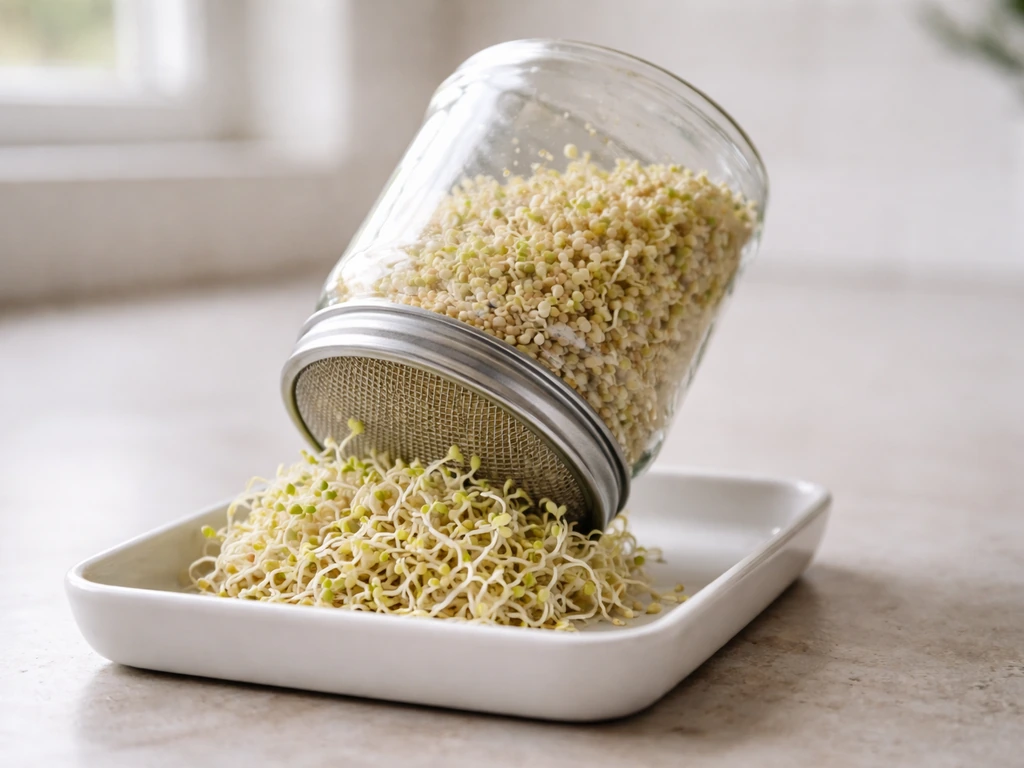
Technically, some seeds in a bird seed mix can sprout and grow into edible microgreens, but most extension services and food safety agencies recommend against it. Oregon State University and Penn State Extension both say explicitly: do not use bird seed for microgreens. The core problem is not whether the seeds can sprout, it is whether they are safe to eat. Many bird seed mixes contain seeds that are treated with fungicides or pesticides, labeled "not for human consumption," or mixed with fillers like milo and cracked corn that have no place in an edible crop. If you are determined to try it, there is a careful way to do it, but you need to know exactly what you are working with before you put anything on your plate.
Can You Use Bird Seed for Microgreens? Safety and Steps
Maya Collins
21 Jun 2026
What's actually in bird seed vs. microgreens seed
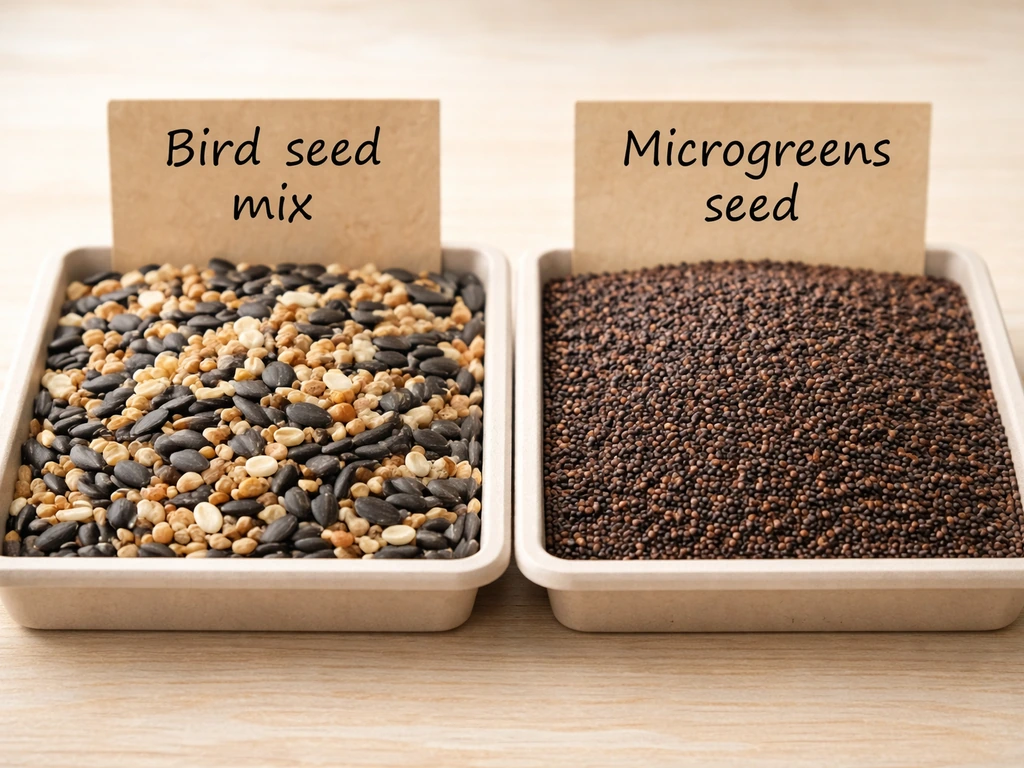
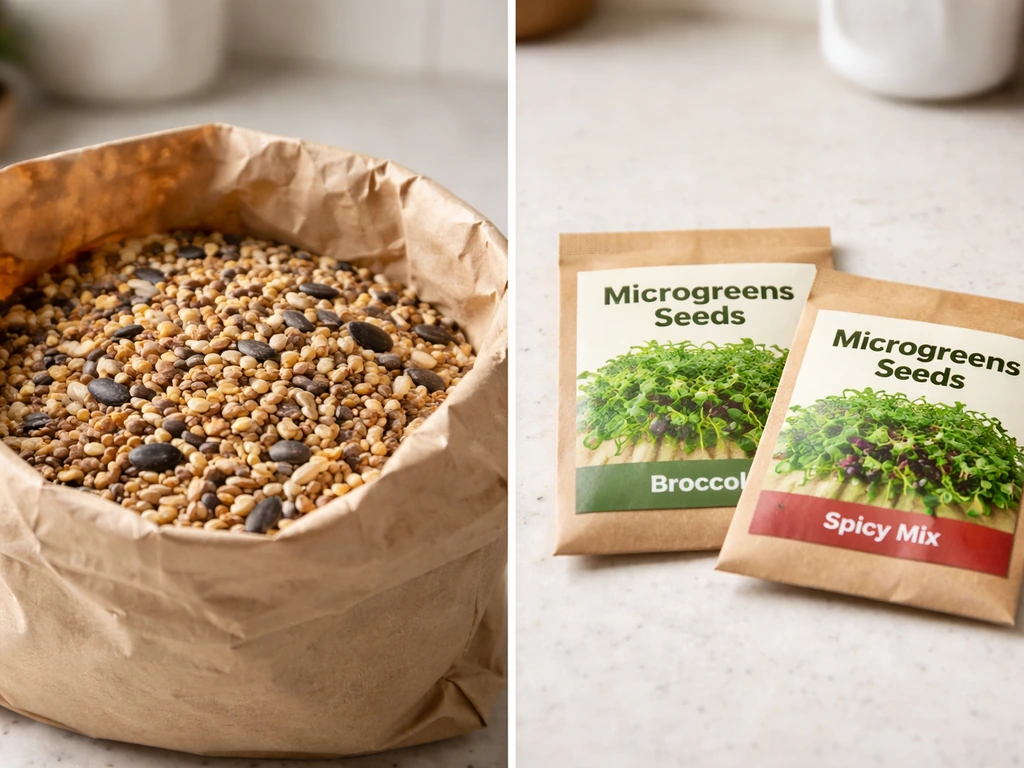
A typical wild bird seed mix contains black oil sunflower seeds, white or red proso millet, cracked corn, safflower, milo (grain sorghum), and sometimes peanuts. Several of those ingredients have perfectly edible counterparts in the food supply, but the version sold in bird seed bags is a different story. The seed may have been grown, stored, and handled under conditions that would never pass muster for human food. Milo sold as bird seed, for example, is sometimes explicitly labeled "Treated; do not use for food, feed, or oil purposes." That red-dyed warning exists for a reason.
Microgreens seed, by contrast, is selected specifically for food use. Penn State Extension recommends seeds that have not been treated with chemicals or coated in any way, and that are specifically marketed for sprout and microgreen production to avoid microbial contamination. The FDA reinforces this: seeds labeled "Not for Human Consumption" should never be used for growing sprouts you plan to eat, because the seed handling chain may have introduced bacterial hazards that go far beyond visible mold or grime. Sprouts and microgreens grown from contaminated seed have caused real foodborne illness outbreaks.
The other difference is species consistency. A bag of sunflower microgreens seed contains one thing: untreated, food-grade sunflower seed. A bird seed mix can contain eight or more species in one bag, each with different germination timescales, moisture needs, and hull characteristics. That makes it almost impossible to grow a clean, even tray of microgreens without sorting. Cracked corn and hulled sunflower fragments will rot and fuel mold before the intact seeds have even sprouted.
How to check if your bird seed is even worth trying
Before you do anything else, read the bag. Look for any of these phrases: "treated," "not for human consumption," "seed coating," or a warning not to use for food or feed. A Reddit discussion about growing microgreens from bird seed also notes that bags saying "not for human consumption" are often treated as a practical warning about safety and handling differences blank" rel="noopener noreferrer">Look for any of these phrases: "treated," "not for human consumption," "seed coating," or a warning not to use for food or feed.. If you see any of those, stop. Do not sprout it. A product containing grain sorghum or milo is a particular red flag because those seeds are very commonly treated. White proso millet may or may not carry a treated label depending on the supplier, and the absence of a label does not guarantee it is untreated.
If the bag lists ingredients you can confirm are untreated and food-adjacent (plain black oil sunflower seeds or plain white proso millet, for instance), the next step is a germination test. NC State Extension describes a home seed viability method where you count germinated seeds on a blank" rel="noopener noreferrer">paper towel after about 10 days to calculate germination and viability as a percentage (for example, 3 of 10 sprouting equals 30%). This tells you whether the seeds are even viable before you commit tray space and time to a batch that will not grow. The North Dakota Seed Department describes blank" rel="noopener noreferrer">tetrazolium as a rapid chemical viability test where soaked seeds are examined for stained tissue.
Running a simple germination test
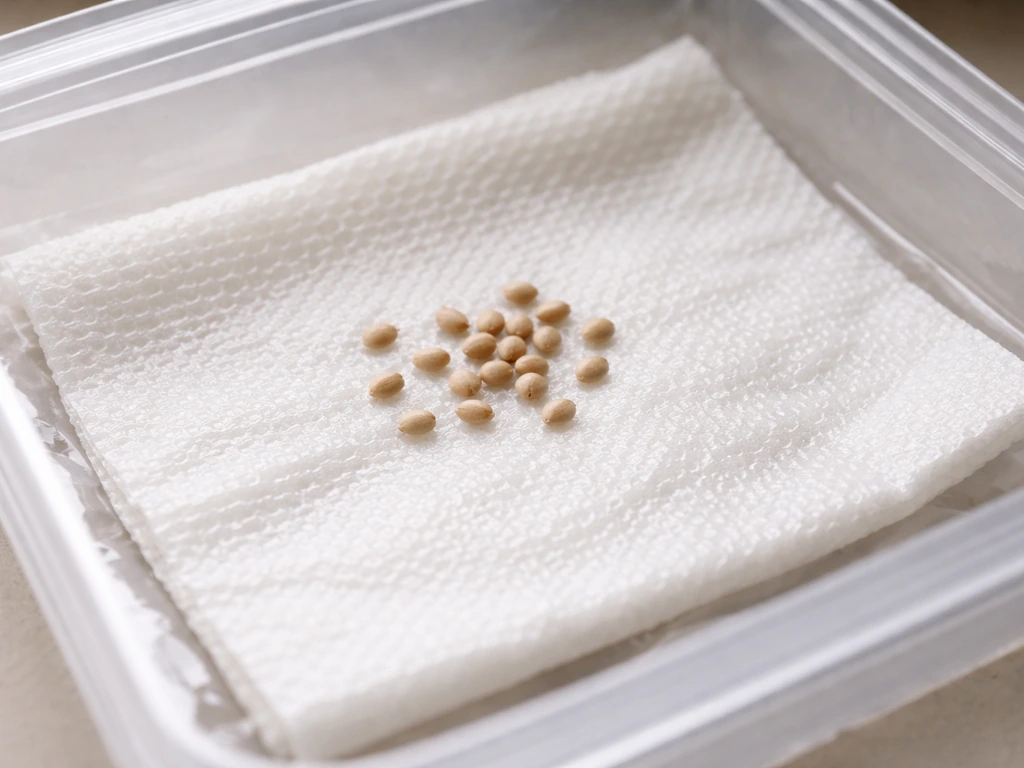
- Sort out 10 to 20 seeds of a single species from the mix. Remove any cracked, shriveled, or obviously damaged seeds.
- Dampen a paper towel, place the seeds on one half, and fold the other half over them.
- Put the folded towel in a zip bag or covered container at room temperature (around 65 to 70 degrees Fahrenheit).
- Check after 5 to 10 days. Count how many have sprouted.
- If fewer than 7 out of 10 germinate (below 70%), the seed is too old or compromised to be worth growing. If fewer than 3 sprout, discard the batch.
University of Arkansas Extension advises adjusting your planting density if germination falls below about 85%, which is a useful benchmark even here. Bird seed is often stored in conditions that degrade viability faster than food-grade seed, so low germination rates are common.
Sorting and preparing the seed
If you are working with a mixed bag and want to use only one species, sort by hand or with a fine mesh strainer. Separate out the target seed completely. Discard cracked corn, milo, peanuts, and any obviously broken or shriveled seeds. You are looking for whole, intact seed of a single identifiable species. A small bowl of sunflower seeds or millet pulled from a larger mix is the only realistic starting point here.
Rinse the sorted seeds in cool running water for 30 to 60 seconds. This will not remove fungicide treatments if they are present, but it removes surface dust, seed chaff, and loose debris that would decompose in your tray. Do not soak bird seed for long periods before you know it germinates reliably, because soggy seed that fails to sprout becomes a mold problem quickly.
Growing the microgreens: step by step
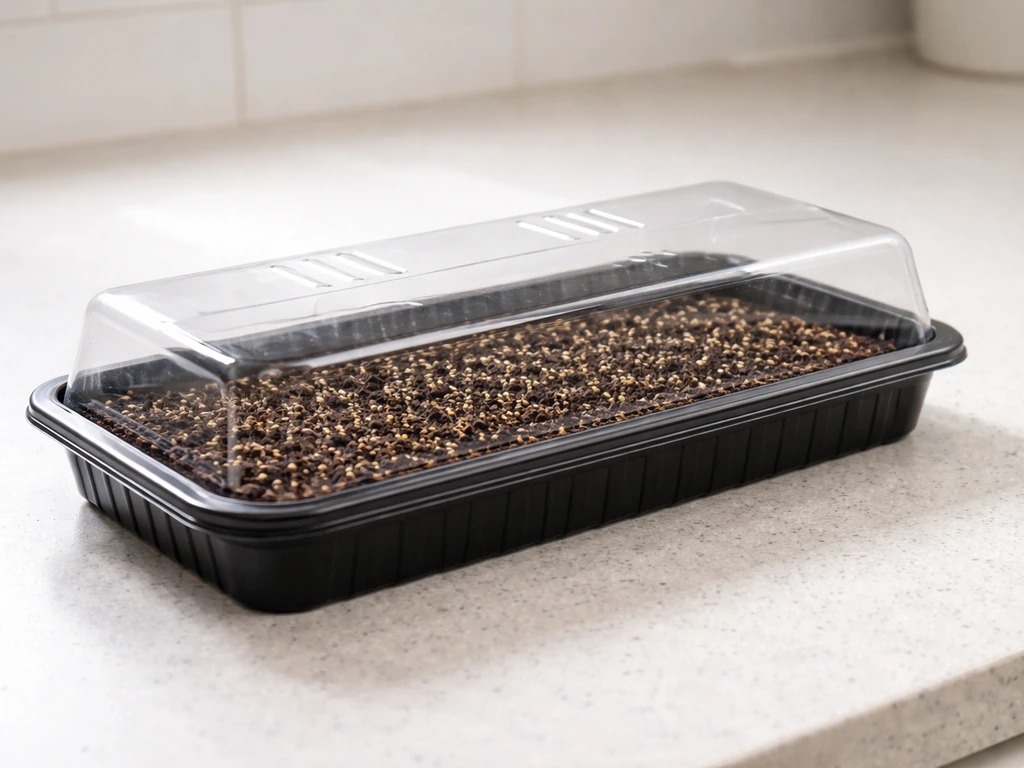
This process assumes you have confirmed the seed is untreated, from a single species, and has passed a basic germination test. If you skipped those steps, go back. The growing method itself is straightforward, but hygiene matters more here than with certified microgreens seed because you have less certainty about the seed's history.
- Sanitize your tray before use. Mix 3 tablespoons of unscented bleach per quart of water, soak the tray for at least 5 minutes, then rinse thoroughly. Let it air dry.
- Fill the tray with 1 to 1.5 inches of fresh, sterile potting mix or coco coir. Use new growing medium for each batch to reduce disease carryover.
- Spread your sorted, rinsed seeds evenly in a single layer. Do not pile them thick; gaps are fine and better than crowding.
- Mist gently with a spray bottle until the surface is moist but not soaked. Cover with a second tray or dome to block light and hold humidity during germination.
- Check daily. Lift the cover briefly to allow fresh air in. Remove the cover for longer periods if you see condensation pooling on the underside.
- Once seeds sprout and begin to push up (typically 3 to 5 days for millet, 5 to 7 days for sunflower), remove the cover and move the tray to a bright spot or under a grow light.
- Water once daily, preferably from below by placing the growing tray inside a second tray with a small amount of water. This keeps the canopy dry and cuts mold risk significantly.
- Harvest when the first true leaves appear or cotyledons are fully open, typically 7 to 14 days from seeding depending on species.
Keeping mold and contamination under control
Mold is the number one practical problem when sprouting or growing seeds that were not specifically selected and packaged for food use. Bird seed husks, particularly sunflower hulls, are especially prone to harboring mold. The drivers are almost always the same: too much moisture, not enough airflow, and warm temperatures. LSU AgCenter recommends letting the growing medium dry slightly between waterings and ensuring there is adequate air movement around the tray at all times.
A small oscillating fan set to its lowest speed, positioned a few feet away from your trays, makes a real difference. You do not need to blow the seedlings around, just keep stagnant air from settling over the canopy. If you are growing in a closed room with no airflow, open a window for at least a few hours each day during the color (growing) stage.
If you spot white fuzzy mold on any part of the tray before harvest, do not eat that batch. White fuzz on roots (as opposed to the stem or leaves) is sometimes root hairs, which are fine, but true mold has a distinct musty smell and spreads outward. When in doubt, discard the batch, sanitize the tray, and start fresh. The bleach solution described above (1 cup bleach per gallon of water) is appropriate for cleaning moldy trays.
Risks to know before you eat anything
The main risks with bird seed microgreens fall into a few categories. Some you can see and some you cannot.
| Risk | What it looks like | What to do |
|---|---|---|
| Treated seed | No visible sign; may be dyed red or labeled | Read the bag before buying or sorting; discard if labeled treated |
| Low germination | Seeds sit for days without sprouting; patches of bare wet growing medium | Run germination test first; discard any batch below 50% germination |
| Mold on tray | White or gray fuzzy growth; musty smell | Discard batch; sanitize tray with bleach solution; improve airflow |
| Off smell from seed | Sour, fermented, or ammonia-like odor after rinsing | Discard immediately; seed is compromised |
| Mixed species clumping | Uneven sprouting, some seeds rotting before others sprout | Sort to one species only; remove all broken seed before planting |
| Bacterial contamination | No visible sign; possible after eating (nausea, GI symptoms) | Use only untreated, food-grade seed; sanitize all equipment; wash hands |
The bacterial contamination risk is the one that gets people in trouble because it is invisible. The FDA and several state extension services have flagged sprouts and microgreens specifically as a food safety concern due to the warm, moist conditions that favor both plant growth and pathogen growth. Bird seed is not grown or stored under food-safety protocols, which is exactly why multiple extension agencies tell you not to use it. If you have any underlying health conditions, are pregnant, or are feeding children or elderly family members, do not use bird seed for edible microgreens at all. Use certified food-grade seed instead.
Storing what you grow and cleaning up after
Once harvested, microgreens are perishable. Do not wash them before storing. Wrap them loosely in a dry or lightly damp paper towel, place them in a sealed container or zip bag, and refrigerate. They will keep for about 5 to 7 days at best, though some types may fade faster. Rinse just before eating, not before storing, because moisture accelerates breakdown.
For the growing setup itself, never reuse growing medium from a bird seed microgreens batch. The risk of carrying over mold spores or pathogens is higher than with certified seed, and fresh growing medium is inexpensive. Compost the spent medium and roots if you have a backyard compost bin, or bag and discard it.
Spilled bird seed on counters or shelves needs to be cleaned up promptly during sprouting projects. Wet seed sitting on a surface will mold within 24 to 48 hours. Wipe surfaces down with the bleach solution (1 tablespoon unscented bleach per gallon of water), let it sit for a minute, then wipe clean. Wash your hands before and after handling growing trays, especially if you have been handling bird feeders or outdoor seed storage at the same time, since those environments carry their own microbial load.
Keep sprouting trays away from pet food areas, bird feeders, and outdoor compost. Cross-contamination between those spaces and a food-prep surface is exactly the kind of scenario that food safety agencies flag. Treat a bird seed microgreens project with the same hygiene habits you would apply to any raw produce preparation.
Which bird seed types have the best (and worst) odds
Not every bird seed ingredient is equally problematic. White proso millet, for instance, is closely related to the millet grown for human food, and some suppliers sell it without treatment. If you can find a single-species, untreated millet sold for birds, it is the most realistic candidate for a small test batch. Millet sprouts relatively quickly (3 to 5 days) and is a common microgreens seed in food-grade form. It is worth noting that millet is a topic worth understanding in more depth if you are considering it as a sprouting seed, since white millet and red proso millet behave quite differently.
Black oil sunflower is popular in community discussions about bird seed microgreens, but hulled sunflower husks mold aggressively. If you try sunflower, you need to either use hulled sunflower seeds (shell already removed) or be prepared for significant mold management work. Sunflower microgreens are also known for needing a weight on top during germination to help the seeds shed their hulls cleanly, something that works well with food-grade seed but becomes messier with whole bird-feeder sunflower.
Milo and grain sorghum should be off the table entirely. As noted above, commercial milo sold for bird seed is frequently treated and explicitly labeled not for human consumption. Cracked corn is not a viable microgreens candidate due to inconsistent germination from the cracked seed surface. Safflower is borderline: it can sprout, but it is not commonly grown as a microgreen and you are unlikely to find clean germination rates from bird seed bags.
If you are interested in sprouting bird seed for chickens rather than for your own table, the risk calculation changes somewhat since you are not eating the sprouts yourself. That is a related but separate topic worth exploring if your goal is chicken fodder rather than human food. If your goal is chicken fodder, you still need to use only untreated seed and follow strict hygiene to reduce mold and bacterial risks.
The honest bottom line
Bird seed can physically sprout, and some of it can grow into something that looks like microgreens. But the food safety case against using it for human consumption is strong and comes from multiple independent extension services and federal agencies. The seed labeling, treatment history, and microbial handling chain are all unknowns that certified food-grade microgreens seed has already resolved. If you want to run a small experiment with a clearly labeled, untreated, single-species seed pulled from a bird seed bag, sort it carefully, run your germination test, sanitize everything, manage moisture and airflow obsessively, and keep your batch small. But if you want reliable, safe microgreens for your kitchen, buy food-grade seed. It is inexpensive, the germination rates are far higher, and you are not guessing about what is on the seed.
FAQ
Can you use bird seed for microgreens if the bag does not say “treated” or “not for human consumption”?
Do not assume it is safe. Some bird seed is not labeled in a way that helps consumers, and seed may still be handled, coated, or stored in non-food conditions. If there is no explicit food-grade or sprout-safe labeling, treat it as unknown and either avoid eating the results or only proceed with very strict sorting and hygiene.
What is the safest way to “test” bird seed before using it for edible microgreens?
Run a germination and contamination screen using a tiny portion. Germinate a small batch, discard it after checking for musty odors, visible fuzz that spreads, and uneven growth, then only continue with larger trays if everything looks clean and your germination rate is acceptably high (around 85% or better is a practical benchmark).
If I only grow sunflower microgreens from bird seed, is that safer than using a mixed bird seed blend?
It is safer in one respect (fewer variables), but not automatically safe. Bird-feeder sunflower often includes hulls or fragments that mold quickly, and those seeds may still be non-food-grade or difficult to clean. For sunflower, you must start with hulled sunflower seed, sort out damaged pieces, and be prepared for tighter mold control.
Can I wash bird seed thoroughly to remove pesticide or fungicide coatings?
Rinsing removes dust and debris, it does not reliably remove chemical treatments or seed coatings. If any ingredient is labeled treated, not for human use, or has seed-coating warnings, rinsing is not a substitute for buying food-grade sprout or microgreen seed.
How can I tell the difference between mold and harmless root hairs on microgreens?
Root hairs tend to look like small, light-colored fuzz closely attached to roots and do not spread outward aggressively. True mold often forms a distinct musty-smelling growth and expands across surfaces. If you cannot confidently distinguish it, discard the batch and sanitize the tray.
What should I do if I notice mold on just one corner of the tray?
Do not “salvage” it. Mold can spread invisibly, and cutting it off does not address contamination risk. Discard the entire batch, sanitize the tray and tools, and start fresh with new growing medium.
How long can I store harvested microgreens grown from bird seed?
Plan on shorter shelf life and handle them cautiously. Microgreens are perishable, they generally last about 5 to 7 days at best in refrigeration when stored dry in breathable packaging, but any extra moisture from rinsing or humid growth conditions can shorten that window.
Should I rinse microgreens grown from bird seed before storing them?
No. Store without washing, use a dry or lightly damp paper towel, and rinse only right before eating. Moisture accelerates breakdown and can worsen microbial risk.
Can I reuse the same trays or rinse without sanitizing between batches?
You should sanitize. If you reuse trays, you increase the chance of carrying residues, mold spores, or bacteria into the next crop. Clean with the recommended bleach dilution, let it sit briefly, then rinse and dry before starting a new batch.
Is bird seed microgreens safe for kids, elderly people, or anyone who is pregnant or immunocompromised?
No, it is not recommended. The core issue is the unknown seed handling chain and the higher pathogen risk associated with warm, moist sprouting conditions. Choose certified food-grade microgreens seed instead for any higher-risk household members.
What if my goal is to grow sprouts or microgreens as chicken fodder instead of for human food?
The risk is still not zero. You still need untreated seed and strict hygiene to reduce mold and bacterial problems, especially because moldy growth can harm animals too. However, the decision criteria and consequences differ, so treat it as a separate safety standard rather than a simple “same as eating” situation.
Next Article
Does Millet Bird Seed Sprout? How to Test and Grow It
Yes sometimes. Test millet bird seed germination at home and sprout it safely with step-by-step soaking, tray setup, tim