Yes, Dollar General does sell bird seed. As of right now, their website lists several wild bird food products you can order or check for in-store pickup, including loose seed blends, a finch-specific mix, a no-waste shell-free option, and even a seed cake. Availability varies by location and season, but bird seed is a legitimate, findable category at Dollar General, not a lucky find.
Does Dollar General Sell Bird Seed? How to Check Today
Maya Collins
6 Apr 2026
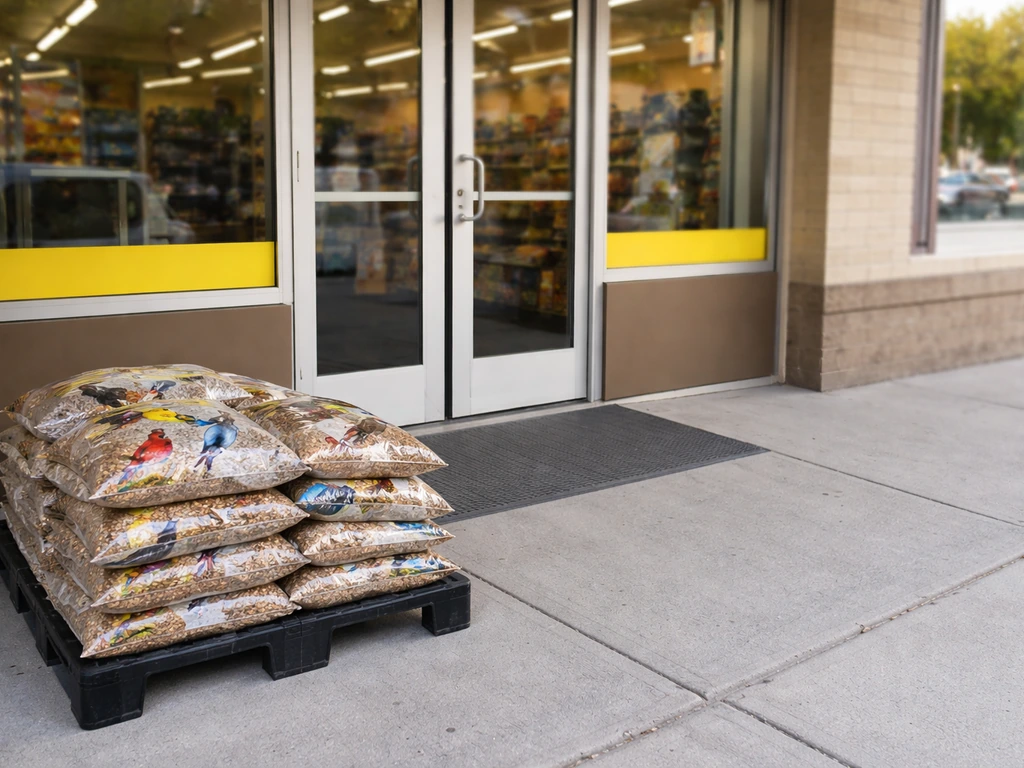
What Dollar General Actually Carries
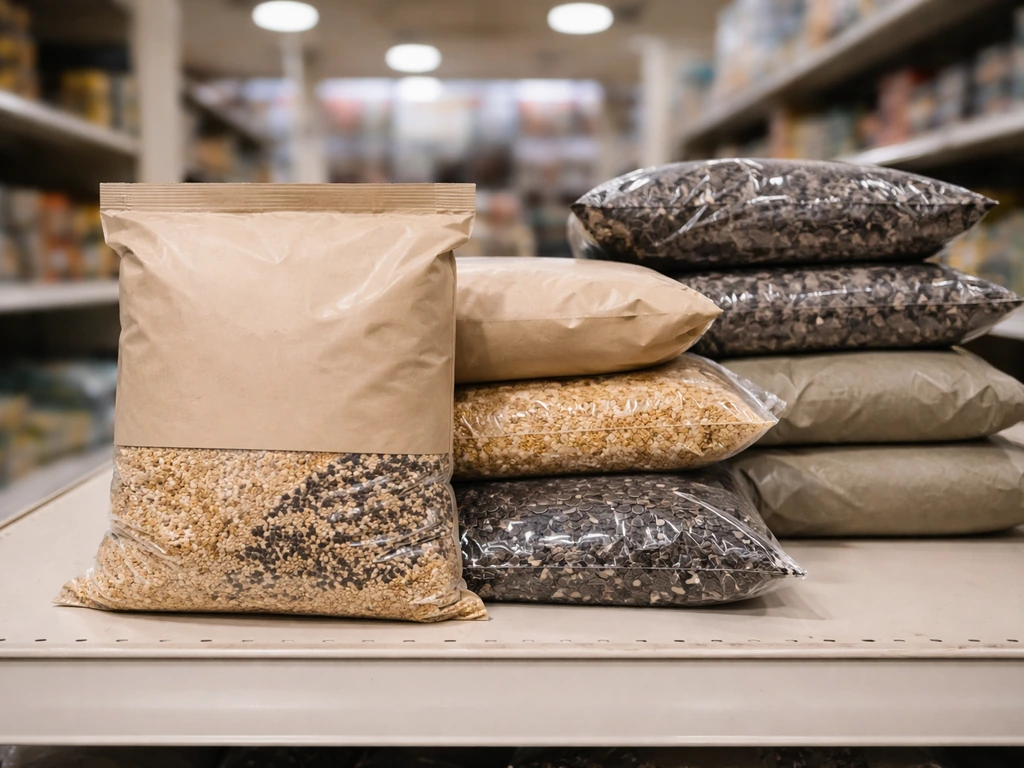
Dollar General's bird seed selection is small but practical. Here is what they currently list online, which gives you a realistic sense of what might be on the shelf near you.
| Product | Size | Key Ingredients | Best For |
|---|---|---|---|
| Premium Blend Wild Bird Food | 4.5 lbs | White millet, milo, sunflower seed, cracked corn, safflower | General backyard feeders, mixed species |
| Audubon Friends Wild Finch Blend | 2 lbs | Nyjer (thistle), sunflower chips, millet | Finches, small-beaked birds |
| Audubon Park Friends Finch | 2 lbs | Nyjer (thistle), fine sunflower chips | Finches specifically |
| Audubon Friends No Waste Blend | 2 lbs | Shell-free mix | Tube, hopper, or platform feeders; less mess |
| Audubon Park Wild Bird Seed Cake | 24 oz | Sunflower seeds, millet, cracked corn | Hanging or platform feeders, mixed species |
The 4.5-lb Premium Blend is the most versatile pick if you just want a general bag to get started. The No Waste Blend is worth noting because shell-free seed means no hulls piling up under your feeder, which makes cleanup significantly easier and reduces the conditions that promote mold. If you are specifically trying to attract goldfinches or house finches, either nyjer-based option is the right call.
Bird Food vs. Wild Bird Seed: What to Look for on Shelves
At Dollar General, bird seed is usually shelved under seasonal or outdoor/garden sections, sometimes near pet food, but not always with it. The labeling can vary: you might see it called "wild bird food," "wild bird seed," or just "bird food." These terms are largely interchangeable on Dollar General's shelves. What matters more is reading the ingredient list. Seed mixes designed for wild birds will list actual seeds: millet, sunflower, nyjer, cracked corn, safflower. If a product says "bird food" but lists pellets or formulated ingredients, that is typically meant for caged pet birds, not backyard wildlife.
Seed cakes are another format to look for. Dollar General's Audubon Park seed cake (24 oz) works just like loose seed but in a compressed block you hang or set on a platform. These are a convenient format, especially in winter or if you want less mess at the feeder.
How to Confirm What's In Stock Right Now
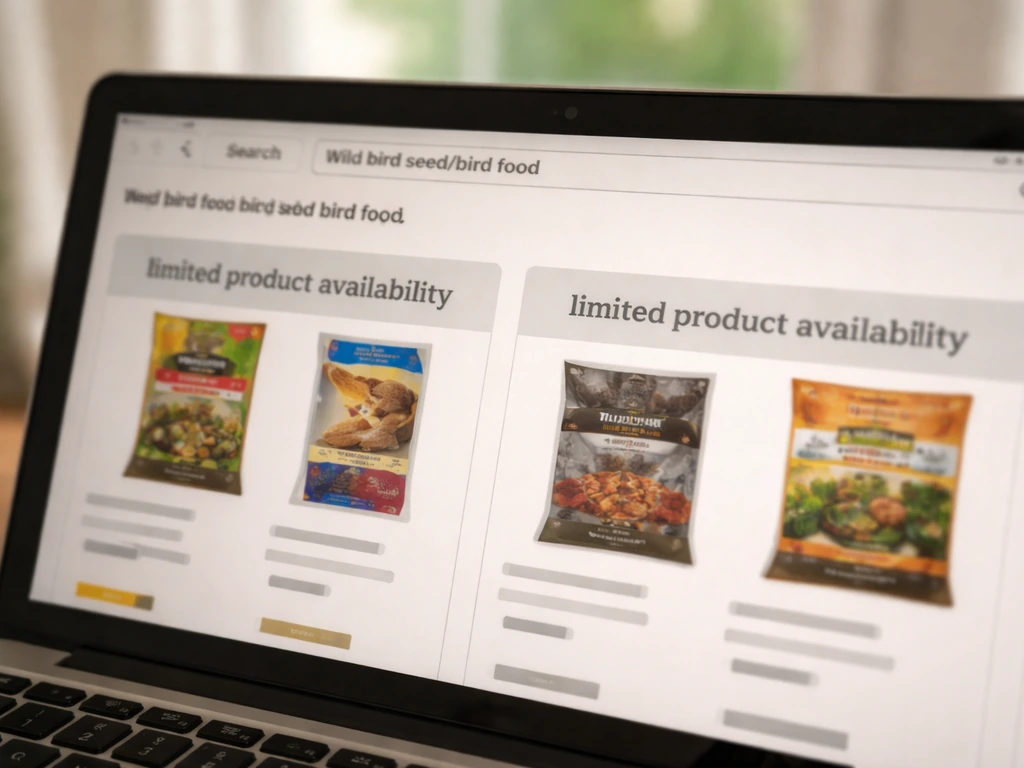
Dollar General's online listings note that some items have "limited product availability," meaning what shows up on the website is not guaranteed to be at your local store today. The fastest way to avoid a wasted trip is to check before you go.
- Go to DollarGeneral.com and search for "wild bird seed" or "bird food." The results will show you what is currently in their system.
- Add the item to your cart and select "DG Pickup." The site will prompt you to enter your zip code or let it use your location, then show you which nearby stores have the item available for pickup.
- Alternatively, use the Dollar General app, which has the same store-specific inventory check built in. Note that age-restricted items are excluded from the app, but bird seed is not restricted.
- Use the store directory on DollarGeneral.com to find your nearest location's phone number if you prefer to call ahead and confirm.
The DG Pickup flow is genuinely the most reliable method here. It gives you store-specific confirmation rather than a general "we carry this" answer. If the pickup option is greyed out or unavailable for your location, that is a signal the product is not currently stocked there.
Dollar General vs. Other Budget and Grocery Stores for Bird Seed
Dollar General is a solid option when you need bird seed quickly and cheaply, but it is worth knowing what else is nearby. If you are already comparison shopping, Family Dollar also carries bird seed and operates a similar model with varying inventory by location. For a discount grocery approach, Aldi occasionally stocks bird seed seasonally, usually in larger bags at competitive prices. If you want a broader selection with consistent stock, Lowe's sells bird seed year-round alongside feeders and accessories, which is useful if you are setting up a new station. For true dollar-store pricing on smaller quantities, it is also worth checking whether Dollar Tree carries bird seed at your nearest location.
Regional grocery chains round out the picture. Food Lion stocks bird seed in many of its Mid-Atlantic and Southeast locations, and Lidl sells bird seed at several of its U.S. stores, typically with European-style packaging but solid seed quality. If Dollar General's shelves are bare, any of these is a practical backup.
Picking the Right Seed for Your Backyard Birds
Once you know what Dollar General has in stock near you, the next question is whether it is actually a good fit for the birds in your yard. Here is a quick breakdown based on what they carry and which common backyard species will eat it.
General mixed-species yards
The Premium Blend Wild Bird Food (4.5 lbs) is your best default. The combination of white millet, sunflower seed, safflower, cracked corn, and milo covers a wide range: sparrows, mourning doves, northern cardinals, and dark-eyed juncos will all work through that mix. Sunflower seed is the single most universally attractive ingredient in any blend, so a mix that lists it prominently is a strong sign the product will actually get eaten rather than picked through and wasted.
Finch-focused setups
If you are running a tube feeder and want to draw in American goldfinches, house finches, or pine siskins, go straight for either the Audubon Friends Wild Finch Blend or the Audubon Park Friends Finch option. Both center on nyjer (thistle) and sunflower chips, which are the two seeds finches prefer. A related Reddit r/birdfeeding thread also reports finch blend acceptance varying by bird and conditions, with birds preferentially eating sunflower chips while discarding nyjer nyjer (thistle) and sunflower chips. Nyjer is tiny, so it requires a feeder with small ports, which tube feeders with finch-specific ports handle well. Standard hopper feeders will let it spill out.
Mess-reduction priority
If you are feeding on a patio, deck, or anywhere cleanup is a real concern, the No Waste Blend is worth the slightly smaller bag size. Shell-free seed means no hull debris accumulating under the feeder, which is one of the main sources of mold and pest problems. This blend works in tube, hopper, and platform feeders.
A quick note on milo and filler seeds
Milo (grain sorghum) shows up in the Premium Blend. In the eastern U.S., most songbirds ignore milo and it ends up on the ground. In the Southwest and parts of the West, some ground-feeding birds like it more. If you are in the East, milo is not harmful but it is not a draw either. It is simply a filler in budget blends, which is fine for the price point.
Storing Your Bird Seed So It Stays Safe
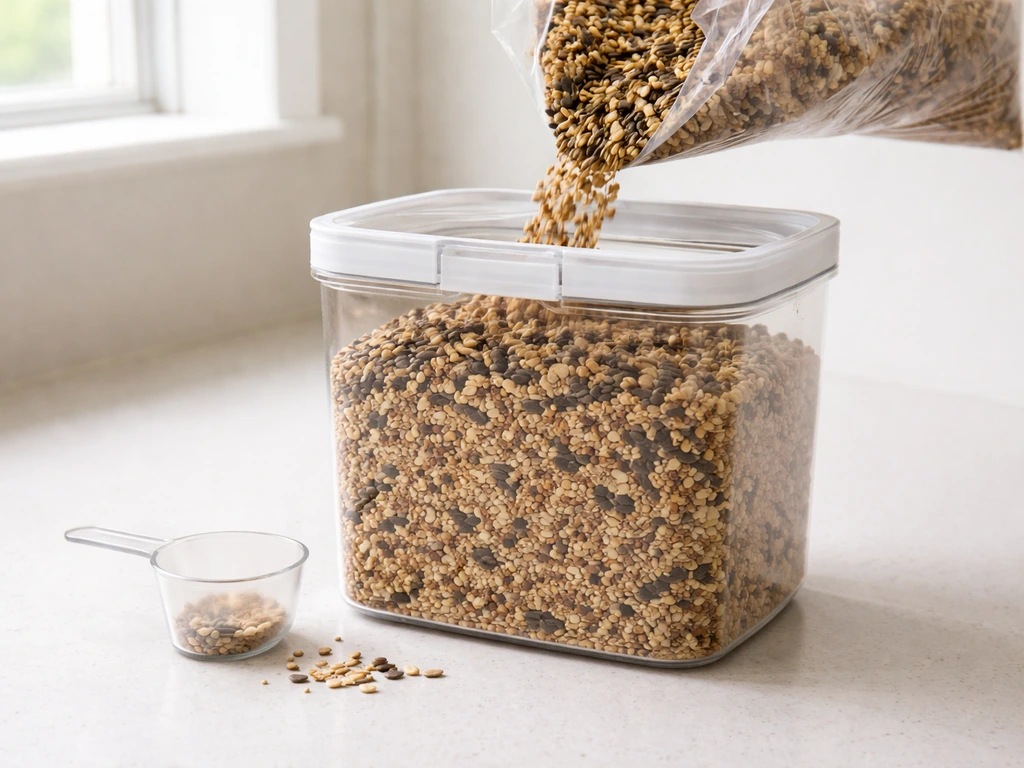
Getting the seed home is only half the job. How you store it determines whether it stays good for weeks or becomes a mold problem within days. The core rule: keep seed dry, sealed, and cool.
Transfer seed from the original bag into an airtight container as soon as you get home. A metal trash can with a locking lid or a hard-sided plastic container both work. The bag it comes in is not airtight enough for extended storage, and it offers no protection against rodents or moths. Pennington's bird-feeding guidance specifically calls out moisture in seed, especially in ingredients like cracked corn and peanuts, as a route to dangerous bacteria and fungal contamination. An airtight seal is the single most effective prevention step you can take.
Store the container in a cool, shaded spot, like a garage, shed, or basement. Heat combined with moisture is what activates mold. Do not store seed in a hot car trunk, an unventilated shed in summer, or anywhere that gets direct sun. Under those conditions, a bag can start to go off in under a week.
What to Do if Seed Gets Wet or Starts to Sprout
Wet seed is a genuine hazard for birds, not just an inconvenience. When seed gets damp and then sits in warm conditions, it can develop Aspergillus mold, which causes aspergillosis, a serious respiratory illness in birds. This can happen fast, especially in summer or after rain hits an open feeder.
If you find wet or clumped seed in your feeder or on the ground beneath it, remove it immediately. Do not just mix it with dry seed or let it dry out and redistribute it. Burying wet seed far from the feeding area is one recommended approach to get it out of reach without putting it in trash where birds might access it. If you see any seed that has turned gray, smells musty, or has visible fuzz, treat it as contaminated and discard it entirely.
Sprouted seed is a slightly different situation. Seed that has just started to sprout in warm, moist conditions is generally not immediately toxic, but it signals that moisture has gotten into your supply, which means mold is not far behind. Sprouted seed should be removed from the feeder and the feeder itself cleaned before refilling.
Feeder Cleaning and Pest Prevention
A clean feeder matters as much as good seed. Clemson HGIC recommends cleaning feeders at least every two weeks under normal conditions, and more frequently during rainy periods or when you have high bird traffic. More birds means more droppings, and droppings in seed are a disease vector.
The cleaning process is straightforward: empty the feeder completely, remove debris and any caked seed with a stiff brush, then disinfect. Audubon cites National Wildlife Health Center guidance recommending a 9:1 water-to-bleach solution for disinfecting feeders and baths. Mix nine parts water with one part plain unscented bleach, scrub the feeder, let it soak for a few minutes, then rinse thoroughly and let it dry completely before refilling. Putting wet seed into a damp feeder immediately after cleaning defeats the purpose.
For the ground under your feeder, sweep up old hulls, discarded seed, and debris regularly. The U.S. Fish and Wildlife Service recommends removing old, moldy, and discarded seed from under feeders rather than leaving it accessible to ground-feeding birds. The U.S. Fish & Wildlife Service similarly warns that unclean feeders and rotting or moldy birdseed can make birds sick and advises disinfecting practices using dilute bleach and water removing old, moldy, and discarded seed from under feeders rather than leaving it accessible. This is especially important during wet seasons when ground debris stays damp and molds quickly.
For pest control around stored seed, the sealed airtight container mentioned above handles most of the problem. Small moths (Indian meal moths) are a common issue with poorly sealed birdseed storage. If you find webbing or larvae in stored seed, discard the affected batch, clean the container with soap and water, and start fresh with a sealed container. Do not try to sift out larvae and reuse the seed.
The Short Version
Dollar General sells bird seed right now, with at least five distinct products in their system ranging from general wild bird blends to finch-specific and no-waste mixes. Use the DG Pickup tool on their website or app to confirm what is actually on the shelf at your nearest store before you make the trip.
Once you have a bag home, go straight into an airtight container, keep it cool and dry, and clean your feeder every two weeks or after any significant rain. You can check whether Dollar Tree sells bird seed as well, since their selection varies by location and season does dollar tree sell bird seed. That combination, the right seed, confirmed stock, proper storage, and a clean feeder, is everything you need to get a backyard feeding station running well.
FAQ
How can I tell if Dollar General’s bird food is meant for backyard wild birds, not pet birds?
Usually, yes. Look for “wild bird food,” “wild bird seed,” or “bird food,” then confirm the ingredients include actual seeds (like millet, sunflower, safflower, nyjer, cracked corn). If the product lists pellets or a formulated diet intended for caged pet birds, it may not be the right type for backyard feeders.
What should I do if DG Pickup shows bird seed is unavailable at my nearest store?
If DG Pickup shows the item as unavailable or not listed for your store, that means it is not currently stocked there. Try nearby locations, then check again after a day or two because some stores restock seasonally, but online listings are not a guarantee for every aisle.
Does Dollar General carry seed cakes in addition to loose seed, and are they consistently stocked?
It is possible, but don’t rely on it. Seed cakes are more likely to be seasonal or limited in supply, so even if loose seed is listed, the cake may not be in stock. Use store-specific pickup confirmation for the exact product size and format you want.
Can I mix wet or clumped bird seed from the feeder back into dry seed?
No, not safely. Once seed is damp, it can grow mold quickly, and mixing it with dry seed can spread contamination. Remove the wet/clumped seed, clean the feeder, and refill with fresh dry seed after the feeder has fully dried.
If I see mold, fuzz, or a musty smell in the bag, should I discard all of it or only the affected parts?
Not recommended. If you see gray discoloration, a musty smell, fuzz, or visible mold, discard the entire batch rather than trying to save part of it. Mold can spread beyond the pieces you notice.
If I buy a nyjer-based finch blend, do I need a special feeder?
Yes, some birds specifically need finch feeders. Nyjer-thistle seed is tiny and can spill through standard hopper feeders, so use a feeder with small ports (often finch tube feeders) when you buy finch blend products.
What should I do if I find moths, webbing, or larvae in stored bird seed from Dollar General?
If moths or webbing show up, discard the contaminated seed. Indian meal moth eggs and larvae can be inside seed mixes, and sifting is not reliable. Then wash the container with soap and water, let it dry fully, and start with a new batch in a sealed container.
What’s the best way to store Dollar General bird seed once I get it home?
Airtight storage is the key, but location matters too. Keep it in a cool, shaded area, avoid garages or sheds that get hot in summer, and never store seed in a warm car or direct-sun spot because heat accelerates spoilage and mold.
Do I need to freeze or treat bird seed to prevent mold and pests?
Not always, because “mold and pests” issues often come from moisture and pests, which sealed containers prevent. If your feeder is cleaned regularly and seed is kept dry and sealed, you usually do not need to freeze or treat seed, but you should replace it if it has moisture damage or contamination signs.
If seed starts sprouting in the feeder, is it still safe for birds?
Yes, but do it carefully. Use the same principles as stored seed, keep the seed dry, and clean the feeder before refilling. If sprouting happens, it suggests moisture got in, and you should remove the sprouted portion and disinfect the feeder to avoid a mold buildup.
Next Articles
How to Make Bird Seed Last Longer: Storage and Fixes
Learn how to make bird seed last longer with proper storage, humidity control, pest prevention, and fixing wet or moldy
How to Keep Bird Seed Fresh and Stop It From Molding
Stop birdseed mold with smart storage: dry handling, right container, moisture control, bag cleanup, and feeder sanitizi
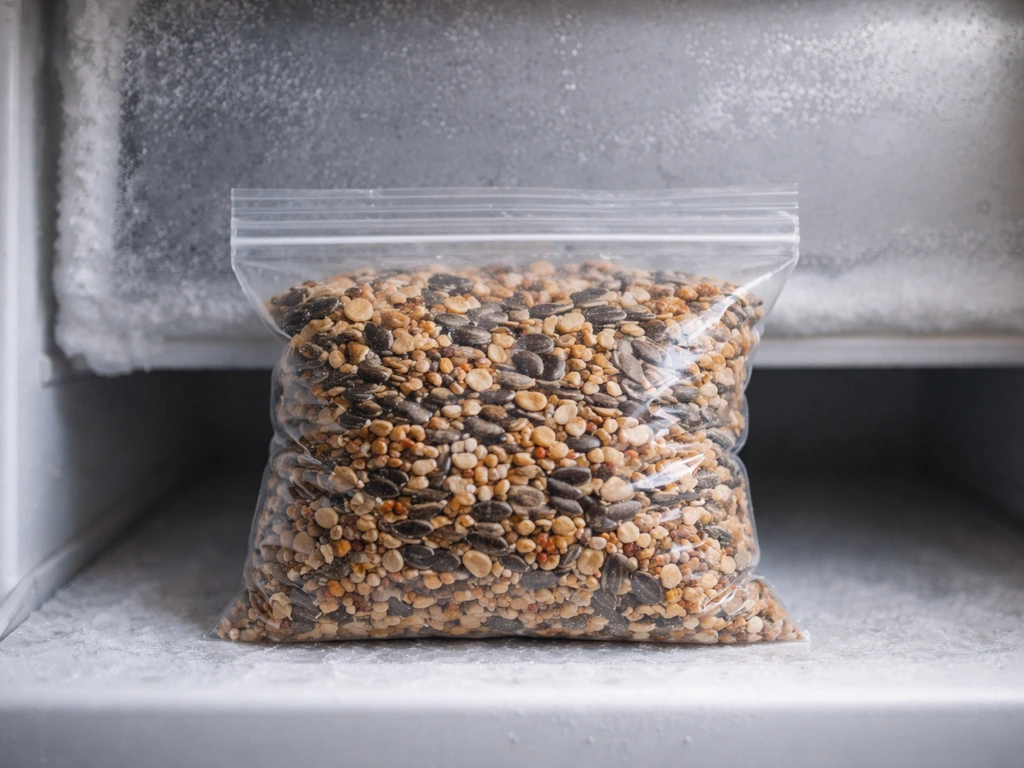
How Long to Freeze Bird Seed to Kill Bugs: Time Guide
Exact freezing time and safe steps to kill beetles, moths and weevils in bird seed, plus thaw checks and storage.