Yes, you can grow real plants from bird seed, but which ones sprout depends entirely on what's in the mix and how it was processed. APHIS states that [import permits specify which plant and seed species can enter the US](https://direct. aphis. usda.
What Plants Grow From Bird Seed: Flowers and Fixes
Maya Collins
5 May 2026
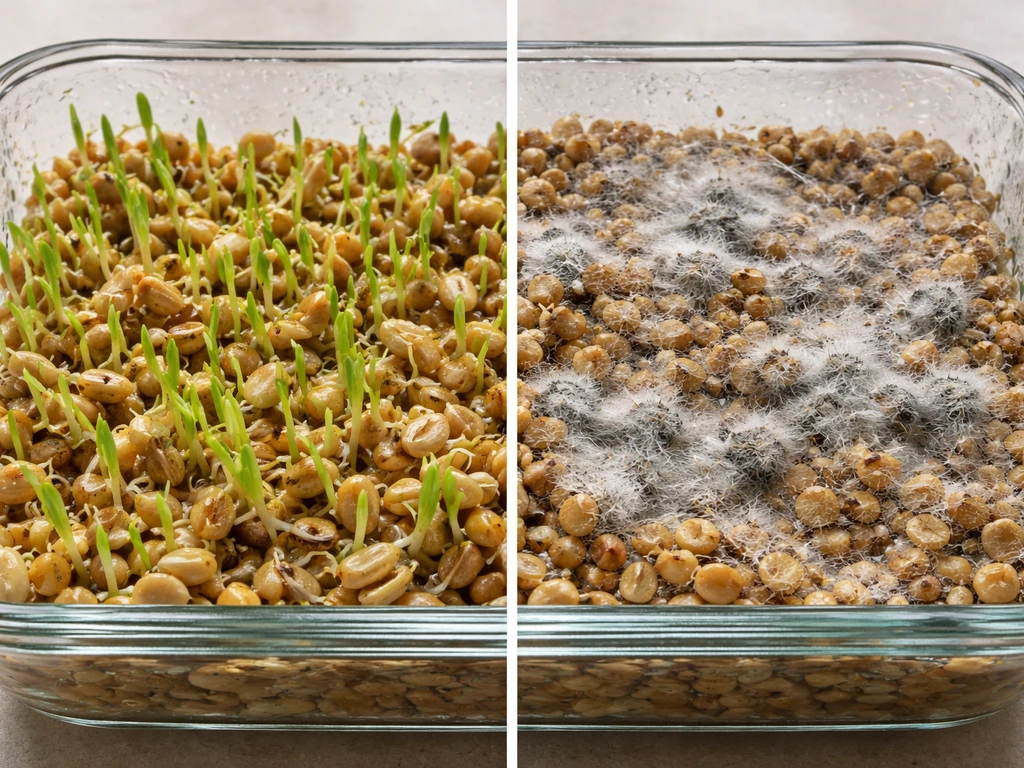
gov/plant-imports/buy-plants-seeds-online) and under what conditions, including treatment, packaging, and shipping requirements. When your bird seed actually takes hold, the sprouts and early leaves can look very different depending on which seeds were in the mix what does bird seed look like when it grows. Sunflowers, safflower, millet, and corn are the most likely candidates in a standard backyard blend. <a data-article-id="A54BB20C-E3A8-4F45-91A4-FDC5C02120BE">Nyjer (often called thistle) is usually heat-treated and won't sprout at all.
The flowers you're most likely to get are sunflowers and safflower blooms, both genuinely attractive plants worth growing on purpose.
What's in bird seed (and which seeds can actually sprout)
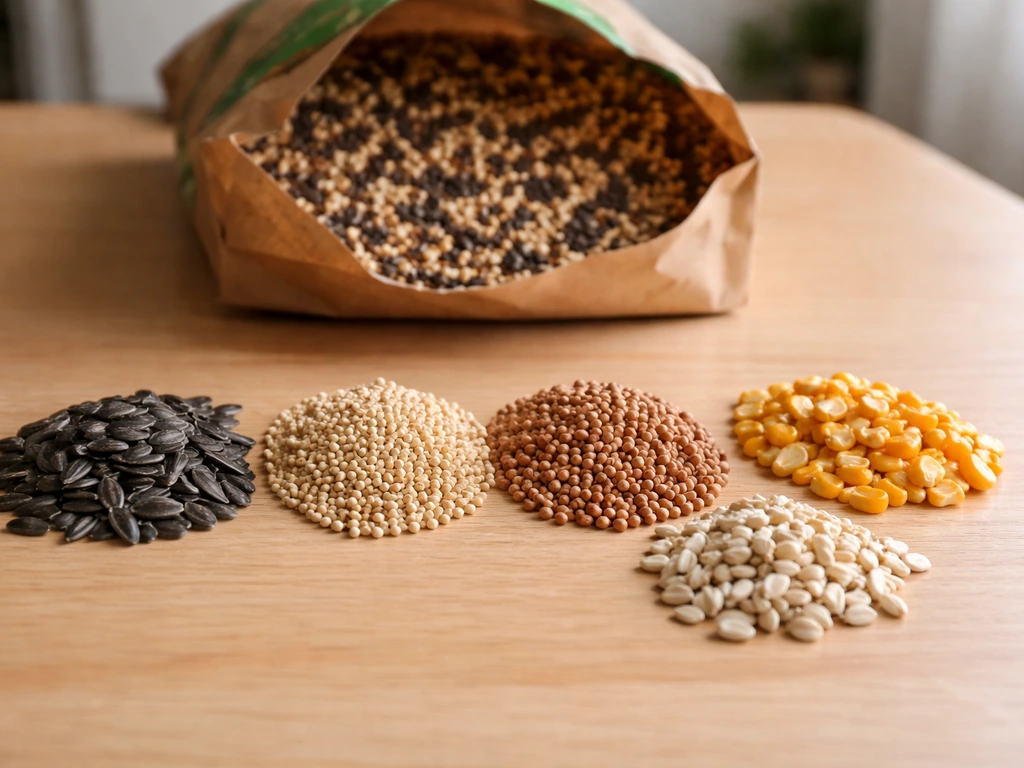
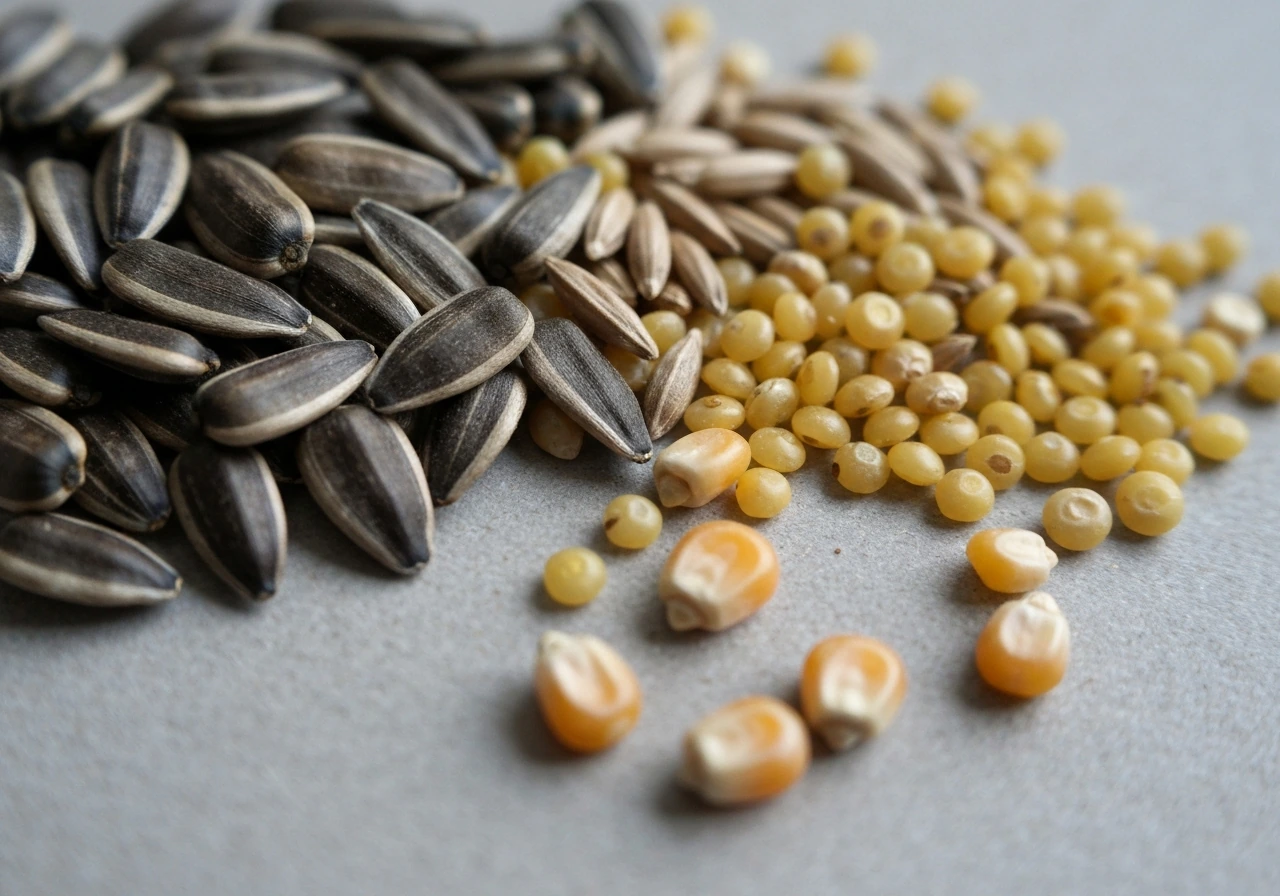
Most commercial bird seed mixes contain a combination of the following: sunflower seeds (black oil or striped), white proso millet, milo (sorghum), safflower, cracked or whole corn, oat groats, and nyjer. Some budget mixes also throw in wheat and fillers like red milo that most birds ignore and leave to rot on the ground.
Not all of these will sprout, for two different reasons. First, some seeds are physically damaged during processing (cracked corn is obvious, but hulled millet and oat groats are too), and a seed without its outer coat or embryo intact simply can't germinate. Second, nyjer seed is legally required to be heat-sterilized before import into the US to prevent the spread of non-native weeds, which is why it almost never sprouts no matter what you do. Nyjer seed, in particular, is heat-sterilized before import, so it usually does not grow even under the right conditions. If you've been wondering why your nyjer spills never produce anything, that's why.
| Seed Type | Can It Sprout? | What Plant It Becomes | Notes |
|---|---|---|---|
| Black oil sunflower | Yes, reliably | Sunflower (Helianthus annuus) | Best performer from most mixes |
| Striped sunflower | Yes | Sunflower (Helianthus annuus) | Larger seed, same result |
| Safflower | Yes, if whole | Safflower (Carthamus tinctorius) | Daisy-like orange/yellow blooms |
| White proso millet | Yes, if intact | Millet grass | Ornamental but mostly just grass |
| Whole corn (kernel) | Yes | Corn (Zea mays) | Needs warm soil, becomes full corn plant |
| Cracked corn | No | Nothing | Embryo destroyed in processing |
| Milo/sorghum | Sometimes | Sorghum plant | Low germination rate in most conditions |
| Nyjer (thistle) | Rarely/No | Nothing reliable | Heat-treated; designed not to sprout |
| Oat groats | No | Nothing | Hulled, embryo removed |
| Wheat | Possibly | Wheat grass | Germinates but not a useful garden plant |
The practical takeaway: sort through your mix and focus on the whole, intact sunflower seeds and any whole safflower seeds. Those are your best shot at actual flowers. Millet will come up as grass, which you may or may not want. Corn is viable if it's whole kernels, but most mixes use cracked corn, so check before counting on it.
What plants and flowers actually grow from bird seed
The headline plants from a typical bird seed mix are sunflowers and safflower. Both are genuinely good-looking garden plants, and both attract the same birds that eat the seed in the first place, so this is a satisfying full-circle situation.
Sunflowers
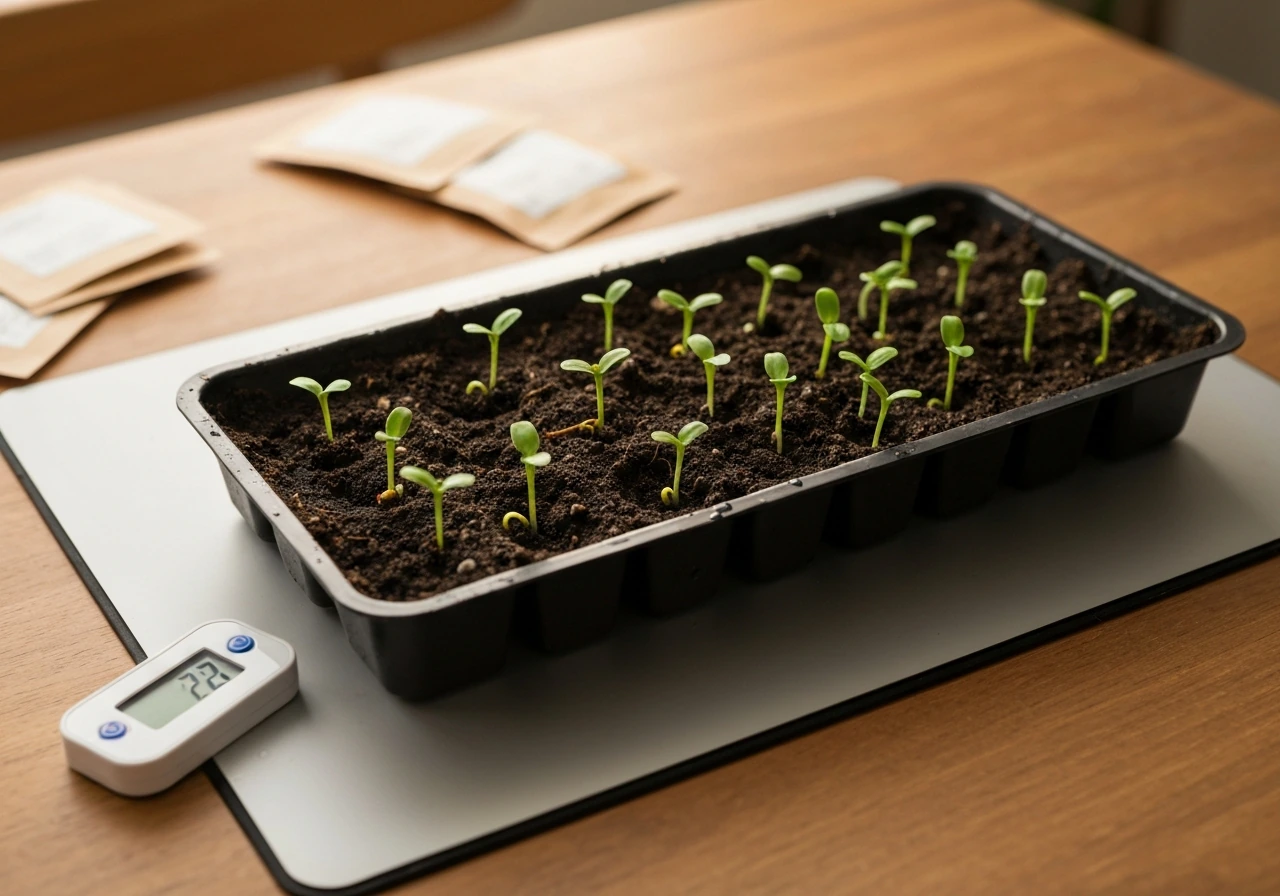
Black oil sunflower seed, the most common ingredient in quality mixes, grows into standard annual sunflowers. You won't get a specific cultivar, but you'll usually get single-headed plants ranging from 3 to 6 feet tall with classic yellow ray petals. They're fast, hard to kill, and extremely rewarding. Birds will come back to eat the seed heads in late summer, completing the loop.
Safflower
Safflower (Carthamus tinctorius) is less well-known but produces beautiful orange, yellow, or red thistle-like blooms on branching plants about 2 to 3 feet tall. It's drought-tolerant once established and thrives in full sun. This is genuinely one of the better cut flowers you can grow, and it's sitting right there in your bird seed bag.
Millet
White proso millet germinates readily in warm conditions and grows into a decorative grass that can reach 3 to 5 feet. It's not a flower, but it's attractive in a naturalized planting and some gardeners use it intentionally as an ornamental grass or for dried arrangements. Ground-feeding birds like mourning doves and juncos will eat it at any stage.
Corn
If your mix contains whole corn kernels (not cracked), those will grow into corn plants. It's a big commitment in the garden since corn needs space and consistent moisture, but it's certainly viable. More commonly you'll find cracked corn in mixes, which won't sprout.
What about nyjer and thistle?
Nyjer is often labeled as 'thistle seed' but it's actually Guizotia abyssinica, an African daisy species, not the North American thistle plant. Even if you could get it to sprout, it wouldn't produce the typical thistle you're imagining. More importantly, commercial nyjer is heat-treated (devitalized) before sale to prevent it from introducing weeds, so germination is extremely unlikely regardless of conditions. If you're curious about whether nyjer can grow at all, the short answer for commercial bird seed is: almost certainly not. If you want to try, this guide explains what is nyjer bird seed and why it usually does not sprout.
Conditions that make bird seed germinate
Getting bird seed to sprout isn't magic, but the conditions really do matter, especially temperature. Most seeds in a bird mix are warm-season species. Here's what each needs:
| Seed | Soil Temp for Germination | Days to Germinate | Light Needed |
|---|---|---|---|
| Sunflower | 65–85°F (18–29°C) | 7–14 days | Full sun after sprouting |
| Safflower | 68–72°F (20–22°C) | 10–14 days | Full sun; light helps germination |
| Millet (proso) | 68–86°F (20–30°C) | 7–10 days | Full sun |
| Corn (whole kernel) | 50–90°F (10–32°C), optimal 85°F | 4–30 days depending on temp | Full sun |
Temperature is the biggest variable. Corn, for example, can take 20 to 30 days to emerge in 50°F soil versus just 4 to 5 days in warm conditions around 85°F. Safflower won't germinate at all below about 35°F (2°C) and takes two weeks even at 41°F (5°C), but drops to just 4 days at 61°F (16°C). If your seeds aren't sprouting, check the soil temperature before assuming the seed is bad.
Moisture is equally critical but also the most common cause of failure in the other direction. Seeds need consistent moisture to germinate, but sitting in soggy soil or a waterlogged tray causes damping-off (a fungal rot that kills seedlings at the base). Keep the growing medium evenly moist, not saturated. Light matters most after germination, but safflower in particular benefits from light during the germination process itself.
How to test viability and figure out what you actually have
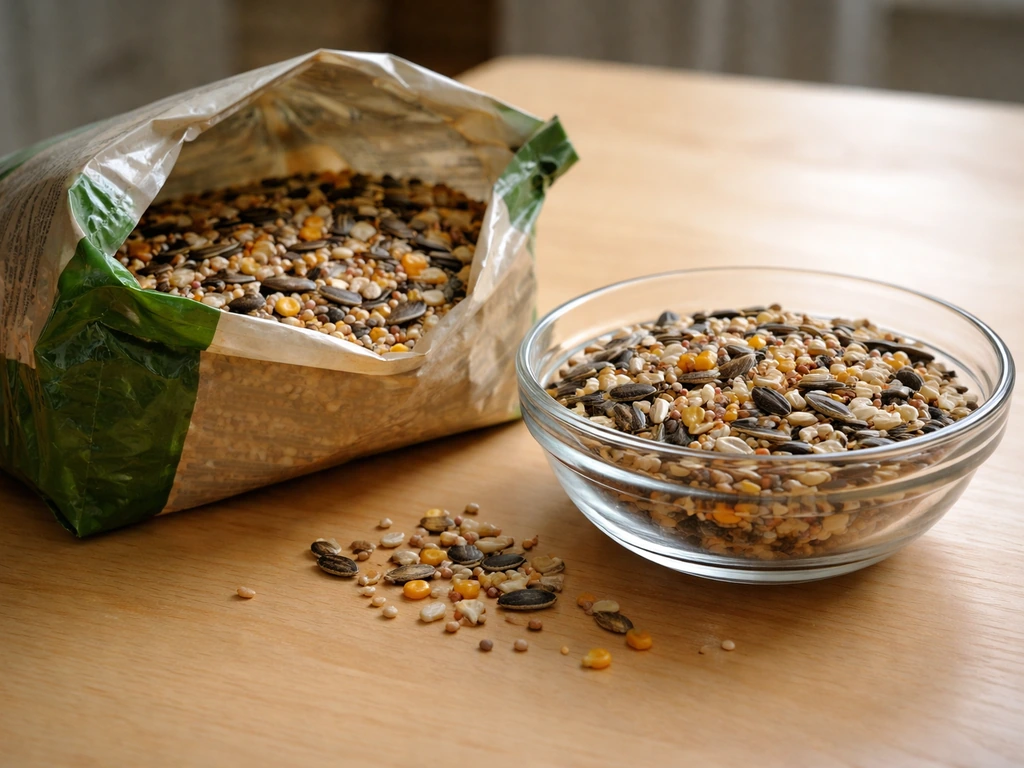
Before you sow anything, spend 10 minutes sorting and testing what you've got. This saves a lot of frustration later.
Read the label first
Most bird seed bags list ingredients in order by weight. Look for: 'sunflower seed,' 'safflower seed,' 'white proso millet,' and 'whole corn.' If the label says 'cracked corn,' 'oat groats,' or lists nyjer prominently, manage your expectations. One common mix format lists millet, milo, wheat, corn, oat groats, safflower seed, and safflower oil, which means about half the ingredients won't sprout at all.
Do a quick float test
Pour a small handful of seeds into a glass of water and let them sit for 15 minutes. Seeds that sink are generally denser and more likely to be viable. Seeds that float may have hollow or damaged embryos and are less likely to sprout. This isn't foolproof, but it's a useful quick screen, especially for sunflower seeds.
Do a paper towel germination test
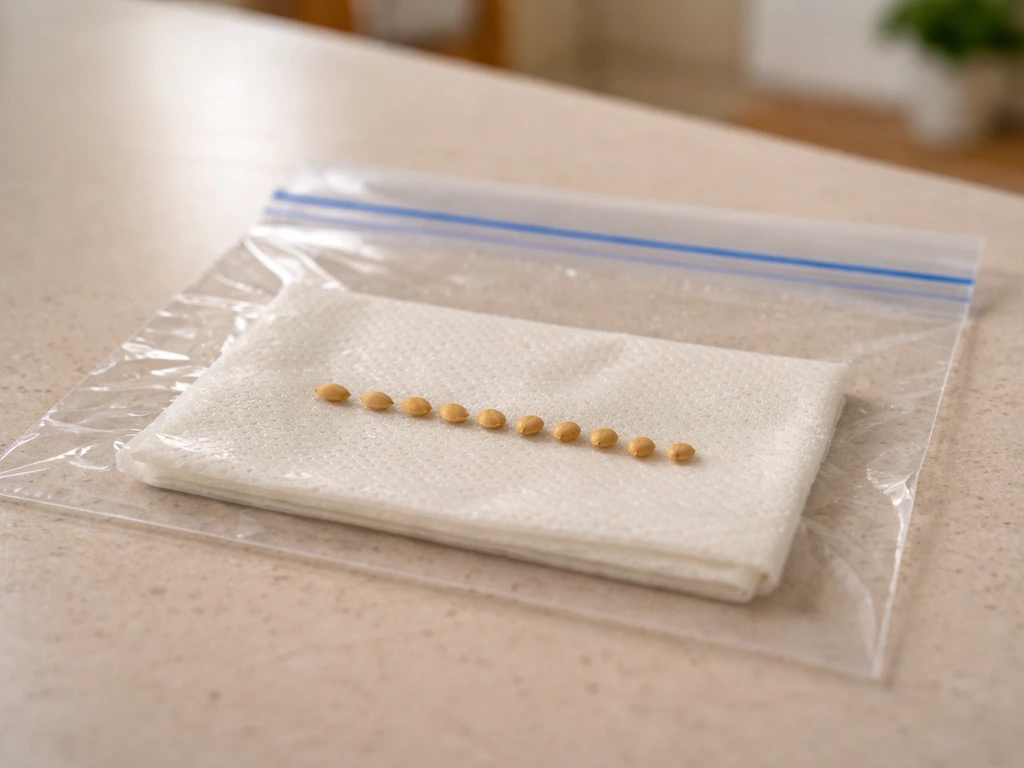
This is the most reliable method. Take 10 seeds of one type, place them on a damp paper towel, fold it over, and seal it in a zip-lock bag. Put the bag somewhere warm (70 to 80°F is ideal) and check after 7 to 10 days. Count how many sprouted. If 7 or more germinate, the seed is worth planting. Below 5 out of 10 (50%), germination will be patchy and disappointing. Use this result to decide how thickly to sow.
Visual sorting
Set aside any seeds that look cracked, shriveled, moldy, or obviously damaged. Whole, plump seeds with intact coats are what you're after. Sunflower seeds should have smooth, unbroken shells. Safflower seeds are small, white, and hard. Millet is tiny and round. If you're unsure what something is, compare it to an online image of each seed type.
Step-by-step: how to sow bird seed and grow plants from it
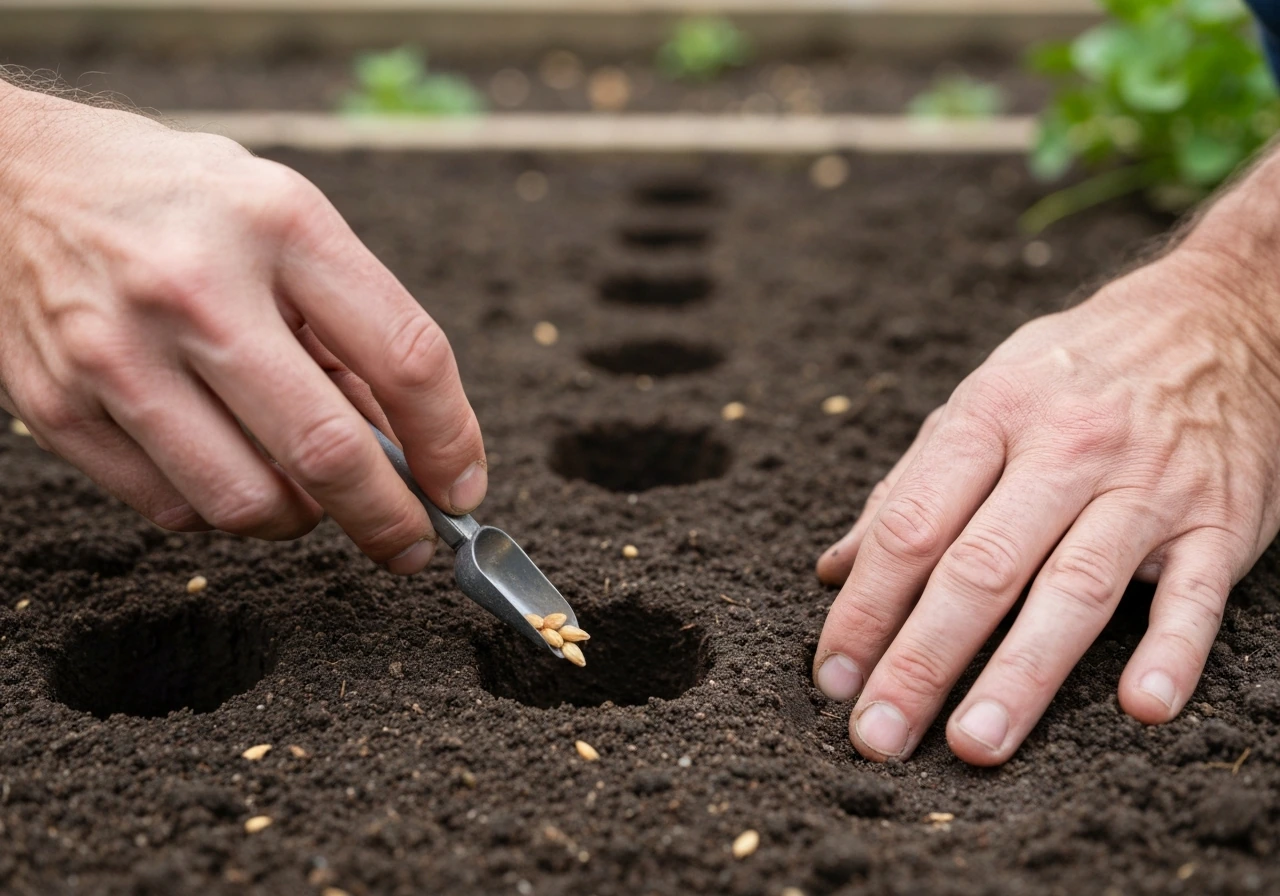
Once you've identified viable seeds, here's how to actually get them growing. Follow the step-by-step sowing and germination tips in this guide to learn how to grow bird seed successfully. You have two options: starting in trays indoors, or direct sowing outdoors. Sunflower and millet do well with direct sowing. Safflower is also best direct-seeded according to most growers, since it dislikes root disturbance. Corn should go directly into warm outdoor soil.
Option A: Direct sowing outdoors
- Wait until soil temperature is consistently above 65°F for sunflower and millet, or above 68°F for safflower and corn. Use a cheap soil thermometer, not just air temperature.
- Choose a full-sun location. All of these plants need at least 6 hours of direct sun daily.
- Loosen the top 2 to 3 inches of soil and remove debris. No need for deep tilling.
- Sow sunflower seeds 1 inch deep, spaced 6 inches apart (thin to 12 inches once sprouted). Sow safflower seeds 0.5 inches deep. Corn goes 1.5 to 2 inches deep. Millet can be scattered and lightly raked in.
- Water gently and keep soil evenly moist until seedlings emerge. Do not let the top inch dry out completely during this period.
- Once seedlings are 3 to 4 inches tall, thin to final spacing and back off on watering to encourage root development.
Option B: Starting in trays indoors
- Use fresh, sterile seed-starting mix, not garden soil or old potting mix. Old or reused media is a primary source of damping-off pathogens.
- Fill clean trays or cell packs and pre-moisten the mix before sowing. It should feel like a wrung-out sponge.
- Sow sunflower seeds one per cell, about 0.5 to 1 inch deep. For safflower, cover lightly with just a thin layer of mix.
- Place trays somewhere warm, 70 to 75°F is ideal. A heat mat helps enormously if your home runs cool.
- Once seeds sprout (typically 7 to 14 days), move to a bright south-facing window or under grow lights for at least 14 hours of light per day.
- Keep the growing medium moist but not wet. Bottom-watering (setting trays in a shallow dish of water for 15 minutes) is better than overhead watering for preventing mold.
- Transplant outdoors once seedlings have two sets of true leaves and outdoor temperatures are reliably warm.
A note on cleaning the seed first
If your seed has been sitting in a feeder or has any visible debris, dust it off and check for mold before sowing. You don't need to rinse or soak most seeds (though a brief 4 to 6 hour soak in room-temperature water can slightly improve germination speed for sunflower and corn). If the seed smells musty or shows white or gray fuzzy growth, don't sow it indoors in trays as the mold spores will spread to seedlings. Either discard it or try a direct outdoor sow where airflow and soil biology can help.
Troubleshooting: no sprouts, weak sprouts, mold, or pests
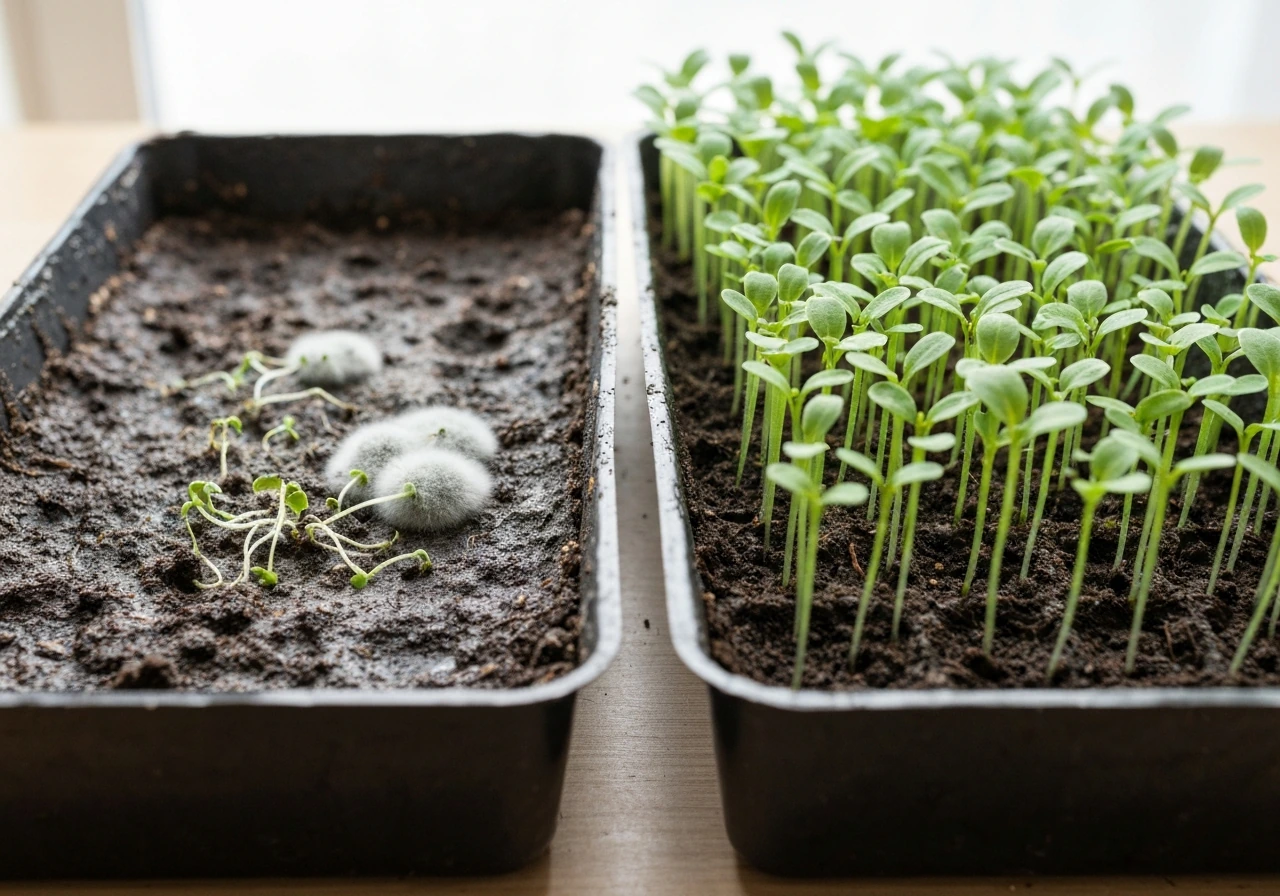
Here are the most common problems and what to do about each one.
No sprouts at all
- Cause: Soil too cold. Fix: Check soil temperature with a thermometer. If it's below 65°F, wait or use a heat mat indoors. Prevention: Don't sow warm-season seeds too early in spring.
- Cause: Seed was processed (nyjer, cracked corn, oat groats). Fix: Nothing to do; these won't sprout. Prevention: Sort your mix and identify what you have before sowing.
- Cause: Soil dried out during the germination window. Fix: Re-sow and water consistently. Prevention: Mulch lightly over outdoor sowings to retain moisture.
- Cause: Seeds planted too deep. Fix: Scratch them up gently and re-sow at the correct depth. Safflower only needs a light covering; sunflower goes 1 inch max.
Weak or leggy sprouts
- Cause: Not enough light. Fix: Move trays directly under grow lights or to a brighter window. Seedlings should get 14+ hours of light indoors.
- Cause: Started too early indoors before outdoor temps allow transplanting. Fix: Sow later, or have a plan for hardening off and transplanting promptly.
- Cause: Overcrowding. Fix: Thin ruthlessly. One strong seedling beats five weak ones competing for light and nutrients.
Mold and damping-off
Damping-off is the term for a family of water molds (most often Pythium or Phytophthora) that cause seedlings to collapse at the base, turning mushy and brown. It spreads fast through shared growing media and irrigation water, which means one affected cell in a tray can wipe out all its neighbors within days.
- Cause: Overwatering or consistently wet soil surface. Fix: Let the top of the medium dry slightly between waterings. Switch to bottom-watering.
- Cause: Contaminated old trays or used growing mix. Fix: Always use new or thoroughly bleach-washed trays (1 part bleach to 9 parts water, rinse well) and fresh sterile mix.
- Cause: Poor airflow. Fix: Run a small fan on seedlings for a few hours each day to strengthen stems and dry the surface between waterings.
- Cause: Moldy seed introduced into the tray. Fix: Inspect seed before sowing. Discard any seed with visible mold or a musty smell.
Pests
Outdoor sowings of bird seed face an obvious problem: the same squirrels, birds, and chipmunks you've been feeding will find your seed bed. Cover freshly sown areas with lightweight row cover or wire mesh until seedlings are 3 to 4 inches tall. Slugs are also attracted to germinating seed; a ring of diatomaceous earth or a shallow beer trap nearby helps.
Cleanup, safety, and storing the rest of your seed
Once you've sorted through a mix and pulled out the seeds you want to grow, you're left with the rest: cracked corn, nyjer, oat groats, and filler seeds that won't sprout but also shouldn't just sit around. Leftover processed seed that gets wet turns into a mold and bacteria breeding ground quickly, especially in summer. Here's how to handle it safely.
Storing remaining bird seed
- Use an airtight, hard-sided container: a metal trash can with a locking lid or a dedicated food-grade plastic bin with a gasket seal. Both keep moisture and pests out.
- Store in a cool, dry location, ideally below 70°F. Garages work in spring and fall; sheds are fine if they don't get humid. Avoid direct sunlight, which accelerates oil rancidity in sunflower seeds.
- Don't mix old seed with new seed. Use the older stock first. Most bird seed remains good for 6 to 12 months if stored correctly; nyjer goes rancid faster and should be used within 4 to 6 months.
- Check stored seed monthly for moisture, clumping, or any musty smell. Discard any that shows mold or off-odor; feeding rancid or moldy seed to birds can make them sick.
Cleaning up spilled or sprouting seed under feeders
Seed that falls under feeders and starts sprouting in unwanted places is a real nuisance. Millet and sunflower are especially prolific this way. Rake up fallen seed regularly before it can germinate. For areas where you don't want any growth at all, lay down a layer of landscape fabric under the feeder zone and cover with pea gravel. This makes cleanup easy and prevents filler seeds from taking hold in your lawn or garden beds.
Hygiene and safety basics
Bird seed and the area around feeders can harbor Salmonella and other bacteria, especially when seed gets wet and sits. Wash your hands after handling bulk seed or sorting through a mix. If you're using seed from a feeder that birds have been visiting, treat it as potentially contaminated: don't handle it near food prep areas, and use gloves if you're sorting large quantities. Moldy seed should go in the trash, not the compost, to avoid spreading fungal spores.
The bottom line: bird seed is surprisingly useful as a source of garden plants, especially sunflowers and safflower. Sort what you have, test viability quickly with a paper towel, sow into warm soil or a clean tray, and manage moisture carefully. Those two simple rules, warm enough soil and not too wet, will get you most of the way to a garden full of blooms that double as your next season's bird feed.
FAQ
Can I grow corn from bird seed I collected under a feeder?
Yes, but only if the seed you used included viable whole kernels (especially whole corn and intact sunflower seed). Cracked corn and most filler grains are unlikely to sprout, so if your “bird feeder mix” label includes “cracked corn,” plan on mostly volunteer grass (millet) and sunflower seedlings, not corn.
How do I know if my bird seed mix has enough safflower to actually flower?
If you want true safflower blooms, buy a mix that lists “safflower seed” as an ingredient, not safflower “oil” or “safflower meal.” Oil indicates the plant material has been processed, and many mixes contain only small amounts of viable safflower seed.
Are the water-sink/float tests reliable for figuring out what will grow?
Don’t rely on a “float test” alone. Floating seeds can still fail for other reasons (temperature, moisture, old storage), and sinking seeds can be damaged too. Use the water test only as a first screen, then confirm with the 10-seed paper-towel germination check.
What should I do if my bird seed smells moldy or looks fuzzy?
Mold is a no-go for starting indoors. If you see fuzzy white or gray growth, a musty smell, or clumping from moisture, composting can spread spores. Bag it and discard it, then clean and sanitize trays and tools before you try a new batch.
Should I soak bird seed before planting to improve germination?
Yes, but it usually makes the most difference for speed, not whether germination happens. For sunflower and corn, a 4 to 6 hour soak in room-temperature water can help, then sow promptly. Over-soaking or leaving seeds wet longer increases the risk of rot.
What if I plant too early, can I still get sprouts?
Most mixes sprout best with warm soil, but you can still plant earlier if you use protection. A cold period can slow warm-season germination dramatically, so consider using row cover, a warm seed-starting spot, or waiting until the soil warms up instead of planting and hoping.
My tray seedlings keep collapsing, is it damping-off and how do I stop it?
Watch for damp-off signs in trays, seedlings collapsing at the base with brown, mushy stems. Reduce watering, improve airflow, use fresh or sterilized trays/media, and avoid letting cells stay saturated. If one cell fails, remove it quickly so the problem does not spread through shared moisture.
How do I stop millet and sunflower from taking over the lawn under my feeder?
Rake up fallen seed regularly and lightly disturb the top inch so you are not constantly watering and creating a moist germination layer. For zero-growth zones, landscape fabric topped with pea gravel works well in feeder areas, and you can refresh the gravel as it settles.
What’s the best way to protect freshly sown bird seed so it actually establishes?
Control for birds and squirrels after sowing. Use lightweight row cover or wire mesh until seedlings reach about 3 to 4 inches tall, then gradually remove. This timing matters, because uncovered tiny seedlings are the easiest to pull up or strip.
Is it safe to use bird seed you collected from a feeder in my garden?
Short answer, yes, treat it as potentially contaminated. Wash hands after sorting, avoid handling seed near food-prep surfaces, and use gloves when processing large quantities. If you’re gardening around kids or pets, store and dispose of moldy seed carefully and keep it off the ground.
Is it better to start bird seed in trays or direct sow outside?
You can, but it depends on the seed type. Sunflower and millet usually handle direct sowing well, while safflower prefers not to have roots disturbed, and corn should go directly into warm outdoor soil. Trays can work, but root disturbance is more likely to reduce success for safflower and corn.
Can I grow thistle from nyjer bird seed?
No, most of the “nyjer” you buy is heat-treated and devitalized, so germination is extremely unlikely even with good warmth and moisture. If you want those familiar thistle-like blooms, you will need to plant a non-devitalized seed source intended for cultivation, not commercial feeder nyjer.
Next Article
What Grows From Bird Seed: Mold, Sprouts, Bugs, Fixes
Identify sprouting, mold, and pests in bird seed with quick checks, safe cleanup steps, and prevention tips.