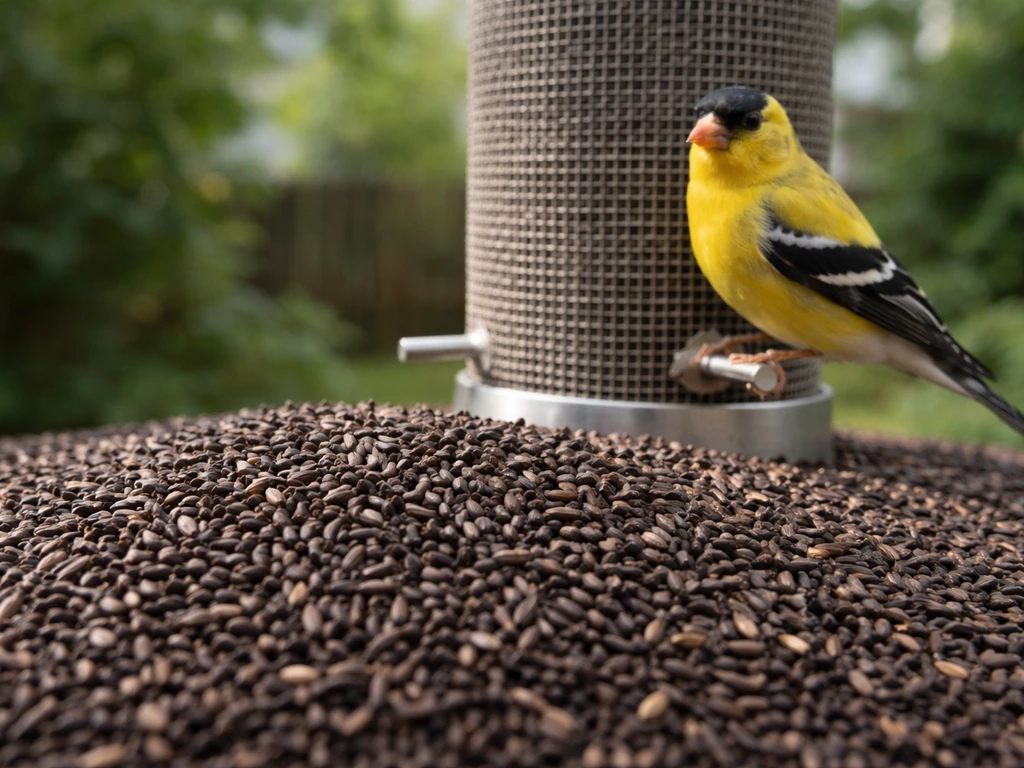
Nyjer bird seed is a small, thin, oil-rich black seed from the plant Guizotia abyssinica, an African daisy. It's sold specifically as a finch food because goldfinches, pine siskins, and common redpolls absolutely love it. It's not thistle, despite being called 'thistle seed' everywhere you look, and it's not from any native or introduced thistle plant at all. If you want to attract finches and you're not already using Nyjer in a dedicated finch feeder, this is the one change that will make the biggest difference at your feeder. If you want more detail on how to grow bird seed, focus on choosing the right plant and starting conditions for your climate If you want to attract finches.
What Is Nyjer Bird Seed and How to Use It Safely
Maya Collins
15 May 2026
What Nyjer bird seed is (and who it's for)
Nyjer (the registered trademark belongs to the Wild Bird Feeding Institute) is the current standard name for what used to be sold as 'niger seed' in the U.S. The name change was intentional: the WBFI created the Nyjer trademark partly to reduce product confusion and move away from a name many found offensive or misleading. The seed itself hasn't changed. Botanically it's still Guizotia abyssinica, and bags sourced from either Ethiopia or India are both the same species.
The seed is high in oil, which is exactly what makes it such good cold-weather fuel for small finches. That oil content is also why storage and handling matter more with Nyjer than with most other seeds: oily seeds go rancid faster than dry, starchy ones, especially when exposed to heat, moisture, or direct sunlight.
Before imported Nyjer reaches a bag at your local store, it's heat-treated at 248°F (120°C) for at least fifteen minutes under USDA treatment schedule T412-a. This devitalizes any weed seeds mixed in with the Nyjer so they can't germinate if they fall to the ground. That's an important practical point: properly processed Nyjer sold in the U. S.
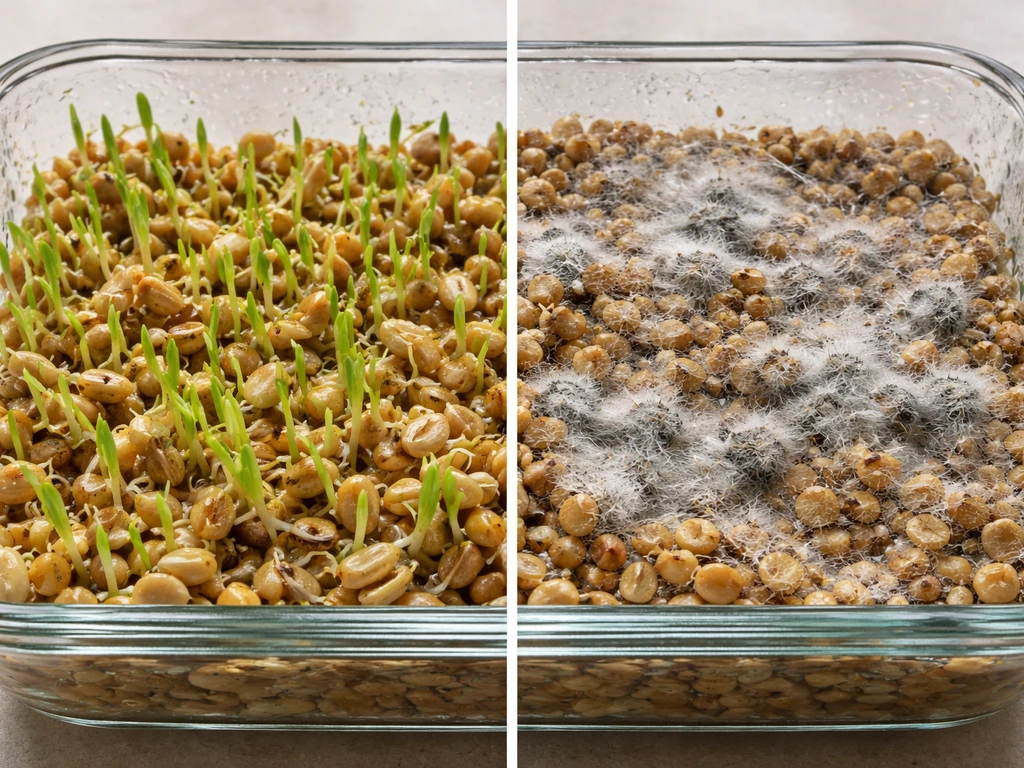
should not sprout, which is one reason it's a cleaner choice around gardens and lawns compared to untreated seeds. If you've ever wondered whether Nyjer will grow in your yard, the heat-treatment process is why it typically won't. Because Nyjer is heat-treated to keep it from sprouting, it generally can not grow from bird seed can corn grow from bird seed.
To avoid disappointment, keep in mind that Nyjer is heat-treated so it typically does not sprout, and it is not what you use when you are trying to grow plants from bird seed what plants grow from bird seed.
Nyjer is not a general bird food. It's specifically for finches. If your goal is attracting cardinals, jays, or sparrows, Nyjer won't do much for you. But if you want goldfinches in particular, it's the single most effective seed you can put out.
How to recognize Nyjer and where to find it
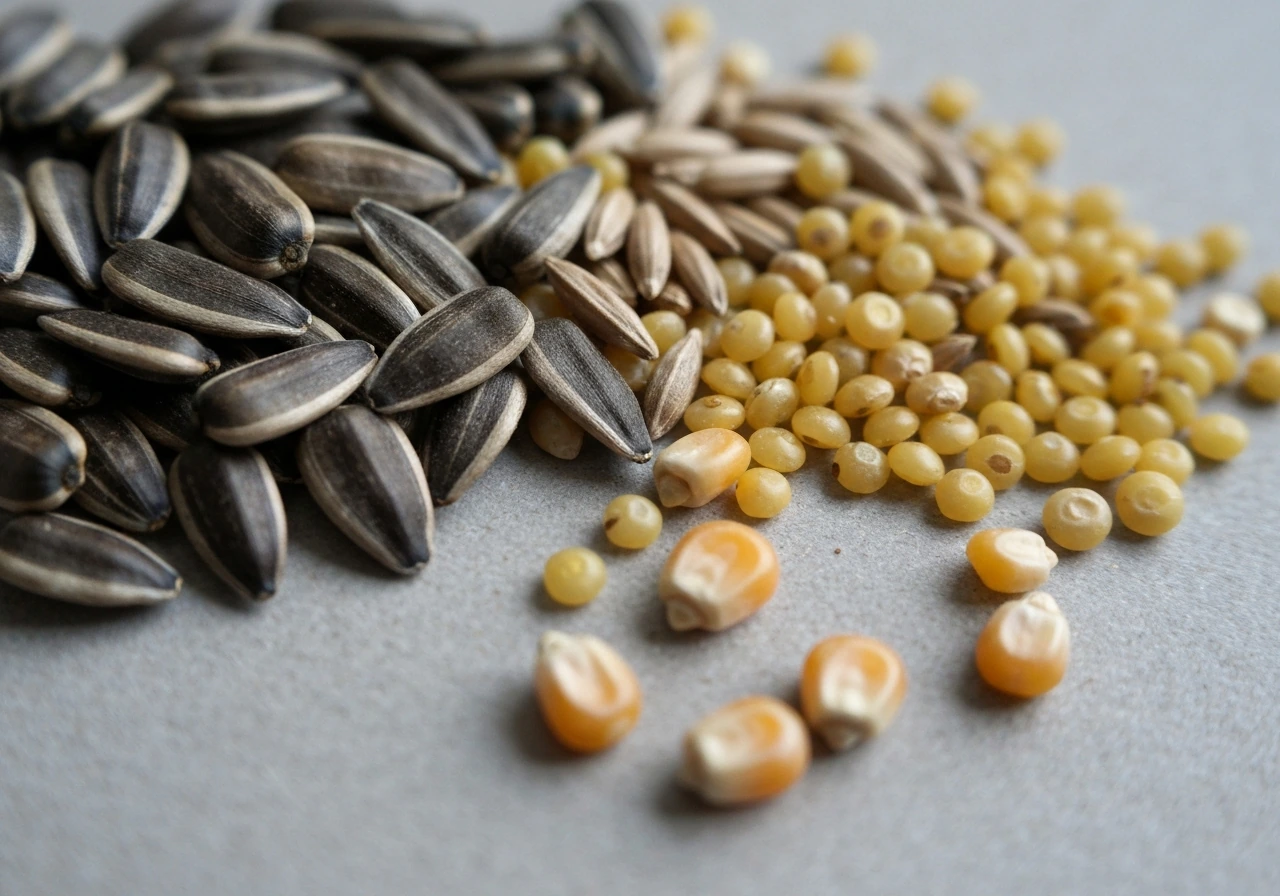
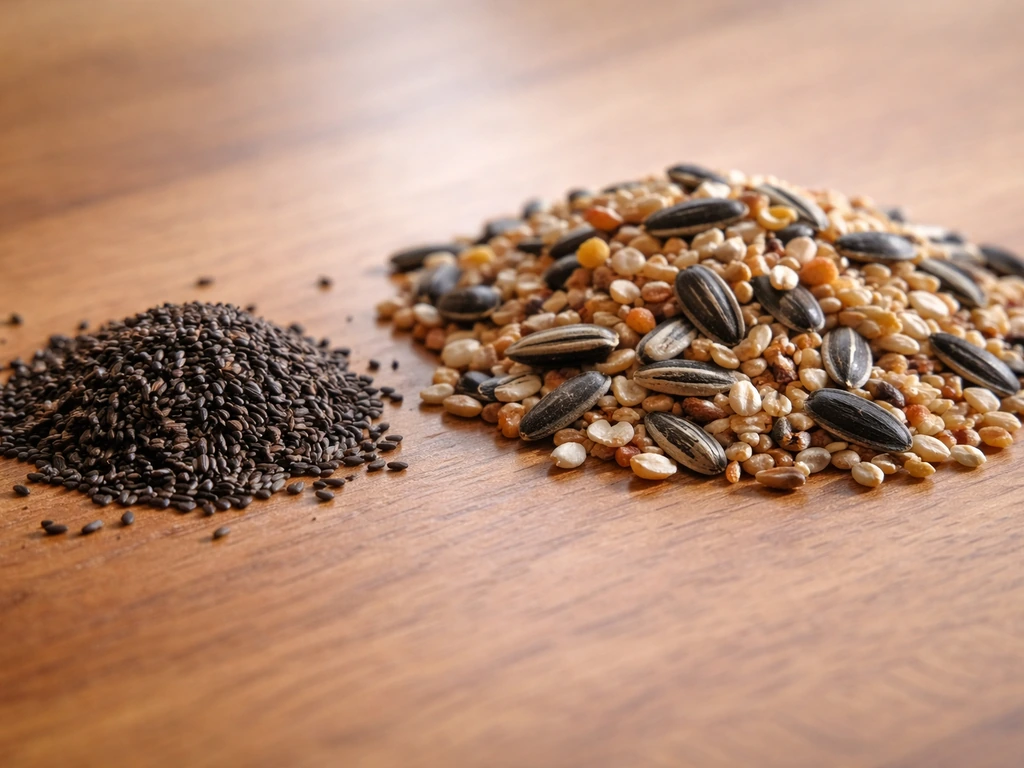
Real Nyjer is unmistakable once you've seen it. The seeds are tiny, roughly the size of a grain of rice but thinner, and they're dark brown to black with a slight sheen from the oil content. If you're curious what bird seed looks like when it grows, compare that to Nyjer's tiny dark brown to black, slightly oily look once it's processed and ready for feeding seed size and color. They're much smaller than sunflower seeds and noticeably thinner than millet. If you pick up a handful, they're slippery and slightly greasy between your fingers.
When buying, check the bag label for the species name Guizotia abyssinica. That's the clearest way to confirm you have real Nyjer and not a cheap substitute or filler. Some bags will also carry the Nyjer trademark symbol. You'll find it at most wild bird specialty stores, big-box garden centers, and online retailers. It's typically sold in 5 lb, 10 lb, and 25 lb bags. Unless you have multiple active finch feeders, start with a 5 lb bag so you're not storing large quantities that can go stale.
One thing to watch for: some cheap 'finch mixes' dilute Nyjer with millet, flax, or other small seeds. Finches will pick through and ignore most of those fillers. If you're buying a blend, check the ingredient list and make sure Nyjer (Guizotia abyssinica) is listed first.
Best feeders and setup for finches (what to do today)
Nyjer requires a dedicated feeder. You cannot use a standard seed feeder with large ports because the seed is so tiny it will pour straight through, pile up on the ground, and attract pests instead of birds. There are two feeder types that work well.
| Feeder Type | How It Works | Best For | Watch Out For |
|---|---|---|---|
| Tube feeder with small ports | Rigid tube with tiny slots or holes; finches cling and feed from openings | Year-round use, easier to clean, holds more seed | Ports must be very small (pinhole size); standard tube feeders won't work |
| Thistle sock / mesh bag | Disposable or reusable fine mesh bag; finches cling to mesh and pull seed through | Quick setup, cheap to start, works outdoors in dry weather | Gets wet and molds fast; replace or dry frequently in humid climates |
| Metal mesh feeder | Rigid metal cylinder with mesh walls; finches cling anywhere on the surface | High traffic, durable, easy to clean thoroughly | Higher upfront cost; watch for rust at seams |
My recommendation: start with a rigid tube feeder that has ports specifically labeled for Nyjer or finch seed. They're easier to clean, last longer, and keep the seed drier than a mesh sock. Metal mesh feeders are worth the upgrade if you get heavy finch traffic. Thistle socks are fine in dry climates or as a temporary option, but in humid regions they trap moisture and become mold problems fast.
Placement tips
- Hang the feeder at least 4 to 5 feet off the ground, away from squirrel launch points (fences, branches within 10 feet horizontally).
- Place it in a spot with some shelter from wind but not directly under a tree that drops debris into the feeder.
- Avoid placing it directly over a garden bed if you want to minimize any seed that falls and accumulates on the soil.
- In hot climates, keep feeders out of direct afternoon sun to slow oil degradation in the seed.
Storage and handling to prevent mold, sprouting, and rancidity
Nyjer's high oil content means it goes rancid faster than sunflower or millet, especially in warm weather. Rancid seed smells off (faintly sour or musty), and birds will reject it even if it looks fine to you. This is one of the more common reasons people buy Nyjer and then complain finches won't touch it.
How to store it correctly
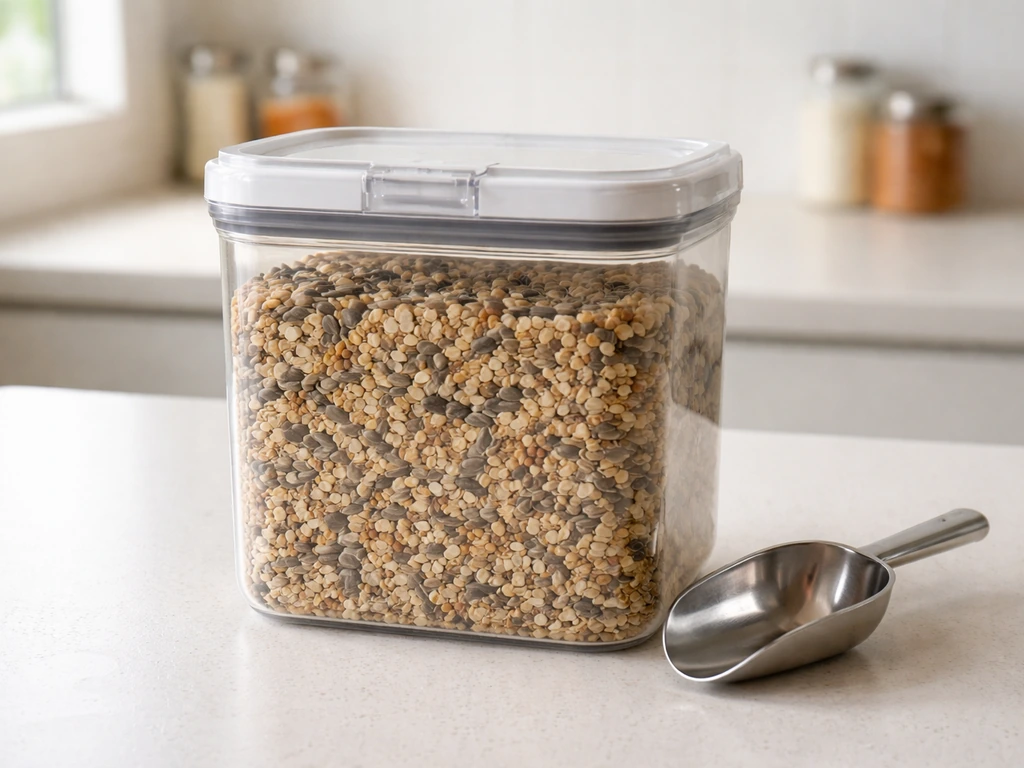
- Transfer seed from the paper or plastic bag into a hard-sided airtight container as soon as you get home. Metal tins or food-grade plastic bins with tight lids work well.
- Store in a cool, dry location. A garage is fine in mild climates but can get too hot in summer; a basement or interior closet is better. Aim to keep storage temperature below 70°F when possible.
- Keep moisture out. Seed should stay at around 2.5 to 5% moisture for long-term storage. In practice, that just means: sealed container, cool space, no condensation.
- Use within 4 to 6 weeks of opening, especially in summer. In winter, properly sealed seed can last longer, but don't push it past 8 weeks once the bag has been opened.
- Never store near pesticides, fertilizers, or strong-smelling chemicals. Oily seeds absorb odors.
Only fill feeders with what birds will eat in 2 to 3 days. Topping up a feeder that still has old seed at the bottom just pushes stale seed deeper. Dump and refill rather than top off.
Pests and infestation prevention (and what to do if you see them)
Stored Nyjer can attract pantry insects including weevils (snout beetles), Indian meal moths, and grain beetles. These pests can work through multiple life stages in infested seed, so a bag that looks fine on the outside might already be compromised inside. Bird seed, dry pet food, and other stored grains are all common targets.
Preventing infestations
- Never store seed in the original paper bag longer than a few days. Paper bags aren't pest-proof.
- Inspect new seed when you buy it: shake the bag and look for fine dust or webbing on the outside, which can indicate moth larvae inside.
- Keep storage containers sealed at all times and check the lid seal every few weeks.
- Clean your storage container between bags: wipe out any residual dust and seed debris before refilling.
- Don't let spilled seed accumulate under feeders. Ground spillage is a direct invitation to rodents and insects.
What to do if you find pests
If you open a container and see moving insects, webbing, or larvae, the batch is compromised. Don't try to pick out the bad parts. Seal the container in a garbage bag and dispose of it outdoors. If the infestation is light and caught early, you can try freezing the entire sealed bag in a household freezer for a week, then sifting out debris before use. That said, for Nyjer specifically, which is already a delicate oily seed, I'd usually just discard and start fresh rather than risk feeding degraded seed to birds.
After disposing of infested seed, wash and dry your storage container thoroughly before refilling. Check the surrounding storage area for any seed dust or spills that could harbor remaining pests.
Cleanup and hygiene when seed gets wet, spills, or goes bad
Wet Nyjer is one of the fastest routes to mold at a feeder. Because the seeds are so small, they clump together when damp and create dense pockets where mold takes hold quickly. If your feeder has been rained on and the seed inside has gotten wet, the right move is to dump it, clean the feeder, let it fully dry, and refill with fresh seed.
Cleaning a Nyjer feeder
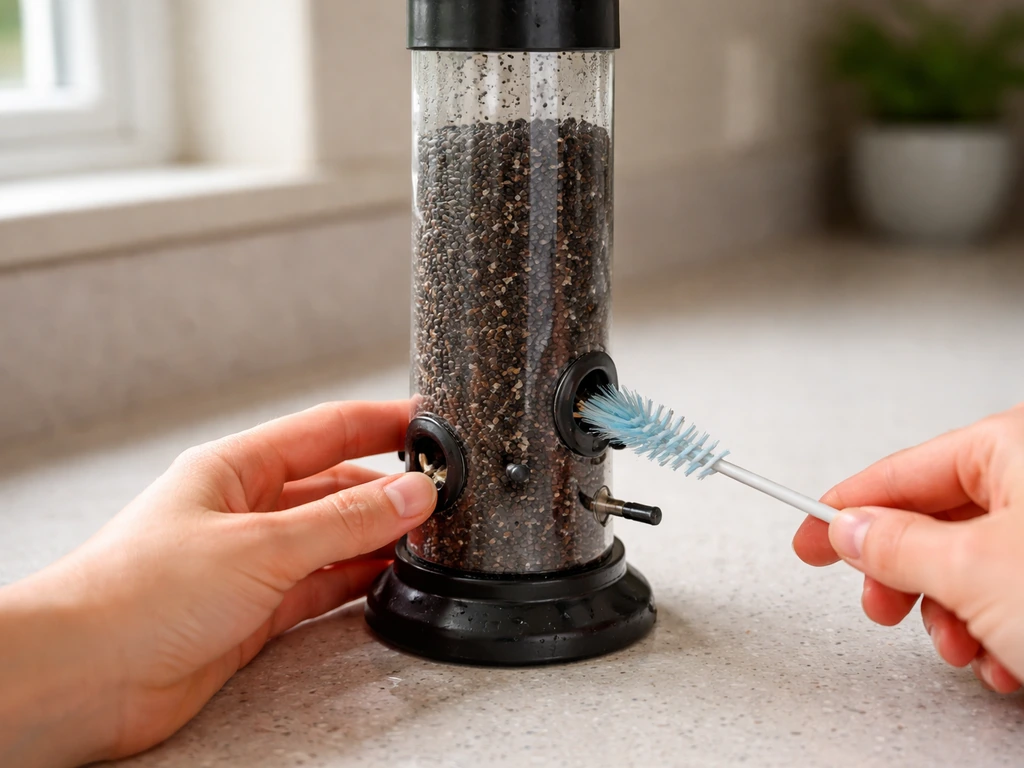
- Empty all remaining seed. Don't just shake out the loose stuff; use a bottle brush or pipe cleaner to push out any clumped seed stuck in the ports.
- Wash the feeder with hot soapy water, scrubbing all surfaces including port openings, perches, and the inside of the tube.
- Disinfect using a 1: 9 bleach-to-water solution (1 part household chlorine bleach to 9 parts water). Soak for 10 minutes, or apply with a cloth or brush to all surfaces.
- Rinse thoroughly with clean water at least twice. Bleach residue can harm birds.
- Allow the feeder to air dry completely before refilling. A wet feeder will immediately start the mold cycle over again.
- If the feeder is dishwasher-safe, the hot cycle works as an effective alternative to hand-washing with bleach solution.
Clean your feeder every 2 weeks as routine maintenance, and immediately after any rain event that gets inside the seed chamber. In humid climates (Gulf Coast, Pacific Northwest, Southeast in summer), weekly cleaning is worth it during peak moisture months.
Handling spilled seed on the ground
Nyjer seeds that fall to the ground should be raked or swept up regularly, ideally every few days. Because they're heat-treated and devitalized, they won't sprout into plants the way untreated seeds can (this is genuinely different from other seeds in a mixed feeder, which can absolutely germinate and become a weed problem). But they will still decompose, attract insects, and eventually mold. Keep the area under feeders clear to reduce pest activity and to stay on top of any seed that's gone off.
Troubleshooting: why birds aren't coming (or behaving differently)
Nyjer is one of those seeds where 'I put it out and nothing came' is a really common complaint. Here are the most likely causes and fixes.
| Problem | Most Likely Cause | Fix |
|---|---|---|
| No finches at all | Finches aren't present in your area yet, or wrong feeder ports | Check regional species calendars for American Goldfinch, Pine Siskin, Common Redpoll; confirm feeder has Nyjer-specific small ports |
| Finches visit but barely eat | Seed has gone rancid or stale | Dump and replace with fresh seed; smell the old seed before discarding to confirm |
| Seed disappears fast but no birds seen | Seed is spilling through oversized ports to the ground | Inspect ports; switch to a feeder with proper pinhole-sized openings |
| Wet clumped seed, mold visible | Feeder exposed to rain or condensation | Empty, clean with 1:9 bleach solution, dry fully, refill; add a weather dome if needed |
| Insects or larvae in feeder | Infested seed batch or old seed in ports | Dispose of seed, clean feeder fully, source fresh Nyjer from a new bag |
| Birds fed for weeks then stopped | Seasonal migration or seed quality drop | Replace seed; check if target species have moved on for the season |
| Only house sparrows or other non-finches | Wrong feeder type; large ports accessible to bigger birds | Switch to Nyjer-specific tube feeder with small ports that exclude larger birds |
The most important thing to check first when birds aren't coming is seed freshness and feeder port size. Those two factors account for the majority of Nyjer failures. If you're in a region where goldfinches are seasonal, timing matters too. American Goldfinches and pine siskins are the most reliable year-round or winter visitors depending on your latitude, while common redpolls are more of a northern specialty. Knowing which finch species should actually be in your area and when is the fastest way to rule out a setup problem versus a bird-availability problem.
One last note: Nyjer is genuinely different from generic seed mixes in how it behaves. It spoils faster, needs specialized equipment, and attracts a narrower group of birds. But when you set it up correctly, with fresh seed, a proper small-port feeder, and regular cleaning, it's one of the most reliably effective seeds you can offer for attracting finches specifically. If you are wondering what bird seed grows into indoors, the key is understanding which seeds are likely to sprout and under what conditions attracting finches specifically.
FAQ
Can I use Nyjer bird seed in any bird feeder I already own?
Yes, but only in a way that matches its purpose and shape. You can use Nyjer only in feeders with small, finch-style ports or a finch tube feeder. Do not put it in a large-port hopper, because it will spill and pile up on the ground, increasing waste, mold risk, and pest activity.
If Nyjer is heat-treated, do I still need to clean up fallen seed?
Nyjer itself is heat-treated so it usually will not sprout into weeds, but it can still decompose and attract insects when it’s left under feeders. If you want to minimize seed fall problems, rake or sweep frequently and refresh the ground area so you are not leaving a long-term food source for pests.
What should I do if my Nyjer gets rained on or turns clumpy?
It depends on what “mold” looks like and how long it’s been wet. If the seed became damp from rain, the safest approach is to discard it, clean the feeder, let it dry completely, and refill with fresh seed. If you notice clumping or a musty smell, treat it as spoiled even if the surface looks mostly intact.
My finches won’t eat Nyjer, even though it looks normal. What’s most likely wrong?
If finches ignore a fresh-looking bag, the two most common causes are rancidity and a feeder issue (ports that are too large or the wrong feeder type). Check for an off, sour or musty odor, then confirm your feeder has Nyjer-labeled small ports, because finches can’t access seed that is falling out or trapped incorrectly.
How can I tell whether the bag is actually Nyjer and not a substitute?
“Thistle seed” in the store is often used as a confusing catch-all name. The reliable way to confirm real Nyjer is to look for Guizotia abyssinica on the label, and ideally the Nyjer trademark. If the ingredient list does not clearly identify it, assume the mix may include substitutes or more filler than Nyjer.
Will Nyjer mixes work as well as pure Nyjer?
A mix can work, but it can also make Nyjer less effective if Nyjer is not the dominant component. Check the ingredient list and make sure Guizotia abyssinica appears first. Even if finches will pick through, large amounts of millet or flax can attract other birds while reducing the amount of Nyjer they consume.
Can I keep refilling my feeder instead of dumping and refilling?
Yes, and it’s usually the better approach for oily seeds like Nyjer. Plan to refill only what birds will finish within about 2 to 3 days, dump what remains, and restart. Topping off leaves older, more oxidized seed in place, which can reduce finch feeding.
What should I do if I see weevils or meal moths in stored Nyjer?
If you find insects, webbing, or larvae, do not try to salvage by scooping the top layer. Seal the container and dispose of it outdoors. Freezing a lightly infested batch can sometimes help for other dry grains, but because Nyjer is oily and more delicate, most people should discard rather than risk feeding degraded seed to birds.
How can I tell if my stored Nyjer has gone rancid?
Rancid Nyjer is identifiable by smell and bird response. If it smells faintly sour or musty, and birds refuse it even when other food is available, assume it is spoiled. In warm weather, shorten the time you keep it open, and store it sealed to limit heat and moisture exposure.
Any storage tips to keep Nyjer fresh and pest-free?
Nyjer generally is best when it is stored in a cool, dry, tightly sealed container and used promptly after opening. After any pest issue or a spill, wash and fully dry the container before refilling, and check the surrounding storage area for leftover seed dust or debris.