Yes, chipmunks absolutely eat bird seed. They are granivores by nature, meaning grains, nuts, and seeds make up the bulk of their diet. If you have a bird feeder in your yard, chipmunks will find it. It is not a matter of if, it is a matter of when. The real question is how to keep feeding the birds you want without turning your yard into an all-you-can-eat buffet for every chipmunk in the neighborhood.
Do Chipmunks Eat Bird Seed? How to Stop Seed Raids
Maya Collins
19 Apr 2026
Why chipmunks are drawn to bird seed
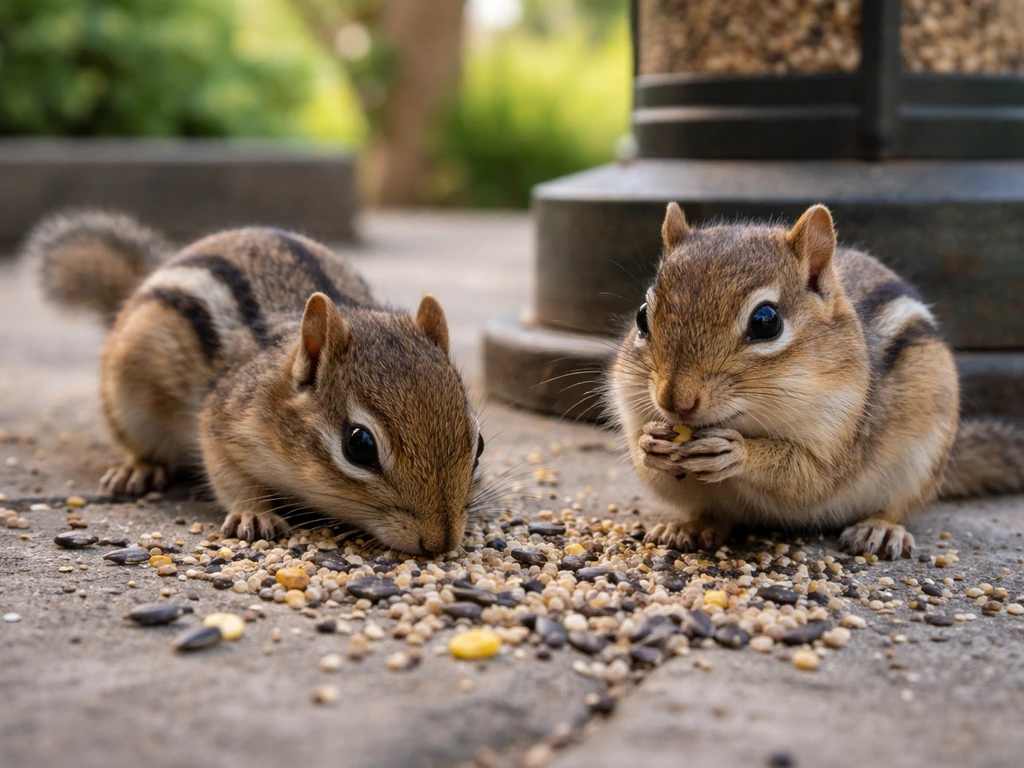
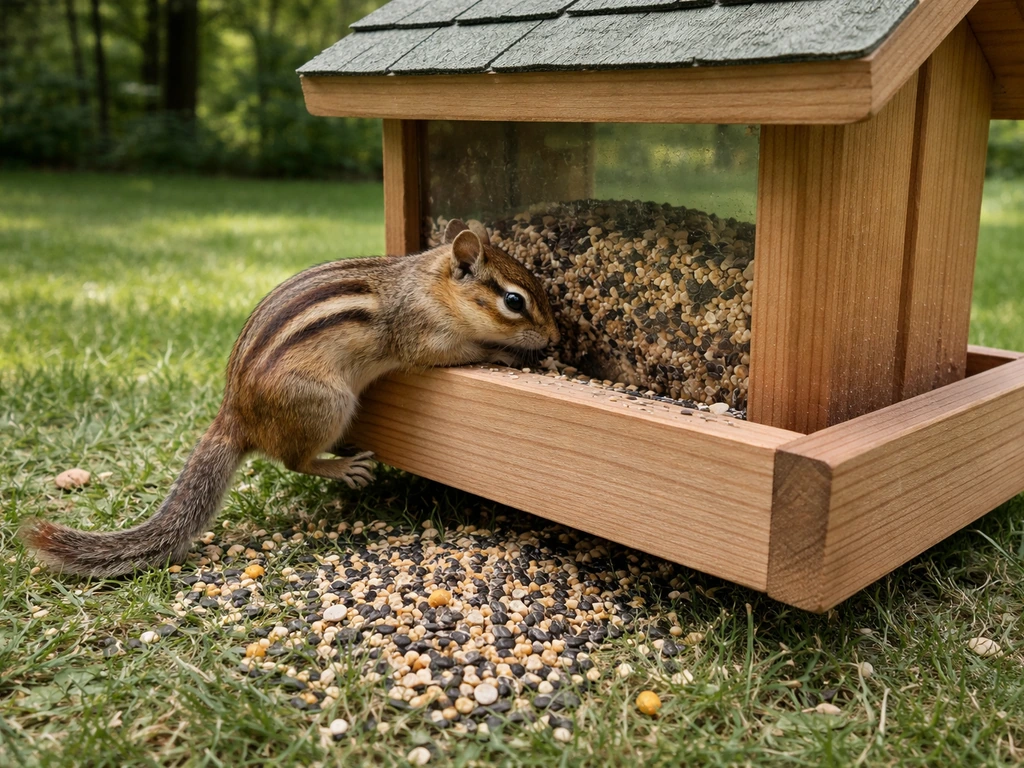
Chipmunks are opportunistic foragers, and bird seed checks every box on their grocery list. Their natural diet consists primarily of grains, nuts, berries, and seeds, so a well-stocked feeder is essentially a perfect food source. What makes the problem worse is their caching behavior. A chipmunk does not just eat what it finds on the spot. It stuffs its cheek pouches and hauls the food back to an underground burrow for storage. Researchers have observed individual chipmunks transporting as many as 70 sunflower seeds in their cheek pouches in a single trip. That means one chipmunk can drain a significant portion of your feeder in just a few runs.
Spilled seed beneath your feeder is often the first attractant. Chipmunks are frequent visitors under feeders, foraging through the hulls and scattered seed that birds knock off. Once they discover the supply, they start climbing to reach the feeder itself. Left unchecked, chipmunks and squirrels can empty a feeder completely in a short time. Similar nuisance patterns show up with other ground-foragers like groundhogs and gophers, but chipmunks are particularly persistent because of their caching drive. Gophers can also be attracted to bird seed, so it helps to confirm what animal is actually doing the feeding.
The seeds chipmunks go after first
Chipmunks are not picky, but they do have clear preferences. They target the most energy-dense seeds available. In a typical backyard mix, that means they head straight for the high-fat, high-calorie options.
- Sunflower seeds (especially black-oil sunflower): the top target, easy to crack and extremely calorie-dense
- Peanuts (whole or shelled): highly preferred and quickly cached
- Cracked corn: easy to carry in large quantities and commonly found in mixed blends
- Millet: small enough to grab in bulk and often scattered on the ground where chipmunks forage
- Safflower and nyjer (thistle): less preferred but will be taken when better options are gone
If your feeder mix contains sunflower seeds, peanuts, or cracked corn, you are going to attract chipmunks. Switching to straight nyjer or safflower seed reduces (but does not eliminate) chipmunk interest, since most chipmunks will still eat those seeds when hungry or when caching for winter.
How to tell if chipmunks are the problem
Before you change your whole feeder setup, make sure you are actually dealing with chipmunks and not squirrels, rats, or another animal. The signs are fairly specific once you know what to look for.
Behavioral and physical signs
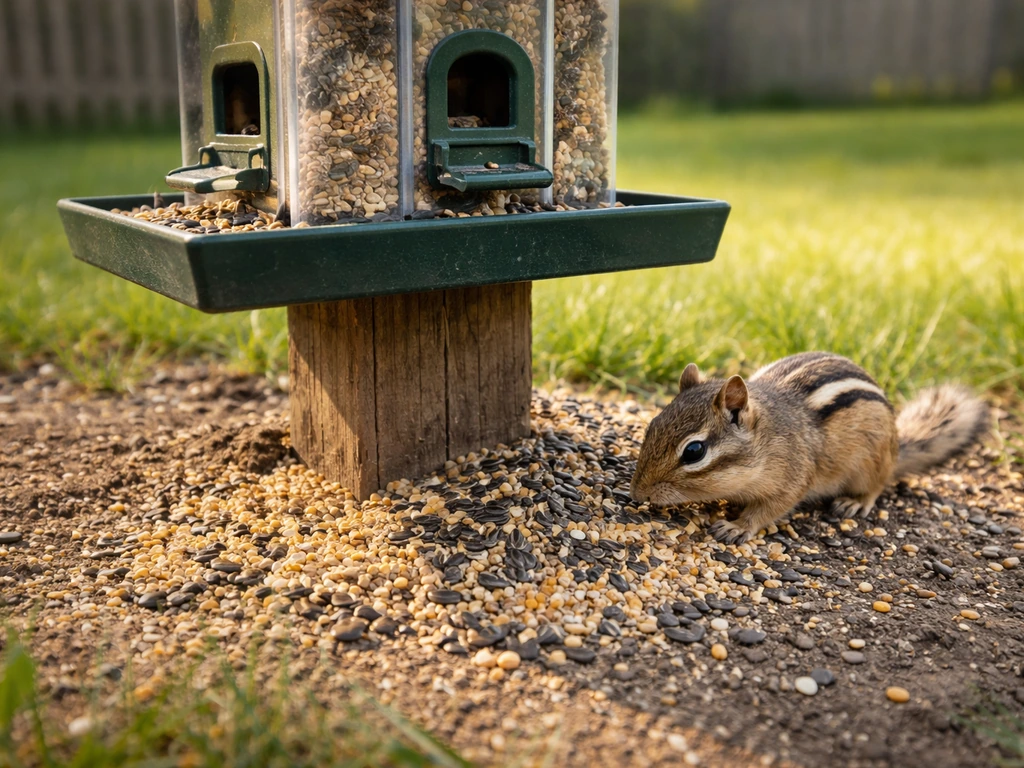
- Feeders emptying faster than your birds can account for, especially between early morning and mid-afternoon when chipmunks are most active
- Seed scattered in a wide radius around the base of the feeder (chipmunks knock seed loose while climbing and foraging)
- Small burrow entrances in the yard, near flower beds, retaining walls, or along foundations, often 2 inches in diameter with little or no loose soil at the opening
- Tiny tracks in soft soil or mud near the feeder: chipmunk prints show four toes on the front feet and five on the back, with a narrow stride and tail-drag marks sometimes visible
- Seed hulls or whole seeds stored near burrow openings or in small piles under garden debris
- A chipmunk seen climbing the feeder pole or darting in and out of ground cover repeatedly in short trips (the caching behavior is very distinctive)
A key distinction from squirrels: chipmunks are smaller, move in short quick bursts, and keep very close to cover. They rarely linger at the feeder the way a squirrel does. If the feeder is being drained steadily without you ever catching the culprit in the act, set up a phone or camera early in the morning. Chipmunks are typically done for the day by mid-afternoon.
Practical ways to protect your bird seed
There is no single fix that eliminates chipmunks entirely, but combining a few strategies works well. Start with the highest-impact changes first.
Use a baffle on the pole
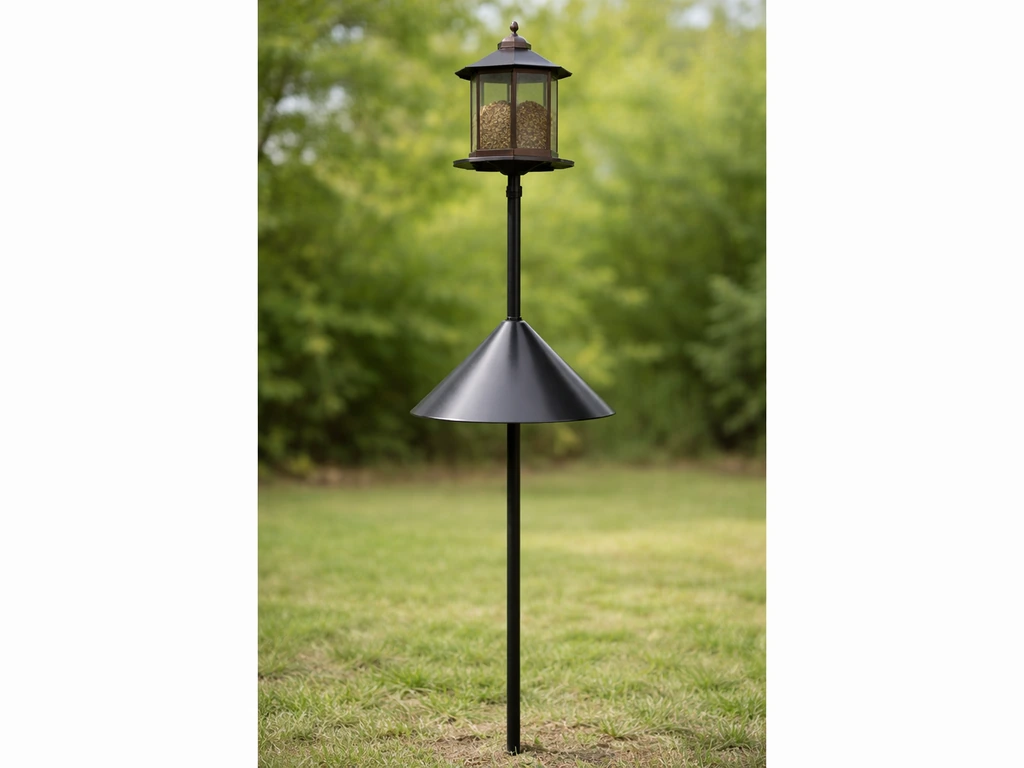
A pole-mounted squirrel baffle is your most effective tool. A cone or cylinder baffle placed at least 4 to 5 feet up on the pole prevents chipmunks from climbing to the feeder. It only works if the pole is not close enough to a fence, shrub, or tree branch for a chipmunk to jump from. Keep the pole at least 10 feet from any such launching point. Chipmunks are more agile climbers than many people expect, so a baffle alone without proper placement will still fail.
Install barriers above and below the feeder
Beyond the standard baffle, adding chipmunk-proof barriers both below and above the feeder housing creates a double obstacle. Some birders mount a cage or mesh guard around the feeder itself, using hardware cloth with 1/4-inch (0.6 cm) mesh openings. This mesh size is small enough to exclude chipmunks while still allowing most songbirds to feed through or access ports. The same 1/4-inch hardware cloth is the standard recommendation for exclusion from pest management authorities, and it is also useful for sealing any gaps in storage sheds or garage areas where seed is kept.
Manage the ground feeding zone
Spilled seed on the ground is the number one chipmunk attractant. You have two options here. The first is to reduce spill by using feeders with catch trays and no-waste seed mixes (hulled sunflower, for example). The second is to accept some ground feeding but clean it up consistently, at least every day or two during warm months. If you use a ground tray feeder intentionally for birds like juncos and sparrows, place it on a hard surface like flagstone or concrete so that seed cannot be buried and the area is easy to sweep clean.
Try seed types chipmunks avoid
Switching some of your seed to safflower can reduce chipmunk activity at the feeder. Many chipmunks are less enthusiastic about safflower than sunflower, and birds like cardinals, chickadees, and nuthatches take it readily. Nyjer seed in a tube feeder with small ports is another option, since the tiny port size physically prevents chipmunks from feeding efficiently. That said, no seed type is fully chipmunk-proof if the animal is persistent and hungry.
Feeder setup and placement: the specifics
Where and how you mount your feeder matters as much as what kind of baffle you use. Here is a practical setup that works for most backyard layouts.
- Place the feeder at least 15 to 30 feet from any building or structure. This keeps spilled seed away from your foundation and reduces the chance that chipmunks nest near your home as a result of the food source.
- Keep the feeder at least 10 feet from trees, shrubs, fences, and any elevated surface a chipmunk could use to jump from.
- Mount the feeder on a smooth metal pole (not wood, which chipmunks can grip easily) at a height of 5 to 6 feet.
- Install a cone baffle on the pole at least 4 feet off the ground, below the feeder. Make sure the baffle is wide enough (at least 18 inches in diameter) that a chipmunk cannot reach around it.
- Position the feeder away from dense ground cover. University of Maine guidance suggests keeping feeders at least 15 feet from shrubby cover, which reduces both predator ambush risk for birds and rodent highway access for chipmunks.
- If you are in a region with heavy chipmunk pressure (wooded areas of the Northeast, Great Lakes, or Pacific Northwest), consider using a covered hopper feeder rather than an open platform. The enclosed design limits access and keeps seed dry.
Feeder type comparison
| Feeder Type | Chipmunk Access Risk | Best For | Notes |
|---|---|---|---|
| Tube feeder (small ports) | Low to moderate | Nyjer, hulled sunflower | Port size limits bulk access; use with baffle |
| Hopper/house feeder | Moderate | Sunflower, mixed seed | Enclosed design helps; still needs pole baffle |
| Open platform/tray feeder | High | Ground-feeding birds | Spill is unavoidable; clean daily |
| Cage/mesh feeder | Low | Suet, peanuts | Wire mesh physically excludes chipmunks if openings are under 1/4 inch |
| Squirrel-proof spring feeder | Low | Most seed types | Weight-activated closing; effective but costs more |
If budget is a concern, a tube feeder on a smooth metal pole with a cone baffle is the most cost-effective combination. Add a catch tray with drainage holes to reduce spill without creating a ground-level chipmunk buffet.
Seed storage, cleanup, and keeping things hygienic
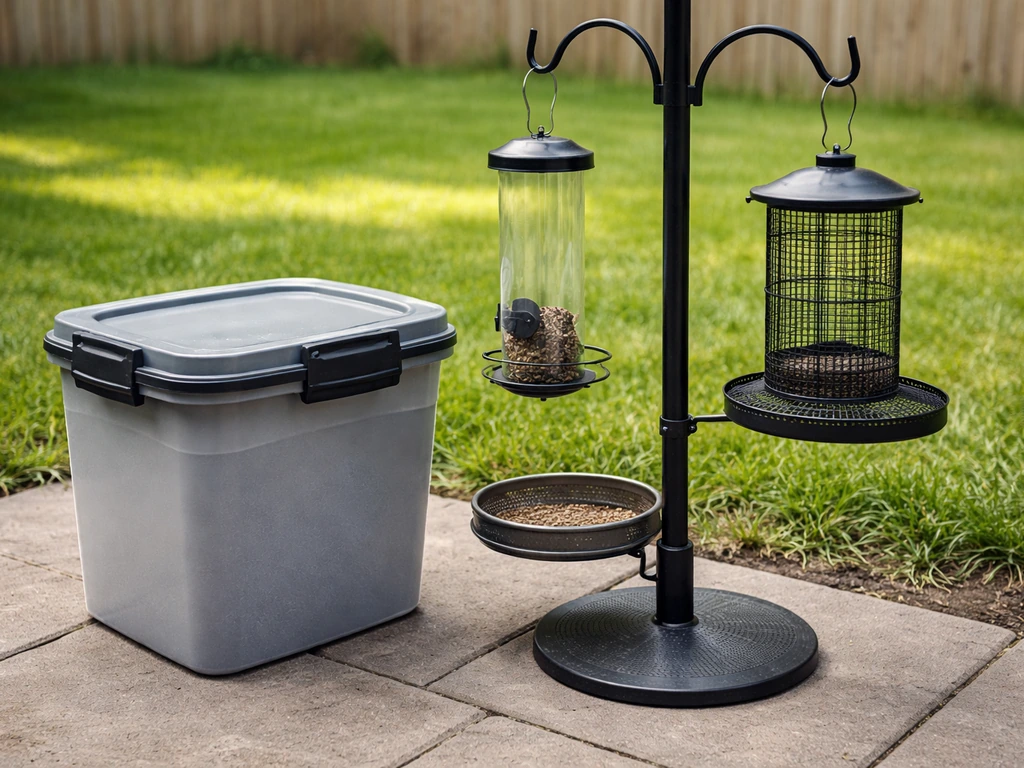
A clean yard and proper seed storage are not just about aesthetics. Wet or sprouted seed can harbor mold and bacteria that make birds sick, and a poorly managed feeding area creates a persistent attractant that no baffle will fully overcome.
Storing seed so it stops attracting pests
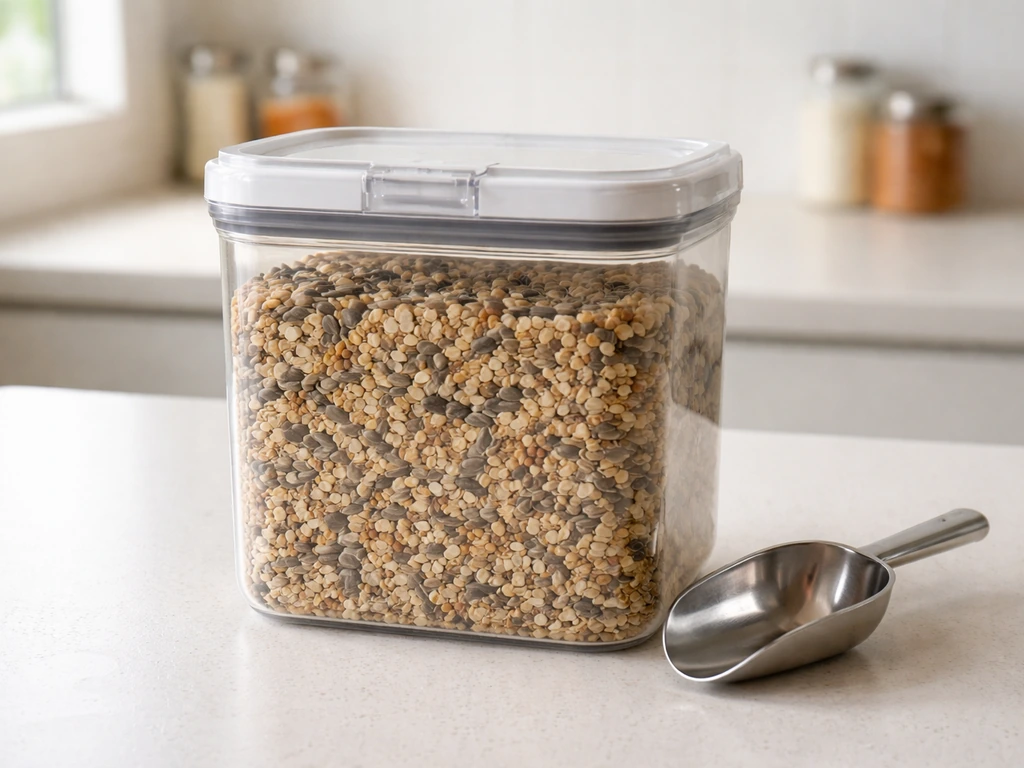
- Store seed in hard-sided, airtight containers, metal or thick plastic with secure lids. Chipmunks can chew through thin plastic bags and cardboard boxes.
- Keep storage containers indoors or in a garage or shed, not on an open deck or porch where chipmunks can locate and access them.
- Do not buy more seed than you can use in 4 to 6 weeks. Fresh seed has lower moisture content and is less prone to mold.
- If seed gets wet or clumps together in the container, discard it. Wet seed grows mold quickly, and moldy seed can cause respiratory disease in birds.
- Sanitize storage containers periodically. Rinse with a 10 percent bleach solution (1 part bleach to 9 parts water), let it air dry completely before refilling.
Feeder cleaning schedule
Project FeederWatch recommends cleaning feeders roughly every two weeks under normal conditions, and more often (every few days) during warm or wet weather. Chipmunk activity increases the urgency because their droppings and digging introduce contamination to the area below the feeder. Here is a straightforward cleaning routine:
- Empty the feeder completely. Discard any wet, moldy, or foul-smelling seed. If seed smells musty or you see any black or green growth, it goes in the trash, not back in the feeder.
- Remove all debris, hulls, and droppings from inside the feeder using a stiff brush.
- Rinse the feeder with hot water, then disinfect with a 10 percent bleach solution.
- Rinse thoroughly with clean water to remove all bleach residue.
- Allow the feeder to dry completely before refilling. A damp feeder seeds mold growth within days.
- Sweep or rake the area below the feeder to remove spilled seed, hulls, and droppings. Bag and dispose of this material rather than composting it.
What to do if seed has already sprouted or gotten wet
Chipmunk digging around the base of a feeder can bury seed, and spilled seed in damp soil will sprout within days. Sprouted seed is not necessarily toxic, but it can develop mold as it decays, and the sprouting plants signal to chipmunks and other wildlife that there is buried food in the area. If you notice sprouting under your feeder, rake it up, remove the seedlings, and consider laying a layer of hardware cloth flat on the ground beneath the feeder (covered lightly with gravel) to prevent buried seed from taking root. Some birders use a concrete or stone pad under the feeder entirely, which makes cleanup far easier and eliminates the sprouting problem.
Regional notes
In warmer, wetter climates (the Southeast and Pacific Coast), mold builds up faster in feeders and on spilled seed. Clean feeders weekly rather than biweekly during summer and fall. In colder northern regions (New England, the Upper Midwest, and the northern Rockies), chipmunks are less active in winter because they enter a semi-dormant state, but they start foraging aggressively in early spring when their cached food runs low. That March and April window is when chipmunk pressure at feeders typically spikes, so it is worth reinforcing your setup before that period rather than reacting after the fact.
The bottom line on chipmunks and bird seed
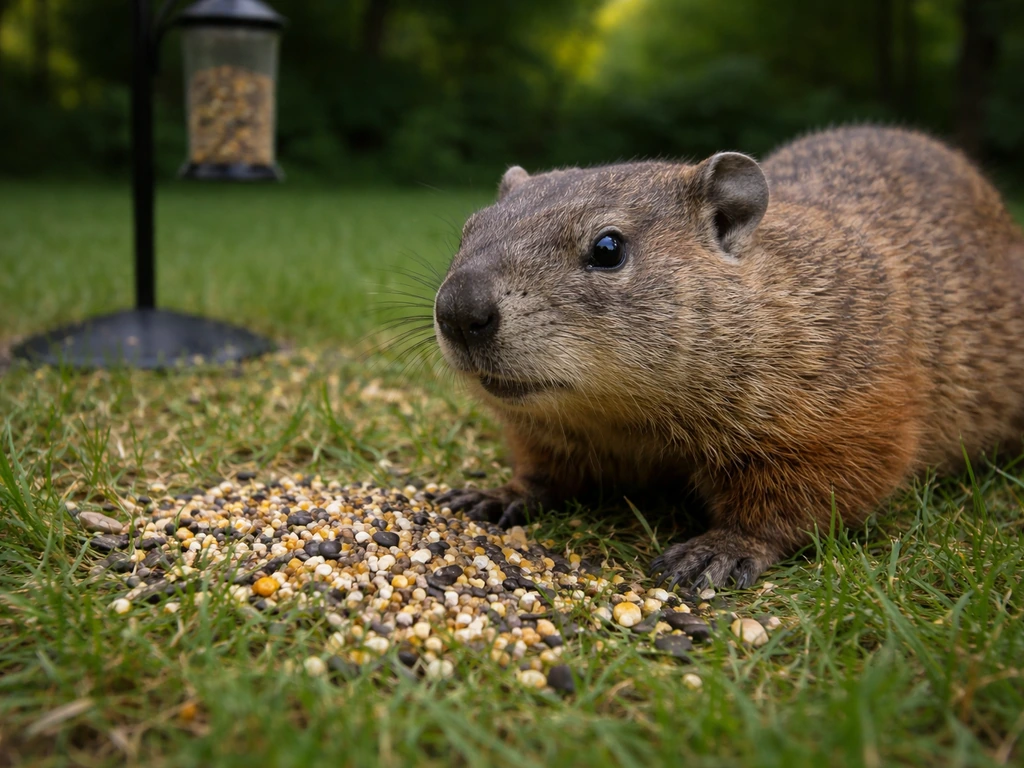
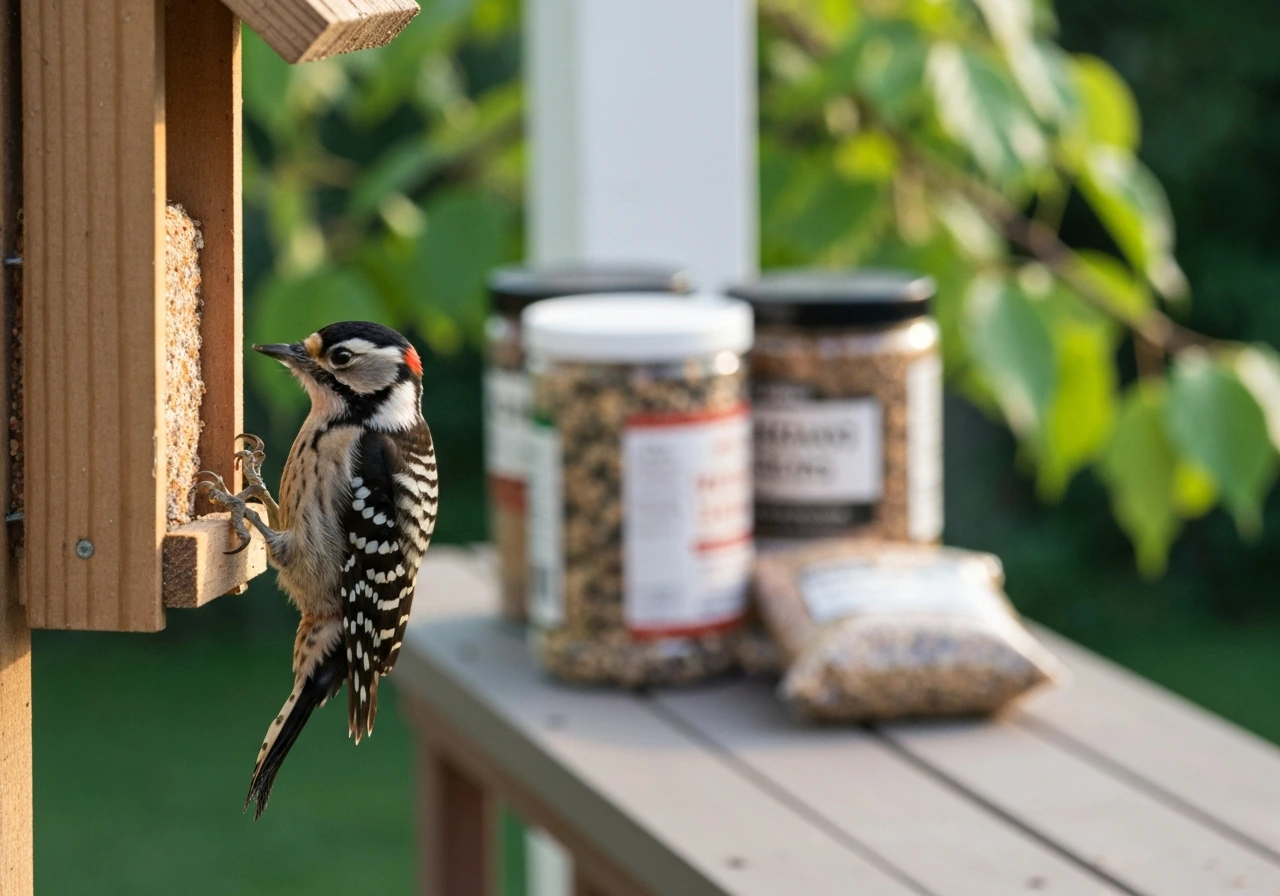
Chipmunks will eat your bird seed, they will cache it, and they will keep coming back as long as the supply is there. Yes, hedgehogs can eat bird seed, but they are not typically a main feeder visitor like chipmunks can hedgehogs eat bird seed. Woodchucks are also known to eat many types of seeds, including what you put out in a bird feeder do woodchucks eat bird seed. Do groundhogs also eat bird seed, or are they mainly interested in other types of food around your yard do groundhogs eat bird seed. Yes, purple martins can eat bird seed, but they prefer natural prey like insects and will usually only eat seed incidentally do groundhogs also eat bird seed. You might also wonder, do woodpeckers eat bird seed, and how their feeding differs from chipmunks at backyard feeders? The good news is that you do not have to choose between feeding birds and dealing with chipmunks. A smooth metal pole, a properly sized cone baffle, the right feeder type, and consistent seed cleanup will handle the majority of chipmunk pressure. Keep feeders 15 to 30 feet from your home, store seed in sealed metal containers, and clean your feeder every two weeks. That combination protects your seed supply, keeps birds healthy, and makes your yard a much less attractive destination for chipmunks looking for an easy meal.
FAQ
What time of day should I check if a chipmunk is raiding my feeder?
Chipmunks usually do most of their foraging earlier in the day and slow down later, so set up your camera or do quick checks in the morning. If you want the best chance to catch them in action, place the camera view so it shows the base of the pole and the feeder opening, since that is where burrow-carrying behavior starts.
Will sunflower oil, suet, or other bird foods make chipmunks worse even if I switch seed types?
Yes, they can. Chipmunks may ignore some seed types, but they will still use bird feeders if there is an energy-dense food source available. If you keep suet blocks, peanut-based mixes, or high-calorie treats nearby, expect chipmunks to treat them as a secondary buffet, so reduce or move those items during the raid period.
Does using safflower or nyjer fully stop chipmunks?
No. These seeds can reduce interest because they are less preferred or harder to access, but chipmunks still eat them when hungry or when caching. The most reliable approach is pairing a less-attractive seed with physical exclusion (baffles, guards) and stricter cleanup to remove the “free” ground food they find under feeders.
How do I tell if squirrels, rats, or raccoons are draining my feeder instead of chipmunks?
Look for size and behavior patterns at the base. Chipmunks tend to stay very close to cover and make short, quick runs, while squirrels often linger and leave larger chewing damage on feeder parts. Rats are more likely to run along the ground and carry seed in different ways, and raccoons usually cause heavier disruption and broader nighttime disturbance. If possible, confirm with a camera focused on the feeder access point and the seed-catching area.
Are baffles safe for all feeder poles and heights?
They work best on smooth poles and when you can prevent “jump access” from nearby branches or structures. If your pole is close to a fence, shrub, or tree limb, chipmunks may bypass the baffle by launching from the side. Also ensure the baffle is properly sized for the pole diameter, otherwise they can climb or gain leverage at the edges.
Should I clean seed hulls and dropped seed under the feeder immediately, or is every few days enough?
In warm or wet weather, more frequent cleanup helps a lot because spilled seed can mold and sprouts can appear quickly, which increases wildlife attraction. If you cannot clean daily, aim for at least every day or two during peak activity periods, and always clean after heavy rain or windy days that spread seed widely.
What’s the best way to manage ground feeding without creating a chipmunk magnet?
If you intentionally use a ground tray, put it on an easy-to-sweep hard surface (concrete or stone) and remove leftover seed frequently. Avoid leaving seed in soil or mulch, since chipmunks can bury it and it will sprout or decay. Even if you tolerate some ground feeding, the key is removing the “stored food” advantage by preventing seed from being buried.
How should I store bird seed to stop chipmunks from returning?
Use sealed metal containers with tight lids and store them indoors or in fully sealed areas. Chipmunks are persistent and can exploit accessible storage sheds or garages, so treat storage protection as part of the feeder strategy. Keeping bags off the floor and away from entry gaps reduces opportunities for both scavenging and cache building.
Can I use deterrent sprays or mothballs to stop chipmunks from eating seed?
Most scent or taste deterrents are inconsistent and often only delay feeding briefly. If you try anything, treat it as a supplement to physical changes, not the main solution, because chipmunks will adapt when food is readily available. Prioritize baffles, feeder guards, and cleanup routines instead of relying on chemical deterrence.
Do chipmunks carry seed underground anywhere near the feeder, and can that create long-term problems?
Yes. Their caching behavior means the area under and around the feeder can become a continuing food source, especially if seed is left to collect in damp soil. To reduce long-term attraction, remove sprouting debris and consider a barrier like hardware cloth under the feeder area (with light coverage) to discourage buried, sprouted seed.
When should I reinforce my chipmunk control efforts during the year?
Plan for early spring. Even in regions where chipmunks are less active in winter, pressure often increases in March and April when stored food runs low, so baffles, feeder type changes, and cleanup intensity are most effective when set up before that spike rather than after raids become constant.