Yes, magpies can eat bird seed, and they will absolutely visit a backyard feeder if the setup is right. They are not dedicated seed eaters like finches or sparrows, but both Eurasian magpies (Pica pica) and black-billed magpies are opportunistic omnivores that will take advantage of accessible, high-energy food sources. Seed is one of those sources, especially when paired with other food types that match their broader diet. If you want to attract them, or you are trying to manage an existing magpie visit without creating a mess or a health hazard, there is a clear and practical way to do it. Purple martins can eat bird seed too, but they rely more on insects than on seed alone do purple martins eat bird seed.
Can Magpies Eat Bird Seed? What to Feed and Avoid

Maya Collins
31 May 2026
Do magpies actually eat bird seed, and when do they show up?
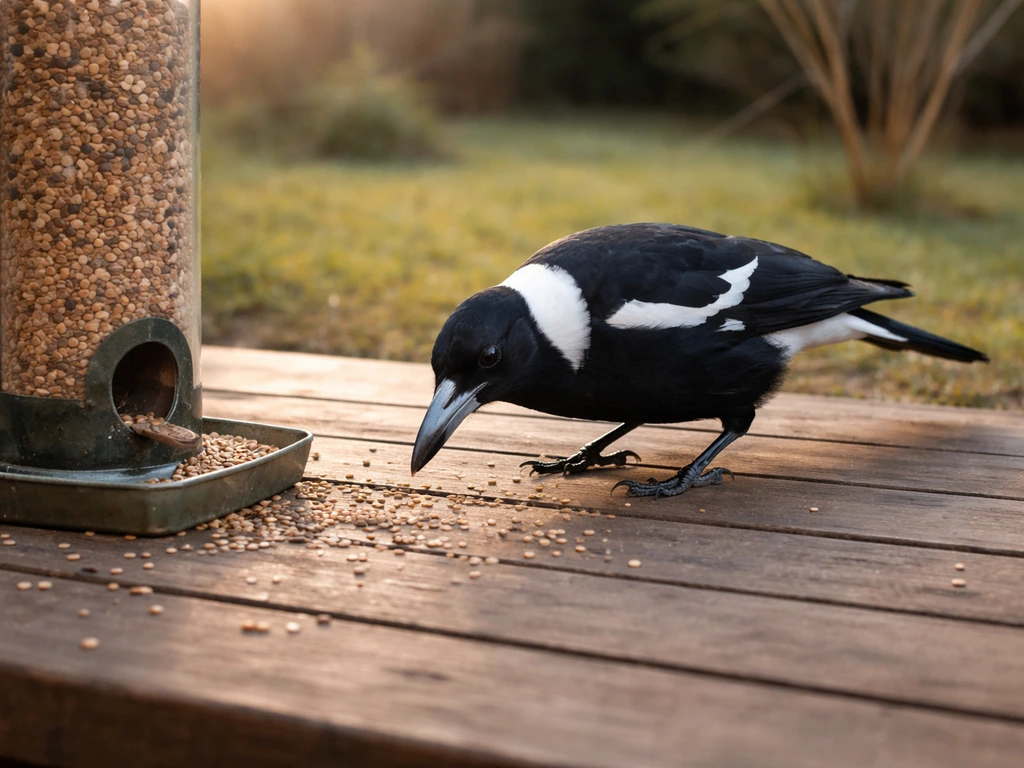
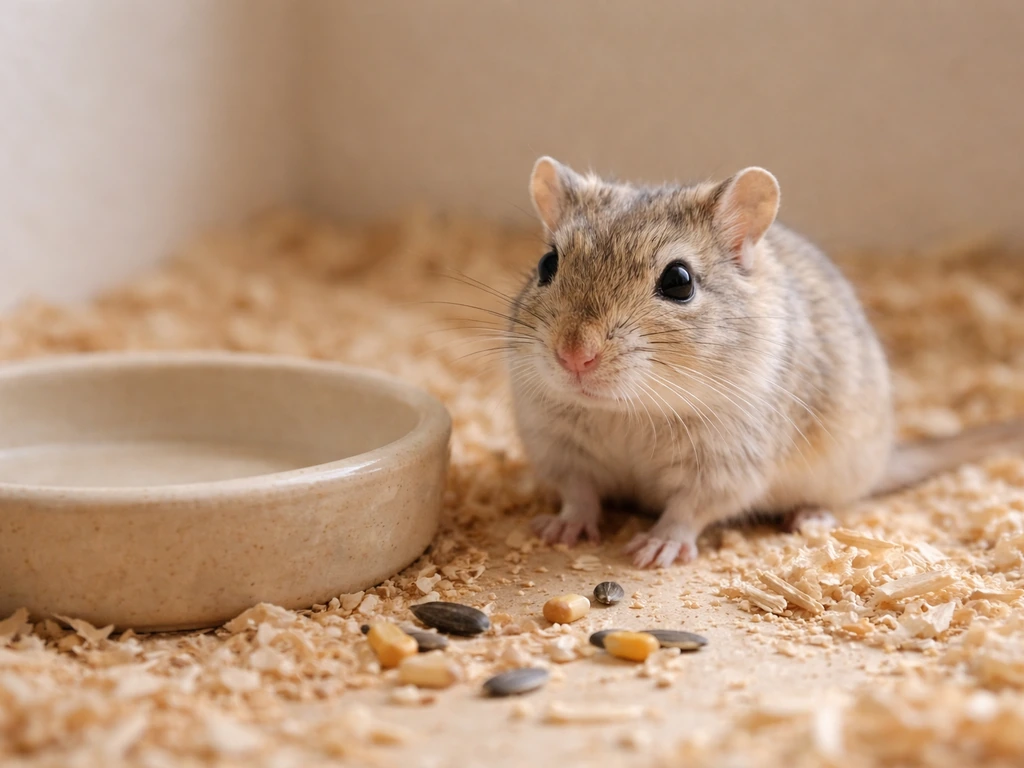
Magpies are generalist foragers, not specialist seed birds. Their natural diet spans insects, invertebrates, small vertebrates, eggs, berries, and yes, cereal grains and seeds. While magpies can eat bird seed, it helps to keep the type and setup appropriate so it does not turn into a mess or a health risk for the local animals, including gerbils cereal grains and seeds. Research from Mediterranean Iberia documented black-billed magpies consuming cereal seeds alongside invertebrates during the breeding season, which shows they genuinely incorporate seed into their diet rather than just sampling it. So the question is less about whether they can eat it and more about what conditions make seed worth their time.
In practice, magpies tend to show up at feeders most reliably in late autumn and winter when natural food is scarce, and during the breeding season when they need quick, calorie-dense options to feed young. They are ground foragers by habit, walking along and flipping objects with their bill to find food underneath. That behavior means a magpie will work over a patch of spilled seed on the ground with the same technique it uses to hunt beetles in a lawn. Once a magpie discovers a reliable food source, it can cache leftovers and return to them within one to two weeks, so a well-stocked feeder can turn into a regular stop on their circuit.
Best bird seed types for magpies
Because magpies are omnivores rather than seed specialists, the most effective approach is to offer a seed mix that is broad and energy-dense, ideally alongside some non-seed items. Here is what works well and why.
| Food item | Why magpies like it | Notes |
|---|---|---|
| Sunflower seeds (black oil or striped) | High fat and energy content, easy to crack or swallow whole | Black oil type has a thinner shell, easier for most birds |
| Cracked or whole corn (maize) | Cereal grain that matches their documented wild diet | Use whole kernel or cracked; avoid flavored or salted varieties |
| Mealworms (dried or live) | High protein, mimics invertebrate prey they naturally hunt | Especially attractive during breeding season |
| Peanuts (unsalted, quality-tested) | High fat and protein, very calorie-dense | Must be aflatoxin-tested and unsalted; see safety notes below |
| Mixed wild bird seed | Broad variety covers different nutritional needs | Choose mixes without excessive filler seeds like milo |
| Suet cakes or suet pellets | High energy fat source | Useful in cold months; place on a low platform or tray |
Magpies will pass over tiny seeds like nyjer (thistle) that require a specialized finch feeder. They are big birds with big bills, so they gravitate toward larger, accessible food items. A general wild bird mix with a good proportion of sunflower seeds and corn will get their attention faster than a premium finch blend.
What to feed vs. what to avoid
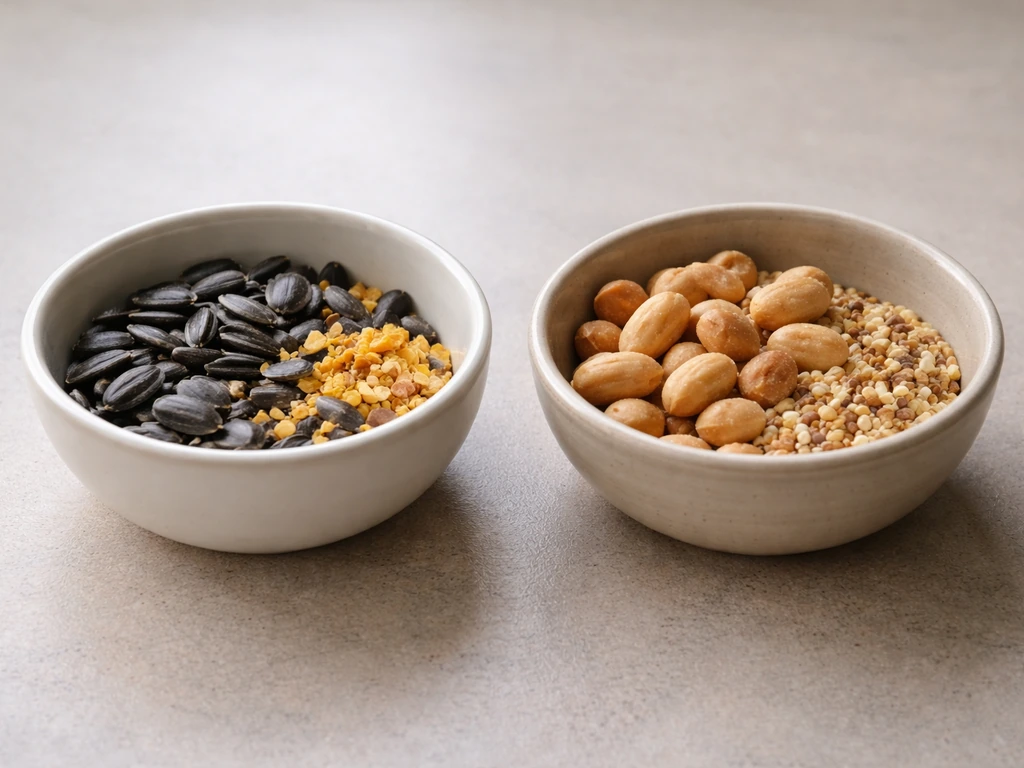
Safe choices
- Black oil sunflower seeds: energy-dense, thin-shelled, and accepted by a wide range of backyard birds alongside magpies
- Cracked corn or whole maize: directly matches the cereal grain component of their documented diet
- Dried or live mealworms: excellent protein source, especially useful during nesting season
- Unsalted, aflatoxin-tested peanuts: high value if quality is confirmed (see below)
- Suet cakes or pellets: great winter supplement, best offered on a flat surface or low tray
Things to avoid or handle carefully
- Salted peanuts or salted seeds: salt in excess is toxic to birds, including smaller species sharing the feeder space
- Poor-quality or improperly stored peanuts: these can carry aflatoxin, a cancer-causing fungal toxin that can be fatal to birds. The RSPB explicitly warns about this. Only buy peanuts from reputable suppliers who test for aflatoxin and store them in dry, cool conditions
- Wet or moldy seed of any kind: mold produces mycotoxins that are dangerous to birds. If seed has clumped, smells musty, or shows visible dark patches, discard it entirely rather than trying to dry it out
- Bread, cooked rice, or salty processed food scraps: these have no nutritional value for birds and can cause digestive problems or sodium overload
- Loose whole peanuts in warm months: the RSPB advises against loose whole peanuts during the nesting season because parent birds can carry them to chicks who then choke. Use a rigid mesh peanut feeder with appropriately sized holes if you offer them at all
The peanut and aflatoxin issue is worth taking seriously. Aflatoxins are monitored by regulators precisely because they are a genuine hazard at low exposure levels. For backyard use, this means buying peanuts labeled for wild birds from established bird-food brands, storing them cool and dry, and never using any peanuts that look shriveled, discolored, or have been exposed to moisture.
Feeder and tray setup to attract magpies and reduce mess
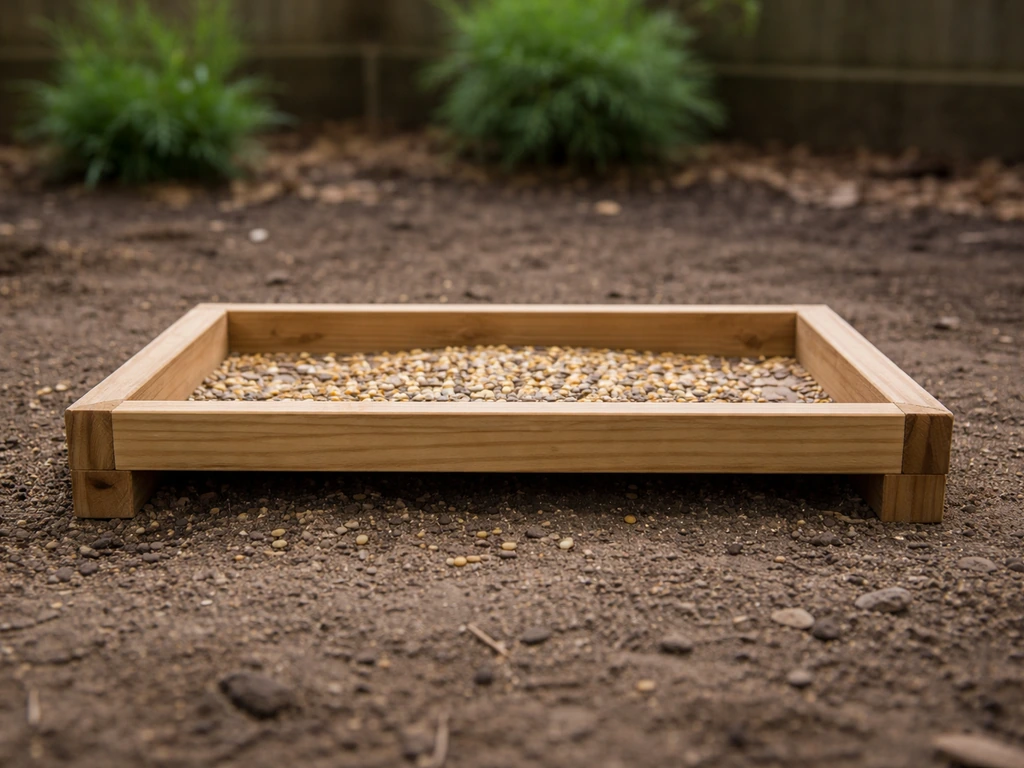
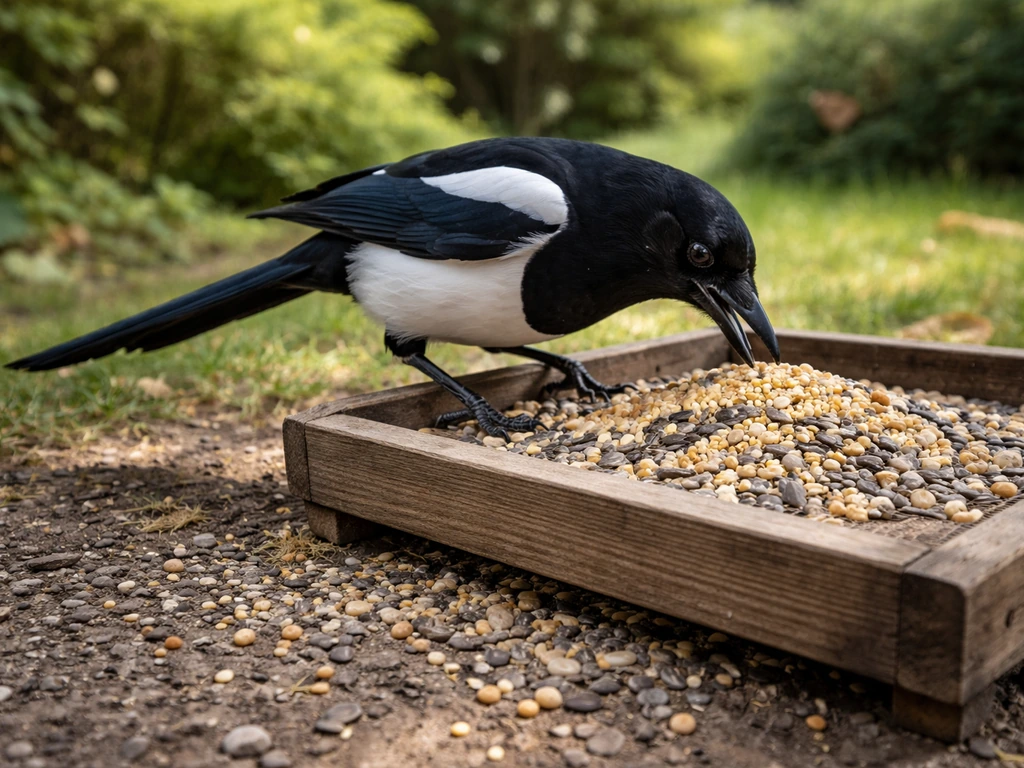
Magpies are ground foragers, so the single most effective thing you can do is offer food at or near ground level. A hanging tube feeder designed for small birds will largely be ignored. Here is a setup that works for magpies without creating a mess or pest problem.
Use a platform or tray feeder
A flat platform feeder or wide tray mounted low to the ground (12 to 18 inches off the ground is a good starting point) gives magpies the open access they prefer. It also lets you control how much seed is on offer at once. Keep the platform no larger than about 12 to 14 inches square to reduce the total seed volume sitting out, which limits waste and makes cleanup easier.
Ground feeding as a secondary option
You can scatter a small amount of food directly on a clean, hard surface like a paving slab. This works with magpie behavior well. However, food on the ground carries a higher risk of contamination from droppings and moisture, and it is more likely to attract rodents. Project FeederWatch explicitly flags ground-scattered seed as a rodent attractant. If you use ground feeding, scatter only what birds will consume in one session (no more than a palmful) and sweep the area clean afterward.
Placement tips
- Place the feeder within sight of a fence, wall, or tree branch so magpies have a lookout perch nearby
- Keep it at least 10 feet from dense shrubs where cats can stalk from cover
- Position it where you can see it from a window, which helps you monitor how quickly food is consumed and spot any mold or fouling early
- If you also want to support smaller seed birds (finches, sparrows), run a separate tube feeder at a different location since magpies can be intimidating at shared feeders
Managing spill and mess
Magpies are not especially tidy feeders. They will knock seed off a tray and cache bits of food nearby by burying them in soil or tucking them under bark. To reduce mess, use a seed tray with raised edges to contain scatter, and lay a mat or tray beneath the feeder to catch fallout. This makes cleanup much faster and prevents seed hulls and debris from building up in the lawn or garden beds where mold can develop unnoticed.
Preventing pests, mold, and wet or sprouted seed
This is where most backyard seed problems originate, and magpie visits make it more important to stay on top of things because they are big, active birds that disturb seed and leave more droppings than a small finch. Minnesota DNR notes that mold and bacteria commonly form on wet birdseed in feeders or on the ground in damp weather. Here is how to stay ahead of it.
Keep seed dry
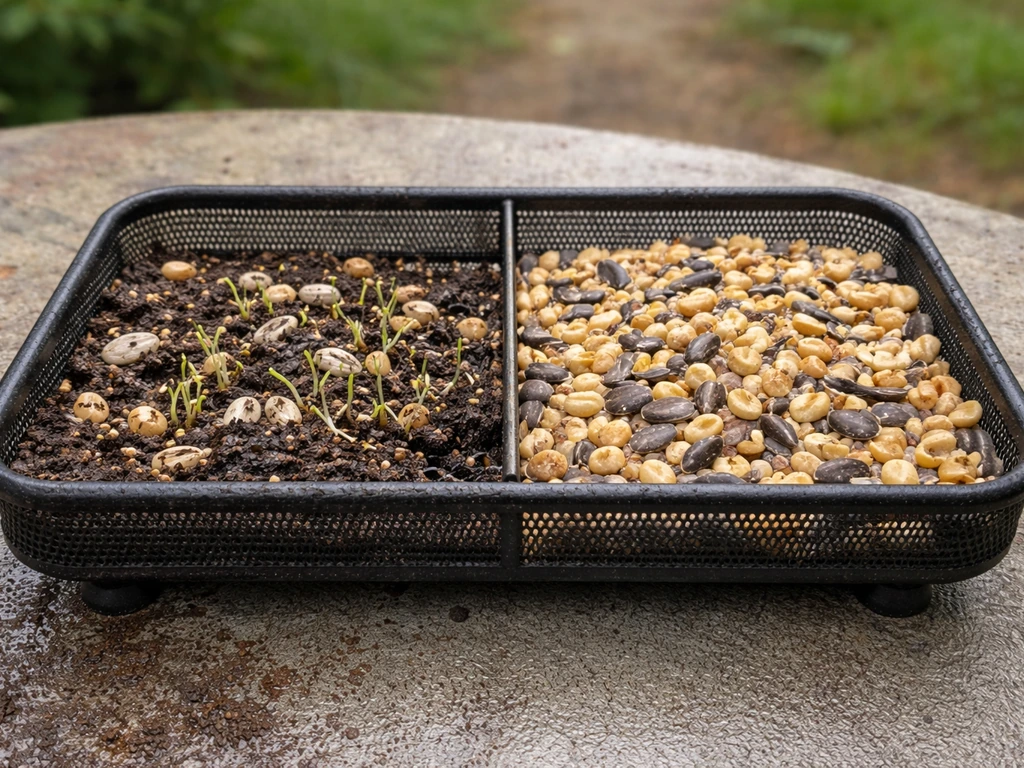
- Use a platform feeder with drainage holes so rain does not pool under the seed
- Add a roof or weather guard over the tray if you are in a wet climate
- Fill only what birds will eat within one to two days, especially in warm or humid conditions
- If you reach into the feeder and the seed feels damp, clumped, or smells musty, empty the entire contents into the bin, do not just mix it with fresh seed
Spot and stop sprouting
Millet, sunflower, and corn seeds will sprout if they sit in damp soil or a moist feeder for more than a few days. Sprouted seed is not necessarily toxic, but it signals that the conditions are right for mold too. Remove sprouted seed promptly and consider using hulled (shell-less) sunflower seeds or sunflower chips in your mix, since these cannot sprout and they generate far less hull debris under the feeder.
Rodent prevention
Spilled seed on the ground is the main rodent attractant. If you are wondering whether do gophers eat bird seed, the answer is yes, and that is why ground scatter can bring them in. Collect fallen seed daily if rats or mice are a concern in your area, or use a catch tray beneath the feeder and dispose of its contents every evening. Avoid leaving suet or mealworms out overnight, as these are especially attractive to rats. If you are also dealing with other opportunistic wildlife visitors, like groundhogs or chipmunks, the same strategy of limiting ground-level food and cleaning up at dusk applies across the board. If you are wondering whether woodchucks eat bird seed, the same ground-level cleanup habits can help reduce how much spilled seed wildlife will find do woodchucks eat bird seed. Chipmunks can also eat bird seed, so you may see them at the feeder when seed is available chipmunks eat bird seed. Groundhogs are another animal that may be drawn in by spilled seed, so keep food off the ground and clean up regularly.
Feeder cleaning schedule and how to do it properly
Project FeederWatch recommends cleaning seed feeders about once every two weeks as a baseline, and more often during heavy use or warm, damp weather. With magpies visiting regularly, especially during breeding season, you should lean toward cleaning every seven to ten days. Here is the process.
- Empty the feeder completely and shake out all seed, hulls, and debris
- Wash with hot soapy water and scrub all surfaces, including any crevices where droppings accumulate
- Disinfect with a dilute bleach solution of 1 part bleach to 9 parts water; let it soak for a few minutes
- Rinse thoroughly with clean water until there is no bleach smell remaining
- Allow the feeder to air dry completely before refilling. Iowa DNR specifically flags this step: a damp feeder speeds mold growth on fresh seed
- If you have a dishwasher-safe plastic or stainless feeder, running it on a hot cycle handles steps 2 through 5 efficiently
If you notice cloudiness in a water dish or black mold anywhere on the feeder, that is an immediate-action situation, not a wait-until-cleaning-day one. Discard the contaminated content, clean the feeder right away, and check whether moisture is getting in from a gap or crack that needs fixing.
Storage, handling, and post-visit cleanup
Storing seed properly
Bird seed should be stored in a sealed, rigid container, ideally metal or thick plastic, in a cool and dry location out of direct sunlight. A shed, garage, or cool utility room works well. Do not store large quantities if your magpie visits are seasonal, because older seed is more likely to go rancid or develop mold. Buy in quantities you will use within four to six weeks and check the seed before each refill for any signs of dampness, clumping, or off-smell. Peanuts in particular should be stored separately in a sealed, cool container and used within the period specified by the supplier.
Cleanup after magpie visits
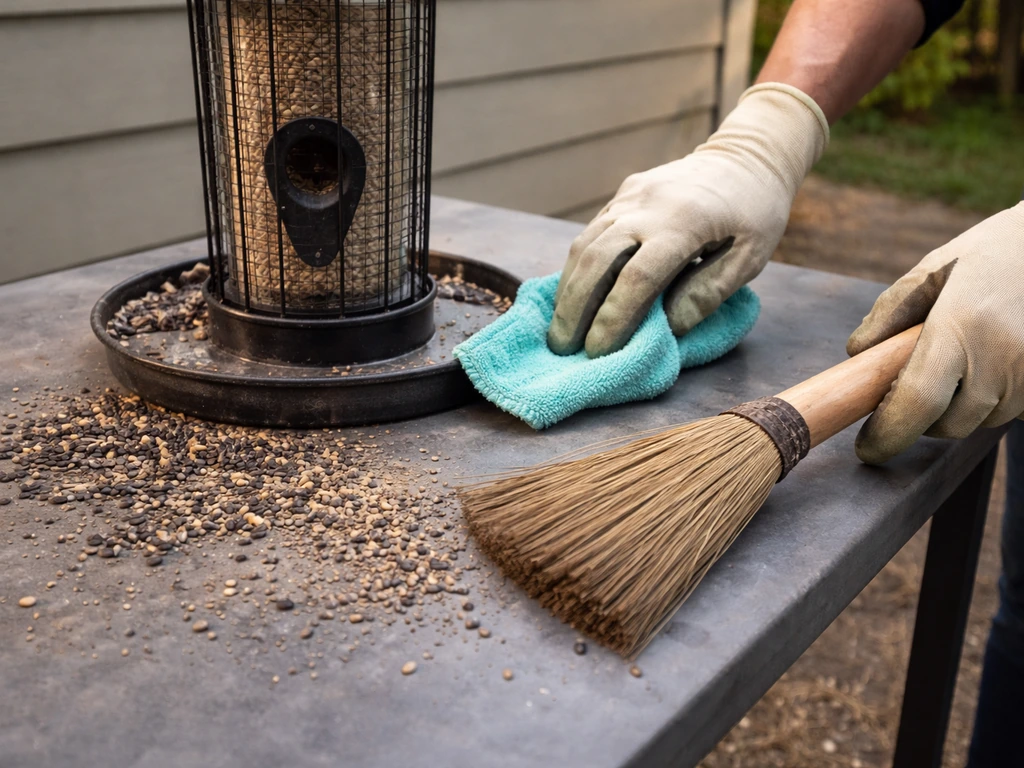
- Rake or sweep seed hulls, fallen seed, and debris from beneath the feeder regularly, at least every few days, and more often if visits are heavy. Dispose of this in the bin rather than composting it
- Wipe down the tray or platform surface after each visit if you can, especially if droppings are visible. Virginia DWR notes that birds poop as they feed, which contaminates tray seed directly
- Replace seed in the tray rather than just topping it up: tipping out the old layer and refilling prevents the bottom layer from sitting there getting stale or damp under fresh seed
- Wash your hands after handling feeders, seed, or cleanup debris as standard practice
A note on seasonal feeding
If you are in the UK, RSPB guidance from 2025 onward advises pausing seed and peanut feeding between May 1 and October 31 to reduce disease risk in the warmer months. In North America, the approach is more flexible, but scaling back on seed during summer and focusing on mealworms or suet for breeding magpies aligns well with both their seasonal diet and with keeping feeders sanitary in warm weather. Other omnivorous visitors like chipmunks or hedgehogs also tend to be more active in warmer months, which can increase feeder traffic and contamination pressure, so adjusting quantities seasonally is good practice regardless of location. If you are also thinking about hedgehogs at your feeder, you may wonder whether can hedgehogs eat bird seed safely.
Your next steps today
If you want to start feeding magpies or you are already dealing with them at your feeder, here is what to do right now. Set up or reposition a platform tray feeder at low height with a mix of black oil sunflower seeds, cracked corn, and dried mealworms. Check any peanuts you have for quality and salt content before putting them out, and discard anything that smells stale or looks damp. If your current feeder has not been cleaned in the last two weeks, clean it before refilling using the bleach solution method above. Sweep under the feeder, dispose of any debris in the bin, and get into the habit of doing that sweep every two to three days. Those steps alone will make your setup safer for magpies and every other bird that visits.
FAQ
If I already have a finch or small-bird seed mix, will magpies eat it?
Yes, but choose cleaner options. Magpies will ignore very tiny seed like nyjer, and they tend to prefer larger, more accessible foods (sunflower, cracked corn, peanuts). If you are using a mixed wild bird blend, avoid mixes dominated by millet or other small hull grains, since much of it will spill and attract rodents.
How do I feed magpies without creating a rodent problem?
If a magpie is repeatedly visiting, assume it will leave behind hulls and droppings. Use a low platform with raised edges plus a removable catch tray or mat, and sweep the area on a set schedule (every 2 to 3 days in winter if they are active). This reduces both mold buildup in damp weather and rodent attraction.
What should I change during hot, humid weather?
Change the quantity rather than only the feeder style. In warm or humid months, reduce how much seed you put out (smaller daily portions) and remove any damp clumps promptly, because sprouting and mold can start within a few days. Also prioritize hulled sunflower chips to cut down hull debris that can trap moisture.
Can I mix mealworms or other animal-based food with bird seed for magpies?
You can offer mealworms, but do it strategically. Remove mealworms and any damp leftovers quickly, and do not leave protein foods out overnight, since rats and mice are especially drawn to these. If you use a catch tray beneath the feeder, empty it every evening during peak rodent season.
Is it safe to keep using seed that has gotten a little damp?
Generally, no. Magpies can be affected by the same fungal and bacterial risks as other feeder birds, especially when seed gets wet or sits in warm conditions. If you see mold, clumping, or a musty smell, discard it and clean the feeder immediately, rather than waiting for your next routine cleaning.
Can I just scatter seed on the driveway or lawn for magpies?
If you want fewer droppings on the ground, avoid pure ground-scattering and stick to a low platform or tray. If you do scatter, limit it to what they will finish in one session (for example, a palmful), then sweep the area clean right after to remove leftover seeds.
Which seed types create the least mess under a magpie feeder?
Use shell-less or hulled sunflower when possible, and consider cracked corn in smaller amounts. Hulled foods reduce the amount of husk and debris that accumulates under the feeder, which means less gunk for mold to grow on and less mess to clean.
What should I do if magpies are causing issues around my yard?
In many areas, magpies are protected, so you should not attempt to remove them or handle them unless you have the right permits and guidance. For conflicts, focus on deterrents at the feeder level (stop feeding, remove spilled seed, fix gaps that let water in, and secure trash), since consistent food supply is what sustains visits.
Do magpies cache seed, and how does that affect cleanup?
Because magpies cache food, you might see leftovers days later even after you refill less. Reduce the portion size, clean the catch tray frequently, and do a quick sweep check mid-week if they are actively caching nearby. This prevents stale, partially buried seed from growing mold.
Can I use peanuts I buy from the store (for people) instead of bird-food peanuts?
Yes, but only if it is handled like feeder food, not like table snacks. Use only products intended for wild birds, keep peanuts and seed stored cool and dry in sealed containers, and discard anything that looks shriveled, discolored, or smells off. Also check salt content, since salty foods are not appropriate for birds.
Next Article
Can Gerbils Eat Bird Seed? Safety, Risks, and Better Alternatives
Can gerbils eat bird seed safely? Learn risks from mixes, additives, mold, and pests, plus gerbil-safe alternatives.