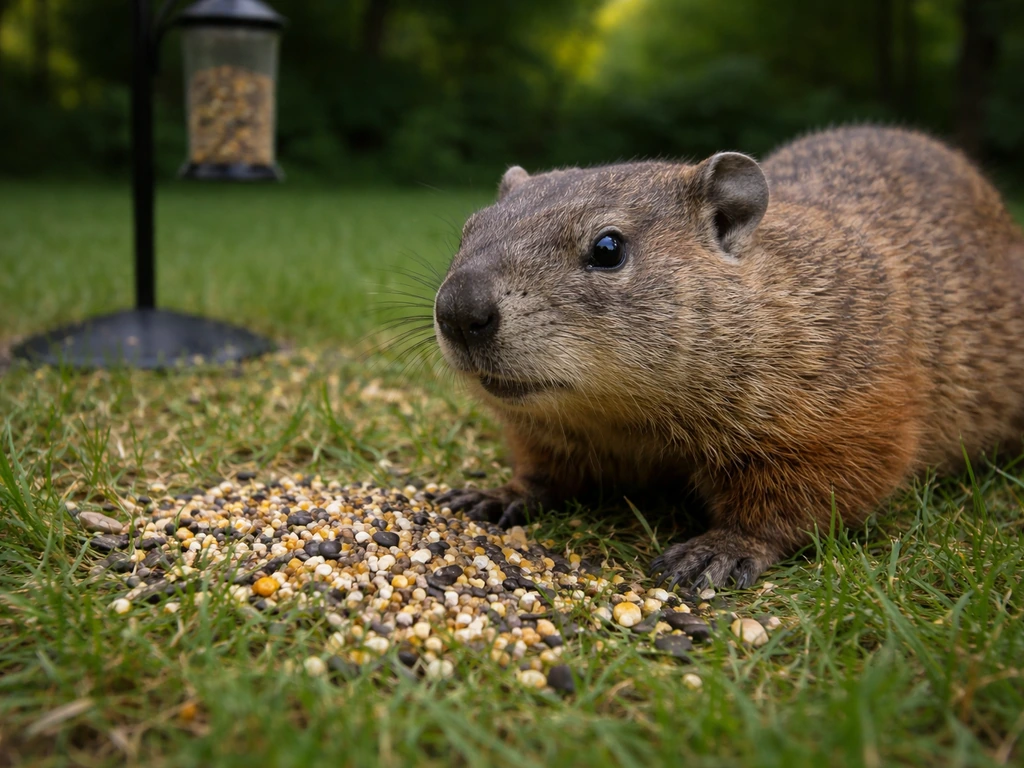
Yes, groundhogs eat bird seed. They are not specialized feeder raiders, but spilled seed, especially black oil sunflower seeds, is an easy, high-calorie meal they will not pass up. If you are seeing your seed pile disappearing faster than usual, or you have spotted a fat, low-slung animal waddling away from your feeder area, there is a good chance a groundhog (also called a woodchuck) is helping itself. They may do it regularly whenever they find spilled seed within easy reach woodchucks eat bird seed. The good news is that a few targeted changes today can stop the problem without making you stop feeding birds.
Do Groundhogs Eat Bird Seed? How to Stop Seed Raids Fast

Maya Collins
15 Apr 2026
Why groundhogs go after bird seed
Groundhogs are primarily herbivores. Their natural diet covers grasses, clover, alfalfa, bean plants, peas, carrot greens, and wild fruits. Bird seed is not a normal part of that diet, but it is calorie-dense, sits at ground level, and smells appealing, so when it spills under a feeder, a groundhog passing through will take full advantage. Anecdotal reports of groundhogs actively feeding on black oil sunflower seeds at ground-level feeders are common, and the attraction makes biological sense: groundhogs are focused on building fat reserves before hibernation, so a free, concentrated food source is hard to ignore.
Timing matters a lot here. Groundhogs are day-active animals. The Indiana Department of Natural Resources also describes groundhogs as diurnal, meaning they are most active during the day Groundhogs are day-active animals. They emerge from their burrows in spring (typically late February to April depending on your region) and make several foraging trips above ground each day, sometimes totaling one to five hours at a stretch. Raiding is most likely in spring and summer. By late October or early November, most groundhogs have gone into hibernation and the problem naturally fades, but that is a long window of potential feeder disruption.
Is that actually a groundhog? How to tell
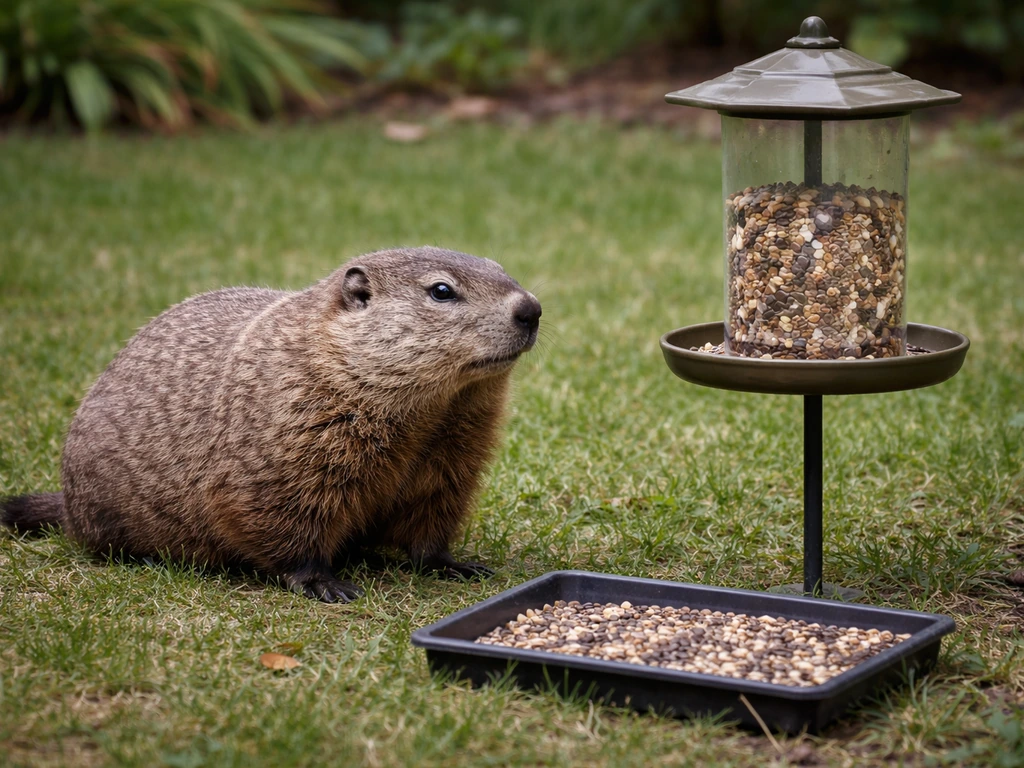
Before you set up exclusion measures, it helps to confirm the culprit. A lot of animals hit seed piles: squirrels, chipmunks, raccoons, opossums, and deer are the usual suspects. Groundhogs have some distinctive tells.
- Size and build: Groundhogs are chunky and low to the ground, typically 16 to 20 inches long and weighing 5 to 14 pounds. They move with a slow, deliberate waddle rather than the quick darting of a squirrel.
- Activity time: They are active during daylight hours, usually mid-morning through early afternoon. If seed is vanishing overnight, it is more likely a raccoon, opossum, or rat.
- Tracks: Groundhog tracks show four toes on the front feet and five on the hind feet, with short, curved claw marks close to the toe pads. You can check pressed mud or dust near the feeder base.
- Droppings: Groundhog scat is pellet-like, dark brown, and roughly oval, about half an inch long. It is often deposited near burrow entrances or along their regular travel paths.
- Burrow entrances: A groundhog will usually have a burrow nearby (often under a deck, shed, or garden border). A large mound of loose soil with a clean entrance hole 6 to 8 inches wide is a strong indicator.
- Gnaw or rub marks: Groundhogs scent-mark near their dens by gnawing or rubbing on objects, but these marks appear near the burrow, not necessarily at the food source.
If you are still unsure, consider what else is visiting your yard. Chipmunks eating bird seed tend to stuff their cheek pouches and dart off quickly. Squirrels are acrobatic climbers. A groundhog will sit, eat slowly, and look entirely unbothered. Also worth noting: gophers and bird seed are sometimes confused with groundhog activity, but true gophers rarely surface to forage at feeders the way groundhogs do.
What to do right now: stop access today
The fastest fix is to remove or secure the food source. Groundhogs are opportunists, and if the easy meal disappears, most of them will redirect their foraging elsewhere. Here is a practical same-day action plan:
- Bring feeders in during midday: Groundhogs forage mainly between mid-morning and early afternoon. Pull any ground-level or low-hanging feeders inside during that window for the next few days while you set up permanent deterrents.
- Sweep up all spilled seed immediately: Every seed on the ground is an invitation. Rake or sweep the area under your feeders and dispose of the seed in a sealed bag or covered bin. Do not just scatter it further into the yard.
- Switch to a tray with a catch basin: If you use a tray-style feeder, swap to one with a deep catch basin that holds spilled hulls rather than letting them fall. Empty it daily.
- Temporarily stop filling ground feeders: Ground-level platform feeders are essentially a free buffet for any animal that walks past. Suspend ground feeding until you have exclusion measures in place.
Feeder and tray setup changes that actually work
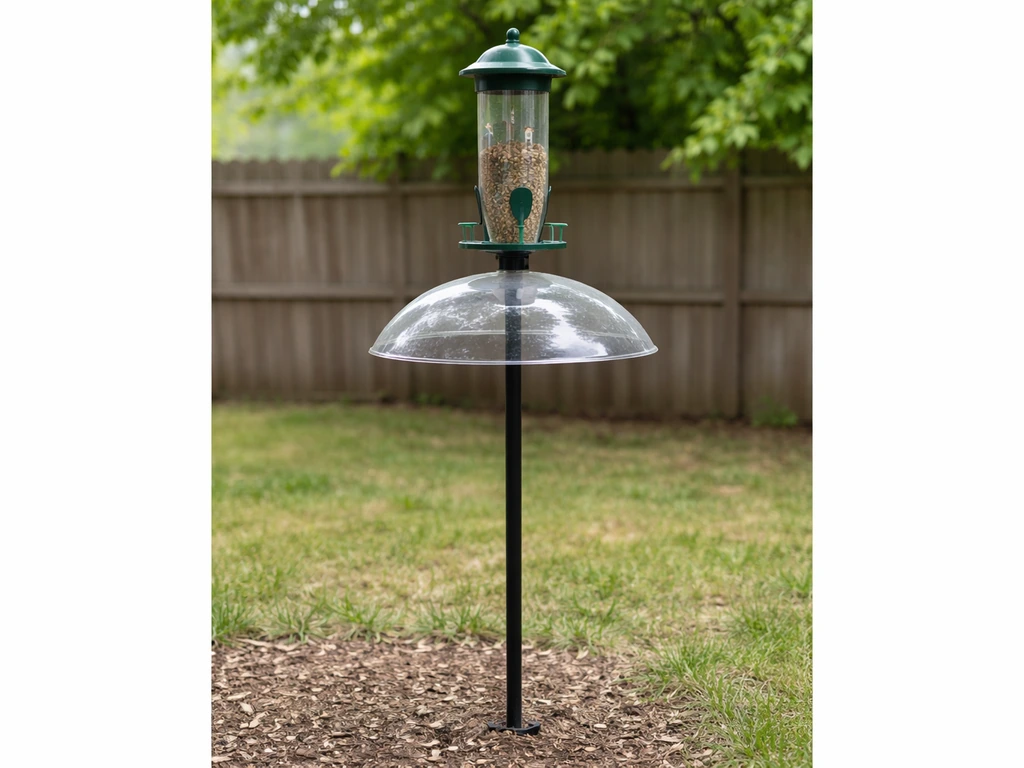
Fixing the feeder setup is the most durable solution. The goal is to keep seed accessible to birds but physically out of reach for a ground-dwelling, 10-pound animal that cannot climb a smooth pole.
Height and pole placement
Mount feeders on a smooth metal pole at least 5 feet off the ground. The pole itself needs a baffle, a cone or cylinder guard that stops climbing animals from reaching the feeder. One key detail: the feeder needs to hang at least 10 feet away from any fence, tree branch, deck railing, or other structure a groundhog could use to bypass the baffle by jumping. If the feeder is too close to a jump-off point, a baffle provides little protection.
Reducing ground spill
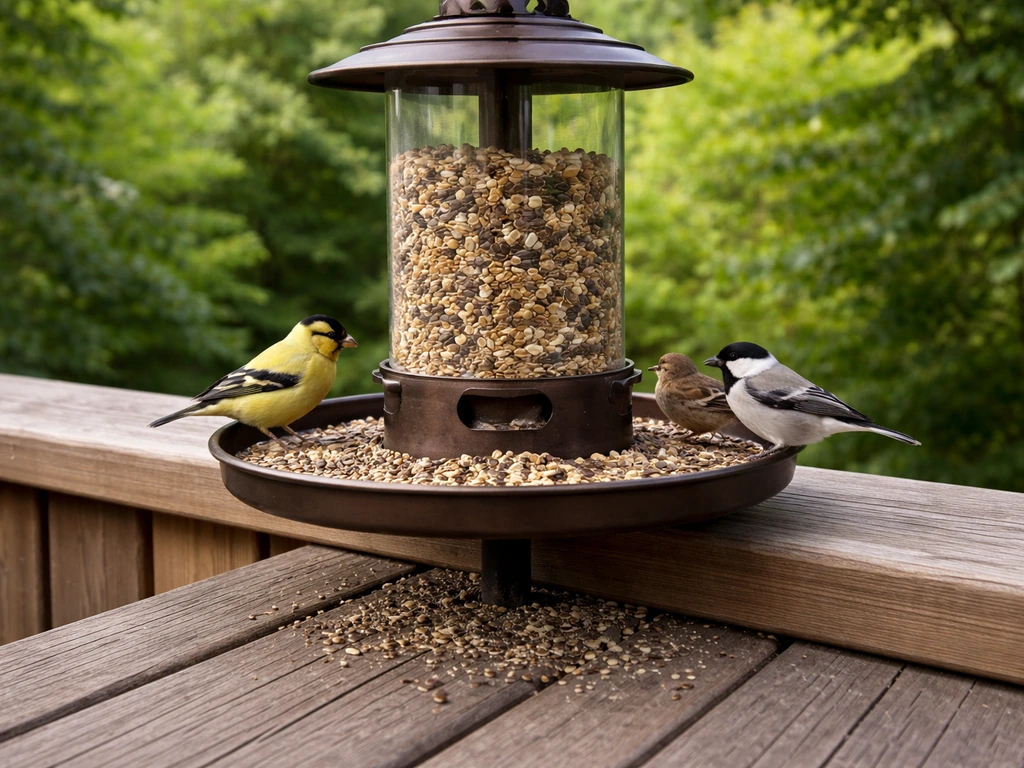
Spilled seed under feeders is the number one groundhog attractant at bird feeding stations. Use feeders with a no-waste seed mix (hulled seeds produce less debris), add a wide tray with a lip to catch shells, and empty the tray every day or two. Avoid loose millet mixes that scatter easily. A bird feeder that drops seed constantly onto bare ground is the equivalent of leaving a bowl of food out for wildlife, and it will attract more than just groundhogs over time.
Adjusting access paths
Look at how groundhogs approach the feeder area. They typically travel along fence lines, garden borders, or the base of structures. Removing low dense vegetation or debris piles within 10 to 15 feet of your feeders eliminates the cover they prefer while moving through your yard.
Seed storage and handling: remove the attractant at the source
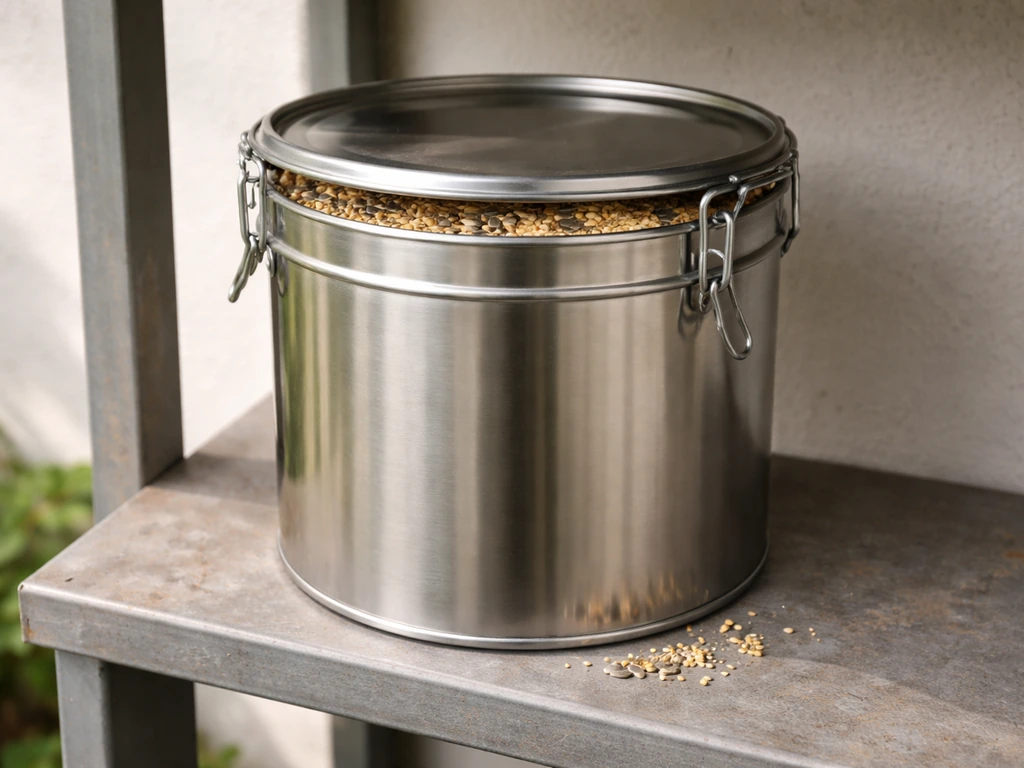
How you store and handle your bird seed affects how appealing your yard is to groundhogs (and a long list of other pests). There are two main problems: poorly stored seed invites animals to find the stash, and wet or moldy seed creates additional hazards.
Store seed in sealed, hard containers
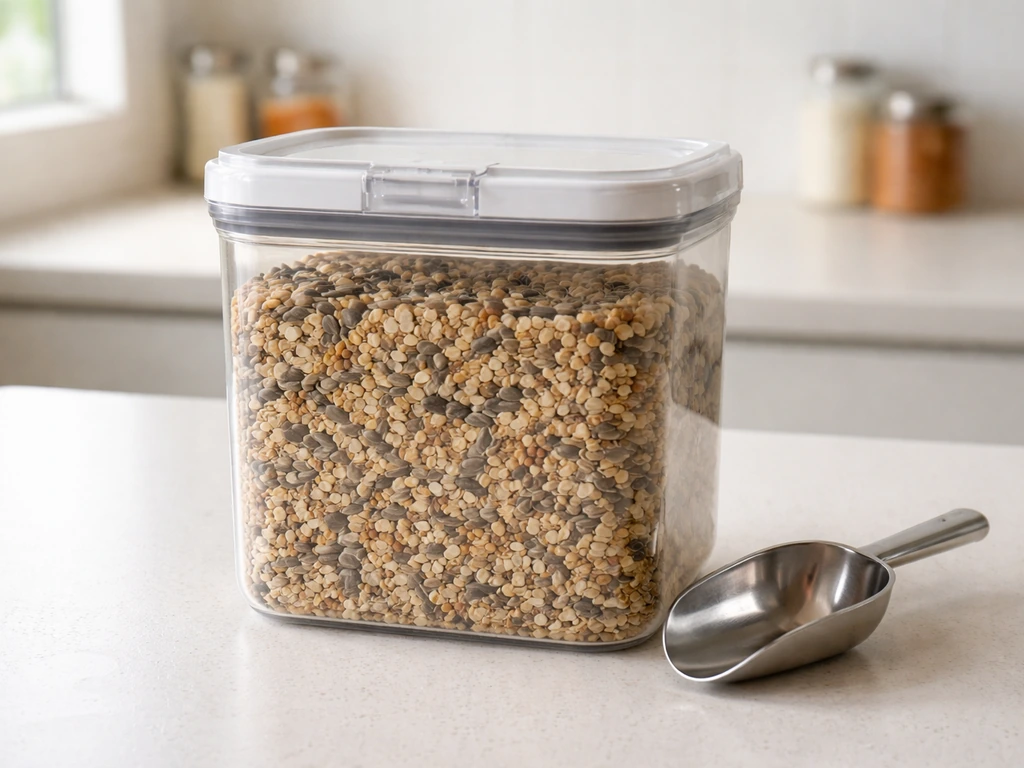
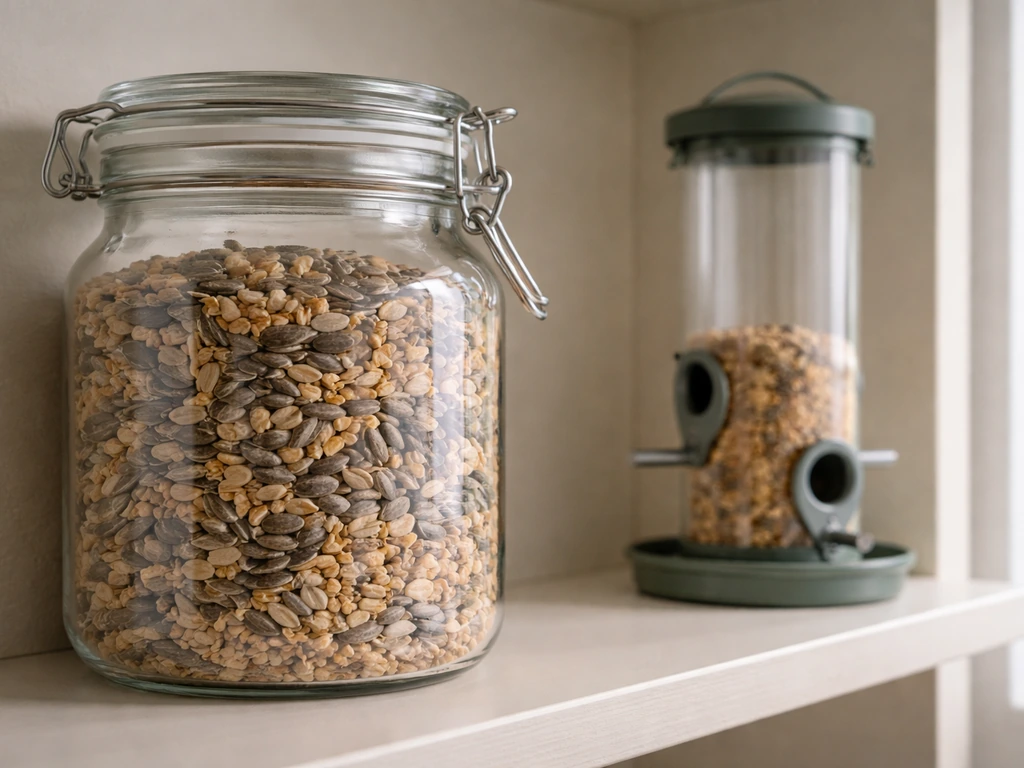
Cardboard boxes and thin plastic bags are useless against a groundhog or any determined rodent. Store all seed in a metal or heavy-duty plastic container with a locking or tight-fitting lid, kept inside a shed or garage. A 30 to 40 quart galvanized metal trash can with a bungee cord over the lid is a simple and effective solution. Never store open seed bags outside or in an unsealed bin.
Deal with wet and moldy seed promptly
Wet seed clumps, sprouts, and molds quickly, especially in a tray feeder after rain. Moldy seed is a health hazard to birds and also produces strong organic odors that attract foraging mammals. After any rainfall, check your feeder tray and the area below it. Discard wet or clumped seed immediately rather than letting it sit. Sprouted seeds below feeders should be raked up and removed, not left to accumulate into a seed patch that doubles as a groundhog food source. If you use a platform feeder, consider covering it with a weather dome to reduce rain contact.
Rotate and use seed promptly
Old seed sitting in a feeder for weeks loses nutritional value and becomes more prone to mold. Refill feeders in smaller quantities every few days rather than topping them off with stale seed. The fresher the seed, the less likely it is to develop the kind of strong odor that draws scavenging animals from a distance. It is also worth noting that hedgehogs can be attracted to bird seed that has fallen and begun to decompose, so keeping the area clean protects against a range of wildlife visitors, not just groundhogs.
Cleaning up spilled seed and droppings safely
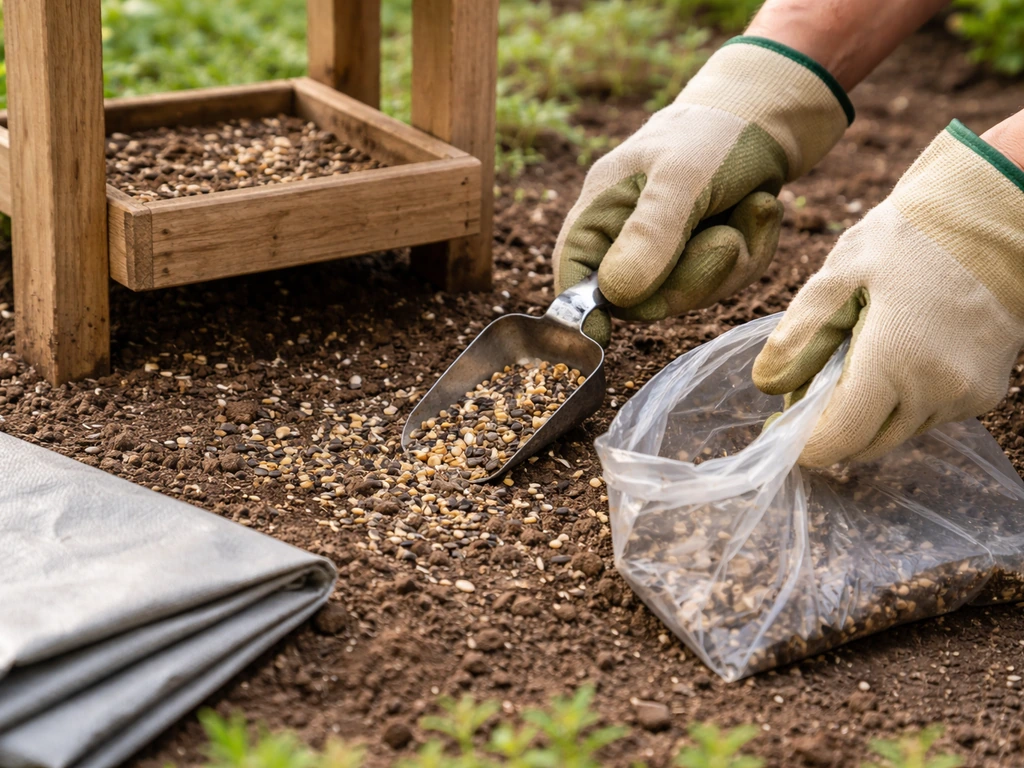
Once you confirm groundhog activity, cleaning up properly matters for both your garden hygiene and your health. Groundhog droppings can carry pathogens, and accumulated seed hulls are a mold risk.
- Wear gloves: Put on disposable gloves before handling droppings, wet seed, or heavily soiled feeder trays. For a larger cleanup involving heavy droppings accumulation, add a dust mask.
- Do not sweep droppings dry: Sweeping dry droppings can aerosolize particles. Lightly mist the area with a dilute bleach solution (1 part bleach to 9 parts water) before picking up or sweeping droppings and seed debris.
- Bag and seal waste: Place collected droppings, old seed, and hulls in a plastic bag, seal it, and put it in an outdoor trash bin. Do not compost it.
- Disinfect the feeder and tray: Wash feeders with the same 1:9 bleach-to-water solution, scrub with a stiff brush, rinse thoroughly, and let them dry completely before refilling. Do this at least once a month as routine maintenance.
- Wash your hands: Even after removing gloves, wash hands with soap and water for at least 20 seconds. This step matters especially if children play in the area.
If you are dealing with a rodent infestation rather than an occasional groundhog visit, federal health guidance recommends ventilating the area for 30 minutes before cleanup and using more thorough PPE. For anything beyond a typical outdoor bird-feeding cleanup, check your local or state health department guidance.
If groundhogs keep coming back: exclusion, barriers, and repellents
Sometimes adjusting the feeder setup is not enough, especially if a groundhog has already established a burrow on or near your property. In that case, you need to make the whole area less hospitable.
Fencing and underground barriers
A standard garden fence will not stop a groundhog reliably because they can both dig under it and climb over it. An effective groundhog fence uses welded wire or hardware cloth, stands at least 3 to 4 feet tall, and has a 1-foot extension bent outward at a 90-degree angle at the top to prevent climbing over. Underground, the fence should extend 12 inches into the soil with another 6 inches bent outward horizontally to stop them from digging underneath.
For a garden or feeder zone you want to fully protect, this is the most effective long-term barrier. Embedding steel mesh or hardware cloth underground around the perimeter of a shed or garden bed is another option if you want to block burrowing entirely.
Repellents and timing
Commercial granular or spray repellents containing putrescent egg solids or hot pepper can discourage groundhogs from a feeding area, but they need to be reapplied after rain and are most useful as a supplement to physical exclusion, not a replacement. Planting deterrent herbs like lavender or yarrow along feeder perimeters has some anecdotal support but limited reliable evidence. The most consistent deterrent is habitat modification: clear brush, remove wood piles, and eliminate any potential den sites within 20 feet of your feeding station.
Timing your feeding sessions
Since groundhogs are day-active and most active mid-morning to early afternoon, you can limit feeder exposure to early morning (before 8 a. ESF Adirondack Ecological Center also notes that woodchucks are mainly diurnal, with summer foraging early morning and late afternoon and more midday activity in spring and autumn Since groundhogs are day-active and most active mid-morning to early afternoon,. m.) and late afternoon (after 4 p.m.) when groundhog activity is lower. Bring feeders in or empty trays between those windows if raiding continues. This is not a permanent fix but it breaks the habit loop while you work on exclusion.
When to call a professional
If a groundhog has burrowed under a foundation, deck, or retaining wall, or if the population on your property seems to be growing, it is worth contacting a licensed nuisance wildlife control operator. Some states regulate what you can do with trapped groundhogs, so check your local rules before setting live traps. Relocation without proper guidance can be ineffective and in some areas is not permitted.
How other wildlife compares at your feeder
Groundhogs are far from the only animals that show up at bird feeding stations. Understanding who is actually raiding your seed helps you pick the right fix. Here is a quick comparison of common ground-level feeder visitors: In the same way you decide whether ground-level visitors are raiding your seed, you may also wonder, can gerbils eat bird seed as a related consideration for what else might show up at feeders.
| Animal | Active time | Key sign | Main fix |
|---|---|---|---|
| Groundhog | Daytime (mid-morning to early afternoon) | Large pellet droppings, burrow entrance nearby, slow waddling animal | Exclusion fencing, raised feeders, remove spill |
| Chipmunk | Daytime | Small cheek-stuffing animal, tunnels under garden edges | Baffled pole, reduce ground spill |
| Squirrel | Daytime | Acrobatic climbing, chewing on feeder | Baffle, cage feeder, placement 10+ feet from structures |
| Raccoon | Nighttime | Feeder knocked down, scattered seed, handprint tracks | Bring feeders in at night, secure with bungee cord |
| Rat | Nighttime | Small dark droppings, gnaw marks on stored seed containers | Sealed storage, remove ground spill, hardware cloth barriers |
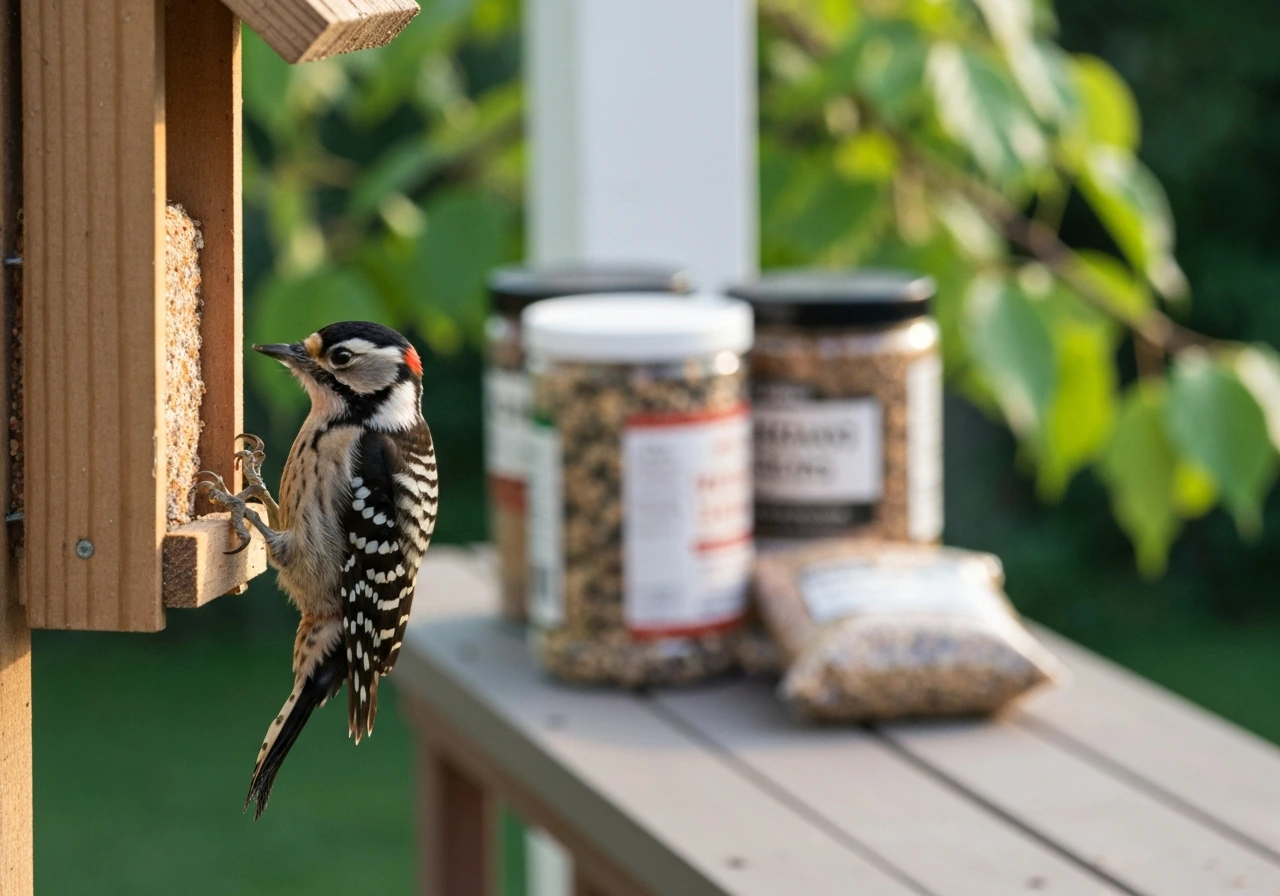
It is also worth checking whether the birds themselves are the ones spreading seed. Some species like woodpeckers at a bird feeder can knock considerable seed to the ground while feeding, which then becomes an open invitation for any ground-foraging animal, including groundhogs. Reducing that spill at the source is often the quickest path to solving the mammal problem without any other changes.
Regional and seasonal notes
Groundhog behavior varies by region and climate. In the mid-Atlantic, New England, and Midwest, groundhogs emerge between late February and April. In warmer southern states, emergence can come earlier. If you are in a region with mild winters, your active raiding window is longer. Conversely, by late October most groundhogs in colder climates are done foraging for the year and will hibernate until spring, so a problem that starts now in April is likely to persist through summer without intervention.
Spring is also when groundhog territory behavior is most active, since mating season begins shortly after emergence. During this period, animals are ranging further and more aggressively seeking calories, which is exactly why feeders get hit hardest in March and April. Getting your exclusion setup in place early in the season prevents the habit from forming in the first place.
The full picture: keeping birds fed without feeding groundhogs
The core strategy here is straightforward: eliminate the easy meal, not the feeder. Raise your feeders on baffled poles at least 5 feet high and 10 feet from any jump-off structure. Sweep up spilled seed daily, store all seed in sealed metal containers, and deal with wet or moldy seed immediately. If a groundhog has already moved in close, add a properly built exclusion fence and consider timing your feeding sessions around their peak activity window.
Some visitors, like purple martins and bird seed interactions, are not really a concern because those birds do not eat seed at all. But magpies eating bird seed can scatter quite a bit of it to the ground while feeding, much like woodpeckers do, so if you have multiple messy eaters at your feeders you may need to address spill from several angles at once. And while it might sound unrelated, questions like whether gerbils can eat bird seed and whether woodchucks eat bird seed (woodchuck is simply another name for groundhog) all point to the same practical issue: many animals find bird seed attractive, and the best defense is always a clean, well-maintained feeding station with physical barriers doing the heavy lifting.
Follow the steps above and most groundhogs will redirect to easier, more natural foraging elsewhere. They are not committed feeder raiders by nature, they are opportunists. Take away the opportunity, and your feeder goes back to being a bird thing.
FAQ
Will hot pepper or egg-based repellents stop groundhogs from eating bird seed?
It can help, but it is usually not enough by itself. If a groundhog already learned that seed appears at ground level, it may keep returning until the accessible food source is removed or baffled. Repellents also need reapplication after rain, so plan to treat them as an add-on to cleanup, tray management, and exclusion hardware.
Should I change bird seed types, or is feeder setup the real solution?
Yes, but the “best” option depends on whether the feeder is the real access point. If the groundhog is taking spilled seed, improving the tray and baffle access usually fixes the problem faster than switching seed types. If the groundhog is eating from the feeder directly, focus on a smooth pole plus a baffle and increasing the distance from jump-off structures.
What is the safest way to clean up after groundhog visits?
If you find droppings or a seed pile under the feeder, avoid sweeping dry material right away, especially if you have asthma, allergies, or are working in a small enclosed area. Wetting the area lightly before removal (where appropriate) can reduce dust, and wear gloves and a mask per local guidance. Let the area air out afterward, then sanitize your hands and any tools.
If I block the feeder, why am I still getting seed raids?
They can, especially when the bird activity is creating spill, for example with large ground-feeding birds or messy feeders. If you use a tray, platform, or any feeder that produces frequent shell and hull drop, you may get groundhog attraction even if the feeder itself is baffled. The quickest way to reduce secondary visitors is daily hull cleanup plus choosing mixes and feeder designs that produce less debris.
Is limiting feeding hours actually effective, or will groundhogs just move their feeding time?
Bring feeders in or empty trays between early morning and late afternoon as a “reset,” then reintroduce feeding in a consistent schedule while you install physical barriers. Groundhogs often adjust their routine when food availability changes, so consistent timing works better than random day-to-day changes.
Do I need a baffle if my feeder is already high off the ground?
No, because groundhogs cannot climb like squirrels. The key risk is bypassing the barrier by jumping from nearby cover (fence rails, tree branches, deck edges). If the feeder is within reach of any jump-off point, even a good baffle can be overcome.
When are groundhogs most likely to raid bird seed in my area?
Expect the highest activity when groundhogs are actively foraging, which in many regions is spring through summer, with peak mid-morning to early afternoon. In colder climates, late fall may naturally reduce visits, but in mild winters the raiding window can be longer. If your issue is happening now, treat it as a sign the local groundhogs are still actively feeding.
Is it better to relocate a groundhog if it is raiding my feeders?
Relocation can fail or backfire because it does not remove the underlying attractants, and it may violate state rules. Also, a new groundhog moving in can take the same route to the same food. If you suspect an established burrow near your feeder area, exclusion or professional nuisance control is usually more reliable than moving the animal.
How do I know if the raiding is from groundhogs or from birds knocking seed to the ground?
Groundhogs are primarily herbivores, so a sudden appearance at seed piles is usually linked to easy calories, spilled seed, and accessible tray bottoms. If your yard has been cleaned recently and storage is sealed, but raiding starts again, check for a new spill source such as a new feeder, a different seed mix, or a broken tray lip that is dropping hulls onto bare ground.
I have a fence, why are groundhogs still getting to the feeders?
Not always. Tall fences can be bypassed by jumping, and many “partial” barriers fail where they do not stop digging. If groundhog pressure is consistent or you see travel lanes along bases, you likely need a perimeter exclusion plan (above ground barriers plus a buried mesh skirt) rather than relying on a single fence section.
At what point should I stop treating this as a one-off visit and start exclusion?
If you are seeing frequent arrivals or persistent activity at the same spot, the pattern suggests more than a single casual visit. Look for signs like consistent footprints, repeated seed trays emptied in the same manner, or a nearby burrow entrance. In those cases, setting up exclusion before the animal “claims” the area usually prevents ongoing raids through the active season.