Yes, doves absolutely eat bird seed, and wild bird seed mixes work well for them. Roadrunners will sometimes eat seeds too, so the answer depends on what kind of seed you offer and whether they can reach it comfortably do roadrunners eat bird seed. Mourning doves are one of the easiest backyard birds to feed because blank" rel="noopener noreferrer">seeds make up more than 99% of their natural diet. The trick is knowing which seeds they actually want, how to present it so they can reach it, and how to keep everything clean so you're not attracting pests or feeding them rotten seed.
Do Doves Eat Bird Seed? What to Feed and How to Set Up
Maya Collins
22 Apr 2026
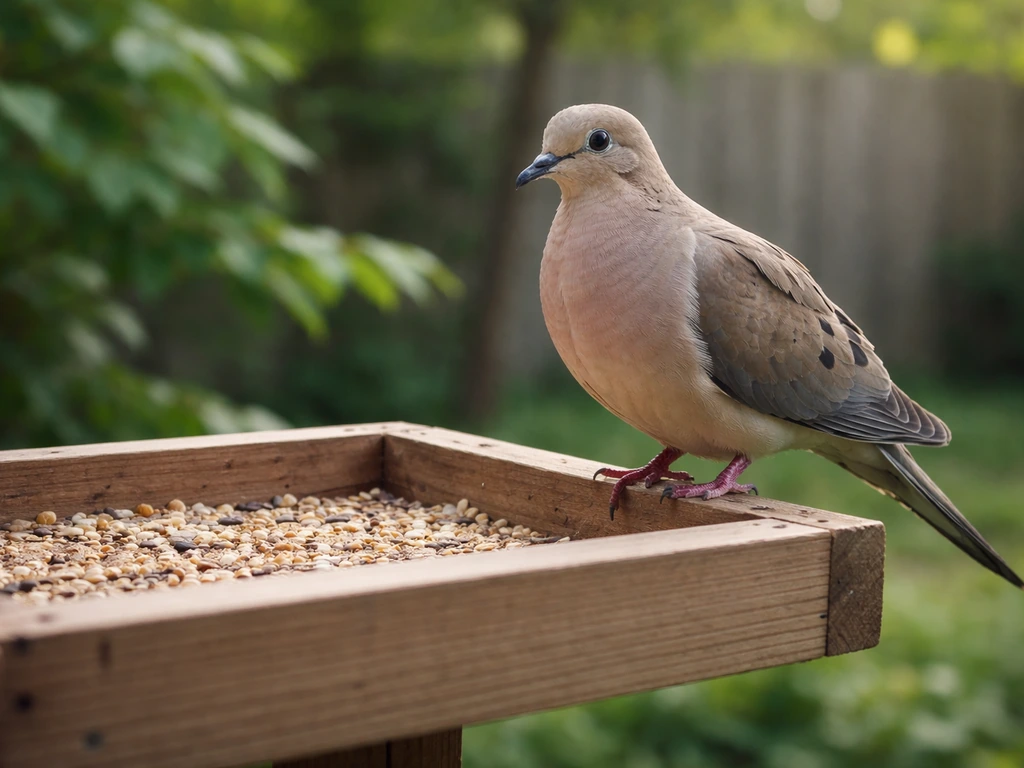
Will doves eat bird seed (including wild bird seed)?
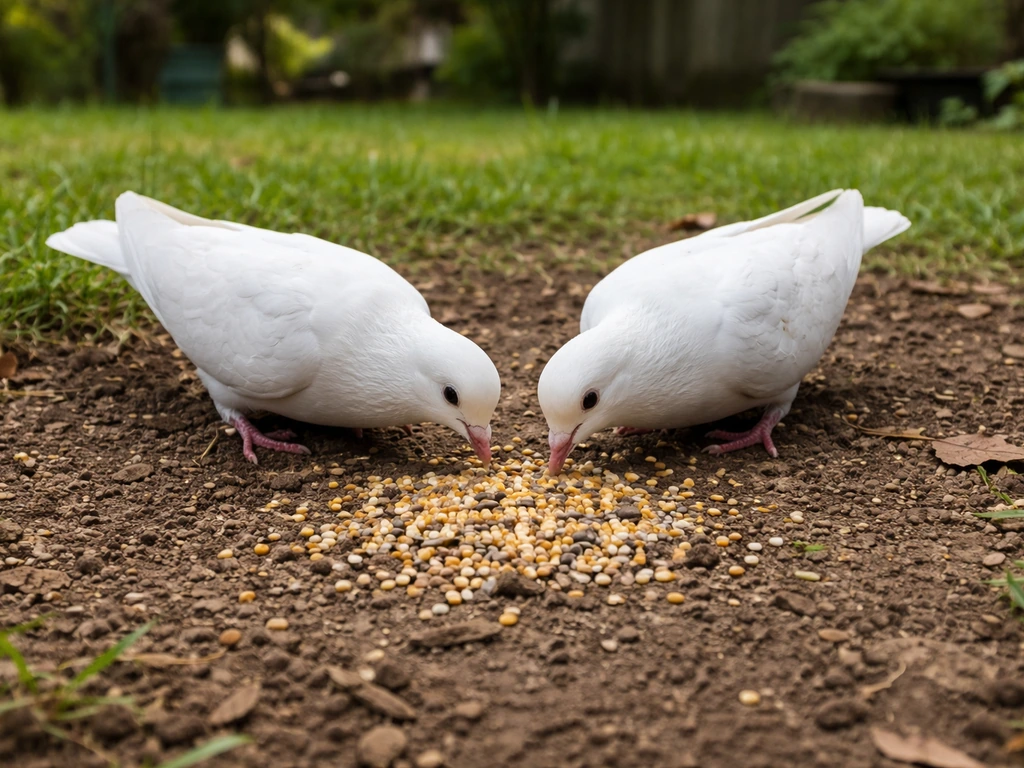
Doves will readily eat most commercial bird seed, including standard wild bird mixes. Because seeds are essentially their entire diet, they're not picky visitors. You'll typically see mourning doves show up reliably once they locate a food source, especially if you're offering the right seed types (more on that below).
The caveat with wild bird seed mixes is quality. Many budget mixes are padded with filler grains like red millet, oats, wheat, and canary seed that doves and most backyard birds will ignore. Those rejected seeds end up sitting on the ground, rotting. This is a common complaint from people who scatter a cheap wild bird mix and then wonder why half of it just stays there and starts to mold. The seed isn't bad for doves to eat, but they often won't bother with it, and the waste creates a real hygiene problem.
Which seed types doves prefer vs. ignore
Doves have clear favorites. If you want to attract them reliably and minimize waste, it's worth putting the right seed in the right spot rather than just scattering a generic mix.
| Seed Type | Dove Preference | Notes |
|---|---|---|
| White millet | High | One of the top choices; doves seek it out specifically |
| Black-oil sunflower | High | Easier for doves to handle than striped sunflower |
| Cracked corn | High | A winter staple; doves readily eat it off the ground |
| Safflower | High | Doves eat it well and squirrels tend to avoid it |
| Milo (sorghum) | Low | Eaten occasionally but often left behind in mixes |
| Nyjer (thistle) | Low to moderate | Doves will eat it but it's not a top draw for them |
| Peanuts (no shell) | Moderate | Will eat them, but not a primary attractant |
| Red millet, oats, wheat, canary seed | Low | Common fillers in cheap mixes; usually ignored by doves |
If you want the cleanest setup with the least waste, go with straight white millet or a mix of millet and cracked corn. Adding black-oil sunflower gives you a broader appeal to other birds as well. Safflower is a smart choice if squirrels are a problem at your feeders, since doves eat it happily but squirrels generally won't touch it.
How to set up feeding for doves
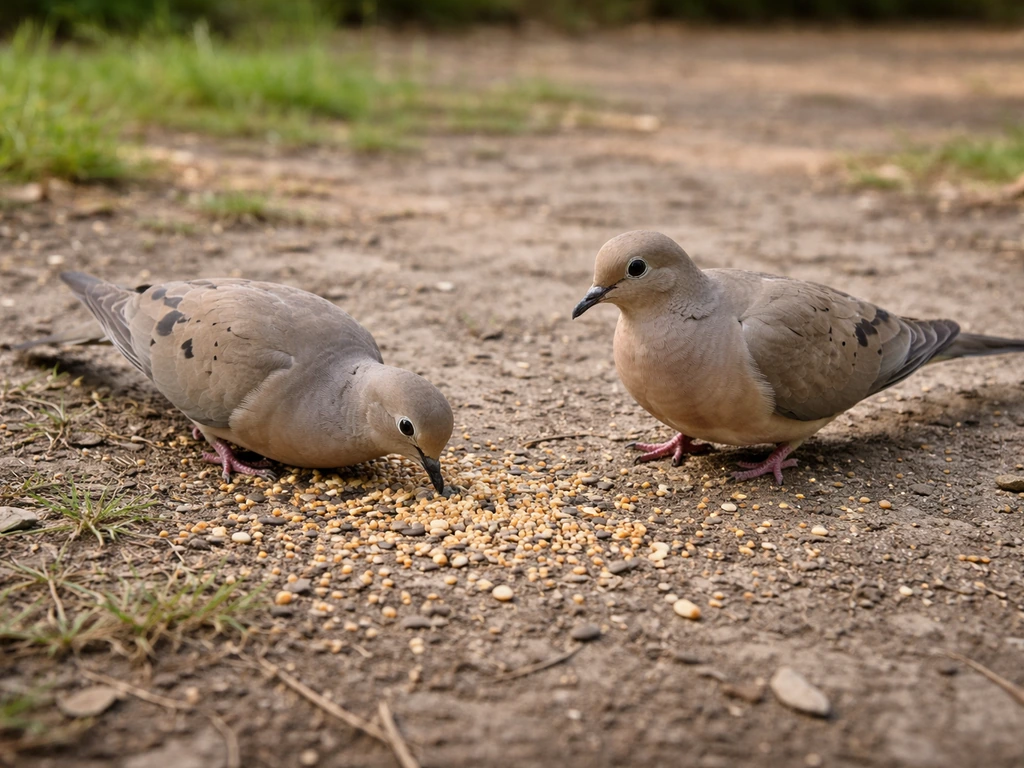
Doves are ground feeders first. In the wild they forage by walking along the ground, and that behavior carries over to your yard. Understanding this is the most important thing for getting them to actually show up and eat.
Ground feeding
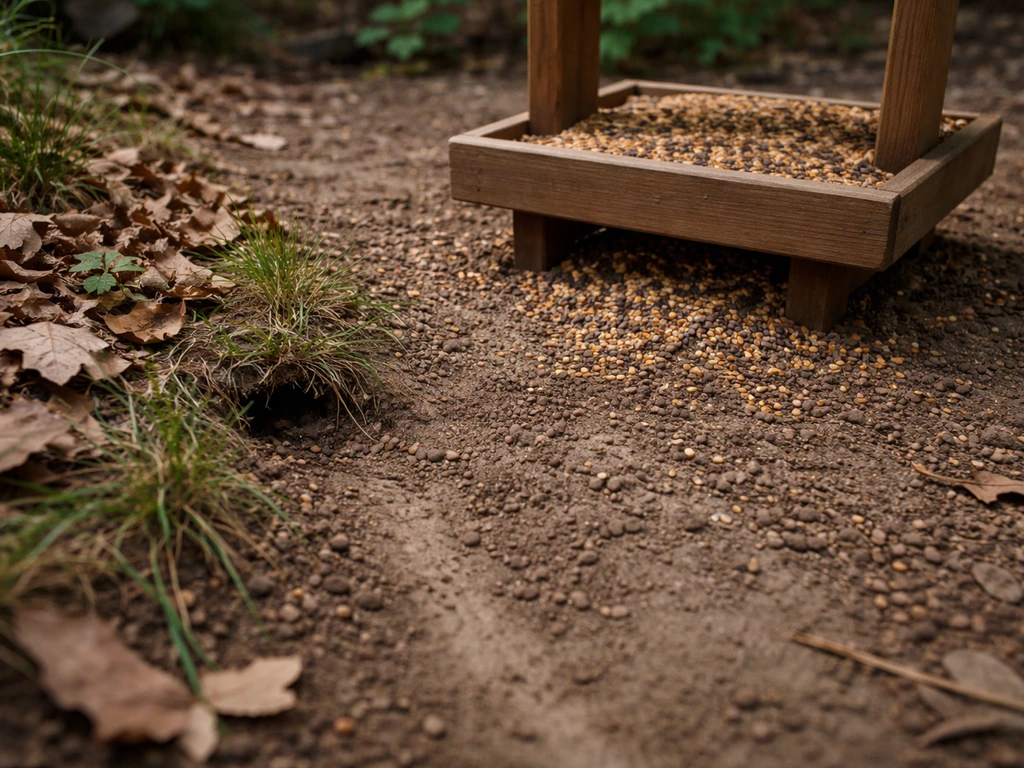
Scattering seed directly on the ground works and doves will use it. The downside is that ground-scattered seed gets wet quickly, molds faster, and can attract rodents and other pests. A better approach is a low, wide tray or platform feeder placed close to the ground (6 to 12 inches off the surface is fine). This gives doves the comfortable low-angle feeding position they prefer while keeping seed off the bare dirt and slightly more protected from rain.
Platform and tray feeders
A flat platform or fly-through feeder is the best dedicated dove feeder. Doves are larger birds and need room to land and walk, so they struggle with tube feeders or small hanging feeders that work fine for finches and chickadees. Look for a platform feeder with a mesh or slatted bottom so water can drain through rather than pooling under the seed. If you already have a tube feeder, adding a wide tray attachment at the bottom is another option that doves will use.
Placement tips
- Place feeders or ground-feeding areas in open spots where doves can see approaching predators easily
- Keep the area within a few feet of shrubs or trees so doves have a quick escape route
- Avoid placing seed directly under feeders unless you're checking it daily, since it becomes a mess fast
- In wet or humid climates, a covered platform feeder makes a real difference in keeping seed dry
If doves won't eat: troubleshooting common reasons
If doves aren't coming to your feeder or are ignoring seed you've put out, it's almost always one of a few fixable problems.
- Wrong seed: If you're using a cheap mix heavy in red millet, oats, or wheat, doves may pick through it or skip it entirely. Switch to straight white millet or cracked corn and you'll usually see a difference within a day or two.
- Feeder style: Tube feeders and small hanging feeders don't suit doves physically. If that's all you have out, doves may visit briefly and leave. Add a platform or tray at ground level.
- Competition: Larger birds like jays or starlings can crowd doves out, especially at small feeders. Offering seed at two or more separate locations gives doves a better chance at consistent access.
- Wet or spoiled seed: Doves will walk away from seed that smells off or is clumped and wet. If the seed in your tray is damp or has been sitting out more than a couple of days in warm weather, discard it and replace it with fresh, dry seed.
- Feeder location: If the feeder is in a spot that feels exposed and unsafe (middle of a wide open lawn with no nearby cover), doves may be reluctant to settle in and eat. Move it closer to a shrub or fence line.
- Time of year and weather: Doves may shift feeding patterns in extreme heat or cold. In very wet weather they may feed less consistently. This is normal and usually temporary.
Prevent mold, pests, and spoilage
Keeping seed fresh is the single biggest maintenance task in dove feeding. Ground-level and tray feeders are more exposed to moisture than elevated tube feeders, so this matters more here than with many other setups.
Storing seed properly
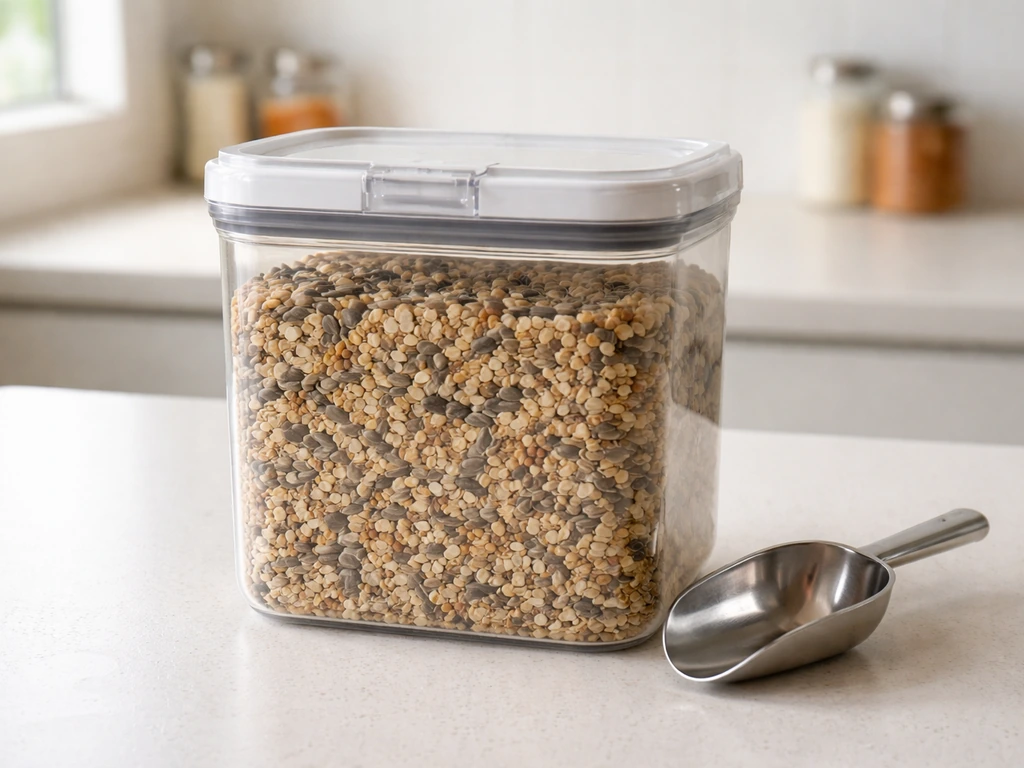
Never leave seed in an open bag. Once a bag is open, moisture and insects get in fast. Transfer seed to a hard-sided, airtight container (a metal or heavy-duty plastic bin with a lid works well) and store it somewhere cool and dry. Most bird seed stored correctly lasts roughly 6 months to 2 years depending on the seed type, but the moment it smells musty, sour, or rancid, it's done. Throw it out. Feeding birds moldy or rancid seed is genuinely harmful to them.
Dealing with wet or sprouting seed
Wet seed in a tray feeder will start to clump and mold within 24 to 48 hours in warm weather. If seed gets rained on or you notice it's clumping, remove it, clean the tray, let it dry fully, and replace it with fresh seed. Don't just top off wet seed with dry seed on top, the wet layer underneath will mold and contaminate everything above it. Sprouting seed (where you start to see small green shoots) is a sign the seed has been sitting too long in moist conditions. Discard it and clean the feeding surface. A covered platform feeder is the most practical long-term fix if wet seed is a recurring problem in your area.
Wet weather feeder management
During rainy stretches, shake your tray or platform feeder every day or two to break up any moisture buildup at the bottom. This simple habit buys you more time before seed starts to compact and spoil. If a prolonged wet period is coming, consider putting out smaller amounts of seed more frequently rather than filling the tray all at once.
Pest prevention
Spilled seed and accumulated waste under feeders attracts rodents, and to a lesser degree insects. Doves feeding on the ground are not especially messy compared to, say, squirrels, but the filler seeds they leave behind are exactly what rodents come looking for. If you are also watching for other wildlife, you may be wondering whether do lizards eat bird seed and how that changes what gets left behind under the feeder.
Keeping your feeder stocked with seeds doves actually eat reduces the amount of rejected seed that ends up on the ground. If you are also dealing with pests like slugs, it helps to know whether slugs eat bird seed and how that affects your cleanup routine do slugs eat bird seed. Some people also wonder whether do snails eat bird seed, since pests can show up when seed is left out on the ground.
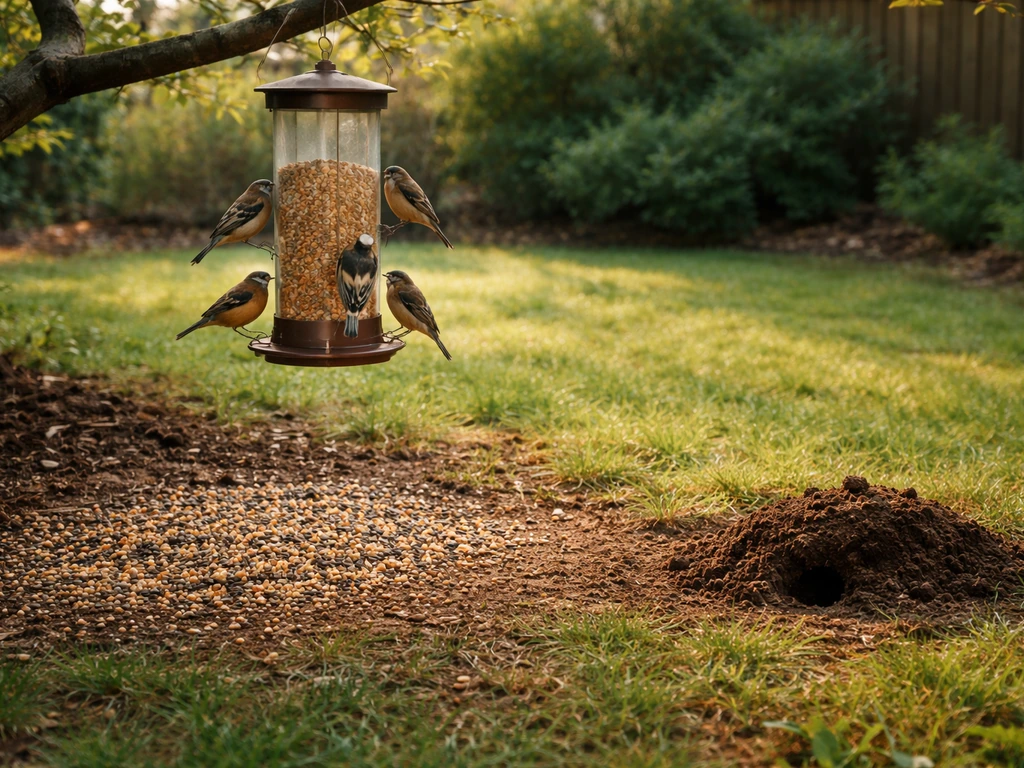
If you're also concerned about other wildlife interacting with spilled seed (moles and voles, for example, are attracted to seed-rich areas under feeders), that waste management becomes even more important. Water voles may also investigate seed around feeders, so it's helpful to know whether they eat bird seed and how that affects cleanup do water voles eat bird seed.
Moles will often show up around bird feeders because spilled seed and rejected seed attract insects and worms they like to eat.
Cleanup and hygiene around dove feeding areas
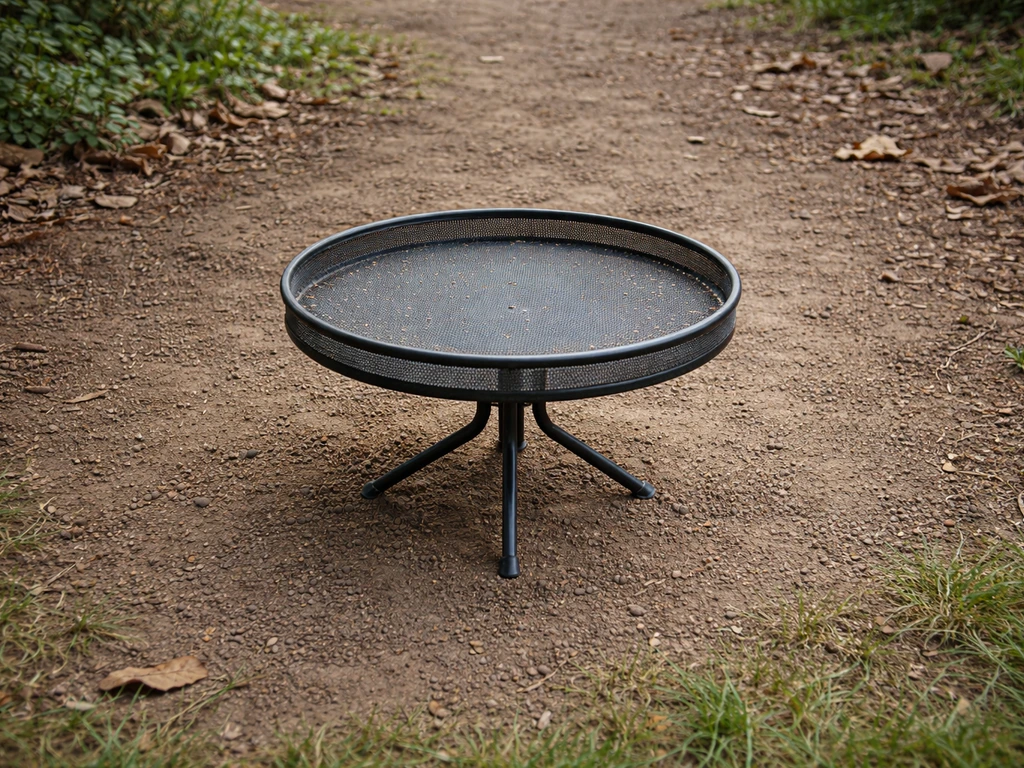
Platform and ground-level feeders need more frequent cleaning than tube feeders because they're more exposed to droppings, moisture, and debris. A basic cleaning schedule makes a real difference.
Feeder cleaning schedule
Clean your platform feeder at least once every two weeks under normal conditions. During warm, damp weather (spring and summer especially) bump that up to once a week. To clean it properly: empty all remaining seed, remove any visible debris and droppings, scrub the surfaces with a mild bleach solution (1 part bleach to 9 parts water works well), rinse thoroughly, and then set it in the sun to dry completely before refilling. Don't skip the drying step. Refilling a damp feeder just restarts the mold cycle.
Ground cleanup under feeders
Rake or sweep the area under and around your feeding spot every week or two. Old seed hulls, droppings, and rejected seeds build up quickly and create a contamination risk. If you're feeding on bare ground, consider placing a rubber mat or removable tray underneath the feeder that you can lift out and hose off. This takes 5 minutes and prevents a lot of problems.
Personal hygiene
Wear gloves when cleaning feeders if you can, especially if there's visible mold or black discoloration. Wash your hands thoroughly after handling feeders, seed, or cleaning up seed debris. This isn't overly cautious, bird droppings can carry pathogens and moldy seed can harbor fungi you don't want on your hands.
Quick safety do's and don'ts for dove-friendly seed
To wrap this up cleanly, here's the short version of what to do and what to avoid:
- Do use white millet, cracked corn, black-oil sunflower, or safflower as your primary seed choices
- Do use a platform or tray feeder with good drainage so water doesn't pool under the seed
- Do store seed in a sealed, hard-sided container in a cool, dry location
- Do clean your feeder every one to two weeks, and more often in warm or wet conditions
- Do discard any seed that smells off, looks moldy, or has started to sprout
- Don't leave seed in an open bag between uses
- Don't top off old or wet seed with fresh seed without cleaning the feeder first
- Don't use feeders with small perches or openings that doves can't physically access
- Don't let rejected filler seed accumulate on the ground under your feeder
- Don't skip the drying step after cleaning a feeder before you refill it
Feeding doves is genuinely low-effort once you have the right seed and a clean setup in place. Get those two things right and you'll have reliable, consistent visitors without the hygiene headaches that come from using cheap mixed seed in the wrong feeder.
FAQ
How do I choose a seed that doves will actually eat from a mixed bag?
Check the label for what is listed as the main portion. Doves tend to prefer straight white millet, millet-and-cracked-corn blends, or mixes that include enough millet and sunflower to reduce leftover filler. If you see lots of red millet, oats, wheat, or canary seed as major ingredients, expect more rejected seed on the ground.
Can I feed doves seed on the ground, or will it always become a pest problem?
Ground-feeding can work, but plan for faster spoilage and more rodents. If you do it, use smaller daily amounts and remove wet or moldy seed quickly. A low tray or platform 6 to 12 inches off the ground usually gives doves the same access with less mess.
What if my tray feeder has a mesh or slatted bottom, but seed still seems to stay wet?
Pooling can happen if the tray sits too close to soggy soil or lacks drainage clearance. Put the feeder on a dry surface (like a paver) and keep it level so water flows out. Also shake off clumps during rainy periods and clean more frequently so wet hulls do not build up.
How often should I replace seed in a dove feeder during hot summer weather?
Beyond the regular cleaning schedule, replace sooner if the seed starts clumping or smelling off. In warm, humid conditions, tray seed can go from fine to mold-prone quickly, so treat wetness and musty odor as the real timers, not the calendar.
Is it safe to feed doves seed that has sprouted a little?
No. Sprouting usually means the seed has been sitting too long in moisture. Remove it, clean the feeding surface, and discard the sprouted seed to prevent mold and fungus issues.
Will doves eat sunflower seeds and will that increase mess?
Yes, black-oil sunflower is a strong dove attractant and also brings other birds. It can reduce waste if it is a major component of the mix you use, but any feeder setup will still produce dropped shells, so plan on regular sweeping and tray cleaning.
Do doves eat seed from tube feeders, or do I need a platform?
Doves generally struggle with narrow tube or small hanging feeders because they need room to land and walk. If you already have a tube feeder, adding a wide tray attachment at the bottom can make it dove-accessible without replacing the whole setup.
What is the best way to store seed so it does not go bad before I feed it?
Transfer seed from an open bag into an airtight, hard-sided container and keep it cool and dry. Do not use it if it smells musty, sour, or rancid, and avoid storing it in humid garages where insect activity and moisture can start quickly.
Why do some birds show up but not doves, even though seed is available?
The most common causes are feeder height and seed presentation. Doves are ground feeders first, so if your seed is in a higher or narrow feeder that they cannot comfortably reach, they may ignore it. Also verify your mix has enough of the dove-attractive components like millet and that leftover filler is not dominating.
How can I reduce waste under the feeder without making it harder for doves to eat?
Use a platform feeder with drainage and consider a removable rubber mat or catch tray underneath. Keep seed off bare dirt, sweep or rake beneath weekly or every two weeks, and aim for dove-preferred seeds so fewer grains are rejected and dropped.
Do I need to adjust my feeding plan if I have squirrels around?
Yes. Use safflower as a dove-friendly option that squirrels typically avoid, and consider feeding with smaller, more frequent refills to reduce the time seed is available for digging and caching. If squirrels are actively dislodging seed, elevate maintenance frequency and clean up spilled hulls faster.