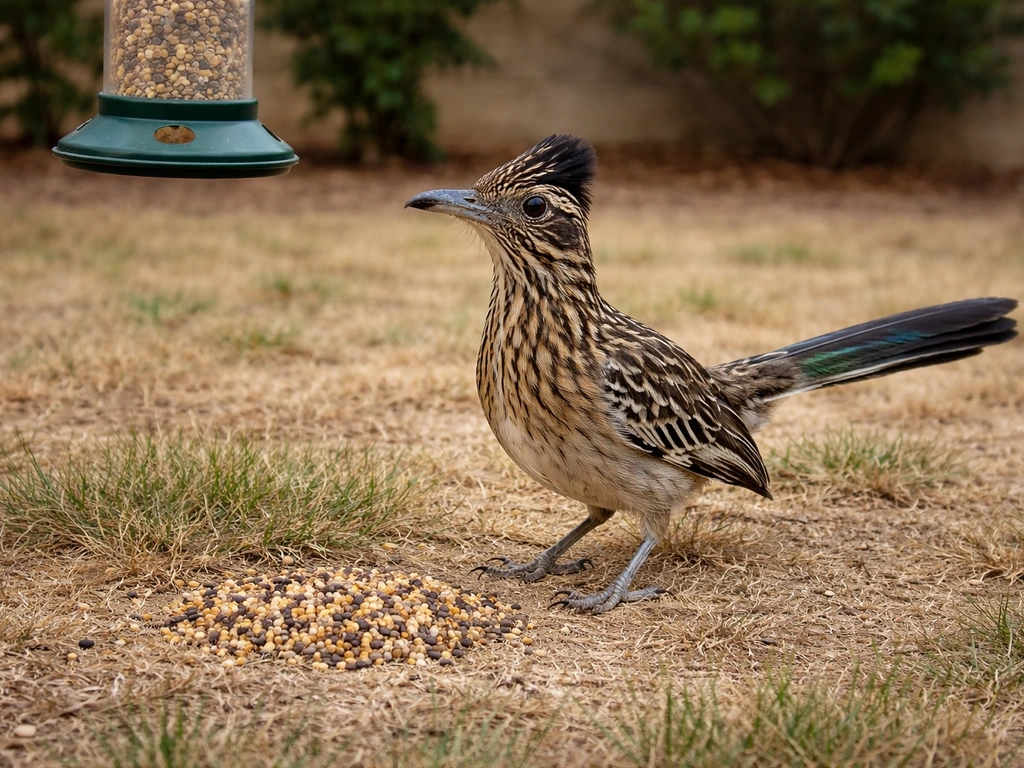
Yes, water voles will eat bird seed if they can reach it. They are primarily herbivores that naturally eat grasses, sedges, roots, and shoots, but their diet does include seeds broadly, and an easy food source like spilled bird seed near water is genuinely attractive to them. If you have a garden backing onto a stream, pond, ditch, or marshy ground and you are losing seed from ground-level feeders or trays, a water vole is a real candidate, especially in the UK where they are found near slow-moving or still water.
Do Water Voles Eat Bird Seed? What to Do in Your Yard
Maya Collins
2 Jun 2026
Why water voles end up near bird seed
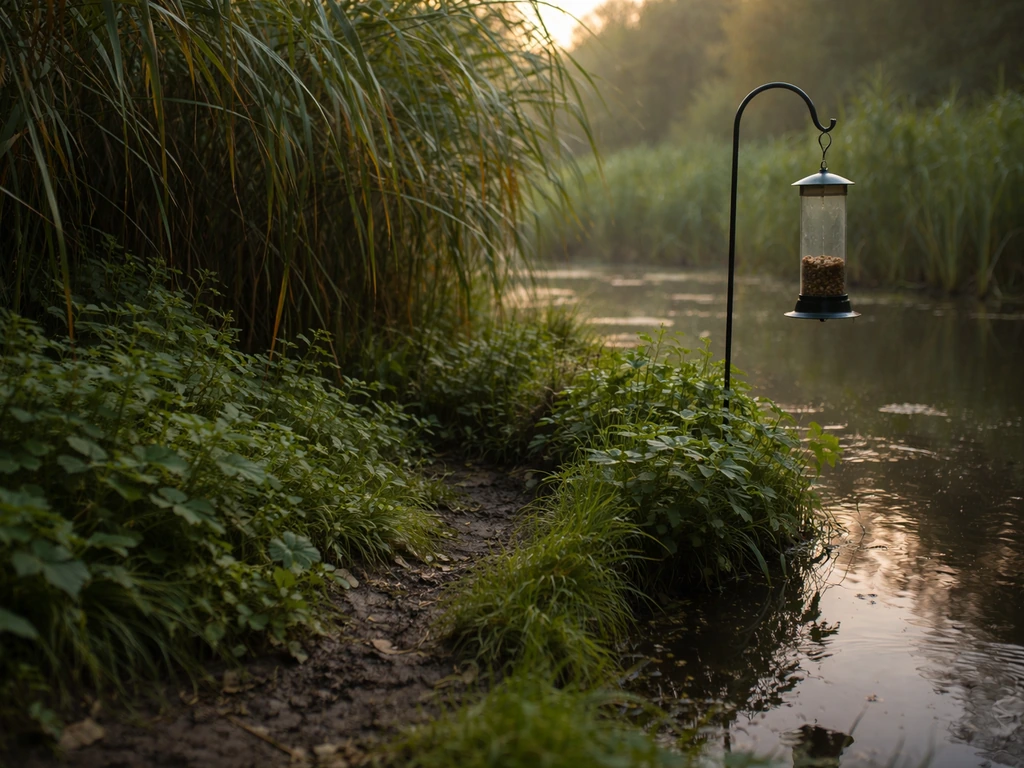
Water voles (Arvicola amphibius) live in burrows in the banks of rivers, streams, ditches, and ponds. They rarely stray far from water and dense vegetation, which gives them cover from predators. When a bird feeder or ground tray sits close to that waterside vegetation, it is essentially sitting right in their territory. They do not need to take a risk to find it.
Their natural diet is almost entirely plant-based: grasses, sedges, rushes, herbs, roots, bulbs, and fruit. Seeds fall into that category. Research from the Zoological Society of London notes that water voles play a role in seed dispersal, which tells you they are handling and consuming seeds as a normal part of life. Wikipedia's species summary for the European water vole specifically lists fruit and seeds as opportunistic food items alongside their usual vegetation. So bird seed, particularly sunflower seeds, millet, and cereal-based mixes, is well within what their gut is designed to process.
The timing matters too. Late summer and autumn are peak feeding periods when water voles are building fat reserves. If spilled seed is sitting on the ground or in a low tray near cover, that is an easy calorie source they will exploit. Similarly, wet weather keeps them close to the bank, and a feeder within a few metres of the water edge can be enough to pull them in during foraging trips.
How to tell if it really is a water vole (and not a rat or mouse)
This identification step matters a lot, and not just for practical reasons. In the UK, water voles are protected under the Wildlife and Countryside Act 1981, so knowing what you are actually dealing with before taking any action is important. Rats, mice, voles, and even squirrels all take bird seed. Do roadrunners eat bird seed too, and what other foods should you consider managing around feeders? They leave different evidence.
Look at the droppings
This is the most reliable field sign. Water vole droppings are roughly 8 to 12mm long and 4 to 5mm wide, with blunt, rounded ends at both ends. Rat droppings are larger, typically 15 to 20mm, and pointed at one end. Mouse droppings are smaller still, about 3 to 7mm, and also pointed. Water voles often deposit droppings in communal latrines, small piles near burrow entrances or along their runs, rather than scattering them randomly. The Wildlife Trusts specifically highlights the rounded-at-both-ends shape as the key visual distinction from rat droppings.
| Animal | Dropping length | Shape | Location pattern |
|---|---|---|---|
| Water vole | 8-12mm | Rounded at both ends | Communal latrines near water/burrows |
| Brown rat | 15-20mm | Pointed at one end | Scattered along runways |
| Mouse | 3-7mm | Pointed, elongated | Scattered widely near food |
| Grey squirrel | 8-12mm | Slightly tapered | Scattered under feeders/trees |
Look for feeding signs near water
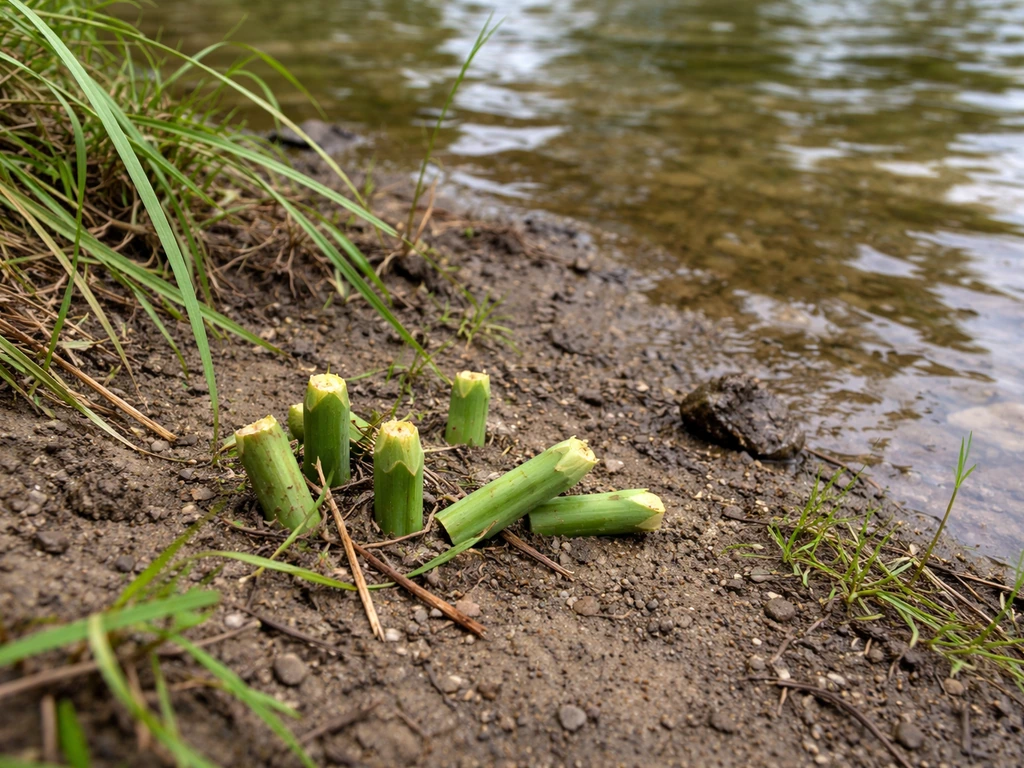
The Mammal Society describes a very specific water vole feeding sign: short sections of nibbled grass or plant stem, cut at a distinctive 45-degree angle, left in small neat piles along runs at the water's edge. If you see piles of neatly cut vegetation near the bank alongside missing seed, that points strongly to water voles. Rats and mice do not produce that tidy, angled cutting pattern.
Check the habitat
Water voles almost never venture far from water. If your garden is nowhere near a stream, ditch, pond, or heavily waterlogged ground, the culprit is almost certainly a common vole, wood mouse, rat, or squirrel instead. A garden directly bordering a waterway with dense marginal vegetation like reeds, nettles, or long grass is genuine water vole habitat. If your situation matches that description, it is worth checking the other sibling species too: common voles and rats behave differently and need different responses.
What you can do today: stop access without harming them
Because water voles are legally protected in the UK, you cannot trap, harm, or disturb their burrows without a licence (specifically GOV.UK's CL31 licence covers intentional disturbance or destruction of water vole shelters). The good news is that you do not need to do any of that. The goal is simply to remove easy food access so they go back to their natural diet. Exclusion and feeder management are the right tools here.
Raise your feeders off the ground
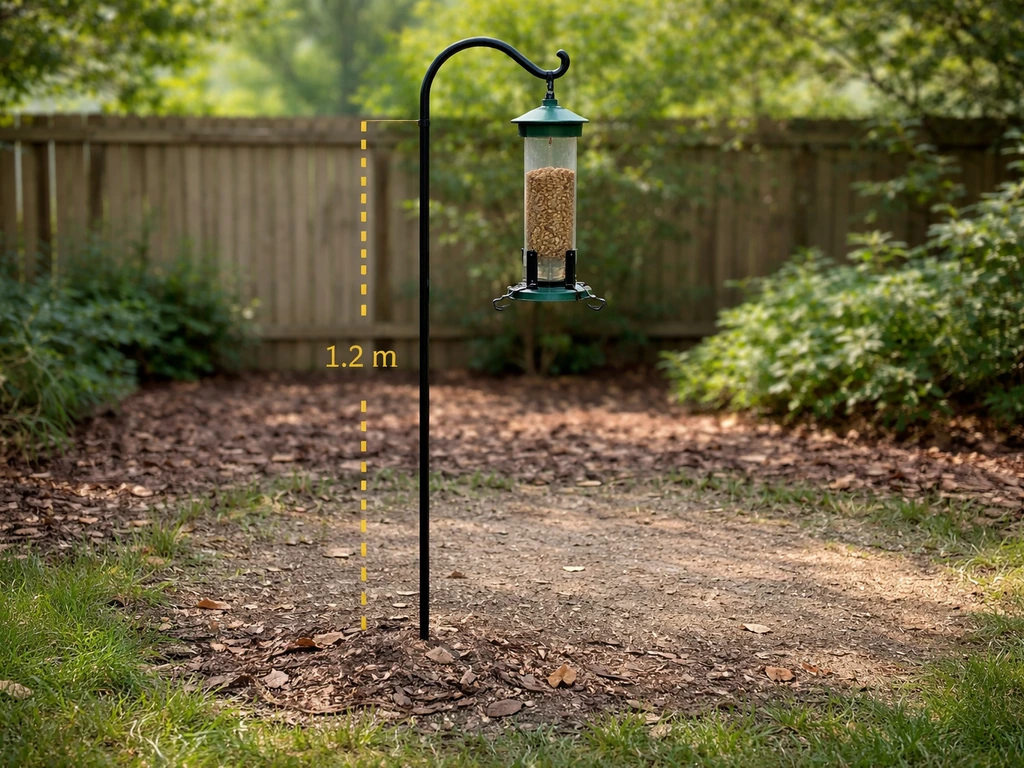
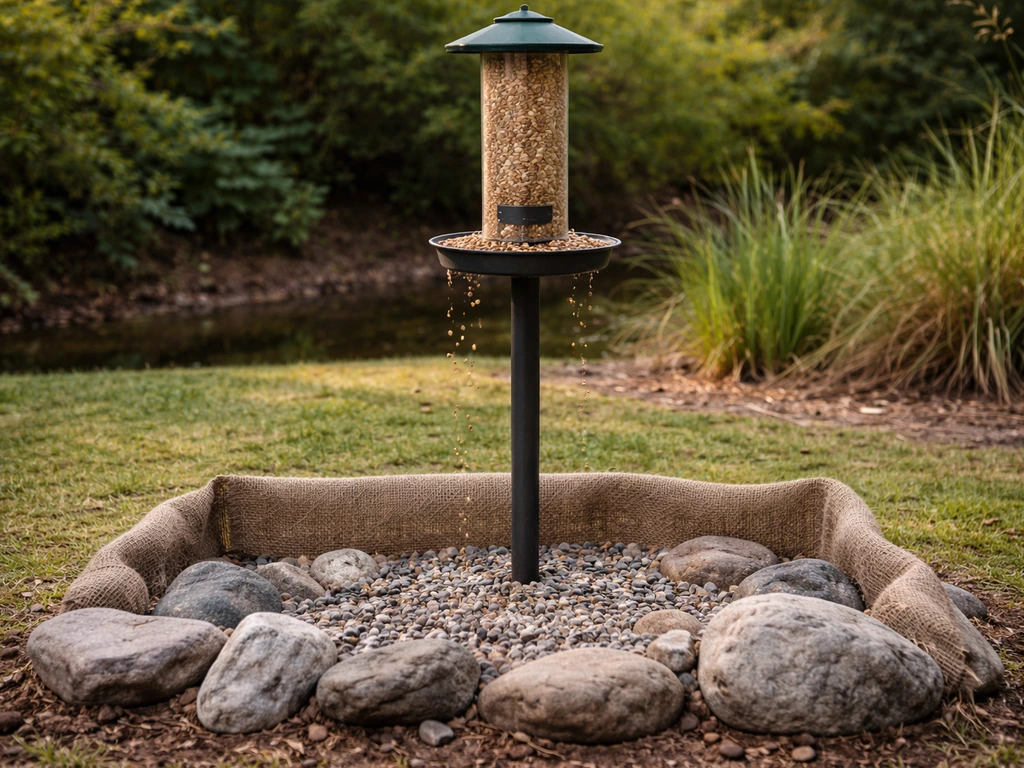
King County Public Health recommends placing feeders at least 4 feet (roughly 1.2 metres) off the ground to reduce access by ground-level rodents. Water voles are not climbers in the way squirrels are, so a pole-mounted feeder at that height is genuinely effective. Fit a baffle below the feeder on the pole, a cone-shaped or tubular barrier that prevents animals climbing up. Audubon notes that a pole and baffle combination gets you very close to rodent-proofing a feeder setup.
Eliminate ground spill
Spilled seed on the ground is the primary attractant. To cut the chance of unwanted wildlife taking it, keep bird seed from becoming an easy target by preventing spills on the ground Spilled seed on the ground is the primary attractant.. USDA APHIS is direct about this: do not allow bird food to accumulate on the ground. A tray or catcher mounted directly below the feeder catches loose seed before it falls. Alternatively, switch to no-mess seed mixes that birds hull before dropping, such as sunflower hearts, which reduce the amount of debris landing on the ground. Sweep up spilled seed each evening, especially if you are near water where voles are active at dawn and dusk.
Use physical barriers near the water edge
If your feeder setup is close to waterside vegetation, move it further into the open garden, at least 3 to 4 metres from the water edge and from dense cover. Water voles are prey animals and are very reluctant to cross open ground. Removing the cover connection between the bank and the feeder significantly reduces the likelihood of visits. Do not place feeders under dense shrubs or next to log piles near the bank.
Stop feeding on the ground entirely
Ground feeding trays and scatter feeding on the lawn are the easiest access points for any ground-level mammal. Do snails eat bird seed as well, so it can help to look for other clues from nearby pests too water voles. If you want to support ground-feeding birds like dunnocks and robins, use a raised platform feeder at table height rather than placing seed directly on the ground. This gives birds access while removing the easy surface-level meal for voles and other rodents.
Seed handling: storage, wet seed, and mold prevention
A lot of the problems that make feeders attractive to unwanted wildlife, including water voles, come down to poor seed management. Damp, fermenting, or sprouting seed sends stronger scent signals and is more accessible. Tightening up your seed handling makes a real difference.
Storage
Store bird seed in a sealed, hard-sided metal or heavy plastic container with a locking lid. Cardboard bags and thin plastic sacks are easy for rodents to chew through, and open bags broadcast seed scent strongly. Keep the container away from the water's edge and ideally indoors or in a shed. Do not store more than a 2 to 4 week supply at a time, as seed quality deteriorates and the longer it sits, the more likely it is to attract pests or go off.
Wet and sprouting seed
Wet seed in a feeder is a real problem. Minnesota DNR confirms that mold and bacteria form quickly on wet bird seed, both inside feeders and on the ground. If seed gets rained on or is sitting in a damp feeder, remove it promptly. Do not leave wet seed sitting in a tray or on the ground overnight. Sprouting seed on the ground, where fallen seeds germinate in soil, becomes its own attractant and also introduces invasive plants. Rake up and bin sprouted seed rather than leaving it.
Feeder design for wet conditions
Use feeders with drainage holes and a roof or weather guard. Tube feeders with mesh sides let moisture escape. In prolonged wet weather, reduce the amount of seed you load so it gets eaten before it can sit and spoil. In coastal or very wet UK regions, daily checks in winter are worthwhile given how quickly conditions deteriorate.
Cleanup and hygiene: removing waste safely
If you have confirmed or suspected rodent activity near your feeders, treat the cleanup the same way you would treat any rodent contamination. Do not sweep up droppings dry, as this can aerosolize particles. The CDC recommends putting on rubber or plastic gloves first, then spraying the affected area with a disinfectant or a bleach solution (1 part bleach to 9 parts water) and letting it soak for 5 minutes before wiping up. Double-bag the waste and bin it.
King County Public Health specifically links feeder hygiene to reducing rodent problems: clean the feeder itself regularly, removing old hulls, droppings, and debris that build up in the tray or on the pole. A monthly scrub with a dilute bleach solution, followed by thorough rinsing and drying before refilling, is the baseline. If you have had active rodent visits, move to fortnightly cleaning until the activity stops.
Reduce scent attractants in the wider area too. Fallen fruit, uncovered compost heaps, and pet food left outside all compound the problem alongside bird seed. USDA APHIS advises removing all incidental food sources as part of keeping wildlife out of the garden, and that applies directly here. A cleaner garden is a less interesting garden for a water vole looking for an easy meal. Do roadrunners eat bird seed, and if so, how can you reduce their access?
A quick action checklist for today
- Check droppings near your feeder: 8-12mm with rounded ends at both ends means water vole; adjust your response accordingly.
- Raise any ground-level or low feeders to at least 4 feet (1.2m) off the ground on a pole with a baffle fitted below.
- Move feeders at least 3 to 4 metres away from the water edge and away from dense bankside cover.
- Sweep up or collect all spilled seed from the ground this evening.
- Switch to no-mess seed (sunflower hearts, hulled millet) to reduce ground debris.
- Check seed in feeders for moisture or sprouting; remove and bin any wet seed.
- Clean the feeder with a dilute bleach solution if there are droppings present, wearing rubber gloves.
- Move seed storage into a sealed metal container indoors or in a shed.
- Do not trap, disturb, or attempt to block burrows without checking UK legal requirements first.
FAQ
How can I tell the difference between a water vole and a rat if both may be eating bird seed near my pond or stream?
Look for a combination of size and pattern. Rat droppings are typically larger and pointed on one end, water vole droppings are about 8 to 12mm and rounded at both ends, and water voles often leave neat, short, 45-degree angled nibbled plant sections in small piles along runs. If you are unsure, do not disturb burrow areas and confirm with a local wildlife group or conservation officer.
Do water voles ever come onto the lawn to feed, or only near the water edge?
They are strongly tied to the bank and dense cover, so they usually do not travel far across open ground. If bird seed is on the lawn or scattered broadly, it can still pull them in, but the risk is highest when the lawn provides cover access from waterside vegetation. Moving feeding away from cover lines and reducing ground-level spillage lowers the chance dramatically.
What is the safest cleanup approach if I find droppings near my feeder?
Avoid sweeping dry waste, because fine particles can become airborne. Wear gloves, dampen or disinfect the area before wiping, then double-bag and bin everything. If you recently had active visits, clean more frequently (for example, every two weeks) and keep pets away from the treated area until it is dry.
Can I use poison or traps to stop water voles from eating seed?
Do not. In the UK, water voles are protected, and harming or disturbing burrows is not allowed without the appropriate licence. Also, poisons can cause secondary poisoning to pets and birds. The practical approach is to remove food access, improve feeder placement, and use exclusion like a baffle and catcher where appropriate.
Will switching to sunflower hearts or seed-free food help if water voles are visiting?
Often yes, because these options reduce messy hulls that fall to the ground. However, water voles may still eat exposed seed if it is accessible. The bigger wins are preventing ground accumulation, using a seed catcher, and placing feeders well away from waterside cover.
How far should I move a feeder if my property borders a ditch, stream, or pond?
A practical target is at least 3 to 4 metres from the water edge and away from dense marginal vegetation. Even then, avoid placing feeders under shrubs or next to logs that create a cover route. If you cannot move the feeder, increase barriers and make sure no seed reaches the ground beneath.
Are pole-mounted feeders really safe from water voles if I add a baffle?
They are generally effective because water voles are not typical climbers like squirrels. A feeder mounted at about 1.2 metres off the ground, combined with a baffle that blocks upward access, reduces the chance of reaching the tray. Still, seed can attract them if it spills, so use a catcher and clean up daily during peak feeding periods.
What should I do if the seed is getting wet from rain or condensation inside the feeder?
Empty and replace damp seed promptly, do not leave it overnight. Use feeders with drainage and weather guards, and consider reducing how much you load during wet spells so it is consumed before it spoils. Damp or sprouting seed increases scent and creates additional attractants, which can bring more frequent visits.
Do water voles prefer certain seed types, like sunflower or millet?
They will take seeds broadly, but sunflower seeds, millet, and cereal-type mixes are commonly appealing because they provide calorie-dense food. If you must feed birds, using seeds that birds consume with less leftover debris (like hearts) plus strict spill prevention reduces the specific “easy snack” that draws voles in.
If I stop feeding for a while, will water voles leave permanently?
Not necessarily. They may continue returning as long as cover routes and nearby spilled or incidental food remain. A short pause can help, but the most reliable outcome comes from a consistent change in access, including no ground accumulation, better feeder hygiene, and removing other outdoor food sources like fallen fruit or unsecured pet food.
Next Article
Do Roadrunners Eat Bird Seed? What to Expect and Fix
Find out if roadrunners eat bird seed, which seeds attract them, and how to stop spillage safely.