Do owls eat bird seed? The short answer
No, owls do not eat bird seed. They are obligate carnivores, meaning their entire diet consists of live prey: small mammals, birds, insects, frogs, and similar animals. If you are seeing seed disturbance at night and wondering whether an owl is raiding your feeder, the owl is almost certainly not after the seed at all. It is after whatever the seed has attracted, which is usually mice, voles, or small birds. That distinction changes everything about how you should respond.
How owls actually feed and why your feeder still matters to them
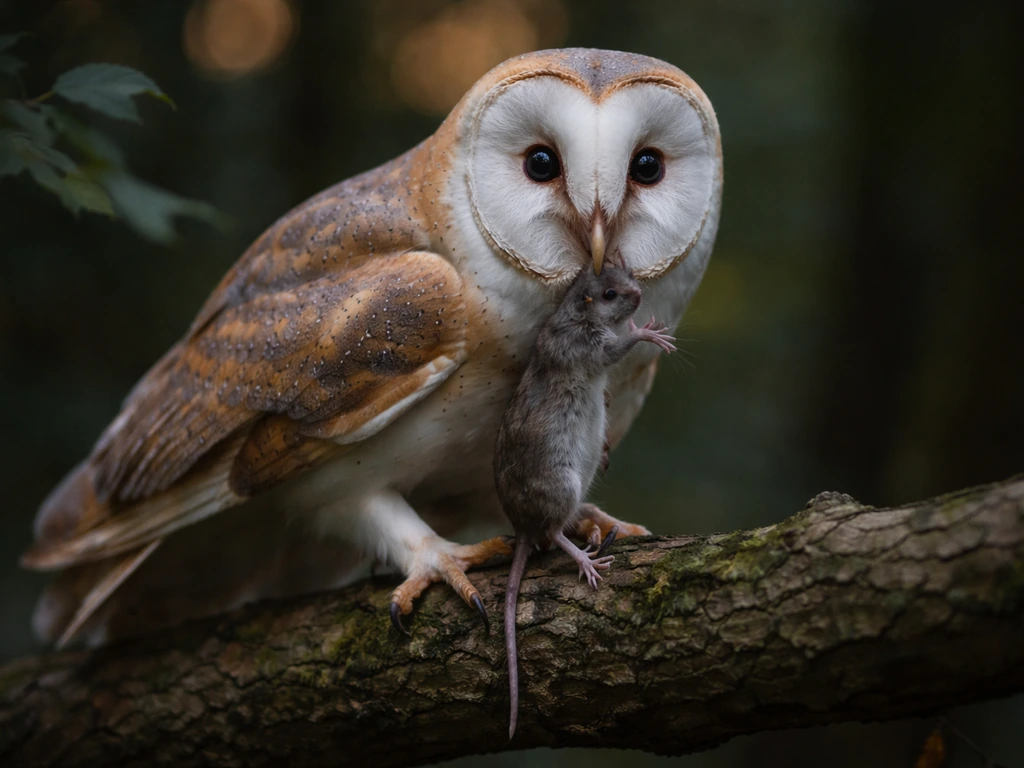
Owls are ambush predators with hooked bills and sharp talons built for catching and killing, not for cracking seeds. Tennessee's wildlife agency notes that Barn Owls eat primarily voles, shrews, and native rats, with birds, reptiles, and insects rounding out the diet. The Eastern Screech-Owl, probably the most common backyard owl in North America, is an opportunistic predator that takes insects, earthworms, small mammals, and songbirds. Cornell Lab documents that Screech-Owls typically perch 6 to 10 feet off the ground and pounce on prey below them, occasionally snatching something mid-air. They also cache surplus food for several days when hunting is good.
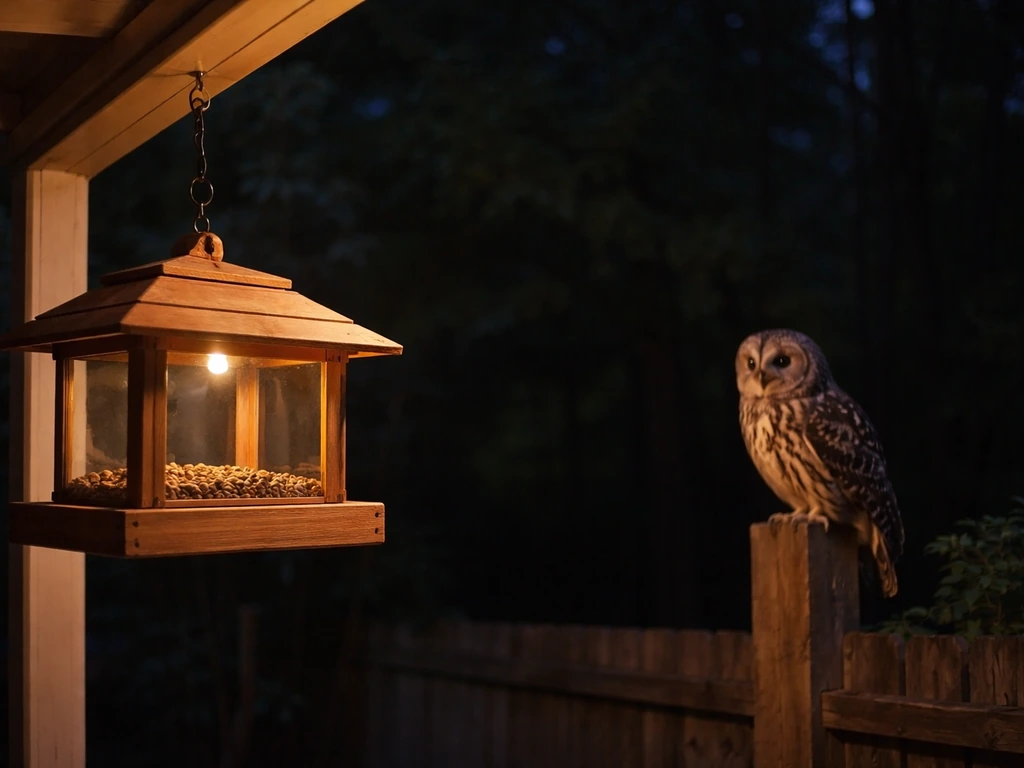
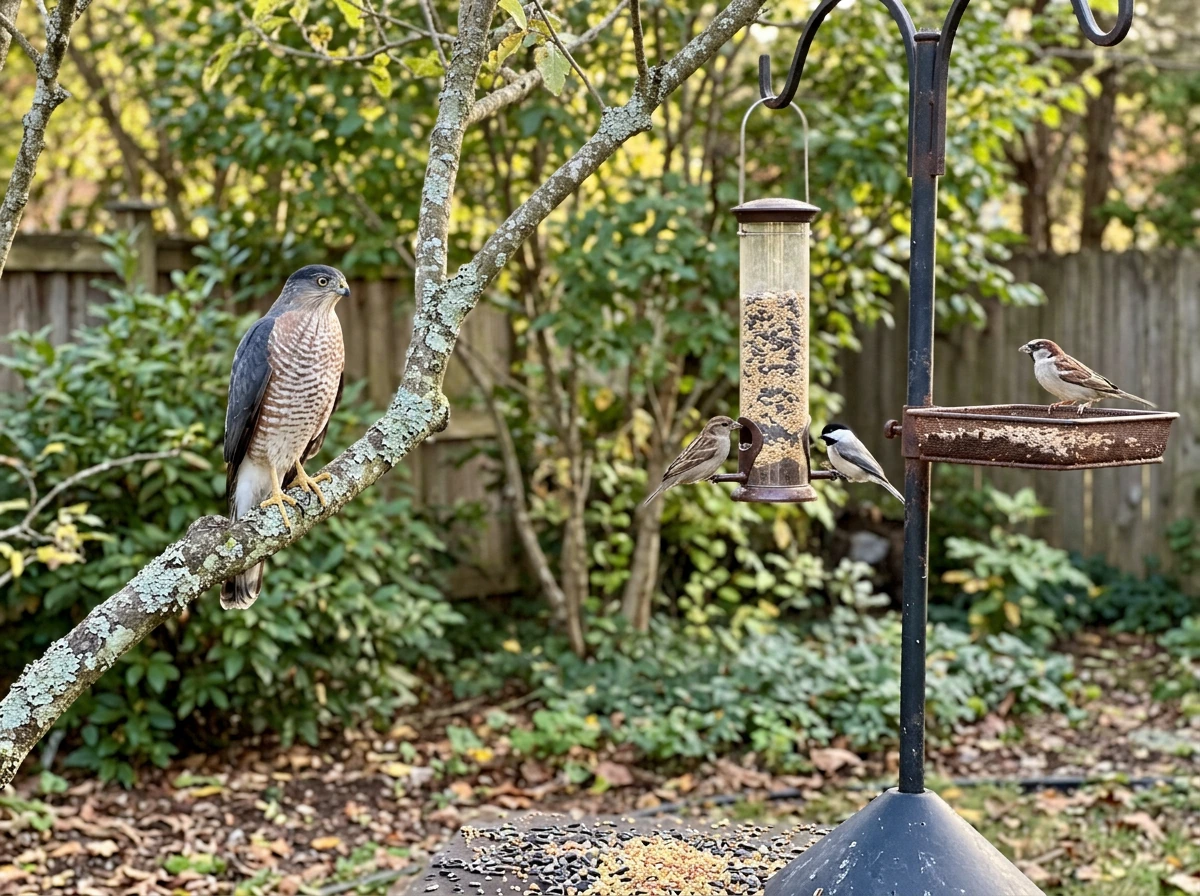
So why would an owl show up at your feeder? Because your feeder is a hunting ground, not a buffet. Seed draws sparrows, finches, and small mammals like mice. Those animals draw owls. Project FeederWatch has documented Barred Owls visiting feeders during harsh winter weather, including one well-known January observation of a Barred Owl sitting quietly while songbirds fed nearby, clearly watching rather than eating. Your feeder essentially concentrates prey into a predictable spot. As Audubon puts it, bird feeding can "shrink the predatory playing field" for raptors.
This is true for other raptors too, not just owls. If you have been reading up on whether hawks eat bird seed, you will find the same pattern: raptors visit feeders for the prey animals, never the seed itself.
What you will actually notice in your backyard
Owls are quiet and mostly invisible, which makes them easy to mistake for other nocturnal visitors. Here is what each likely culprit actually looks like on the ground.
| Visitor | Signs at or near feeder | Time of activity |
|---|
| Owl | No seed missing, feathers or prey remains nearby, occasional calling (Screech-Owl trill lasts 2-3 seconds), perched silhouette in nearby tree | Dusk through dawn |
| Mouse or vole | Seed definitely missing, small tunnels in spilled seed, droppings under feeder | Dusk through dawn |
| Raccoon | Feeder knocked down or displaced, large amounts of seed spilled, muddy paw prints | Mostly night |
| Rat | Consistent seed loss, gnaw marks on feeder or pole, burrows in nearby ground | Night |
| Opossum | Scattered seed, slow methodical foraging, may climb pole | Night |
| Other birds (crows, jays) | Seed missing during daytime, loud activity, caching behavior | Daytime |
MSU Extension provides a useful predator signs table for distinguishing predators that have taken birds, noting that owls typically leave the head and neck eaten while other predators leave different patterns. If you found a small bird carcass near your feeder, that table is worth checking. The key takeaway: if seed is disappearing overnight, an owl is not the cause. Mice, rats, or raccoons are far more likely.
One reliable sign of owl presence that people often overlook is sound. The Eastern Screech-Owl produces a hushed, descending trill lasting about 2 to 3 seconds, often repeated. Barn Owls make a raspy screech. Barred Owls give the classic "who cooks for you" call. If you hear any of these after dark near your yard, an owl is hunting the area. It is worth knowing that bats also visit yards at night and are sometimes confused with small owls in low light, but bats are insectivores and pose zero risk to seed or songbirds.
Feeder and yard setup changes to make today
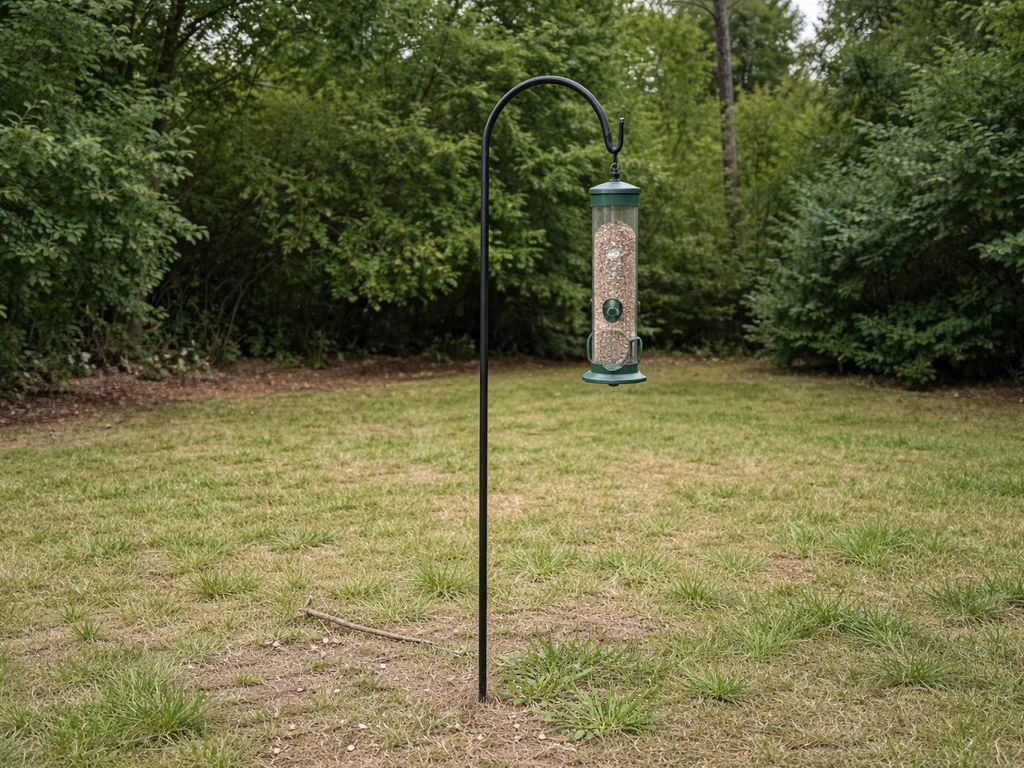
You do not need to stop feeding birds because owls are present. Owls are native predators doing exactly what they are supposed to do. But you can make smart adjustments that protect songbirds, reduce rodent attraction, and keep your feeding station from becoming an easy hunting ground.
Feeder placement and structure
- Keep feeders 15 to 20 feet from dense shrubs or trees. Audubon recommends this as a buffer: close enough that small birds can escape to cover, far enough that a predator cannot launch an ambush directly from the vegetation.
- Mount feeders on a smooth metal pole, not on a fence, deck railing, or tree branch. Wild Birds Unlimited and the Audubon Society of Rhode Island both recommend a pole system with a raccoon baffle to stop mammals from climbing.
- Use a baffle that is free-swinging on the pipe so it wobbles when a mammal tries to climb. A rigid baffle that a raccoon can grip defeats the purpose. The baffle should be mounted at least 4 to 5 feet off the ground.
- Consider removing or repositioning feeders entirely if owl activity is heavy and you have noticed songbird casualties. A one to two week break during peak hunting periods (especially late fall and winter) can reduce predator reliance on your yard as a hunting spot.
- Avoid ground feeding or platform feeders at ground level during periods of high owl or rodent activity. Elevated feeders with baffles keep songbirds safer and reduce the mouse population that draws owls in the first place.
Managing the prey magnet problem
Kansas State University Extension wildlife experts make the point plainly: feeders can increase predator presence because they concentrate prey into predictable locations. Reducing the rodent population around your feeder directly reduces owl (and hawk, and cat) presence. The best lever you have is controlling spilled and uneaten seed, which is the primary food source for mice and rats near feeders.
It is also worth thinking about which birds you are trying to attract. Some birds, like robins, are not typical feeder visitors at all. Understanding what robins actually eat and whether bird seed attracts them can help you tailor your setup to songbirds that actually use feeders, rather than offering a broad spread that draws more mammals than birds.
Seed storage, cleanup, and preventing the mess that attracts trouble
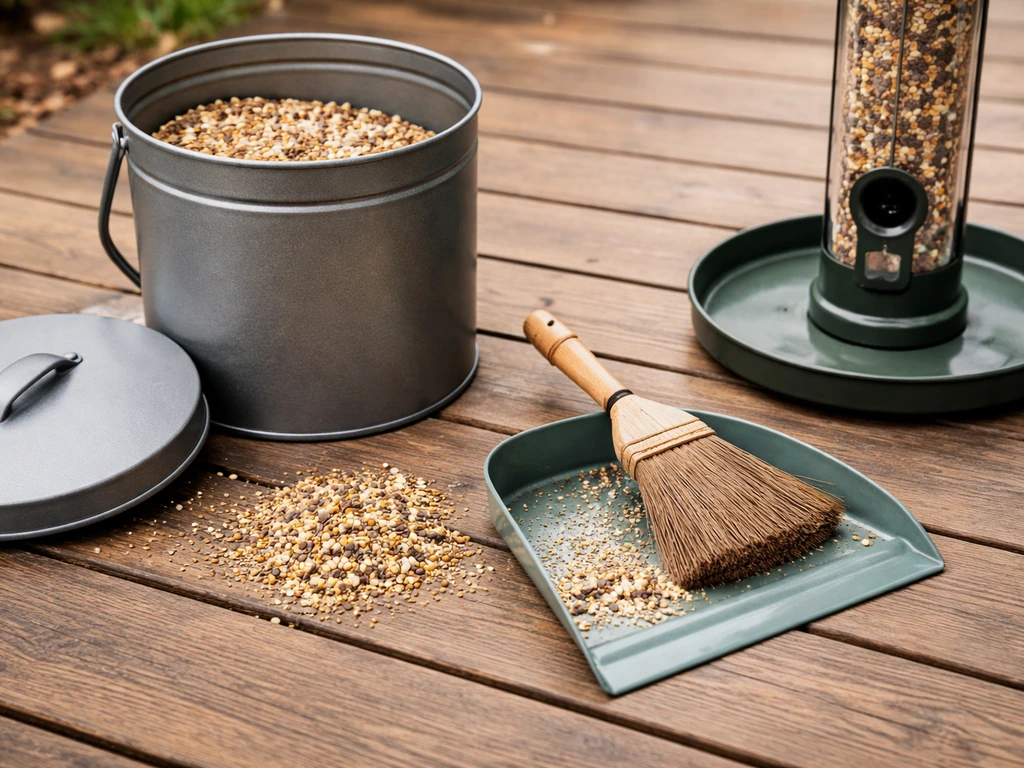
Wet, spilled, or spoiled seed is the biggest driver of rodent activity near feeders, and rodent activity is the biggest driver of owl and raptor visits. Fixing your seed management habits has a direct effect on predator pressure in your yard.
Storing seed correctly
- Store bulk seed in a metal container with a tight-fitting lid. Plastic bins are not sufficient because rodents can chew through them quickly.
- Keep stored seed off the ground and away from exterior walls. A garage shelf or shed with a sealed floor is better than a corner of a porch.
- Do not stockpile more than a 2 to 4 week supply, especially in humid or warm climates where seed can go rancid or develop mold faster.
- Check stored seed regularly for clumping, unusual smell, or visible mold. Discard any seed that smells musty, appears wet inside the bag, or shows dark spots.
Preventing mold and sprouting in the feeder
Mold and sprouting happen when seed stays wet, whether from rain, dew, or high humidity. Both are harmful to songbirds and both attract rodents. Use feeders with drainage holes in the base so water can escape. After a rain event, check the feeder and scoop out any clumped or wet seed before it sits for more than 24 hours. In wet climates or rainy seasons, consider a tube feeder with a rain guard dome over it rather than an open platform tray.
Clean your feeder every 1 to 2 weeks with a 10 percent bleach solution (roughly 1 part bleach to 9 parts water), rinse thoroughly, and let it dry completely before refilling. Wet feeders filled with fresh seed are a setup for mold growth within days. This is especially important in spring and summer when temperatures accelerate spoilage.
Cleaning up spilled seed
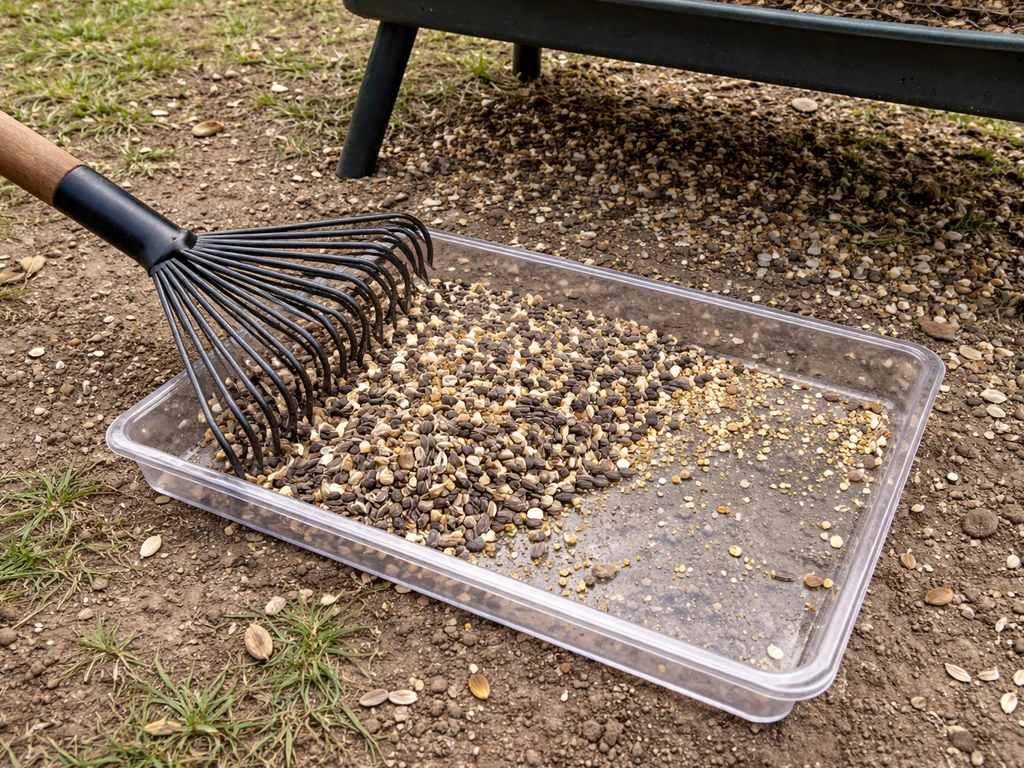
- Rake or sweep under feeders every 2 to 3 days. Seed hulls, dropped seed, and droppings accumulate fast and are a reliable food source for mice.
- Use a tray or catch basin under the feeder to contain spills, then empty it every day or two rather than letting seed build up.
- Do not let spilled seed sit overnight if you know rodents or raccoons are active in the area. Even a small pile of seed is enough to bring them in.
- If you find wet or clumped seed on the ground, bag it and discard it in a closed trash container. Do not compost it, as it can still attract rodents.
Not all nighttime visitors are the same: a note on other species
Once you start paying attention to nighttime activity around your feeder, you may notice a wider cast of characters than you expected. Owls get a lot of attention, but they are rarely the ones disturbing your seed. Crows visiting a bird feeder are usually daytime visitors, but they can linger near dusk. Ravens are similarly bold, and understanding whether ravens eat bird seed can help you tell apart corvid activity from rodent or predator activity by timing and behavior.
Blue jays are aggressive daytime feeders that can clear a feeder fast and are sometimes blamed for disturbance that happened earlier. If you want to know whether blue jays eat bird seed and how to manage their presence alongside smaller songbirds, that is worth reading separately. The point is that accurate identification of what is visiting your yard and when is the first step before making any setup changes. Blaming an owl for seed disappearance when mice are the actual culprit leads to the wrong fixes.
Orioles are another species people sometimes spot unexpectedly near feeders. Unlike owls, orioles do interact with certain types of bird seed setups, though their preferences run toward fruit and nectar over standard mixes.
Quick troubleshooting checklist for nocturnal disturbance
Run through this list if you are seeing overnight seed loss, feeder disruption, or signs of predator activity near your feeding station.
- Check whether seed is actually missing. If not, an owl may simply be perching nearby to hunt, and no feeder changes are needed.
- Look for droppings, tracks, or burrows under the feeder. Rodent signs mean mice or rats are the issue, not the owl.
- Inspect the feeder mount. If the feeder has been knocked down or displaced, raccoons or opossums are more likely than owls.
- Look for feathers or small carcasses near the feeding area. A songbird predated near your feeder may indicate a hunting owl or hawk, in which case temporarily moving or removing the feeder for 1 to 2 weeks is the most practical step.
- Check your seed storage. If the bag or container has been chewed or torn, rodents have already found your supply. Switch to a sealed metal container immediately.
- Sweep under the feeder and remove all spilled seed today. Then reduce how much you put in the feeder at a time so less accumulates on the ground.
- If you want to keep owls around for natural rodent control but protect songbirds, install a baffle on your feeder pole and move the feeder at least 15 feet from trees and dense shrubs.
- If owl activity is heavy during nesting season (roughly February through May depending on your region), consider bringing feeders in at dusk and putting them out again at sunrise to eliminate the nighttime hunting window around your feeding area.
The bottom line: owls will not touch your bird seed. But a well-stocked feeder with poor cleanup habits is a rodent magnet, and a rodent magnet is an owl magnet. Tighten up your seed storage and ground-cleanup routine, put your feeder on a baffled pole away from dense cover, and you will keep the songbirds coming while making your yard a lot less convenient for nocturnal predators.