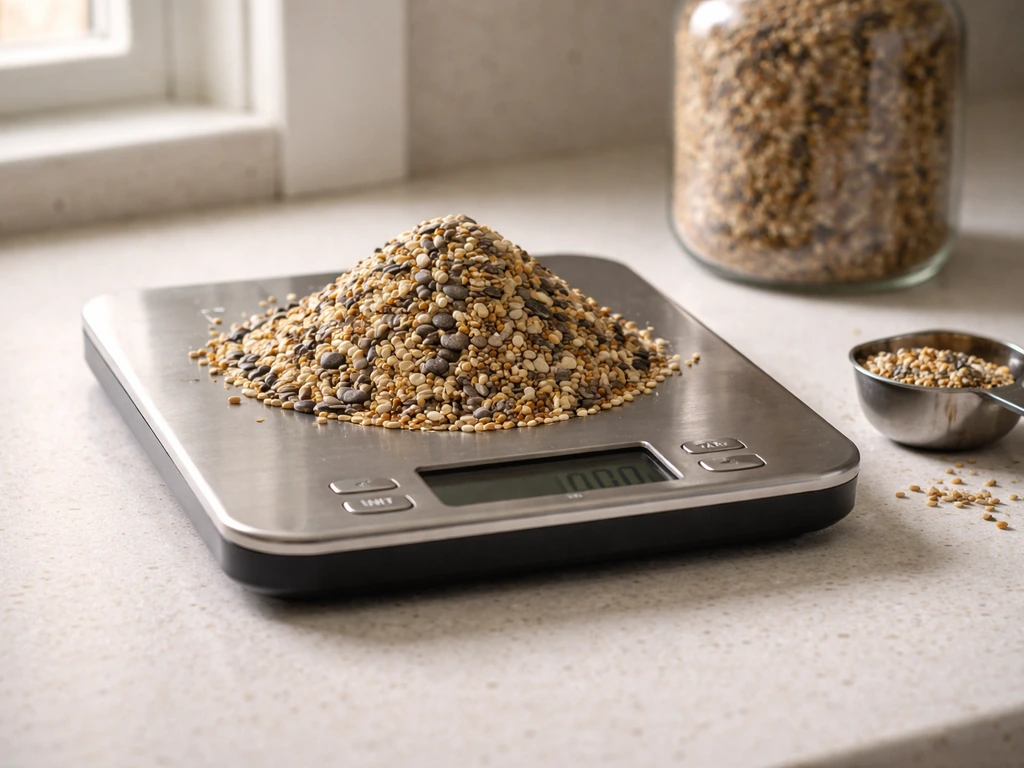
For most common backyard bird seed mixes, 20 lbs fills roughly 2.5 to 4 gallons, depending on the seed type. Heavier, denser seeds like safflower or millet sit toward the lower end (closer to 2.5 gallons), while lighter mixes with sunflower shells or pellets can push toward 4 gallons. There is no single fixed answer because gallons measure volume and pounds measure weight, so the conversion always depends on how densely the seed packs together. If you need a quick pricing estimate, you can use these same bulk-density basics to figure out how much bird seed you’re really getting in a given weight.
How Many Gallons Is 20 Lbs of Bird Seed? Estimate Guide
Maya Collins
21 Jun 2026
Why the conversion isn't a fixed number
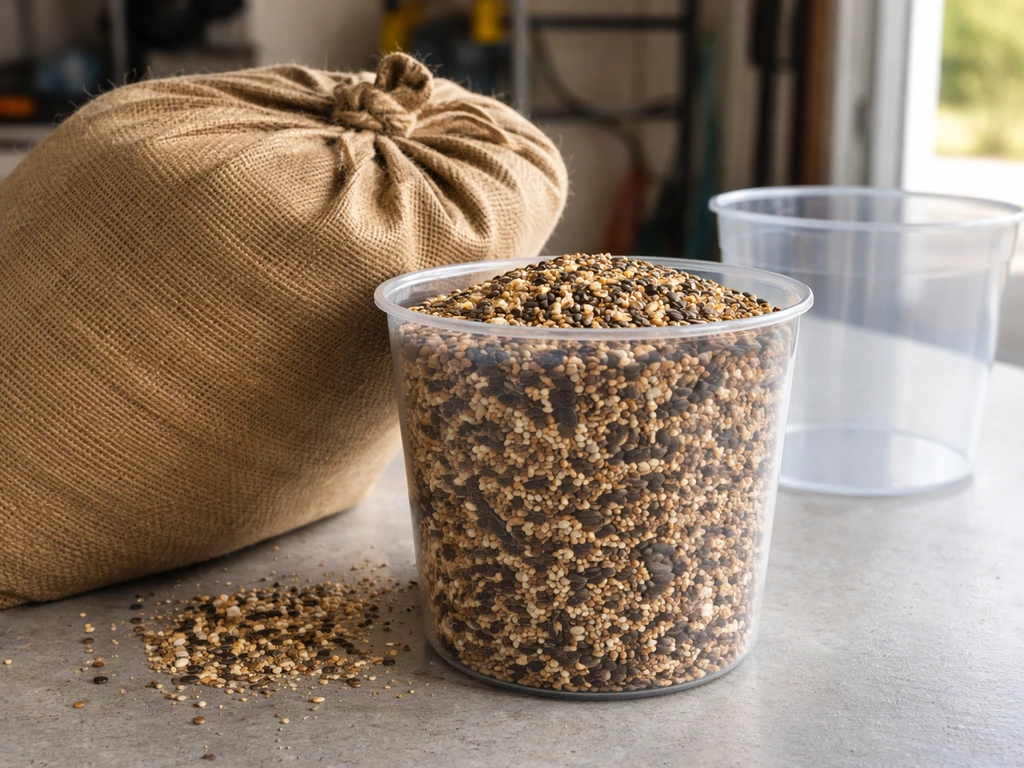
Pounds and gallons measure completely different things. Pounds tell you how much something weighs; gallons tell you how much space it takes up. To convert between them, you need one more piece of information: the seed's bulk density, which is how much a given volume of seed actually weighs. Bulk density changes based on seed type, particle size, whether seeds are whole or cracked, how much they've settled during shipping, and even how much moisture is in the bag. Two bags that both say '20 lbs' on the label can take up noticeably different amounts of space if they contain different blends.
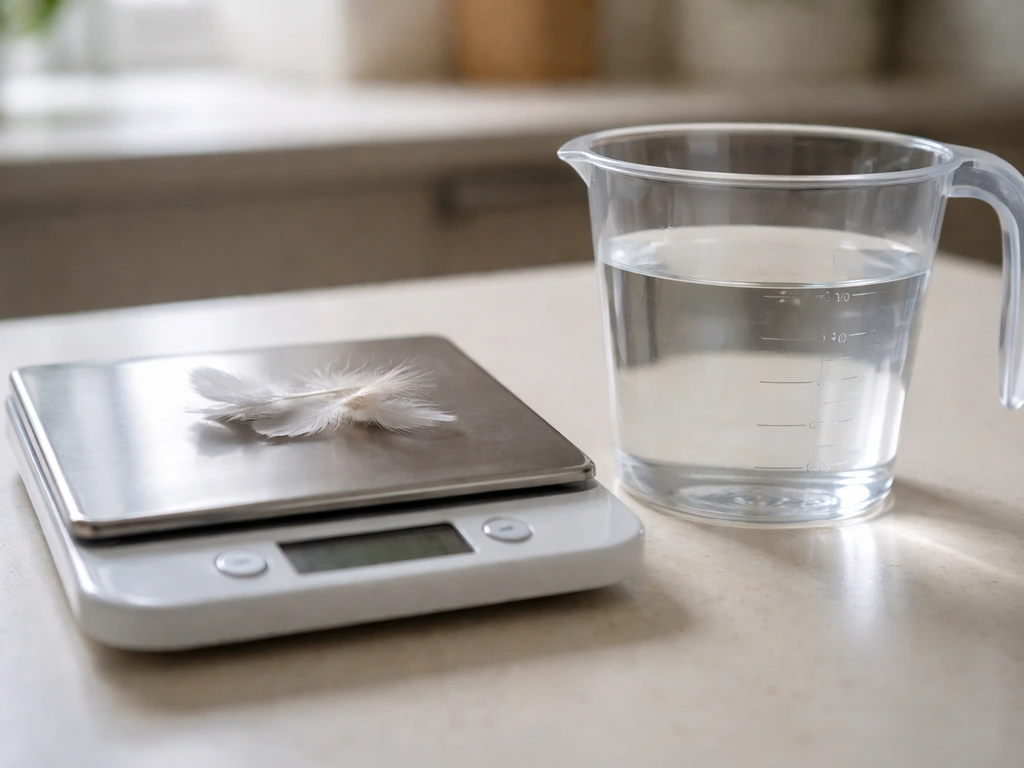
This is the same reason a pound of feathers takes up more space than a pound of nails. Bird seed is no different. Whole black oil sunflower seeds are bulky and leave air pockets between them. Fine millet packs much tighter. That difference in packing is exactly what bulk density captures, and it's what drives your conversion number.
Find or estimate the bulk density of your seed
The most accurate approach is to get the bulk density from the bag or manufacturer. Check the product label for any volume reference printed alongside the net weight. Some retailers post this kind of information in product Q&As: for example, a 7-lb bag of a cardinal blend was documented to hold about 20 to 22 cups by volume, which works out to roughly 1.25 to 1.37 gallons for 7 lbs. That gives you a real-world bulk density you can scale up to 20 lbs without any guessing.
If the bag doesn't have that information, you can estimate using typical bulk density ranges for common seed types. These are well-established ranges from grain-handling references and practical use:
| Seed Type | Typical Bulk Density (lbs/gallon) | Est. Gallons for 20 lbs |
|---|---|---|
| Black oil sunflower (whole) | 5.0–5.5 | 3.6–4.0 |
| Safflower | 5.5–6.0 | 3.3–3.6 |
| White proso millet | 6.0–6.5 | 3.1–3.3 |
| Mixed seed (sunflower-heavy) | 5.0–5.5 | 3.6–4.0 |
| Mixed seed (millet-heavy) | 5.5–6.5 | 3.1–3.6 |
| Nyjer (thistle) | 5.5–6.0 | 3.3–3.6 |
| Pellets or crumbles | 4.0–5.0 | 4.0–5.0 |
| Cracked corn | 6.5–7.0 | 2.9–3.1 |
Use these as working estimates, not hard guarantees. The actual number for your specific bag may fall slightly outside these ranges, especially if the blend contains added ingredients like dried fruit, peanut pieces, or suet nuggets.
Step-by-step calculation examples
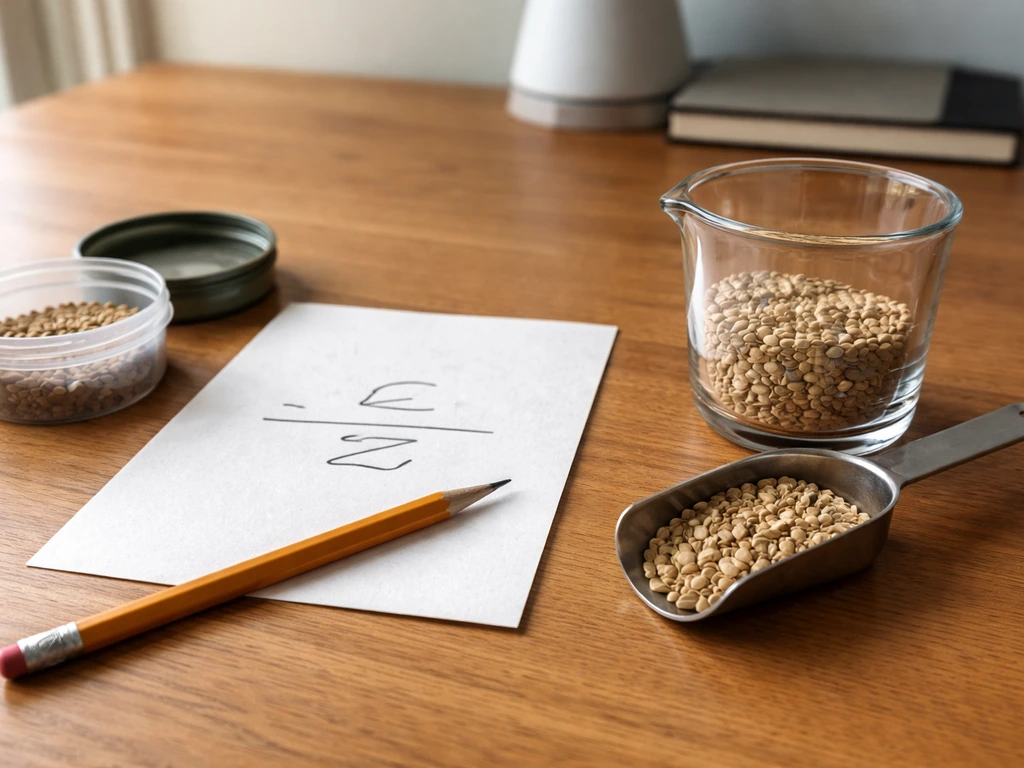
The formula is simple: divide the weight (in lbs) by the bulk density (in lbs per gallon) to get the volume in gallons. Once you plug in the seed's bulk density, you can estimate how many pounds of bird seed fit in a gallon bulk density (in lbs per gallon).
Gallons = Weight (lbs) / Bulk Density (lbs/gallon)
Example 1: Black oil sunflower seed
Black oil sunflower has a typical bulk density of about 5.2 lbs/gallon. So: 20 lbs / 5.2 lbs per gallon = 3.85 gallons. Round it to about 3.8 to 4 gallons for practical storage planning.
Example 2: White proso millet
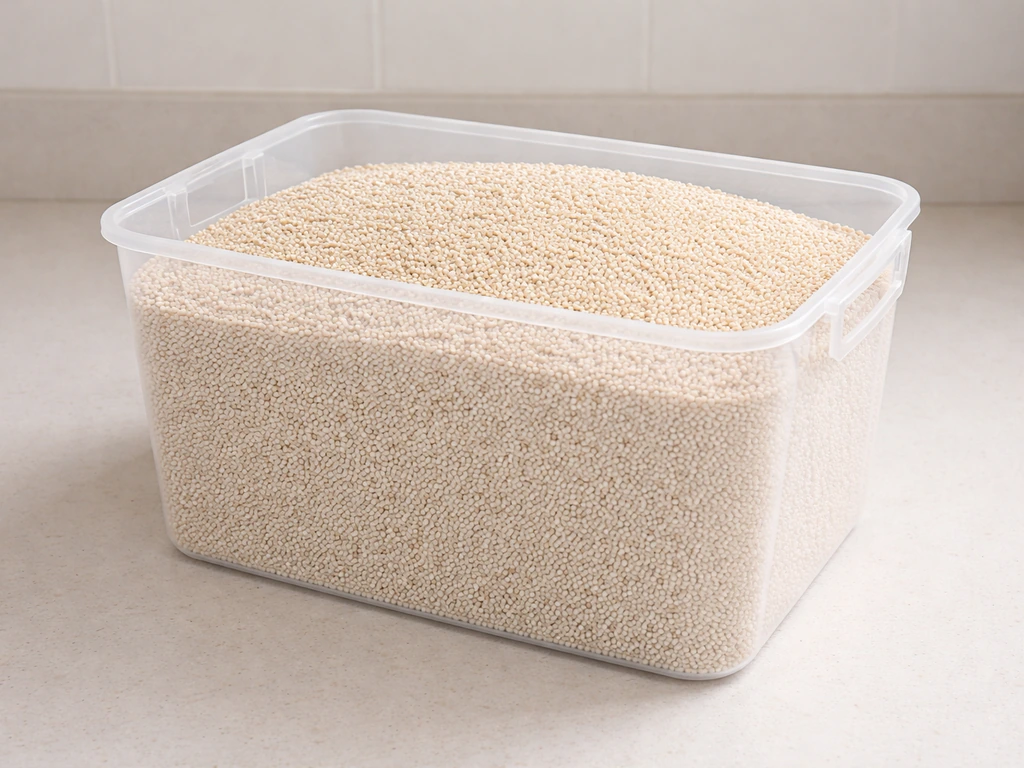
Millet is denser and packs more tightly, with a typical bulk density around 6.2 lbs/gallon. So: 20 lbs / 6.2 lbs per gallon = 3.2 gallons. You'd need a container just over 3 gallons to hold a 20-lb bag of millet.
Example 3: Pellets or crumbles
Pellets and crumble-style seed (common in some finch and parakeet blends) are less dense than raw whole seed. With a bulk density of around 4.5 lbs/gallon: 20 lbs / 4.5 lbs per gallon = 4.4 gallons. That's a meaningful difference from millet, which is why pellet users often underestimate how much bin space they need.
Example 4: Scaling from a real product label
If your bag gives cups rather than gallons, convert first: 16 cups = 1 gallon. So if a 7-lb bag is listed as holding about 21 cups, that's 21/16 = 1.31 gallons for 7 lbs. The bulk density is 7 lbs / 1.31 gallons = 5.34 lbs/gallon. Now scale: 20 lbs / 5.34 = 3.75 gallons. This is the most accurate method because it uses the real product's actual volume.
Adjusting for particle size, flakes vs. pellets, and moisture
A few factors can push your estimate up or down by half a gallon or more, so they're worth knowing before you buy a storage bin.
- Larger whole seeds (like striped sunflower) have more air space between them than small seeds, so they run lighter per gallon and need more storage volume per pound.
- Cracked or crushed seed packs more densely than whole seed of the same type, so 20 lbs of cracked corn needs less space than 20 lbs of whole corn.
- Pellets and crumbles are irregular shapes that don't nest together well, making them less dense than whole grains of similar size, which means more volume per pound.
- Moisture adds weight without adding useful seed volume. Seed that has absorbed humidity will weigh more per gallon, which makes it look denser on paper but is a sign of a storage problem, not a packing efficiency bonus. Moisture content above about 12% actively encourages mold growth, so treat any weight increase from dampness as a red flag, not a feature.
- Settling during shipping can compress seed noticeably. A freshly opened bag may pour out slightly fluffier than the settled seed that's been sitting in a bin for a week. Plan for 5 to 10% settling in your storage container estimate.
Practical tips: measuring by volume to skip the math next time
Once you've done this conversion once for your specific seed, the easiest move is to stop converting and just measure by volume going forward. For a budgie, the amount of bird seed you need depends on how long you are storing it and the seed type and blend density how much bird seed does a budgie need. Here's how to set that up practically.
- The first time you open a new 20-lb bag, pour it into a container with volume markings (a 5-gallon bucket with a permanent marker line works perfectly) and note exactly where the seed level sits. That mark becomes your personal reference for that specific seed brand.
- Label the container with the seed type, brand, and date opened. When you reorder, you already know exactly how much bin space you need.
- If you're buying seed in bulk and splitting it between feeders and storage, use a dedicated scoop with a known volume (a 2-cup scoop is easy to find and easy to track) so you can log how much you're using without weighing each fill.
- For feeder refills, volume is actually more useful than weight anyway since feeders are designed around cup or quart capacity, not ounces. Knowing your seed is about 5.2 lbs per gallon means 1 quart (0.25 gallon) weighs roughly 1.3 lbs, which is handy for estimating how long a feeder fill will last.
If you're comparing prices between bag sizes and want to know how many gallons different weights give you, the sibling topic covering 40 lbs of bird seed goes through the same calculation at double the quantity, which makes it easy to compare storage costs side by side. That means the 40-lb conversion is just the same process, scaled up based on the bulk density of your specific seed 40 lbs of bird seed.
Storing your 20 lbs: keeping it dry, safe, and pest-free
Once you know how many gallons you're working with (call it 3.5 to 4 gallons for a typical mixed seed), you need a container that fits that volume with a few inches of headroom for easy scooping. A 5-gallon food-grade bucket with a locking lid is the standard choice for a reason: it's the right size, it's rodent-resistant, and a tight lid keeps humidity out.
Moisture is the main enemy of stored seed. Penn State Extension is direct about this: if seed becomes moldy, do not use it. Mold can develop surprisingly quickly if the storage area is humid or if a small amount of wet seed contaminates the batch. Keep your storage container in a cool, dry place, away from concrete floors (which wick moisture) and away from direct sunlight (which drives temperature swings that cause condensation). If you're in a humid climate or storing seed through a wet season, tossing a food-safe silica gel packet into the container adds inexpensive insurance.
Pest prevention
Mice and insects are attracted to stored seed fast, especially in garages and sheds. A hard-sided container with a snap or screw lid is far more effective than leaving seed in the paper or plastic bag it came in. Avoid storing in areas where you've seen rodent activity. Check the container each time you open it: if you see droppings, webbing (from grain moths), or clumping, treat it as contaminated and discard the contents rather than trying to sort through it.
Mold, wet seed, and when to throw it out
Moldy seed is not a salvage situation. If you see black, green, or white fuzzy growth on any portion of the batch, or if seed smells musty or sour, discard the whole container. Partially contaminated seed isn't safe to sort and keep: mold spores spread throughout before you can see them. The same goes for seed that sprouted in storage due to moisture, which can look like harmless green growth but signals that the conditions have already been bad long enough to compromise the rest of the batch.
Cleaning up contaminated containers and feeders
If you need to clean a container or feeder that had moldy or contaminated seed in it, follow a simple but effective process. Empty and scrub the container with hot soapy water first, removing all visible residue. Then disinfect by soaking or wiping with a bleach solution: one part bleach to nine parts water, following Project FeederWatch's guidance. Let the parts soak for at least 10 minutes, then rinse thoroughly and dry completely before adding new seed. OSU Extension uses a similar ratio (1 part bleach to 10 parts water) as a minimum. Both are effective; the key is full contact time and complete drying afterward.
Don't forget the ground below your feeders. Seed debris, hulls, and droppings accumulate quickly and become a secondary mold and pest source. Rake or sweep the area regularly, especially after rain, and dispose of any visibly wet or moldy ground debris rather than leaving it. This small habit protects both your stored seed and the birds eating from the feeder above.
Your best-estimate workflow when you don't have exact bulk density
If you're standing in the store or looking at an online listing with no volume info on the label, here's the fastest reliable path to an answer for 20 lbs of bird seed: That same approach also helps when Nellie is buying bird seed and needs to estimate how many gallons she should plan for 20 lbs of bird seed.
- Identify the dominant seed in the mix (sunflower, millet, safflower, pellets, or cracked corn).
- Use the bulk density table above to pick the midpoint of the range for that type.
- Divide 20 by that number to get your gallon estimate.
- Add 10% to that estimate to choose your storage container size, to account for settling and headroom.
- Once home, pour the bag and mark the actual fill line on your container for future reference.
For a sunflower-heavy mix, that process gives you about 3.8 gallons of seed volume, so a 5-gallon container is the right call. For a dense millet-based mix, you'd get closer to 3.2 gallons, and a 4-gallon container would work. Either way, you're picking a container with confidence rather than guessing and hoping it fits.
FAQ
My bird seed bag lists “cups” for a smaller weight, how do I use that to estimate gallons for 20 lbs?
If your bag lists cups (or another kitchen volume) instead of gallons, convert first (16 cups = 1 gallon). Then use bulk density = weight ÷ gallons-from-cups, and finally gallons = 20 lbs ÷ that bulk density. This avoids the common mistake of scaling cups directly without accounting for different density.
Will the gallons estimate change depending on whether the seed is freshly poured or after it has settled in the bin?
Yes, the conversion is still volume, but dry, settled seed will pack differently than seed that is freshly poured. If you can, weigh and measure the same bag after it has rested and “settled” in storage for consistency. For rough planning, count on the estimate shifting by about half a gallon or more.
What container size should I choose if my calculation says 3.8 to 4 gallons?
For storage planning, leave headroom. Even if 20 lbs is “about 3.8 gallons,” a 4-gallon container can be tight once you account for scooping and slight swelling from humidity. A 5-gallon bucket is usually easier to use because it fits the expected range plus comfort space.
How do add-ins like dried fruit pieces or suet nuggets affect “20 lbs to gallons” calculations?
Extra ingredients can lower bulk density (more porous or chunky items), which increases the gallons for the same 20 lbs. Examples include dried fruit pieces, nut fragments, or suet nuggets mixed into pellets or seeds. If your label does not provide volume, treat the result as an estimate and size the container toward the higher end.
What if the bag has no volume info at all, can I still get a reliable answer for 20 lbs?
If the label shows only “net weight” with no volume reference, you must rely on typical bulk-density ranges by seed type, or you can compute bulk density yourself by measuring a known volume (for example, fill a 1-gallon container loosely, then weigh it). Use that measured lbs/gallon for the conversion, rather than applying someone else’s number.
Does moisture in the bag change the gallons estimate, or is it just a safety issue?
Bulk density estimates assume normal handling (whole vs cracked seed, typical moisture level). If the seed is unusually dry, it may pack tighter, and if it is slightly damp, it can pack differently and also becomes higher-risk for mold. For safety, do not “fix” dampness by storing it longer, discard moldy seed and dry surroundings.
Why might my pellets take up more space than I expected compared to whole seed?
Pellets and crumbles often look like they should be denser, but many are still less dense than whole sunflower because of shape, air space, and how they settle. If you switch from raw seed to pellets, re-check using the pellet bulk density range (around 4.5 lbs/gallon in the article’s method) instead of carrying over your previous mixed-seed calculation.
How can I compare prices fairly when different seed types pack differently?
If you’re comparing price per weight across bag sizes, calculate price per gallon using your bulk-density-based gallons estimate. This makes mixes with different packing characteristics comparable for storage cost. It also prevents the common mistake of assuming a “$ per lb” comparison means “$ per bin space” is the same.
If some of the seed looks questionable, can I still measure and use the remainder based on the gallons calculation?
If you see any mold growth, musty smell, or clumping from moisture, do not try to “rescue” by measuring a few cups and using the rest. Mold spores can spread through the entire batch before you can visually confirm it, so discard the whole container to avoid health and bird safety issues.
Is there a simple at-home way to determine the bulk density of my exact bag?
Yes, you can measure your real bulk density at home. Fill a known volume container (like a 1-gallon bucket) in the same way you’ll store (loosely scooped, not compacted), level it, weigh it, then compute lbs/gallon. Use that for 20 lbs to get a practical, bag-specific gallon estimate.
Next Article
Stephanie Has 7/8 Pound of Bird Seed: Measure and Use It
Learn what 7/8 lb bird seed equals, how to measure it, and safe storage tips to prevent waste and contamination.