7/8 pound of bird seed equals 14 ounces, or about 396 grams. That's a little less than a full pound, and it's a perfectly practical amount for topping off a tube feeder or portioning seed for a few days of backyard feeding. If you're working through a math problem or just trying to figure out how much seed you actually have in hand, the conversion is straightforward: multiply 7/8 by 16 ounces per pound, and you get exactly 14 oz.
Stephanie Has 7/8 Pound of Bird Seed: Measure and Use It
Maya Collins
9 Jun 2026
What 7/8 pound actually equals in ounces and grams
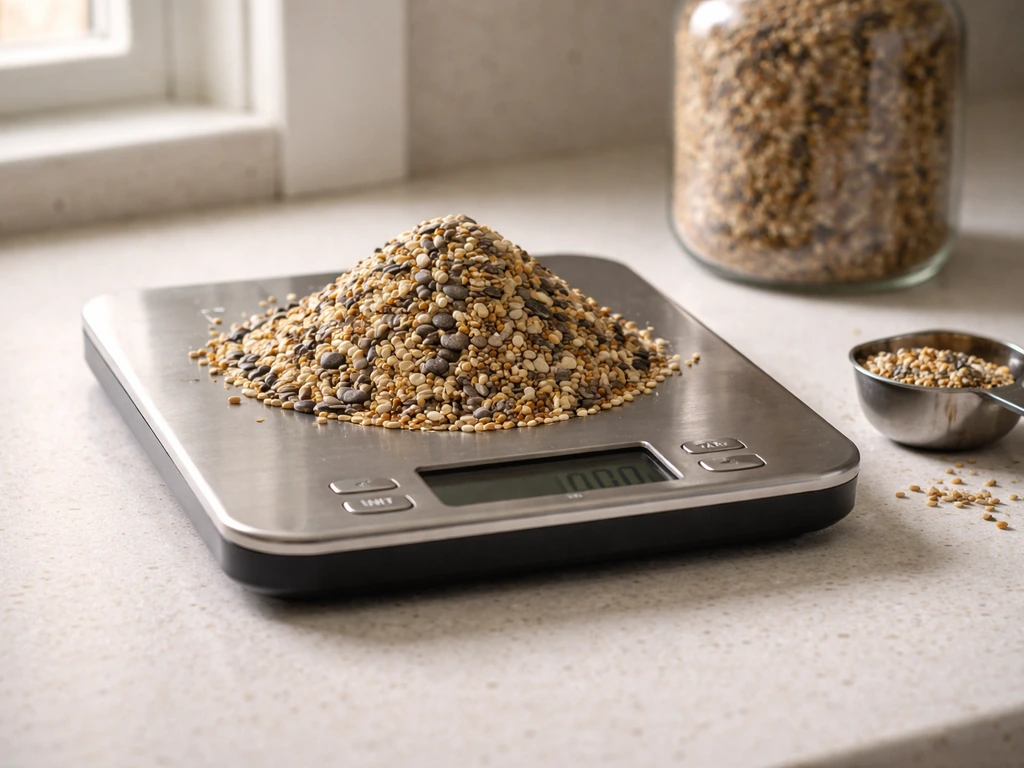
One pound contains 16 ounces, so 7/8 of a pound is 7 divided by 8, then multiplied by 16. Kyle's Converter lists 1 avoirdupois ounce as 28.349523125 grams, which aligns with the grams estimate used here one pound equals 453. That gives you 14 ounces exactly. In grams, one pound equals 453.6 grams, so 7/8 of that is roughly 396.9 grams (call it 397 grams for practical purposes). If you want to do the fraction-of-a-quantity math with any other starting number, the pattern is the same: multiply the total weight by 7, then divide by 8.
| Unit | Full Pound | 7/8 Pound |
|---|---|---|
| Ounces | 16 oz | 14 oz |
| Grams | 453.6 g | 396.9 g (~397 g) |
| Pounds (decimal) | 1.00 lb | 0.875 lb |
In a real feeder-refill context, 14 oz is about what you'd scoop out of a 5 lb storage bag for a few days of feeding, or what might be left near the bottom of a smaller bag. It's a useful reference number, not an awkward fraction you need to stress over.
How to measure 14 ounces at home without guessing
Using a kitchen scale (recommended)
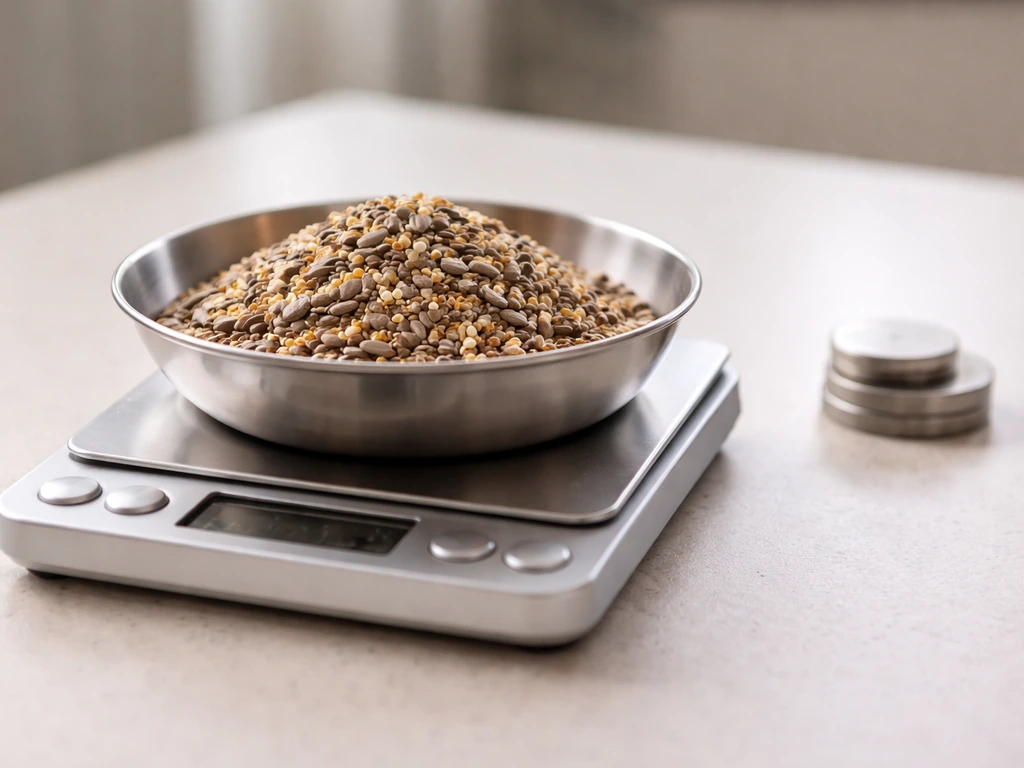
A kitchen scale is the fastest and most accurate tool here. Set your container or bowl on the scale, press tare to zero it out, then scoop seed in until the display reads 14 oz or 397 g. If you're also wondering how much is bird seed in your specific case, using this 14 oz (about 397 g) measure by weight will give you the most reliable answer. Switch between units using the mode button if your scale defaults to grams. Done. The whole process takes about 30 seconds and works for any seed type regardless of density.
Using measuring cups (no scale)
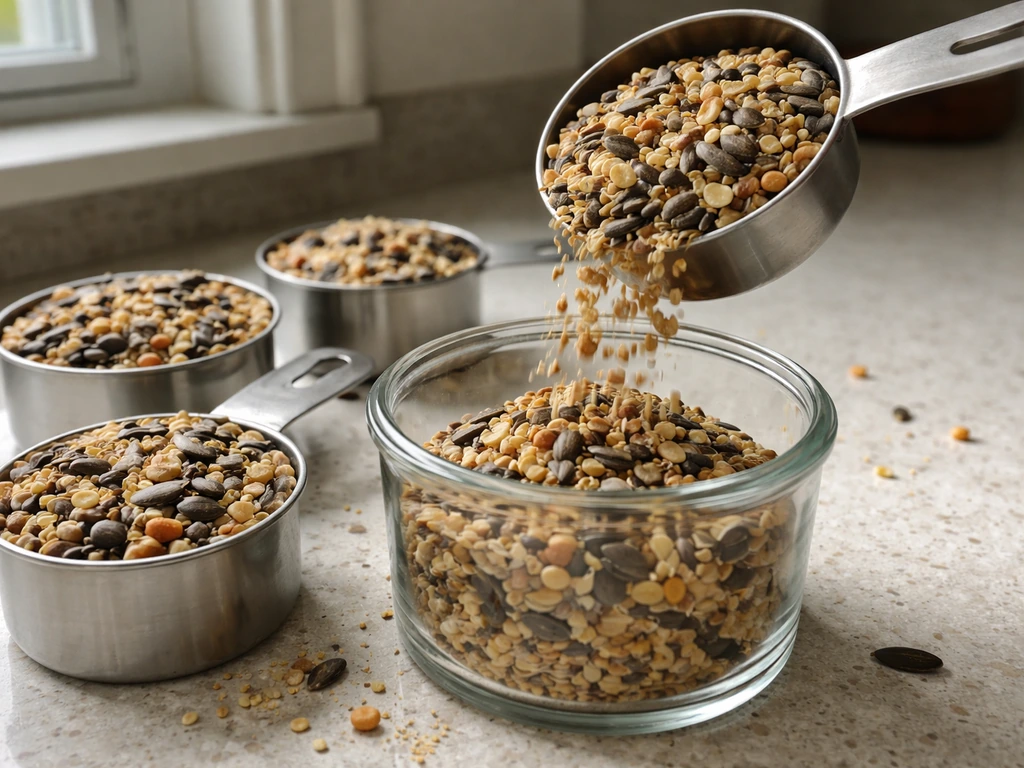
Cup measurements for bird seed are less precise because different seeds have different densities and void spaces, but they're workable as an estimate. Mixed wild bird seed runs roughly 2.86 to 3.14 cups per pound based on typical bag volume estimates, so 7/8 of a pound works out to somewhere between 2.5 and 2.75 cups depending on your specific blend. Sunflower seeds, which are bulkier, tend to fall on the lower end. For example, the Book of Yields includes a sunflower seeds raw hulled yield table showing cups-per-pound style approximations that can differ by processing (raw hulled versus other forms). Small seeds like millet pack more tightly and creep toward the higher end. If you're eyeballing it, use 2.5 cups as your conservative estimate and adjust from there.
- Mixed wild bird seed: approximately 2.5 to 2.75 cups for 14 oz
- Black oil sunflower (in shell): approximately 2.25 to 2.5 cups for 14 oz
- Hulled sunflower (chips): approximately 2.5 to 2.75 cups for 14 oz
- Millet (small, dense): approximately 2.25 to 2.5 cups for 14 oz
- Cracked corn: approximately 2.5 cups for 14 oz
These are starting estimates, not guarantees. If you're portioning seed for a specific purpose like a timed feeder or a measured study, use a scale. Cups are fine for everyday refills where a little variance doesn't matter.
Seed type changes everything about volume
Weight is fixed and reliable. Volume is not. This matters a lot when you're comparing seed types or trying to figure out how much space 14 ounces of seed will actually take up in a feeder or storage container. Hulled seeds, like sunflower chips or hulled millet, are denser by volume because there's no shell creating air gaps. Whole seeds with shells, like in-shell sunflower or safflower, have more dead space between pieces and take up more volume for the same weight. So 14 oz of sunflower chips might fill a feeder tube halfway while 14 oz of in-shell sunflower fills it nearly to the top. To convert that same 40 lb amount into gallons, you need to account for bird seed density since volume varies by seed type fill a feeder tube.
This also affects how long 14 oz lasts at a feeder. Nellie is buying bird seed so she can portion it, refill the feeder, and keep track of how long her 14 oz supply will last 14 oz lasts at a feeder. Small, calorie-dense seeds like nyjer (thistle) draw finches that eat quickly and in groups. A 14 oz fill in a thistle sock can disappear in a day during peak season. The same weight of mixed seed in a hopper feeder might last three or four days depending on traffic. Knowing your seed type and your bird traffic helps you figure out how often you actually need to refill.
If your seed is wet, sprouted, or smells off
Before you measure out 14 oz and pour it into a feeder, give the seed a quick check. Wet or compromised seed isn't just wasteful, it's genuinely dangerous to birds. Soggy seed can grow mold fast, and some molds produce toxins that harm or kill birds. Any seed that smells musty, looks clumped or discolored, has visible fuzz or film on it, or is wet to the touch should be discarded. Don't try to dry it out and reuse it. Toss it.
- Musty or sour smell: discard the affected seed immediately
- Visible mold, white or green fuzz, or powdery coating: discard and clean the container
- Clumped or caked seed: check for moisture; if any dampness is present, discard
- Sprouted seeds: small sprouts aren't always toxic but indicate moisture exposure; use judgment and discard if any mold is also present
- Insect larvae, webbing, or live insects in the seed: discard the batch and sanitize the storage container before refilling
In wet or humid climates (or during summer heat), mold and bacteria can form on seed in a feeder within 24 to 48 hours. If you're in a humid region, err on the side of smaller fills more frequently rather than loading up a feeder and letting it sit. This is especially relevant if you're measuring out a set amount like 14 oz with the intent of making it last a specific number of days.
Keeping your seed safe from pests and mold
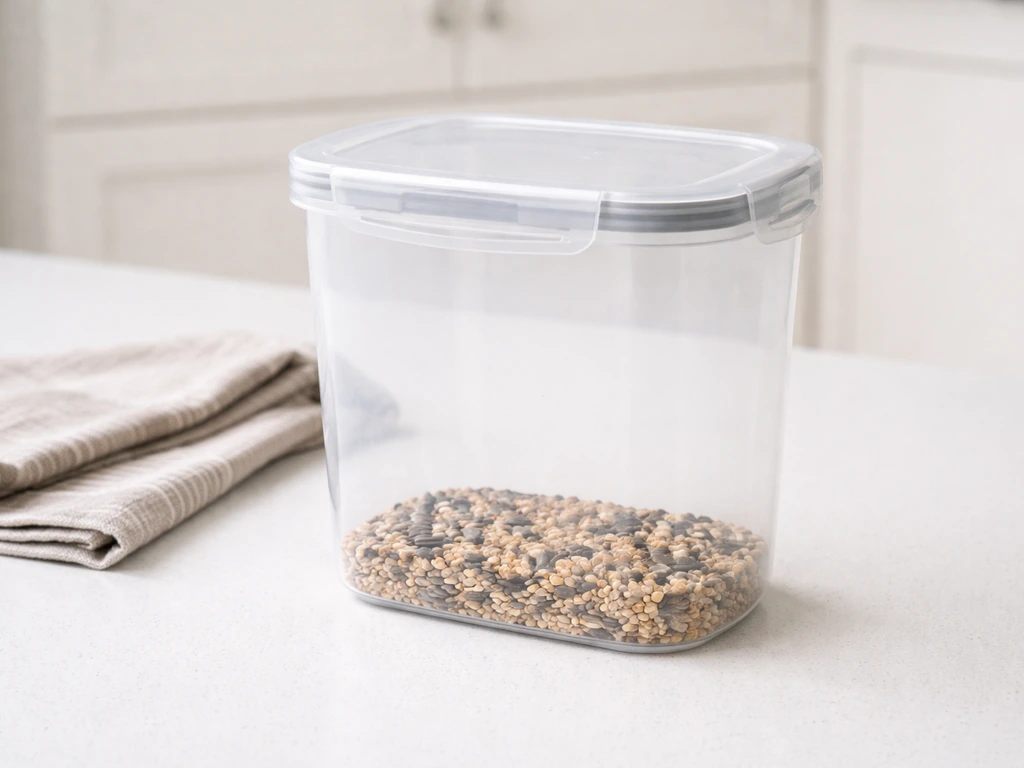
Once you've measured out your 14 oz, what you do with the rest matters just as much. Proper storage prevents the frustrating situation where your next measured portion is already compromised. Keep all stored seed in a sealed, airtight container in a cool, dry spot. A metal or hard plastic bin with a tight lid works well. Avoid cardboard boxes or loosely folded bags, which let in moisture and give insects easy access.
Before refilling a storage container, wipe it down inside to remove seed dust and residue. That fine powder at the bottom of a bin traps moisture and can harbor mold spores that contaminate fresh seed. A quick wipe with a dry cloth before adding new seed makes a real difference over time.
For feeders themselves, clean them every one to two weeks under normal conditions and more often during hot or wet weather. Audubon and Project FeederWatch both recommend this interval, and Flathead Audubon suggests a dilute bleach solution of 1 part bleach to 9 parts water for sanitizing. Scrub, rinse thoroughly, and let the feeder dry completely before adding any seed. Putting seed into a damp feeder just accelerates the mold problem you're trying to avoid.
Portioning, refilling, and keeping things clean
If you're working with a specific amount like 14 oz on purpose, whether it's what you have left or a deliberate portion, here's a practical approach to using it well. Measure it out by weight using a tared scale, store any unused portion in an airtight container right away, and only fill the feeder with what birds are likely to consume in two to three days. Overfilling leads to leftover seed sitting in heat or rain, which leads to mold, which leads to waste and health risk.
- Tare your container on a kitchen scale and weigh out 14 oz (397 g) of seed
- Pour only what birds will eat in 2 to 3 days into the feeder (about half to two-thirds of your measured amount)
- Store the rest in a sealed airtight container in a cool, dry location
- Check the feeder daily in wet or hot weather for clumping, moisture, or off smells
- Before refilling, tap out old seed, wipe the feeder interior, and inspect for mold or insects
- Clean the feeder fully with a dilute bleach solution every 1 to 2 weeks, rinse well, and dry before adding fresh seed
- Sweep or rake up seed debris under the feeder regularly to reduce mold growth and pest attraction at ground level
If birds aren't eating as fast as expected, cut back on fill amount rather than letting seed accumulate. Appetite varies by season, local species, and weather. In winter, birds burn more calories and visit feeders more frequently. In summer, natural food sources compete with your feeder. Matching your fill volume to actual consumption is the single best way to keep seed fresh and minimize waste.
Fourteen ounces is a very manageable amount of seed to work with. It fits easily in a quart-size container, fills most standard tube or hopper feeders partway, and gives you a clean starting point for understanding how much seed your yard actually goes through. If you also need to convert a much larger bag into gallons, you can use the same approach but start from the weight for 20 lbs and then translate it into volume how many gallons is 20 lbs of bird seed. Because budgies are smaller and eat a more consistent diet than wild birds, you will usually need to offer only a small daily amount and replace it when they finish it how much bird seed does a budgie need. From there, scaling up or down is simple math, and keeping things measured and stored properly means you're always putting out seed that's safe and fresh for the birds visiting your yard.
FAQ
I don’t own a kitchen scale. What’s the best way to measure 7/8 pound of bird seed using cups?
If you do not have a scale, weigh a known container once as a one-time calibration, then use that weight as your “cup equivalent” for your specific seed blend (since densities change). Without that calibration, cup estimates will drift and the 7/8 pound target can be off.
If I measure out 14 oz on purpose, how do I know when to refill so it stays fresh?
For a storage portion, use 14 oz by weight, then decide your refill schedule based on consumption and weather. If you’re aiming for 2 to 3 days of freshness, don’t just refill on a calendar date, adjust when birds slow down so seed does not sit in heat or rain.
My scale only shows grams sometimes. What number should I target for “7/8 pound,” and is rounding okay?
If your scale shows grams but you want 14 oz, use 397 g as your practical target. If your scale toggles to “oz,” the exact target is 14.00 oz, but rounding is fine as long as you stay close and avoid repeatedly underfilling or overfilling by large amounts.
Does 14 oz fill the feeder the same way for all seed types?
In-shell seeds and hulled seeds can take very different space in a feeder. To plan how “full” your feeder will look from 14 oz, do a quick test fill with your exact seed type, then note whether it reaches half, two-thirds, or nearly full, and reuse that reference going forward.
What should I do if I put out 14 oz but birds aren’t eating it fast enough?
If birds are actively feeding, do not extend the time seed sits at the feeder. Instead of keeping a full 14 oz longer, reduce the amount per refill (or switch to smaller, more frequent top-offs) so moisture exposure stays lower.
Can I dry out seed that got a little damp in the feeder to avoid wasting it?
Don’t wash seed. If you suspect moisture but the seed is still dry, improve airflow and reduce time in the feeder, but if it is wet to the touch or shows mold signs, discard it. For safety, treat any musty smell, visible fuzz, or clumping as a discard signal rather than a “dry and reuse” situation.
How should I tare and scoop the seed so my 14 oz portion is accurate?
For measuring accuracy, tare the container before adding seed, and avoid pressing down or packing it. Scooping and leveling without tamping gives a more consistent weight reading and reduces variation between portions.
Do I need to redo my measurements if I change bird seed brands or mixes?
When you switch seed brands or blends, cup-based measurements become unreliable. If you rely on 14 oz by weight, you can keep your portioning consistent, but if you switch to cups, re-check the density with a scale once so your new “cup amount” matches the blend you’re using.