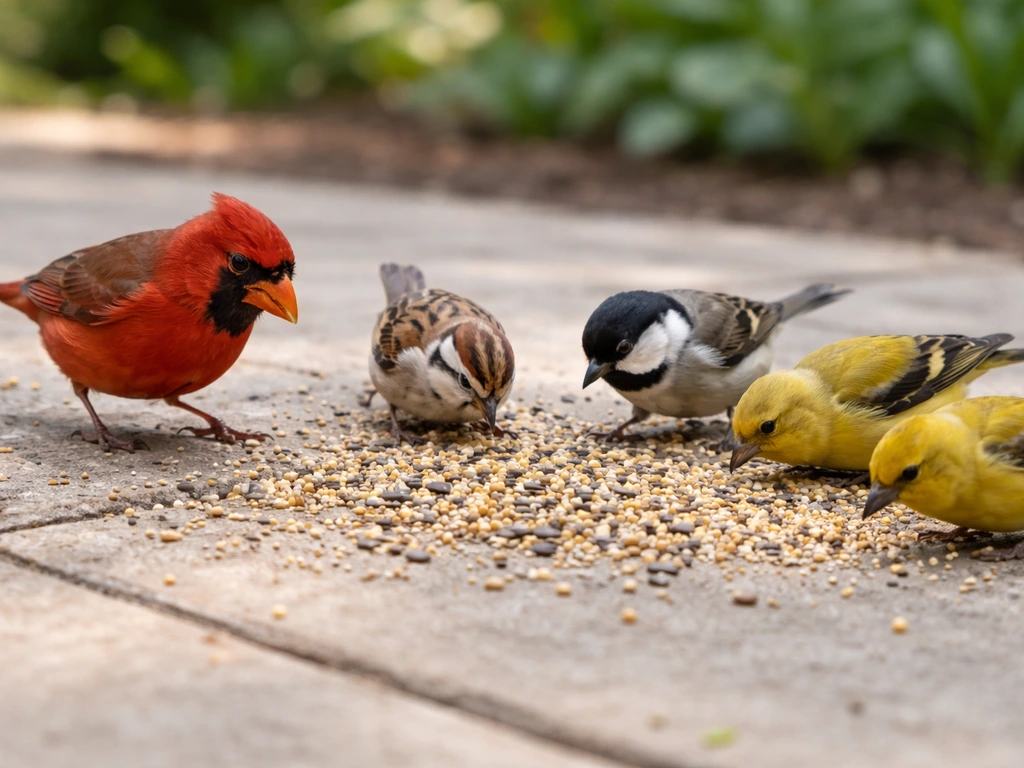
No mess bird seed is simply bird seed with the shells and hulls already removed. Because birds can eat every bit of what lands in and around the feeder, there are no empty shells, husks, or discarded casings piling up underneath. That pile of grey sunflower shells or millet chaff you normally rake up every week? Gone. The "no mess" label is not a gimmick. It genuinely works, as long as you pick the right product and set things up correctly.
What Is No Mess Bird Seed and How to Use It
Maya Collins
15 May 2026
What "No Mess" Actually Means
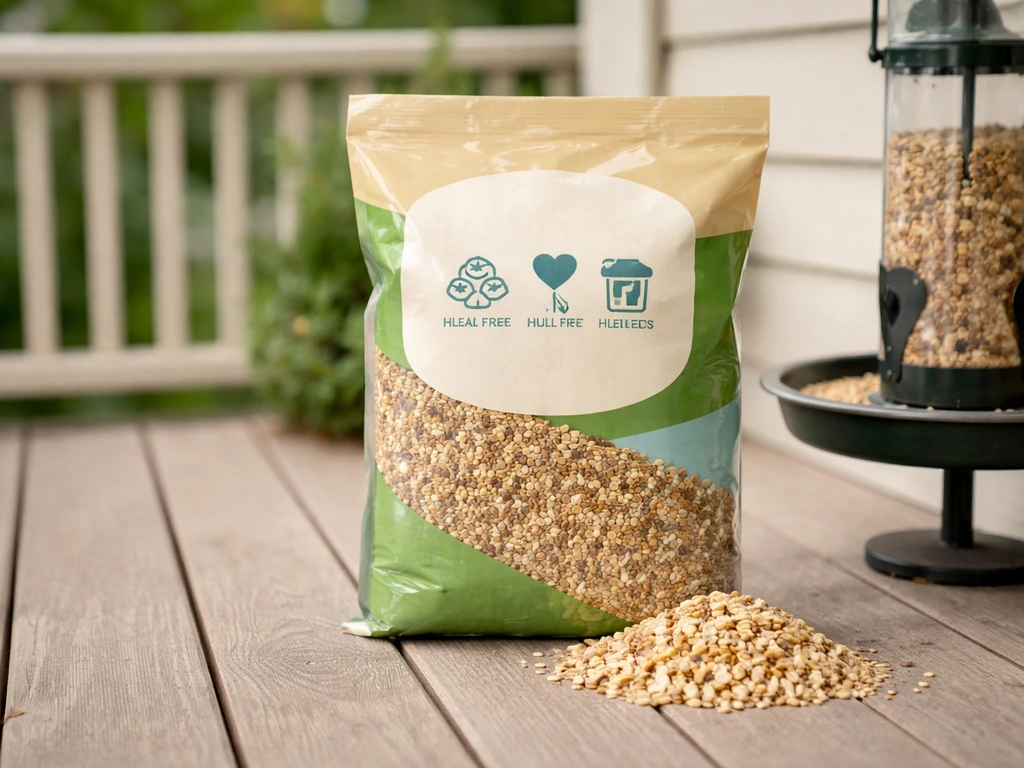
When a seed bag is labeled "no mess" or "no waste," it means the manufacturer has pre-shelled the seed before bagging it. Regular sunflower seed, for example, is about 40 to 50 percent shell by weight. Birds crack the shell, drop it, and eat the kernel. Those shells accumulate fast, smother grass, and can even release allelopathic compounds that inhibit plant growth nearby. A no-mess product skips all of that by delivering just the edible kernel, chip, or heart directly.
The result is that nearly everything a bird picks up gets eaten. Wild Birds Unlimited describes their No-Mess Blend specifically as "100% edible" because only the meat of the seed goes into the bag. Audubon Park makes the same point about their Sunflower Hearts: shells removed, zero waste, less mess under the feeder. Less mess under the feeder also means fewer wet, rotting hulls that attract mold, rodents, and insects.
What's Actually Inside No-Mess Products
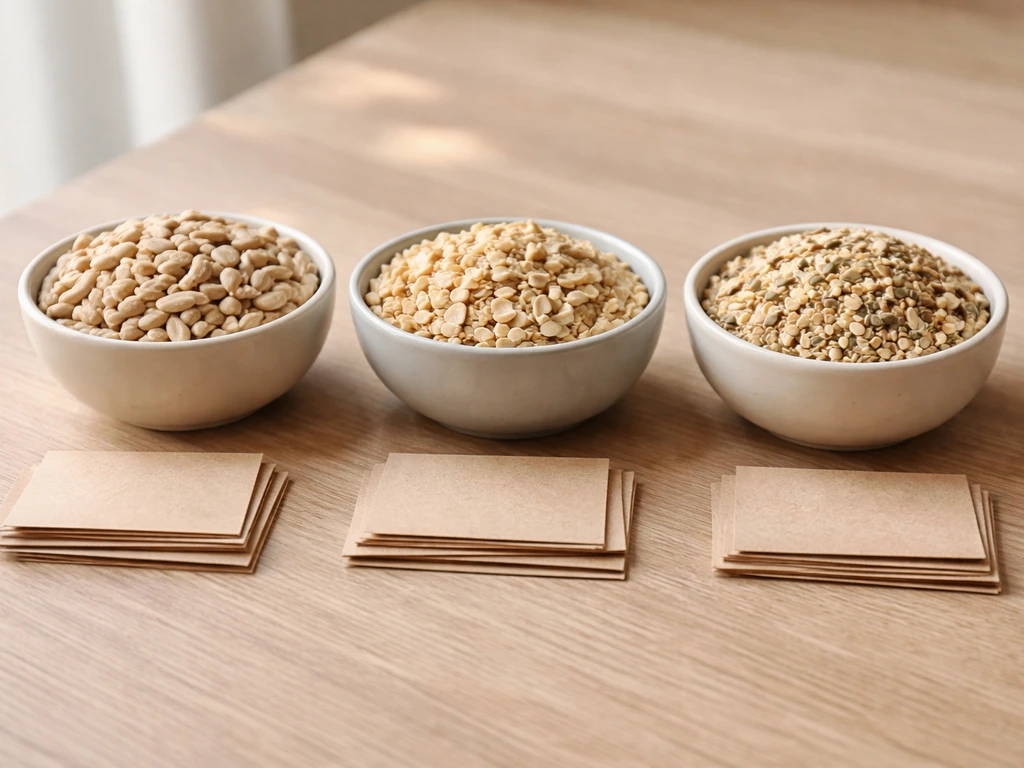
Most no-mess mixes are built around a handful of hull-free or low-hull ingredients. Knowing these helps you read a label and confirm you are actually buying a true no-mess product, not just a marketing name slapped on a standard mix.
| Ingredient | What it is | Birds it attracts |
|---|---|---|
| Sunflower hearts / chips | Sunflower kernels with the shell fully removed, sometimes chopped into smaller pieces | Cardinals, chickadees, finches, nuthatches, sparrows, doves |
| Hulled millet | White millet without the outer husk | Sparrows, juncos, doves, towhees |
| Kibbled maize (cracked corn) | Corn with the outer hull removed and cracked into smaller pieces | Doves, jays, sparrows, woodpeckers |
| Husk-free oats / groats | Oats with the husk stripped | Sparrows, finches, buntings |
| Canary seed | Naturally small, thin-hulled seed that birds consume completely | Finches, sparrows, doves |
| Peanut hearts / chips | Peanuts shelled and often chopped | Woodpeckers, jays, chickadees, nuthatches |
The RSPB's No Mess Sunflower Mix, for instance, combines sunflower hearts with kibbled maize, husk-free oats, and canary seed, specifically to keep the entire blend hull-free. That is the kind of ingredient list to look for. If you see whole sunflower seeds, whole peanuts in-shell, or safflower listed without a "hulled" or "hull-free" note, the product is not a true no-mess blend.
Labels to look for (and one to ignore)
- "No mess" or "no waste" combined with an ingredient list showing hearts, chips, hulled, or hull-free seed
- "100% edible" on the front panel
- "Shell-free" or "husk-free" on the ingredient description
- Avoid bags that just say "low mess" without specifying hull-free ingredients, since those sometimes still contain whole seed mixed in
Choosing the Right No-Mess Seed for Your Birds and Feeder
The best no-mess product for your yard depends on two things: which birds visit regularly and what type of feeder you are running. A tube feeder with small ports works well with sunflower chips and hulled millet. A platform or tray feeder can handle kibbled maize and larger peanut pieces. Hopper feeders handle most no-mess blends without issue.
If you mainly want to attract finches, chickadees, and small sparrows, a sunflower hearts and hulled millet blend is hard to beat. Cardinals and woodpeckers benefit from a broader mix that includes peanut pieces and kibbled maize. If you are in a warmer, wetter climate (the Southeast US, Pacific Northwest, or UK for example), look for blends with coarser, drier ingredients like sunflower chips over finely chopped pieces, because fine particles clump and go rancid faster in humidity.
One practical tip: start with a single-ingredient product like 100% sunflower hearts before moving to a blend. You get the clearest picture of what birds eat, what stays in the feeder, and how quickly the seed moves. If birds are leaving behind hulled millet, switch to a hearts-only or hearts-and-peanut mix. Matching the seed to what your birds actually eat is the fastest way to cut waste.
Setting Up Your Feeder to Get the Most Out of No-Mess Seed
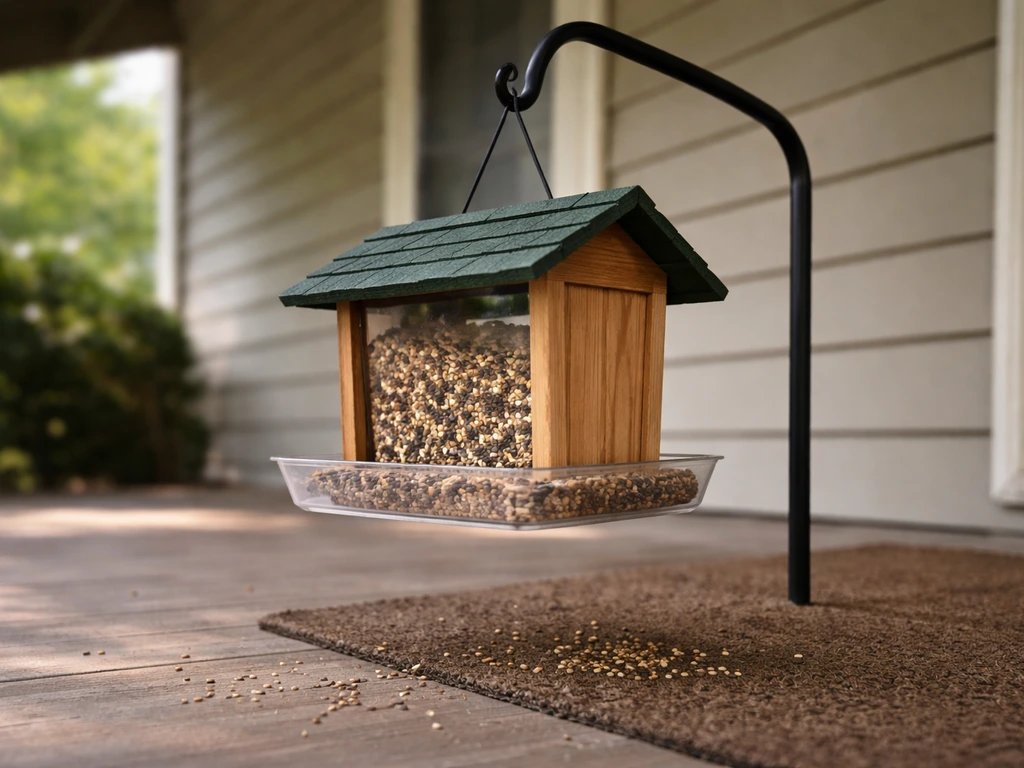
The seed itself does most of the work, but your feeder placement and accessories determine how much scatter still happens. No-mess seed is lighter than whole seed with shells, so wind scatter is actually a bigger concern, not a smaller one. A little setup goes a long way.
Feeder placement
- Place feeders in a sheltered spot, ideally with a fence, wall, or shrub windbreak on the prevailing wind side
- Keep the feeder no higher than 5 to 6 feet if using a pole mount, which makes it easier to add a seed-catching tray beneath
- Avoid placing feeders directly over vegetable gardens or flower beds, since even hull-free seed can sprout if it lands on bare soil and gets watered
Catching seed that does fall
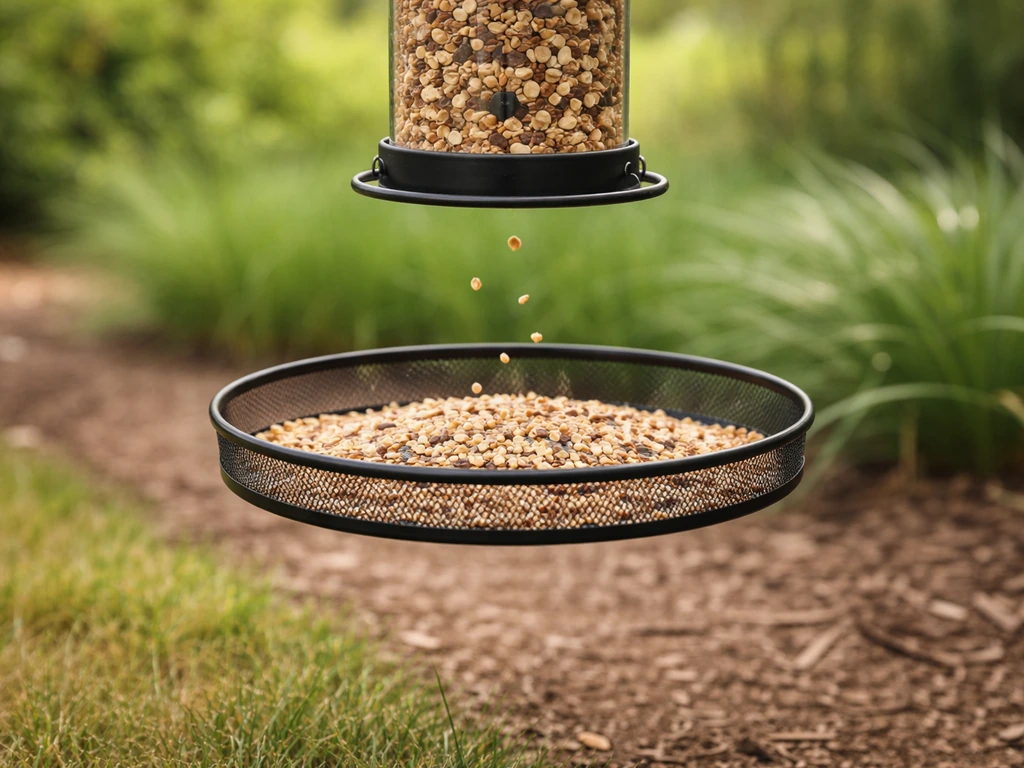
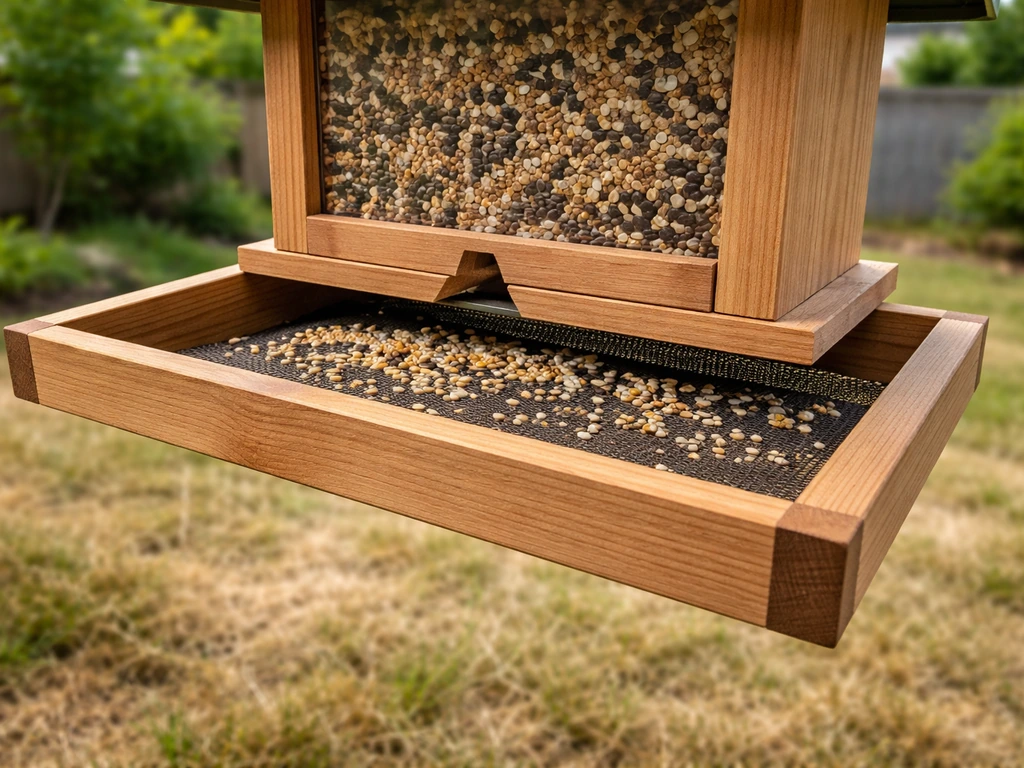
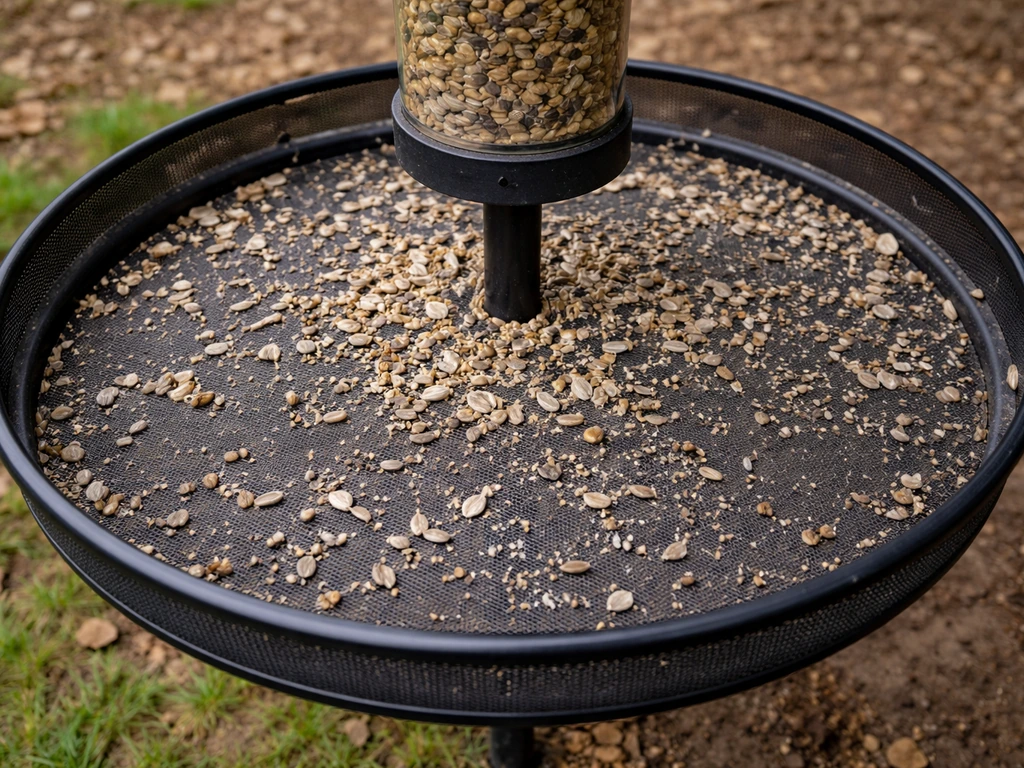
Even with no-mess seed, birds fling bits out while feeding. A seed-catching tray mounted under the feeder, or a wide tray feeder used as the base, catches those pieces before they hit the ground. Ground-feeding birds like sparrows, juncos, and doves will clean up tray spillage naturally. If you are trying to catch falling seed, the goal is to reduce scatter so the seed stays accessible to birds and off the ground how to catch falling bird seed.
If you are wondering about feeding outside the feeder, check best practices for throwing bird seed on the ground so you avoid waste and pests throw bird seed on the ground. This works especially well with hulled millet and sunflower chips, which stay edible in a tray for a day or two in dry weather.
If you are thinking through the best tray setup or what to put on the ground under the feeder, those decisions pair closely with what type of no-mess seed you are running.
For anyone who wants to go further in reducing ground scatter, using a feeder with a built-in seed tray or adding a separate wide-brimmed catch tray cuts cleanup dramatically. Some feeders also come with weight-sensitive perches or cage guards that limit which birds can feed, which reduces the frantic "fling and peck" behavior that scatters seed.
Storing No-Mess Seed the Right Way
Here is where a lot of people run into trouble. Hull-free seed spoils faster than whole seed because the protective shell is gone. The oils in sunflower hearts, peanut chips, and hulled millet go rancid more quickly when exposed to air, heat, and moisture. A metal can for bird seed can help you keep hull-free seed fresh and protected from pests. Rancid or moldy seed is a mess problem, a bird health problem, and a pest problem all at once.
Storage rules for no-mess seed
- Store in an airtight metal or hard plastic container, not the original paper or thin plastic bag. A metal can with a tight-fitting lid is ideal because it also deters rodents.
- Keep it cool and dry: a garage, shed, or basement is fine as long as temperatures stay below about 70°F (21°C). Avoid anywhere with direct sun or humidity above 60 percent.
- Buy in quantities you will use within 4 to 6 weeks. Hull-free seed, especially sunflower hearts, has a shorter shelf life than whole seed. In summer heat, aim for a 2 to 3 week rotation.
- Do not top off a feeder that still has old seed in it. Empty it fully, wipe it out, and then refill. Layering new over old is how clumps and mold start.
- If you live somewhere with hot, humid summers, consider buying smaller bags more frequently rather than a large bag you store for months.
What to do if seed gets wet
Wet no-mess seed in a feeder needs to come out the same day if possible. Hull-free seed clumps and begins molding within 24 to 48 hours in warm, wet conditions, much faster than whole seed. Empty the feeder, discard the wet seed (do not dry and re-use it), scrub the feeder with a 1:9 bleach-to-water solution, rinse thoroughly, and let it air dry completely before refilling. This is non-negotiable in warm weather.
Troubleshooting: Pests, Mold, Sprouting, and Cleanup
Even well-run no-mess setups occasionally have problems. Here is how to identify and fix the most common ones fast.
| Problem | Likely cause | Fix | Prevention |
|---|---|---|---|
| Mold in the feeder | Wet seed sitting too long, feeder not draining | Discard seed, scrub feeder with 1:9 bleach solution, rinse, dry fully before refilling | Add drainage holes to feeder if missing; check feeder after every rain; use a feeder roof/baffle |
| Sprouting under the feeder | Hulled seed landing on moist soil and germinating | Rake and remove sprouted seed promptly; lay hardware cloth or gravel under feeder | Use a catch tray; sweep ground weekly; consider laying a rubber mat or paving stones under feeder |
| Rodents or squirrels attracted to area | Seed accumulating on the ground | Remove ground seed daily; store bulk seed in a sealed metal container | Use a catch tray to keep seed off the ground; mount feeder on a baffled pole |
| Seed clumping in the feeder | High humidity or condensation inside feeder | Empty feeder, clean it, and refill with fresh dry seed | Move feeder to a more ventilated spot; reduce fill level so seed turns over in 2 to 3 days |
| Insects (moths, weevils) in stored seed | Seed stored too long or in original packaging | Discard infested seed; freeze new seed for 72 hours before storing to kill eggs | Store in airtight metal containers; buy smaller quantities; inspect seed when you open a new bag |
| Rancid smell from seed | Seed too old or stored in heat | Discard the seed; do not feed rancid seed to birds as it can cause digestive harm | Rotate stock within 4 to 6 weeks; store away from heat and direct light |
Quick hygiene checklist
- Clean feeders every 1 to 2 weeks in normal conditions, every week in summer or wet weather
- Scrub with 1: 9 bleach-to-water solution, rinse with clean water, and air dry fully before refilling
- Sweep or rake the ground under feeders weekly to prevent seed buildup
- Wash hands after handling bird seed and feeders
- If you find a sick or dead bird near the feeder, take the feeder down, clean it thoroughly, and wait a week before putting it back up
The Honest Expectation
No-mess bird seed delivers on its promise in a straightforward way: no shells means no shell litter. You will still get some scatter from birds flicking seed around, and you will still need to clean feeders regularly. But the volume of debris under your feeder drops dramatically, and the seed that does fall is edible, so ground-feeding birds clean it up instead of leaving a rotting pile. Pair it with a catch tray, a sheltered feeder location, and proper airtight storage, and the mess you deal with week to week becomes genuinely manageable.
FAQ
Does “no mess” mean the feeder area will have zero cleanup?
Not always. Some “no-mess” bags include mostly hull-free kernels, but still contain a percentage of low-hull or lightly husked pieces. Check the ingredient list for words like “hearts,” “hulled,” or “husk-free,” and look for any whole seeds or in-shell items (whole sunflower seeds, peanuts in-shell, or safflower) that would reintroduce debris.
How often should I clean a feeder that uses no-mess seed?
Yes, but you still need regular sanitation. With no-mess seed, there are fewer shells to trap moisture, yet oils can still smear inside feeders and attract insects. Plan on emptying and scrubbing on the same cadence you would use for whole-seed feeders, and clean sooner if you notice clumping, sour odors, or sticky buildup.
If my birds are leaving no-mess seed behind, what should I troubleshoot first?
Use a simple “time to empty” check. If birds are leaving a lot behind, it is usually because the feeder is exposed to wind-driven waste, the mix is wrong for local birds, or the pieces are too small and fall through the ports. Switch to a smaller blend for your birds (for example sunflower hearts for finches) and adjust feeder type or port size before changing everything.
Is it okay to freeze no-mess bird seed to prevent spoilage?
Avoid freezing as a freshness strategy. Freezing can reduce some insect activity, but it can also create condensation when you open the container, which speeds spoilage for hull-free kernels. Instead, store in sealed, cool conditions and keep the storage area dry, then refill only what you will use quickly.
What feeder port size works best with no-mess seed?
Pick based on the birds you want, not just the “seed type.” No-mess sunflower hearts and hulled millet are great for small seed-eaters, but larger birds often prefer chunkier pieces like sunflower chips or peanut hearts. If you have multiple bird sizes, choose a blend with both small kernels and larger chipped components that match feeder port size.
Will no-mess seed clog feeders or turn into clumps in humid weather?
Some mixes can be more “fuss-friendly” than others, especially in humid climates. If fine particles are present, they can clump in warm weather and clog certain feeders or form a wet layer. In high humidity, favor coarser kernels or chips, and use feeders that allow air circulation, like hopper feeders, instead of tightly enclosed designs.
Can no-mess seed still attract pests and insects?
No. No-mess seed still contains fats and sugars that can support insects if it is stored poorly or left out too long. Use airtight storage, keep the container off the floor, and do not refill a feeder with seed that looks damp, smells rancid, or shows any moldy patches.
What should I do if no-mess seed gets wet in the feeder?
If it gets wet, treat it like you would spoiled food. The article advises removing wet hull-free seed the same day when possible, discarding it, and cleaning the feeder thoroughly (bleach solution, rinse, then fully air dry). Do not try to “salvage” wet hearts by drying them in place in the feeder.
Is it safe to let birds eat seed that has fallen onto a tray under the feeder?
Yes, for a short window. Tray spillage stays edible longer in dry conditions, but once it starts to mold or smells off, take the tray content away and clean the tray. A good rule is to check daily in warm weather, because hull-free kernels can spoil within a day or two depending on humidity.
How can I tell whether no-mess seed has gone rancid or molded?
If you see discoloration or a musty smell, remove it. Rancid hull-free seed often smells sharp or “paint-like,” and moldy seed looks fuzzy or damp. When you notice either, empty the feeder completely, discard the seed, scrub, rinse, and let the feeder dry before refilling with fresh, sealed seed.