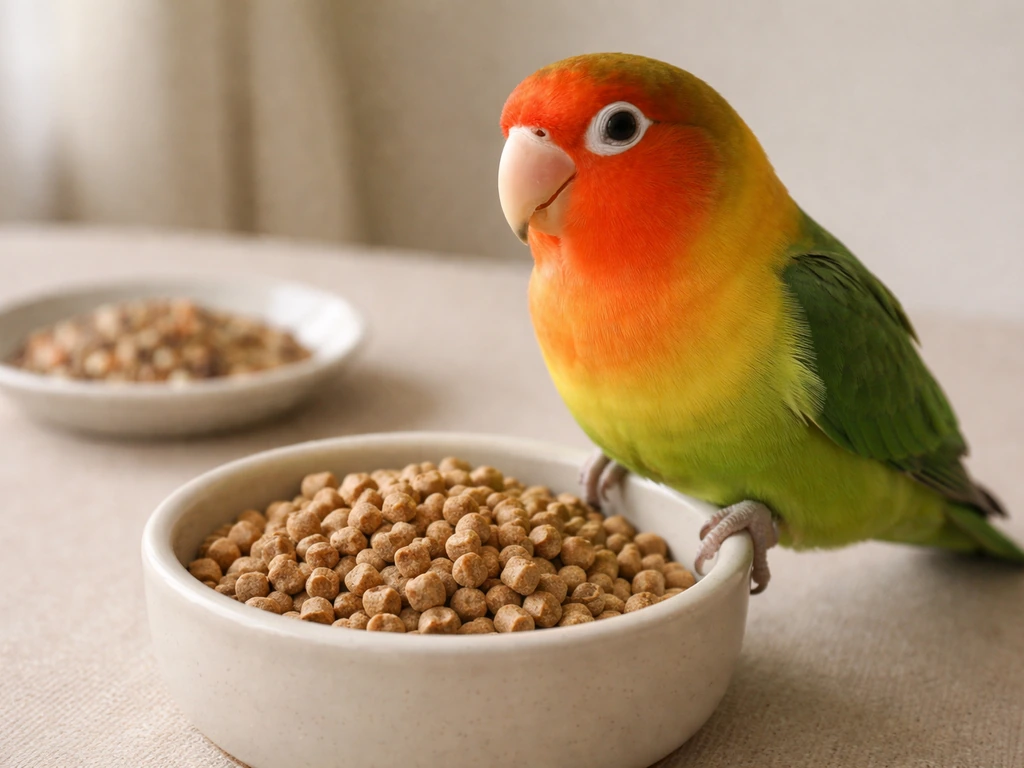
Lovebirds can eat some of the seeds found in wild bird seed mixes, but you should not use wild bird seed as a regular or primary food source for them. Most commercial wild bird blends are formulated for outdoor species like sparrows, finches, and doves, not small parrots. They often contain seeds that are too large, too fatty, or nutritionally incomplete for lovebirds, and they carry real contamination risks: mold, pesticide residue, and pest debris. If you have some on hand and want to offer a small amount as a one-off supplement, a few of the safer seeds (like plain millet) are fine in moderation. But if you are feeding this regularly, stop and read this first.
Can Lovebirds Eat Wild Bird Seed Safely? Vet-Backed Guide
Maya Collins
29 May 2026
What wild bird seed actually contains
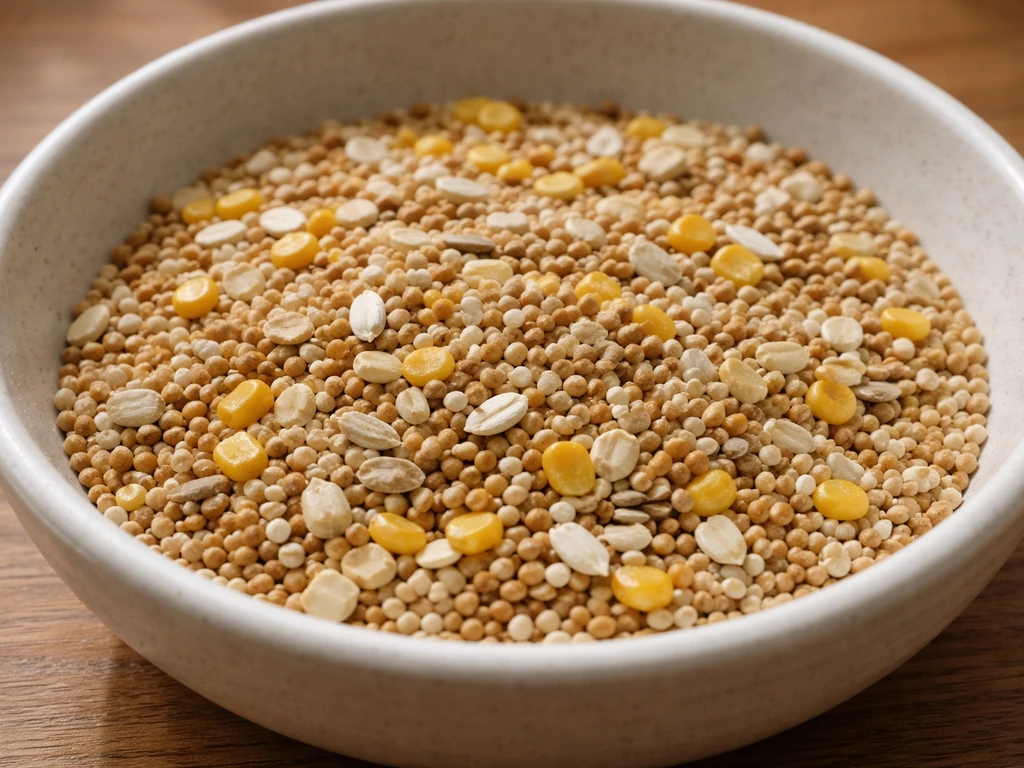
Wild bird seed is not a single product. It is a blend designed to appeal to the widest variety of backyard birds, which means it is optimized for species very different from lovebirds. A typical wild bird mix includes some combination of the following ingredients:
- Millet (white proso, red, or golden): fine for lovebirds in small amounts, and actually a staple in many parrot mixes
- Black oil sunflower seeds: high in fat, technically edible, but too calorie-dense to feed freely to small parrots
- Safflower seeds: acceptable occasionally, but again high in fat
- Milo (sorghum): low nutritional value for parrots, often used as filler in cheap blends
- Cracked corn: mostly filler, not harmful but not nutritious for lovebirds
- Peanuts or peanut pieces: a significant mold risk, especially in shell form
- Nyjer (thistle): very small, oily seed generally ignored by lovebirds
- Dried fruit pieces or suet: can contain added sugar, salt, or preservatives not appropriate for parrots
The core problem is nutritional imbalance. Seed-heavy diets, whether wild bird blends or standard parrot seed mixes, are deficient in vitamin A, protein (specifically lysine and methionine), calcium, and several other key nutrients. The Merck Veterinary Manual notes that all-seed diets are suboptimal for psittacines for exactly this reason. Wild bird blends make this worse because they are skewed even further toward high-fat, low-nutrient fillers. A lovebird eating mostly wild bird seed will almost certainly develop a vitamin A deficiency over time, which shows up as respiratory issues, poor feathering, and susceptibility to infection.
When it is okay and how much to give
The safest way to think about wild bird seed with lovebirds is this: some of the individual seeds in the blend are fine, but the blend as a whole is not ideal. If you want to use it at all, treat it as an occasional supplement, not a base diet.
A reasonable guideline is to offer no more than a teaspoon of wild bird seed (sorted for appropriate seeds, see the prep section below) two to three times per week at most. This should represent well under 10 percent of the bird's total food intake. The rest of the diet should be built around high-quality pellets formulated specifically for parrots or lovebirds. University of Florida veterinary guidance recommends 75 to 80 percent pellets plus 15 to 20 percent fresh fruits and vegetables for parrots generally. Seeds, whether from a lovebird mix or a wild bird blend, should be the smallest component of the diet.
Do not mix wild bird seed directly into the main food dish. Offer it separately in a small treat dish so you can control the quantity and monitor consumption. If your lovebird is already on a seed-heavy diet, this is not the time to add more seed. Focus on transitioning toward pellets instead (more on that at the end of this article).
The real risks: mold, pesticides, and contamination
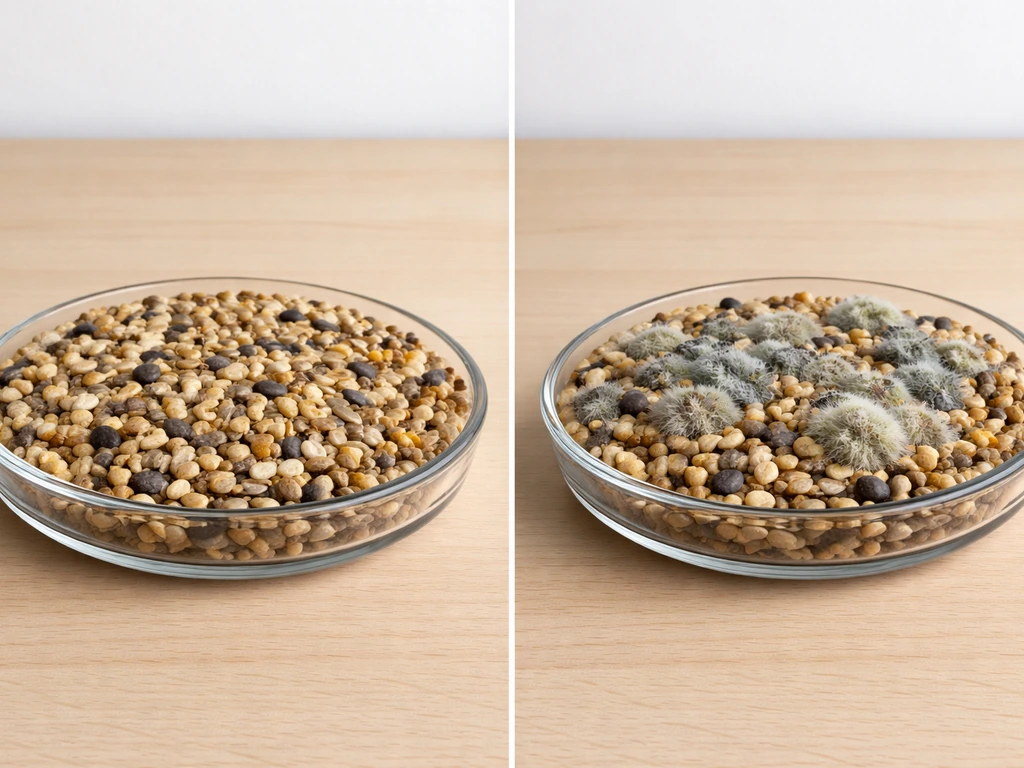
This is where wild bird seed gets genuinely dangerous for a small parrot. Outdoor bird seed is stored, handled, and packaged under very different standards than pet bird food. The contamination risks are real and worth taking seriously.
Mold and mycotoxins
Mold is the biggest concern. Wild bird seed is often stored in bulk, in outdoor sheds or garages, in conditions that are far from ideal. Fungi that produce mycotoxins grow on grain during crop production, handling, and storage, and the key environmental triggers are moisture and warmth. FAO grain storage guidance notes that storage fungi can start growing at moisture contents around 15 to 20 percent, and that visible "sweating" on stored bags is a sign of serious fungal damage already underway. The Merck Veterinary Manual is direct about this: improperly stored seeds, especially peanuts, can grow mold that damages the liver if eaten by birds. For a lovebird weighing 40 to 60 grams, even a small dose of mycotoxins is a serious health risk.
Sprouted or wet seed
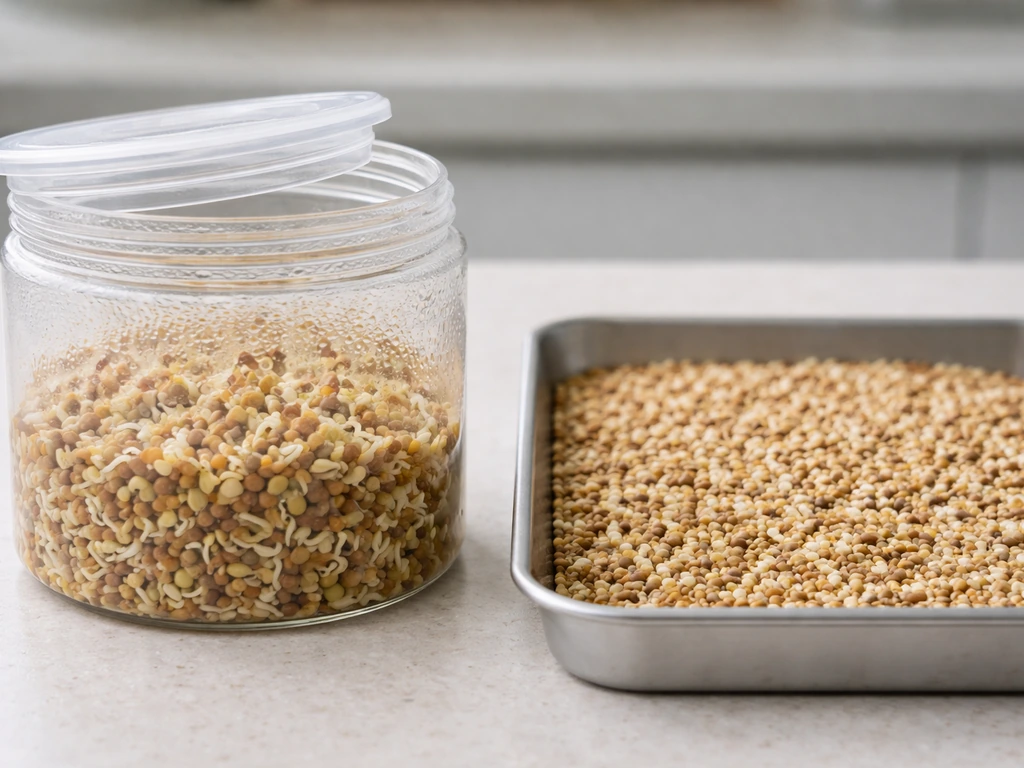
Seed that has been exposed to rain, condensation, or a leaky feeder can start to sprout or ferment. Sprouted seed from a clean, intentionally controlled soak is actually fine and nutritious. But spontaneously sprouted or wet seed from a bag or outdoor feeder is a different story: it is a breeding ground for bacteria and mold. Never feed your lovebird seed that looks clumped, smells musty, or has visible moisture or growth on it.
Pesticide residue
Wild bird seed is an agricultural product and is not held to the same standards as food for human consumption or companion animals. Pesticide residue on the seed coating or hull is a genuine risk. This matters less if you are rinsing and drying the seeds before offering them (see below), but it is one more reason to keep wild bird seed as a very occasional treat rather than a dietary staple for your lovebird.
Additives and fillers
Some wild bird blends, especially bargain or "wildlife" mixes, contain added salt, artificial dyes, or flavor enhancers to attract birds. Salt is harmful to parrots even in small amounts and can cause kidney stress. Always check the ingredient label before offering any wild bird product to your lovebird. If the label lists salt, artificial color, or sugar, do not use that product for your bird at all.
How to prepare and store seed safely right now
If you decide to offer wild bird seed occasionally, the prep and storage steps below will significantly reduce the contamination risks. Do these every time, without shortcuts.
Sorting the seed
- Spread a small portion of the seed on a clean white plate or tray in good light.
- Pick out and discard all peanuts, peanut pieces, large corn chunks, and any seeds that look discolored, shriveled, or coated in a dusty or powdery residue.
- Discard any seed that smells musty, sour, or off. Trust your nose here.
- Keep only the small, clean seeds: white proso millet is the best candidate from most wild bird blends.
Rinsing and drying
- Rinse the sorted seeds under cool running water in a fine mesh strainer for 30 to 60 seconds.
- Shake off excess water and spread the seeds in a single layer on a clean paper towel or dry dish towel.
- Let them air-dry completely at room temperature before offering them. This takes at least 1 to 2 hours depending on humidity. In a humid climate (above 70% relative humidity), give them more time or use a fan.
- Do not offer damp seed. Moisture in the dish promotes bacterial growth within hours.
Storing the bag
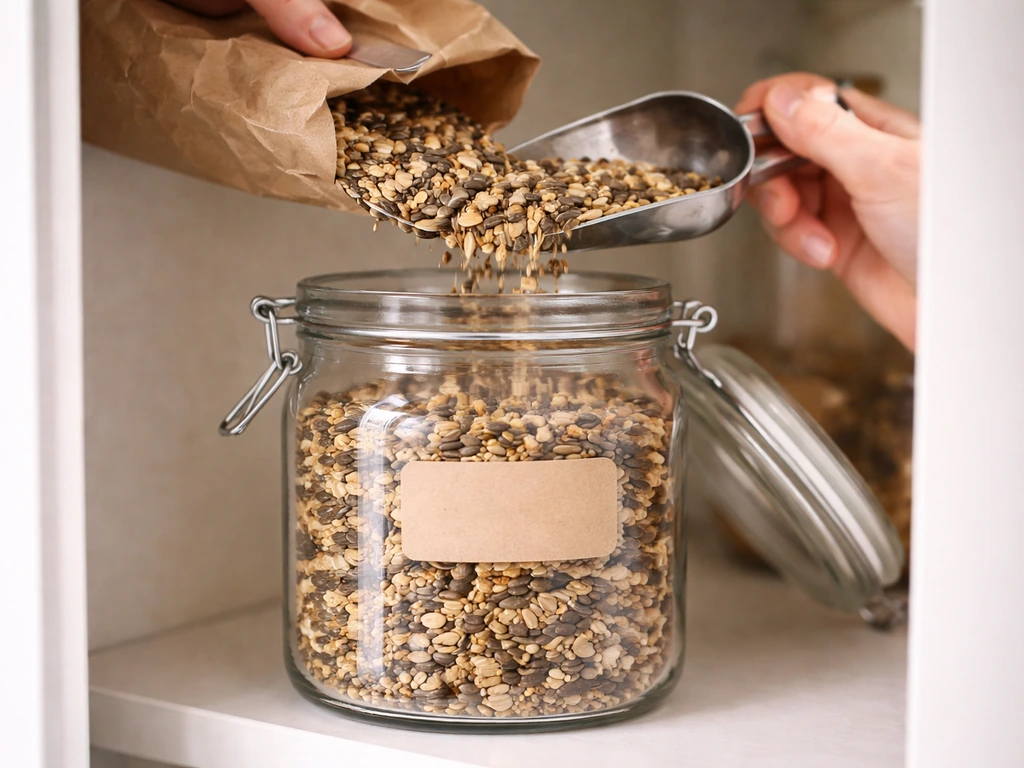
- Keep wild bird seed in a sealed, airtight container, not the original paper or thin plastic bag.
- Store it in a cool, dry location away from temperature fluctuations. A pantry or climate-controlled utility room is better than a garage or shed.
- Check the seed every week for clumping, moisture, or off smells. Any of those signs mean the batch should go in the trash.
- Do not buy in bulk if you are only feeding a small amount occasionally. A fresh, smaller bag is safer than a large one that sits for months.
Dish and feeder cleanup
- Wash the seed dish with hot soapy water after every use and rinse well.
- Do not top off an old dish of seed. Empty it completely, wash it, dry it, and refill.
- Check for hull debris and uneaten seed at the bottom of the dish daily. Hulls trap moisture and accelerate mold growth.
When your lovebird refuses the seed or has a bad reaction
Lovebirds are notoriously picky, and introducing a new seed or blend may result in flat-out refusal or some digestive grumbling. Here is how to read and respond to the most common problems:
| Problem | Likely Cause | What to Do | How to Prevent It |
|---|---|---|---|
| Bird ignores the wild seed completely | Unfamiliar smell, texture, or taste | Try offering just millet from the blend separately; birds recognize millet more easily | Introduce new seeds alongside familiar food, not as a replacement |
| Soft or loose droppings after eating | Digestive upset from new food, especially high-fat seeds or contaminated batch | Remove the seed immediately and return to normal diet; monitor for 24 hours | Introduce in tiny amounts (a pinch) the first few times |
| Regurgitation or repeated head-bobbing | Possible spoiled or toxic seed, or too much fat at once | Stop the seed and contact an avian vet if it continues more than a few hours | Always sort, rinse, and dry seed; never skip the prep steps |
| Bird eats only the wild seed and ignores pellets | Preference for high-fat, high-palatability seeds over balanced food | Remove the treat dish entirely until pellet intake is back to normal | Never offer seed as free-choice; use it as a timed treat only |
If your lovebird shows any signs of lethargy, fluffed feathers, or stopped eating for more than 24 hours after eating seed, call an avian vet. Small parrots deteriorate quickly when something is wrong, and mold-related liver stress is not something to wait out.
Better alternatives and how to move away from wild seed
The best long-term diet for a lovebird is built on high-quality pellets formulated specifically for small parrots or lovebirds. Pellets provide a more balanced calcium-to-phosphorus ratio and appropriate levels of vitamin A compared with seed-based diets, and they eliminate most of the storage and contamination risks that come with loose seed. If you are currently feeding mostly seed, whether that is wild bird seed or a standard parrot seed mix, here is how to transition your bird safely.
Choosing the right pellet
Look for a pellet specifically labeled for lovebirds or small parrots. Brands like Zupreem, Harrison's Bird Foods, and Roudybush make small-particle pellets appropriate for lovebird-sized beaks. Avoid pellets with added artificial color or sugar. A natural, compressed pellet or crumble is fine.
Transitioning from seed to pellets
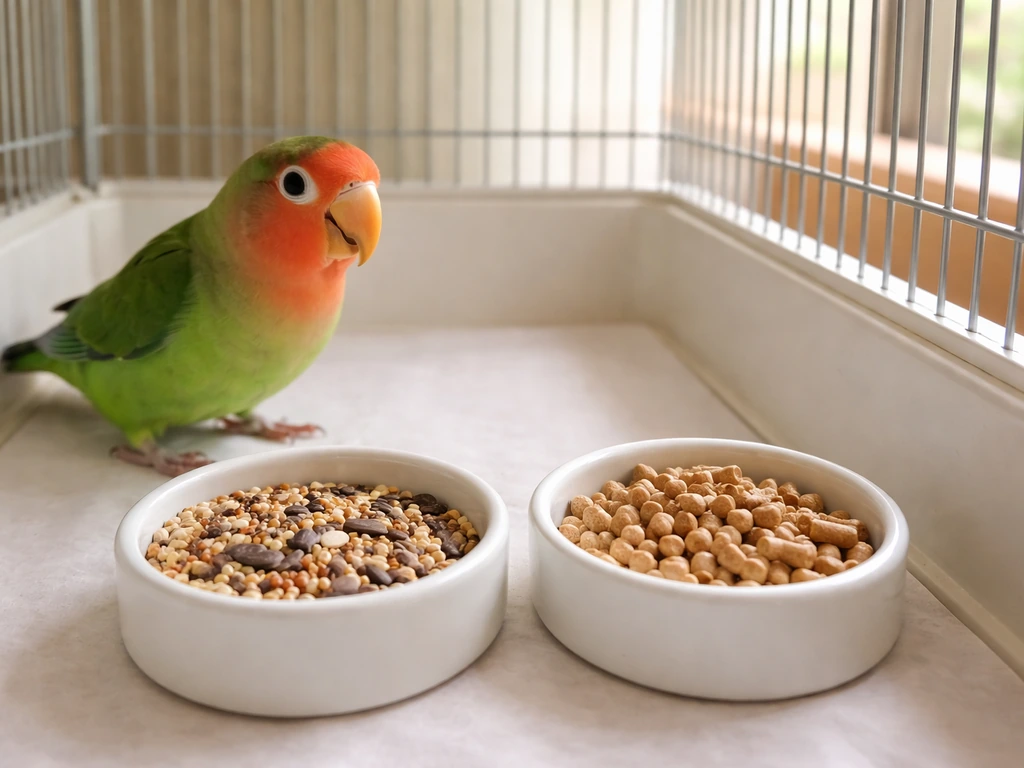
Birds that are used to seeds may not immediately recognize pellets as food. The IVIS Clinical Avian Medicine guidance notes that new items in the cage may not be recognized as food at first, so the transition needs to be gradual and monitored. Do not switch cold turkey by removing all seed at once. That approach risks a bird refusing to eat at all.
- Week 1: Offer the normal seed diet but add a separate small dish of pellets alongside it. Do not reduce seed yet. Let the bird investigate.
- Week 2: Mix pellets into the seed dish at about a 25% pellet to 75% seed ratio.
- Week 3: Shift to 50/50 and watch droppings and energy levels closely.
- Week 4 onward: Move toward 75% pellets and 25% seed. Many vets recommend eventually reaching 80% pellets for the best nutritional outcome.
- Throughout: Offer fresh leafy greens, carrots, or other bird-safe vegetables daily. These also help fill vitamin A gaps and keep the bird interested in non-seed foods.
If your lovebird is very resistant to the transition, small changes made with veterinary guidance are worth the effort. University of Illinois veterinary medicine guidance recommends a well-balanced pellet as the foundation of a parrot diet, and the transition, while sometimes slow, pays off in long-term health.
If you are exploring this question because you have leftover wild bird seed at home, the safest use is still to leave it for the outdoor birds it was designed for. The topic of feeding wild bird seed to other pet species, including finches and canaries, comes up often, and the answer tends to follow a similar logic: some seeds overlap and are technically edible, but the nutritional fit and contamination profile are not the same as food formulated specifically for those species. If you are wondering can you feed wild bird seed to pet birds like finches or canaries, the key concerns are still nutrition fit and the same contamination risks from storage finches and canaries. Can finches eat wild bird seed depends on the mix, but it is usually safer to choose finch-specific seed and treats. Can canaries eat wild bird seed safely, and if so, how much and how often should you offer it? Can fish eat bird seed? Does bird seed float in water? The same storage and ingredient issues can also affect how it behaves when wet, so it is best to avoid soaking unless the label and sources are safe. It depends on the type of seed and any coatings, but it is not something you should use as a fish food source feeding wild bird seed.
FAQ
If a wild bird seed mix contains millet, can I just give my lovebird the millet part?
Yes, but only in limited, controlled amounts and only if the individual seeds are appropriate. If you cannot separate and visually sort the mix, you cannot confidently remove large seeds, fatty fillers, or questionable additives. Treat it as a one-off snack, not a regular treat, and use only seeds you can identify (like plain millet) rather than the full blend.
Can lovebirds eat sprouted wild bird seed?
Do not feed sprouted seed that came from a wet bag or a rain-exposed feeder. Sprouting is only beneficial when you start with dry seed from a clean source and sprout it intentionally, then offer it promptly and hygienically. With wild mixes, the higher risk is contamination already present on the seed surface.
What should I do if my wild bird seed smells a bit musty or looks clumped?
If it already looks clumped, smells musty, shows any condensation, or has visible growth, throw it out and do not “dry it out” and reuse it. Mold toxins can persist even if the seed dries later, and a lovebird is small enough that a small amount can be meaningful.
Which wild bird seed ingredients are red flags for lovebirds?
Avoid mixes labeled with salt, artificial dyes, or sugar, and also avoid products with added flavor enhancers or “wildlife attractants.” For parrots, even small salt exposure can stress kidneys. When in doubt, use only plain, single-ingredient seeds rather than colorful or sweetened blends.
If my lovebird won’t eat pellets, can I increase wild bird seed to make up for it?
Yes, but only as a supplement while you keep nutrition balanced. Aim for the smallest dietary fraction, and make sure pellets (or a lovebird-appropriate diet) provide the bulk of calories and micronutrients. If your bird refuses pellets, keep the pellet available but do not increase the seed portion to compensate.
How do I transition from a mostly seed diet to pellets without triggering refusal?
Yes, and the transition can be riskier if your bird has been on seeds exclusively for a long time. Start by offering pellets alongside the familiar foods, then slowly reduce seed based on acceptance. Also monitor droppings and appetite during the switch, since some birds show temporary digestive change when diet composition shifts.
If my lovebird eats some wild bird seed and seems okay, can mold still be a problem later?
Yes, wild bird seed can be a concern even if the bird seems fine at first. Mycotoxin-related problems may develop over time, so if you ever suspect mold exposure, keep pellets as the main diet and contact an avian vet if you notice breathing changes, reduced feather quality, or appetite decline.
When is it an emergency if my lovebird gets sick after eating wild bird seed?
If a lovebird stops eating for more than 24 hours after eating seed, you should treat it as urgent and call an avian vet. With a small parrot, dehydration and weakness can come quickly. If possible, bring the exact seed mix and any packaging details to the appointment.
Is soaking wild bird seed in water safer than feeding it dry?
That can be risky. Outdoor mixes may contain coatings or additives, and some seeds may become contaminated when soaked. If you want to offer “wet” seed, prefer intentionally sprouted seed started from clean, safe seed, or skip soaking entirely and use fresh vegetables as the moisture-rich component of the diet.
Can I use wild bird seed as a daily treat as long as I keep the portion small?
It depends, but generally it is not a good idea to use wild mixes for daily feeding. Even when some seeds are technically edible, the overall blend is nutritionally skewed, and contamination controls are not designed for indoor pets. If you want something seed-based for daily use, choose a species-appropriate seed product and keep it as a minor component, not the foundation.