Spicy bird seed works well for deterring squirrels and other mammals, but it does almost nothing to deter most birds. If you are wondering whether you can put cayenne pepper in bird seed, it’s still unlikely to deter most birds. The reason is biology: birds lack the same capsaicin-sensitive nerve receptors (TRPV1) that make mammals feel a burn. So if you're hoping spicy seed will run off pigeons, starlings, or house sparrows, you'll likely be disappointed. That said, it's not a complete dead end, and there's a right way to test it before giving up or doubling down.
Does Spicy Bird Seed Work? What to Try and When It Fails

Maya Collins
21 May 2026
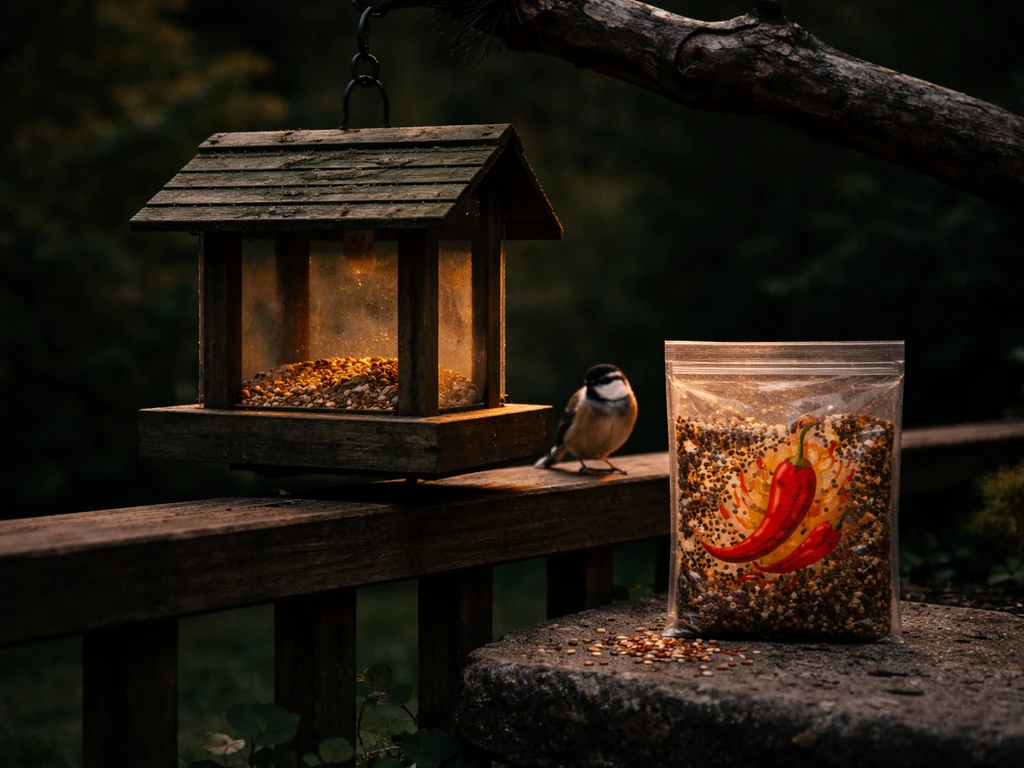
What spicy bird seed actually is
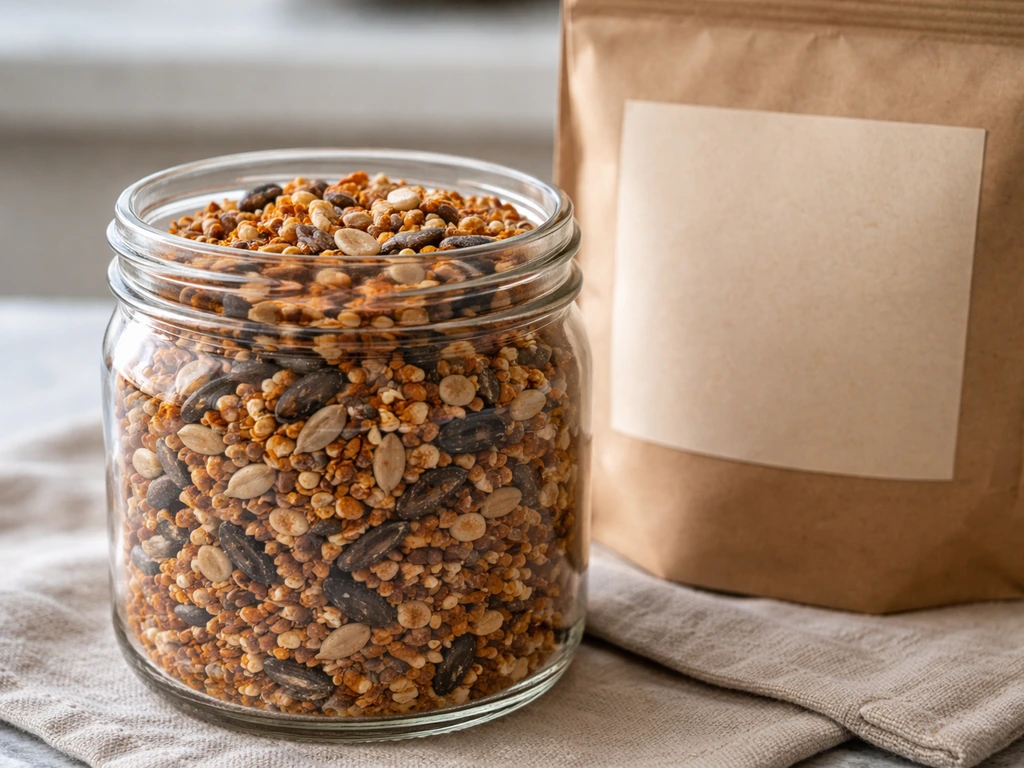
Most products marketed as spicy or hot bird seed are standard seed blends (sunflower, millet, safflower) that have been coated or mixed with capsaicin, the active compound responsible for the "heat" in chili peppers. It comes in two forms: a dry powder that's dusted onto the seed, or an oil-based coating applied during processing.
As you test different products, check whether the label specifies capsaicin strength, since that determines how much chili powder in bird seed you would need capsaicin concentrate repellents. You can also buy commercial capsaicin concentrate repellents (some formulated at 2. 5% capsaicin, like Miller Chemical's Hot Sauce) and apply them yourself to existing seed.
If you are wondering what “hot sauce” repellents look like, commercial capsaicin products are sometimes sold under names like Hot Sauce for use on seed can you put hot sauce on bird seed. If you are wondering about DIY options, avoid treating standard bird seed with random additives like red pepper flakes, since capsaicin products are inconsistent and can create extra irritation risks during handling.
The core marketing claim is that the heat deters unwanted animals by irritating their mouths, noses, and eyes. For mammals, this is actually true. Squirrels, raccoons, and deer experience real discomfort from capsaicin because their TRPV1 receptors respond to it strongly. Virginia DWR specifically recommends hot pepper seed as a squirrel deterrent. But for birds, the mechanism breaks down almost entirely, which is why results at the feeder are so inconsistent.
Does it actually deter nuisance birds?
For most bird species, spicy seed is not a meaningful deterrent. If you're wondering does hot bird seed work, the evidence suggests it usually doesn’t meaningfully deter most nuisance birds at the feeder spicy seed. Peer-reviewed research confirms that birds are largely insensitive to capsaicin because their TRPV1 receptors differ at the molecular level from mammalian ones. In plain terms, they simply don't feel the burn. A pigeon can eat capsaicin-coated seed all day without any irritation that would change its behavior. The Audubon Society, Clemson Extension, and feral pigeon research published in MDPI all point to the same conclusion: capsaicin's repellent mechanism is mammal-relevant, not bird-relevant.
There is one notable exception worth knowing about. Controlled lab studies published in the Wilson Bulletin found that European starlings can actually detect capsaicin and learn to avoid seed treated at 1.0% concentration (by mass). So starlings are more capsaicin-aware than most birds. But even that result comes with a caveat: it happened under training conditions. Whether starlings in your backyard adapt and return anyway is a real possibility, since behavioral learning cuts both ways.
Why do results vary so much from yard to yard? Several factors play into it. Capsaicin concentration in commercial blends varies widely and is rarely disclosed on packaging. Weather degrades the coating quickly, especially in rain or humidity. And individual bird populations differ in their feeding pressure, desperation, and exposure history. If a starling flock is hungry enough, no amount of spice is going to stop them.
How to run a safe trial in your yard
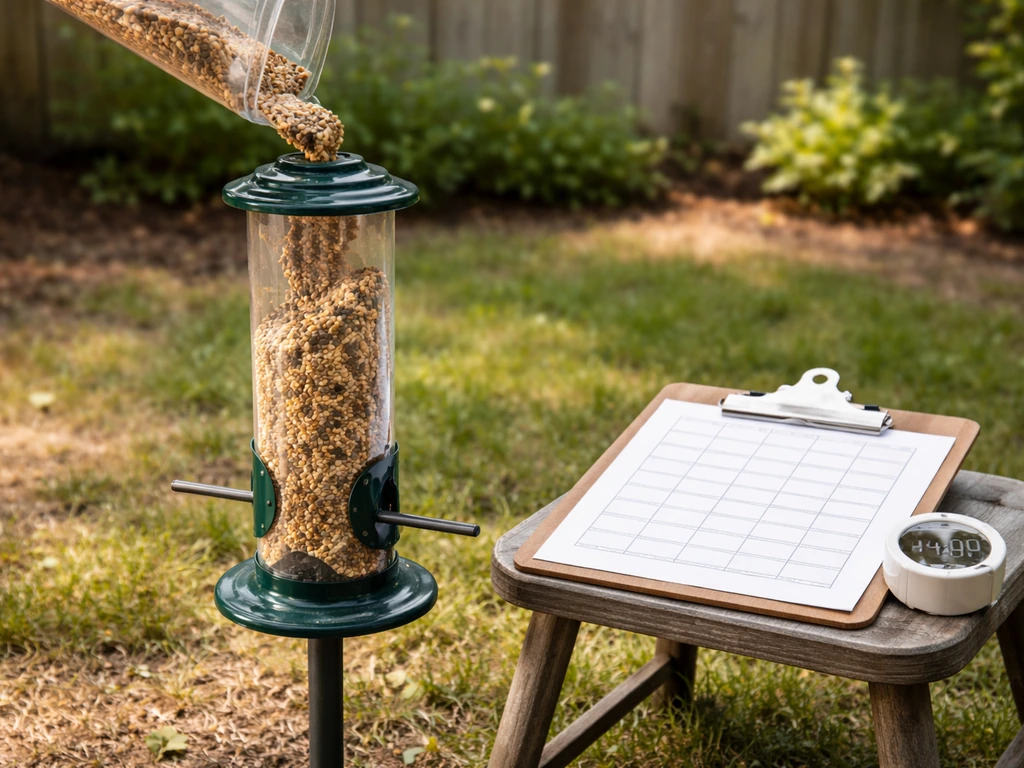
If you want to test whether spicy seed makes a difference in your specific situation, run a structured two-week trial rather than just switching seed and hoping for the best. Here's how to do it without wasting money or causing hygiene problems.
Step-by-step trial plan
- Clean your feeder completely before starting (see the hygiene section below for how). You want a clean baseline with no residue from old seed.
- Buy a commercial spicy seed blend or a capsaicin-treated product. If you're coating your own seed, use a repellent formulated for this purpose and follow label rates. Don't improvise with grocery-store chili powder or cayenne at high volumes, as inconsistent coating causes clumping and mold.
- Fill only one feeder with spicy seed. Keep a second feeder nearby with your regular seed. This comparison gives you a real read on behavior change.
- Observe for 7 to 14 days. Note which species are eating from which feeder, and whether nuisance birds shift to the regular seed or just ignore the spice entirely.
- After the trial, evaluate: did the target species avoid the spicy feeder? Did it only deter squirrels? Did all birds stop coming? Adjust from there.
Placement and handling
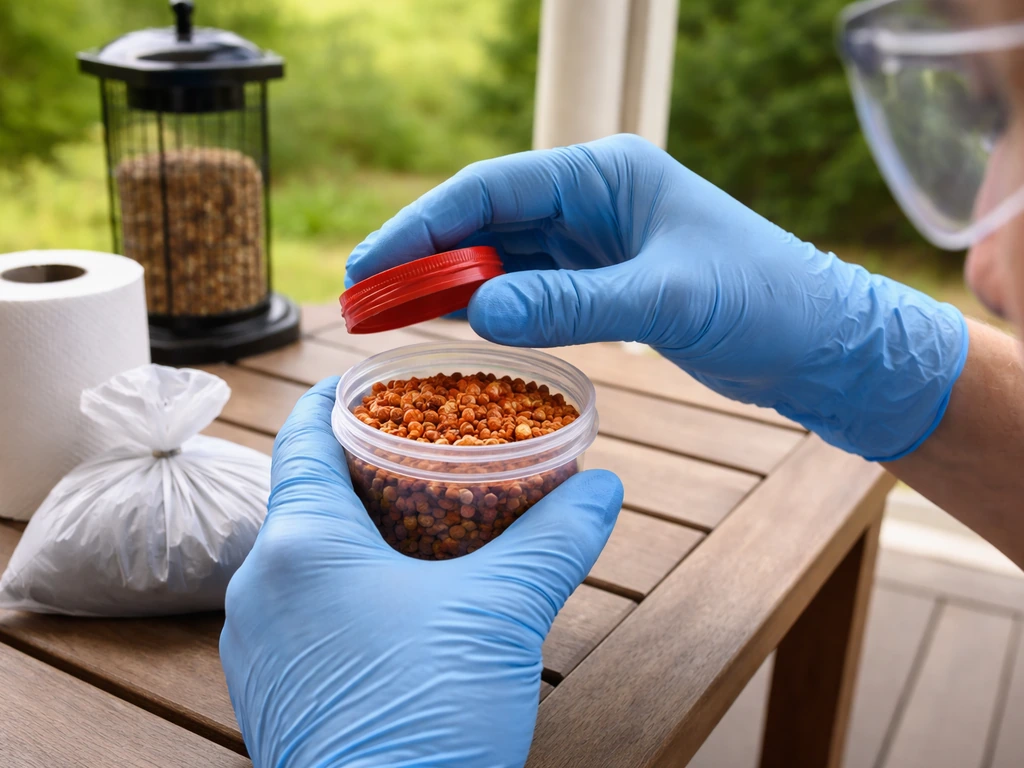
Capsaicin dust is genuinely irritating to eyes and skin, even if it doesn't bother birds much. The NPIC (National Pesticide Information Center) flags it as very irritating on contact. Wear gloves when handling coated seed, avoid touching your face, and don't pour seed in windy conditions where dust can blow back at you. If you have pets that access the yard, keep them away from the feeder area during the trial, especially dogs, who are mammals and will feel the irritation.
Which birds it may deter vs. which will ignore it
| Bird species | Sensitivity to capsaicin | Likely outcome with spicy seed |
|---|---|---|
| European starlings | Moderate (can detect at 1.0% concentration) | May show some avoidance early, but can adapt over time |
| Feral pigeons | Very low (nearly insensitive) | Almost no deterrence; will continue feeding normally |
| House sparrows | Very low | Unlikely to be deterred; biology same as most passerines |
| House finches / goldfinches | Very low | Will continue eating, especially sunflower and nyjer |
| Mourning doves | Very low | Ground feeding continues regardless of spice coating |
| Squirrels (mammal, not a bird) | High | Strong deterrence; this is the primary use case that works |
The honest takeaway here is that spicy seed is not a bird-specific deterrent. If your problem is squirrels raiding a feeder that birds you like are also using, it makes a lot of sense. If your problem is nuisance birds (starlings, pigeons, house sparrows), you'll get limited mileage from capsaicin alone and should lean on the alternatives below. USDA APHIS' National Wildlife Research Center describes repellent research and evaluation in terms of active ingredients and how repellents are tested, including capsaicin.
Better deterrence options if spicy seed doesn't cut it
Feeder design and placement do more for bird selectivity than any ingredient swap. Here's what consistently works when capsaicin doesn't:
Feeder setup changes
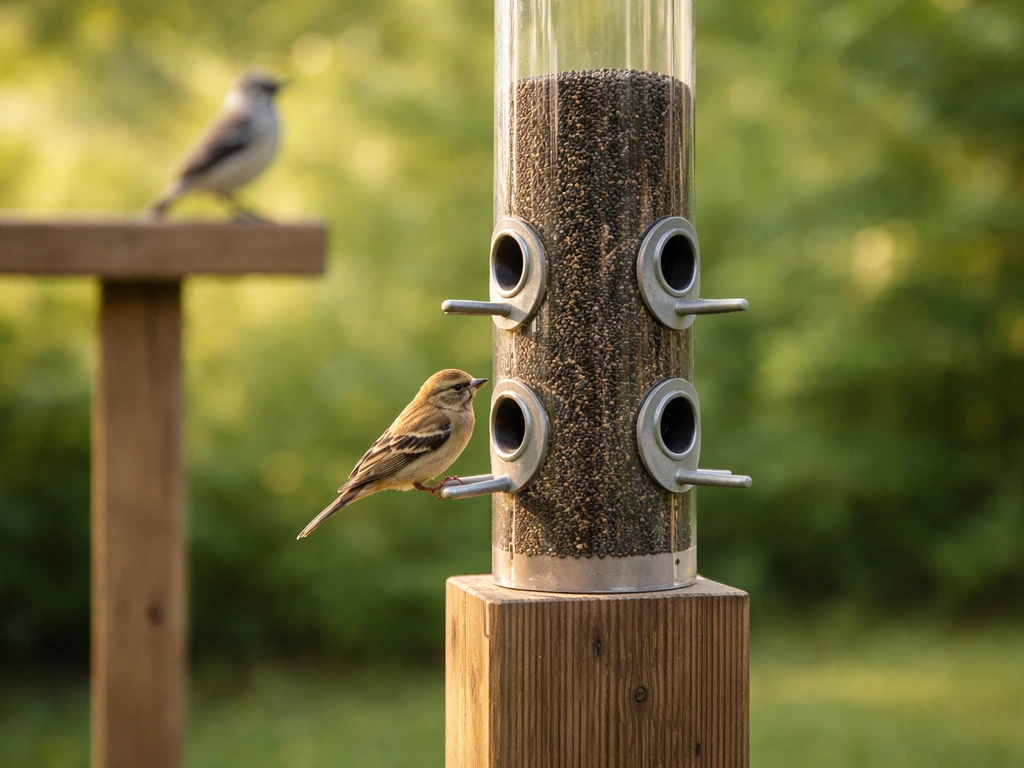
- Switch to a tube feeder with small ports for nyjer (thistle) seed. Finches can access it easily; larger nuisance birds like starlings and pigeons cannot.
- Use a cage-style or weight-sensitive feeder. Weight-sensitive feeders close off access when a bird above a set weight (typically a starling or heavier) lands on the perch.
- Remove tray feeders and ground feeding entirely if you're attracting doves, sparrows, or pigeons in problem numbers. These species are ground feeders by preference, and any spillage will keep them around.
- Install a squirrel baffle on the pole below the feeder, positioned so the top of the baffle is at least 4 feet off the ground. This handles the mammal problem without relying on spicy seed at all.
Seed selection
Switching seed type is often more effective than adding capsaicin to existing seed. If you are wondering how much red pepper to add to bird seed, the amount matters because too little may do nothing and too much can create irritation issues for you and your birds. Safflower seed is a practical choice: most squirrels dislike it, and nuisance birds like starlings tend to ignore it while cardinals and chickadees eat it readily. Nyjer (thistle) is highly selective for finches. Shelled peanuts attract jays and woodpeckers but not pigeons or sparrows. Removing millet and cracked corn from your mix eliminates much of the pull for ground-feeding nuisance birds.
Habitat tweaks
If pigeons or starlings are roosting nearby and using your feeder as a dining destination, physical exclusion from roosting sites helps more than any repellent. Bird spikes on ledges, removal of flat perching surfaces, and trimming dense shrubs that provide shelter reduce the local population that's gravitating to your yard in the first place.
Keeping seed clean and safe during the trial
Changing seed types and adding coatings introduces some real hygiene risks that are worth taking seriously, especially in warm or wet conditions.
Storage
Store spicy seed in an airtight container in a cool, dry place, the same as any bird seed. If you're trying it with red pepper flakes instead of a commercial spicy blend, start with a small amount and keep the seed dry and sealed to avoid clumping red pepper flakes in bird seed. Oil-coated capsaicin seed goes rancid faster than plain seed, so don't buy in large bulk if you're just running a trial. Buy a smaller quantity and use it within four to six weeks. If the seed smells musty or the coating has clumped the seeds together into solid masses, discard it. Clumping seed is a mold risk.
Feeder cleaning
Clean your feeder at least once a month under normal conditions, and more frequently (every one to two weeks) when you're running a trial with coated seed. Iowa DNR recommends a 10% bleach solution for disinfecting feeders. That's roughly 1 part household bleach to 9 parts water. Scrub all surfaces, rinse thoroughly, and let the feeder dry completely before refilling. All About Birds also recommends this dilution and emphasizes that a damp feeder filled with fresh seed creates conditions for mold and fermentation quickly, especially in summer.
Preventing rodents and insects
Switching seed types and cleaning out old seed during the transition can leave seed debris on the ground that attracts rodents and insects. Rake up all spillage at the start of your trial. Don't let seed sit on the ground overnight. If you're in a region with high rodent pressure, consider suspending feeding entirely for a week before restarting with the new seed, which breaks the established rodent habit of visiting that spot.
Adding capsaicin to seed actually helps here: spicy seed that falls to the ground is less attractive to rats and mice than plain seed, though it won't eliminate the problem on its own. Related to this, if you're also wondering whether spicy seed keeps rats away from feeders, the answer is: it helps reduce mammal interest, but exclusion (sealed garbage cans, removed ground spillage) is more reliable.
Troubleshooting checklist and when to stop
Work through this checklist if you're two weeks in and the problem hasn't improved:
- Confirm which species is actually causing the problem. Are you trying to deter a mammal (spicy seed is appropriate) or a bird (less effective)?
- Check the capsaicin concentration. Generic "spicy blend" products often underdose. Starlings showed avoidance in lab studies at 1.0% concentration. Most retail blends don't disclose their level.
- Check for rain exposure. Capsaicin coating degrades fast when wet. If your feeder is unprotected and it's rained, the coating may be gone already.
- Look for behavioral adaptation. Are the same birds that initially hesitated now eating normally? Starlings in particular can learn to tolerate capsaicin exposure over time.
- Rule out alternative food sources. If nuisance birds have another food source nearby (a neighbor's feeder, accessible garbage, or fruit trees), they'll cycle back regardless of what you put in your feeder.
- Check feeder design. If pigeons or starlings can physically perch and reach the seed, no coating will stop them long-term. A feeder redesign (cage, weight-sensitive mechanism, or port size reduction) is the more permanent fix.
When to stop using spicy seed
- If your target nuisance birds (especially pigeons or house sparrows) show no behavioral change after 14 days, the capsaicin approach isn't working for your situation. Stop and switch to feeder design changes.
- If you notice the birds you want to attract (finches, chickadees, cardinals) are avoiding the feeder too, switch back to plain seed immediately. Some individuals may be more sensitive or simply prefer uncoated seed.
- If seed in the feeder is clumping, smelling musty, or showing visible mold, remove and discard everything, clean the feeder with bleach solution, and dry fully before any refill.
- If you or household members are experiencing eye, nose, or throat irritation from handling the seed or being near the feeder on windy days, stop using the coated product and switch to a different deterrence method.
Quick decision guide
If your goal is deterring squirrels and other mammals while continuing to feed birds, spicy seed is a reasonable and low-hassle tool. Use it. If your goal is reducing specific nuisance bird species like starlings, pigeons, or house sparrows, invest your effort in feeder design, seed type selection, and physical exclusion instead. Spicy seed is the right solution for the wrong problem when it comes to birds specifically, and knowing that upfront saves you two weeks of frustration and a bag of seed.
FAQ
If I sprinkle cayenne pepper or mix hot sauce into my seed, will it stop birds at my feeder?
You usually will not, especially for pigeons, starlings, and house sparrows. Those species generally keep feeding because they are not capsaicin sensitive in the same way mammals are. If starlings are your main issue, expect at best inconsistent results, because some birds can learn to avoid treated seed under lab training conditions, but that does not reliably translate to backyard feeders.
What’s the safest, most reliable way to make spicy bird seed work if I want to try it?
Better results come from using capsaicin products designed for seed treatment (dry dusting or oil-based coatings) rather than random kitchen additives. Kitchen mixes like red pepper flakes are inconsistent by strength, and they add handling irritation risk without a predictable amount of active ingredient reaching the bird’s mouth.
How do I run the two-week trial so I can tell whether spicy seed is actually helping?
For a DIY test, set a baseline first (2 to 3 days of your normal mix), then run a true 14-day trial with no other changes. Measure the same outcomes each day (for example, how many times you see squirrels, and which birds are landing). If you change seed type, feeder height, or keep adjusting the amount of spice daily, you cannot tell whether the coating is the cause.
How can I tell if my spicy bird seed has gone bad or become unsafe to use?
If the coating dust clings to the seed or clumps together, treat that as a quality and hygiene red flag. Oily-coated products can go rancid faster, especially in heat or humidity. If you notice a musty odor, sticky clumps, or visible moisture, discard the bag rather than trying to salvage it at the feeder.
What precautions should I take while using capsaicin-coated seed at home?
Yes, you can increase irritation risks even if birds ignore capsaicin. Wear gloves when handling coated seed, avoid touching your eyes or face, and avoid pouring or scooping in windy conditions where dust can blow back. If you have kids or pets that roam the yard, block access to the feeder area during the trial.
Why does spicy seed seem to work one day and fail the next?
Weather and exposure history can erase the effect quickly, so you may see weaker performance after rain, dew, or high humidity. If your feeder is outdoors in frequent wet conditions, plan for more frequent cleaning and consider re-evaluating after the weather stabilizes rather than judging the product on one damp week.
Will taking feeders down for a while improve results for pests?
If you stop feeding entirely for a short period, you can break established foraging routines for rodents, but avoid doing it indefinitely if you still want birds to visit. A practical approach is a short pause during high rodent pressure, then restart with strict control of spillage and a feeder cleaned before refilling.
Does spicy seed keep rats and squirrels away on its own?
Spicy seed may reduce mammal interest, but it is not a full replacement for physical controls. The most reliable rat and squirrel prevention usually combines sealed trash, removing ground seed, and excluding animals from easy access points. Treat capsaicin as an extra deterrent only, not the primary barrier.
What should I change first if spicy seed is not fixing my bird problem?
If your goal is nuisance birds, prioritize the feeder and seed selection first. Options with better species targeting include nyjer for finches, safflower to discourage many squirrels while attracting certain desirable birds, and removing millet or cracked corn if ground-feeding nuisance species are showing up. Use capsaicin only when you confirm your target issue involves mammals more than birds.
How often should I clean my feeder while using capsaicin-coated seed?
You should clean more often when running a coated-seed trial, because residue and dust can build up and because warm, damp conditions speed up mold and fermentation. A good rule is at least every one to two weeks during the trial, and ensure the feeder fully dries before adding fresh seed.