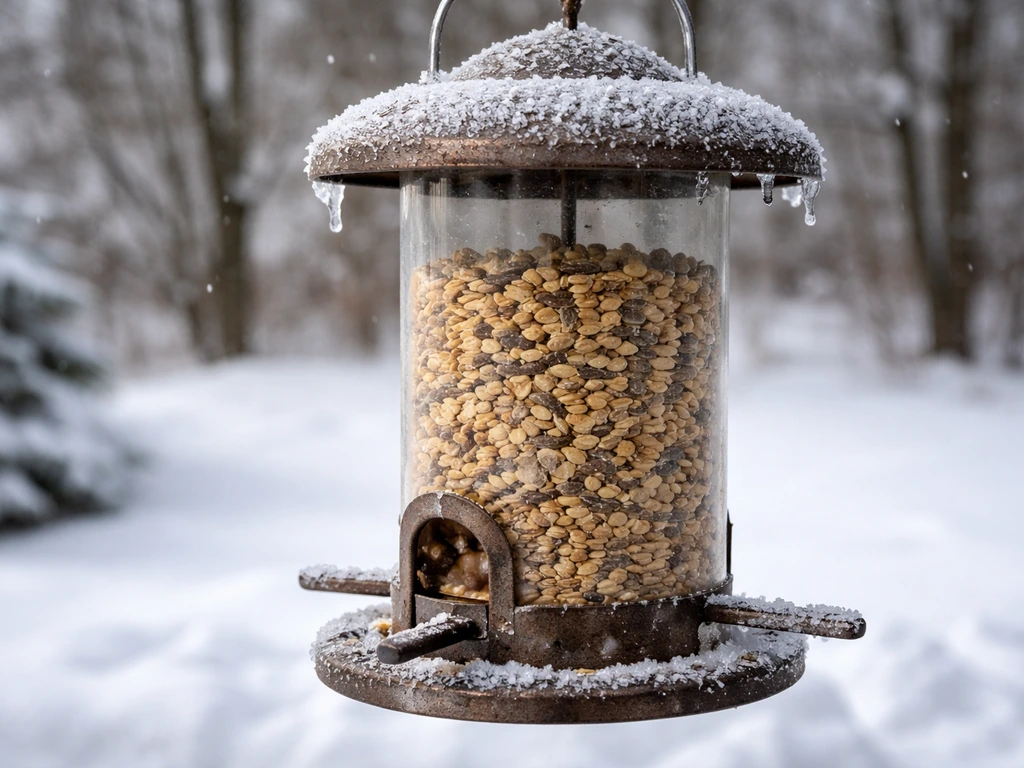
You can put hot sauce on bird seed, but you probably should not. The liquid will wet the seed, encouraging mold and bacterial growth within hours in warm or humid weather. Because hot sauce has the same key issue as “hot bird seed,” it can make seed spoil faster and create contamination risks, so it often is not a good idea.
Can You Put Hot Sauce on Bird Seed? What to Do Instead

Maya Collins
28 May 2026
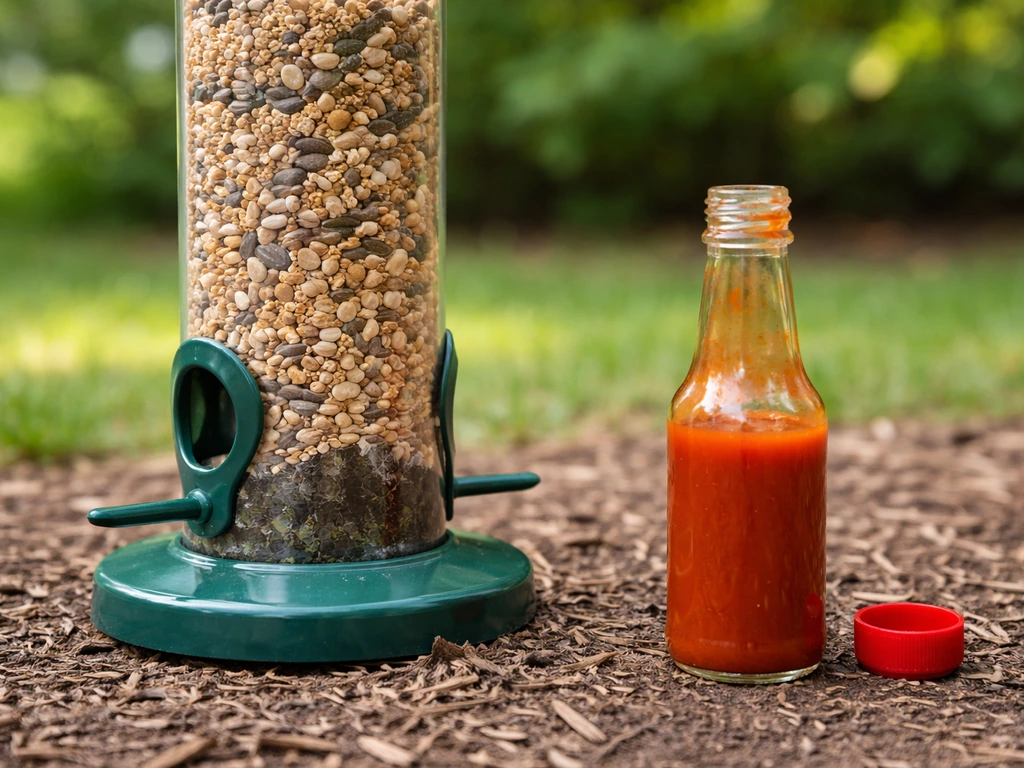
Capsaicin, the active compound in hot sauce, does deter squirrels and some rodents, but the same irritant can affect sensitive tissue in birds too, and the vinegar, salt, and preservatives in bottled hot sauce add contamination risks that dry capsaicin powder does not. If your goal is squirrel or pest deterrence, there are cleaner, safer, and more reliable ways to get there.
Is hot sauce actually safe for birds?
Birds have far fewer capsaicin receptors than mammals, which is why capsaicin-treated seed research generally shows that bird visitation rates stay the same or even increase after treatment. A 2000 Wildlife Damage Management Conference study found that capsaicin-coated seed significantly reduced the seed squirrels ate and the time they spent at feeders, while bird visitation was unaffected at two sites and went up at a third. So the capsaicin component itself is not acutely toxic to birds in the way it is aversive to squirrels.
That said, capsaicin is still classified by NPIC (Oregon State University) as very irritating to skin and eyes and capable of irritating mucous membranes on contact. Birds have delicate nasal passages, eyes, and crop linings. If hot sauce is applied heavily and seed is coated in a liquid form, those tissues can be exposed every time a bird handles or cracks a seed. Fledglings and any bird with tender or irritated tissue are at higher risk. The science says birds are less affected than mammals, not that they are unaffected.
The bigger problem with bottled hot sauce specifically is everything that comes with the capsaicin: water, vinegar, salt, sugar, and preservatives. None of those belong in a feeder. Wet seed spoils fast. The Minnesota DNR notes directly that wet birdseed, whether in a feeder or on the ground, can develop mold and bacteria in wet weather. Hot sauce makes seed wet by definition, so using it triggers that same spoilage risk even on a dry day.
Why people try hot sauce in the first place
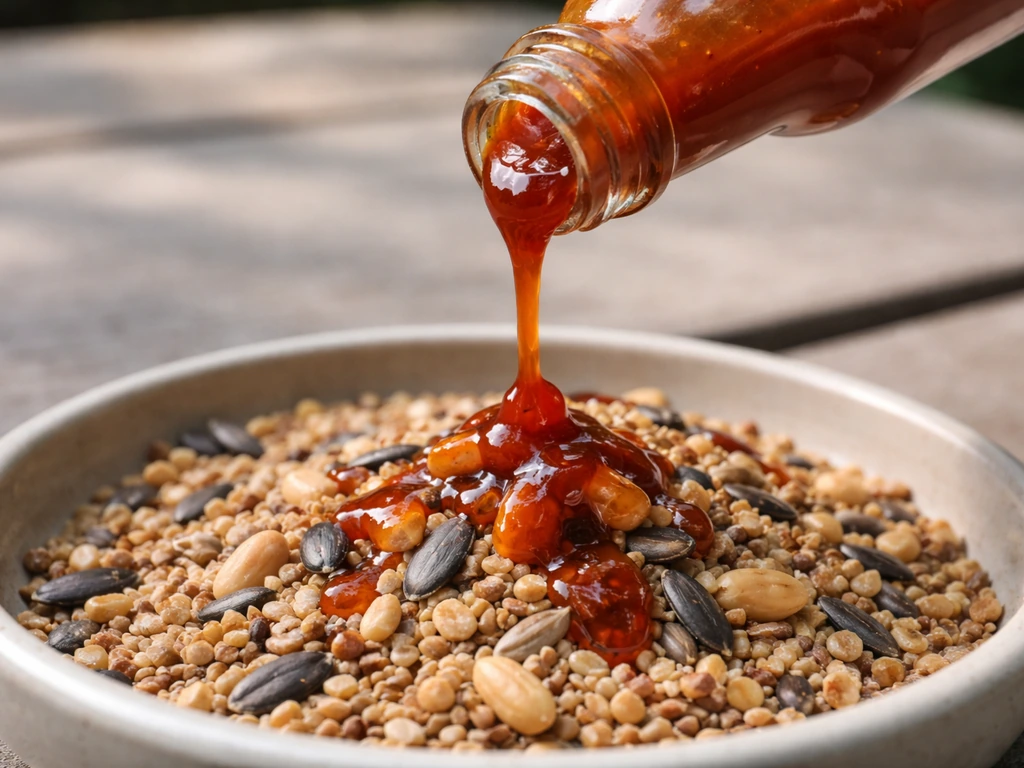
Almost everyone who reaches for the hot sauce bottle is trying to solve one of two problems: squirrels raiding the feeder or unwanted animals (rats, raccoons, or even specific bird species) getting into seed meant for songbirds. The idea makes intuitive sense because capsaicin genuinely works as a repellent for mammals. Commercial capsaicin-based repellents like Hot Sauce by Miller Chemical are marketed for exactly this type of wildlife deterrence, though those products are formulated for outdoor plant protection rather than direct seed application. Miller Chemical markets Hot Sauce as a capsaicin-based taste repellent for agricultural plant protection, with stated effectiveness against multiple wildlife types including squirrels Hot Sauce by Miller Chemical is marketed for wildlife deterrence for outdoor plant protection.
Some people also reach for hot sauce because they already have it in the kitchen and want a quick fix. That improvised approach is where the real problems start. Bottled hot sauce is a food-grade condiment, not a pest control product. Using chili powder in bird seed can seem like a simple DIY deterrent, but the safe amount is not well established and residue can create other risks. It is not designed to stay stable outdoors, resist rain, or dry on seed without leaving a residue that attracts insects or promotes fungal growth. The deterrent logic is sound in principle, but the delivery method creates more problems than it solves.
How different animals actually respond
The response to capsaicin varies a lot by species, and knowing this helps you decide whether a spicy approach is even worth pursuing in your situation.
| Animal | Response to Capsaicin | Practical Deterrent Effect |
|---|---|---|
| Songbirds (finches, chickadees, sparrows) | Minimal aversion, fewer capsaicin receptors | Little to no deterrence; continues feeding normally |
| Squirrels | Strong aversion, find it unpleasant | Measurably reduced feeding time and seed consumption |
| Rats and mice | Moderate to strong aversion as mammals | Some deterrence, but persistent rodents adapt over time |
| Raccoons | Some aversion, but often push through | Inconsistent; physical barriers work better |
| Insects (ants, beetles) | Variable; capsaicin may deter some insects | Wet seed from hot sauce actually attracts more insects |
| Starlings and grackles (unwanted birds) | Same low sensitivity as songbirds | No deterrent effect; capsaicin does not discriminate by bird species |
This table highlights a key limitation of using hot sauce as a deterrent: it cannot distinguish between the birds you want and the birds you do not. If you are trying to keep grackles or starlings away, capsaicin will not help. If you are targeting squirrels specifically, dry capsaicin powder on seed can work, but hot sauce is the wrong vehicle for it. If you are trying to use red pepper as a deterrent, it is best to start with a light pinch and adjust carefully based on the kind of pests you are targeting dry capsaicin powder.
Better ways to deter pests without touching the seed
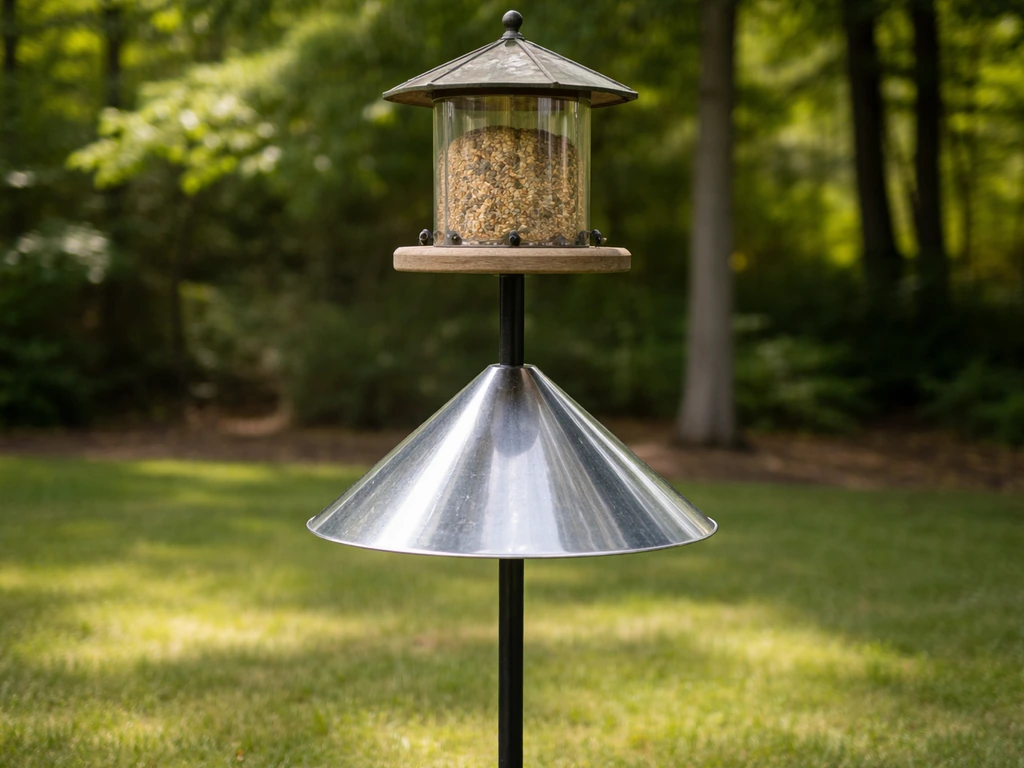
Physical deterrents are more reliable, longer lasting, and carry zero contamination risk. The US Fish and Wildlife Service describes baffles as the least aggravating long-term solution for squirrel-proofing feeders. Audubon recommends mounting feeders on a pole with a baffle installed below the feeder, placed at least 10 feet from any tree branch or structure a squirrel can jump from. That combination gets you close to squirrel-proof without any chemical involvement.
- Use a pole-mounted feeder with a cone or cylinder baffle below the feeder to block squirrels climbing up
- Hang feeders at least 5 feet off the ground and at least 10 feet away from trees, fences, or rooflines squirrels can launch from
- Switch to a weight-sensitive or caged feeder that physically closes when a squirrel's weight lands on it
- Use seed types that target the birds you want: safflower seed and nyjer (thistle) are less attractive to squirrels and most rodents
- Add a seed catcher tray under the feeder to reduce ground spillage, which attracts rats and mice more than anything else
- Clean up spilled seed from the ground every two to three days, and more often in wet weather
- Move feeders indoors or stop filling them temporarily if rat activity is high — removing the food source is the most effective pest control step you can take
King County Public Health specifically notes that seed falling to the ground is a primary driver of rat attraction around feeders. A tray baffle that catches spillage before it hits the ground addresses two problems at once: it reduces pest attraction and keeps the area cleaner. If you are dealing with ants climbing feeder poles, a water moat or ant guard installed on the hanging wire is more effective than any spicy coating.
If you are set on using a capsaicin-based deterrent for squirrels, the cleaner approach is buying birdseed that has already been coated with dry capsaicin powder by the manufacturer, or adding pure dried cayenne or chili powder to dry seed yourself. If you are wondering whether is everything seasoning bird seed is a safe alternative, the key issue is that anything that leaves wet residue or contamination risks can still cause spoilage and health problems.
If you are adding chili powder to dry seed, you can use the same goal in mind as the dry capsaicin approach, but the right amount matters so it does not clump or overdo the residue how much chili powder in bird seed. If you are specifically considering cayenne pepper in bird seed, the same idea applies: keep the coating light so it does not clump or leave problematic residue how much chili powder in bird seed. Dry powder does not wet the seed, so mold risk is much lower. Related topics like using cayenne pepper in bird seed or how much chili powder to add cover the details of that approach specifically.
Related topics like using cayenne pepper in bird seed or how much chili powder to add cover the details of that approach specifically. If you are wondering about other spicy additives, avoid the idea of using red pepper flakes in bird seed as well.
What to do if you already used hot sauce on seed
Discard the affected seed immediately
Any seed that has been wet with hot sauce should be thrown out. Do not try to dry it and reuse it. The Iowa DNR is clear that feeders must be completely dry before refilling with seed, and that standard applies here too: if the seed absorbed liquid, it is already on the path to spoilage. Bag it and put it in the trash rather than composting it, because the capsaicin and vinegar residue can affect soil organisms.
Clean the feeder thoroughly before refilling
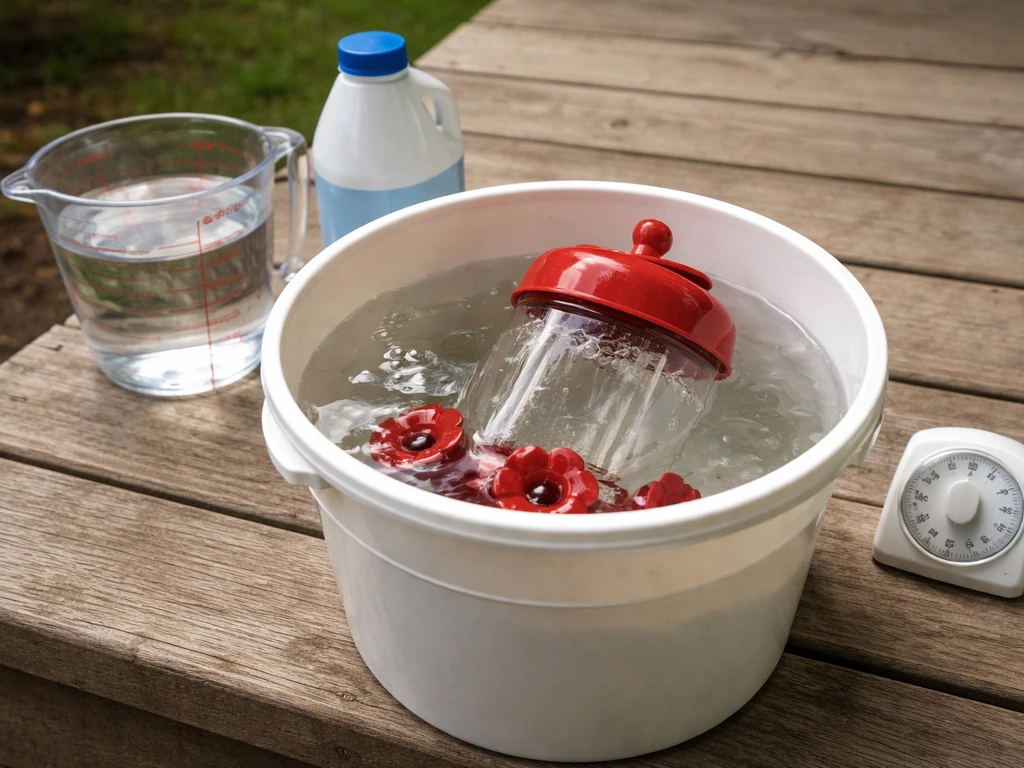
The CDC recommends soaking bird feeders in a diluted bleach solution of 9 parts water to 1 part bleach for at least 10 minutes. The Minnesota DNR gives a similar ratio: 2 ounces of bleach per gallon of water. Scrub all surfaces, paying attention to crevices where seed or sauce residue can collect, and keep the feeder visibly wet with the solution for the full contact time. Rinse thoroughly with clean water and let it dry completely before adding fresh seed. A quick rinse under a tap will not remove capsaicin residue reliably, and any leftover residue continues to contact bird tissue with every visit.
- Empty all remaining seed from the feeder and discard it
- Rinse the feeder with plain water to remove loose residue
- Mix a bleach solution: 9 parts water to 1 part unscented bleach (or 2 oz bleach per gallon of water)
- Submerge or thoroughly coat all feeder surfaces and let soak for at least 10 minutes, keeping surfaces visibly wet
- Scrub with a dedicated brush, including ports, perches, and the feeder base
- Rinse completely with clean water until no bleach smell remains
- Allow the feeder to air dry fully, ideally in sunlight, before refilling
- Clean the ground or tray area below the feeder, removing any seed or sauce-contaminated debris
Check for mold before you call it done
If the hot sauce-treated seed sat in the feeder for more than a few hours, especially in warm or humid conditions, inspect both the feeder interior and any seed on the ground for visible mold. The Minnesota DNR notes that mold and bacteria can form on wet birdseed quickly in wet weather. Any seed that looks clumped, discolored, or smells sour should be treated as a contamination risk and discarded. If you see black mold inside the feeder, repeat the bleach soak before refilling.
Species and household safety considerations
Not all birds are equally robust. Ground-feeding species like doves, towhees, and juncos spend more time in contact with contaminated seed or seed debris than perch-feeders, because they pick directly from the ground where residue concentrates. If you used hot sauce and some of it dripped to the ground, those species face the highest exposure. Similarly, fledglings being fed by parents at or near a feeder are more vulnerable than adult birds with established foraging habits.
For households with children or pets, capsaicin residue on feeder surfaces, poles, and the ground below feeders is a real contact hazard. NPIC rates capsaicin as very irritating to skin and eyes. A dog that sniffs around a contaminated feeder area or a child who touches a pole and then rubs their eyes will have an unpleasant experience. This is another reason the full clean-and-dry protocol matters, not just for the birds but for everyone sharing the yard.
If you are in a region with significant wildlife activity, such as bears in the American Southeast, Pacific Northwest, or parts of the Northeast, be aware that strong food odors from hot sauce can attract curious animals. Spicy scents do not reliably deter bears the way capsaicin spray does when used defensively at close range. A hot sauce-scented feeder is more likely to attract investigation than discourage it.
Signs it's time to stop and start over
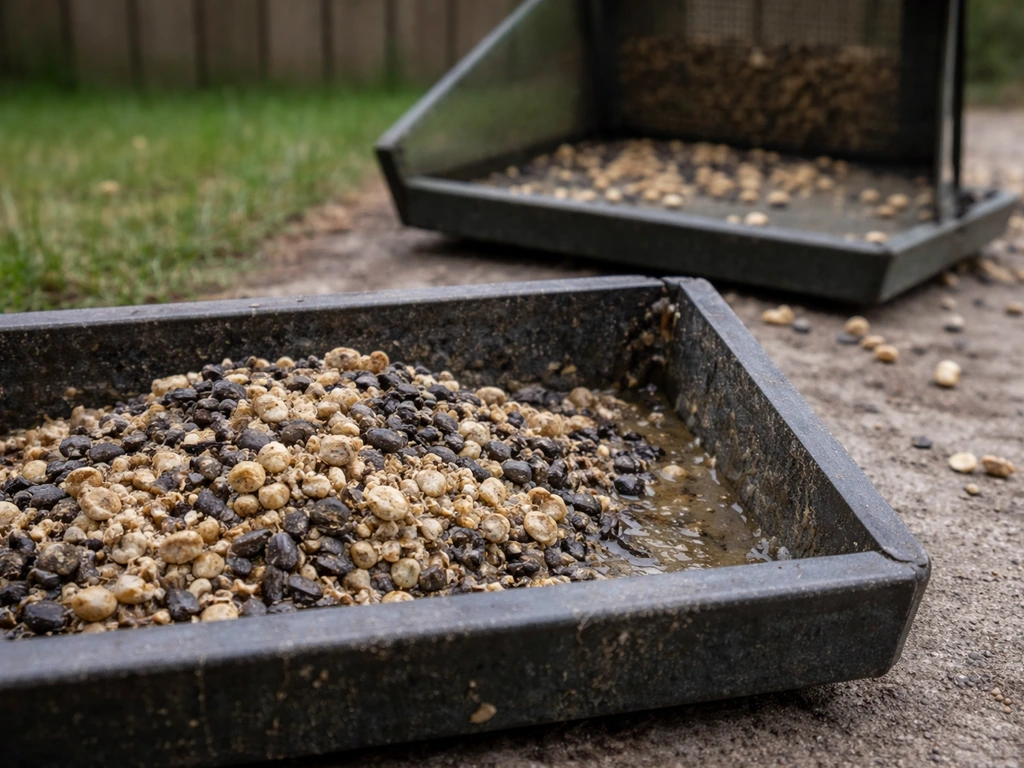
Stop using any capsaicin-based approach on seed and take the feeder down temporarily if you notice any of the following:
- Seed is visibly clumped, discolored, or smells fermented or sour after treatment
- Birds that normally visit are avoiding the feeder or leaving immediately after landing
- You see birds shaking their heads repeatedly, rubbing their beaks on branches, or showing watery eyes near the feeder
- Mold appears on seed inside the feeder or on the ground below within 24 to 48 hours
- Insects (especially flies or ants) are swarming the feeder more than usual, attracted by the sugars and acids in the sauce
- The feeder surface feels sticky or coated after the seed is removed, indicating residue buildup
Project FeederWatch recommends cleaning feeders every two weeks under normal conditions and more often during heavy use or warm, damp weather. If you have used hot sauce, treat the cleanup as an emergency cleaning rather than a routine one, follow the full bleach-soak protocol above, and give the feeder a full dry before refilling. Going forward, keep a maintenance schedule and let physical deterrents and seed selection do the pest control work instead.
FAQ
If I accidentally put hot sauce on bird seed, can I just let it dry and use it again?
No. If the seed or feeder got wet from hot sauce, it is treated as contaminated and spoilage-prone. Drying it later does not remove capsaicin and vinegar residue reliably, and mold can already have started forming. The safest move is to discard the seed and do a full clean and dry before refilling.
What’s a safer alternative if I want a capsaicin deterrent but not the wet-seed risk?
Use dry, pre-coated dry capsaicin seed or add dried chili/cayenne powder to dry seed in small amounts. This avoids liquid wetting, which is the main driver of fast mold and bacteria growth. Still, note that capsaicin approaches can irritate birds if they get residue in eyes or nasal passages, so avoid heavy coating.
What should I do right now if I see birds eating hot-sauce-coated seed at the feeder?
If the birds are actively feeding, you can still reduce exposure. Stop serving that batch immediately, remove the feeder, and throw away any remaining treated seed (and any seed spilled on the ground that got sauce residue). Then run the full bleach-soak cleaning and fully dry before putting out fresh, dry seed.
How can I tell whether the treated seed has become unsafe?
Watch for clumping, sour or “fermented” smells, discoloration, or visible fuzzy growth inside the feeder or on spilled seed. If you notice black mold on feeder surfaces, repeat the bleach soak before refilling. If you do not see mold but the seed was in place for hours in warm or humid conditions, it is still safest to discard.
Is there a risk to pets or children from hot sauce on bird feeders?
Yes, but in a specific way. Hot-sauce residue can leave lingering irritation on feeder poles, trays, and the ground where drips fall. For families with kids or pets, keep them away from the feeder area until after you have cleaned with the full bleach protocol and the surfaces are completely dry.
Do ground-feeding birds have higher risk if hot sauce dripped to the ground?
Yes. Some species (like doves and other ground feeders) get more contact with spilled debris on the ground. If sauce dripped or seeded ground coverage occurred, those birds can have higher exposure. If you are targeting a particular feeder species, recognize that capsaicin does not selectively deter only the birds you dislike.
Why isn’t a quick rinse enough to clean a feeder after using hot sauce on seed?
A quick rinse is not enough. Residue from capsaicin and vinegar can persist in crevices, and leftover residue can keep contacting birds each time they visit. Use the diluted bleach soak for the full contact time, scrub crevices, rinse thoroughly, then let the feeder dry completely.
Does capsaicin in hot sauce actually repel birds I want to attract?
Species variation matters, and birds are generally less affected than mammals by capsaicin as a deterrent, but they are not unaffected by irritation. If your goal is to stop one pest animal type, capsaicin will also affect non-target species because it cannot distinguish between bird types. That makes mechanical and placement-based solutions a better first choice.
If it was only out for a few minutes, can I keep using the same seed?
If the treated seed sat for only a short time, you still should not reuse it. The spoilage and contamination risk can begin within hours in warm or humid weather, and the residue remains a contact hazard. Discard the batch and clean the feeder as described, then refill with fresh dry seed.
I’m trying to stop squirrels, is hot sauce the best approach?
Hot sauce can help for squirrels in some cases, but it is an unreliable delivery method and it adds wetting and residue problems. If squirrels are the issue, baffles, correct mounting distance from launch points, and reducing spilled seed are usually more effective and safer than any spicy coating.
Next Article
Does Hot Bird Seed Work? When to Warm vs Replace Seed
Yes, hot bird seed can help with dry seed in cold weather, but replace wet or moldy seed to avoid risks.