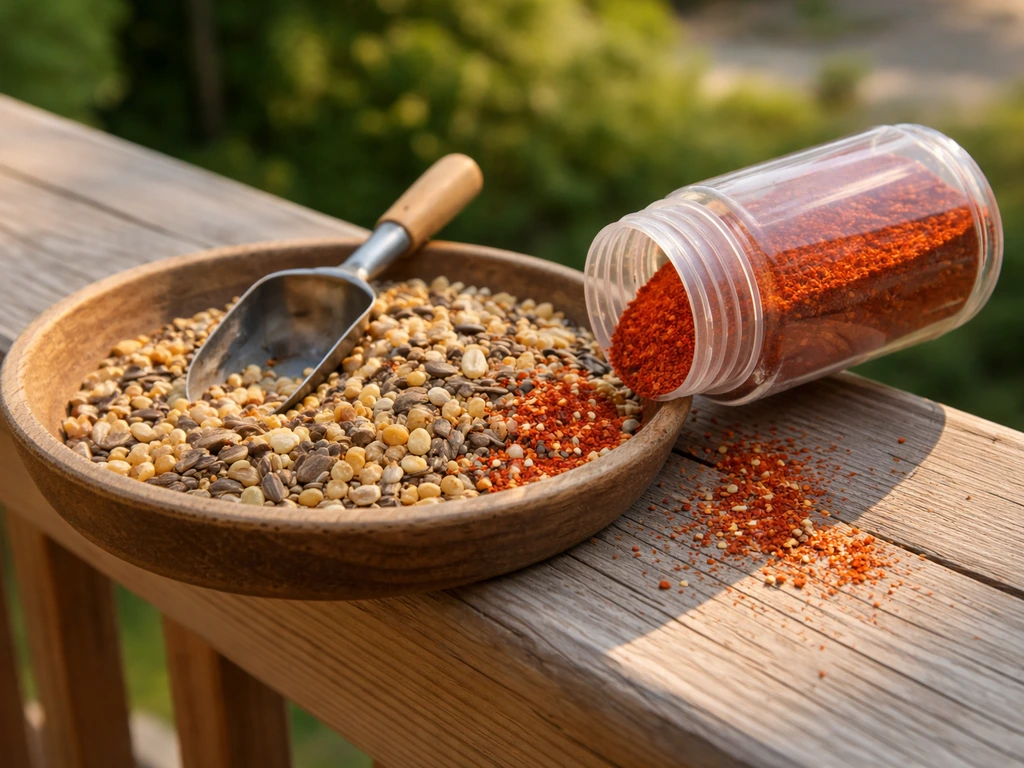
Cayenne pepper will not reliably keep rats away from bird seed. Rats can detect capsaicin and will avoid it at high concentrations in controlled lab settings, but in a real backyard situation they are hungry, motivated, and often have no better food option nearby. That combination means they push through the irritation, especially once rain, humidity, or seed turnover dilutes the powder. It is worth trying as one layer of deterrence, but if you are dealing with an active rat problem at your feeder, pepper alone is not going to solve it.
Will Cayenne Pepper in Bird Seed Keep Rats Away? What Works

Maya Collins
22 Jun 2026
Does cayenne pepper actually deter rats from bird seed?
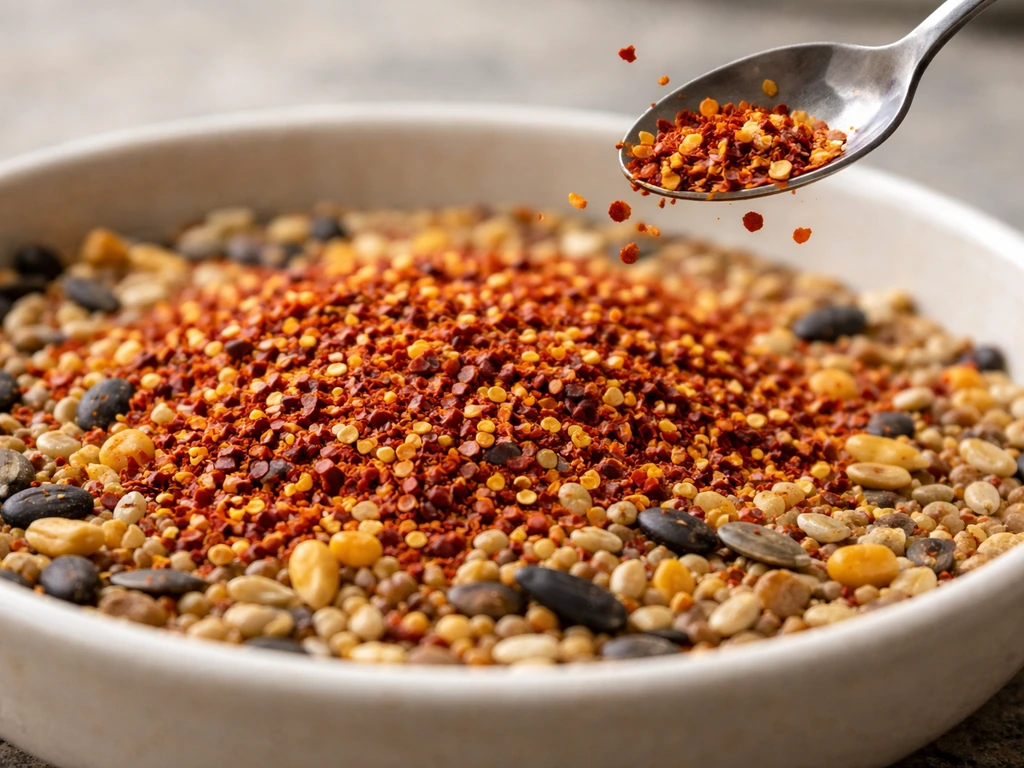
The idea makes sense on paper. Capsaicin, the compound that makes cayenne hot, irritates the mucous membranes in a rat's mouth, nose, and eyes. Research confirms that rats do show concentration-dependent avoidance of capsaicin in oral trials, taking fewer tastes and pulling back from treated feed when given a choice. A 2003 field evaluation on farms found that rodent consumption of capsaicin-treated poultry feed was meaningfully lower than untreated controls. So far, so good.
Here is where it breaks down: that same study found that when Norway rats were offered a choice between capsaicin-treated feed and a rodenticide bait, they preferred the bait. The deterrence was real but incomplete, and it depended heavily on what alternatives were available. A rat with no other food source in the yard will tolerate a lot of irritation to get to your seed. Weather makes it worse. Even a single rain shower or heavy dew will wash cayenne off seed surfaces and reduce the concentration dramatically. If you are topping off your feeder every few days without re-coating, the deterrent effect is essentially gone.
The Internet Center for Wildlife Damage Management is direct about this: cayenne in bird seed does not always work, even for squirrels, which are far less motivated than a rat that may be nesting nearby. If you are wondering whether everything seasoning or spicy blends work the same way as this cayenne approach, the answer depends on the exact ingredients and how the seed is handled bird seed. Treating this as a reliable fix will cost you time while the rat population at your feeder keeps growing.
How rats interact with feeders, and what pepper cannot stop
Rats are not just eating from the feeder. They are doing something that cayenne cannot touch at all: scavenging fallen seed from the ground beneath it. Most feeders spill constantly. Birds toss seed they do not want, and hulls and fragments accumulate into a reliable ground-level buffet. A rat may never even touch your capsaicin-coated seed in the feeder itself. It just waits underneath, eats whatever falls, and you never solve the problem.
Rats are also neophobic, meaning they are cautious around new things, but they habituate quickly. A rat that gets a nose twitch from capsaicin on day one is often back at the same spot by day three, especially if that location has become familiar and the irritant concentration has dropped. They also communicate through scent trails. If one rat found food there before, others follow the same paths even if conditions change slightly.
Compare this to squirrels, which are the pest cayenne is most commonly recommended for. Squirrels are more sensitive to capsaicin, less tolerant of persistent irritation, and have more alternative food options nearby. They are more likely to simply leave and forage elsewhere. Rats, especially Norway rats or roof rats living close to a structure, are operating in a smaller territory with fewer alternatives and more urgency. That is a fundamentally different behavioral profile, and it is why a deterrent that works on squirrels often fails on rats.
Safety for birds, pets, and people when using spicy powders
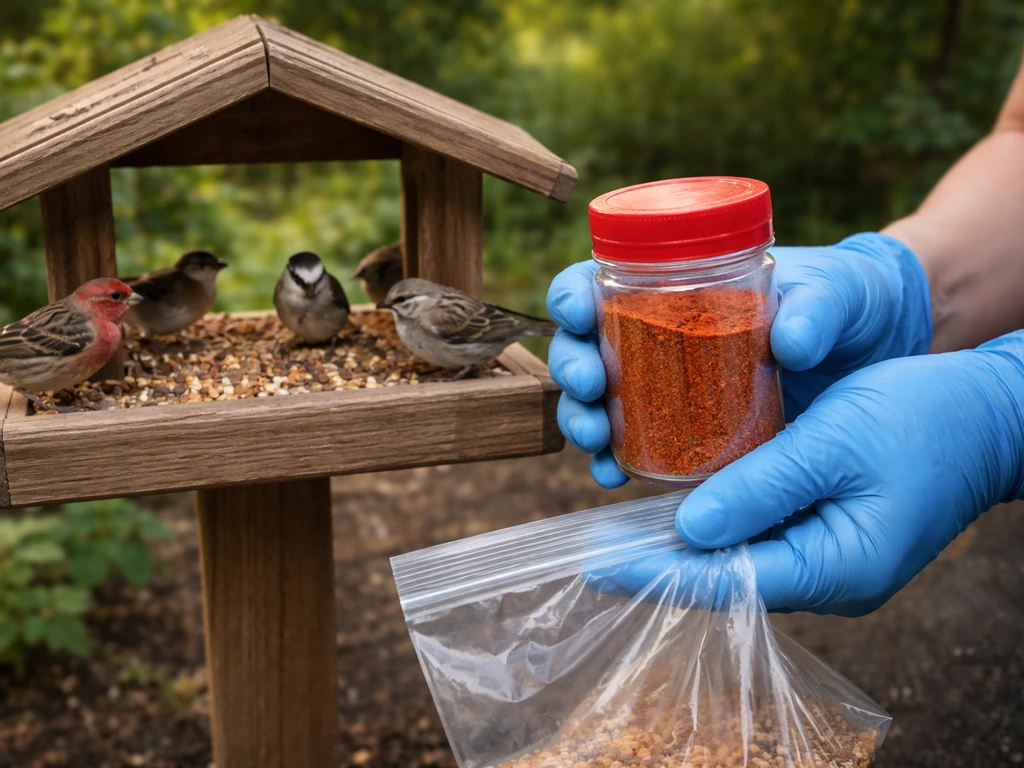
Birds do not feel the burn from capsaicin the way mammals do. They lack the specific receptor that capsaicin binds to in mammals, which is why hot pepper bird seed products are marketed as bird-safe. That part is legitimate. Birds at your feeder will not be harmed by cayenne-coated seed in the way a mammal would be.
The concern is with you, your pets, and any wildlife that is not the target. Capsaicin dust is genuinely irritating to skin, eyes, and the respiratory tract. According to NPIC (Oregon State University's National Pesticide Information Center), capsaicin exposure can cause temporary blindness, tearing, burning pain, nasal irritation, coughing, and in higher exposures, bronchoconstriction. According to NPIC’s Capsaicin Technical Fact Sheet, blank" rel="noopener noreferrer">capsaicin exposure can cause temporary blindness, tearing, burning pain, nasal irritation, coughing, and bronchoconstriction in higher exposures. Pouring or mixing cayenne powder outdoors on a windy day can send that dust into your own face or onto your dog. If you are also wondering how much chili powder to use, the right amount depends on whether you are coating seed or mixing it into a blend. Cats, dogs, and rabbits that might nose around under your feeder can get capsaicin in their eyes or on their paws.
If you do use cayenne or red pepper flakes in your seed, mix it outdoors away from pets and children, wear gloves and eye protection, and avoid doing it on windy days. Wash your hands thoroughly before touching your face. When cleaning up pepper-treated seed spills under the feeder, wear a dust mask and damp the area down first to keep particles from becoming airborne. These are not dramatic precautions, just practical ones.
It is also worth knowing that beneficial wildlife like hedgehogs (in some regions) or ground-feeding birds can be affected by high concentrations of capsaicin on spilled seed. If you have ground-feeding species you want to protect, concentrated pepper treatments at the base of your feeder can be counterproductive.
Rodent-proof feeding: what actually works
Physical exclusion and station design are the only things that produce reliable, lasting results with rats. Think of cayenne as maybe reducing casual exploration, but think of the steps below as actually solving the problem. If your goal is to keep rats away, adding hot sauce or cayenne bird seed may reduce casual exploration, but exclusion and feeder-proofing are what actually stop repeat visits.
Feeder height and pole placement
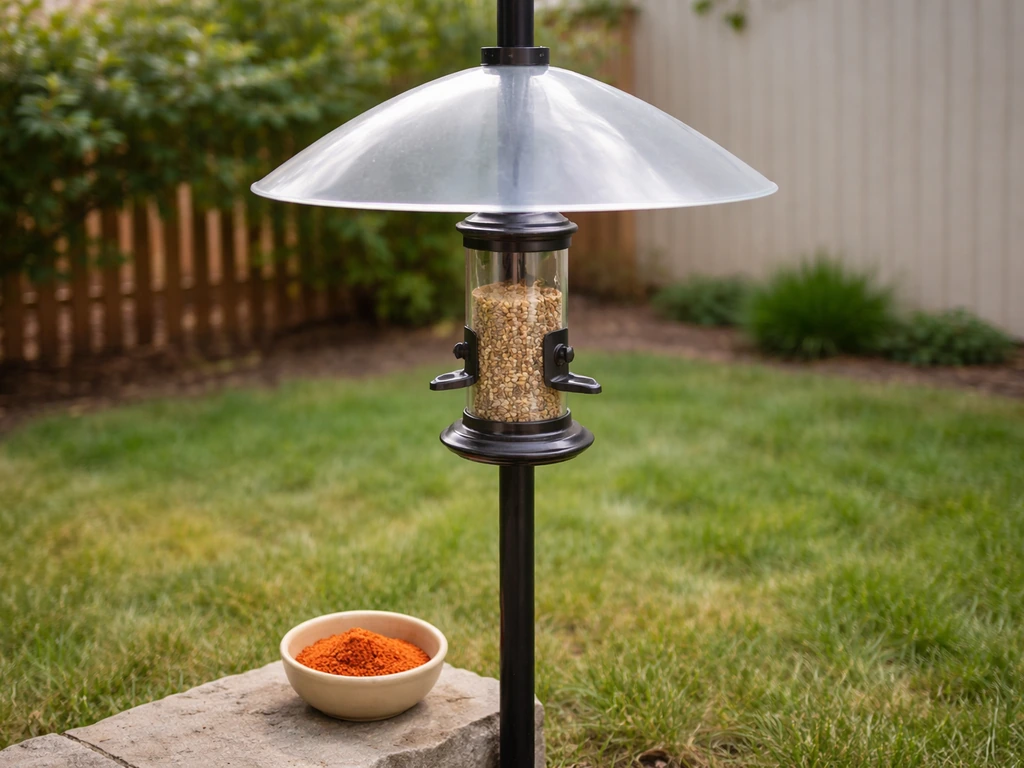
Mount your feeder on a smooth metal pole at least 5 feet off the ground. Rodent-proof feeding tips like using a smooth metal pole are a strong adjacent option, even if hot bird seed deterrence is unreliable. Rats are excellent climbers but struggle with smooth metal. Keep the feeder at least 10 feet from any fence, tree branch, roof edge, or structure they can jump from. If your feeder is hanging from a tree or close to a wall, rats can reach it without ever touching the pole.
Baffles
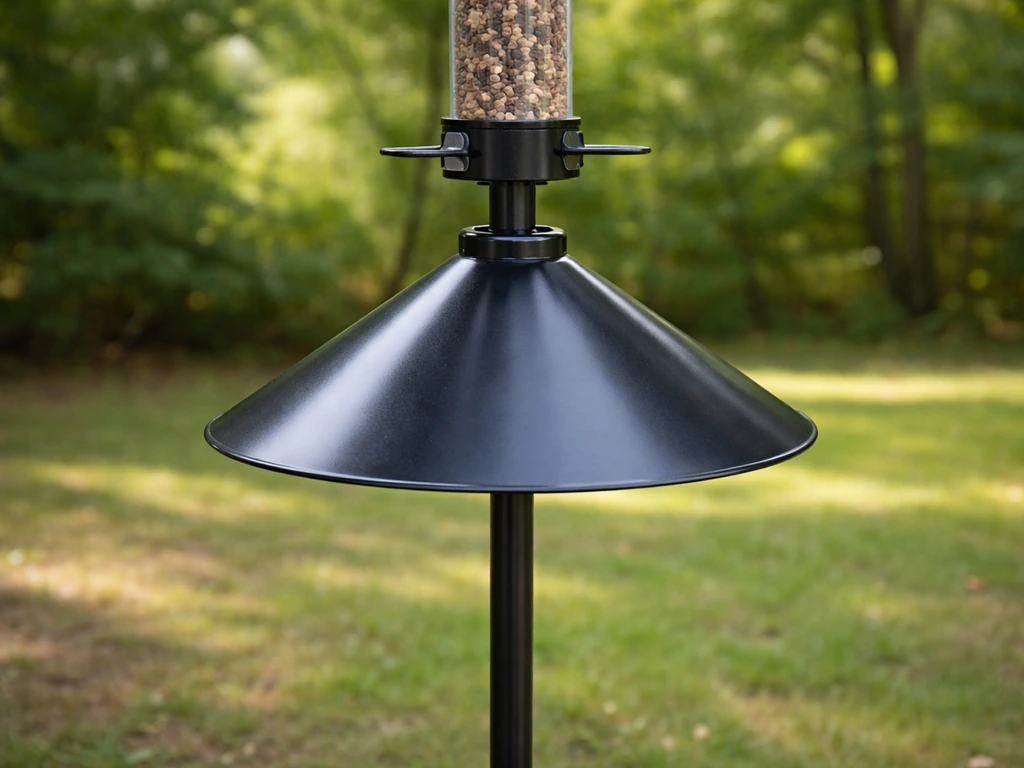
A cone or cylinder baffle mounted on the pole below the feeder is one of the most effective single upgrades you can make. A baffle needs to be at least 18 inches in diameter and positioned so its bottom edge is at least 18 inches above the ground. Rats that try to climb the pole hit the baffle and cannot get past it. Make sure the baffle is tight enough against the pole that they cannot squeeze around the edge.
Feeder design choices
Tube feeders with small ports and weight-sensitive perches are better than platform or open tray feeders for rodent management. Avoid feeders that allow large amounts of seed to sit exposed in a wide tray. If you use a tray, look for one with drainage holes and use it with a catch tray beneath it rather than letting seed fall freely to the ground.
Seed management: spills, wet seed, and what rats are really attracted to
The ground beneath your feeder is often a bigger draw than the feeder itself. Cleaning up fallen seed is not optional if you have active rat activity. Rake or sweep the area under and around your feeder every day or two until activity drops, then maintain a weekly schedule. Do not let hulls and seed fragments accumulate, as they compact into a dense mat that both feeds rats and creates harborage.
Wet and moldy seed is another major attractant. Seed that gets rained on or exposed to humidity ferments and grows mold, and that smell draws rats from further away than you might expect. Check your feeder after any rain and remove clumped, wet, or off-smelling seed immediately. Only fill your feeder with as much seed as birds will eat in one or two days so you are not letting it sit and go stale. If you are using spicy additives instead, check how much red pepper to add to bird seed so you do not overdo it and waste the deterrent in one or two days.
Seed blends with a lot of millet, milo, or cracked corn tend to produce more spillage because these are smaller and fall through feeder gaps easily. They are also preferred by ground-feeding birds and rats alike. Switching to larger seeds, shelled sunflower hearts, or no-mess blends that produce fewer shells can meaningfully reduce what ends up on the ground. If you currently use a blend with a lot of cheap filler, this is the first mix change to make.
Store all seed in a metal container with a tight-fitting lid, not a plastic bin or the original paper bag. Rats chew through plastic in minutes and paper bags are no barrier at all. A galvanized metal trash can with a locking lid is the minimum standard for outdoor seed storage.
Cleanup and monitoring: knowing if things are improving
Once you have made changes, you need a way to know whether they are working. Rats are most active at dawn and dusk, so check for fresh activity at those times. Signs to watch for include:
- Fresh droppings under or near the feeder (rat droppings are roughly 1/2 to 3/4 inch long, dark, and tapered at the ends)
- Gnaw marks on the feeder, pole, or storage containers
- Runways or grease marks along walls, fences, or at the base of structures near the feeder
- Disturbed soil or mulch indicating burrowing near the feeding area
- Seed disappearing overnight rather than during daylight hours when birds are active
After making changes, give it 5 to 7 days before drawing conclusions. If droppings and other activity signs are still fresh and increasing after that window, the exclusion measures are not sufficient and you need to escalate.
When to escalate
If you have cleaned up spilled seed, installed a baffle, repositioned the feeder, switched to a tighter feeder design, and secured your seed storage, and rats are still active after a week to ten days, consider taking the feeder down entirely for two to three weeks. This removes the food source completely and forces rats to move elsewhere. It sounds drastic but it is often the fastest reset, and you can bring the feeder back with better exclusion measures in place.
If you are seeing burrows near your home's foundation, chew damage on structures, or activity inside the garage or shed where seed is stored, that is no longer a feeder management problem. That is a structure-level infestation, and you should contact a licensed pest control professional. At that point, no amount of baffle adjustment or seed switching will address what has become an established colony.
One honest note: some people try cayenne as a first step because it feels like a low-cost, low-risk experiment before committing to hardware or calling a professional. There is nothing wrong with that, and it may reduce casual rat visits from animals that are less established around your feeder. Just go in with accurate expectations. The research supports mild deterrence, not elimination. Can you put cayenne pepper in bird seed? The research here points to mild deterrence, not elimination. If you want to explore capsaicin-based approaches further, you may also be wondering about red pepper flakes, hot sauce on seed, or commercially prepared spicy bird seed blends, all of which work through the same mechanism with similar limitations. The physical and management strategies above are what close the loop when those approaches fall short.
FAQ
How often would I need to reapply cayenne to make it work?
If you try cayenne anyway, treat it as a short-term experiment and reapply after rain, heavy dew, or after you notice the seed has been spilled and turned over. Without re-coating, the deterrent concentration drops quickly, especially on humid days, and rats keep feeding.
Does mixing cayenne into the seed work better than sprinkling it on top?
If you are choosing between “spicy additives,” understand that results depend on capsaicin concentration and where the pepper sits. Mixing into the seed may last longer than sprinkling on top, but any approach still fails if rats are eating fallen seed under the feeder, or if they have better food options nearby.
How can I tell if cayenne is actually deterring rats, not just delaying them?
Measure expectations by behavior, not by “smell” or “taste.” Rats may still investigate initially and come back once habituation and bait choice kick in, so look for reduced fresh droppings and fewer visits at dawn or dusk, not just a temporary pause.
Will cayenne still help if I have a lot of seed spill on the ground?
Rats generally need only small amounts of exposure to fallen seed to keep a feeder area profitable. If you do not clean up shell fragments and hulls daily, cayenne can become irrelevant because the rats are targeting the ground buffet instead of your treated seed.
My feeder is near a fence or wall, will cayenne compensate for that?
No. Cayenne can’t stop rats from reaching your feeder if they can climb a nearby tree, fence, or roof edge. If a rat can access the feeder area by a jump or along a line of sight, exclusion upgrades like a pole and baffle are what make the difference.
Are certain feeder types more compatible with cayenne?
Choose a rodent-proof setup first. If you use tray or platform feeding, you should expect more spillage, and more ground feeding. Tube feeders and designs with fewer exposed seed surfaces reduce the chance that rats bypass your deterrent entirely.
Is it safe for pets and me to handle cayenne-coated seed outside?
Yes. Even if you do not see birds affected, pepper dust can irritate your eyes and breathing, especially on windy days. Wear gloves and eye protection, avoid mixing indoors or in gusty conditions, and damp-clean any pepper-treated spills so dust does not become airborne.
What if my dog or cat tries to sniff or lick spilled seed?
If cats, dogs, or rabbits routinely approach the feeder zone, the risk is not just eating seed, it is getting pepper on paws, fur, or in eyes. Keep treated seed handling strictly controlled, and consider switching to full exclusion methods if your pets spend time under the feeder area.
When should I check for evidence that rats are still coming after I make changes?
In many cases, you can get a “false negative” if you only check during midday. Rats are most active around dawn and dusk, so evaluate fresh activity then, after 5 to 7 days of your changes, to see whether visits are truly declining.
What signs mean this is no longer just a feeder problem?
If you are seeing damage, burrows near the foundation, or activity inside a garage or shed, the problem is likely more than feeder access. At that point, pepper deterrents can waste time, and you should escalate to a licensed professional for colony-level control.
Are hot sauce or homemade spicy mixtures safer or more effective than cayenne powder?
Some “spicy” claims are really about deterrence, not safety. Avoid hot sauce or homemade mixtures that drip and create wet, sticky surfaces that can attract more attention, and avoid very fine dusting that increases airborne irritation without extending effectiveness.
Next Article
How Much Red Pepper to Add to Bird Seed Dosing Guide
Exact red pepper dosages for bird seed, safety tips, targets deterred, and cleanup and storage steps.