Yes, ants do eat bird seed. Some ant species are genuinely granivorous, meaning they actively collect and consume seeds as a core part of their diet. Harvester ants, for example, can move tens of thousands of seeds and store them in underground chambers to eat later. But most of the ants you see swarming around your feeder are generalist scavengers attracted to the whole package: oily seed residue, spilled hulls, sugary droppings, and any insects that happen to be near the feeding area. So the short answer is yes to both questions you might be asking. Ants eat bird seed, and ants are strongly attracted to bird seed even when they are not consuming the seeds directly.
Do Ants Eat Bird Seed? How to Stop Ants at Feeders

Maya Collins
17 Apr 2026
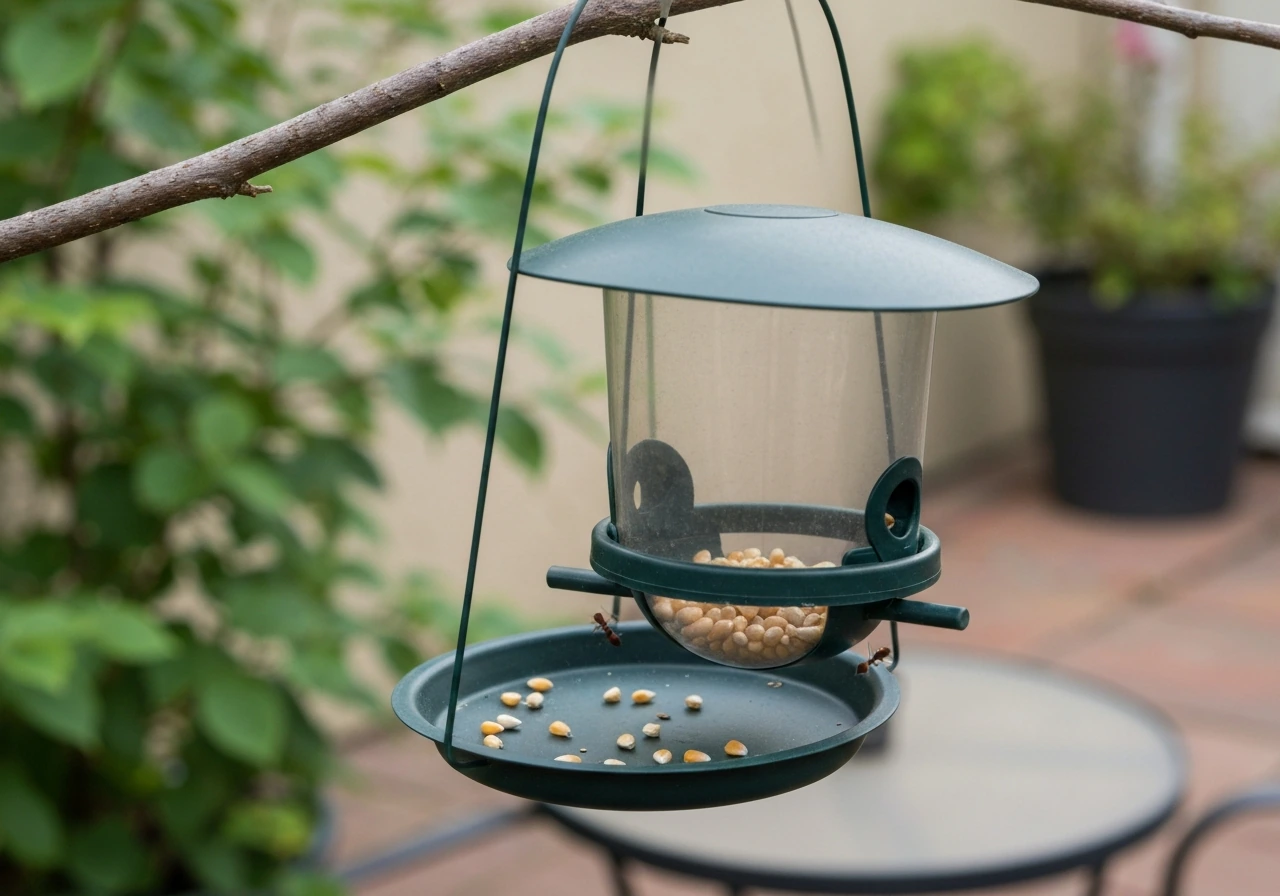
Eating or just attracted? Here's the real distinction
Granivorous ants, like harvester ants common in drier regions, are the ones most likely to be physically removing and consuming whole seeds. They are drawn to small, unprotected seeds with high nutrient content, and research from the University of Arizona confirms that seed size, weight, and digestibility all influence which seeds these ants prefer. If you live in the Southwest or a drier part of the country and you see ants carrying whole seeds away from your ground feeding area, that is true seed predation.
The ants you see in wetter or more temperate climates are more likely opportunistic feeders. They are not after the whole sunflower seed. They want the oils and fats left behind on hulls, the millet or milo dust at the bottom of a tray, the spilled suet crumbles, and the sugary residue from fruit-based mixes. These ants are a problem not because they are depleting your seed supply, but because they contaminate it and can drive birds away from the feeder entirely. Both types are worth stopping.
Signs that ants are actually the issue
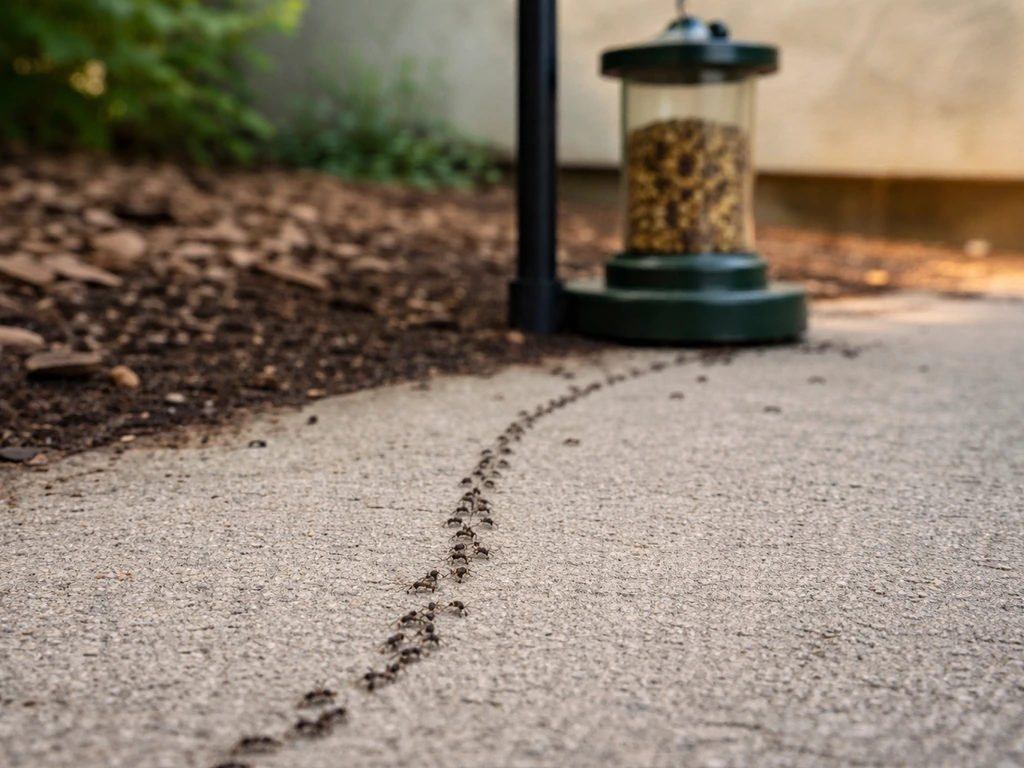
Before you change your whole setup, take five minutes to confirm ants are the real culprit. Here is what to look for:
- Visible ant trails leading from the ground or a nearby structure up a pole, shepherd's hook, or hanging wire to your feeder
- Ants clustered inside the seed tray or feeder ports, especially in the corners where seed dust and oil accumulate
- Seed clumping or unusual caking at the bottom of a tray that wasn't there yesterday, which can happen when ants deposit debris or moisture while foraging
- Birds avoiding a feeder they normally use heavily, sometimes a sign that ants have taken over the feeding surface
- Ant colonies or mounds within 10 to 15 feet of your feeder pole, since harvester ants in controlled seed-tray experiments show clear spatial foraging patterns based on distance from the nest
- Seed disappearing from ground level faster than birds could account for, especially overnight
If you see a single ant now and then, it is probably just scouting. If you see a defined trail or a cluster inside the feeder, you have an active foraging problem and it is worth acting on now.
Which bird seeds attract ants most, and why
Not all seed is equally attractive to ants. The seeds and mixes most likely to draw ant activity are the ones highest in fats, oils, or simple sugars, and the ones that create the most debris on the ground below the feeder.
| Seed or Food Type | Why Ants Are Attracted | Ant Risk Level |
|---|---|---|
| Suet and suet cakes | High animal fat content, energy-dense, fragrant | Very High |
| Black oil sunflower seed | Rich in oil; dropped hulls accumulate fast below feeder | High |
| Mixed filler-heavy blends (milo, red millet, wheat) | Birds reject filler and knock it to the ground, creating a debris pile | High |
| Nyjer (thistle) seed | Small and easy to carry; oil content is moderate | Moderate |
| Safflower seed | Hard shell deters some ants; lower oil spillage | Low to Moderate |
| Peanuts and peanut-based mixes | High fat and protein; very attractive to scavenging ant species | High |
Suet is probably the single biggest ant magnet you can put outside. It is rendered animal fat, and ants can smell that from a distance. Black oil sunflower is also a consistent draw, not because ants love the seed itself, but because the hulls pile up under the feeder and create a layer of oily debris that is easy for ants to exploit. Filler-heavy mixed blends make the problem worse: birds pick out what they want and toss the rest, so you end up with a growing pile of rejected milo and millet at ground level. Wild Birds Unlimited recommends blends with a high percentage of black oil sunflower specifically because they generate less filler waste, which matters for ant prevention too.
Fix it today: cut off ant access and clean up spills
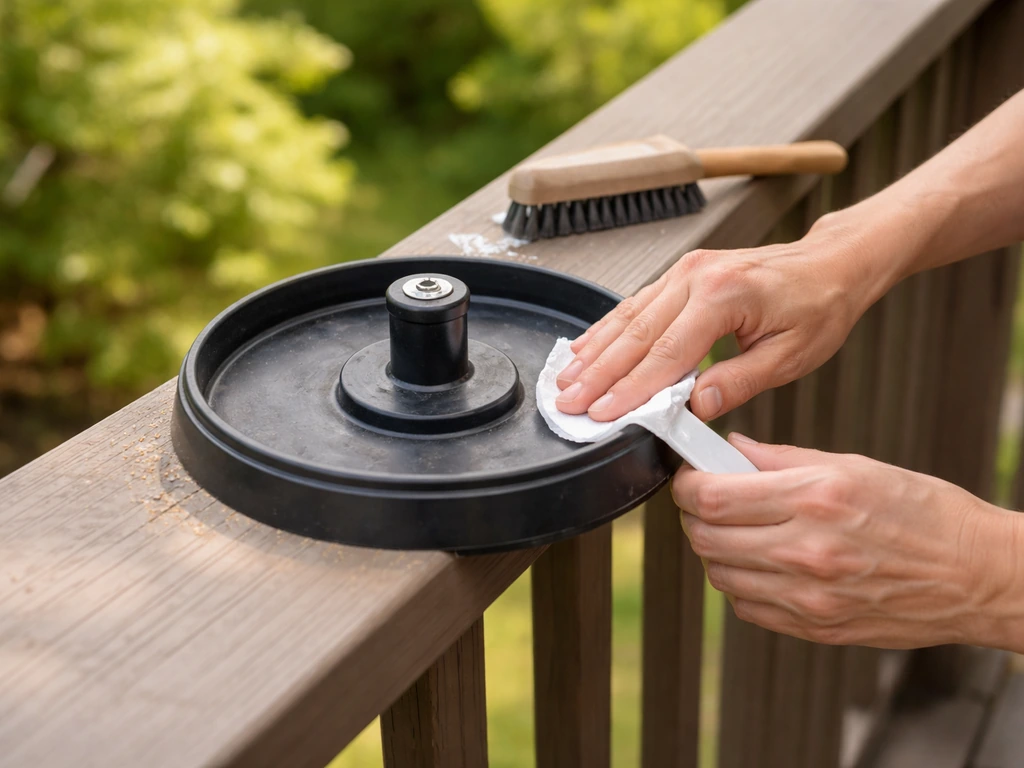
If you have an ant problem right now, the fastest fix is a combination of physical exclusion and removing the food source they are already using. Here is what to do today, in order.
Install an ant moat on hanging feeders
An ant moat is a small water-filled cup that mounts between the hanging wire and the feeder. Ants cannot cross standing water, so they stop at the moat and cannot reach the seed. In r/Birdfy, people commonly discuss an “ant moat” or water-moat approach to block ants from reaching feeder seed blank" rel="noopener noreferrer">ant moat or water-moat approach. You can buy a ready-made moat for a few dollars, or make one from a small plastic bottle cap with a hole drilled through the center. Georgia DNR recommends both approaches as a non-chemical ant barrier. Fill the moat with plain water and check it every couple of days, especially in hot weather when it evaporates quickly. Nebraska Extension guidance also specifically calls out ant moats as a recommended barrier tool for feeders on poles and hanging setups. Do not use petroleum jelly or grease on the hanger wire. It can get on bird feathers and impair their ability to preen properly.
Mount pole feeders with a baffle
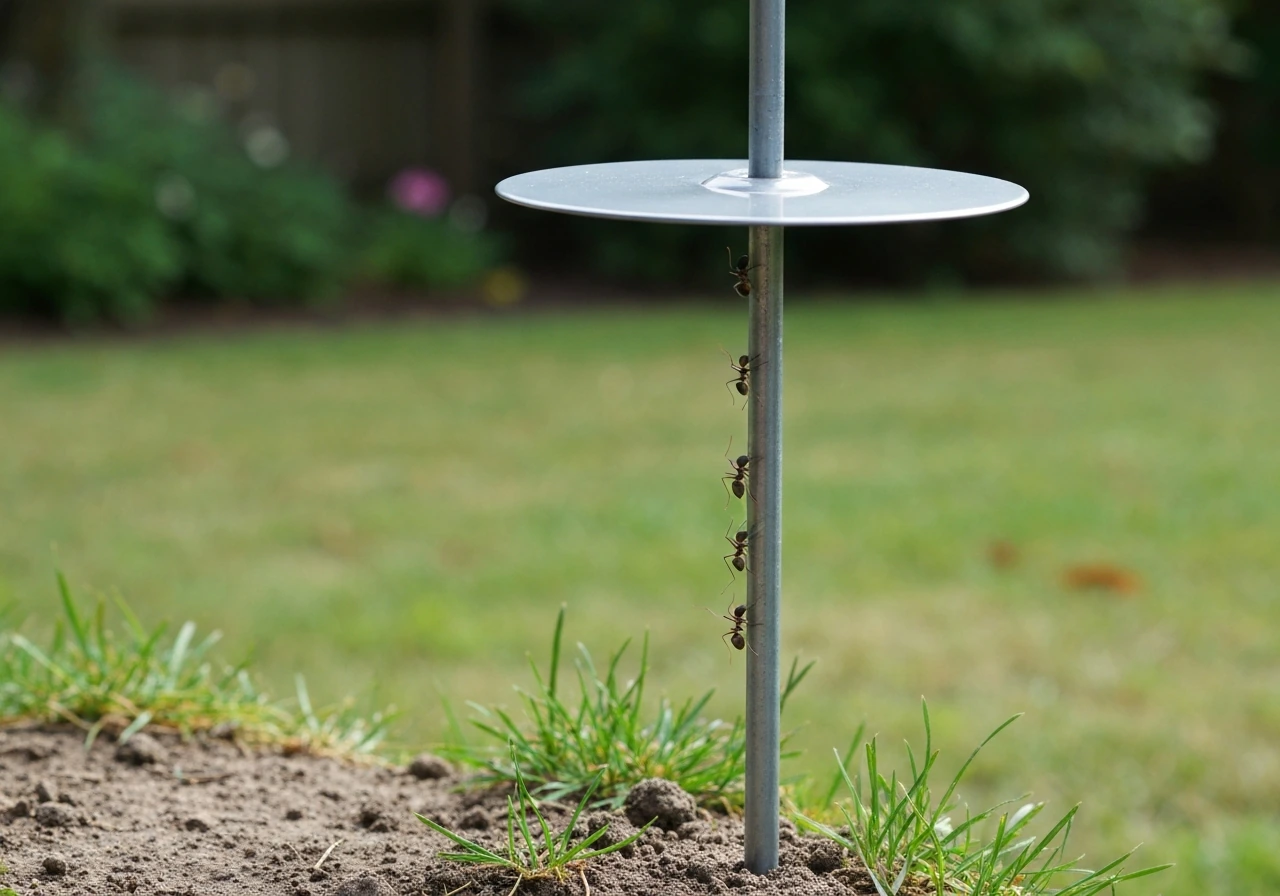
For feeders on a pole, a smooth metal or plastic baffle mounted about 4 to 5 feet up the pole stops ants (and squirrels) from climbing. Make sure the pole is not touching any fence, branch, or structure that ants could use as a bypass route.
Clean up spilled seed immediately
Rake or sweep up everything beneath the feeder today. CSU Extension also advises cleaning up spilled seed promptly because spilled birdseed attracts more than birds, so you should place and handle seed to prevent it from getting thrown to the ground blank" rel="noopener noreferrer">rake or sweep up everything beneath the feeder today. blank" rel="noopener noreferrer">Penn State Extension advises only putting out as much seed as birds can eat in a single day, specifically because excess and spilled seed create pest conditions. If you have a big debris pile under your feeder, that is your ant's current food source. Remove it and you break the cycle. Use a small dustpan and dispose of the hull debris in a sealed bag or compost bin away from the house.
Switch to a tray with drainage holes
If you are using a flat or low-sided tray without drainage, seed and hull debris collect in the bottom and get wet, which accelerates spoilage and attracts more ants. A tray with mesh or holes lets moisture drain through so the surface stays cleaner between refills.
Consider a no-mess seed blend
Hulled or shelled seeds leave significantly less debris under the feeder. Hulled sunflower chips, for example, are eaten whole and leave almost no shell litter. Yes, they cost more, but they dramatically reduce the ground-level debris that ants are drawn to.
Check your seed storage right now
Ants inside your seed bin or storage container are a sign of a storage problem, not just a feeder problem. Wet, sprouted, or moldy seed is one of the most reliable ant attractants you can create in your backyard, and it is one that most people overlook.
Penn State Extension is direct on this: store bird seed in a cool, dry place, and if seed becomes moldy, do not use it. Wild Birds Unlimited adds that you should immediately discard any seed that smells rancid or foul. Mold and fermentation produce compounds that are highly attractive to ants, and once you have ants in a seed bin, the bin itself is contaminated and needs to be emptied and cleaned before you refill it.
Here is how to inspect your seed storage today:
- Open the container and smell it. Fresh seed smells nutty and mild. Rancid seed smells sour, musty, or like old oil.
- Look for clumping. Seed that sticks together in masses has gotten wet at some point and is either sprouting or molding.
- Check for visible mold, which looks like gray, green, or white fuzzy patches, especially at the bottom of the bin.
- Look for ants, larvae, or other insects inside the container. If you see any, the seed needs to go.
- If the seed passes all of these checks, transfer it to a clean, airtight metal or hard plastic container. Metal is harder for rodents and ants to chew through.
- Only buy as much seed as you will use within 2 to 4 weeks during warmer months. In cool, dry winter conditions you can stretch that to 6 to 8 weeks.
It is also worth thinking about other visitors that show up when seed storage gets sloppy. Roaches can also be drawn to bird seed, especially in humid conditions where seed is stored improperly or spilled seed sits near a structure overnight. Ants and roaches often respond to the same root causes, so fixing your storage setup addresses multiple pest problems at once.
Cleaning routines that stop ants from coming back
A single cleanup gets you some relief, but ants will come back if the food source reappears. The goal is to make the area around your feeder consistently unattractive to foragers.
- Sweep or rake beneath the feeder every 2 to 3 days during active ant season (spring through early fall)
- Wipe down the feeder tray, ports, and exterior with a diluted white vinegar solution (1 part vinegar to 4 parts water) weekly. This removes oil residue and disrupts the scent trails ants use to navigate back to a food source
- Deep-clean the entire feeder at least once a month with a 9-to-1 water-to-bleach solution, then rinse thoroughly and let it dry completely before refilling
- Change out seed in the tray every 1 to 2 days in warm weather rather than topping off old seed with new. Old seed at the bottom gets oily and compacted
- Move suet feeders to a shaded spot and check them every 2 days. Suet melts and drips in warm weather, and drips on the ground are a direct ant attractant
- Trim any grass, weeds, or ground cover within 12 inches of your feeder pole, as dense vegetation provides cover for ant colonies and foraging routes
Expect ant activity to drop noticeably within 3 to 5 days of removing the food source and installing an ant moat or baffle. Forager ants return to where food was, so there may be lingering activity for a few days even after you have cleaned everything up. Stay consistent with the cleanup routine through that window and you should see the trail disappear on its own.
Safe ant control near bird feeders
Physical exclusion and cleanup should be your first line of defense. But if you have a large colony nearby and exclusion alone is not cutting it, here is how to handle chemical control safely around birds.
Ant baits: the safest chemical option
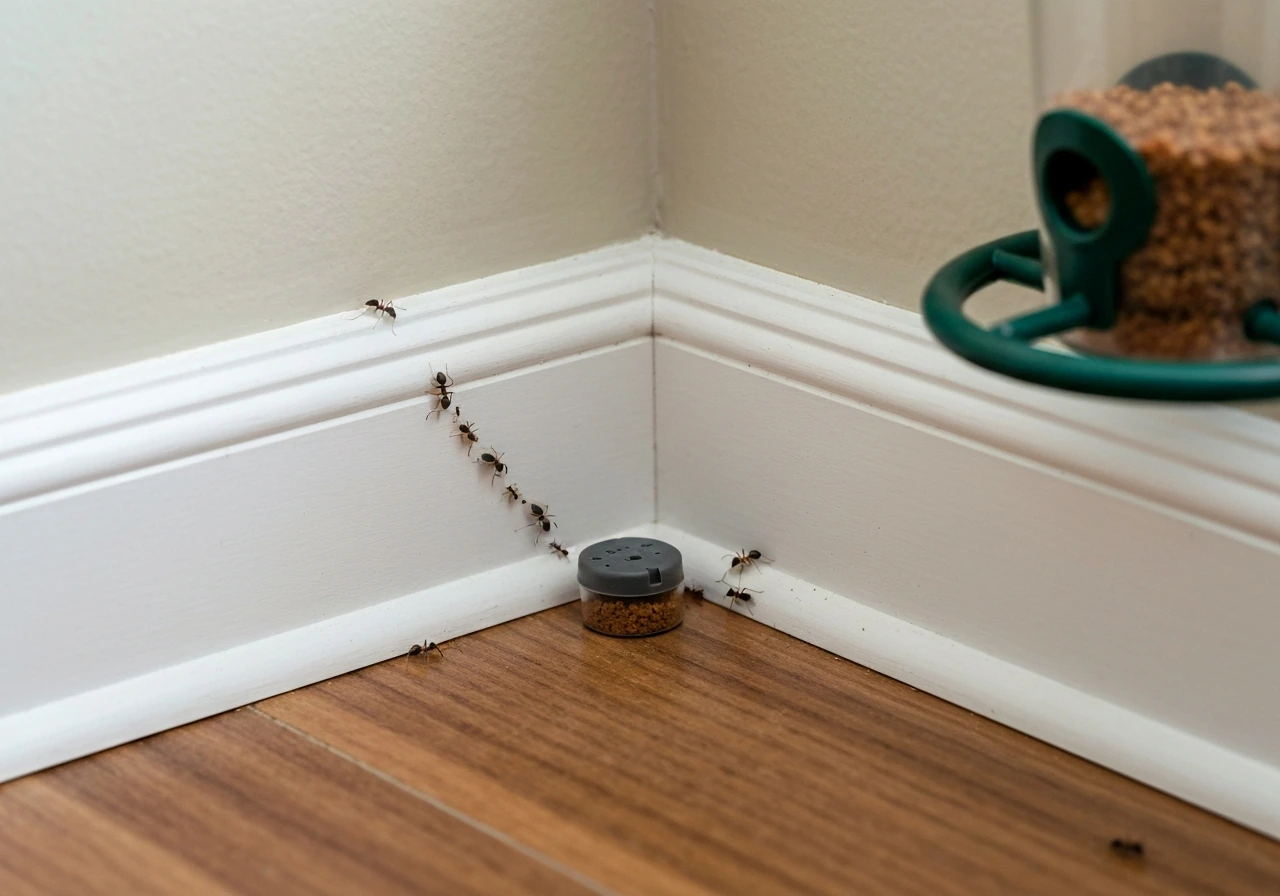
Slow-acting ant bait is the best chemical option when physical exclusion is not enough. Worker ants carry the bait back to the colony and share it, which eliminates the colony at the source rather than just killing surface foragers. The key for use near feeders is placement: put bait stations under a rock, inside a small covered shelter, or in a location birds cannot physically access. The U.S. EPA stresses following label directions for any bait product, specifically around non-target species, and integrated pest management guidance supports placing baits in enclosed areas where birds and pets cannot reach them. Never scatter bait granules openly under a feeder.
Ant guard products
For hanging feeders, you can also add a commercial ant guard, a small device that mounts between the hanger and the feeder and repels ants without chemicals that could contact the seed. Products like these are designed specifically for the seed or nectar feeder application and are a practical upgrade if you want a low-maintenance solution beyond a water moat.
What to avoid
- Spraying insecticide directly on or near the feeder, the pole, or the ground immediately under it. Even contact insecticides labeled for ants can harm birds that forage at ground level or ingest treated seed
- Petroleum jelly or sticky substances on poles or wires. These can coat feathers and interfere with a bird's ability to thermoregulate and preen
- Cinnamon, cayenne, or other home remedies applied directly to the feeder or seed. These can irritate birds' respiratory systems and are not reliably effective
- Diatomaceous earth spread near the feeder base. It is not targeted, can harm beneficial insects, and becomes ineffective when wet
A note on other insects that show up at feeders
Ants are not the only insects drawn to your seed setup. Wasps also visit bird feeders, usually drawn to the same oily residue and sugary spillage that attracts ants. If you are troubleshooting your feeder area and seeing multiple insect types, the root cause is almost always the same: spilled seed, hull debris, or improperly stored seed creating an odor plume that draws foragers of all kinds. Bees occasionally investigate bird feeders too, especially if there is fruit-based mix or fermented seed involved. Cleaning the feeder area thoroughly addresses all of these at once.
Which birds are worth protecting your feeder for
One reason it is worth solving the ant problem properly is that ant infestations can drive away birds you actually want at your feeder. Wrens do eat bird seed in certain situations and are easily spooked from feeders by heavy insect activity. House wrens in particular will visit seed feeders when their usual insect foraging is disrupted, so keeping the feeder clean and ant-free can make the difference between seeing them regularly or not at all. Less obvious visitors like swallows can also occasionally engage with bird seed setups, and swans will eat grain-based seed if you feed near water. A clean, well-managed feeder attracts the birds you want and discourages the pests you do not.
Your at-a-glance ant prevention checklist
Keep this list handy and run through it once a week during active ant season. It takes about ten minutes and prevents most repeat infestations.
- Check the ant moat or baffle: refill the moat with fresh water if it has evaporated or become dirty
- Sweep all hull debris and spilled seed from the ground beneath the feeder
- Wipe down the feeder tray and exterior with a diluted vinegar solution to break up oil residue and scent trails
- Inspect stored seed: check for clumping, mold, bad smell, or insects inside the container
- Confirm you are not overfilling: only load what birds can eat in a day
- Check suet for melting or dripping and reposition if needed
- Look for new ant trails leading toward the feeder and trace them back to locate the colony
- If trails persist after three days of cleanup, place enclosed bait stations near the colony origin point, out of reach of birds
FAQ
Why do I see ants at the feeder even when there is no seed missing?
Ants often patrol the area for oily residue, hull debris, and sugary residue from mixed foods. They may ignore intact seeds but still exploit what birds drop or spill, so missing seed is not a reliable indicator of the size of the problem.
Do ants prefer certain bird seed types over others?
Yes. Seeds that leave an oily layer or fine, easy-to-carry dust (such as millet or milo residue) typically bring more ant activity than seeds that are eaten cleanly. Changing to hulled sunflower chips or other low-debris options often reduces ant foraging within a week.
Will an ant moat work for ground feeders too?
A water moat is most effective for hanging or suspended feeders where ants must cross a gap. For ground-level setups, focus on removing the debris ring beneath the feeder and consider a baffle or feeder stand design that prevents contact climbing along nearby surfaces.
How often should I refresh the moat water?
Check every couple of days, and more often during hot weather or windy conditions where evaporation is faster. If the moat dries out even briefly, ants can resume crossing and quickly rebuild a foraging trail.
Is it safe to use grease or petroleum jelly on the hanger wire?
It can be risky. The residue can rub onto birds’ feathers and interfere with preening. If you need a barrier, use a moat or a dedicated ant guard designed for bird-feeder use instead of improvised coatings.
How can I tell if ants are being attracted to the feeder or to something nearby (like a tree or patio)?
Look for a continuous trail that leads from a nest or structure to the feeder area. If the trail starts at a nearby crack, mulch line, or tree base, cleaning only the feeder may not stop traffic until you remove the nearby food and cover entry points.
What should I do if ants are inside my seed container, not just at the feeder?
Treat it as a storage infestation. Discard or fully remove contaminated seed, empty the bin, and clean it thoroughly before refilling. After that, store seed in a cool, dry, sealed container to prevent reinfestation.
Can I just scatter less seed to solve the ant issue?
Short term, yes. Feeding only what birds can consume in a day reduces the spilled hull and residue pile that ants feed on. However, if there is already a debris layer under the feeder, you still need to rake or sweep it up first.
Do ant baffles stop squirrels as well?
Often they do. A smooth baffle mounted high enough on a pole can block both ants and squirrels from climbing, but you must ensure there are no bridges (like fence rails, branches, or nearby posts) that ants can use as bypass routes.
If I use ant bait, will it harm birds?
It can if bait is accessible. The safest approach is slow-acting bait placed in enclosed, bird-proof stations in locations birds cannot reach, and to follow the label exactly. Never scatter bait openly under or around the feeder area.
Why do ants come back after I clean up?
Foraging routes often linger even after food is removed, and scouts can continue returning until the colony abandons the location. If you maintain cleanup and barriers consistently, activity typically drops within a few days rather than immediately.
Should I treat for ants differently during wet weather?
Yes. Wet seed, spoiled seed, and damp trays increase spoilage smells and make feeders more attractive. During rainy or humid periods, prioritize draining trays (or using mesh/holed designs) and stop using any seed that shows mold or a foul odor.