Yes, bird seed absolutely attracts bears. A standard 7-pound backyard feeder holds over 18,000 calories, which is an enormous, easy meal for a bear. Once a bear finds your feeder, it will remember that location and return repeatedly, often bringing the problem back even after you've cleaned up once. The good news is that a few targeted changes to your setup, storage, and habits can cut your risk significantly starting today.
Does Bird Seed Attract Bears? How to Feed Safely

Maya Collins
18 Jun 2026
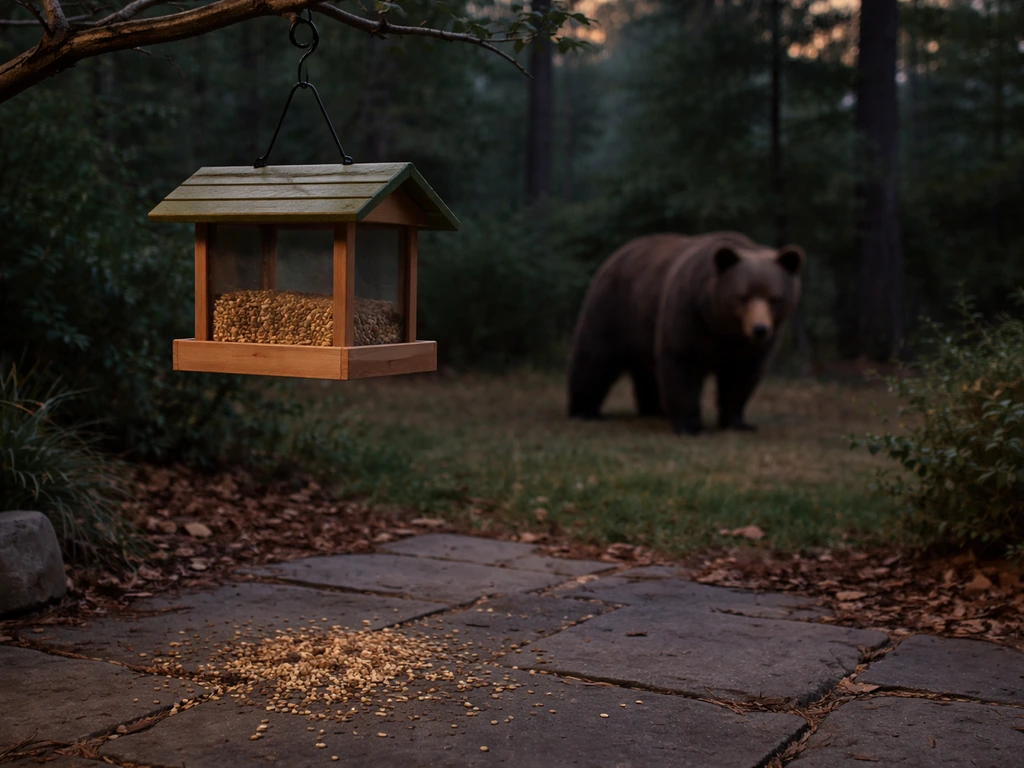
Why bears zero in on bird feeders
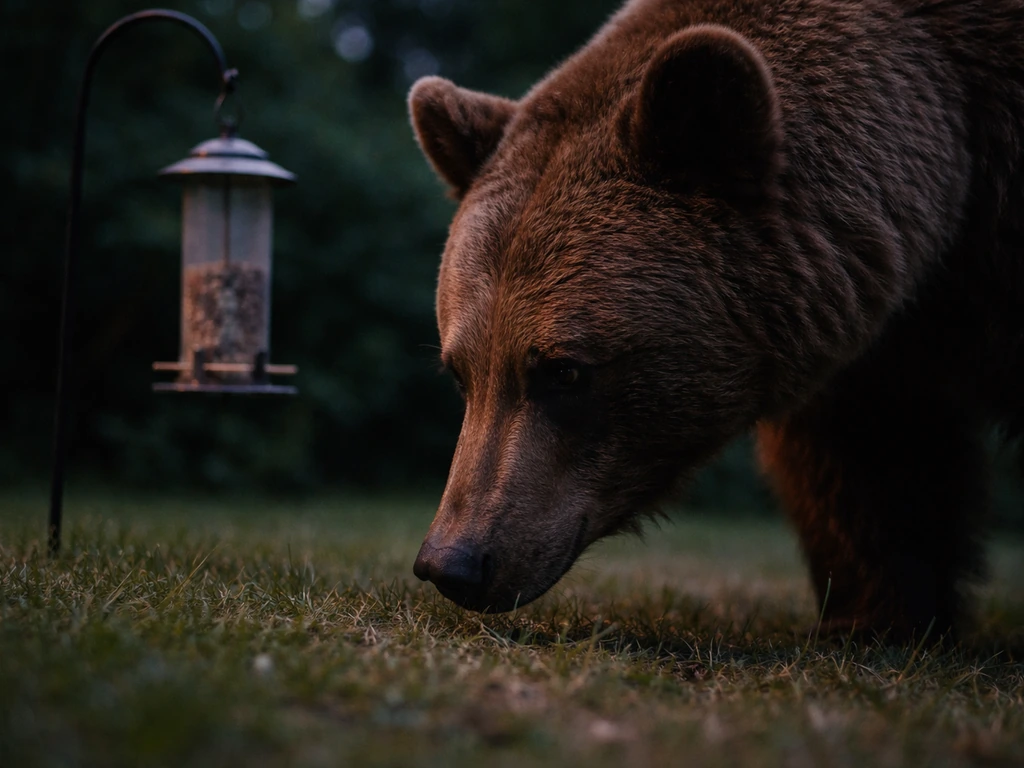
Bears have an extraordinary sense of smell, estimated to be seven times stronger than a bloodhound's. They can detect food odors from miles away, which means even a small amount of spilled seed on the ground, a rancid suet cake baking in summer heat, or a poorly sealed storage container is enough to pull a bear in from a long distance. It is not just the seed itself that signals food: mold, fermented hulls, and wet or sprouted seed all produce stronger, more volatile odors than fresh dry seed, making neglected feeders and dirty trays especially attractive. If you are also wondering about other animals drawn to feeder food, you may be interested in why are bees attracted to bird seed as a related consideration related to bird-attracting feeder choices.
Access is the second big driver. A feeder hanging from a shepherd's hook 5 feet off the ground is no obstacle for a black bear that stands 6 to 7 feet tall on its hind legs and can exert hundreds of pounds of force with its front paws. Ground-feeding setups, platform trays with no baffle, and seed that has accumulated on the ground beneath a feeder are the easiest targets. Bears are also opportunistic: if natural food sources are scarce due to drought, late frosts, or a poor berry season, they move closer to homes and become bolder about investigating anything that smells like calories.
Which bird seeds are riskiest and which are safer
Not all seed is equal when it comes to bear attraction. The calorie density, fat content, and odor profile all matter. Suet is the highest-risk offering you can put out: it is essentially pure rendered fat, produces a strong meaty odor, and goes rancid quickly in warm weather, broadcasting an even stronger smell. Black oil sunflower seed is the most popular bird seed and also one of the most calorie-dense, making it very attractive. Nyjer (thistle), millet, and safflower are lower in fat and produce less odor, which lowers but does not eliminate risk. If you are wondering about insects, does bird seed attract moths, and you may want to manage moisture and storage to reduce that risk too. Hummingbird feeders with sugar water are also well-documented bear attractants because of their sweetness.
| Seed or Feeder Type | Bear Attraction Risk | Notes |
|---|---|---|
| Suet cakes | Very High | High fat, strong odor, goes rancid fast in summer |
| Black oil sunflower seed | High | Calorie-dense, very popular seed, spills easily |
| Hummingbird (sugar water) | High | Sweet smell, easily accessible, very high calorie |
| Safflower seed | Moderate | Lower fat, fewer pest issues overall |
| Nyjer (thistle) | Lower | Small seeds, less oily, but volume still adds up |
| White millet | Lower | Less odor, but ground scatter still attracts bears |
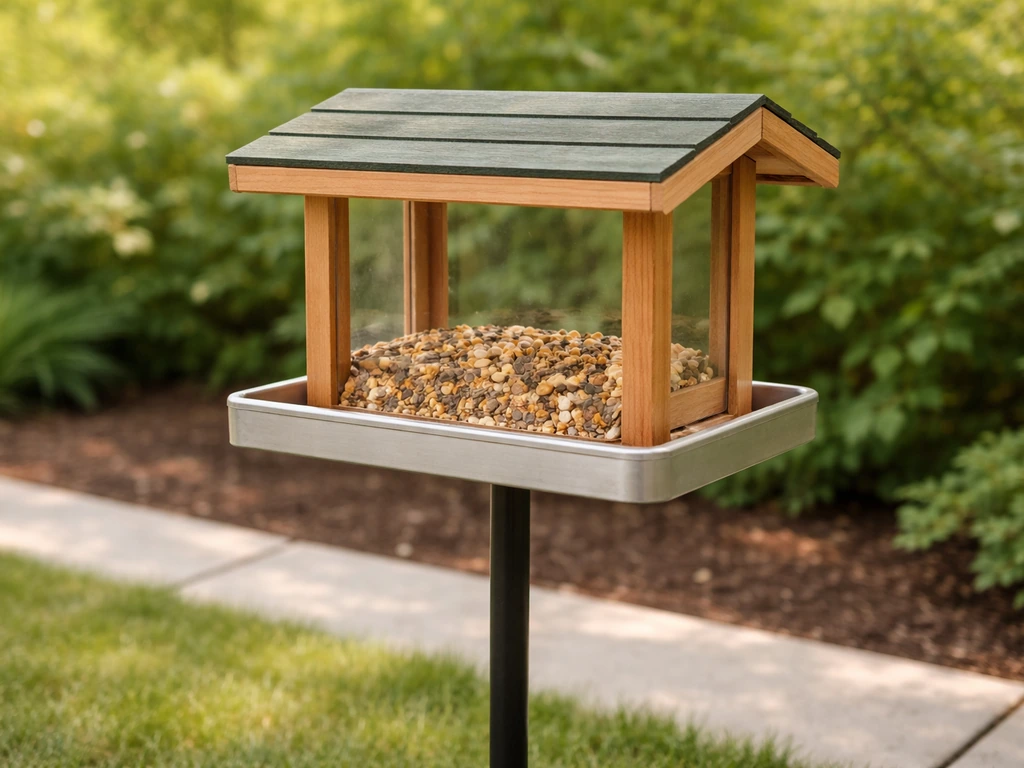
The safest practical move during active bear season (spring through fall in most of North America) is to take all feeders down entirely, including hummingbird feeders and suet. The Washington Department of Fish and Wildlife recommends removing all seed, suet, and hummingbird feeders from spring until fall precisely for this reason. If you are not willing to do that, switching to Nyjer in a tube feeder with a tight-fitting tray and no scatter guard is your lowest-risk option. Avoid platform or open tray feeders in bear country during warmer months, because they dump seed on the ground constantly.
Feeder setup that makes life harder for bears
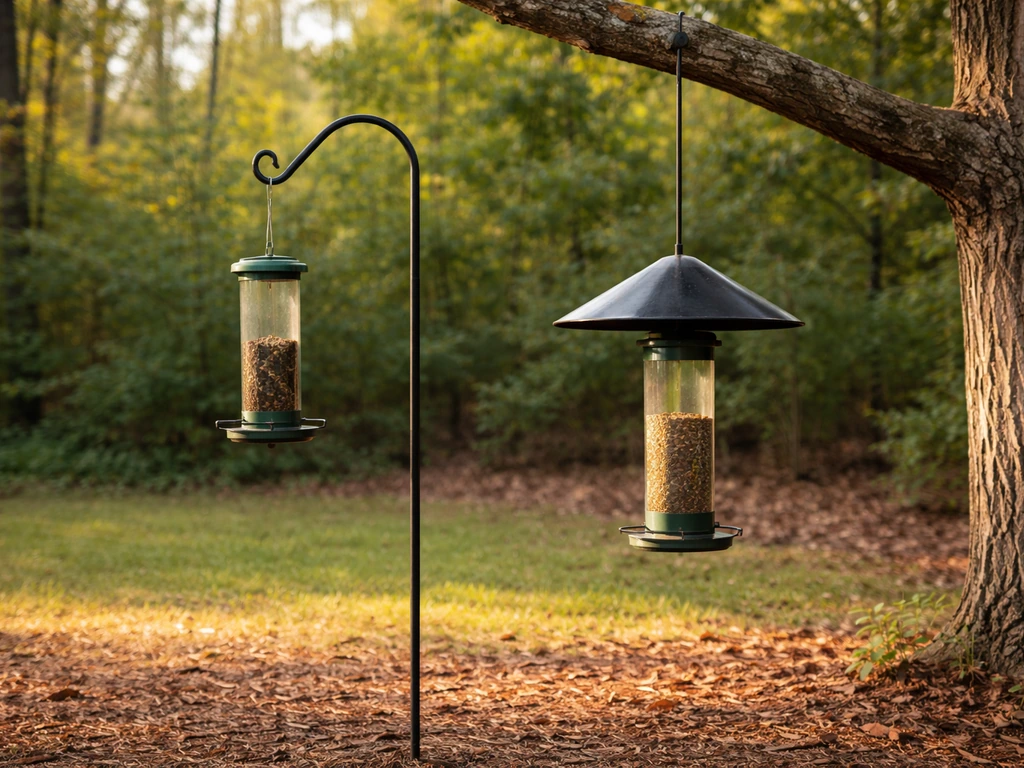
Where and how you hang a feeder matters as much as what is in it. A shepherd's hook at 5 feet does nothing to stop a bear. To make a feeder genuinely difficult to reach, you need to suspend it from a line strung between two points at least 10 feet off the ground, with the feeder at least 4 feet below the line and at least 4 feet away from any tree trunk or branch a bear could climb. This is the same bear canister hanging method used for backcountry camping and it works for the same reasons.
If you cannot rig a suspension system, bring your feeder inside every night. Bears are primarily nocturnal foragers, and the NPS specifically recommends putting feeders out only during periods when bears are less active. Bringing feeders in at dusk and putting them back out after sunrise cuts bear exposure significantly. Any feeder that remains outside overnight during active bear season is an invitation.
Stop seed from hitting the ground
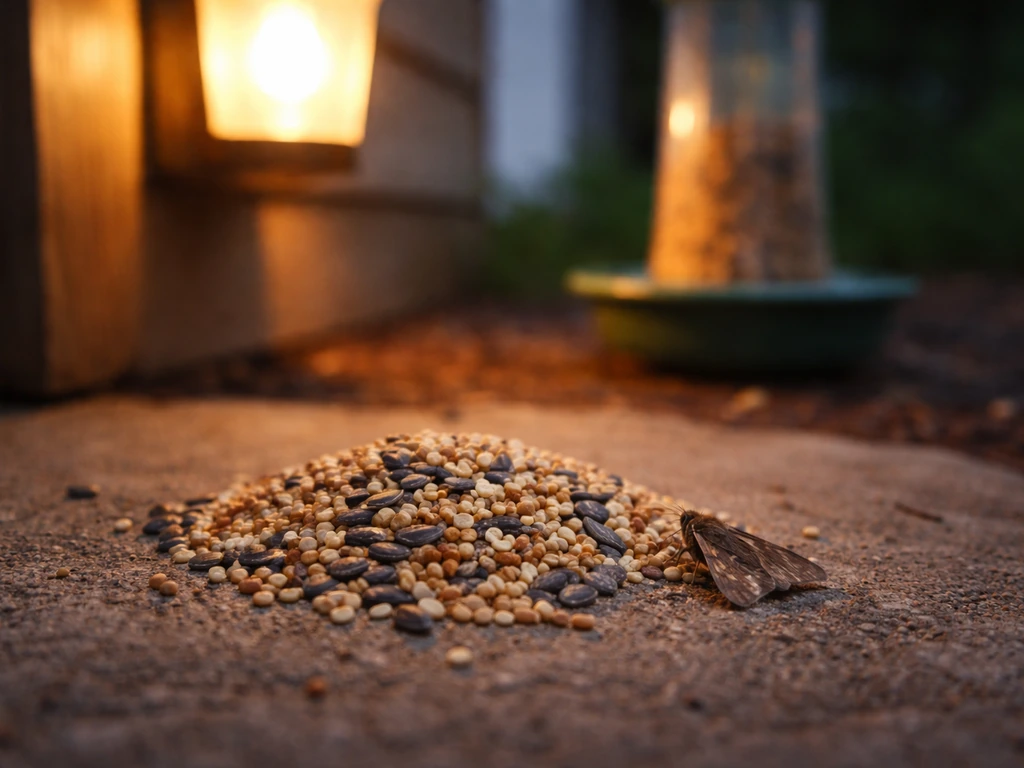
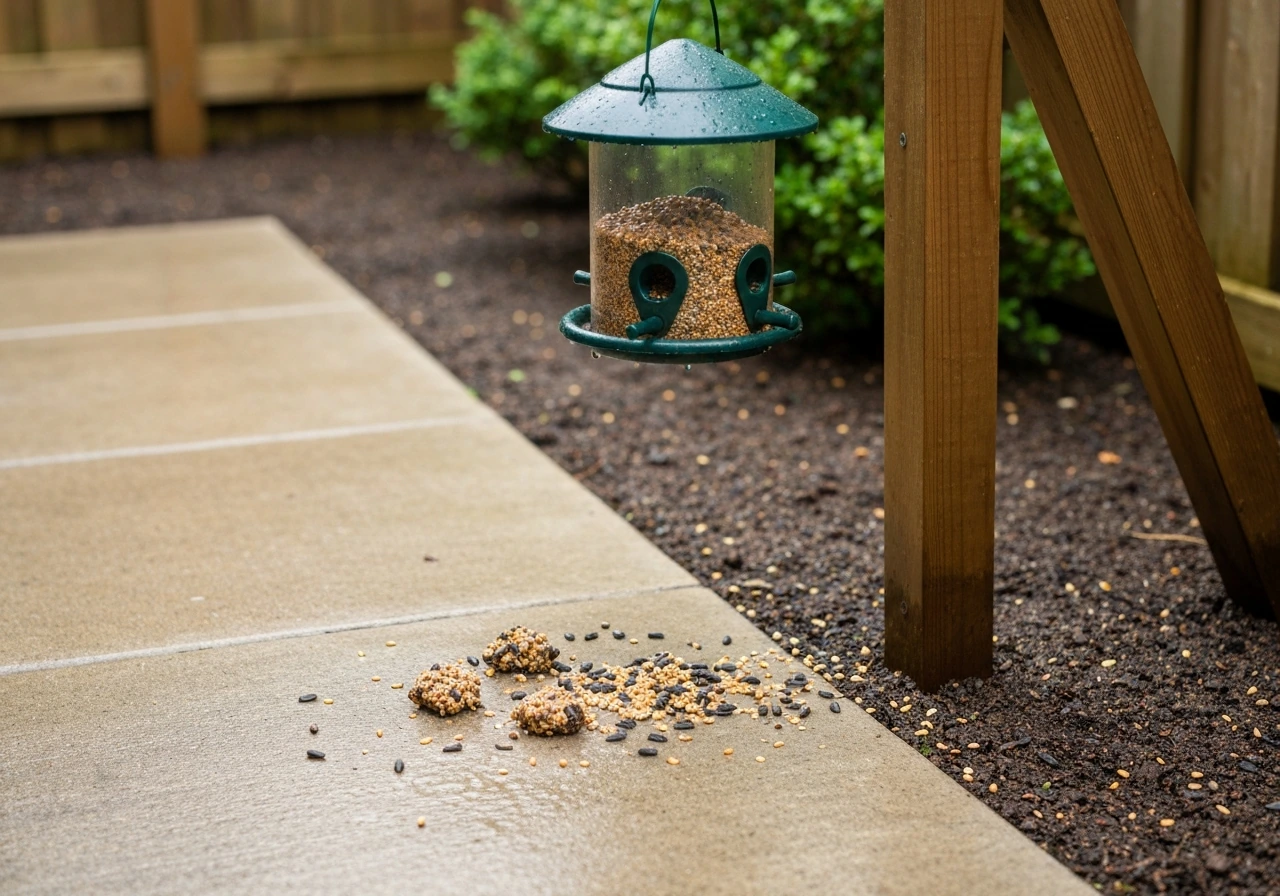
Dropped and scattered seed on the ground is usually the biggest single attractant because it is easy to reach and accumulates fast. Bird seed can also attract other pests like ants, especially if seed spills or remains accessible around the feeder does bird seed attract ants. A few targeted changes fix most of this:
- Use tube feeders with small ports sized for the seed you are offering so birds cannot rake out large quantities.
- Avoid open platform or tray feeders in bear country during warmer months.
- Fit feeders with a seed catcher tray that has a lip deep enough to hold debris, and empty it every day or two.
- Switch to no-waste or no-mess seed blends (pre-hulled seed and chips) that birds consume entirely rather than cracking open and dropping shells.
- Rake or vacuum the area directly under feeders every 1 to 2 days during active bear season.
Storage and handling that reduces odors and bear interest
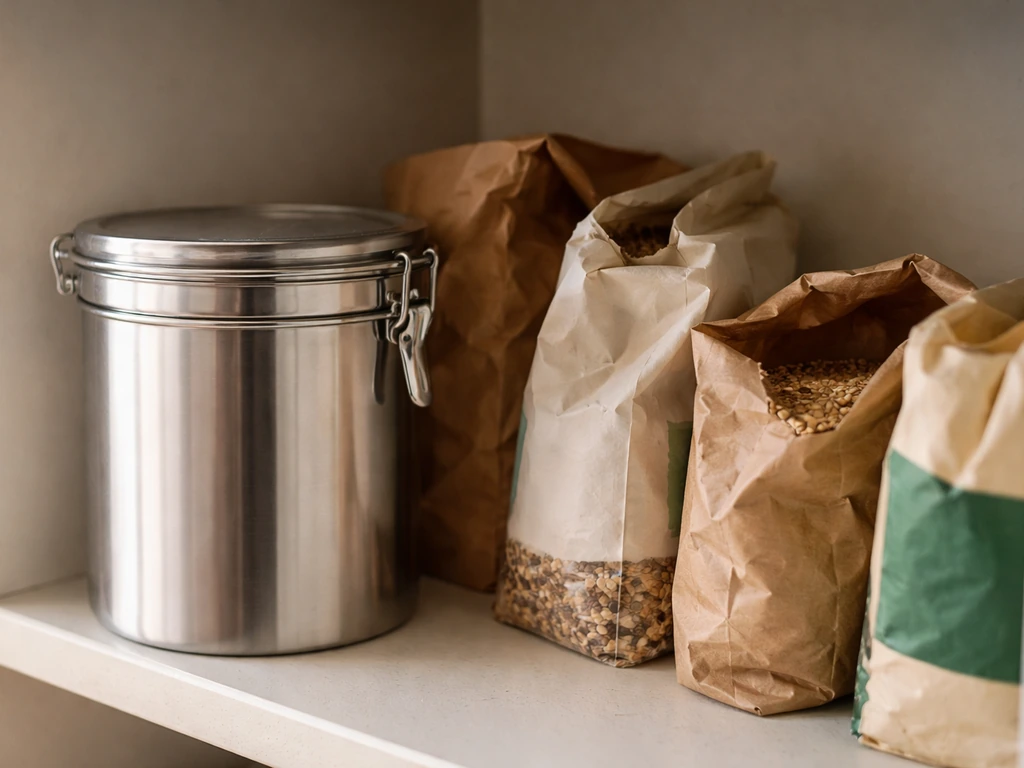
How you store seed has a direct effect on how much odor it broadcasts. Seed stored in paper bags, thin plastic bags left open, or cardboard boxes in a garage is accessible by smell and sometimes physically to a determined bear. Bears have broken into garages and sheds to reach improperly stored bird seed, so this is not a minor concern.
Store all seed in metal containers with tight-fitting lids, either inside your home or in a locked outbuilding. Food-grade galvanized steel garbage cans with locking lids work well and hold 20 to 50 pounds of seed. If you use plastic bins, bears can and will chew through them. Keep no more than a 1 to 2 week supply on hand so the seed stays fresh and you are not maintaining a large long-term odor source.
Prevent wet seed, mold, and rancid odors
Wet and moldy seed smells far more strongly than fresh dry seed because mold and fermentation produce additional volatile compounds. This is an area where proper seed hygiene serves two goals at once: it keeps seed safe for birds and it keeps odors from escalating. Practical rules for staying on top of this: it keeps seed safe for birds and it keeps odors from escalating, which also reduces the odds of related pests, like does bird seed attract roaches? Practical rules for staying on top of this:
- Empty and rinse feeders once a week during summer, and dry them completely before refilling.
- Discard any seed that clumps, smells sour, or shows visible mold immediately. Do not mix moldy seed into fresh stock.
- Do not overfill feeders. Add only what birds will consume in 24 to 48 hours during warm, humid weather.
- Avoid suet cakes above about 50°F unless you use a specifically labeled 'summer formula' suet, which has a higher melting point. Standard suet goes rancid quickly and produces a strong odor.
- Check stored bulk seed regularly. If you see clumping or notice an off smell, the entire batch has likely started to turn.
These same storage and handling habits also reduce interest from other wildlife. Wet and moldy seed is a common driver of visits from mice, rats, and insects, so keeping seed dry and fresh addresses multiple problems at once. Wet and moldy seed can also draw in mice, so keeping seed dry and contained helps deter them too other wildlife.
What to do right now if bears are already showing up
If you have already had a bear visit, you need to move fast. Bears that find food at a location learn to return, and each successful visit reinforces the behavior. Yes, bird seed can attract flies as well, especially when seed gets damp or spills in the open does bird seed attract flies. Here is what to do in the next 24 to 72 hours.
- Take all feeders down immediately, including hummingbird feeders and suet cages. Bring them inside your home, not just a garage or shed the bear can access.
- Rake, sweep, or vacuum all seed, hulls, and debris from the area beneath where your feeders hung. Bag it in heavy-duty trash bags and put it in a secure, bear-proof bin or take it off-site.
- Scrub the ground area and any surfaces (deck railings, poles, hooks) with a solution of one part white vinegar to one part water, or a dilute bleach solution (one tablespoon of bleach per gallon of water). This breaks down the food odors that tell the bear this spot is worth checking again.
- Move all bulk seed storage inside your home or into a locked metal container the bear cannot open or carry off.
- Check the perimeter of your property for other attractants: unsecured garbage, pet food left outside, a compost pile with food scraps, or fruit that has dropped from trees. Address all of these, because a bear that is already circling your yard will investigate every food signal.
- Keep feeders down for at least two to three weeks after the last bear sighting. Montana FWP and other wildlife agencies recommend removing attractants entirely and maintaining that absence long enough to break the bear's association between your yard and a food reward.
- If the bear has become bold, approaches the house, or returns after you have removed all attractants, contact your state or provincial wildlife agency. Do not attempt to scare off a bear that is on your porch or at your door.
When it is safe to put feeders back out
In most of North America, late November through early March is the safest window for feeding birds without significant bear risk, because bears are typically denning or at minimum much less active in winter. If you are in a region with mild winters where bears stay active year-round (parts of the Pacific Coast, the Southeast, and the Southwest), the safest approach is to bring feeders in every night without exception, use only low-odor seed like Nyjer, and keep the feeding station meticulously clean. The NPS recommends daytime-only feeding as a minimum precaution in areas with year-round bear activity. If you are curious about how birds locate it in the first place, the answer is a mix of scent, sight, and learned patterns around your yard how do birds find bird seed.
The goal is not to stop feeding birds permanently. It is to set up your feeder station so that it rewards birds without broadcasting a food signal that reaches a bear's nose half a mile away. With the right seed, a properly suspended or nightly-retrieved feeder, tight storage, and a clean ground zone, you can keep feeding through at least part of the year safely. If you are already managing a yard for multiple wildlife concerns, the same principles that help with rodents and insects, clean feeders, no accumulation on the ground, and no rotting or moist seed, apply directly to reducing bear risk. To reduce human-associated attractants, Montana FWP recommends feeding pets only during the day and cleaning up spilled or uneaten food blank" rel="noopener noreferrer">feed pets only during the day and clean up spilled or uneaten food. Rats are also attracted to available, odorous food, so keeping bird seed from being accessible or spilled is important.
FAQ
If I use only a small amount of bird seed, will bears still come by?
Yes. Bears are drawn to odor and learning, so even a few handfuls can matter if it gets spilled, drops under the feeder, or comes from stored seed that smells strongly (rancid, fermented, or moldy). The critical factor is whether food odor accumulates and whether the station is easy to reach, not the total pounds you buy.
Do hummingbird feeders attract bears the same way as regular bird feeders?
They can, especially because sugar water has a strong sweetness signal and hummingbird feeders are often left up continuously. If you cannot remove them during peak bear season, bring them in on the same dusk schedule as other feeders and scrub the base and tray so residue does not ferment overnight.
What should I do if I find seed or suet scattered on the ground after a bear visit?
Treat it as active food conditioning. Remove all remaining seed, bag it, and clean the area thoroughly so there is no lingering scent source. Check for damp piles, spoiled suet, or wet seed in corners, because fermented residue can keep the odor strong even after you stop feeding.
Will a bear canister or metal container for the seed fully prevent bear visits?
It reduces access to the seed supply, but it does not stop bears attracted to the feeder itself, spilled seed, or feeder odor. You still need to prevent ground scatter, keep trays clean, and use a suspension or bring the feeder in nightly. Containers help most when bears try to break into storage rather than reach the hanging feeder.
Is Nyjer (thistle) always the lowest-risk seed in bear country?
It is typically lower risk because it is less calorie-dense and usually has a milder odor than high-fat seeds, but it is not risk-free. If you use Nyjer, still use a feeder setup that prevents scatter, keep it dry, and remove feeders during the spring to fall window if you want the biggest safety margin.
How often should I clean the feeder and tray to reduce bear attraction?
At minimum, clean promptly whenever seed or suet spills, becomes damp, or looks caked with old hulls. A practical approach is to wipe trays daily when bears are active and do a deeper clean on a regular schedule, because fermented residue and moldy bits can create a stronger odor than fresh dry seed.
Can I keep feeding year-round if I’m in a region where bears are active in winter?
Possible, but the safest rule is daytime-only feeding and never leaving feeders outside overnight. In year-round bear areas, also keep the feeding station spotlessly clean, remove any seed that lands on the ground, and use lower-odor options like Nyjer, since winter activity means bears still respond to food cues.
What’s the biggest mistake that causes bear visits even after I change the seed type?
Letting seed accumulate under the feeder. Even with a lower-fat seed, dropped and scattered hulls build an easy, persistent scent source and a reachable snack. If you cannot guarantee zero scatter and quick cleanup, switch to a suspension method or stop feeding during the active season.
If a bear approaches the feeder, should I yell, spray, or try to scare it away immediately?
Do not intervene closely or in a way that increases risk to you. Keep distance, secure children and pets indoors, and give the bear a clear exit route. If the bear is persistent, contact local wildlife authorities, because continued visits often mean the bear has learned the station is reliable.
What if birds stop visiting after I change my feeder setup or bring it in at night?
That can be normal, because birds rely on consistent timing and weather conditions. If you use a daytime-only approach, place feeders back out after sunrise and ensure the feeder is stable and properly hung so it attracts birds without scattering seed. Do not extend feeding hours into dusk when bear activity rises.
Does using anti-squirrel features or baffles help against bears?
Not reliably. Anti-squirrel guards are usually designed for small animals and do not prevent a bear from reaching a feeder if it can stand on hind legs or climb nearby branches. The bear-resistant strategies that matter are higher suspension with clearance from climbable surfaces, no ground scatter, and removing feeders during peak season.