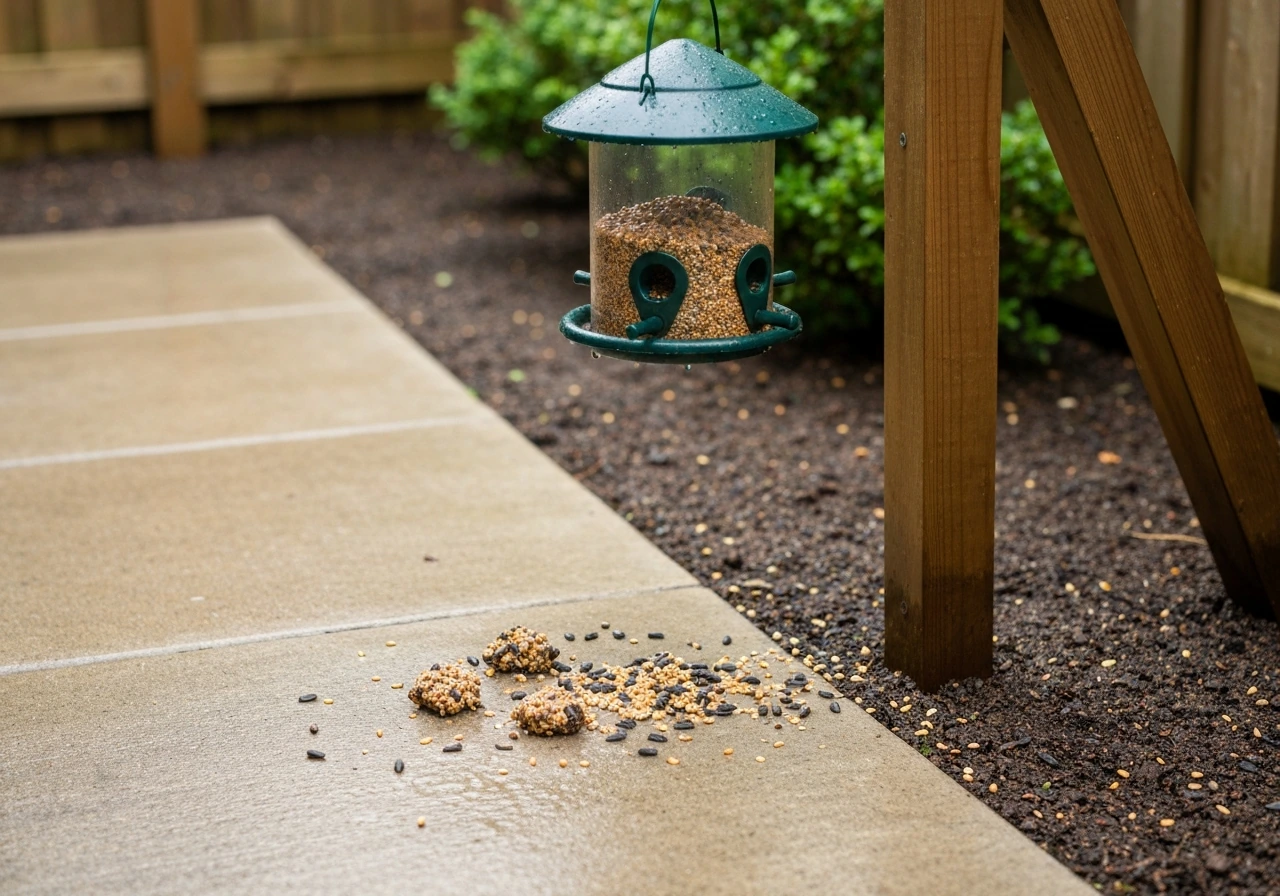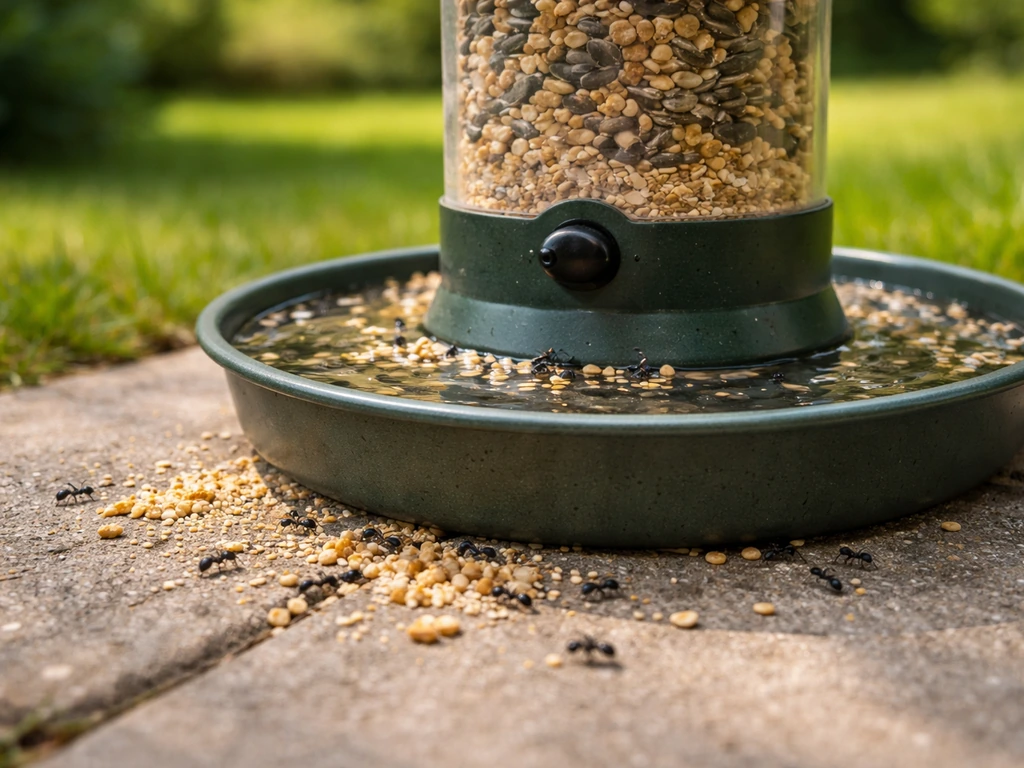
Yes, bird seed can attract flies, but the seed itself is rarely the real culprit. If your question is whether bird seed attracts moths, the key is still moisture and organic material, since moths are drawn to fermenting or decaying matter rather than dry seed does bird seed attract moths. What actually draws flies in is the condition of the seed: wet, moldy, sprouted, or spilled seed sitting on the ground or in a damp tray is what gives flies a reason to show up. Keep your seed dry, clean up spills daily, and feed only what birds eat in a single day, and flies stop having anything to work with.
Does Bird Seed Attract Flies? Causes and Fixes Today

Maya Collins
5 Jun 2026
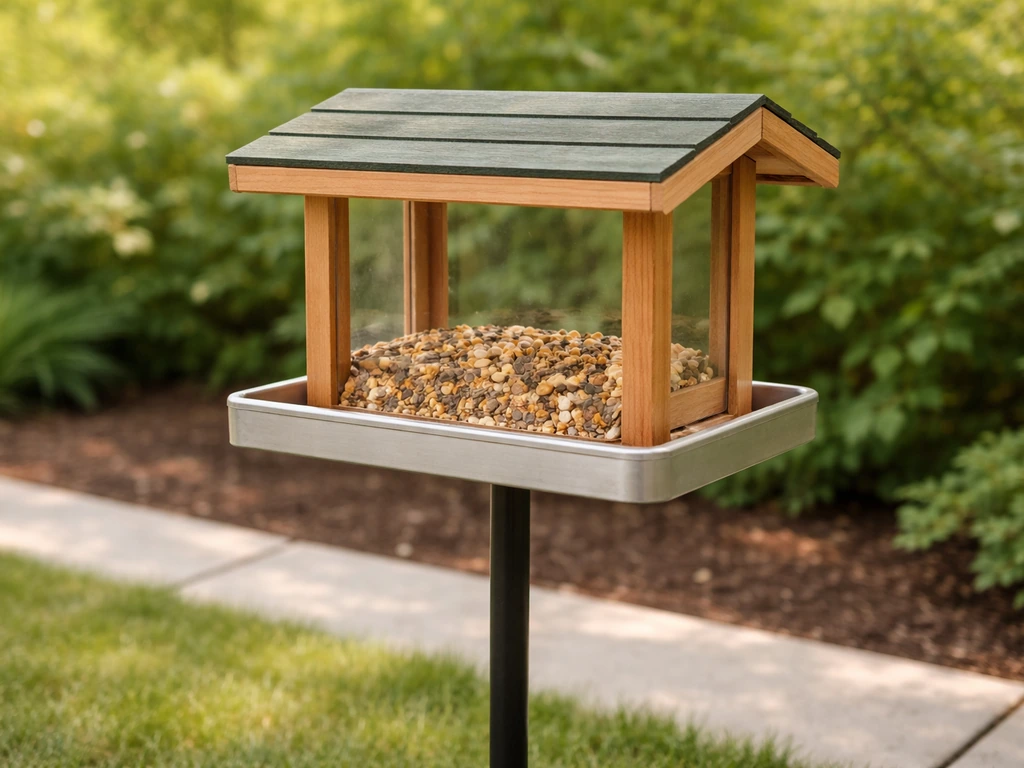
Why Flies Show Up at Your Feeder
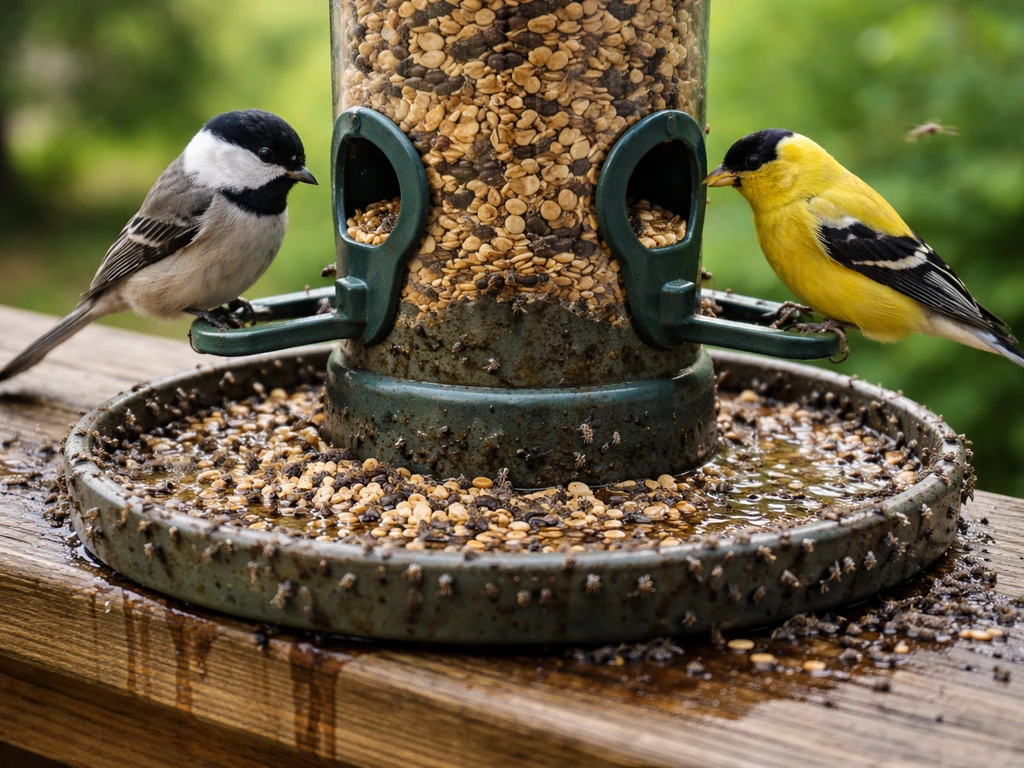
Flies are not attracted to dry, fresh bird seed sitting in a clean feeder. What they are attracted to is decomposing organic material, and a neglected feeding station can produce plenty of it. House flies breed in moist, decaying matter, including waste grain mixed with moisture and bird droppings. UC IPM research confirms that fly larvae develop specifically in warm, moist organic materials, and Penn State Extension identifies decaying organic matter accumulation as the central driver of house fly problems.
Penn State Extension also notes that house flies breed in decaying organic matter such as horse manure and other rotting materials, so decaying matter should not be allowed to accumulate decaying organic matter accumulation is the central driver of house fly problems. In a feeder context, that means soggy hulls, wet millet or cracked corn, droppings mixed into tray debris, and seed that has started to ferment or mold.
Fruit flies are a separate issue and work on a faster timeline. A female fruit fly can lay up to 500 eggs near the surface of fermenting food, and those eggs hatch in as little as 24 to 30 hours. If you have overripe fruit nearby, a suet block that has started to go rancid, or seed that has gotten wet and begun to ferment, you can go from a clean yard to a fruit fly cloud in a couple of days. House flies are slower to build up but leave a messier, more persistent problem once they establish a breeding site.
Cluster flies are sometimes spotted near feeders but are actually unrelated to seed. Their larvae parasitize earthworms in soil, so they show up in yards with healthy earthworm populations, not because of what you are feeding birds. If you see large, sluggish flies near the ground around your feeding area, cluster flies are probably not something your feeding setup caused, though they may share the same outdoor space.
Which Seed Types Are More Likely to Cause Problems
Not all bird seed creates equal fly risk. The issue is always moisture and fermentability, so seeds that absorb water easily or have higher organic content create more trouble when they get wet or are left to sit.
| Seed/Food Type | Fly Risk Level | Why |
|---|---|---|
| Cracked corn | High | Absorbs moisture quickly and ferments fast when wet |
| Millet (spilled/ground) | High | Piles up under feeders, stays damp, and rots |
| Suet or suet-like blocks | High (in heat) | Fat goes rancid in warm weather, mimicking decaying matter |
| Whole sunflower seeds | Medium | Shells resist moisture better but wet hulls still accumulate |
| Nyjer/thistle | Lower | Small seed, less moisture retention, but tray buildup still matters |
| Sprouted or wet seed (any type) | Very High | Fermentation begins quickly, ideal fly breeding material |
Wet or sprouted seed is the biggest red flag regardless of seed type. Once seed gets damp and starts to clump or sprout, mold can begin within 4 to 12 hours under warm conditions. At that point, the seed is no longer just unappealing to birds, it is actively creating a fly breeding site. Suet is especially problematic in summer: most standard suet blocks are not formulated for heat and can turn rancid within a few days, producing exactly the kind of warm, moist, organic mess that flies target.
How to Reduce Flies Fast
Control Portion Size
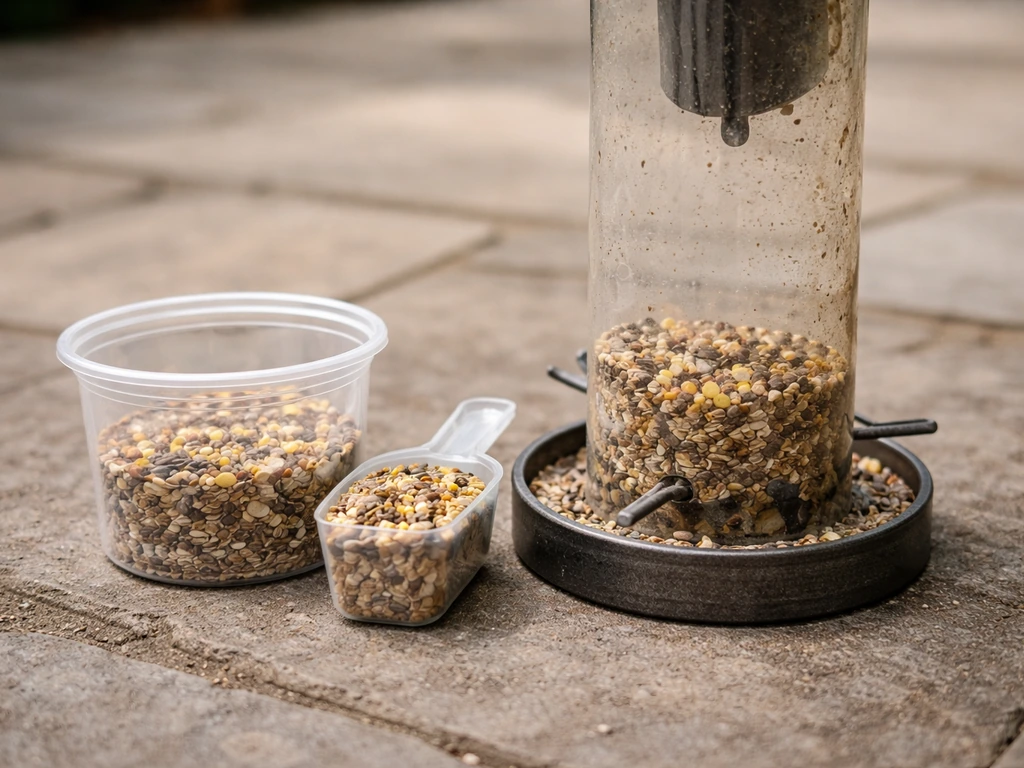
The single most effective thing you can do is stop overloading your feeder. Penn State Extension and UNH Extension both recommend filling feeders with only as much seed as your local birds will eat in a single day. That one change eliminates the leftover, rain-soaked seed that becomes fly food overnight. Watch your feeders for a few days to calibrate the right amount. If you are filling a platform feeder and half of it is still there at dusk, you are putting out too much.
Pick the Right Feeder and Tray
Tube feeders with drainage holes keep seed drier than flat platforms. If you use a tray or platform feeder, look for one with mesh or perforated bottoms so rain drains through instead of pooling. Solid-bottomed trays are where seed sits in puddles, rots, and starts attracting flies within 24 hours of rain. Bird seed is not a reliable attraction for roaches, but damp buildup, exposed food, and other household attractants can bring them in does bird seed attract roaches. Some trays have removable inserts that make daily cleanup much easier, which is worth the extra few dollars.
Feeder Placement
Place feeders where they get morning sun and good airflow. Shade keeps seed wetter for longer. Avoid placing feeders directly over garden beds, compost areas, or anywhere seed can fall into organic mulch or soil, since spilled seed in moist ground is a prime fly breeding environment. If you are wondering about other wildlife, bird seed can also draw in larger animals in some situations, so it helps to know what to expect from bears.
If you are trying to stop flies, it also helps to understand how birds find bird seed and how to keep what is spilled from staying damp spilled seed in moist ground is a prime fly breeding environment. Hanging feeders at least a few feet off the ground also reduces the chance of spilled seed piling up in one concentrated wet spot.
Daily Cleanup Under the Feeder
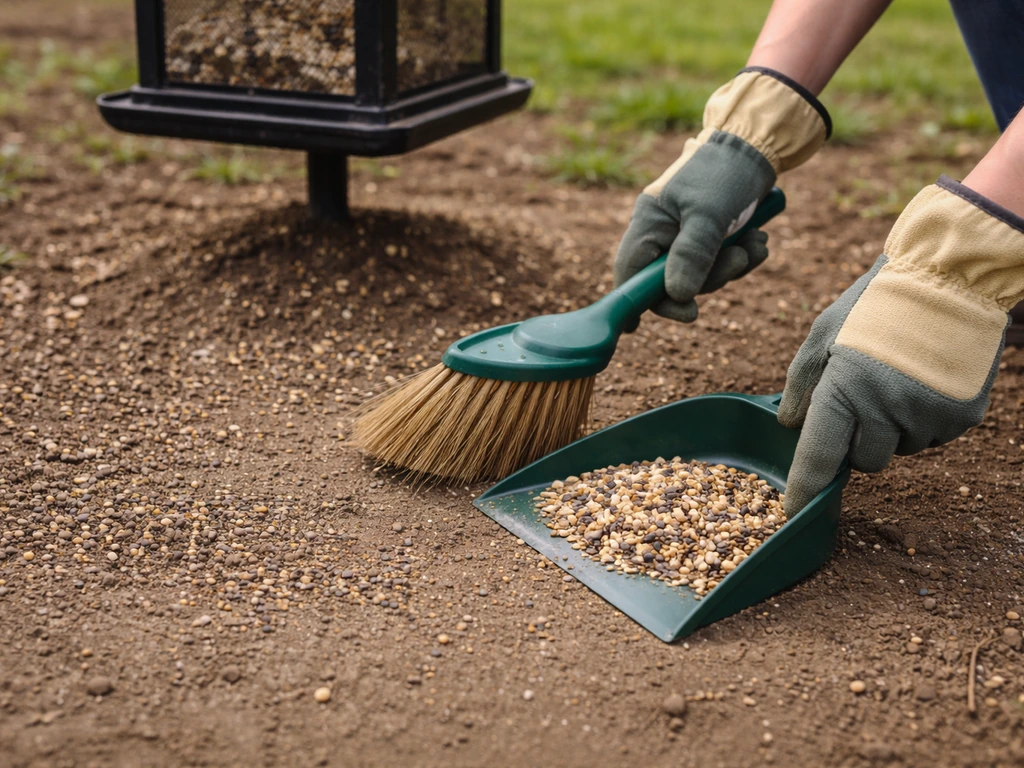
Sweep or rake up spilled seed, hulls, and droppings from the ground under your feeder every day or every other day during warm months. This debris is where most fly breeding happens, not inside the feeder itself. Dispose of it in a sealed bag rather than adding it to a compost pile, since wet seed and droppings in compost can perpetuate the problem.
Storage and Handling to Keep Flies Out
Flies can start breeding in stored seed if it gets damp. Always store bird seed in airtight, hard-sided containers, not the paper or plastic bags it comes in. Metal trash cans with locking lids or heavy-duty plastic bins with gasket seals work well. Keep containers off bare concrete floors in garages or sheds, since concrete draws moisture that can wick up into the container. A wooden pallet or shelf works fine.
Check your stored seed regularly for clumping, musty smell, or visible mold. Any of those signs mean moisture has gotten in and fermentation may already be underway. Moldy or clumped seed should be disposed of immediately, sealed in a bag and placed in your outdoor trash, not composted. Do not put it back in the feeder hoping the birds will eat around the bad parts.
If you buy seed in bulk, make sure you are going through it fast enough that it does not sit for weeks in warm conditions. Seed shelf life varies, but most mixed seed and cracked corn should be used within four to six weeks once opened, especially in summer. Nyjer seed goes stale faster and should be rotated every two to three weeks in warm weather. In humid climates, err on the shorter end of those windows.
If your seed gets rained on or wet during transport, spread it on a clean, dry surface in a well-ventilated area and let it dry completely before storing or using it. Putting wet seed into an airtight container guarantees mold. If it has already started to clump or smell, skip the drying step and throw it out.
Troubleshooting When Flies Keep Coming Back
If you have cleaned up your feeder, switched to daily portions, and are storing seed properly but still have a fly problem, the feeder is probably not the source anymore. Here is how to figure out what else is going on.
Fruit Flies vs. House Flies: Spot the Difference
Fruit flies are tiny (about 1/8 inch), tan or brownish, and tend to hover in slow, drifting patterns close to a food source. House flies are larger, faster, and move more erratically. Knowing which you have tells you where to look. Fruit flies almost always trace back to something fermenting nearby: overripe fruit, a compost bin, a drain with organic buildup, or in the feeder context, a suet block that has gone rancid.
Knowing which you have tells you where to look, and if you are also wondering why bees are showing up, see why are bees attracted to bird seed for the key factors that bring them in. House flies suggest a larger, wetter organic mass nearby, such as pet waste, wet garbage, or a pile of wet lawn clippings.
Check These Common Nearby Attractants
- Trash cans or recycling bins near the feeding area (especially ones with food residue inside)
- Compost bins without tight lids, or open compost piles with fruit and vegetable scraps
- Pet waste in the yard that has not been cleaned up
- Outdoor drains, gutters, or areas where water pools and organic debris collects
- Overripe or fallen fruit from nearby trees
- A suet feeder left out in hot weather (above 80 to 85°F, standard suet goes rancid fast)
- Bird bath water that has not been changed and has algae or debris in it
Exclusion Steps That Won't Harm Birds
Avoid fly sprays, traps with chemical attractants, or sticky tape placed directly at or near feeders. These can harm birds or cause them to avoid the area. Instead, move your feeder at least 10 to 15 feet away from the suspected secondary attractant while you address the root problem. Yellow sticky traps placed a few feet from (but not at) the feeder can help identify whether you are dealing with fruit flies or another species and catch some adults, but they do not solve the breeding source issue.
It is also worth noting that fly problems around feeding stations can overlap with other pest concerns. The same conditions that attract flies (spilled seed, damp organic debris) can also attract ants, roaches, and in some regions, rodents. Rodents are also drawn to the same kind of seed mess, so it is reasonable to ask whether bird seed attract mice as well. If you leave spilled seed or damp debris around your feeder, it can also make the area more attractive to rats. Addressing the feeder hygiene issue usually knocks back all of these at once.
Cleanup Routine and Safety Around Birds and Your Household
How to Clean Your Feeder Safely
Always wear disposable gloves when cleaning feeders or handling contaminated seed. The CDC specifically recommends this for anyone cleaning bird feeders or baths. Wash the feeder with hot, soapy water first to remove debris and seed residue, then disinfect it with a dilute bleach solution: 9 parts water to 1 part bleach, soak for 10 minutes. Rinse thoroughly, and allow the feeder to dry completely before refilling. A damp feeder put back in service immediately is one of the fastest ways to restart a mold and fly cycle.
How Often to Clean
In warm weather (roughly May through September in most of the US), clean feeders at least every one to two weeks. Platform trays and ground feeders with exposed surfaces need attention more often, ideally every few days during humid or rainy stretches. Tube feeders need less frequent deep cleaning but should be checked weekly for any damp clumps at the bottom port, which is where mold typically starts.
Disposing of Contaminated Seed
Moldy, wet, or fly-infested seed should be sealed in a plastic bag and placed in your outdoor trash, not your compost bin. If you have a significant amount of contaminated seed (several pounds), double-bag it. Do not dump it in the yard, spread it in a garden bed, or leave it in an open container for animals to find. Birds that eat moldy seed can get sick, and leaving it out just extends the fly problem.
When to Take More Serious Action
If you have cleaned everything, removed all obvious attractants, and still have a heavy fly infestation that is affecting your home (flies getting indoors, large clusters near windows or doors), it is worth calling a licensed pest control professional to identify the breeding source. Persistent house fly problems sometimes trace back to issues that are not visible, such as a dead animal under a deck, a drainage problem, or a neighbor's waste issue that is drifting into your yard. A professional can locate those sources quickly and recommend treatment options that will not put your backyard birds at risk.
FAQ
How can I tell if flies are coming from my feeder or from something else nearby?
Look at where they spend most time. Fruit flies tend to hover right at a fermenting food source, like overripe fruit or rancid suet. House flies usually linger around wetter organic buildup on the ground, such as spilled seed mixed with droppings, pet waste, or damp trash. If you can go 24 to 48 hours without new wet seed residue appearing and the numbers drop, your feeder setup was likely the source.
Does using a bird seed tray or platform feeder increase fly risk compared with a tube feeder?
Yes. Platform and tray feeders usually increase risk because spilled seed sits in place and rain can pool under or around the tray. Tube feeders with drainage holes and a drier bottom generally reduce standing water. If you use a platform, choose mesh or perforated bottoms (and add daily cleanup), otherwise the underside becomes a hidden breeding spot.
If I only put out small amounts of seed, will flies still show up?
It can still happen, especially if the “small amount” is getting wet or fermenting. Even a little clumped seed, damp hulls, or a suet block turning rancid can support breeding. The key is to prevent moisture and remove residue quickly, not just the total amount of seed.
Will flies come if the seed looks dry but there is moldy buildup at the bottom?
Yes. Seed can look intact from the top while the bottom collects moisture, hull dust, or droppings, which supports larvae. Check the underside of platforms and the bottom ports of tube feeders for damp clumps, musty smell, or sticky residue, then clean and dry thoroughly before refilling.
Should I use a power washer or only soap when cleaning a feeder?
Use hot soapy water for the initial wash, then disinfect with a properly diluted bleach solution as described in the article. Avoid pressure washing that can damage plastic coatings or drive residue deeper into crevices. After disinfecting, rinse well and let the feeder fully dry, because returning a damp feeder can restart the mold and fly cycle.
How long after I fix the feeder conditions will the fly problem improve?
Adults may decline quickly once the breeding material is removed, but it depends on how established the breeding site is. Fruit flies often drop sooner because their lifecycle is fast, while house flies can take longer to break because larvae in moist organic material may already be present. Expect noticeable improvement after several days of consistent cleanup and no new wet residue.
Can I compost moldy seed and feeder debris?
No, moldy, wet, or fly-infested seed and the contaminated debris under the feeder should go in sealed outdoor trash, not compost. Compost can stay warm and moist enough to keep the problem going, and birds can also get sick if contaminated material re-enters the food chain.
What if I have flies in summer but I do not use suet?
Suet is a common trigger, but flies still need warm, moist, fermentable material. Check for other sources, such as rain-soaked spilled seed, wet millet or cracked corn, droppings mixed into tray debris, a nearby compost bin, overripe fruit, or a damp drain with organic buildup. Reducing those specific moisture sources usually solves the overlap.
Are there any traps I should use near the feeder if I want to confirm the type of fly?
You can use yellow sticky traps a few feet away from the feeder to help identify the species and reduce uncertainty. Avoid placing traps directly at the feeder and skip chemical attractant traps, since they do not fix the breeding cause and can discourage bird activity. Use the trap information to focus your cleanup on the true breeding area.
What should I do if I find clumping or a musty smell in my stored seed?
Do not dry and reuse clumped or musty seed if it already smells fermented or shows visible mold. Seal it in a bag and discard it outdoors, because moisture may already be supporting growth. For future storage, switch to airtight, hard-sided containers and rotate seed on a tighter schedule in humid weather.
Do flies ever attract to bird seed outdoors during winter or cold weather?
They’re less common in cold months because larvae need warmth and moisture to develop, but you can still see adult activity if there is damp debris under the feeder. The main prevention still applies, keep the feeding area dry, clean up hulls and droppings routinely, and avoid leaving wet residue after rain.