
Yes, bird seed absolutely attracts moths, but the type of moth matters a lot. Outdoor moths may flutter around a feeder at night out of curiosity or because spilled seed is fermenting, but the real problem is the Indian meal moth, a stored-product pest that lays eggs directly in your seed bag and whose larvae eat and web through the grain. If you are seeing small tan-and-copper moths near your seed storage, inside your garage, or crawling around your pantry, that is almost certainly an Indian meal moth infestation and it needs to be dealt with today before it spreads to other dry foods in your home.
Does Bird Seed Attract Moths? Quick Fix and Prevention

Maya Collins
6 Jun 2026
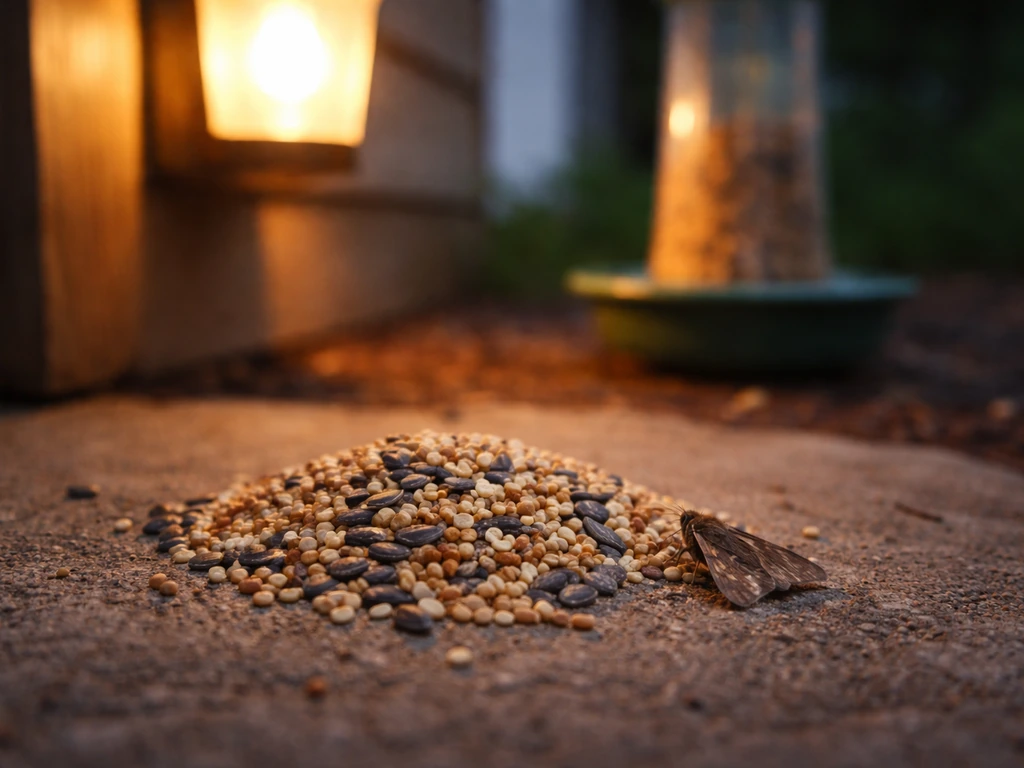
Outdoor moths vs. storage moths: how to tell which you have
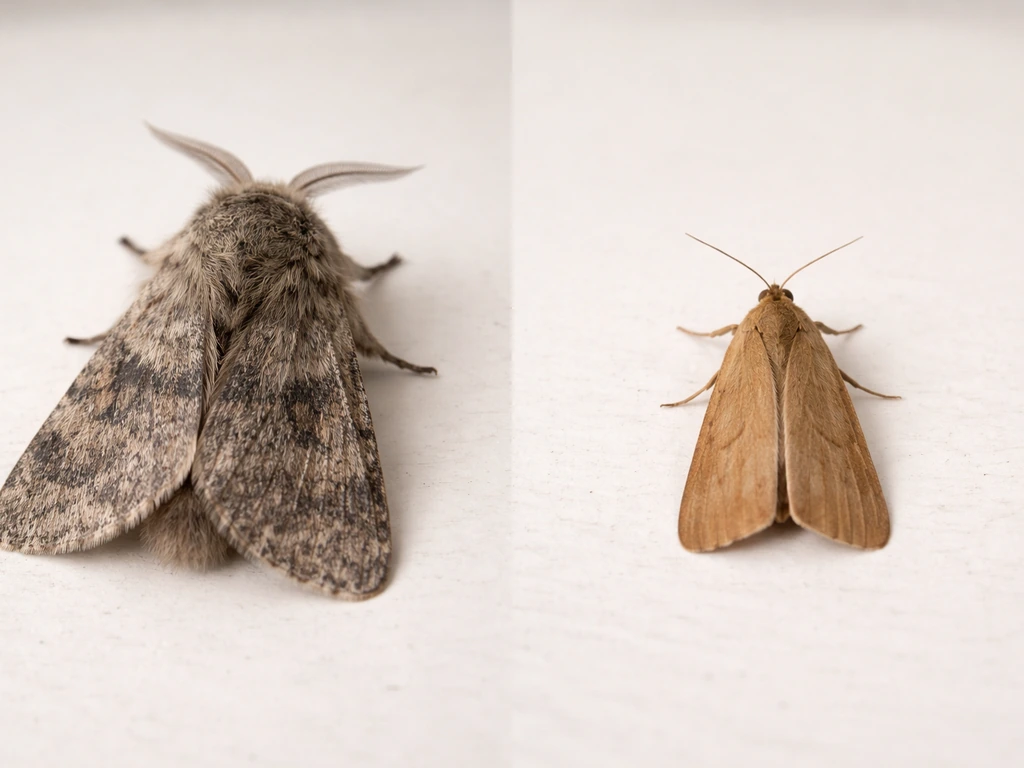
This is the single most important thing to figure out first. blank" rel="noopener noreferrer">Outdoor moths, the large, fuzzy ones you might see around a porch light or swooping near a feeder at dusk, are wild pollinators and they are not interested in your seed. If you are curious about how birds find the seed in the first place, it usually comes down to sight, smell, and where feeders are placed how do birds find bird seed. They are drawn to light and to flowers with nectar, and they do not infest stored food. Wikipedia also notes that the Indian meal moth is attracted to light, which helps explain why stored-product moths show up around lighting near seed storage blank" rel="noopener noreferrer">drawn to light. Seeing one or two big moths near an outdoor feeder on a warm June night is normal and harmless.
Indian meal moths are a completely different story. They are small, about 5/8 inch long, with a distinctive two-tone wing: pale gray near the body and a reddish-copper band toward the tip. You will find them flying indoors or in enclosed spaces like garages and sheds where seed is stored, not just outside near the feeder. They are attracted to light, so you may notice them near windows or light fixtures inside. The larvae look like small off-white or cream-colored caterpillars and they leave silk webbing behind in the seed, often visible on the surface of the grain or clumped in corners of the bag.
| Feature | Outdoor moth | Indian meal moth (storage moth) |
|---|---|---|
| Size | Large (1–3 inches wingspan) | Small (~5/8 inch wingspan) |
| Where you see it | Outside near lights, flowers, feeders | Indoors, in garages, sheds, pantries |
| Wing pattern | Varied, often muted browns/grays | Pale gray front, reddish-copper rear band |
| Larvae visible? | No, not in your seed | Yes, cream-colored, in seed or bag corners |
| Webbing in seed? | No | Yes, silky webbing is a key sign |
| Threat to stored food? | None | High, spreads to other dry goods fast |
| What draws it? | Light, flowers, nectar | Dry grains, seeds, stored food products |
Why bird seed attracts moths in the first place
Indian meal moths are attracted to dry grain and seed products because that is exactly what their larvae need to develop. Bird seed is an ideal breeding ground. Mixed seed bags often contain millet, milo, cracked corn, sunflower, and safflower, all of which are grains and seeds that moth larvae feed on happily. The female lays eggs directly on or near the food source, and the first-instar larvae can bore right into cracked or hulled grains to grow inside them.
Moisture makes things significantly worse. Wet or humid seed speeds up mold growth, which in turn attracts more insects and creates warmer microenvironments where moth eggs and larvae develop faster. At temperatures between 20 and 30 degrees Celsius, the Indian meal moth can go from egg to adult in roughly 25 to 30 days, meaning a small initial infestation can become a serious problem within a single month. Warm summer storage in a garage or shed is essentially perfect moth habitat.
Poor storage is the root cause most of the time. Seed left in the original paper or thin plastic bag, stored in a warm area, or kept for weeks without being used gives eggs already present in the bag plenty of time to hatch and develop. It is also common for bird seed to arrive from the retailer already carrying moth eggs, which is why even brand-new bags can produce an infestation if you do not use them quickly or freeze them first.
Signs of infestation in seed and around feeders
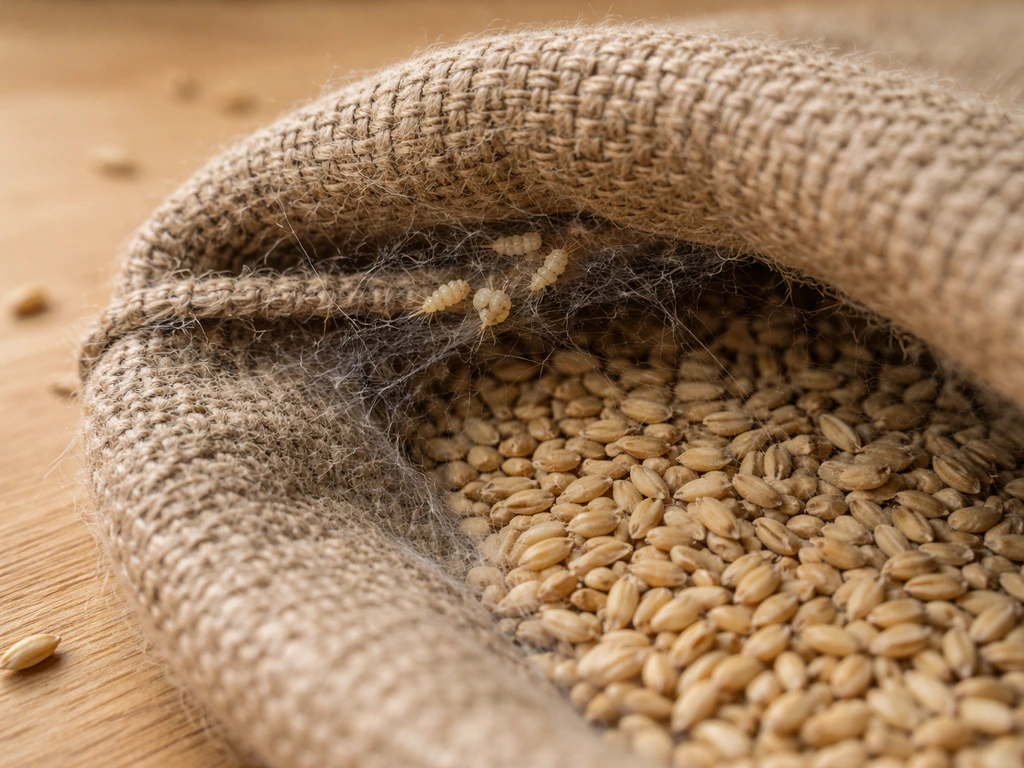
Check your seed storage area and your bags carefully. Here is what you are looking for:
- Silk webbing on the surface of the seed, clumped grain, or webbing in the corners and seams of the bag
- Small cream or off-white larvae (caterpillars) visible in or on the seed, often 1/2 inch or less
- Frass, which is tiny dark specks of insect excrement, mixed in with the seed
- Cast skins or pupal casings, thin papery shells left behind after larvae molt
- Dead adult moths found inside containers or around the storage area
- A musty or off smell coming from the seed bag
- Grain clumped together where webbing has bound it
- Small moths flying inside the house, garage, or shed, particularly near lights or windows
At the outdoor feeder itself, signs of a moth problem are less obvious, but heavy spilling of seed onto the ground, wet seed left sitting in the tray, or old seed that has not been rotated can all indicate conditions that invite pests. However, you may also be wondering if does bird seed attract bears spilled seed onto the ground. If you are finding larvae in your hanging feeder or tray, the seed inside has been contaminated and needs to come out immediately.
What to do today: isolate, clean, and dispose safely
Do not wait on this. Indian meal moths spread fast, and adults can fly to other dry food storage in your home before you notice. Work through these steps now.
Step 1: Remove and isolate contaminated seed
Pull all suspect seed bags out of storage and put them into heavy-duty sealed garbage bags immediately. Do not leave open bags sitting in your garage or shed. If you are not sure whether a bag is infested, treat it as suspect.
Step 2: Decide: freeze or discard?
If the infestation is light (a little webbing, a few larvae), you can salvage the seed by freezing it. Seal it in a heavy zip-lock bag or airtight container and place it in a freezer set to 0°F (-18°C) for 4 to 7 days. This kills eggs, larvae, and adults at all life stages. The USDA confirms household freezing at 0°F is effective for killing insects in food. After freezing, inspect the seed again, screen out any webbing or larvae, and store it properly. If the infestation is heavy, with thick webbing throughout, large numbers of larvae, or a foul smell, discard it. Do not compost heavily infested seed as it can spread the problem.
Step 3: Clean out the storage area
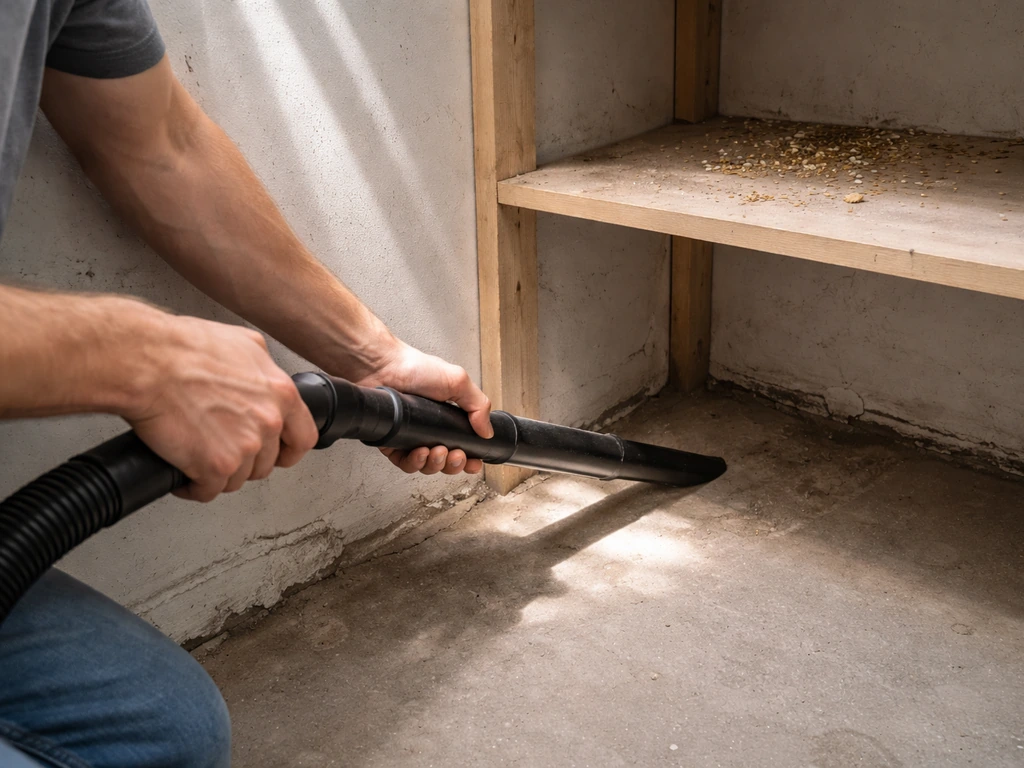
Vacuum the entire area where the seed was stored, including cracks, shelving, and corners. Larvae and pupae hide in crevices to complete their development, so a thorough vacuum matters. Wipe down surfaces with a damp cloth, then let the area dry completely before putting anything back. Check any other dry foods nearby: cereals, flour, dried fruit, nuts, and pet food are all potential secondary infestations.
Step 4: Empty and clean the feeder
Empty your bird feeder completely, discard old or suspect seed, and scrub the feeder with hot soapy water. Rinse thoroughly and let it dry fully before refilling. Clean the tray or platform underneath the feeder too, removing all spilled seed from the ground.
How to store bird seed to prevent moths going forward
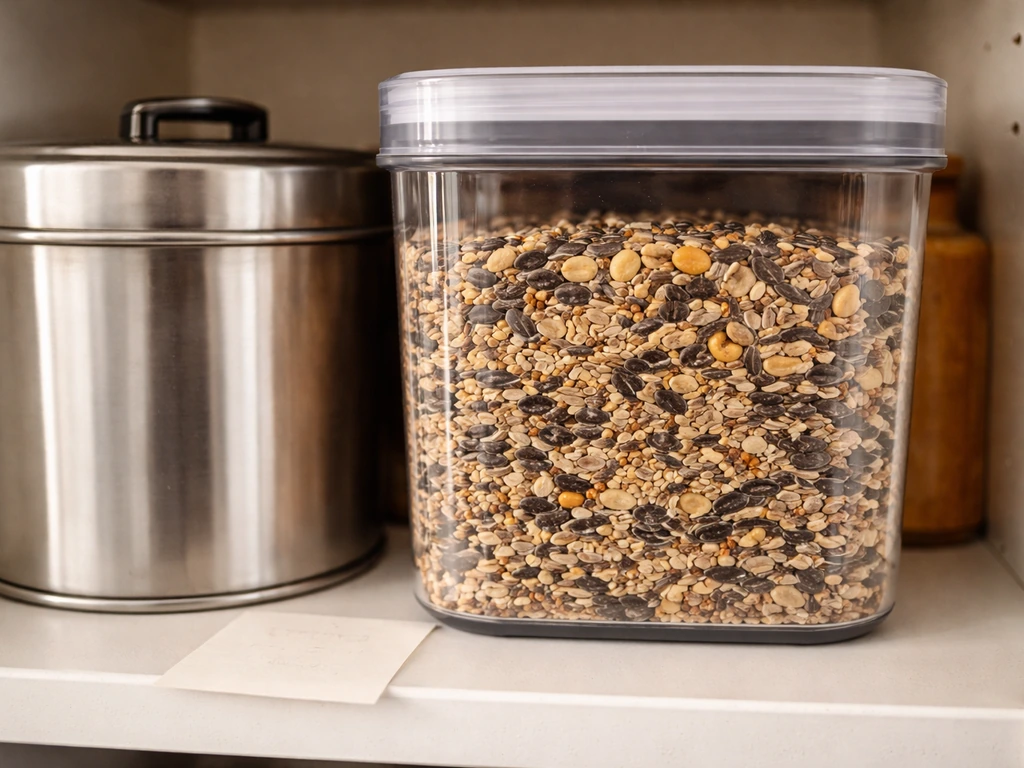
Good storage habits eliminate the conditions moths need to thrive. Follow these steps every time you buy or store seed.
- Transfer seed from the original bag into a rigid, airtight container immediately after purchase. Metal trash cans with tight-fitting lids, food-grade plastic bins with locking lids, or large glass jars all work well. Thin plastic bags provide almost no barrier to moths.
- If you have any doubt about whether a new bag might carry eggs, freeze it first at 0°F for 4 to 7 days before storing it in your regular container.
- Store seed in a cool, dry location. A cool garage corner or climate-controlled shed is far better than a hot garage in summer. Heat speeds up the moth development cycle dramatically.
- Buy smaller quantities that you will use within 4 to 6 weeks. Large bags of seed sitting through summer are a primary cause of infestation.
- Use a first-in, first-out rotation. Label containers with the purchase date and use older seed before opening a new bag.
- Inspect your seed every time you refill the feeder. A quick look for webbing or clumping takes 10 seconds and catches problems early.
- Keep the storage area clean and dry. Sweep up spilled seed promptly as loose grain on shelves or floors is ideal for moth egg-laying.
Feeder and yard setup changes that help
Your outdoor setup can also reduce the chances of moths establishing around your feeder area. A few practical changes make a real difference.
- Use a tray feeder or catch tray that is easy to empty and clean daily. Seed that sits wet in a tray for days is an open invitation for insects of all kinds.
- Only fill feeders with as much seed as birds will eat in one or two days, especially in humid summer weather. Smaller, more frequent refills beat large amounts sitting out.
- Sweep or rake up spilled seed from below the feeder regularly. Ground seed attracts not just moths but also rodents, ants, and other insects.
- If you use an outdoor storage bin or shed for seed, consider yellow or sodium-vapor lighting nearby rather than standard white or blue-spectrum lights. Research shows moths are significantly more attracted to shorter wavelength (blue/white) light, so switching outdoor lighting near your storage area can reduce adult moths settling in.
- Avoid platform feeders with deep seed reservoirs that hold large quantities of seed exposed to humidity and warmth. Tube feeders with small ports dispense less at a time and keep seed drier.
- If you are in a humid region (the Southeast, Gulf Coast, or Pacific Northwest in particular), be extra aggressive about small fill quantities and frequent cleaning during summer months.
Other problems to watch for while you are dealing with moths
If you are digging into your seed storage because of moths, it is worth checking for a few related issues at the same time. If you are digging into your seed storage because of moths, it is also useful to think about why are bees attracted to bird seed and how overall foraging pests and pollinators can respond to the same feeding setup. Mold and wet seed often show up alongside moth infestations, because moisture encourages both. Any seed that smells off, looks gray or discolored, or has visible mold spots should be discarded regardless of whether you see moth activity.
Bird seed stored on the ground or in thin bags also attracts rodents, which can chew through containers and make the pest problem much larger very quickly. If you are already dealing with moths, check for gnaw marks, droppings, or signs of rodent access in your storage area. If you are already dealing with moths, check for gnaw marks, droppings, or signs of rodent access in your storage area, since questions like does bird seed attract mice are often related to the same poorly stored food. Rodents and moths often share the same poorly stored seed as a food source.
Spilled seed below feeders is a magnet for multiple pests at once. Flies can also be attracted to bird seed when it gets wet or gets spilled and breaks down, especially around feeders bird seed attract flies. Ants, flies, and in some areas roaches are all drawn to ground-level seed accumulation, especially when seed has gotten wet. Regular cleanup under and around your feeder is one of the highest-impact things you can do for overall pest control and bird feeder hygiene. If you are already dealing with moth issues, chances are the same cleanup habits that fix your moth problem will also reduce the risk from these other insects. Roaches are more likely to show up when there is accessible food and moisture, but bird seed is not a typical roach lure in the way it can be for moths.
Finally, once your storage area is clean and restocked with properly stored seed, keep up a regular inspection schedule. Checking seed every time you refill the feeder, rotating stock consistently, and buying in smaller quantities during warm months will keep you ahead of infestations rather than chasing them after the fact.
FAQ
If I see moths at my bird feeder, does that mean my seed is infested?
Not necessarily. Large outdoor moths that you see near porch lights or the feeder are usually harmless wild species, but moths that are small with a two-tone wing pattern and show up around your garage, pantry, or windows are more likely Indian meal moths from contaminated seed.
Can new, unopened bird seed attract moths?
Yes, if the seed was already contaminated from the store or was kept too warm and unused for weeks. Freezing new bags for several days before first storage can stop eggs from hatching, which is why brand-new seed can still lead to an infestation without quick freezing or fast use.
Will birds eating the seed prevent moths from breeding?
Birds will not “solve” the infestation inside your storage area, because Indian meal moth larvae live inside dry grains and create webbing that you may not notice until there are many moths. Even if birds eat some spilled seed, you still need to remove suspect bags, vacuum crevices, and clean the feeder area.
Is freezing always enough to fix a moth problem in bird seed?
Freeze storage works best for light infestations, when you only see a small amount of webbing or a few larvae. If you notice thick webbing across the bag, lots of larvae, or an off odor, freezing is not a good fix because the damage and contamination are already extensive.
What’s the best way to store bird seed to prevent moths?
It can, if the seed is stored or sits in a way that insects can access it. If you use thick sealed containers (not flimsy bags) and keep seed off the floor away from moisture, you reduce moth access and also block eggs from spreading to nearby dry foods.
What early signs should I look for in a seed bag before moths get obvious?
Yes, check for eggs and early damage even if you do not see moths yet. Indian meal moth activity often starts as webbing or clumped grain in corners, so inspect sealed bags for silk strands, tunneled grains, and off-color patches before you move the seed to the main pantry.
Does humidity or wet seed change how quickly moths become a problem?
Yes. Moisture can cause mold, and warm, humid conditions make moth development much faster. Avoid storing seed in basements, near leaky walls, or in garages with temperature swings, and discard any seed that smells sour or looks moldy.
If I find Indian meal moths in my bird seed, should I check my other pantry foods?
It depends on how much dry food you have nearby. Indian meal moths can spread to other grain-based items, so after removing suspect seed, inspect and quarantine other foods like pet food, cereal, flour, nuts, and dried fruit that are stored in the same area.
What should I do differently if the moth problem seems to be at the feeder, not just in storage?
If you see larvae or webbing on or in the hanging feeder tray area, remove and discard the spilled or contaminated seed. Vacuum under the feeder, scrub the feeder with hot soapy water, and let everything dry completely before refilling so you do not leave pupae or larvae behind.
Can mice or rats be attracted to the same bird seed moth problem?
Rodents and moths often show up together when food is stored poorly or spilled. Look for gnaw marks on the container, droppings, and evidence of entry, and then fully seal the seed container after cleaning, because rodents can also contaminate the food and make the area harder to sanitize.