Bird seed is a mixture, not a pure substance. Almost every bag you buy contains multiple seed types, grains, and added ingredients that are physically distinct and separable, which is the textbook definition of a heterogeneous mixture. Even a bag labeled "100% black-oil sunflower" still contains chaff, dust, broken shells, and seed lots from different harvests, so it never qualifies as a chemically pure substance. Understanding this classification is not just an academic exercise: the fact that bird seed is a mixture directly affects how you store it, how fast it spoils, and which birds show up at your feeder.
Is Bird Seed a Pure Substance or Mixture? Explained
Maya Collins
23 Jun 2026
Pure substance vs mixture: what the terms actually mean
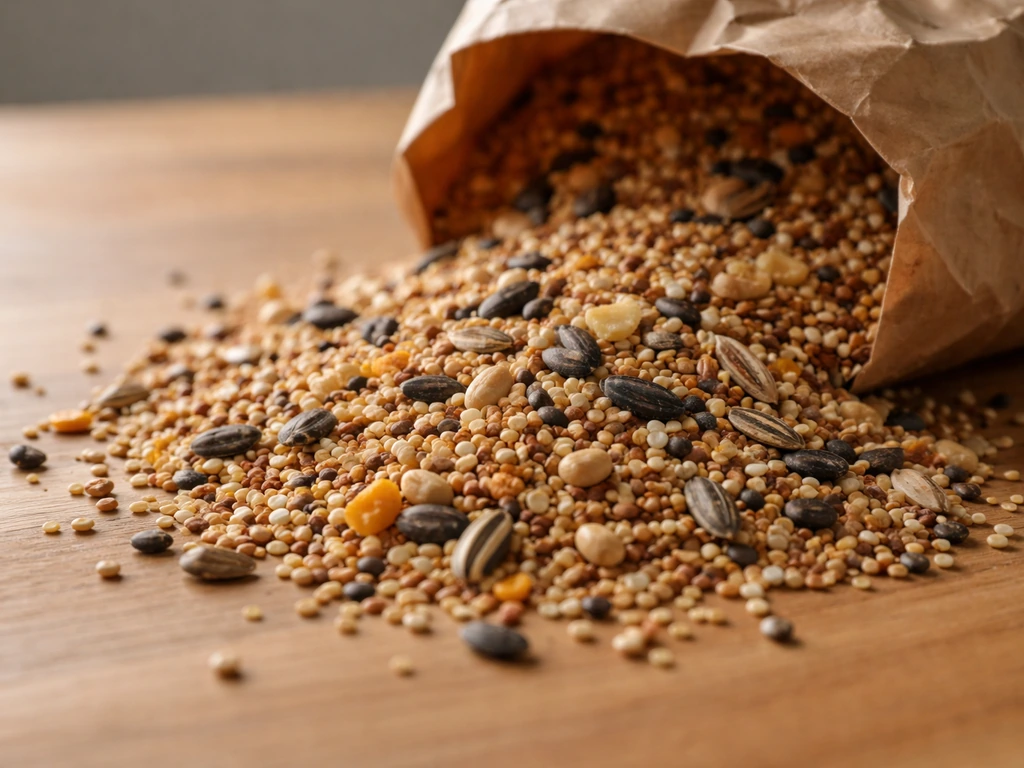
A pure substance has the same composition in every sample. Elements (one type of atom) and compounds (elements bonded in a fixed ratio, like water) are pure substances. A mixture is simply two or more substances combined without any chemical bonding. Mixtures split into two types: homogeneous (uniform throughout, like saltwater) and heterogeneous (visibly non-uniform, where you can see and physically separate the components). Bird seed fits squarely in the heterogeneous mixture category. You can look into the bag and see different seed shapes and colors, and you could sort them out by hand if you wanted to. No chemical reaction is needed to combine them or separate them.
What is actually inside a typical bag of bird seed
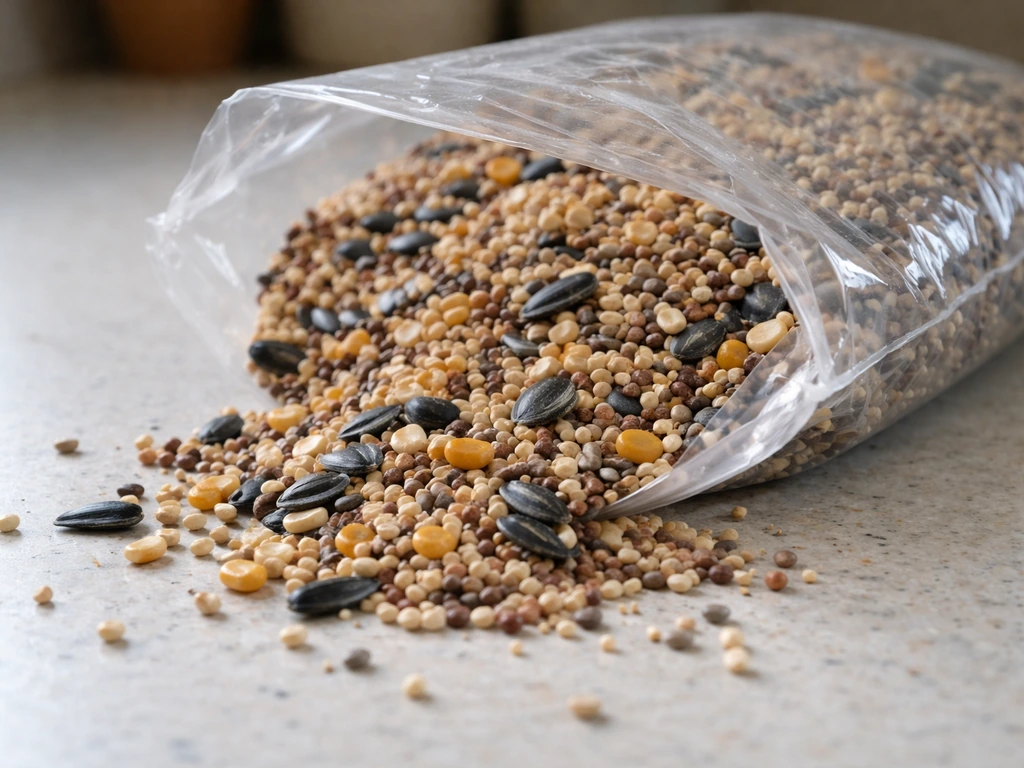
Most commercial wild bird blends list five to seven ingredients. A standard backyard blend might include white millet, cracked corn, black-oil sunflower, striped sunflower, and safflower, sometimes with shelled peanuts and a small amount of soybean or safflower oil added to reduce dust and bind coating. Premium mixes designed for specific birds, like finch mixes, lean heavily on blank" rel="noopener noreferrer">Nyjer seed, which is high in oil and spoils faster than drier seeds. Budget blends often pad the formula with wheat, milo, and oat groats, which most songbirds ignore. All of these components have different densities, oil content, and moisture tolerance, which matters a lot once you open the bag and start storing it.
Why bird seed is never truly "pure", even in single-seed bags
You might wonder whether a single-ingredient bag (say, 100% black-oil sunflower) could count as a pure substance. It cannot, for a few practical reasons. Real-world seed lots contain chaff, dust, broken seed pieces, and small amounts of foreign material. AAFCO's feed ingredient rules actually acknowledge the presence of chaff and dust as expected components in seed products. Corn-based seed components carry a meaningful aflatoxin contamination risk, and that contamination exists at a microscopic level even when the grain looks clean. Add in the fact that seeds from different harvest lots are combined in processing, and you end up with a product whose composition is not fixed or uniform. That variability is the opposite of what defines a pure substance.
- Chaff, dust, and broken seed pieces are present in virtually all seed products
- Oils added to blends create a chemically distinct component mixed in with dry seeds
- Filler ingredients like milo or wheat are common in economy mixes and are easy to miss on a quick glance at the bag
- Seed from multiple harvest lots is combined during processing, so composition shifts slightly between bags
- Aflatoxin contamination on corn can be present before any visible mold appears
Homemade vs commercial seed: does purity ever come into play?
Some backyard birders mix their own seed to avoid fillers or target specific species, buying black-oil sunflower, safflower, or Nyjer in bulk and combining them at home. This gives you more control over the ingredient list, but the result is still a heterogeneous mixture, just one you assembled yourself. The components remain physically separate and identifiable. Where homemade blending actually helps is consistency: you know exactly what went in because you bought each ingredient separately and can inspect each one before mixing. Commercial blends, by contrast, are formulated to a recipe for year-round consistency, but that recipe is a manufacturer's standard, not a chemical guarantee of uniformity.
Whether you are comparing homemade mixes to store-bought blends, suet cakes to loose seed, or pelletized feed to raw seeds, the mixture classification holds in every case. None of them qualify as pure substances. The practical difference between your DIY mix and a commercial bag is traceability and ingredient quality, not chemical purity.
How to check what is actually in your bag
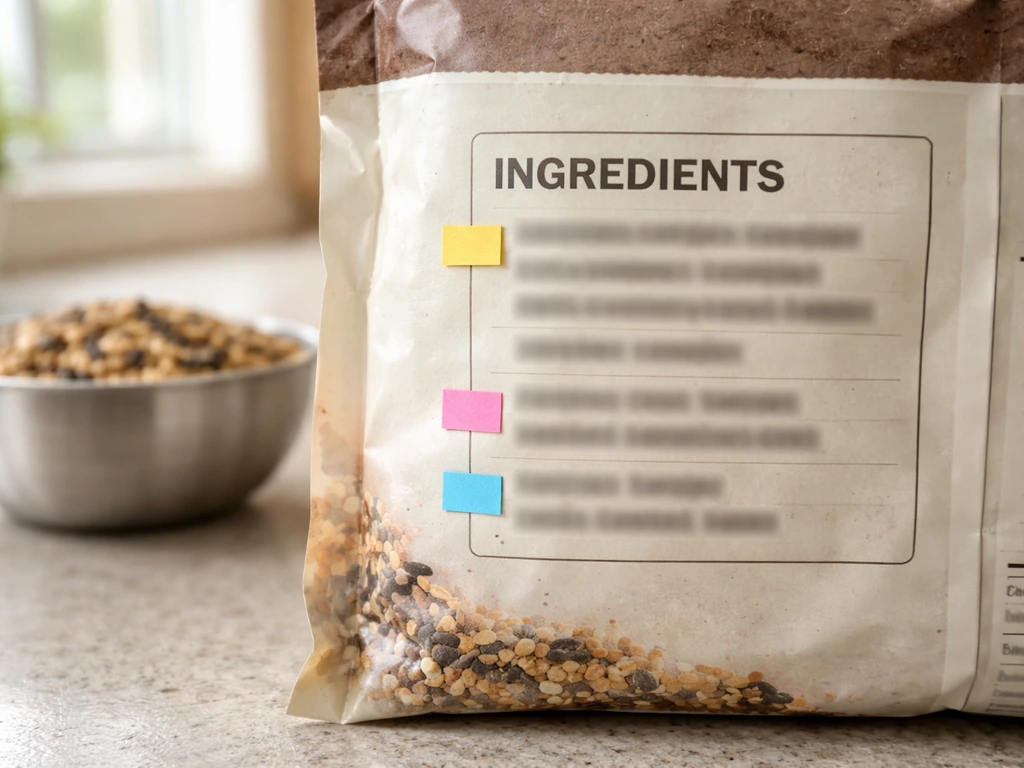
Start with the ingredient list on the label. WBFI guidelines require ingredients to be listed in order of predominance by weight, so whatever is listed first makes up the largest portion of the bag. A bag that leads with milo or wheat is a budget blend built around cheap fillers. A bag that leads with black-oil sunflower or Nyjer is designed to attract higher-value songbirds. Look for the guaranteed analysis panel, which will show minimum crude protein and fat, and maximum crude fiber and moisture. High maximum moisture (above 12 to 14 percent) is a red flag for faster spoilage.
- Read the ingredient list: first ingredient is the largest component by weight
- Check for added oils or preservatives listed toward the end of the ingredient panel
- Look at the guaranteed analysis for maximum moisture content
- Open the bag and do a visual check: you should see distinct, intact seeds without clumping, off smells, or visible dust-heavy residue
- Look for a lot number or production date on the bag so you can track when it was packed
- If the label says "bird seed mix" with no individual ingredient breakdown, consider it a blend of uncertain quality until you can inspect the contents directly
What being a mixture means for storage, spoilage, and pests
Because bird seed is a heterogeneous mixture of components with different properties, it does not behave as a single, stable product in storage. High-oil seeds like Nyjer spoil faster than dry seeds like millet. Cracked corn is the component most vulnerable to aflatoxin if exposed to warm temperatures and humidity. A single damp handful of corn in a 20-pound bag can become a mold source that spreads to the surrounding seeds. This is why treating the bag as a uniform product and storing it loosely indoors is a mistake.
| Component | Spoilage Risk | Primary Threat | Storage Note |
|---|---|---|---|
| Black-oil sunflower | Moderate | Rancidity from oil oxidation | Keep cool and dry; use within 1 to 2 months of opening |
| Nyjer (thistle) | High | Oil goes rancid quickly | Buy small quantities; rotate stock every 4 to 6 weeks |
| Cracked corn | High | Aflatoxin mold in humidity | Most critical to keep dry; discard any clumped or discolored pieces |
| White millet | Low to moderate | Moisture-triggered sprouting | Watch for clumping after rain or humidity exposure |
| Safflower | Low | Slow to spoil relative to oily seeds | Longest shelf life in most blends |
For storage, keep seed in a sealed hard-sided container indoors in a cool, dry location. Do not leave the original paper or thin plastic bag sitting in a garage or shed where temperature swings and humidity are hard to control. A metal or heavy-duty plastic bin with a tight lid stops rodents and keeps moisture out. Check stored seed every two to three weeks by opening the container and doing a quick sniff and visual scan. Clumping, a sour or musty smell, or visible webbing from stored-product insects are all signs to act on immediately.
If you find a light insect infestation (grain weevils or moth larvae are the most common), sifting the affected seed through a coarse screen can remove adults and larvae, and freezing the remaining seed at 0 degrees Fahrenheit for four days kills any eggs. However, if mold is present, discard the entire affected portion. Aflatoxins can exist on corn even before visible mold appears, and no amount of sifting makes contaminated seed safe.
Species-specific notes and cleanup when seed goes bad
Different birds interact with different components of a mixed bag, and that separation at the feeder gives you practical information. Cardinals and grosbeaks crack large sunflower seeds and drop hulls. Sparrows and juncos scratch through millet on the ground. Chicken scratch is often sold as a cheaper, lower-quality feed blend, so it can differ a lot from bird seed in ingredients and intended use. Doves and pigeons are drawn to cracked corn and milo. Goldfinches dominate Nyjer feeders almost exclusively. When a blend contains fillers like milo or wheat, you will often see seed kicked to the ground untouched by songbirds, where it becomes a germination problem or attracts starlings and house sparrows.
When seed goes bad at the feeder, the cleanup approach depends on where the problem is. For platform feeders and tray feeders, remove all seed, scrub the surface with a 9-to-1 water-to-bleach solution, rinse thoroughly, and let it dry completely before refilling. For tube feeders, use a long bottle brush to scrub the interior ports and base where wet hulls and seed debris collect. Spent hull piles on the ground underneath feeders decompose slowly and harbor bacteria and fungal spores, so rake them out at least once a week during wet weather. In regions with heavy rainfall or high summer humidity (the Gulf Coast, Pacific Northwest, or Southeast), plan to clean feeders every five to seven days rather than monthly.
If you have been putting out a broad blend and attracting unwanted species or dealing with constant waste and mold, switching to a single-component feeder setup is worth the effort. Offer black-oil sunflower in one feeder, Nyjer in a sock or tube designed for finches, and safflower in a platform for cardinals. You will waste less seed because birds take what they want, the components with different spoilage rates are no longer mixed together, and cleanup becomes simpler. It is the most practical payoff from understanding that bird seed is a mixture: managing each component on its own terms. Bird pellets can also be an alternative, but the key differences from seed come down to composition and how they affect spoilage and pests.
FAQ
If a bag says “single ingredient” or “100% black-oil sunflower,” is bird seed still a mixture?
No, “100%” on a bird seed label does not make it a pure substance. Even single-ingredient products still include expected non-seed material like chaff, dust, and broken seed pieces, plus microscopic contaminants that you cannot see. Pure substances require a fixed chemical composition, not just one named seed type on the bag.
Once I mix the seeds inside a bag, does bird seed become a homogeneous mixture?
Yes, it remains a heterogeneous mixture even after mixing or when you shake the bag. The individual components (sunflower kernels, millet, oils, hulls, and dust) still have different properties and can be physically separated, and the composition can vary across lots.
If I store the bag sealed, will the seed spoil at the same rate everywhere?
Not reliably. Bird seed is not just “one material with one formula,” so moisture and oil content can vary between components and between areas inside the bag. A frozen or sealed bag slows spoilage, but it does not guarantee uniform shelf life across every component.
Can I sift out the bad pieces and keep the rest of the seed if it starts to go moldy?
You can, but the mixture logic still applies. Sorting works best for visible whole seeds, not for dust, chaff, or microscopic mold and aflatoxin risk on corn. If mold is present, removal by sifting is not a safe fix for contaminated portions.
Why does my bird seed smell “rancid” or clump even when the bag is unopened?
Check storage conditions first. If you notice “off” odors, clumping, or webbing, you are dealing with spoilage or stored-product insects, not normal settling. Those signs indicate the seed chemistry has changed enough that you should stop feeding and address the underlying cause.
Is vacuum-sealing bird seed a good alternative to a sealed container?
A vacuum can help against insects and reduce airflow, but it cannot remove moisture already in the seed or prevent condensation from temperature swings. Use a hard-sided, airtight container and keep it in a cool, stable indoor spot to minimize humidity changes.
Can I move seed from a “bad” bag to a clean container and keep feeding?
No. Re-using a partially spoiled bag elsewhere usually spreads contaminants, including insect eggs and fungal spores, to the new feeding area or container. If you discard or freeze, do it consistently and clean any containers or bins that touched the problem seed.
Does bird seed count as a pure substance when it’s pelletized?
Yes, the classification stays “mixture” across formats, including pellets. Pellets can be compressed and coated, but the underlying feed is still composed of multiple ingredients (seed components plus binders and additives).
What label info helps me compare different seed bags if the mixture is not chemically uniform?
Look for “guaranteed analysis” ranges and ingredient order, but do not expect chemical uniformity. High oil seeds like Nyjer and sunflower generally have faster spoilage windows than drier grains, so comparing guarantees is more useful for predicting performance than for proving purity.
Would feeding only one seed type at a time change anything besides bird choices?
It’s a practical step. If you feed one component at a time (for example, sunflower only), you reduce cross-contamination between components with different spoilage rates, and your cleanup gets easier because there is less mixed waste.
My feeder has a few tiny moths. Does that mean the entire seed bag is contaminated?
Some insects and residues are hard to see in early stages. If you start seeing tiny moths, webbing, or tunneling, remove the seed source promptly, then freeze any remaining seed you plan to keep for at least several days to kill eggs.