For most pet parrots, parakeets, and cockatiels, pellets are the better base diet. Seeds are high in fat, low in key vitamins and minerals, and let birds cherry-pick their favorites while skipping the rest. That said, finches and canaries are naturally seed-eating birds that do fine with a quality seed mix as their core diet. The honest answer is: it depends on the species, and for many birds the best setup is pellets as the foundation with seeds used sparingly as treats or enrichment, not as the main meal.
What Is Better Seed or Pellets for Your Bird?
Maya Collins
24 Jun 2026
Seed vs pellets: what each one actually does for nutrition
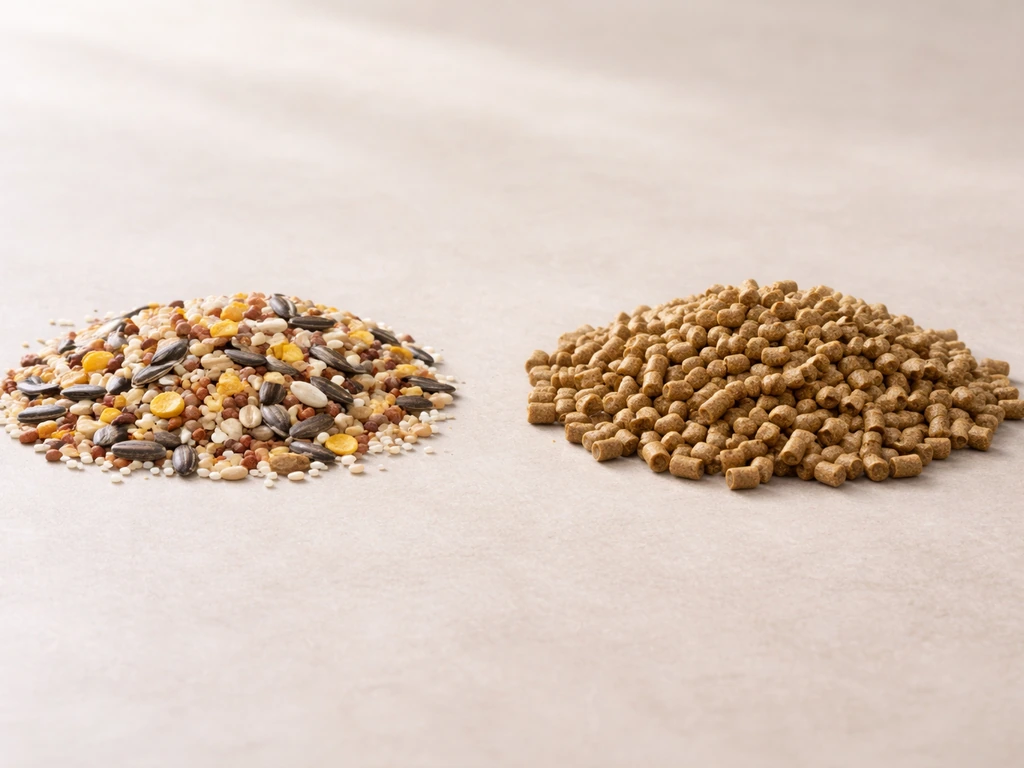
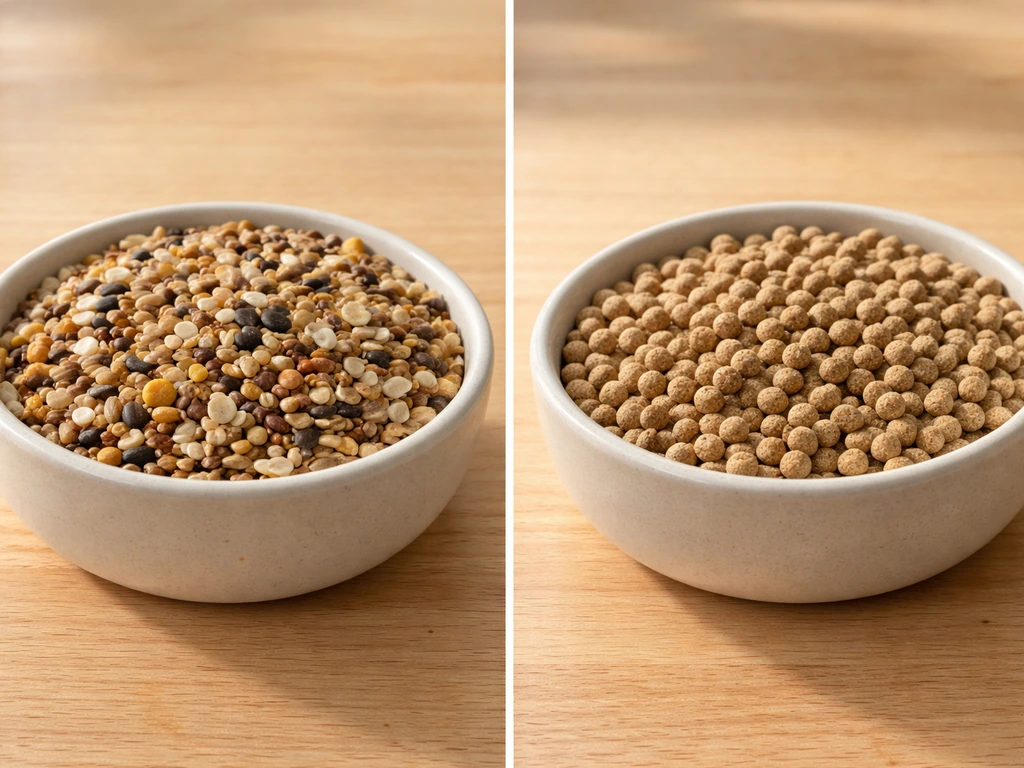
Seeds are not junk food, but they are incomplete food. Most commercial seed blends are high in fat and carbohydrates and short on vitamins A, D3, B12, calcium, and several trace minerals. The fatty acid profile also varies widely between seed types, which creates an imbalance risk when birds eat from a mixed blend selectively.
Because different seed types vary, the overall makeup of a seed blend can be uneven, which is why it is often considered heterogeneous rather than homogeneous fatty acid profile. Sunflower and safflower seeds, two of the most popular with birds, are among the highest in fat. The Merck Veterinary Manual is direct about this: [seeds should not make up the bulk of a pet bird's diet](https://www. merckvetmanual.
com/en-us/veterinary/bird-owners/choosing-and-taking-care-of-a-pet-bird/feeding-a-pet-bird) because they are not nutritionally sufficient on their own.
Pellets are formulated to close those gaps. A quality extruded pellet is designed to be nutritionally complete, meaning every bite delivers the same balance of protein, fat, vitamins, and minerals. There is no cherry-picking and no way to eat around the less-preferred parts. The Association of Avian Veterinarians and the UC Davis School of Veterinary Medicine both recommend pellet-based diets as the nutritional foundation for most pet bird species precisely because they address the imbalances that seed-heavy diets create. That said, pellets are not magic. They still benefit from fresh vegetables and leafy greens alongside them, and they need to be fresh to deliver on their nutrition promise.
| Factor | Seed Blends | Pellets |
|---|---|---|
| Nutritional completeness | Incomplete, varies by blend | Formulated to be complete |
| Fat content | Often high (especially sunflower/safflower) | Controlled, generally moderate |
| Vitamin/mineral balance | Low in A, D3, calcium, B12 | Standardized in formulation |
| Selectivity risk | High: birds pick favorites, skip rest | Low: every bite is the same |
| Acceptance by birds | Immediately preferred by most birds | Often requires transition period |
| Best for (species) | Finches, canaries, some wild birds | Parrots, parakeets, cockatiels, lovebirds |
| Freshness/storage | 6-12 months dry; mold risk if wet | Shorter shelf life once opened; absorbs moisture |
How to choose the right option for your bird's species and age
Species matters more than anything else here. Psittacines, which includes parrots, parakeets, budgies, cockatiels, lovebirds, and conures, are not naturally heavy seed eaters in the wild. In captivity, an all-seed diet for these birds is a known driver of nutritional deficiency disease. Pellets are the right primary food for this group, with fresh vegetables as a daily supplement and seeds as an occasional treat. Passerines, meaning finches, canaries, and related small songbirds, are genuinely seed-adapted. Their digestive systems and foraging behavior are built around seeds, and most do well with a good-quality seed mix as the core of their diet, rounded out with soft foods like egg food or greens.
Age matters too. Juvenile birds that are still being weaned or recently weaned are often introduced to pellets more easily than adult birds that have been eating seed for years. If you have a young bird, starting with pellets early is much simpler than converting an adult seed addict later. Adult birds that have eaten seed their whole lives can and do convert, but it takes patience. Breeding birds and birds recovering from illness should not be switched mid-cycle. The Merck Veterinary Manual specifically cautions against diet conversion if the bird is underweight or sick.
- Parrots, parakeets, budgies, cockatiels, lovebirds, conures: pellets as the primary diet (50-70% of total intake), fresh vegetables daily, seeds as treats only
- Finches and canaries: quality seed mix as the core diet, supplemented with egg food, greens, and occasional soft fruits
- Juvenile birds: introduce pellets early during weaning for easier long-term acceptance
- Senior or recovering birds: do not change diet without veterinarian guidance
- Breeding birds: maintain their established diet during breeding season and convert after
Pellet size is not a minor detail. A budgie or parakeet will struggle with a pellet sized for a medium parrot and may simply ignore it. Mini pellets, designed for small birds, are meaningfully more accepted by budgies and cockatiels than standard-sized ones. Match pellet size to the bird's beak size: small pellets for budgies and parrotlets, medium for cockatiels and conures, larger for amazons and macaws.
Practical feeding setup: amounts, transition steps, and schedules
How much to feed
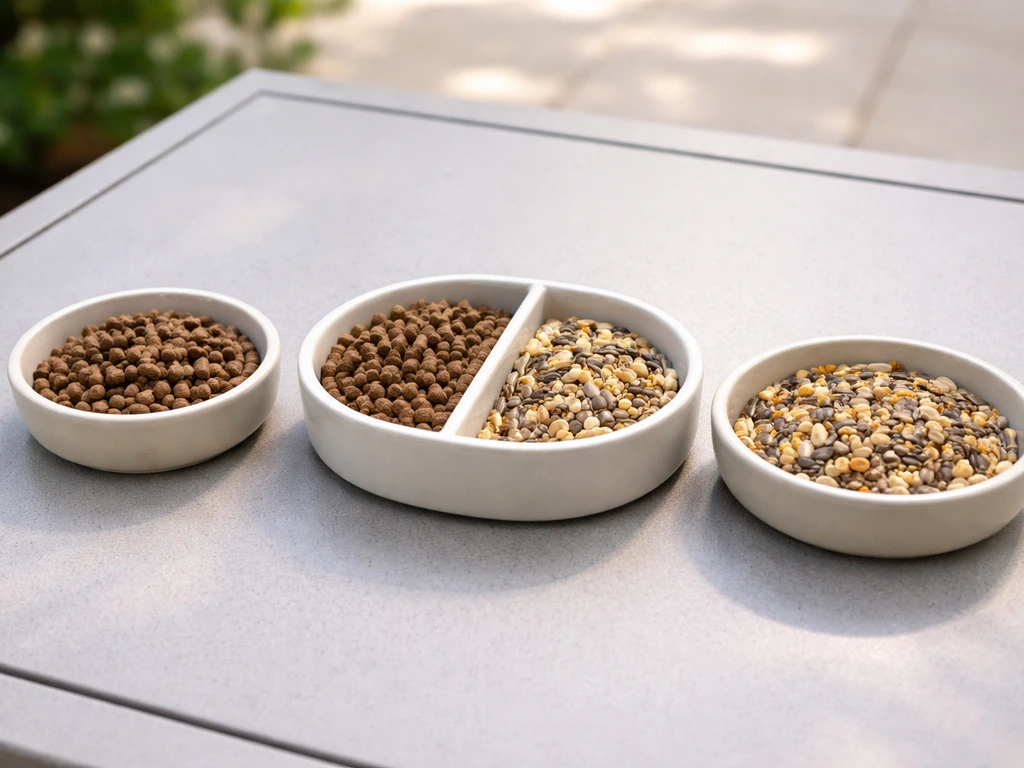
A general rule for psittacines: pellets should make up about 50-70% of the total diet by volume. Fresh vegetables (leafy greens, carrots, bell peppers) fill another 20-30%. Seeds and treats, including fruit, make up the remaining 10% or less. Seed is typically a mixture of different grains and other ingredients rather than a single pure substance, so its composition can vary by product Seeds and treats. For a budgie or small parakeet, that translates to roughly 1-1.5 teaspoons of pellets per day plus a small pinch of fresh greens. A cockatiel eats about 1.5-2 teaspoons of pellets. Larger parrots need proportionally more, but the ratio stays similar. Remove uneaten fresh food after 2-4 hours to prevent spoilage.
How to transition from seed to pellets safely
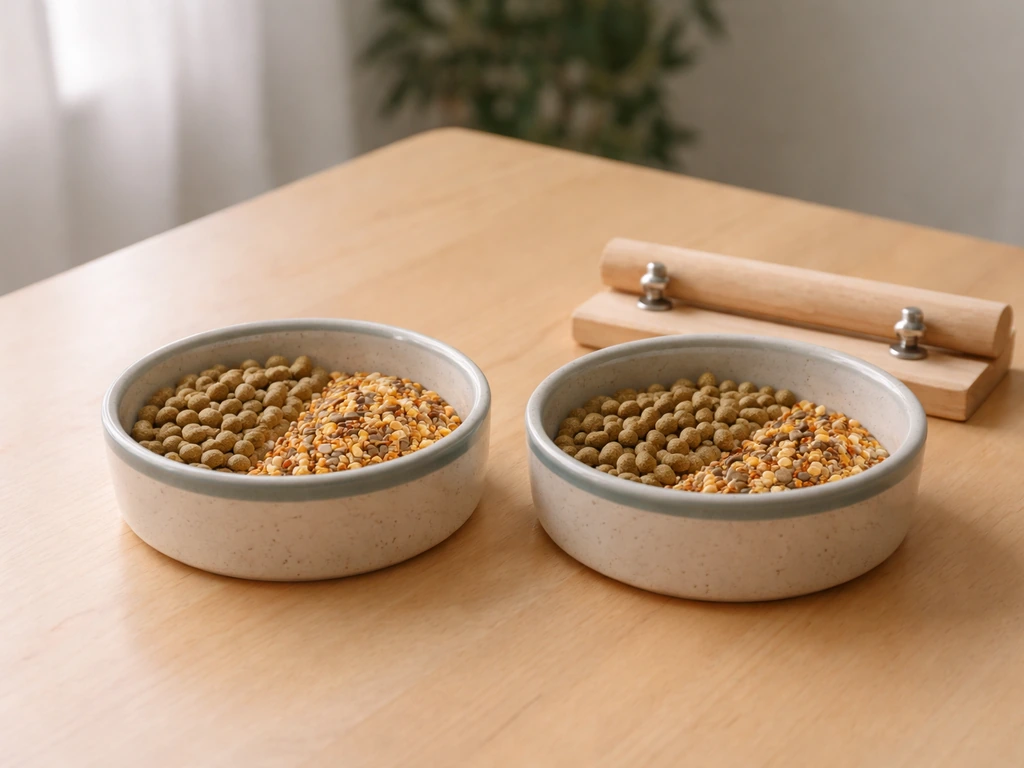
The biggest mistake people make is switching cold turkey. Most birds, especially long-term seed eaters, do not recognize pellets as food at first. Abrupt removal of seed can cause a bird to go without eating long enough to become dangerously underweight. The goal is gradual substitution over several weeks, not days.
- Week 1: Place pellets in the food bowl alongside the normal seed. Do not reduce seed yet. The goal is familiarity. Try sprinkling a few pellets on top of the seed so the bird encounters them while foraging.
- Week 2: Shift to roughly 25% pellets and 75% seed by volume. Offer pellets in the morning when the bird is hungriest, and add seed later in the day. Merck recommends this timing strategy specifically because birds are most motivated to eat after the overnight fast.
- Week 3-4: Move to about 50% pellets and 50% seed. Watch droppings and body weight. If the bird seems lethargic, is losing weight, or droppings drop off dramatically, slow the transition down.
- Week 5-6: Aim for 75% pellets and 25% seed. Some birds reach this point faster, some slower. Follow the bird's pace, not a rigid calendar.
- Week 7 and beyond: Seeds become an occasional treat rather than a staple. Most birds accept this comfortably by this point if the transition was gradual.
A helpful technique during the transition is to grind a small amount of pellets into powder and mix it into the seed. This exposes the bird to the pellet taste and smell without requiring it to pick up an unfamiliar object. Some birds also respond well to bridge foods, like pellet-heavy products that include familiar textures such as grains and dried fruit, which can ease the shift from seed to pure pellet.
One caution that often gets overlooked: once a bird is on a complete pelleted diet, do not add vitamin or mineral supplements to the water or food. Harrison’s-hosted AAV feeding brochure material that includes Table 4.2.2f advises against adding vitamin or mineral supplements to the water or food after switching to a complete pelleted diet. Pellets already contain balanced levels of these nutrients, and adding more creates a real risk of over-supplementation. This is especially relevant for small birds like finches and canaries if they are ever introduced to a formulated diet.
Feeding schedule
Two feeding sessions per day works well for most pet birds: one in the morning and one in the early afternoon. Fresh food (vegetables, any soft foods) should be offered in the morning and removed within 2-4 hours. Pellets can stay in the bowl longer but should be refreshed daily. Avoid leaving seed in the bowl all day without tracking intake, since this makes it easy to miss the early signs of a bird going off food.
Freshness, storage, sprouting, and mold prevention for seed and pellets
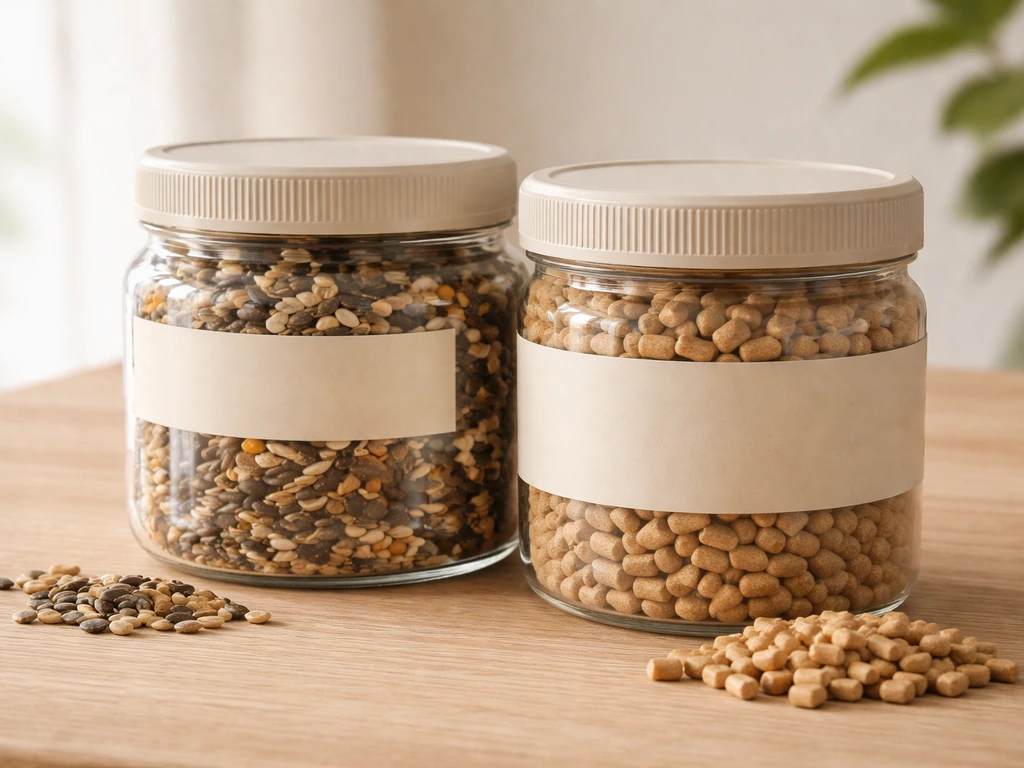
Both seed and pellets go bad, and both can make birds sick if stored carelessly. The two main threats are moisture (which causes mold and aflatoxin risk from Aspergillus growth) and insects (which consume and contaminate the food). Seed stored at room temperature in a dry environment stays usable for roughly 6-12 months. Pellets, once opened, are typically good for 30-60 days before fats begin to oxidize and vitamin potency degrades. Always check the manufacturer's date.
- Store seed and pellets in airtight containers, not the original paper or thin plastic bags
- Keep containers in a cool, dry location away from direct sunlight and heat sources
- Never mix new stock on top of old stock: empty and clean the container first
- Check stored seed every two weeks during warm months and monthly during cooler months for clumping, off smells, or visible insects
- If seed smells musty, looks clumped, or has any visible mold, discard the entire batch
- Do not store large quantities that will outlast the freshness window: buy in amounts you will use within 4-6 weeks for pellets and within 2-3 months for seed
Sprouting seed is a separate issue. Intentional sprouting (soaking seed until it germinates) actually improves nutritional value and is popular with many bird keepers. But seed that sprouts unintentionally in the bowl or storage container because of moisture is a contamination risk. Wet seed in a warm bowl can grow mold within hours. Change water dishes frequently if they are positioned where seed falls in, and check the seed bowl daily for any clumping or wet spots.
Pests and hygiene: rodents, insects, and cleanup strategies
Stored bird seed and pellets are a reliable attractant for rodents, grain beetles, and mealworms. Mealworm infestations are particularly common in areas where seed has accumulated and been forgotten, like the base of a storage bin or under a feeder. The conditions that drive pest outbreaks are moisture, warmth, and undisturbed accumulation, which makes basic storage hygiene the most effective prevention.
- Use hard-sided, sealed containers (metal or thick plastic with locking lids) for all bulk seed and pellet storage. Rodents chew through paper bags and thin plastic within minutes.
- Clean the feeder or food bowl completely every week. Rinse with hot water and mild soap, then dry fully before refilling. Do not let old hulls, seed dust, or moist pellet crumbles build up.
- Sweep or vacuum under and around the feeding area daily or every other day. Spilled seed on the floor is an open invitation for insects and mice.
- Inspect storage containers every two weeks in warm weather. Look for live insects, webbing, droppings, or off smells. If you find pests, discard the contaminated batch, wash the container with hot soapy water, dry completely, and do not reuse until clean.
- If rodents have accessed a storage area, discard the entire batch and sanitize the container and surrounding area before restocking. Rodent urine and droppings carry pathogens that can harm birds.
- In warm, humid climates, consider a refrigerator or dedicated cool storage room for pellets to extend freshness and reduce insect activity.
Fungi producing aflatoxins can develop in stored seed when moisture and temperature conditions favor Aspergillus mold growth. This is not a theoretical risk: aflatoxin-contaminated grain is a documented problem in feed storage, and birds are sensitive to it. Keeping storage dry and rotating stock frequently is the most practical line of defense.
Troubleshooting common issues
Bird refuses pellets entirely
This is the most common complaint during transition. The core issue is that birds often do not recognize pellets as food, especially when the pellets look nothing like anything they have eaten before. Try crushing or grinding pellets into a fine powder and mixing it with seed so the bird ingests some pellet material without having to pick up the pellet itself. Some birds respond to watching you pretend to eat the pellet enthusiastically (birds are social eaters). Placing a mirror near the food bowl sometimes helps too, since seeing a "flock mate" eat can encourage a reluctant bird to try. If refusal persists beyond 3-4 weeks with no progress, consult an avian vet before reducing seed further.
Loose or changed droppings during transition
Looser droppings during a diet switch are common and usually temporary. Pellets have a different moisture content and fiber profile than seed, and the digestive system takes a week or two to adjust. If droppings are looser but the bird is active, eating well, and maintaining weight, monitor and wait. If droppings are very watery, have an unusual color, or the change persists beyond 2 weeks, have the bird checked by a vet. Do not mistake the larger urine component of droppings (common with higher-water foods like fresh vegetables) for diarrhea.
Suspected nutritional gaps
If a bird has been on an all-seed diet for a long time, vitamin A deficiency is the most common issue to watch for. Signs include flaky skin, respiratory problems, and dull feather color. Switching to pellets is the most practical fix, but it should be paired with a vet visit if you suspect active deficiency, since the bird may need short-term nutritional support. Do not start supplementing vitamins into the water on your own, because the doses are hard to control and over-supplementation of fat-soluble vitamins (like A and D) causes its own problems.
Bird picks out only certain pellets or seed
Selective eating is common and undermines a mixed diet. If you are using a seed blend and your bird consistently eats only sunflower and millet while ignoring everything else, the bird is not getting a balanced diet regardless of what the bag label says. This is also the heart of the “bird pellets vs seed” question, because seed blends can make it easy for birds to skip key nutrients.
This is a strong argument for moving to pellets, where every piece has the same nutritional content. If you need to keep seeds in the rotation, offer them in a separate small cup so you can see exactly how much the bird is eating and not mistake hull piles for actual food consumption.
Bird losing weight during transition
If the bird drops noticeable weight during a pellet transition, slow down immediately and increase seed back to the previous level. Weight loss during conversion is a sign the bird is not eating enough of the new food yet, not a sign to push harder. Weigh small birds weekly with a kitchen scale to catch this early. A budgie should weigh between 25-35 grams, and a cockatiel between 80-100 grams. Drops of more than 10% from the bird's normal weight warrant a vet visit before continuing the conversion.
Where to go from here
If you have a parrot, parakeet, budgie, or cockatiel, the most useful thing you can do today is pick up a bag of appropriately sized pellets and start introducing them alongside the current seed using the week-by-week plan above. Do not rush it, do not cut seed cold turkey, and weigh your bird weekly so you have an objective read on how the transition is going. If you have finches or canaries, focus on sourcing a fresh, high-quality seed mix and adding soft foods like egg food and fresh greens rather than pushing pellets as the primary diet.
On the storage and hygiene side, the easiest upgrade is moving seed and pellets out of their original bags and into sealed hard-sided containers today. That one change reduces mold risk, pest access, and nutritional degradation meaningfully. If you are also interested in how pellets compare more broadly to other food formats, the comparison between bird pellets and seed diets and the question of suet versus seed are worth exploring as companion topics depending on what birds you are feeding. If you are curious about how suet fits into feeding, see the comparison of suet vs bird seed for guidance on what each option contributes suet versus seed.
FAQ
If I choose pellets, do I still need vegetables every day?
If your bird is already eating pellets, you still need to provide daily fresh produce, because pellets do not fully replace the variety of micronutrients, phytochemicals, and moisture that fresh foods contribute. Use leafy greens as the default, and introduce new vegetables one at a time to watch for refusal or digestive upset.
Can I add extra vitamins to pellet food or water to be safe?
No. If your bird is on a truly complete pellet diet, adding vitamin powders or multivitamins can push fat-soluble vitamins like A and D above safe levels. If you suspect a deficiency or the bird is unwell, ask an avian vet about targeted supplementation and the exact route (sometimes injections or specific short-term foods are used instead of water additives).
How do I know if the pellet transition is going too fast, beyond just watching droppings?
Weighing is the best “true” check, but droppings patterns can also help. Loose droppings can be normal during the switch, but a drop in weight, low energy, or refusal to eat should be treated as a conversion failure and addressed immediately by slowing the transition and contacting an avian vet if it persists.
What if my newly weaned bird refuses pellets?
Young birds often accept pellets faster, but you can still run into refusal in recently weaned birds. Expect a learning curve, offer pellets in a separate bowl near the favorite food during the first days, and use pellet powder mixed into seed rather than removing all seed immediately.
Is it okay to leave some seed available all the time as backup food?
With psittacines, you generally cannot rely on seed as a “backup” if your goal is a pellet-based foundation, because selective eating will mask the problem. If you include seeds, treat them as a measured portion in a separate cup, so you can track exactly how much is being consumed, not just what is left over.
Can I soak or mash pellets to help my bird accept them?
Yes, but only as an intentional tool. Grind pellets well or soak a small amount to create a mash, then mix with the bird’s current foods so the bird ingests pellet content without needing to recognize the pellet as a separate item. Avoid soaking large amounts for long periods, since moisture can spoil food quickly.
My bird has been on an all-seed diet for years, what should I watch for first during conversion?
If your bird has been on an all-seed diet for a long time, conversion should be slower and paired with closer monitoring of weight and appetite. If you see signs like flaky skin, breathing issues, or dull coloration, book a vet visit before you reduce seed too aggressively.
How do I choose the right pellet size, and what happens if it is wrong?
Pellet size matters because a bird may starve itself by ignoring pellets it cannot comfortably handle. Use small pellets for budgies and parrotlets, medium for cockatiels and conures, and larger sizes for bigger parrots, matching the pellet shape and hardness to the beak and bite strength.
Can I switch to pellets while my bird is breeding or recovering from illness?
Switching mid-breeding cycle or during illness can reduce feeding drive and worsen stress. If your bird is recovering, the safest approach is to ask the avian vet what transition speed to use, because they may prioritize stabilizing weight and hydration before changing the diet.
My bird refuses pellets after several weeks, what are the next steps?
If your bird refuses pellets for more than a few weeks despite gradual substitution and pellet powder mixing, it is time to involve an avian vet. Persistent refusal can be a sign of oral pain, crop or gut issues, or improper pellet palatability, so ruling out health problems is more important than continuing to reduce seed.
When should loose or watery droppings stop being considered normal transition behavior?
If pellets are already a large portion of the diet and droppings remain watery beyond about two weeks, or the bird shows abnormal color, straining, or reduced appetite, treat it as a potential health issue rather than “just adjustment.” A vet visit is warranted because watery droppings can have causes unrelated to pellets.
How can I tell if stored seed or pellets have gone bad?
Yes. Unopened seed is still vulnerable to moisture and pests once opened, and long storage at room temperature can allow fat oxidation or mold risk to increase. Keep both seed and pellets sealed in hard containers, label with purchase date, and discard anything that shows clumping, off-odors, or visible mold.