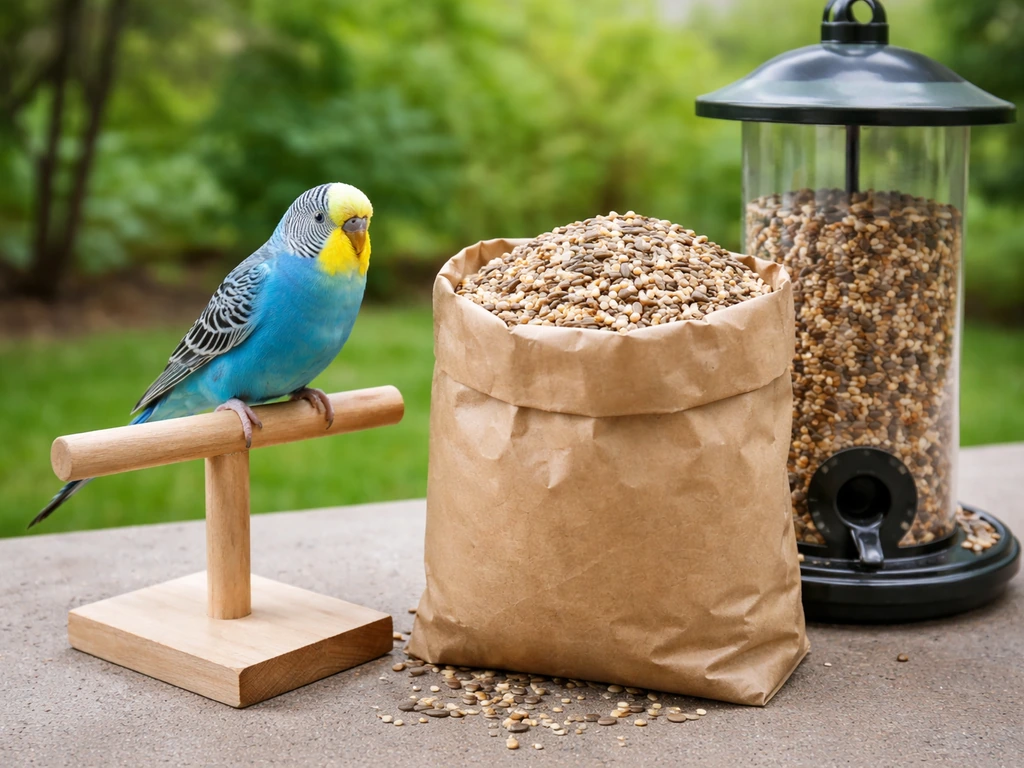
Budgies can eat some of the seeds found in wild bird mixes, but wild bird seed as a staple or even a regular supplement is a bad idea. If you mean chickens specifically, it is still best to feed them a chicken-appropriate diet rather than using wild bird seed. The short answer is: a few recognizable, mold-free seeds from a clean, fresh wild mix probably won't hurt your bird in a pinch, but wild bird seed is not formulated for budgies, often contains ingredients that are too fatty or nutritionally mismatched, and carries a much higher risk of mold and pest contamination than seed sold specifically for pet birds. The safer default is always a budgie-specific seed mix or, better yet, a formulated pellet diet with fresh produce on the side.
Can Budgies Eat Wild Bird Seed Safely? Key Risks and Rules
Maya Collins
2 Apr 2026
When wild bird seed becomes a real risk
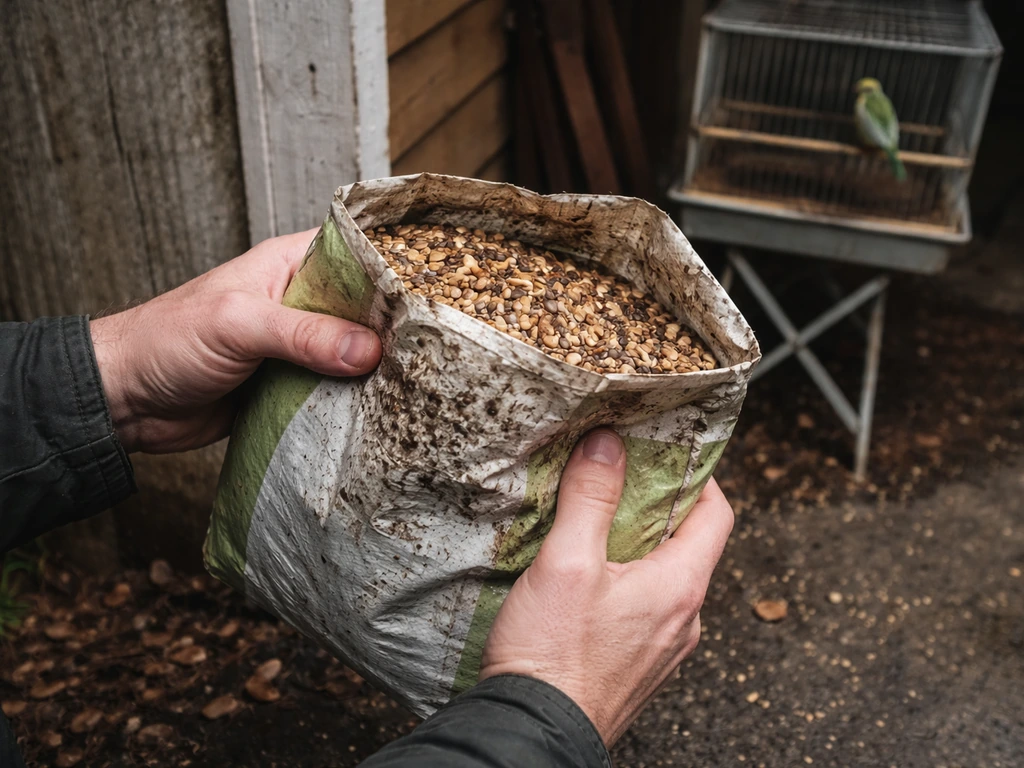
The danger isn't just nutritional mismatch. Wild bird seed is typically bought in large bags, stored in garages or sheds, and cycled slowly through backyard feeders exposed to rain, humidity, and pests. That storage environment is where things go wrong for a small pet bird. Mold that forms on improperly stored seed can produce aflatoxins, a class of mycotoxins that cause liver disease in birds. Signs of aflatoxin poisoning include sluggishness, loss of appetite, vomiting, jaundice, and unexplained bleeding. These symptoms can appear even when seed doesn't look visibly spoiled, because toxin levels can build up before you see obvious mold.
High-risk ingredients for aflatoxin contamination include corn, peanuts, and cottonseed, all of which are common in wild bird mixes. If your mix contains any of those, the bar for freshness and storage quality needs to be very high before you'd consider offering it to a budgie.
Beyond mold, wild mixes are not nutritionally balanced for budgies. Merck Veterinary Manual notes that an unsupplemented, unbalanced, seed-based diet plus “cafeteria-style” feeding is a cause of dietary deficiency in psittacine birds an unsupplemented, unbalanced, seed-based diet plus “cafeteria-style” feeding can cause dietary deficiency in psittacines. Seeds are naturally high in fat and low in many essential nutrients, and allowing a bird to pick through a mixed bag means it'll typically choose its favorites and skip everything else, which creates nutrient imbalances. Malnutrition from pure seed or seed-heavy diets is one of the most common health problems in pet budgies, leading to obesity and conditions like iodine deficiency.
What's actually in a wild bird seed mix
Wild bird mixes vary a lot by brand and target species, but most contain some combination of the following:
- Millet (white proso, red millet): budgies can eat this and it's one of the safer ingredients
- Sunflower seeds (black oil or striped): edible for budgies but very high in fat, should be a small occasional treat
- Safflower seeds: generally safe in small amounts but again fatty
- Cracked corn: higher aflatoxin risk, not ideal for budgies
- Peanuts or peanut pieces: high fat, high aflatoxin risk, not appropriate for regular budgie feeding
- Milo/sorghum: often used as filler, most small birds ignore it
- Nyjer/thistle: fine for finches, not a staple for budgies
- Oats or wheat: generally fine in small amounts
- Sunflower chips (hulled): very fatty without the benefit of the bird working for the seed
The ingredient you most want to avoid offering to a budgie from a wild mix is peanuts, especially any that look shriveled, discolored, or are in a bag that's been open for a while. Corn is the second concern. Millet is the one ingredient in many wild mixes that's genuinely budgie-friendly, which is why some people buy small bags of straight millet rather than pulling it from a mixed bag.
Compare this to a properly formulated budgie product: a complete pellet or nutri-berry style food includes multiple seeds and grains alongside added vitamins, minerals, and calcium sources like dicalcium phosphate. Wild seed mixes have none of that supplementation, so even the "safe" seeds in them don't deliver balanced nutrition on their own.
How to inspect wild bird seed before feeding any to a budgie
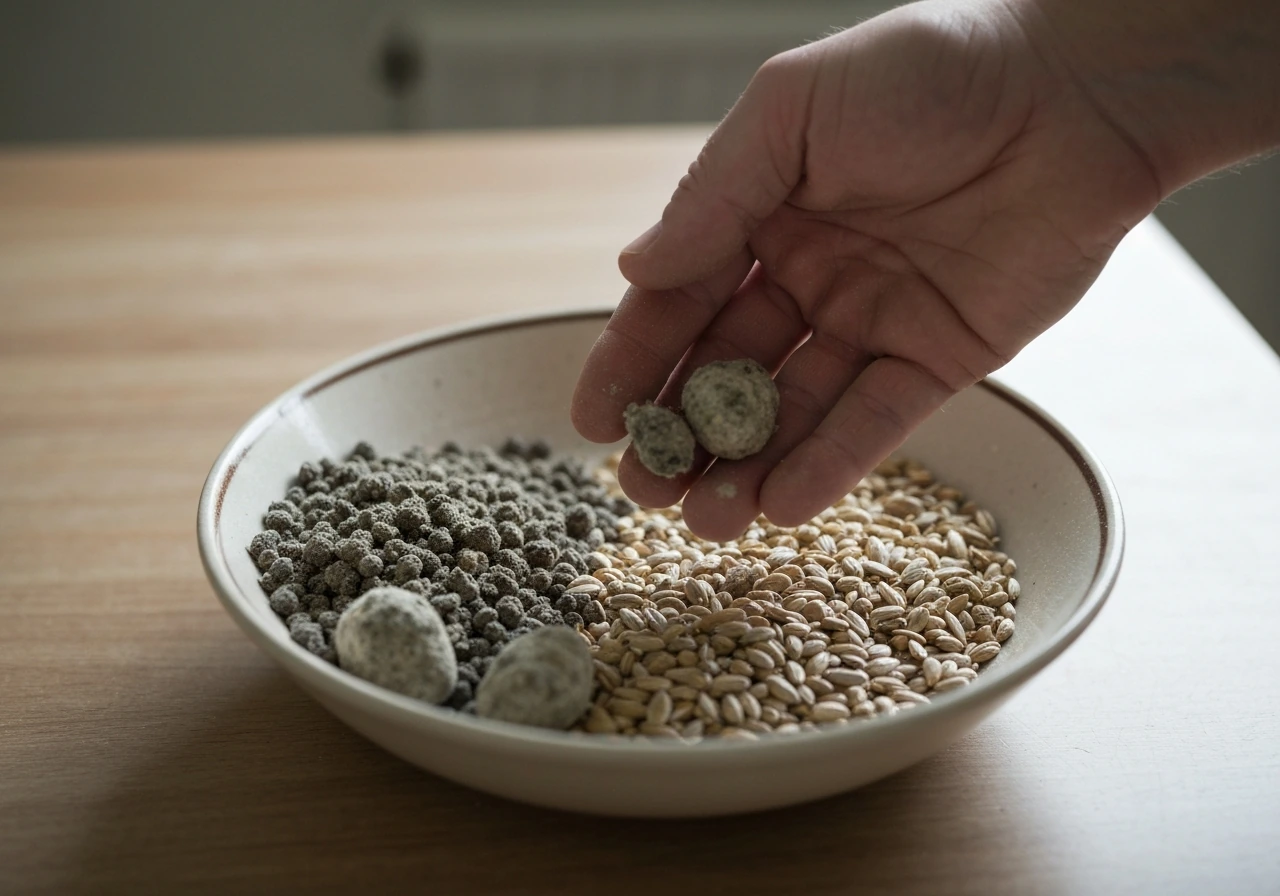
If you're going to offer any wild bird seed to your budgie, inspect it carefully first. This is non-negotiable. Here's what to check:
- Smell it: fresh seed smells neutral or slightly nutty. A musty, sour, or dusty odor means mold is already present, even if you can't see it. Discard the whole batch.
- Look for clumping or caking: seed that sticks together in clumps has absorbed moisture, which creates conditions for mold growth. Toss it.
- Check for visible mold: look for gray, green, black, or white fuzzy patches anywhere in the bag or on the seed surface. If you find any, the entire bag goes in the trash, not just the moldy portion.
- Look for insects or webbing: small beetles, weevils, or fine silk webbing between seeds means the bag has an infestation. Do not use it.
- Check for discolored or shriveled seeds: especially for peanuts and corn. Discoloration (dark spots, off-yellow) or shriveling can indicate mycotoxin contamination.
- Check the bag date and storage history: if the bag has been open for more than 4 to 6 weeks, stored in a humid area, or exposed to rain or condensation, treat it as suspect regardless of appearance.
If the seed passes all of those checks, you can sort out the budgie-safer pieces (primarily millet, small amounts of oats or safflower) and discard the peanuts, corn, and milo. Even then, treat this as an occasional supplement, not a regular food source.
Storing wild bird seed safely and preventing spoilage
Wild bird seed is typically sold in large bags designed for outdoor feeders, not for the more careful storage standards you'd apply to a pet's food. If you're storing any seed that a budgie might access, the rules are tighter.
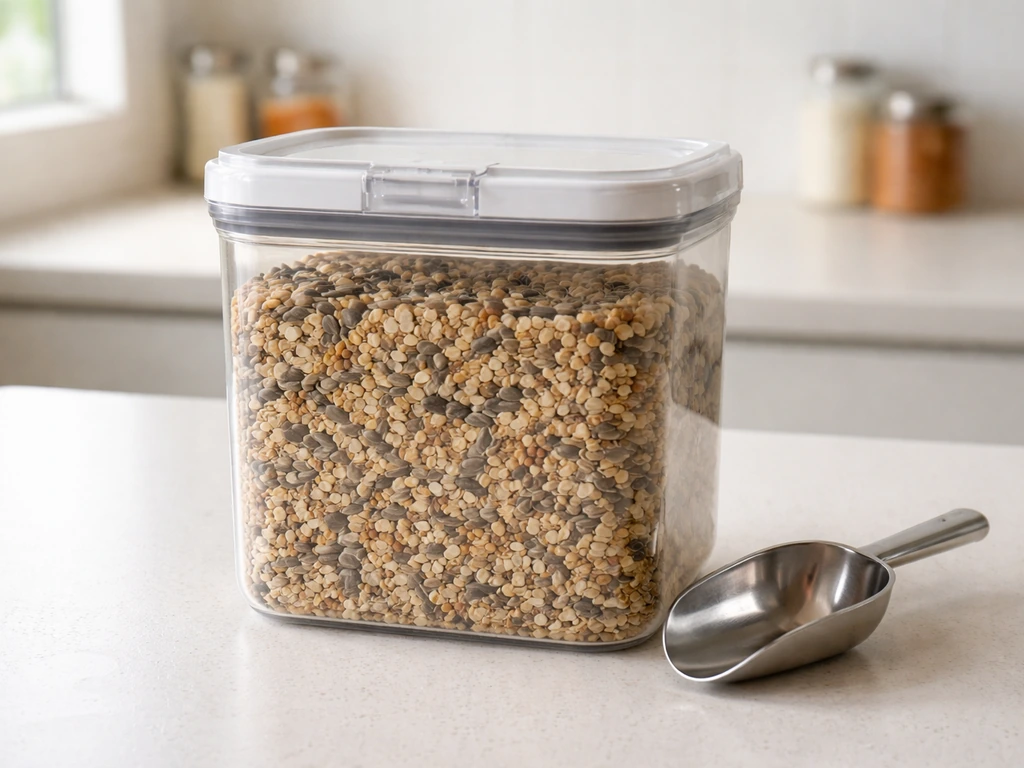
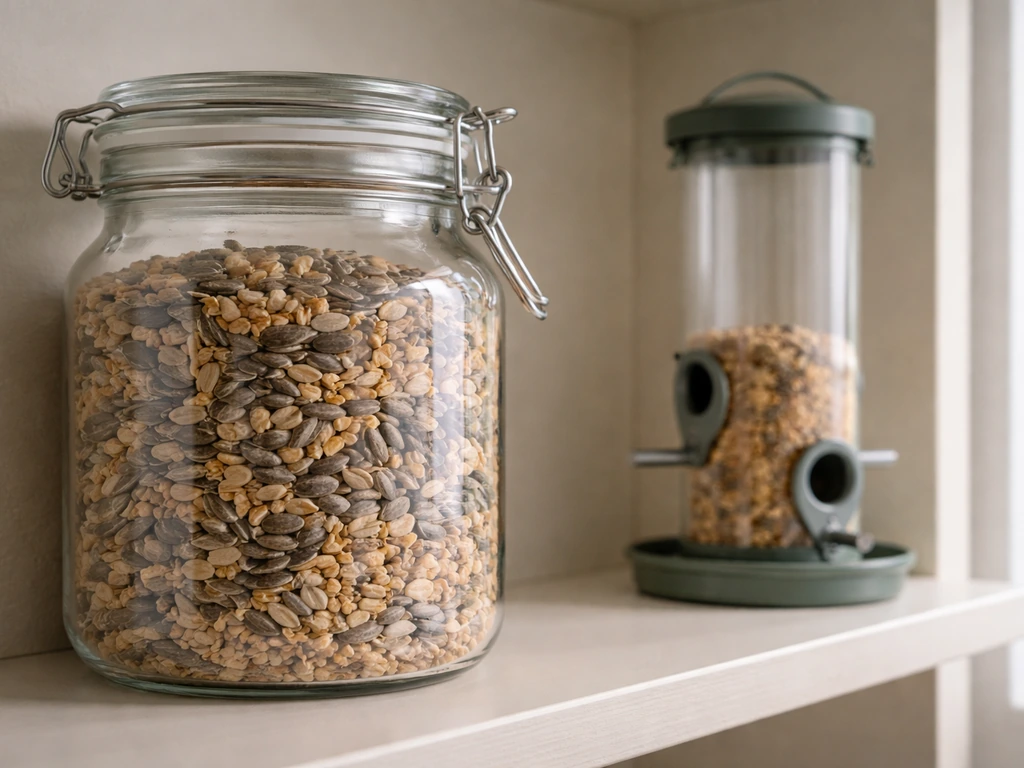
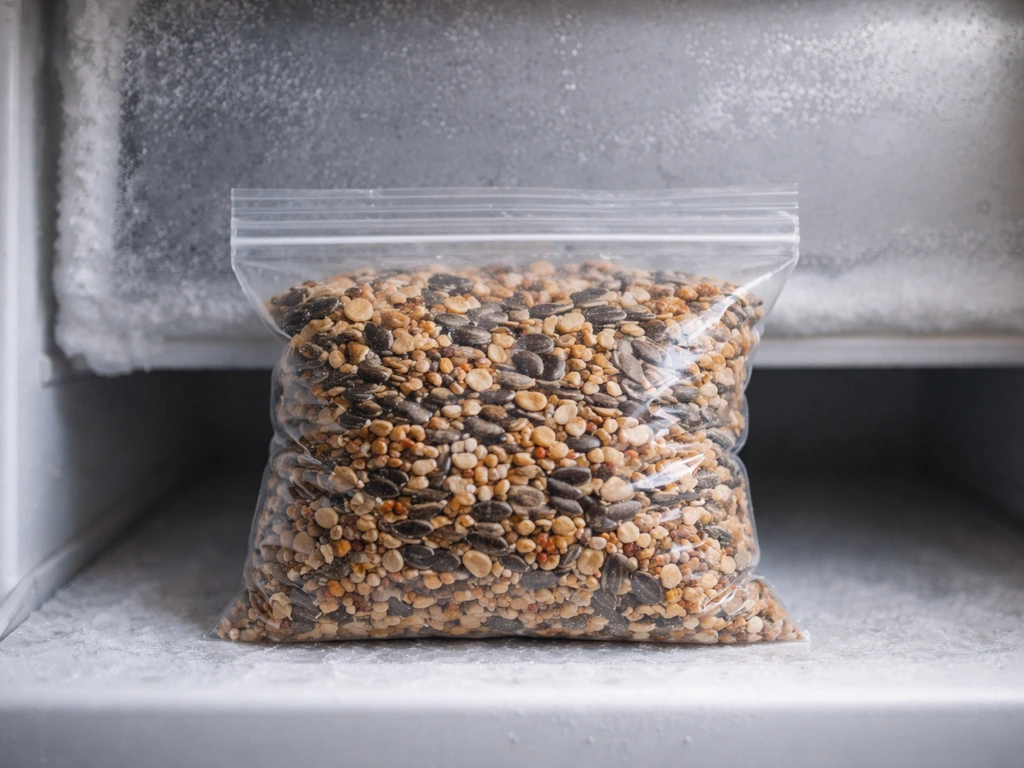
- Store in an airtight, hard-sided container (metal or thick plastic with a sealed lid), not in the original paper or mesh bag
- Keep it in a cool, dry location, ideally below 70°F (21°C) and away from humidity sources
- Do not store in a garage or shed that experiences temperature swings or dampness
- Keep pet-bird seed completely separate from backyard wildlife seed to avoid cross-contamination
- Label containers with the date you opened or transferred the seed
- Discard any seed that's been open longer than 4 to 6 weeks, or sooner if it fails the smell and visual checks above
- Rinse and dry storage containers before refilling them with fresh seed
Wet or sprouted seed deserves special attention. Wet bird seed is one of the fastest routes to mold growth. If seed has gotten damp, the safest call is to discard it entirely rather than trying to dry it out and reuse it. Mold growth can begin within 24 to 48 hours in warm, wet conditions, and the toxins it produces don't go away just because the seed dries out later.
Sprouted seed is a slightly different case. If you've intentionally sprouted clean, fresh seed (a practice some budgie owners use to increase nutritional value), that's generally considered safe when done correctly and fed immediately. But seed that has sprouted accidentally in a damp bag or feeder is not the same thing and should be discarded.
If you decide to offer it: portions, frequency, and sorting
If the seed has passed your inspection and you want to offer a small amount, here's how to do it responsibly:
- Sort first: physically remove peanuts, corn, milo, and any shriveled or discolored seeds. Use only millet and small intact seeds like safflower or oats.
- Limit the amount: think of this as a treat-level serving, roughly a pinch (half a teaspoon or less) per bird, not a bowl.
- Frequency: once or twice a week at most, not daily. Seeds should not make up the majority of a budgie's diet under any circumstances.
- Never replace their main food: wild seed should always be a supplement offered alongside, not instead of, a proper budgie pellet or formulated seed mix.
- Watch for selective eating: if your budgie starts picking out only the wild seed and ignoring its regular food, stop offering it. Selective eating from mixed seed creates nutrient gaps quickly.
- If transitioning away from wild seed, do it gradually over 1 to 2 weeks to avoid the bird refusing food entirely. Budgies can develop food neophobia and may reject unfamiliar food, and small birds can become dangerously underweight within 36 to 48 hours if they stop eating.
Keeping your feeding setup clean and avoiding cross-contamination
One often-overlooked risk is cross-contamination between backyard wildlife feeders and your budgie's food. If you maintain outdoor feeders for wild birds and then handle seed or equipment without washing your hands, you can transfer bacteria, mold spores, or even parasites to your pet bird's environment.
- Wash hands thoroughly with soap and water after filling or cleaning outdoor feeders before handling your budgie or its food
- Never use the same scoops, bowls, or storage containers for wild bird seed and budgie seed
- Clean your budgie's food bowl daily with hot water and dish soap; rinse thoroughly and let dry before refilling
- Inspect the food bowl at every refill: empty old seed before adding fresh, don't just top it up
- If you notice any seed sticking to the bowl or soft/damp patches, clean the bowl before continuing
- Discard uneaten fresh food (fruits, vegetables) within a few hours; don't let it sit and introduce moisture near dry seed
Merck's guidance for pet bird care specifically calls out keeping cages and food bowls clean as a basic feeding requirement. It's simple but it matters, because a contaminated bowl negates all the careful seed selection you've done upstream.
What to feed your budgie instead
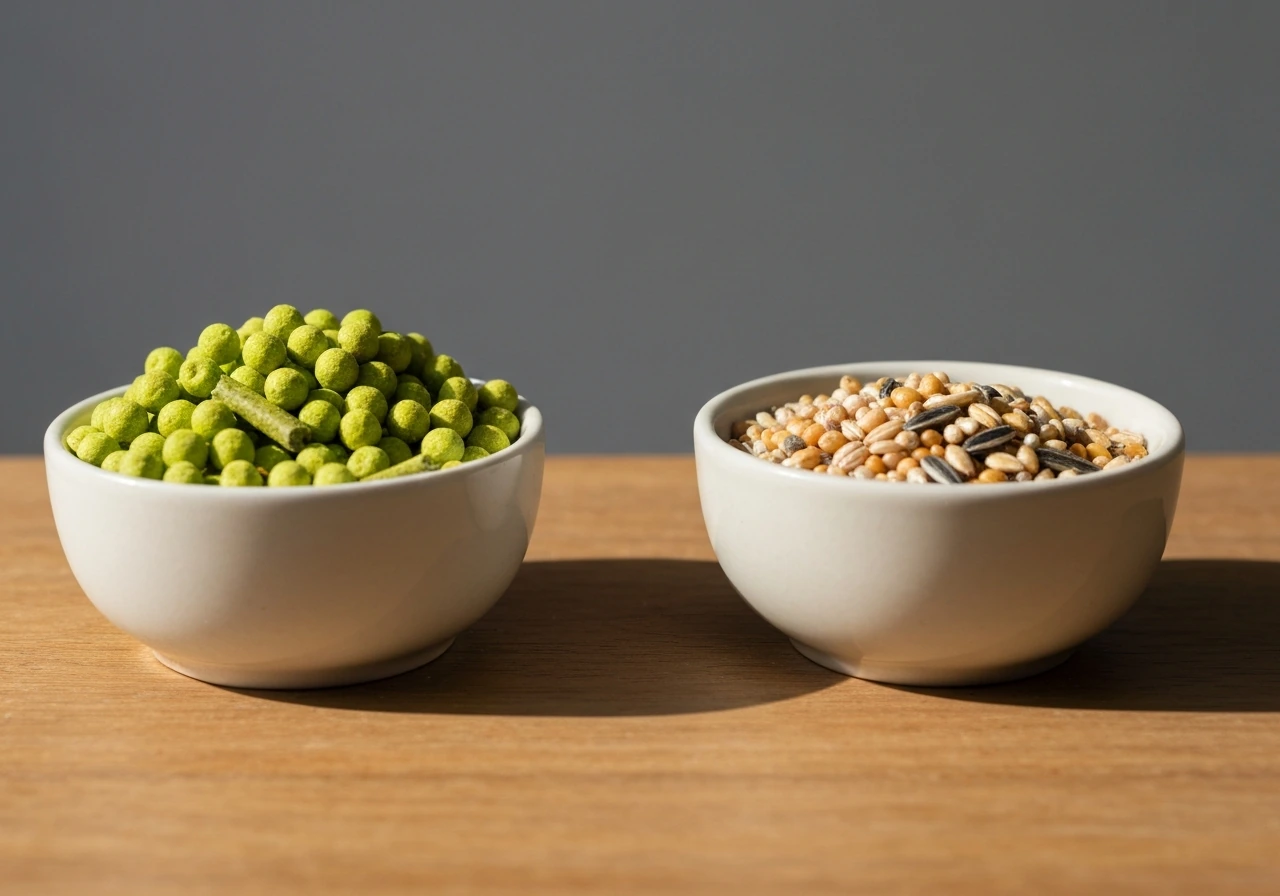
The clearest, most practical recommendation from veterinary sources is to build your budgie's diet around formulated pellets, not seed. But if you are asking can you eat bird seeds, the safer choice is to feed budgies formulated pellets instead of wild or mixed seed. A reasonable target is 50 to 70% pellets as the dietary base, 20 to 40% fresh vegetables and some fruit, and around 10% seeds or nut-based treats used for foraging or training. This isn't just opinion: a pure or mostly-seed diet is consistently linked to malnutrition and obesity in budgies, two of the most common preventable health problems in pet birds.
If your budgie currently eats mostly seed (including wild bird seed) and resists pellets, the transition needs to be gradual. If you are looking for a safe protein add-on, consider offering mealworms in a controlled, budgie-appropriate portion rather than mixing them into bird seed. One approach that works well is grinding pellets into a fine powder and sprinkling them over a small amount of moist food the bird already likes. Do this over 1 to 2 weeks, slowly increasing the pellet proportion. Never abruptly remove seed from a budgie that hasn't yet accepted pellets, given how quickly a small bird's condition can decline without adequate food intake.
If your bird refuses to transition after a couple of weeks of consistent effort, talk to an avian vet. Some birds are more stubborn than others, and a vet can confirm whether the bird's weight is holding steady and suggest additional strategies.
For the seed portion of the diet, buy a seed mix formulated specifically for budgies or parakeets rather than pulling seeds from a wild bird mix. Budgie-specific mixes are calibrated for smaller beaks and the nutritional needs of the species. They also typically don't include the high-fat, high-risk ingredients like peanuts and cracked corn that show up in backyard wildlife mixes.
Round out the diet with small daily amounts of fresh vegetables (leafy greens, carrots, bell pepper) and occasional fruit. Merck recommends fresh produce every day as part of a properly balanced bird diet. Variety matters here: rotating different vegetables gives your bird a broader range of micronutrients and keeps it engaged with food.
Your action plan for today
- Inspect any wild bird seed you've been using or considering: smell it, look for clumping or mold, check for pests. If it fails any check, discard the whole bag.
- If it passes inspection, sort out peanuts, corn, and milo before offering anything to your budgie. Limit any offering to a small pinch, once or twice a week max.
- Stop using wild bird seed as a primary or daily food source immediately if that's currently what's happening.
- Pick up a budgie-specific seed mix or formulated pellet product to replace it. If your bird hasn't eaten pellets before, start the transition gradually.
- Set up separate storage and handling for any wild bird seed (for backyard feeders) and your budgie's food. Never share containers, scoops, or bowls between the two.
- Clean your budgie's food bowl today with hot soapy water, let it dry, and refill with fresh, appropriate food.
- If your bird seems lethargic, has lost appetite, or shows any signs of illness after eating wild seed, contact an avian vet. Mention the seed exposure so they can consider aflatoxin testing if warranted.
FAQ
If my budgie already eats some wild bird seed, is it always unsafe?
Yes, but only as a very occasional, tiny portion, and only if it passes inspection, stays dry, and contains no peanuts, corn, or other high-risk items. Because wild mixes are not nutritionally balanced for budgies, even “safe-looking” seeds should never replace pellets or vegetables.
What should I do if the wild bird seed got damp from rain or condensation?
If you find wet seed, the safest choice is to discard it. Don’t try to dry it and reuse it, because mold and some mycotoxins can persist even after the seed looks dry again.
Is sprouted wild bird seed safer for budgies than dry seed?
Accidentally sprouted seeds in a feeder or bag should be discarded. Intentionally sprouting clean seed is different, and the key is that it must start with fresh, uncontaminated seed and be fed immediately before any spoilage begins.
What symptoms mean wild bird seed may have caused poisoning?
If a bird shows lethargy, loss of appetite, vomiting, yellowing of the skin or eyes, or unexplained bleeding after any questionable seed, treat it as urgent and contact an avian vet right away. Waiting to see if it “passes” can delay treatment for toxin exposure.
If I sort out only millet and toss the rest, can I make wild seed a regular routine?
Avoid selecting only the “good” pieces to make up a large portion of the diet. Sorting helps reduce specific risks, but it still leaves you with an imbalanced, seed-heavy diet, which commonly leads to obesity and nutrient deficiencies over time.
What is the safest way to transition a seed-fed budgie to pellets if the bird won’t try them?
Yes, but the method in your article implies a controlled, gradual approach. Start by sprinkling powdered pellet over the moist food your budgie already eats, then increase pellet amounts slowly, keeping access to fresh water and monitoring droppings and weight.
My budgie refuses pellets, what should I do if gradual mixing doesn’t work?
If the bird refuses pellets after a couple weeks, don’t keep forcing it by removing seed entirely. An avian vet can check body condition, rule out issues like dental problems or hormonal changes, and suggest alternatives like different pellet textures or a targeted feeding plan.
Can I use a bird seed mix marketed for parakeets instead of pellets?
Choose a formulated budgie or parakeet seed mix only if you are using it as a supplement, not a staple. Even “pet” seed mixes may not provide the same micronutrient support as pellets, so the pellet portion should remain the main base of the diet.
How can I reduce the risk from cross-contamination with backyard feeders?
Yes. If your budgie is exposed to backyard feeders, focus on hygiene: wash hands after handling wild bird seed, clean the budgie food bowl daily, and avoid touching feeder equipment and then the budgie without washing first.
Is “looks clean and smells normal” enough to make wild bird seed safe?
Don’t rely on visual cues like “no visible mold” or “it smells fine.” Mold-related toxins can be present without obvious spoilage, so stick to strict freshness and storage limits and keep questionable seed out of the budgie diet.
What should I watch for during a pellet transition to catch problems early?
Many budgies do well with a low-stress pellet base, but if you notice rapid weight change, fluffed-up posture, decreased activity, or refusal to eat during transition, slow the change and contact an avian vet for guidance.