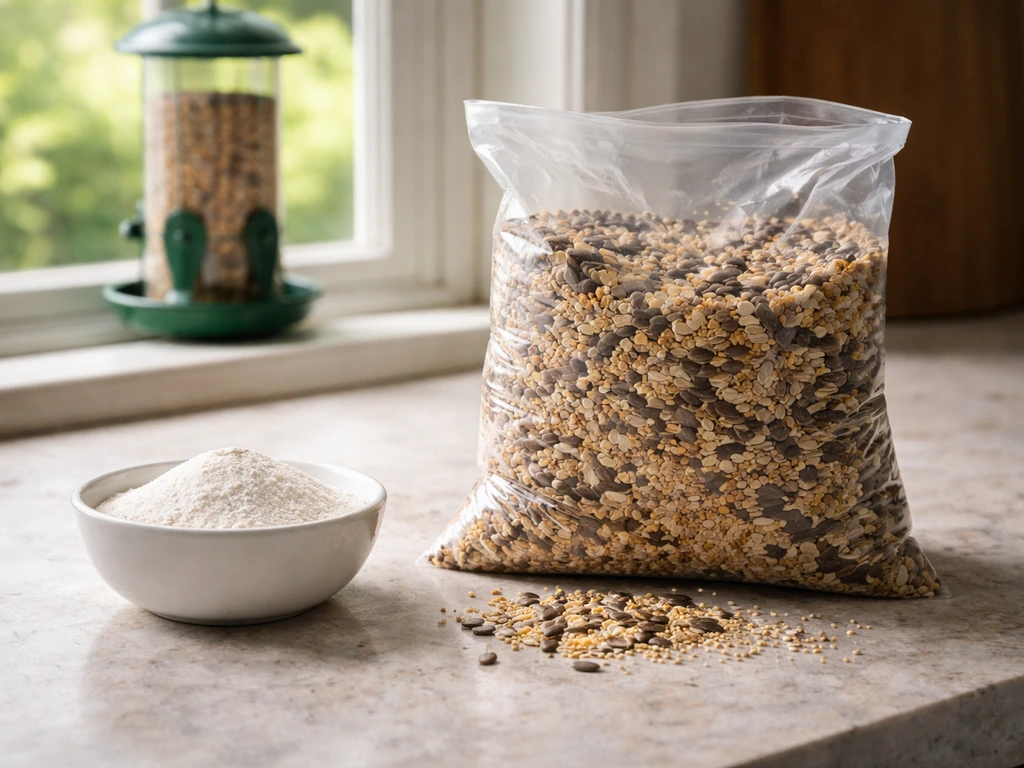
Yes, you can mix mealworms with bird seed, and it works well as long as you use dried or freeze-dried mealworms rather than live ones, keep the mix dry, and refresh it daily. Mixing the two into one tray is a legitimate shortcut that attracts a wider variety of birds without running two separate feeding stations. The main risks are moisture, mess, and the extra guests it can bring, all of which are manageable if you follow a few simple rules.
Can You Mix Mealworms With Bird Seed Safely?
Maya Collins
18 May 2026
Mix or offer separately: what actually works
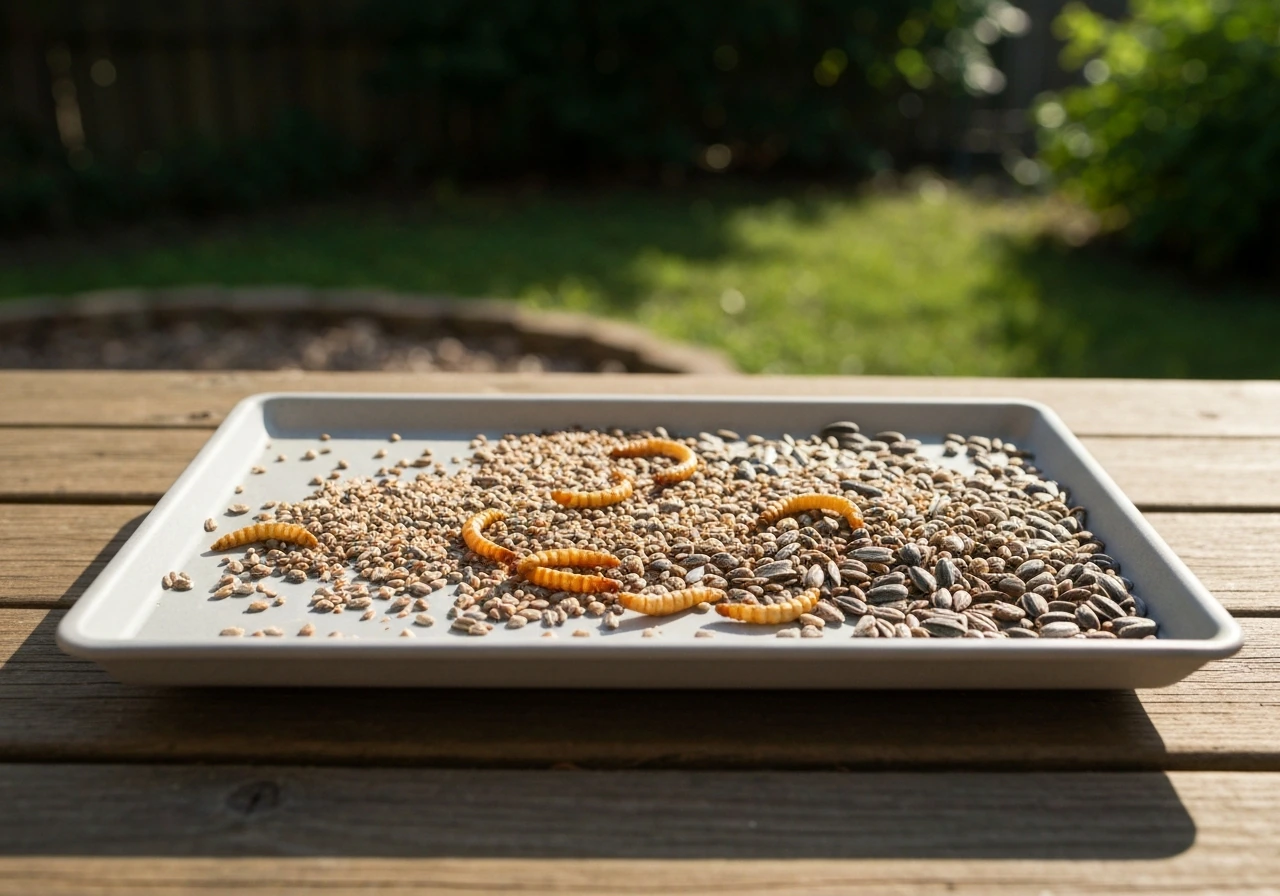
For most backyard setups, blank" rel="noopener noreferrer">mixing dried mealworms directly into your seed on a flat tray or platform feeder is the easiest and most effective approach. The RSPB explicitly recommends adding mealworms to dried bird food and seed mixes to create a more varied and attractive offering. A combined tray means birds that are foraging through seed can stumble on a protein hit, which is especially appealing during breeding season when adults are hunting high-energy food for nestlings.
Offering them separately makes more sense in two situations: when you want to attract very specific species like bluebirds that respond to mealworms in a dedicated dish, or when you are using a tube or hopper feeder where loose mealworms would just clog the ports. Tube feeders and hoppers are not designed for mealworms, so keep the mix on a tray or platform. If you already run a hopper for seed, just add a small separate dish nearby for mealworms rather than trying to combine them.
Live vs dried mealworms: the risk difference
The type of mealworm you choose changes the entire risk profile of mixing. Live mealworms, dried mealworms, and freeze-dried mealworms behave very differently once they hit your feeder.
| Type | Mixing ease | Moisture risk | Escape risk | Shelf life | Bird appeal |
|---|---|---|---|---|---|
| Live mealworms | Poor, need a dish | High (moisture from larvae) | High unless in a smooth-sided container | 1-2 weeks refrigerated | Highest |
| Dried mealworms | Good, mix freely into seed | Low if stored correctly | None | Up to 12 months sealed | High |
| Freeze-dried mealworms | Best, lightest and driest | Very low | None | Up to 12 months sealed | High |
Live mealworms should not be stirred into seed because they introduce moisture, burrow into the mix, and will quickly pupate or die and rot if birds do not take them fast enough. If you want to offer live mealworms alongside seed, use a smooth-sided dish or a purpose-made mealworm feeder placed right next to your seed tray. Sialis.org, which tracks bluebird feeding extensively, specifically recommends sturdy smooth-sided containers to prevent mealworms from escaping, since they can move surprisingly fast.
Dried and freeze-dried mealworms are the practical choice for mixing. They add no moisture, they do not move, and they integrate cleanly with sunflower chips, suet pellets, or standard seed mixes. Freeze-dried versions are slightly less dense and tend to sit on top of the seed rather than sinking, which actually helps birds spot them faster.
How to set up the feeder safely
How much to add
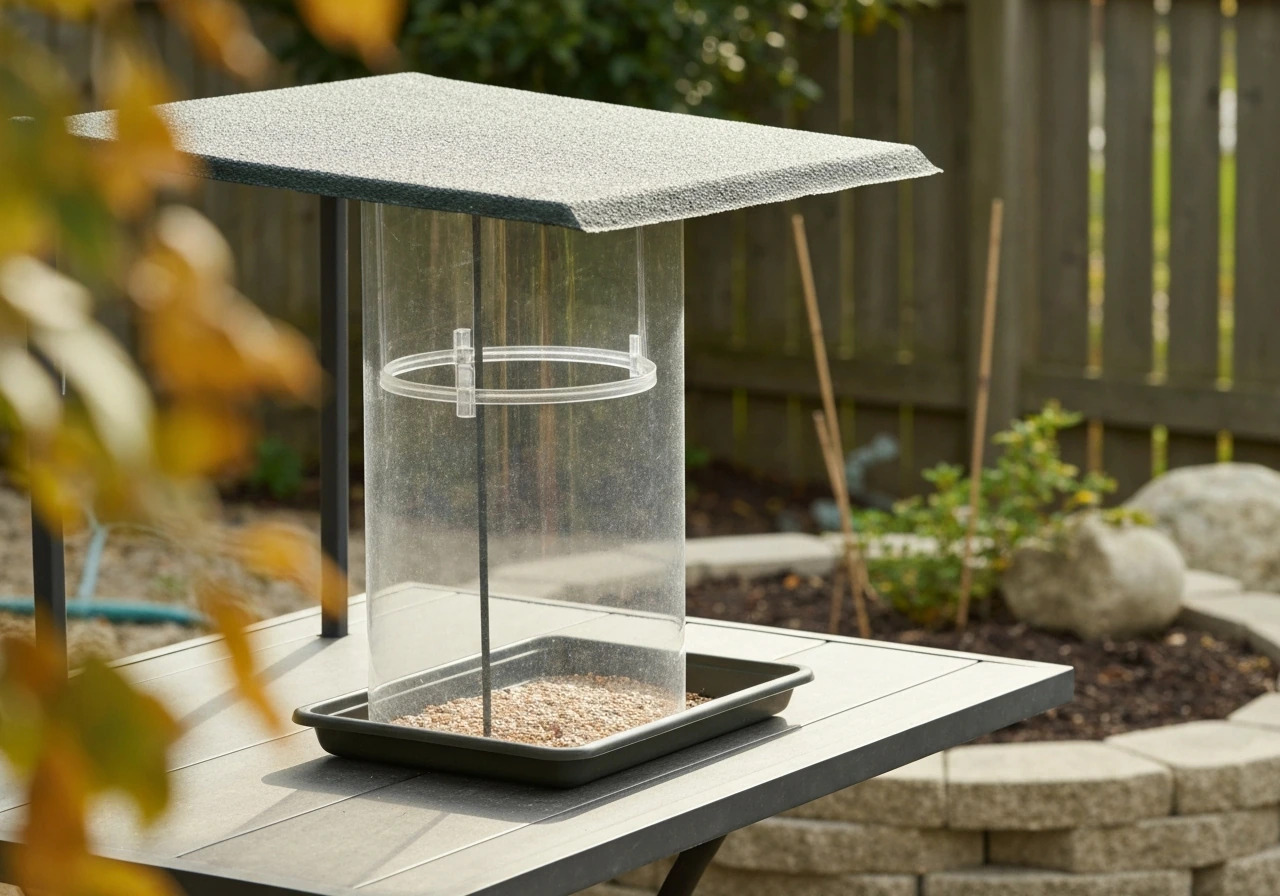
Start with a ratio of roughly one part dried mealworms to four or five parts seed by volume. A small tray holding about a cup of seed gets a small handful, maybe two tablespoons, of dried mealworms. The goal is to supplement, not replace. Overloading a tray with mealworms increases cost, attracts more insects and rodents, and creates more waste when birds do not take them all before rain or nightfall.
Feeder setup that prevents problems
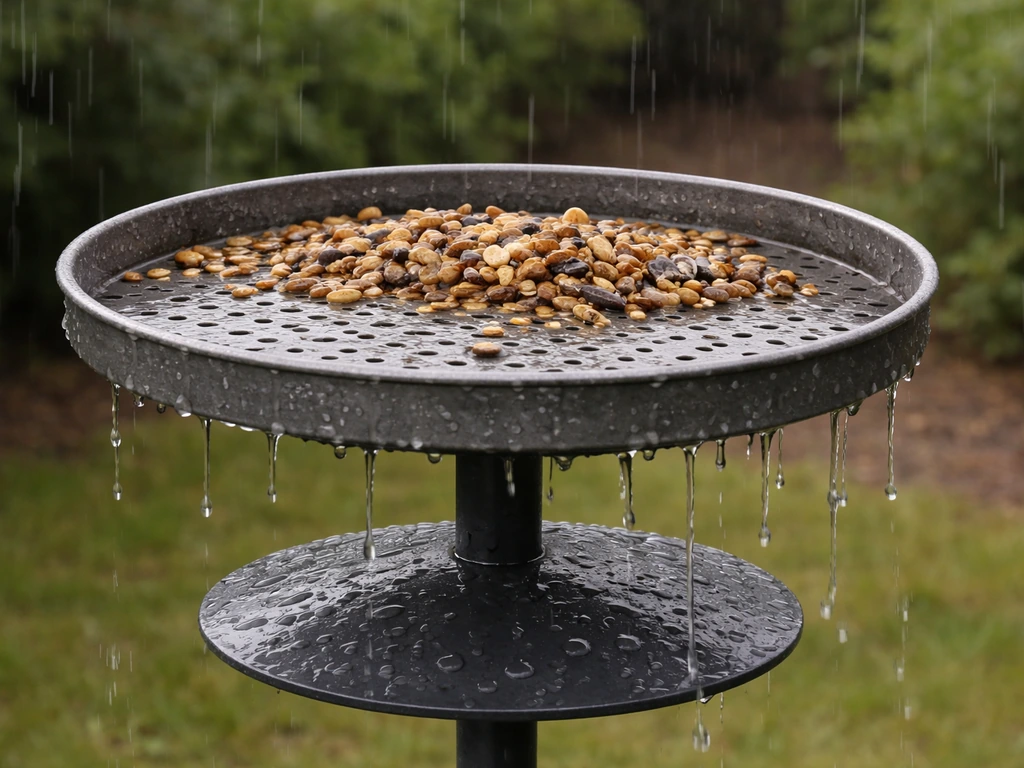
- Use a platform or tray feeder with drainage holes so any light rain passes through rather than pooling on the mix.
- Place the tray on a pole with a baffle rather than hanging it from a tree branch, which makes it easier for squirrels and raccoons to reach.
- Fill only what birds can realistically eat in a day, especially in warm months. Small daily portions beat large refills every few days.
- If you live somewhere that gets afternoon rain regularly, position the tray under a small roof or overhang.
- Keep the tray away from dense shrubs at ground level; that cover makes it a safer hunting ground for cats and allows rodents to approach unseen.
Audubon's feeder guidance points out that platform and table-style feeders suit ground-feeding birds particularly well, which overlaps heavily with the species most likely to eat mealworms. Hopper feeders, which keep seed cleaner and reduce spill, are worth running alongside a mealworm tray if you want the best of both worlds.
Which birds will come, and what else shows up
The seed-plus-mealworm combination is a broad-appeal setup. Cornell Lab's Project FeederWatch identifies chickadees, titmice, wrens, and nuthatches as reliable mealworm takers. Add robins, bluebirds, mockingbirds, Carolina wrens, and warblers during migration, and you have a long list of visitors. In practice, mixing seed and mealworms on a tray broadens your audience beyond the typical seed-only crowd, which skews toward finches, sparrows, juncos, and doves.
That broader appeal comes with a catch: the protein and fat in mealworms attract more than birds. Expect more attention from squirrels, raccoons, and opossums, especially after dark. Ants are a real issue in warm weather because mealworms are a high-value target. Starlings and house sparrows, which are already aggressive at feeders, will also raid a mealworm tray quickly and out-compete smaller songbirds if the tray is too accessible. A feeder with a cage or restrictor can limit access to smaller birds, as Virginia DWR recommends for controlling which species can reach feeders.
Troubleshooting common problems
Mealworms disappearing too fast
If your mealworms vanish within minutes and you are not seeing birds take them, the culprits are almost always starlings or house sparrows arriving in flocks, or squirrels. Check for these species first. If it is starlings, a caged tray with openings sized for smaller songbirds helps. If it is squirrels, a pole-mounted baffle is the fix. Mealworms also disappear fast in hot weather even without obvious theft because they dry out, shrink, and blow away if the pieces are very small.
Clumping and sticking together
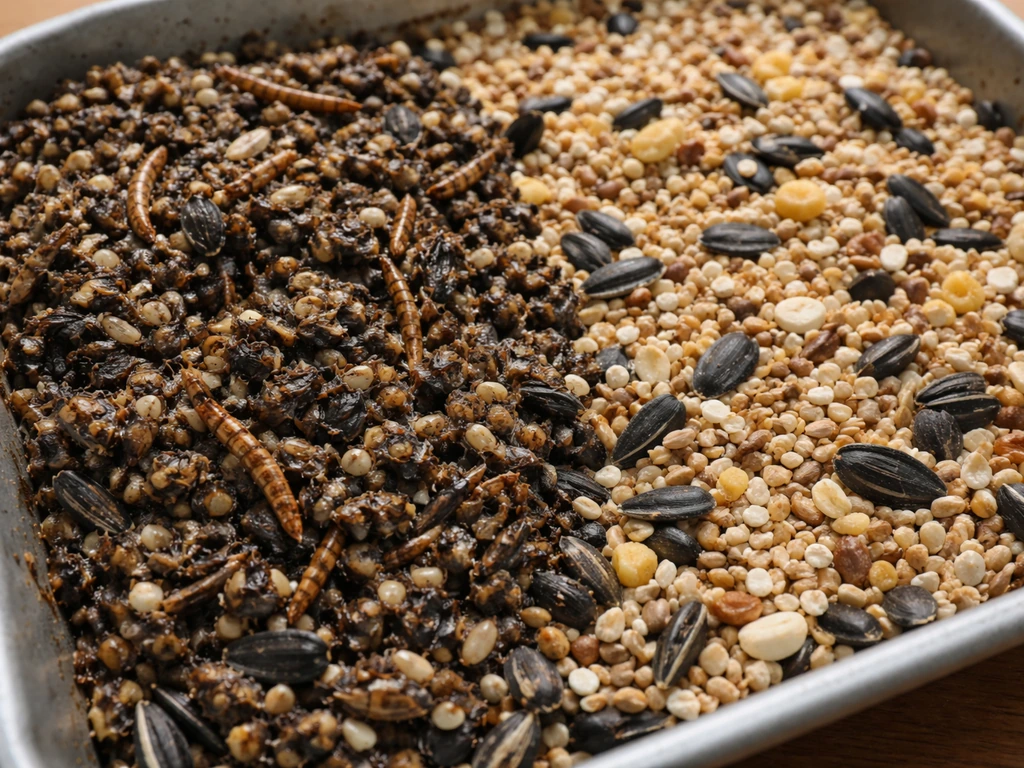
Clumping happens when moisture gets into the mix, either from rain, dew, or humidity. Dried mealworms absorb water quickly and stick to seed hulls, forming a dense mat that birds struggle to pick through and that mold loves. If you see clumping, remove and dispose of the entire mix, clean the tray, dry it fully, and refill with a fresh batch. Do not try to dry a clumped mix in the sun and reuse it.
Ants and other insects
Ants will find a mealworm tray fast in spring and summer. The most reliable fix is a water moat on the feeder pole, which creates a physical barrier ants cannot cross. Avoid ant-repellent oils or sprays near feeders because they can harm birds. Also check that no branches or plant stems are touching the feeder and acting as a bypass route.
Rodents under the feeder
Mealworms that fall to the ground are a serious rodent attractant. Audubon recommends disposing of uneaten feeder seed rather than dumping it on the ground for exactly this reason. Rake up spilled seed and mealworm debris daily during warm months. If you already have a rodent problem, switch to a feeder with a catch tray and reduce the amount you put out so there is very little spill.
Mold and foul odors
Mold in a seed and mealworm mix is a health risk for birds. The Minnesota DNR specifically flags that wet birdseed in feeders rapidly develops mold and bacteria. If your mix smells sour or musty, or you can see any gray or black fuzz, throw it out immediately, clean the tray with a bleach solution, and let it dry completely before refilling. Do not just scoop out the bad spots; contamination spreads through the whole batch.
Storing seed and mealworms so they stay safe
Both seed and dried mealworms need to be kept dry and cool to stay safe and fresh. Store dried mealworms in a sealed airtight container, ideally somewhere cool like a garage shelf, not in direct sunlight. Properly stored dried or freeze-dried mealworms last up to twelve months. Once a bag is opened and exposed to humidity, that window shortens significantly, especially in summer.
For live mealworms, store them in a shallow container with a ventilated lid in the refrigerator at around 45 to 50 degrees Fahrenheit. The cold slows their metabolism and keeps them dormant. Take out only what you will use in a single feeding session and bring them to room temperature before offering them so birds can grab them more easily. Refrigerated live mealworms last one to two weeks; check regularly and remove any that have died.
Bird seed stored in a damp location or left in a wet feeder goes bad fast. To avoid problems, dry wet birdseed right away or discard it so birds are not exposed to mold and bacteria will birds eat wet bird seed. If your stored seed smells musty, clumps in the bag, or shows any visible mold, dispose of the entire batch. BirdNet's guidance is clear: if seed in a feeder gets wet, empty it into the trash and clean the feeder before putting in anything new. Never top off a feeder that already has damp seed at the bottom, as the old wet layer will contaminate the fresh batch on top.
A few practical storage tips that save headaches later:
- Use metal or hard plastic bins with locking lids for bulk seed storage; rodents chew through paper and thin plastic bags easily.
- Keep storage containers off the ground on a shelf to reduce moisture contact and make rodent access harder.
- Write the purchase date on any bag you open and use it within 4 to 6 weeks in summer or up to 3 months in cool, dry conditions.
- Store dried mealworms separately from seed to avoid cross-contamination if one batch goes bad.
- Do not store seed or mealworms in a shed that floods or in a car trunk where heat spikes.
Keeping feeders clean and pests under control
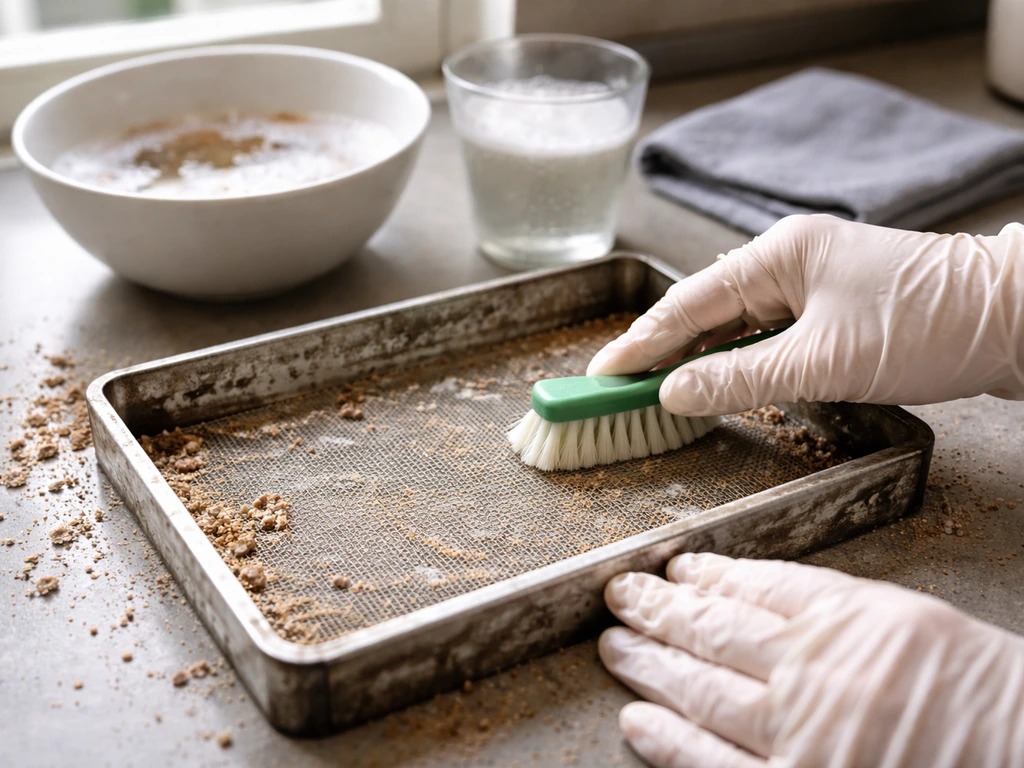
A feeder running seed alone already needs regular cleaning. Add mealworms to the mix and the hygiene schedule becomes even more important because mealworm residue, insect frass, and organic debris break down faster and create a better environment for bacteria and mold. All About Birds (Cornell Lab) recommends cleaning seed feeders at least weekly with hot water and clearing accumulated debris from trays. In warm months or wet climates, weekly is the minimum, and every few days is smarter.
How to clean a feeder tray properly
- Remove all remaining seed and mealworm debris and dispose of it in the trash, not on the ground.
- Rinse the tray with hot water to loosen stuck material.
- Soak in a solution of 9 parts water to 1 part bleach for about 15 minutes. This is the cleaning standard recommended by the National Wildlife Health Center and referenced by Audubon, Virginia DWR, and PetMD.
- Scrub with a stiff brush to remove any remaining residue or mold.
- Rinse thoroughly with clean water to remove all bleach residue.
- Allow to air dry completely before refilling. Even slight remaining moisture can start the mold cycle again.
For tube and hopper feeders used for seed alongside a mealworm tray, Project FeederWatch recommends cleaning roughly every two weeks under normal conditions, more often in wet or warm weather. The RSPB's guidance also warns against overfilling trays, especially in warm months when parasites and bacteria build up faster. RSPB guidance, as reported by TechRadar, also says to avoid overfilling feeder trays in warm months because parasites and bacteria can build up, and it recommends weekly cleaning warns against overfilling trays. Keep portions small, refresh daily, and clean on a consistent schedule rather than waiting until you notice a problem.
Dealing with spills and ground waste
Spilled mealworms and seed hulls under a tray feeder become a slow-moving pest magnet if you ignore them. Rake or sweep beneath the feeder every few days and dispose of the debris in a sealed bag in your outdoor bin. Avoid composting it because seed can sprout and mealworm residue attracts rodents to a compost pile. If rats or mice are already an issue in your yard, temporarily suspend mealworm feeding until the rodent problem is resolved, then restart with tighter portion control and better spill management.
Mixing mealworms with bird seed is one of the simplest upgrades you can make to a backyard feeding setup, but it only stays simple if you keep the mix dry, refresh it daily, clean the tray regularly, and control spill. If you are wondering can you eat bird seeds in the first place, the short answer is that plain birdseed is generally not meant for people and should not be eaten. Get those four things right and you will attract a noticeably broader range of birds without creating a pest problem or a hygiene headache. Can budgies eat wild bird seed? Bird seed is not meant for people, so do not eat it yourself; stick to safe human food. It can be risky, so make sure any seed offered is appropriate and feed in controlled amounts broader range of birds.
FAQ
Can you mix mealworms with bird seed in a hopper or tube feeder?
Not as a combined mix. Hopper and tube ports can clog when mealworms are present, especially if pieces are uneven or start absorbing moisture. Use a separate mealworm dish or tray placed next to the hopper, and keep the mealworm pieces small and fully dried if you want them on a shared platform.
How much mealworm should I add if I want to avoid attracting too many pests?
Use a light supplement, about 1 part dried mealworms to 4 to 5 parts seed by volume, and start with even less on your first days (for example, 1 to 2 tablespoons per cup of seed). If squirrels or raccoons escalate, reduce the portion or move to a caged tray so smaller birds still get access.
What should I do if rain or heavy dew gets on the tray?
Remove the entire mix from service, discard it, and clean the tray before refilling. Drying it in the sun and reusing is not recommended because moisture can trigger mold and clumping across the whole batch, even where it looks only slightly damp.
Is it safe to leave the mixed mealworms and seed out overnight?
It depends on moisture and temperature, but as a rule refresh daily. Warm nights increase drying, blowing away of tiny pieces, and pest activity, and damp morning dew can start the clumping and mold process. If you cannot refresh daily, use smaller portions that are likely to be eaten quickly.
Why do the mealworms disappear fast but I do not see birds eating?
Common causes are raiders that work quickly (starlings, house sparrows, squirrels, raccoons) or mealworms drying out and blowing away in hot, windy weather. Check around the feeder and track incoming traffic, then adjust with a cage or restrictor tray, a squirrel baffle, or a tighter portion size.
Will mealworms attract ants even if I do everything else right?
Yes, mealworm protein can draw ants quickly in warm months. The most reliable fix is a water moat on the pole and removing easy ant bypass routes like touching branches or ground-level bridges.
What does clumping look like, and can I save the batch by just picking out the stuck parts?
Clumping looks like a dense, sticky mat where dried mealworms absorb moisture and bind to seed hulls. Do not scoop out the affected spots, discard the entire mix, clean the tray, and refill with a fresh, fully dry batch.
How should I store mealworms and the mixed food if I make it ahead?
Do not store a wet or partially damp mix, and avoid making large batches that will sit for days. Store dried or freeze-dried mealworms in a sealed airtight container in a cool place, and keep seed dry. If you mix them, only mix what you will use for the next serving cycle and refresh daily.
Can I compost spilled seed and mealworm leftovers?
Avoid composting if seed can sprout or if rodent pressure is an issue. Seed and mealworm residue can create a persistent pest attractant. Bag the debris from under the feeder and dispose of it in your outdoor bin instead.
Is it ever better to feed mealworms separately instead of mixing?
Yes, if you are trying to target specific species that prefer a mealworm-only dish (like some bluebirds) or if your feeder type makes mixing messy. Separate mealworm feeding also makes cleaning easier because you can remove one tray without disturbing dry seed on the main feeder.
If I accidentally mix in live mealworms, is it harmful to leave them?
It is not recommended. Live mealworms can introduce moisture into the seed, burrow, and die, which can rot and increase bacteria and mold risk. If you use live mealworms, offer them in a separate smooth-sided container or mealworm feeder placed right next to the seed.
How do I clean the tray and feeder safely after mealworms?
Remove all debris first, then wash with hot water and dry thoroughly before refilling. If you see any mold or sour odors, clean with a bleach solution, let everything dry completely, and do not just top off over contaminated material.
Next Article
Is Bird Seed Edible for Humans? Safety and What to Do
Learn if bird seed is safe for humans, hazards to watch for, and what to do if someone eats it or handles contaminated s