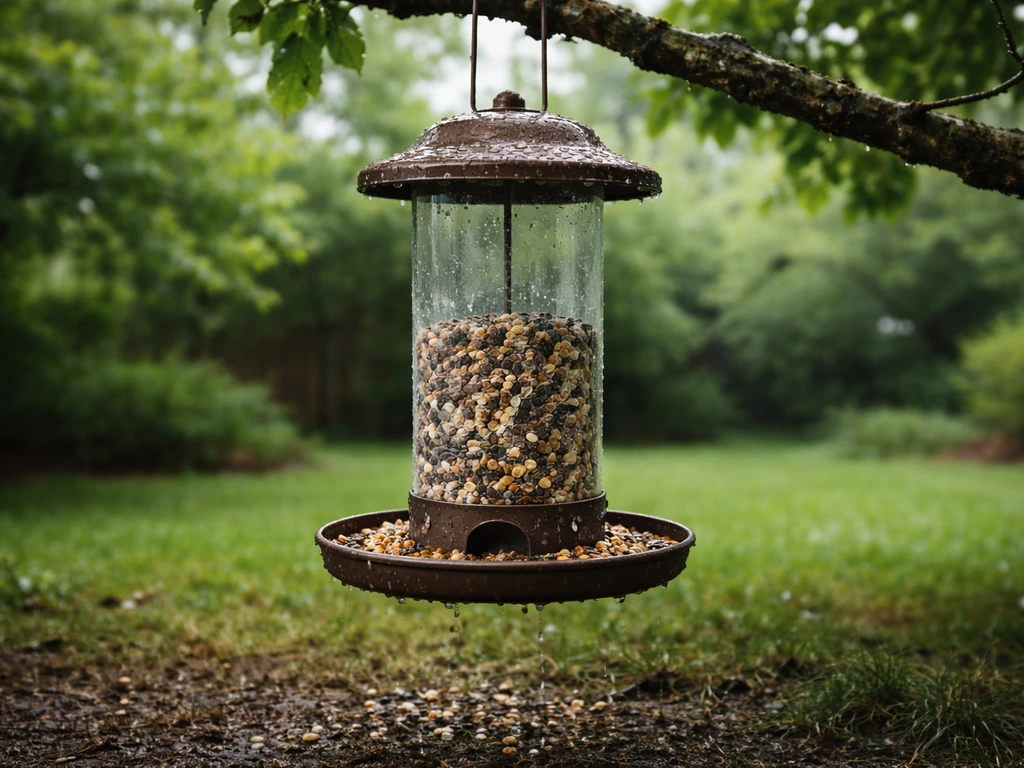
Birds will typically avoid it, and honestly, you should too. The real risk is not the water itself but what happens to seed once it stays wet: mold grows fast, aflatoxins can develop, and the seed can become genuinely harmful to the birds you are trying to help.
Georgia DNR wildlife biologist explains that fungal issues like aspergillosis are often the result of wet and moldy seed hulls building up beneath feeders fungal issues like aspergillosis can result from wet and moldy seed hulls building up beneath feeders.
Why wet seed sometimes attracts birds (and sometimes drives them away)
A little moisture can actually make certain seeds more appealing. Soft-billed birds and ground feeders like doves, sparrows, and towhees sometimes prefer slightly softened seed because it is easier to crack and digest. In dry summer months, a faint dampness can even mimic freshly fallen seed, which is natural foraging territory for many species. Mealworm lovers like robins and bluebirds are similarly unbothered by light moisture.
On the flip side, birds have good instincts about spoiled food. Once seed has been wet long enough to mat together, change color, or develop any visible mold, most birds will simply fly past the feeder. Granivores like finches and chickadees that rely on seed regularly are especially quick to abandon a feeder that smells off. Birds are not foolproof at detecting all dangerous mold, though, which is why your oversight matters.
The real risks of wet seed: mold, toxins, and pests
Wet seed creates a race against the clock. At warm temperatures (roughly above 50°F), visible mold can appear on wet seed within 24 to 48 hours. The two biggest hazards are aspergillosis and aflatoxin. Aspergillosis is a respiratory disease caused by Aspergillus mold spores; Audubon explicitly warns that moldy bird food can transmit this disease to birds. Aflatoxin is a toxic byproduct produced by Aspergillus flavus mold, and the FDA has linked elevated aflatoxin levels to bird food recalls. Texas Parks and Wildlife notes that seeds exposed to humidity, rain, or morning dew carry a much higher mold and aflatoxin risk when left in feeders for a week or more.
Beyond mold, wet seed at ground level or in open trays can attract pests like rats, mice, squirrels, and insects. Standing water pooled under or around feeders also creates conditions that can harbor bacterial toxins. On the household hygiene side, handling moldy seed without gloves can expose you to the same mold spores that threaten birds, so treat suspect seed carefully.
Oklahoma State Extension research also flags aflatoxin as a serious concern for grain-based wildlife feed generally, stressing that any seed showing signs of mold or insect infestation should not be offered. The takeaway: lightly damp seed is usually fine in the short term, but seed that is compacted, discolored, or has any smell needs to go immediately.
How to tell "okay" damp seed from "discard" seed

- Okay: seed feels slightly moist but individual seeds are still loose and separate; no visible mold, no off smell, wet within the last few hours from rain or dew
- Discard: seed is clumped or matted together, has any visible white, green, or black mold, smells sour or musty, or has been wet for more than 24 hours in warm weather
- Discard immediately: any seed that looks compacted in the feeder tube or tray — Oregon State University Extension specifically advises removing and discarding wet compacted feeder seed with no exceptions
How to offer wet or damp seed safely
If the seed is only lightly damp and passes the checks above, you can offer it safely with a few adjustments. The key is to give birds only as much as they can eat in a single day. Penn State Extension recommends this same approach for platform and deck feeders: offer a small portion, let birds eat it down, and do not let leftovers sit overnight. This limits the window for mold to develop.
- Spread the damp seed out on a tray feeder rather than a tube feeder so it dries faster and you can monitor it visually
- Offer only a single day's worth at a time — roughly a cup or less for a small backyard setup, adjusted based on your bird traffic
- Place the tray in a location with good airflow and partial sun so the seed can dry naturally within a few hours
- Check the seed every 4 to 6 hours; if it has not dried and birds are not eating it, remove it
- After removing damp seed, wipe the tray down with a 1: 9 bleach-to-water solution, rinse thoroughly, and let it air dry before refilling with dry seed
- In humid climates (Southeast, Gulf Coast, Pacific Northwest), shorten the monitoring window to 2 to 3 hours in warm months, as mold grows faster in those conditions
Feeder setup tips to minimize future wetting
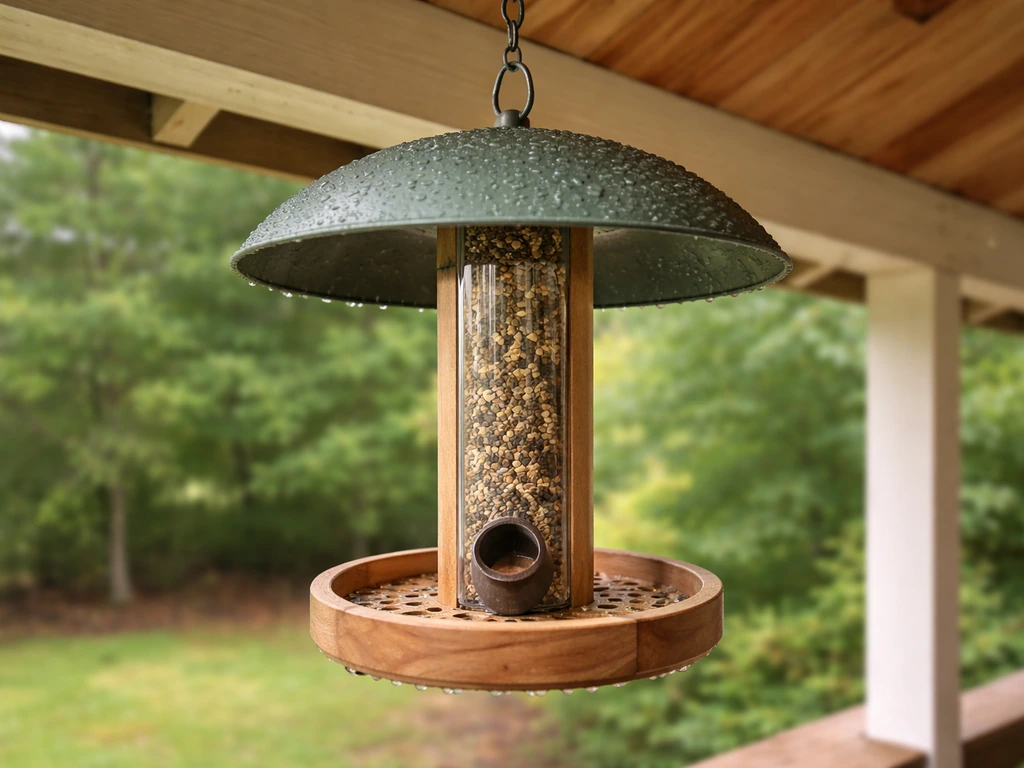
- Use a feeder with a wide roof overhang or add a weather guard baffle above tube feeders
- Choose feeders with drainage holes in the tray base so pooled water escapes quickly
- Position feeders under a tree canopy or roof eave where direct rain exposure is reduced
- Avoid platform feeders in wet climates unless you can check them daily
Better alternatives: sprouted seed, fresh damp seed, and sticking with dry
If your seed keeps getting wet and you want a constructive use for slightly moistened seed, intentional sprouting is worth considering. Sprouted seed is nutritionally richer than dry seed and is accepted readily by many species including finches, sparrows, and doves. The critical difference between safe sprouted seed and dangerous wet seed is controlled moisture: sprouting is done deliberately in a clean container with fresh water, rinsed twice daily, and offered within 1 to 3 days. Anything beyond that window risks the same mold problems as outdoor-wet seed.
If you decide sprouting is too much upkeep, just go back to dry seed. That is genuinely the easiest and lowest-risk option for most backyard setups. Store dry seed in a sealed container in a cool, dry place and refill feeders in small amounts every 1 to 2 days. Dry seed stored correctly lasts 6 to 12 months without significant quality loss.
One easy upgrade worth trying alongside seed is mixing mealworms with bird seed to increase the appeal of your feeder station, especially if birds have recently been put off by a bad batch of wet seed and need a little incentive to return.
Comparing your options when seed has gotten wet
| Option | Best for | Risk level | Effort | Recommendation |
|---|
| Offer lightly damp seed same day | Seed wet less than a few hours, still loose | Low if monitored | Low | Fine with daily monitoring |
| Intentional sprouting (clean setup) | Slightly moist seed you want to salvage usefully | Low if done correctly | Medium | Good option if you have time |
| Switch fully to dry seed | Any wet seed over 24 hours or showing mold | Very low | Low | Best default choice |
| Leave wet seed in feeder | Never | High (mold, aflatoxin, pests) | None | Do not do this |
Troubleshooting when birds still won't eat it
If birds are ignoring a feeder even after you have confirmed the seed is clean and only lightly damp, the issue is usually one of four things: species mismatch, placement, timing, or weather.
Species mismatch
Not all birds eat the same seeds. House finches love nyjer and sunflower hearts; mourning doves prefer millet scattered on the ground; woodpeckers want suet or large striped sunflower seeds. If you are offering a generic mixed blend that has gotten damp, the species visiting your yard might be ignoring the wet filler seeds (like milo or oats) while already eating the pieces they prefer. Check which seeds are being left behind and switch to a single-species seed that matches your target birds.
Placement and weather
Birds are cautious after a disturbance or bad food experience. If they abandoned a feeder during a stretch of wet, moldy seed, they may take 3 to 7 days to return even after you have cleaned and restocked it. Move the feeder a few feet to a slightly different spot, preferably closer to natural cover like a shrub or tree at 5 to 10 feet distance, and be patient. During heavy rain, most birds reduce feeding activity regardless of seed quality, so low traffic in a rainstorm is normal rather than a sign something is wrong.
Timing
Birds feed most actively in the early morning and again in the late afternoon. If you are checking the feeder mid-day and seeing no activity, that does not mean birds are rejecting the seed. Try watching the feeder between 7 and 9 AM for a few days to get an accurate read on whether you actually have a problem.
Cleanup, drying, and keeping seed dry going forward

Once you have removed wet or moldy seed from a feeder, the cleanup process is just as important as what you refill it with. Project FeederWatch recommends cleaning feeders about every two weeks under normal conditions, and more often during warm, damp weather. When mold has been visible, clean immediately rather than waiting for the next scheduled cleaning day.
- Empty the feeder completely and knock out any compacted seed
- Soak the feeder in a 1: 9 bleach-to-water solution for at least 10 minutes
- Scrub all surfaces with a bottle brush, paying attention to seams and drainage holes where wet seed accumulates
- Rinse thoroughly with clean water and allow to air dry completely before refilling — even slight residual moisture can restart mold growth
- Rake up and bag any spilled seed on the ground below the feeder; Georgia Wildlife (Georgia DNR) specifically advises against just tossing moldy seed elsewhere on your property, as it can spread mold and attract pests to a new spot
- If ground underneath the feeder has been contaminated by mold repeatedly, soak the area with a diluted bleach-and-water solution and allow it to dry before resuming feeding in that spot
For storage going forward: keep seed in a hard-sided, sealed container (metal or thick plastic with a locking lid) in a cool, dry location. A garage or shed works well as long as it does not flood or get very humid. Do not store seed directly on a concrete floor, as condensation wicks up through bags. Elevate containers on a wooden pallet or shelf. If you live somewhere with hot, humid summers, buy seed in smaller quantities (2 to 5 pounds at a time) so it gets used up before moisture can build up inside the container.
A note on other animals and wet seed
If you are also feeding other animals around the yard, the wet seed question applies to them too. For example, if you have been wondering whether you can feed ducks bird seed, it is worth knowing that ducks are even more sensitive to aflatoxin-contaminated grain than most backyard songbirds, so the same mold rules apply with equal urgency.
Backyard chickens are another common situation. If you keep chickens and share seed supplies between your flock and wild feeders, check out the guidance on feeding chickens bird seed, since moldy grain affects poultry just as seriously as it affects wild birds.
Pet bird owners sometimes wonder whether cage birds can share from the same seed stock as outdoor feeders. If you have a budgie at home, the article on whether budgies can eat wild bird seed covers the key differences between wild and formulated seed blends, which matters especially when seed quality is in question.
And on a somewhat different note, people sometimes find themselves curious about the seed itself after handling it regularly. If that thought has ever crossed your mind, the pieces on whether you can eat bird seeds and whether bird seed is edible for humans address that directly, including what is actually in most commercial blends.