Some bird seed mixes do contain grass seed, but not always in the way you might expect. Most standard wild bird mixes are built around sunflower seeds, millet, milo, cracked corn, and safflower. None of those are turfgrass. That said, grass seed can show up in two ways: intentionally (canary grass seed is a legitimate bird seed ingredient), or unintentionally as contamination or debris that slipped through during processing. Whether that matters to you depends on what you are trying to avoid, and it is genuinely easy to check once you know what to look for.
Is Bird Seed Grass Seed in It? How to Check Safely

Maya Collins
11 Jun 2026
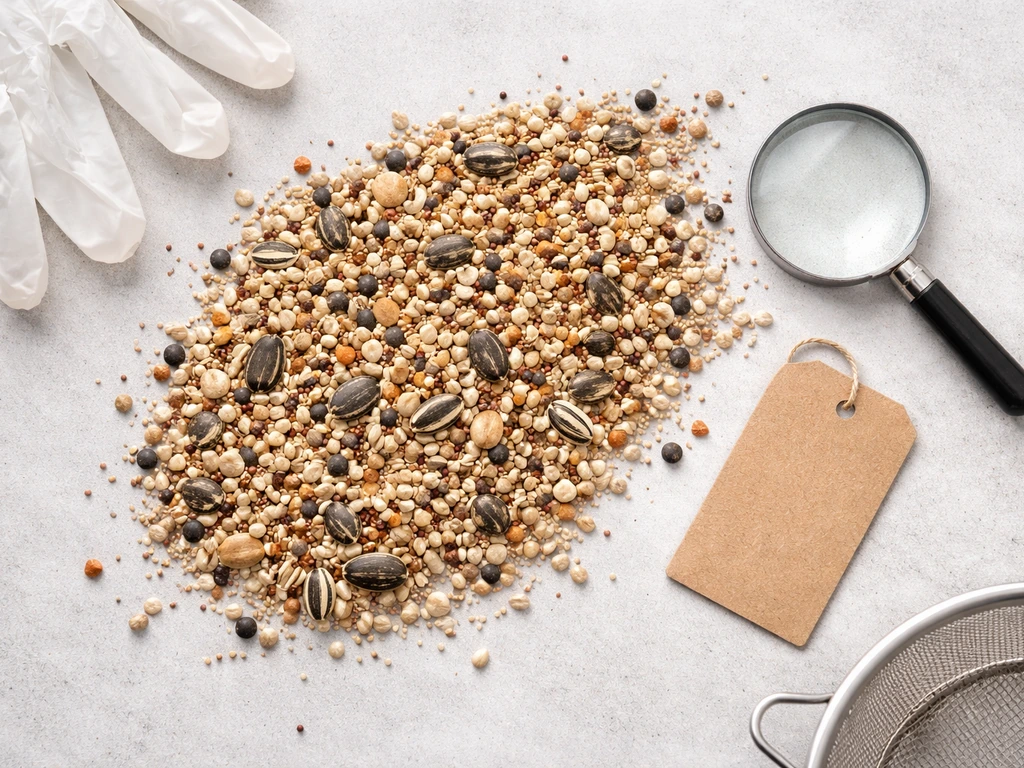
Does bird seed include grass seed? Here is what to check for
The answer is: it depends on the mix and the manufacturer's sourcing. The FAO notes that typical wild bird seed mixes can vary based on factors like raw material availability and price the manufacturer's sourcing. Standard backyard blends from most major brands center on black oil sunflower seed, white or red millet, cracked corn, milo (sorghum), and sometimes peanut pieces or safflower. None of those are grasses in the lawn-seed sense. But two situations bring grass seed into the picture.
First, canary grass seed (sometimes called nyjer or similar) is a legitimate ingredient in some mixes and finch-specific blends. It comes from a plant in the canary seed family and is technically a grass-family seed, even though it looks nothing like a fescue or ryegrass seed. It is included specifically because birds eat it. Second, contamination from incomplete cleaning during processing can introduce small amounts of grass or weed seed into a bag. The raw materials used for bird mixes vary by region and season, and cleaning equipment is not perfect. Regulators actually track this under the Federal Seed Act, which requires labels to disclose weed seed content and inert matter percentages.
So the first check is simple: look at what type of grass seed you are concerned about. Canary grass seed in a finch blend is intentional and harmless. Lawn-type grass seed (fescue, ryegrass, bluegrass, bermudagrass) ending up in a budget mix is the contamination scenario, and that is what causes uninvited patches of grass under your feeder.
How to read the label and ingredient terms
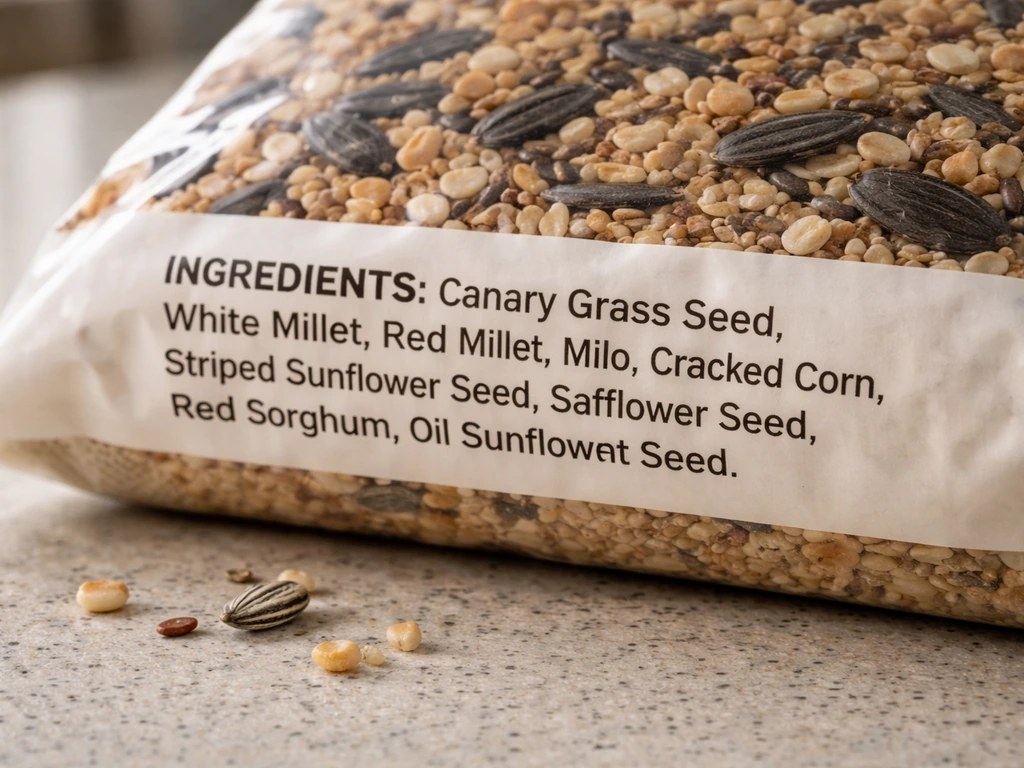
Bird seed bags are not regulated exactly like lawn seed bags, but they do carry labeling under the Federal Seed Act framework. Here is what to look for when you pick up a bag.
- Ingredient list: Look for "canary grass seed," "millet," "milo," "sorghum," "sunflower," "cracked corn," and "safflower." These are the expected players. If you see "grass seed" listed explicitly, that warrants a closer look.
- Purity percentage: A higher purity percentage means fewer off-type seeds and less inert matter. Budget mixes often have lower purity and more filler or contaminants.
- Weed seed percentage: The Federal Seed Act requires this to be disclosed. Even a small listed percentage means there may be identifiable weed or grass seeds in the bag.
- Inert matter: This category legally includes chaff, sterile florets, empty seed husks, and seed-like structures that are not viable. A high inert matter percentage signals a lower-quality mix with more debris.
- "Screenings" as an ingredient: This word is a red flag. Screenings are what is left over after cleaning grain, and they can include chaff, immature seed, weed seed, and other non-target material. A mix listing screenings is more likely to carry stray grass seed.
- Date tested: Germination rates decline over time. A bag tested more than 9 to 12 months ago may have seed that has already degraded, making sprouting and mold more likely if the bag was stored poorly.
If you want a quick comparison of label quality signals, here is a breakdown of what each term actually means for grass seed risk.
| Label Term | What It Means | Grass Seed Risk |
|---|---|---|
| Pure seed % | Percentage of the intended seed species, by weight | Higher = lower contamination risk |
| Weed seed % | Legally required disclosure of weed/off-type seeds | Any nonzero value = possible grass seed present |
| Inert matter % | Chaff, empty husks, seed-like debris | High % = lower-quality mix, more debris |
| Screenings | Grain processing leftovers, mixed content | Higher grass/weed seed likelihood |
| Canary grass seed | Intentional ingredient for finches | Not lawn grass; birds eat it intentionally |
| Noxious weed count | Number of noxious weed seeds per pound | Listed if present; some grass species qualify as noxious |
Why grass seed ends up in mixes, and when it actually matters
The main reason is imperfect processing. Bird seed ingredients move through mechanical cleaning equipment that strips chaff and removes off-type seeds, but no cleaning process is 100 percent efficient. When raw materials come from regions where grass crops or weeds are present in the fields, some of those seeds travel along with the harvest. Budget mixes sourced from lower-cost raw material suppliers are more likely to carry these stowaways because cleaning steps may be fewer or less thorough.
Regional sourcing also plays a role. Because bird seed composition varies based on what is available and affordable locally, a bag bought in one part of the country may have different contamination risk than the same brand bought elsewhere. This is worth knowing if you are in an area where noxious grasses like bermudagrass or foxtail are common agricultural weeds.
When does it actually matter? It matters most if you are trying to manage your lawn or garden. Grass seed that falls under a feeder can germinate and establish, especially in warm and wet conditions. If you are wondering does bird seed sprout, the short answer is yes when viable grass-type seeds land on moist soil.
It also matters if you are feeding in an area where invasive grass species are a concern. It matters less if you have a patio feeder over hard surfaces, or if you are using a tray you can easily sweep. For birds themselves, stray grass seed is largely ignored. Birds select the seeds they want and drop or hull the rest, so an unintended grass seed in the mix is more of a human problem than a bird problem.
How to confirm at home whether your bag has grass seed
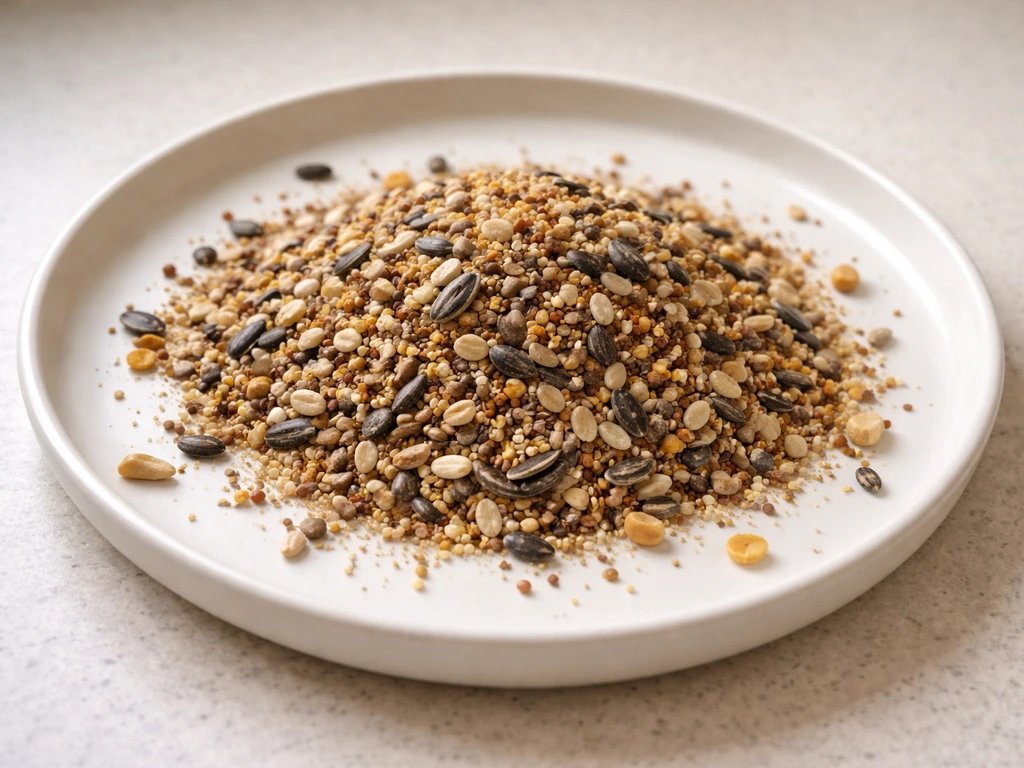
You do not need a seed lab to get a reasonable answer. Here are three practical methods you can do at home, ranked from fastest to most thorough.
Visual sort on a white plate
Pour a quarter cup of your bird seed mix onto a white plate or light-colored tray. Spread it into a single layer. Sunflower seeds are oval and black or striped. Millet is small and round, pale yellow or red. Milo is similar but larger. Cracked corn is irregular and pale yellow. Grass seeds look different: they tend to be elongated, flattened, sometimes with a hull or lemma still attached, and often lighter in color than millet. Look for anything that does not match the expected shapes. Thin, flat, chaffy seeds with attached husks are the most likely culprits.
Check the inert matter by hand
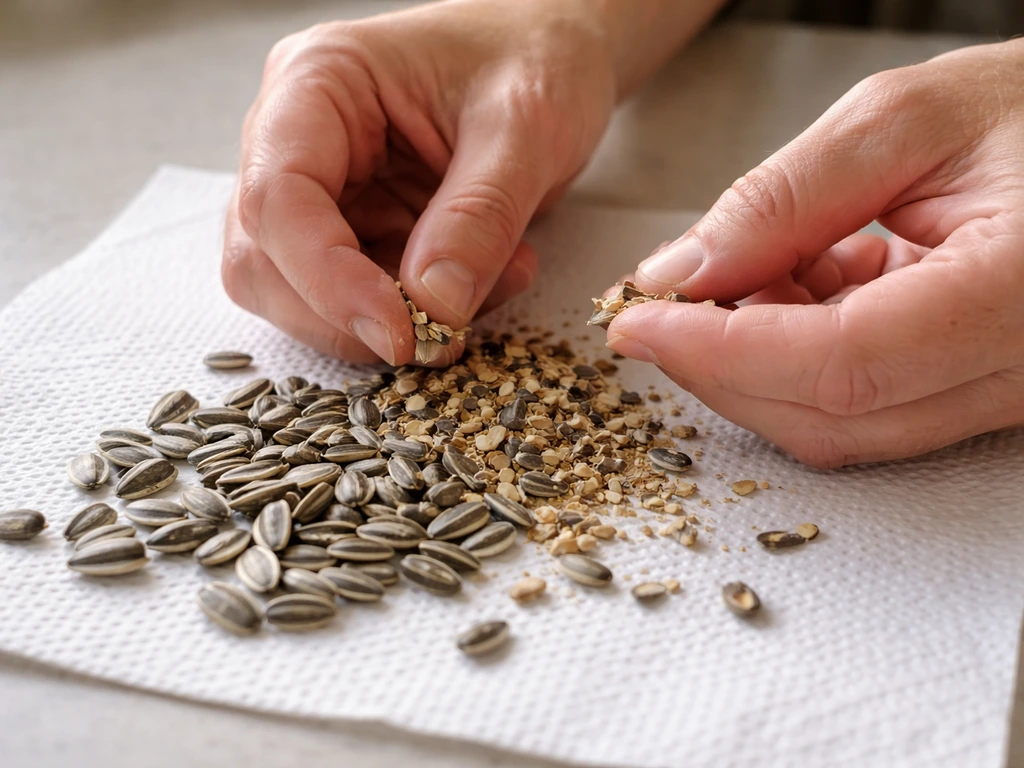
Pick out anything that looks like chaff, empty husks, or flat broken seed pieces. If a significant proportion of what you spread out is not a recognizable whole seed, you are looking at high inert matter content. Under the Federal Seed Act, these structures can include seed-like pieces from weed and grass plants. A bag where more than 5 to 10 percent of the spread sample is chaffy debris is a lower-quality mix worth reconsidering.
Wet paper towel germination test
This is the most definitive home test. Collect 10 to 20 of the small, suspect seeds (anything that looks like a possible grass seed after your visual sort). Place them on a damp paper towel, fold it over, seal it in a zip-lock bag, and leave it at room temperature (about 65 to 75 degrees Fahrenheit) for 5 to 10 days. Check every two to three days.
If seeds sprout with visible shoots and roots, they are viable and will grow if they land on soil. If nothing sprouts after 10 days, the seeds are not viable, which means they may create mess but will not establish as plants. This method mirrors what the OSU Extension and University of Alaska Fairbanks Cooperative Extension recommend for checking seed viability at home.
If you want a definitive professional answer, state seed laboratories including the OSU Seed Laboratory offer formal identification, noxious weed searches, and germination testing on bird seed samples. This is worth doing if you are managing a sensitive natural area or have had repeated grass invasion problems traced to a feeder.
What to do if you do not want grass seed in your mix
This is the most common situation. You have a feeder over a lawn or garden bed and want to stop unwanted plants from establishing. Here are your options, from immediate fixes to longer-term sourcing changes.
Sift the bag you already have
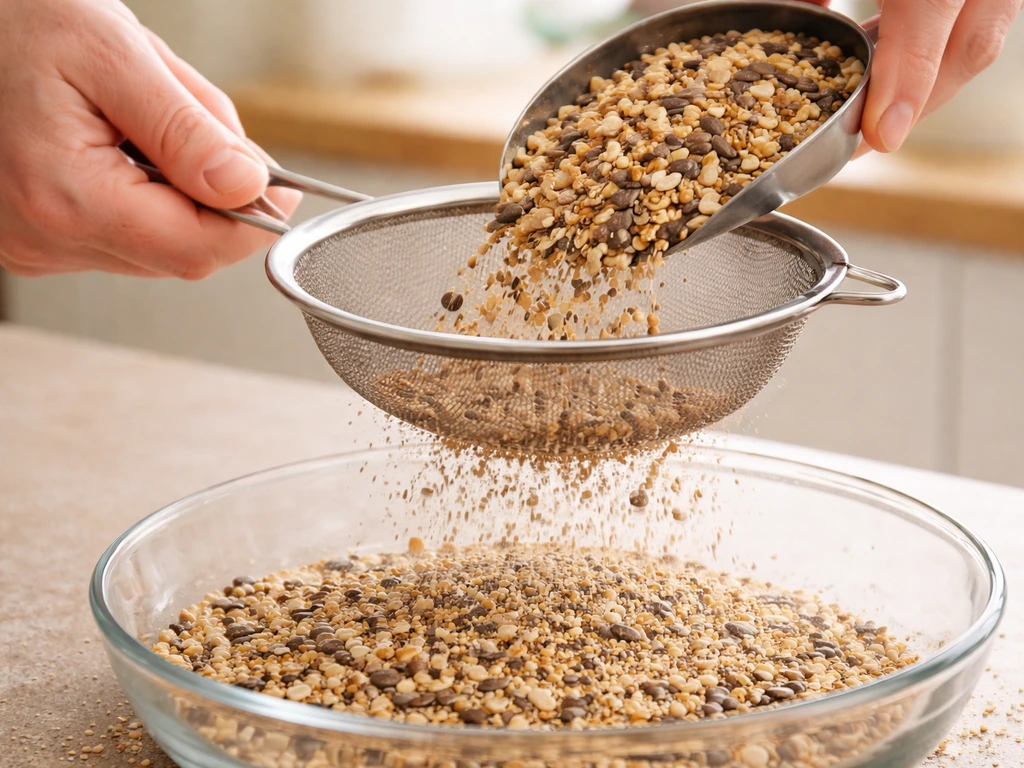
Use a standard kitchen sieve or a quarter-inch hardware cloth frame. Pour the seed through and let the fine debris, chaff, and small flattened seeds fall through. What stays in the sieve (the larger whole seeds) is lower-risk. This will not remove every grass seed if they are close in size to millet, but it eliminates a lot of the fine inert matter and lighter debris in one pass. Do this outside or over a trash bag to make cleanup easy.
Switch to single-species or no-mess seed
Single-ingredient seeds have no opportunity for cross-contamination during blending. Black oil sunflower seed, hulled sunflower chips, straight white millet, and safflower are all available as single-species products. Hulled seeds (sunflower chips, hulled millet) are especially useful because the hull is removed, so there is no viable seed structure to sprout even if it lands on soil. These cost more but eliminate the sprouting and mess problem entirely.
Read labels before you buy
Avoid any mix that lists "screenings" as an ingredient. Look for blends with a stated high purity percentage (above 95 percent is a good benchmark) and a low or zero weed seed percentage. Premium bird seed brands typically disclose these numbers or can provide spec sheets on request. If a bag only lists marketing names with no purity data, treat it as lower-quality until proven otherwise.
Manage the area under the feeder
Place a tray or catcher under the feeder to collect dropped seed before it reaches soil. Sweep or vacuum the area every few days. If you have a ground-feeding area, lay hardware cloth or a rubber mat beneath it to prevent contact with soil. These steps matter because even a clean mix can have seeds that birds drop intact.
If you actually want grass seed in the mix
This is less common, but some readers find they want to encourage ground-feeding birds in an area where a bit of natural grass growth is welcome, or they want to understand whether their bird seed could double as a ground cover. Here is what to know.
Canary grass seed, if present in your mix, is the one grass-family seed birds will actually seek out. It is safe for birds and does not typically establish as an invasive plant in most regions. If you want to deliberately add grass seed to an area where birds feed, use a species known to be palatable and appropriate for your region. Millet is closely related to grass and does establish as an annual in many climates. If you scatter extra millet in a bare patch, some birds (doves, juncos, sparrows, towhees) will actively forage on it.
What to avoid: do not buy a turfgrass seed mix and add it to a feeder. Most lawn grasses like fescue, ryegrass, and Kentucky bluegrass offer little nutritional value to birds, will be ignored in the feeder, and will drop to the ground and establish. You will end up with a weedy patch without any bird benefit. If you want to grow a native grass or seed-producing plant near your feeding area, that is better done separately in the ground, not in the feeder.
From a bird safety standpoint, plain grass seed is not toxic. The concern is more about mold, especially if seed sits in a damp feeder tray. Moist conditions cause any seed, including grass seed, to begin germinating or developing mold within a few days, and moldy seed can make birds sick. So if you are adding any seed with high germination potential to a tray or ground area, keep quantities small and refresh frequently.
Storage, sprouting, mold, and pests: troubleshooting both types of seed
Whether your mix contains grass seed or not, storage and sanitation are where most problems actually start. Grass seeds and bird seeds behave similarly under poor storage conditions, and the presence of grass seed in a mix can make those problems slightly worse because grass seeds tend to have higher moisture content and respond faster to humidity.
Sprouting in the feeder or on the ground
Sprouting happens when seed has access to moisture and warmth. Grass seed and millet will both sprout quickly (within 5 to 10 days in warm, damp conditions). If you are seeing sprouts under your feeder, that is a sign that seed is sitting on moist soil long enough to germinate. Solutions: use a feeder tray to catch dropped seed, switch to hulled or roasted seed (which cannot sprout), and clean up the ground beneath the feeder every few days.
The germination issue is closely tied to the question of whether bird seed can grow, which depends heavily on whether viable seed is reaching soil. In other words, yes, bird seed can grow grass if grass-type seeds are viable and reach soil. If you want to know whether your bag can bird seed grow, focus on whether the seeds are viable and actually reach soil with enough moisture.
Mold risk and wet seed
Wet bird seed is one of the fastest routes to a health hazard. Mold can begin developing within 24 to 48 hours in warm, humid conditions. Moldy seed can cause aspergillosis and other illnesses in birds. [If your seed has gotten wet (from rain, a leaky feeder lid, or condensation)](https://www.
homesandgardens. com/gardens/signs-you-have-an-infected-bird-feeder), do not let it dry out and reuse it. Discard it, clean the feeder with a 10 percent bleach solution (1 part bleach to 9 parts water), rinse thoroughly, and let it dry completely before refilling. Grass seed mixed in with a wet bird seed blend tends to sprout or mold at the same rate as or faster than millet, so contaminated mixes can be slightly more prone to clumping and spoilage.
Storage lifespan and conditions
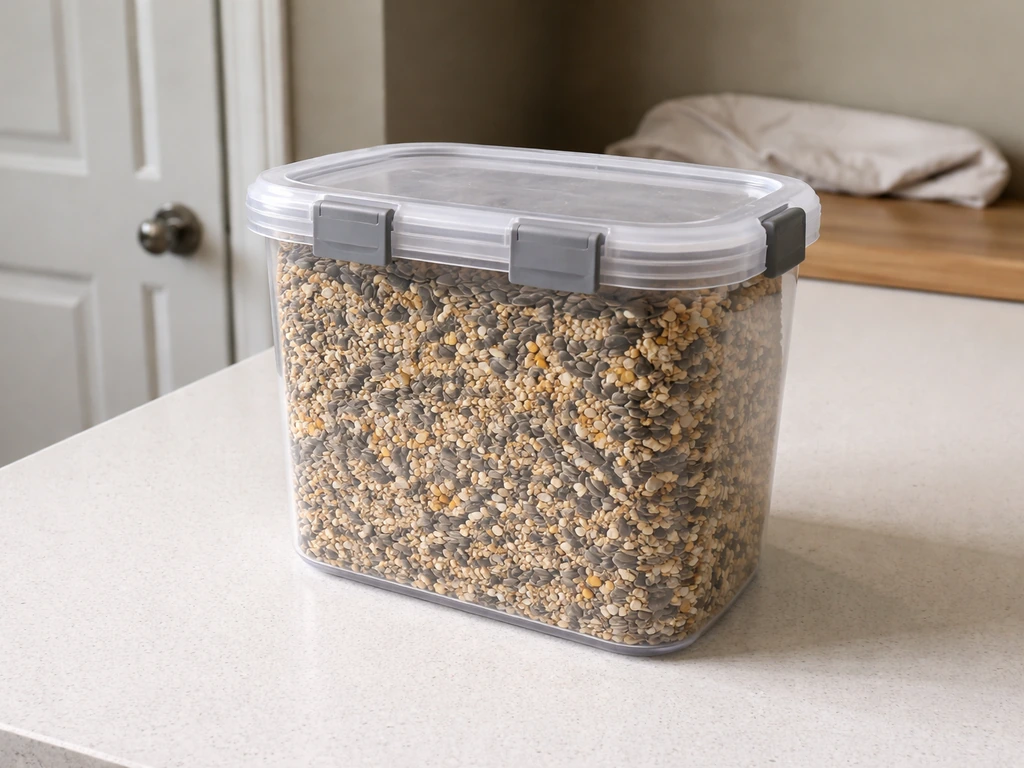
Dry, cool storage extends seed life significantly. Store bird seed in a sealed hard-sided container (a metal trash can or heavy-duty plastic bin with a locking lid works well) in a cool, dry location. Ideal temperature is below 70 degrees Fahrenheit with low humidity. Under good conditions, most bird seed stays viable and fresh for 6 to 12 months. Warmth and humidity accelerate degradation: a bag left in a hot garage in summer may go stale or grow mold within weeks. Grass seed mixed into the bag follows the same rules, but because it is often finer and lighter, it can absorb ambient moisture more quickly than sunflower or corn.
Pest and insect activity
Bird seed attracts rodents, squirrels, and grain-storage insects (weevils, grain moths) regardless of whether grass seed is present. However, a mix high in fine debris and screenings gives grain moths and weevils more surface area to colonize. If you open a bag and see webbing, dusty clumps, or small beetles, the seed is infested and should be discarded. To prevent this: buy seed in quantities you will use within 4 to 6 weeks, store in sealed hard containers, and inspect the bag before purchase for any signs of infestation at the seams or corners.
Cleanup when grass or sprouts appear
If grass or sprout growth has already started under your feeder, remove the established seedlings by hand or with a cultivator before they set their own seed. A layer of landscape fabric or rubber mulch under a ground-feeding station prevents future establishment without requiring you to stop feeding. For feeder-area cleanup after wet or moldy seed events, rake out all old material, bag it, and let the area dry before resuming feeding. Removing the seed source is always more effective than treating the symptom.
FAQ
If a bird seed bag doesn’t list grass seed, can grass still grow under my feeder?
Yes. Grass can still establish from small contamination or inert “seed-like” debris that isn’t clearly labeled. That is why the article suggests checking for chaff content and doing a quick viability test on suspect seeds, especially if you see sprouts.
Is canary seed the same thing as lawn grass seed (like fescue or ryegrass)?
No. Canary seed, often sold as nyjer, is from a plant in the canary seed group and is used intentionally in finch mixes. It is different from turfgrasses you would plant in a yard, and it is typically not what causes lawn-type invasions.
How can I tell if the “grass” I see is from bird seed or from nearby weeds?
Compare timing and location. If seedlings appear right under a feeder or along a predictable drop line, they are more likely related to spilled seed. If they appear randomly across the yard, they are more likely wind-blown weeds. Another clue is leaf shape consistency in a small feeder hotspot.
What if I only want to prevent grass, not all weeds?
Focus on purity and sprouting risk rather than total weed elimination. Choose mixes with high purity and avoid “screenings.” Also consider hulled or roasted single-ingredient products, since hull removal greatly reduces the chance of viable seed structures reaching the soil.
Does “inert matter” on the label mean there is no viable seed in the bag?
Not necessarily. Inert matter refers to non-vegetable or non-viable material categories, but seed-like fragments (chaff, broken seed pieces) can still contain viable grass or weed seeds. The practical approach is sampling for chaffy debris and, if needed, a small germination check.
Will hulled sunflower or millet stop grass from sprouting under the feeder?
It greatly lowers the risk, because the hull is removed and the structure that sprouts is less intact. It will not eliminate contamination completely, but it makes “seed reaching soil and germinating” much less likely than with whole, unhulled seeds.
Can I reuse or compost bird seed if it got wet or started molding?
No for reuse, and be cautious with compost. The article recommends discarding wet or moldy seed and cleaning the feeder thoroughly. If you compost, wait until completely finished composting reaches safe temperatures, and avoid spreading it back into feeding areas.
Is it safer to feed birds on gravel, mulch, or patio pavers instead of bare soil?
Yes. Reducing contact with soil breaks the moisture-and-contact pathway that lets grass seeds establish. A tray or catcher also helps because it prevents seed from being buried by rain or tracked into planting beds.
What should I do if my viability test shows sprouting after 10 days?
Treat those seeds as viable contamination. Reduce exposure by switching to higher-purity blends, using a feeder catcher, or moving to hulled or single-ingredient products. If you want a definitive identification, send a sample to a seed lab rather than guessing based on appearance.
How often should I clean under the feeder if I’m trying to prevent grass patches?
Every few days during active feeding, especially after wet weather. Regular cleanup removes fallen seeds before they get enough moisture and time to germinate. If you only clean once a month, sprouts can establish and then become harder to remove.
Do bird seeds attract insects and rodents more when grass seed is present?
Grass seed itself is not the only driver. Rodents and grain insects are attracted to most bird seed. However, mixes with more fine debris and screenings can provide more surface area for infestations, so purity and storage matter regardless of whether grass seed is included.
Can adding seed to the tray make mold worse, even if I’m not seeing sprouting?
Yes. Mold can develop quickly when seed sits in warm, humid conditions. Even if nothing sprouted yet, wet or stagnant seed can become a health risk, so refresh frequently and discard anything that smells off or looks clumped.
Next Articles
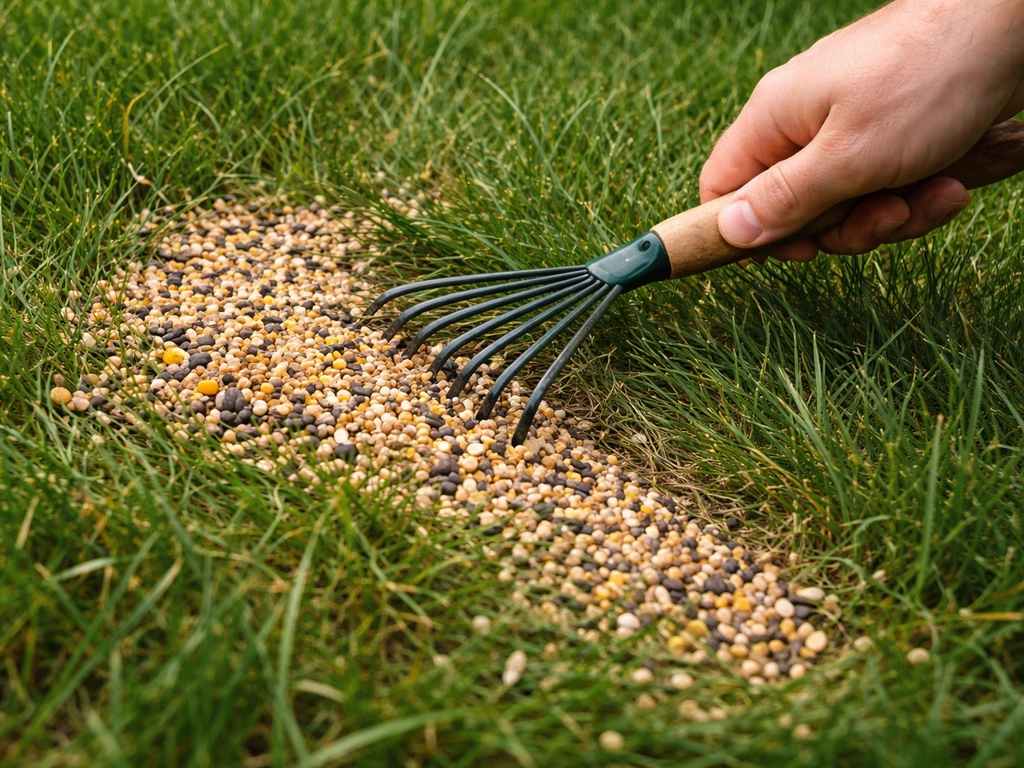
How to Get Bird Seed Out of Grass and Prevent It
Step-by-step cleanup to remove spilled bird seed from grass safely, prevent sprouting and pests, and stop it recurring.
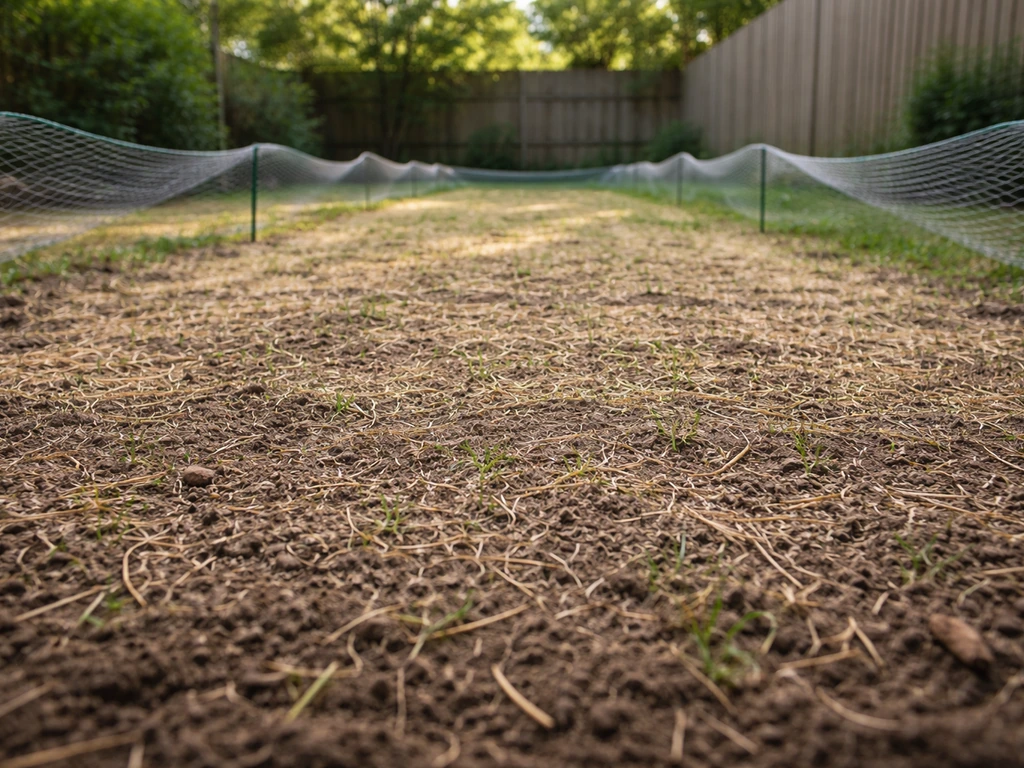
How to Stop Birds Eating Grass Seed After Sowing
Stop birds eating new grass seed with safe coverage, exclusion, deterrents, and fixes for wet sprouted seed.
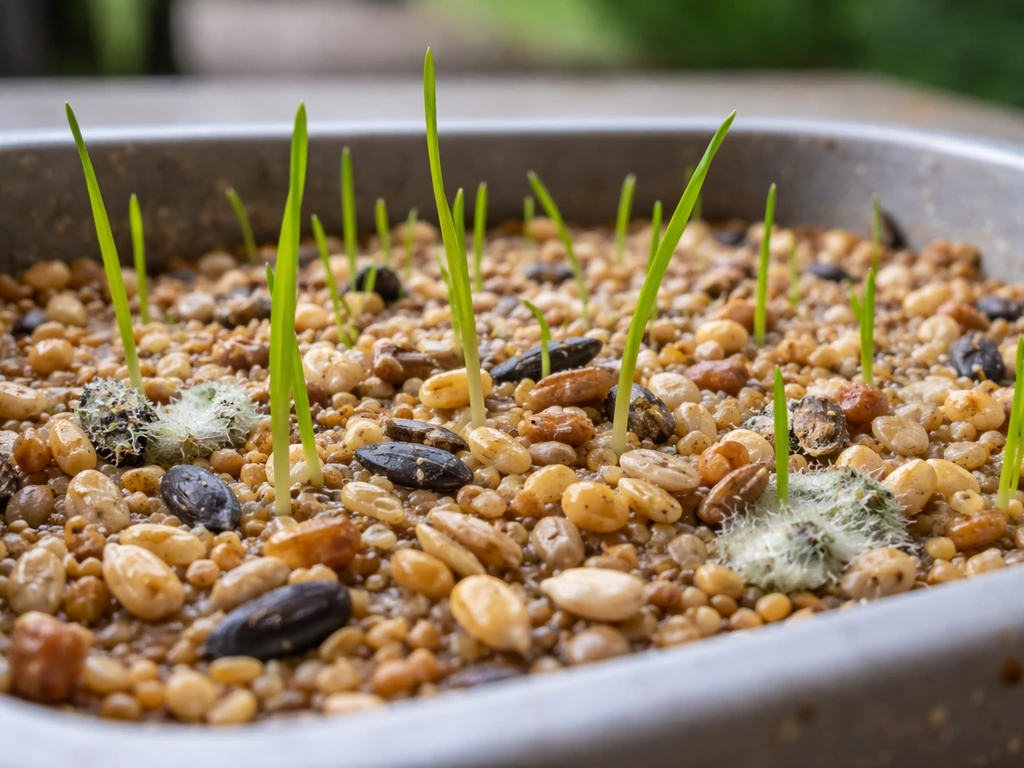
Why Is My Bird Seed Growing Grass? Fix It Today
Learn why bird seed sprouts grass and mold, how to tell true germination, safely discard and clean, and prevent it.